


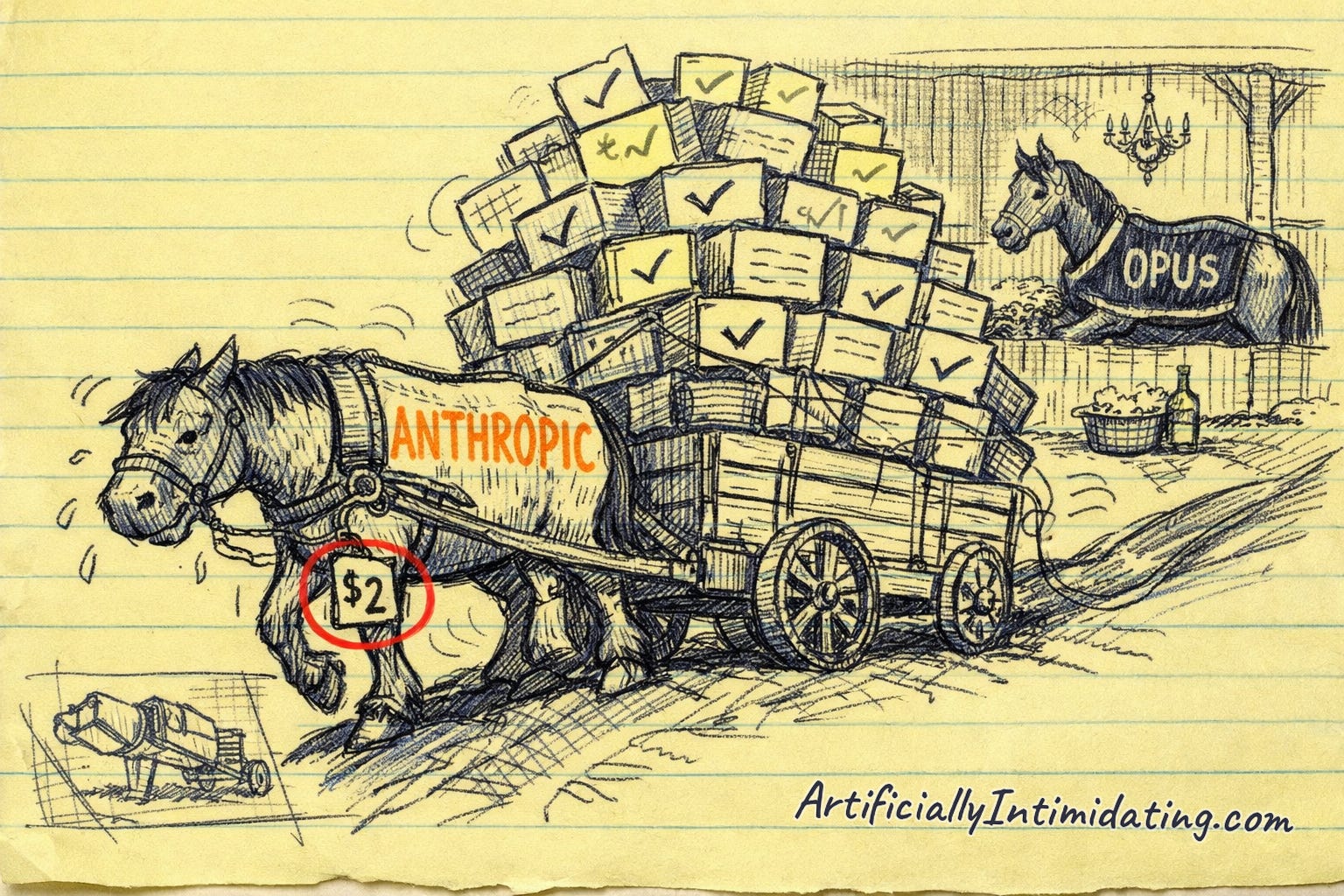
Good day, humans. Anthropic just made its cheapest capable model the one everybody gets by default, Google turned image-and-video generation into a four-second vending machine, and somewhere a draft horse named Sonnet is doing all the work while Opus naps in a plush stall. Also on deck: Cursor slipped your coding agents into your pocket, Nous taught Hermes to read the web 60x faster, and the data says the companies drowning in AI are hiring more juniors, not fewer. Let's get into it.
Anthropic's $2 Workhorse Becomes Everyone's Default
Source: 9to5Mac
What happened: Anthropic released Claude Sonnet 5 and made it the default model on every plan — Free, Pro, Max, Team, and Enterprise — replacing Sonnet 4.6. It's built to deliver near-flagship quality at a fraction of the price of the top-tier Opus 4.8.
Why it matters: Intro pricing is $2 per million input tokens and $10 per million output through August 31, then $3/$15 — roughly half of Opus on input. Earlier this week we watched frontier AI get 80% cheaper; this is the same race, now running inside Anthropic's own lineup.
What everyone's saying: Per testing reports, it finishes multi-step jobs where older Sonnets quit early and checks its own work without being asked. The consensus: this is the new workhorse for agentic coding and everyday use.
My read between the lines: The real move isn't the price — it's making the cheap model the default. Anthropic is betting most usage (and cost) lives in the boring middle, and it's quietly optimizing the whole business around the horse pulling the cart, not the one resting in the stall.
📖 Further reading: Claude Tag vs Viktor: which one do you hire? — a cheap, capable agentic Claude is exactly what makes the AI-coworker question urgent.
Today's theme is AI that does the work, not just the talking — same pitch for your actual job. Viktor is an AI agent that lives in Slack and plugs into 3,000+ tools, shipping real output while you're in meetings: pipeline dashboards, campaign drafts, reconciled reports, working code. Not a chatbot you babysit — a coworker who delivers. New readers get $50 off their first month. Hire Viktor →
Google Turns AI Media Into a 4-Second Vending Machine
Source: Google Cloud
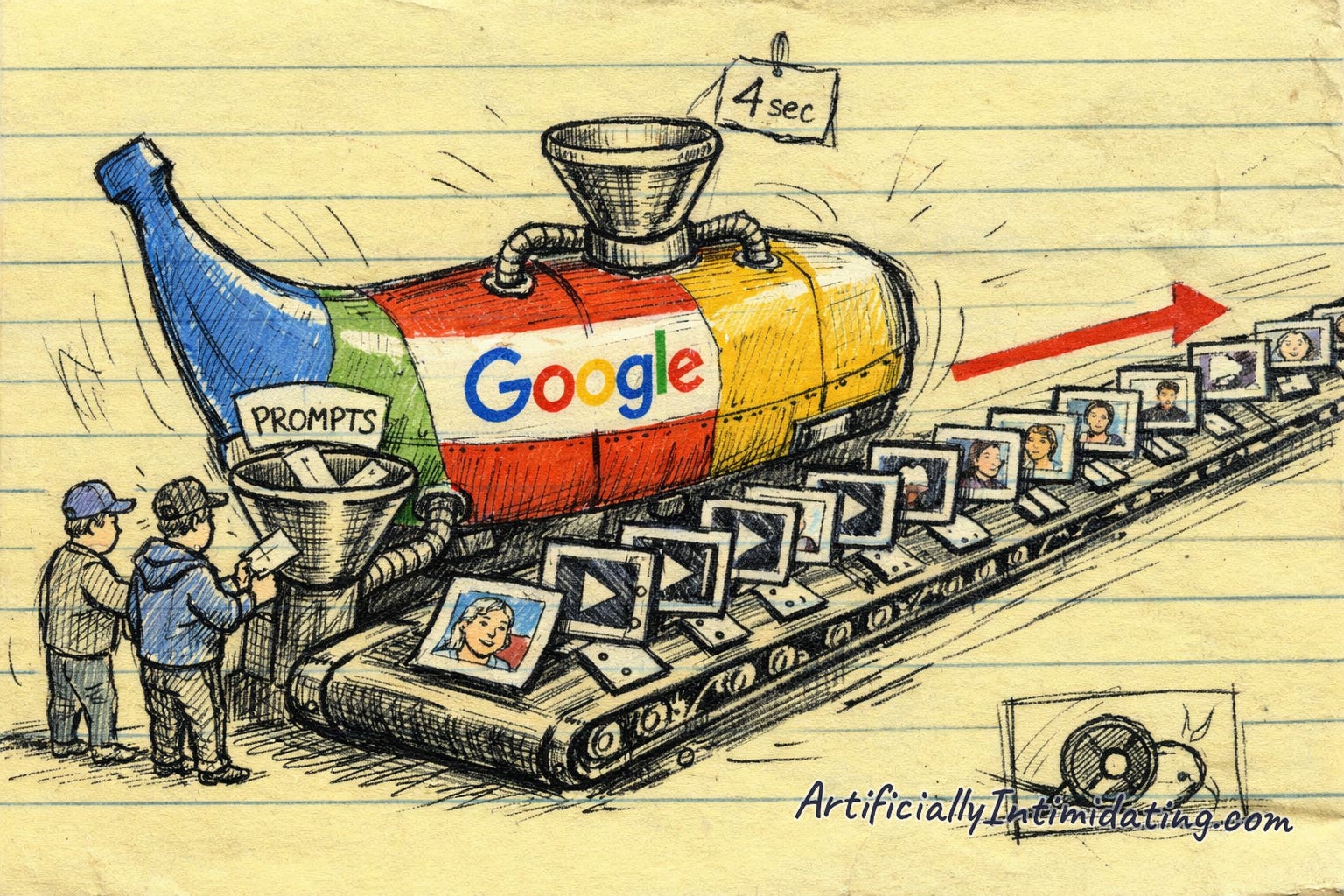
What happened: Google launched two new media models. Nano Banana 2 Lite (technically Gemini 3.1 Flash-Lite Image) makes an image in about four seconds for $0.034 at 1K resolution, and Gemini Omni Flash — now in public preview — generates and edits video from natural-language commands at $0.10 per second, with native audio.
Why it matters: Both are rolling out everywhere at once — AI Studio, the Gemini API, the Gemini app, Search's AI Mode, NotebookLM, Photos, and Google Ads. NotebookLM already uses Nano Banana 2 Lite to turn your uploaded documents into ~60-second explainer videos.
What everyone's saying: As TechCrunch and others frame it, Google is racing to make generation fast and cheap enough for high-volume use — think A/B testing a hundred ad variations before lunch. Adobe, WPP, and Figma are named early adopters.
My read between the lines: Naming your flagship image model “Nano Banana” and pricing it at three cents is a flex. Google is treating image and video generation as a commodity utility, not a premium feature — and when pixels cost less than a gumball, the moat isn't the model, it's the distribution. Google owns the pipes.
📖 Further reading: Thanks to Apple, Your favorite AI tool is a dead tool walking — three-cent image generation is the commoditization thesis playing out in real time.
The Brief stays free — that's a promise, not a trial. But every headline up here has a deeper story underneath: the paywalled deep-dives where I actually pull things apart, plus the full archive. If you want the layer beneath the news, become a member.
Cursor Puts Your Coding Agents in Your Pocket
Source: TechCrunch
What happened: Cursor released an iPhone app that lets developers manage cloud coding agents remotely — kicking off tasks, watching live progress, getting push notifications, and steering with voice.
Why it matters: It solves a genuinely silly pain point: developers have been propping their laptops open so long-running agents don't die. Now the agent runs in the cloud and you check on it like a Tamagotchi from the grocery line.
What everyone's saying: Cursor is following OpenAI and Anthropic, which already offer mobile interfaces for their coding tools. The pattern is clear — the “AI coding” surface is moving off the desktop.
My read between the lines: The phone app is a tell about where this is headed: you're less a coder and more a manager of coders who happen to be software. The skill that matters shifts from writing the code to knowing what to ask for — and when to say “no, redo it” — from the line at the coffee shop.
📖 Further reading: I stopped writing. My output doubled. — voice-steering an agent from your phone is the same shift, one surface earlier.
Hermes Now Reads the Web 60x Faster, 49x Cheaper
Source: Nous Research
What happened: Nous Research says its open-source Hermes Agent now reads the web up to 60x faster and 49x cheaper. Scraping backends pass clean content straight to the agent, and large pages are saved locally and paged on demand instead of reprocessed every time.
Why it matters: Web reading is one of the slowest, most expensive things an AI agent does. Cutting it by orders of magnitude is what makes always-on, self-directed agents that browse the internet actually affordable to run — even at home.
What everyone's saying: The Hermes crowd is impressed by the shipping pace, though one longtime user pushed back that “60x faster” needs more context — faster how, measured against what?
My read between the lines: This is the unglamorous plumbing that decides who wins agents. Everyone demos flashy reasoning; almost nobody optimizes the boring I/O of reading a webpage. Nous quietly making the pipes cheaper is worth more than another benchmark victory lap.
📖 Further reading: I ignored Hermes for two months. Here's what I actually found. — if the plumbing just got 49x cheaper, the hands-on verdict on Hermes matters more.
The AI-Heavy Companies Are Hiring More Juniors, Not Fewer
Source: IBM
What happened: New labor data cuts against the mass-unemployment narrative. A Wall Street Journal survey found companies heavily adopting AI were nearly three times more likely to increase entry-level hiring in 2026 than to cut it, and IBM says it's tripling U.S. entry-level hiring this year.
Why it matters: The pitch: someone has to supervise the automated systems, validate their output, and catch what the machine misses — and that someone is often a junior. After entry-level postings fell 35% over 18 months, that's a real reversal.
What everyone's saying: OpenAI chief economist Ronnie Chatterji is carrying this message to European policymakers at the ECB's Sintra forum, arguing that “AI exposure” is a lousy predictor of actual job loss. OpenAI's new EU framework says only 14% of European jobs face higher near-term automation risk.
My read between the lines: Notice who's funding the optimism. “AI won't take your job, it'll create new ones” is a much better look for the company selling the AI than “we automated your team.” It might even be true — but the messenger has a monster stake in you believing it.
📖 Further reading: AI Is a Trust Problem, Not a Tech Problem — Chatterji's real point — the gap between what models can do and how people use them — is a trust story.
That's your AI Brief for Wednesday. Same time tomorrow, humans.
—Artificially Intimidating


