

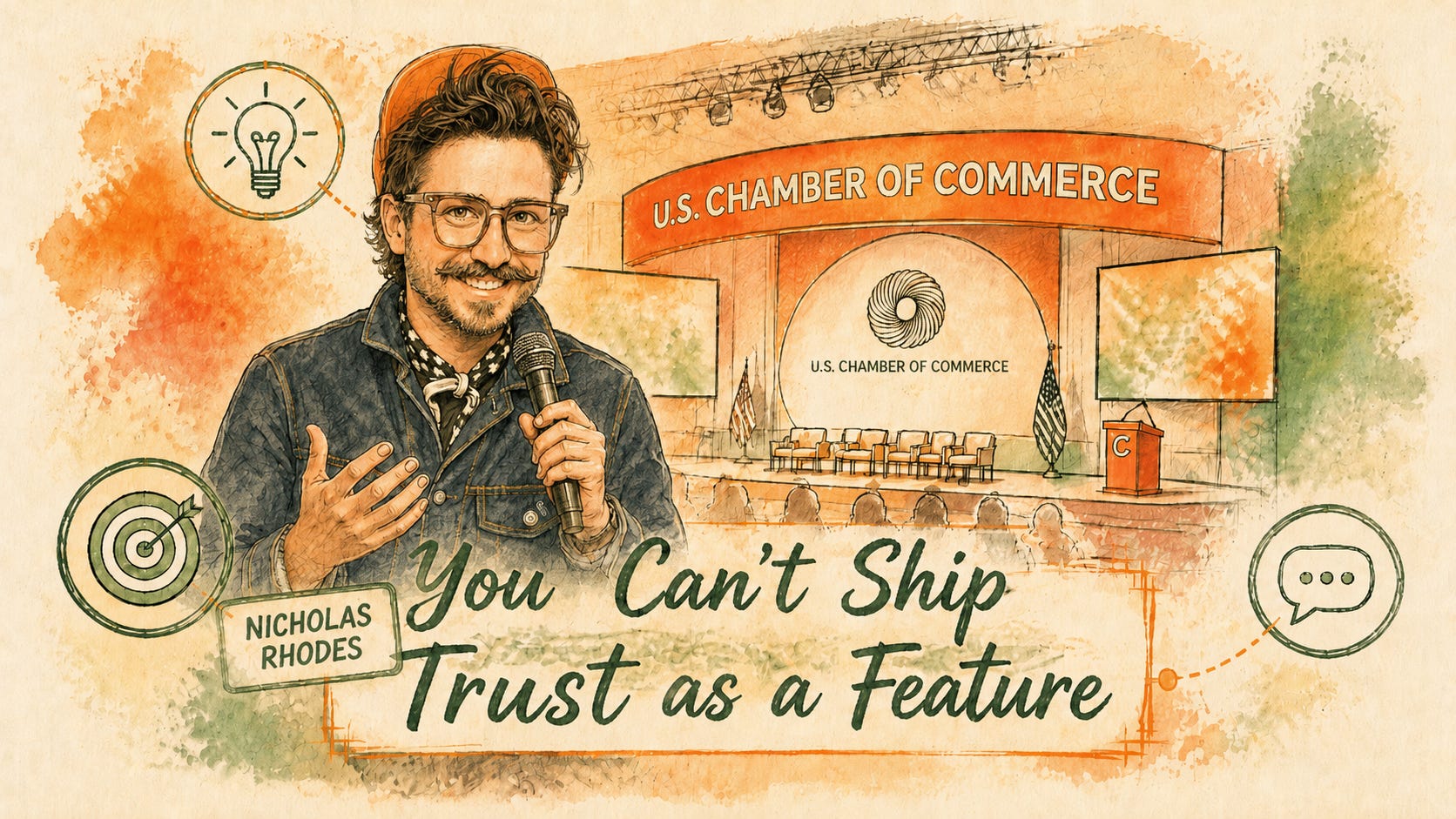
Michael Carney, President of the U.S. Chamber of Commerce Foundation, opened the with something you don’t often hear from people in rooms like that:
“The only thing that’s clear is that we have no idea what’s about to happen.”
I was there. I heard it. And then we all did what you do in those rooms — we moved on, filled our coffee cups, and proceeded to spend eight hours talking about AI with great confidence.
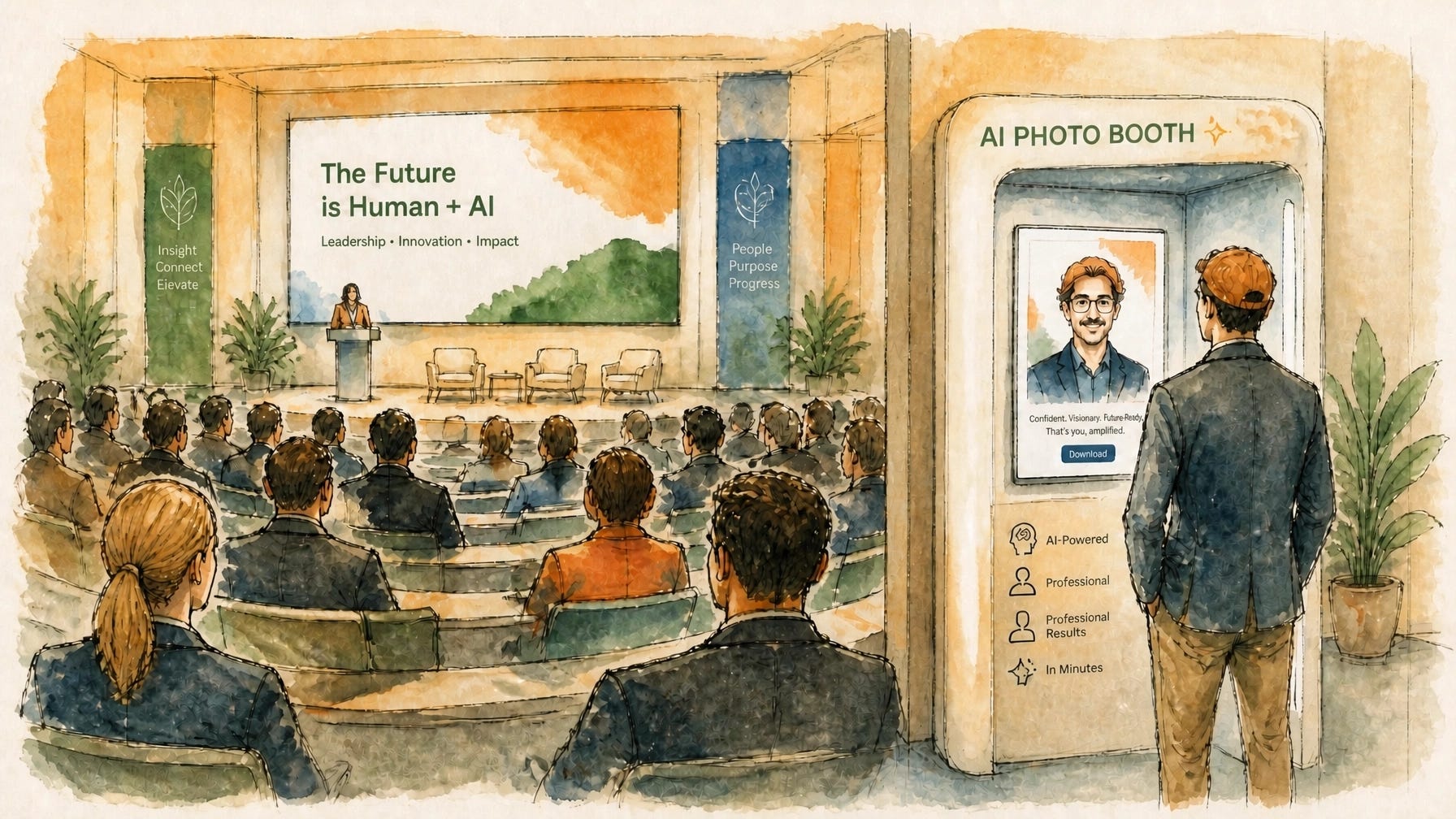
I was lucky enough to be speaker at the US Chamber of Commerce AI + Work Summit this past week. I was also there representing OutSnapped: AI headshots and pet portraits on a 9-foot live screen, just a few feet from the main stage. While nearly 1,000 business leaders debated the future of AI in the workforce, my team was building actual trust with actual people, 90 seconds at a time.
The word underneath every panel, every data point, every debate wasn’t “AI.”
It was trust.
In this pre‑conference conversation at the AI + Work Talent Forward event, Joseph Davis, U.S. Chamber of Commerce Foundation’s director of communications, speaks with Nicholas Rhodes, CEO of OutSnapped, about AI’s role in the workplace.
The Compounding Trust Problem
The summit covered a lot of ground: augmentation vs. automation, skills gaps, workforce planning, equity, the role of small business. No shortage of smart people saying smart things.
But when you cut through all of it, every conversation collapsed into the same problem: nobody is sure who or what to trust, and we’re all moving as fast as possible without a trusted foundation under us.
Trust in the models — which Noella Sudbury, founder of Rasa Legal, captured perfectly: her CTO describes AI as “a hungover intern — very, very confident, and definitely not going to be around to pick up any mess.” Her firm uses AI to help people with criminal records expunge them at scale. They can’t afford hallucinations. So they keep humans in the loop, always.
Trust in the vendors building them — who have their own incentives, their own timelines, and their own definitions of “safe.” Trust in leadership to roll this out thoughtfully. Trust in employers not to use AI as a cover for headcount reduction. Trust in education to re-skill people into jobs that will actually exist.
It’s not a stack of separate trust problems. It’s one compounding one. If the foundation of the model is shaky, and the intent of the vendor is opaque, how can the employee trust the mandate?
The AI Photo Booth Made It Obvious
Here’s what I saw at the OutSnapped booth all day: when you give people genuine control over the output — their style, their setting, how tight the crop is, whether they want to use our camera or their own phone — something changes. The hesitation drops. The curiosity takes over.
We weren’t telling anyone what their AI headshot would look like. We were asking: What do you want?
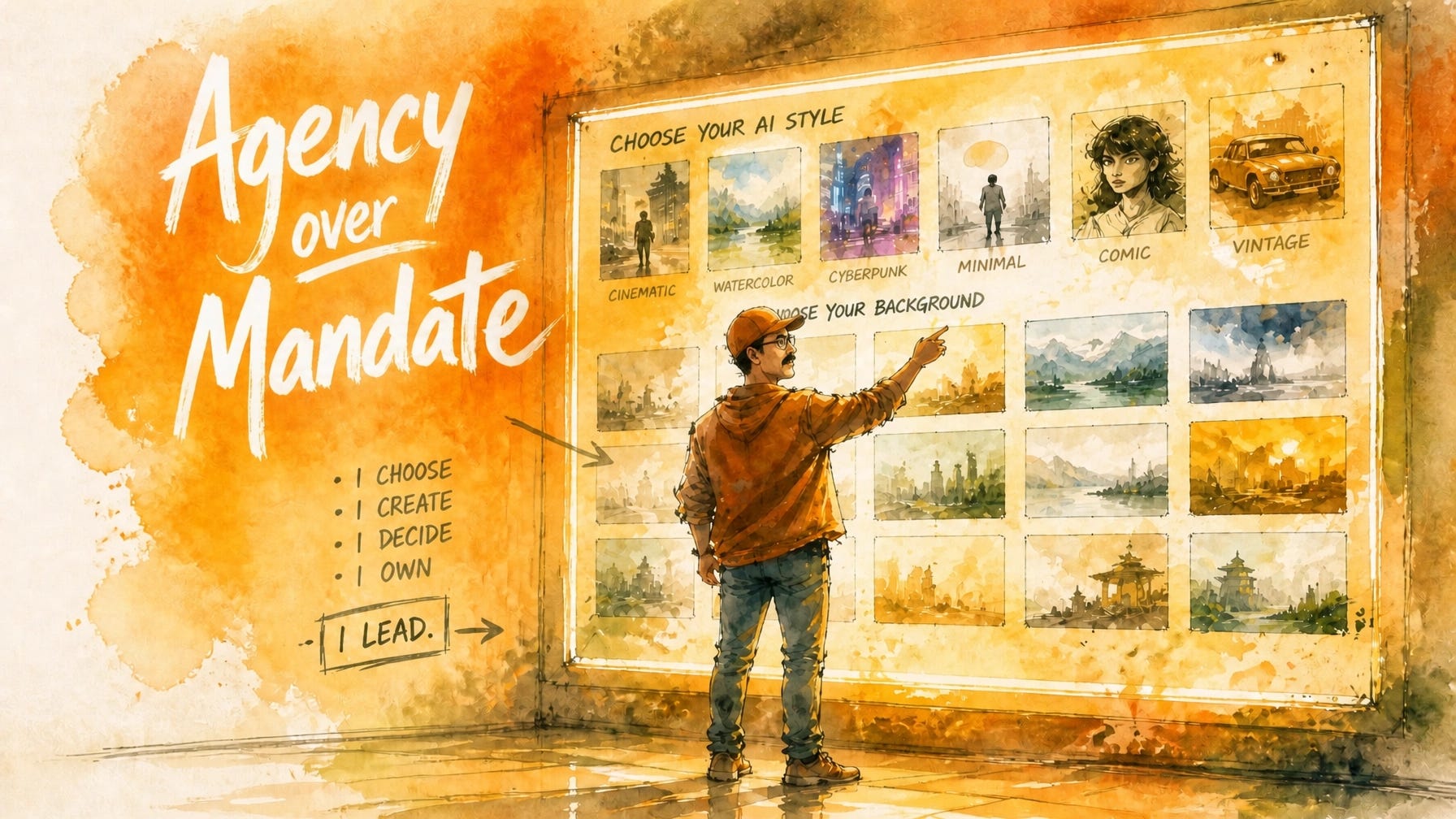
Every person who walked up was making a choice. Opting in on their own terms. And then when their output appeared on the 9-foot screen — whether it was a polished professional headshot or their golden retriever reimagined as a racing car driver — the reaction was pure delight.
Not because the AI was magic. Because they were in control of it.
What was actually running: two OutSnapped.com custom AI Photo Booth & AI Video Booth experiences with cloud-based generative AI — images and video — delivered directly to guests’ phones via email or text in under 90 seconds. The tech was invisible. Human agency was not.
The Neuroscience of Agency
Edwige Sacco, KPMG’s Head of Workforce Innovation, has a neuroscience explanation for exactly why that matters. The brain’s prefrontal cortex works harder — and triggers a threat response — when change is perceived as something happening to you.
Her framework: the goal of any AI rollout is to help the brain reclassify AI from “risk” to “resource.” That reclassification doesn’t happen through mandate. It happens through:
Edwige Sacco’s framework: the brain won’t accept what it perceives as a threat. Give people agency, and the threat signal drops.
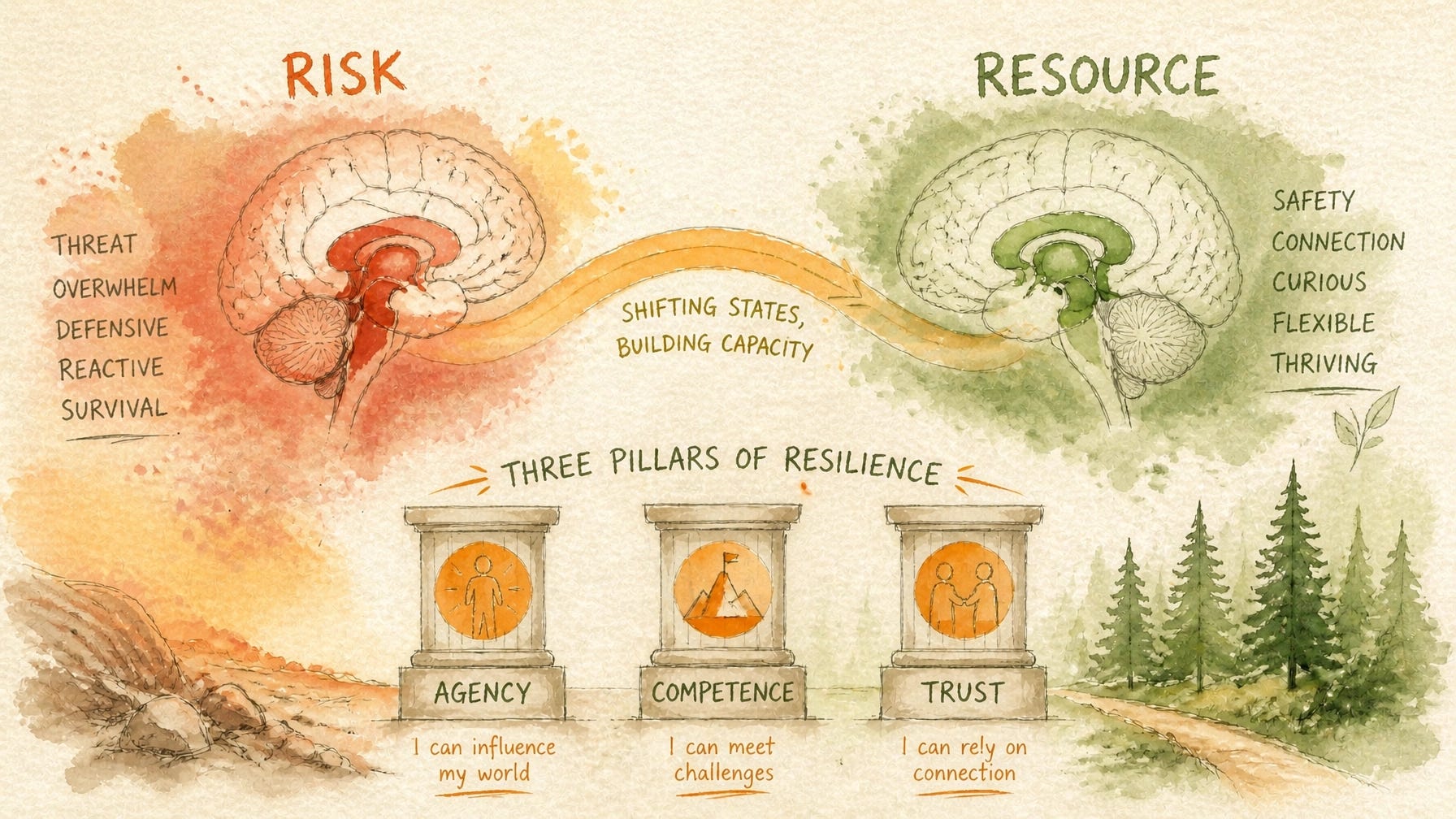
Agency: Having a say in how the tool is used.
Competence: Feeling capable of operating the tech.
Trust: Believing the system — and the leader — has your back.
We see the same reclassification happen with PocketSquare.ai users the first time their bespoke agent responds in a way that’s unmistakably calibrated to their business based on their interactions — it’s not generic AI, but something that actually knows their context. The hesitation that was there five minutes earlier is just gone.
The AI Photo Booth was, accidentally, a perfect application of that framework. Every person who walked up chose to be there. Every output was theirs to direct. The AI was in service of their idea of themselves.
The Dishwasher Moment
The people at that summit — the ones filling the hall, attending the panels, walking up to OutSnapped’s AI Video Booth — they’re already engaged. Already curious enough to show up. Already doing the extra work to figure out what’s going on.
The trust problem isn’t for them.
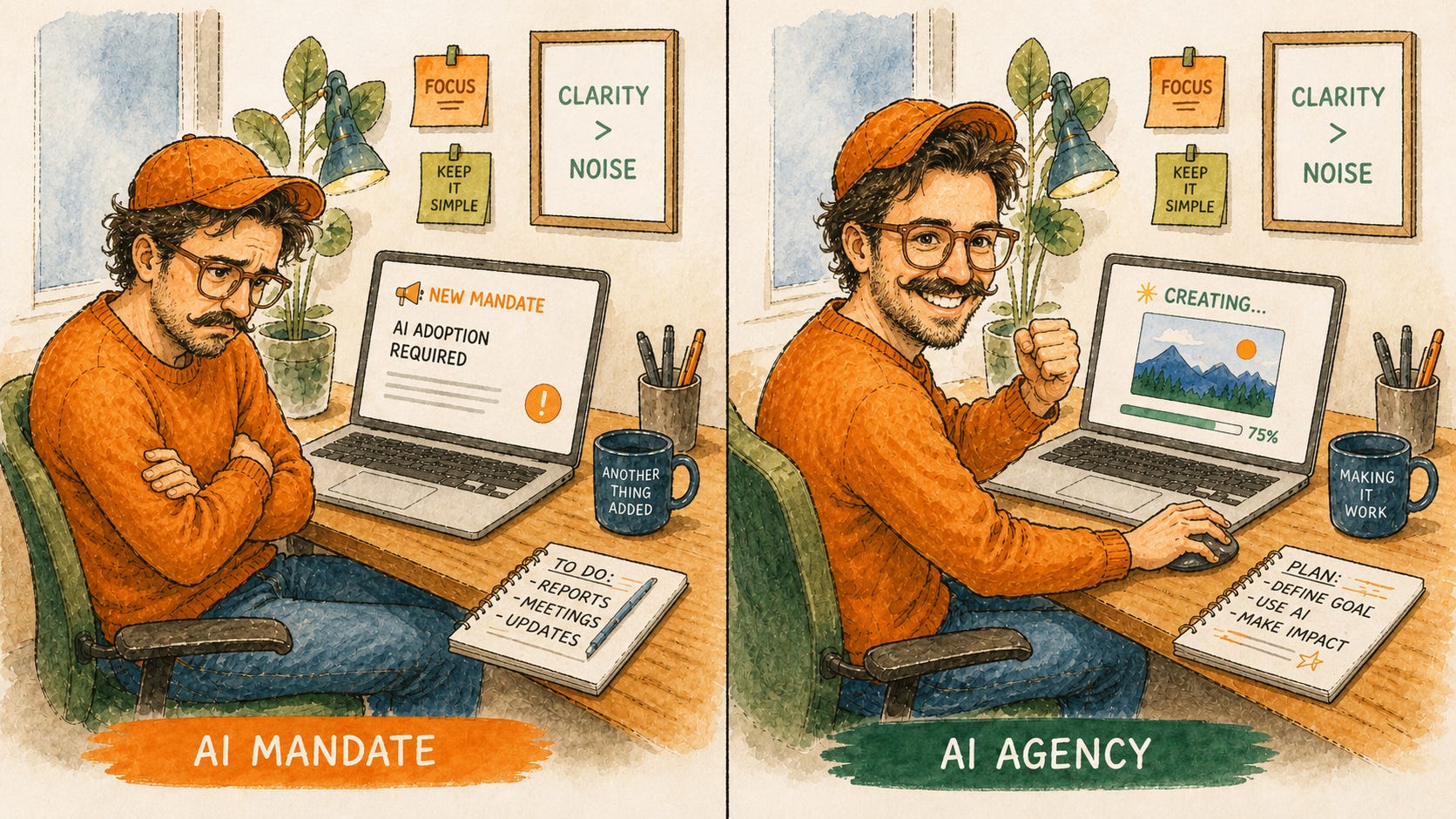
It’s for everyone who wasn’t in the room. The employees who got handed AI as a mandate. The workers who’ve been told, implicitly or explicitly, that this technology is coming to make their role smaller. The small business owner who doesn’t have a $2,000/seat enterprise license and eight hours to spend at a conference figuring this out.
Those people didn’t get to opt in. They got the dishwasher moment: this is your job now, go figure it out.
Nobody trusts something they were told to do. Especially when the people doing the telling don’t fully understand it either. And that’s the part nobody said out loud.
The leaders in that room are going back to their offices on Monday. They’re going to send memos. They’re going to announce AI initiatives. They’re going to share things they learned at the summit.
What most of them won’t do is say: I don’t know exactly where this is going. Here’s what I’m excited about. Here’s what I’m genuinely worried about. Here’s what we’re going to experiment with together.
[Continue reading with a paid subscription...]
