

I got tapped to speak at the U.S. Chamber of Commerce Foundation’s national AI + Work Summit in DC this week. Harvard professors, the former U.S. Chief Information Officer, Google, Anthropic, LinkedIn — and me, a guy who started by taking 1.45 million photos of drunk people at parties.
To prep, I had to write a bio that explained how those two things connect.
What I figured out in the process changed how I write everything now.
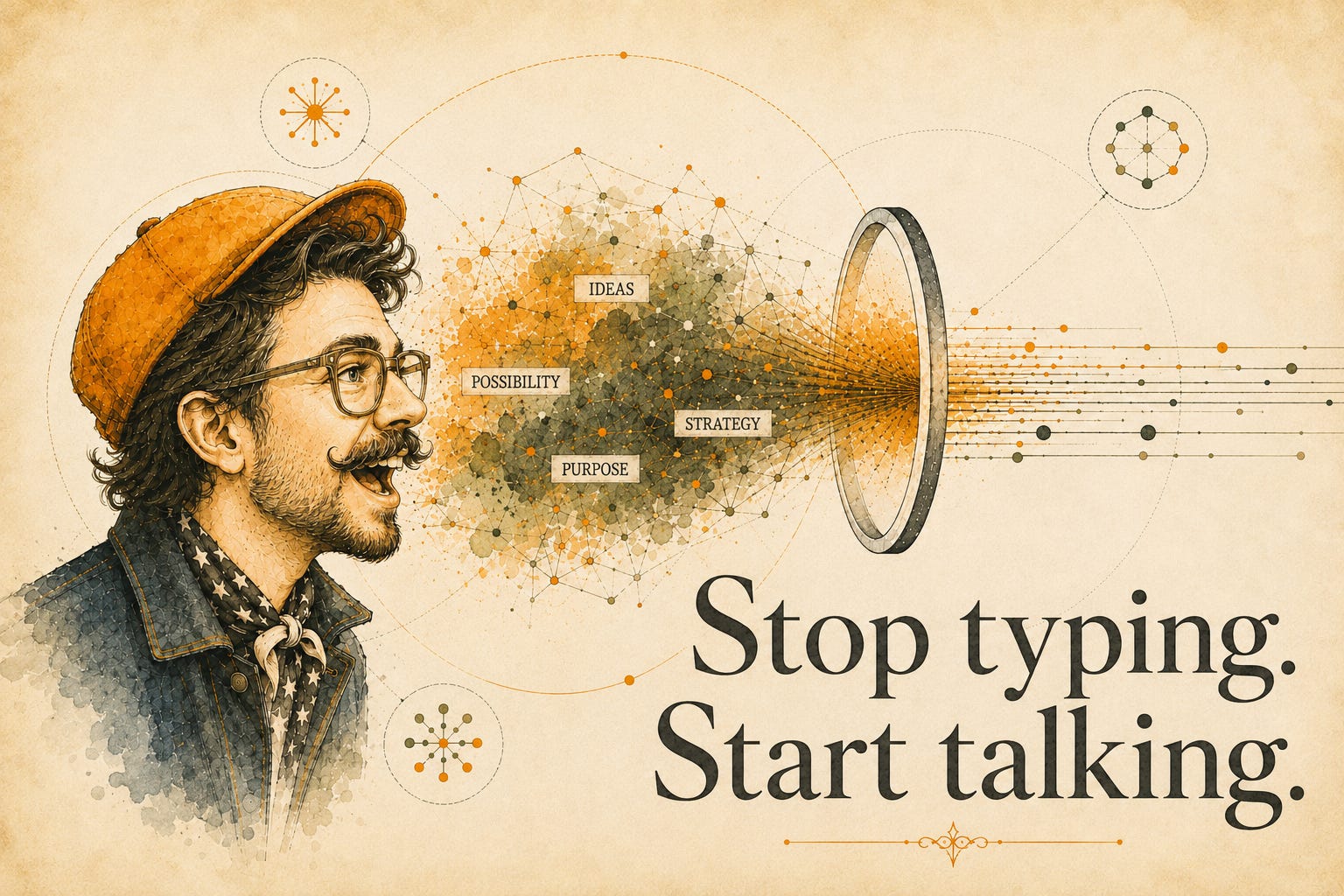
Here’s what I didn’t do: I didn’t start typing.
This is the thing I’ve changed about how I work that’s made the biggest difference in the last year, and almost nobody talks about it. The blank page isn’t a writing problem. It’s a thinking problem. And typing is one of the worst ways to think.
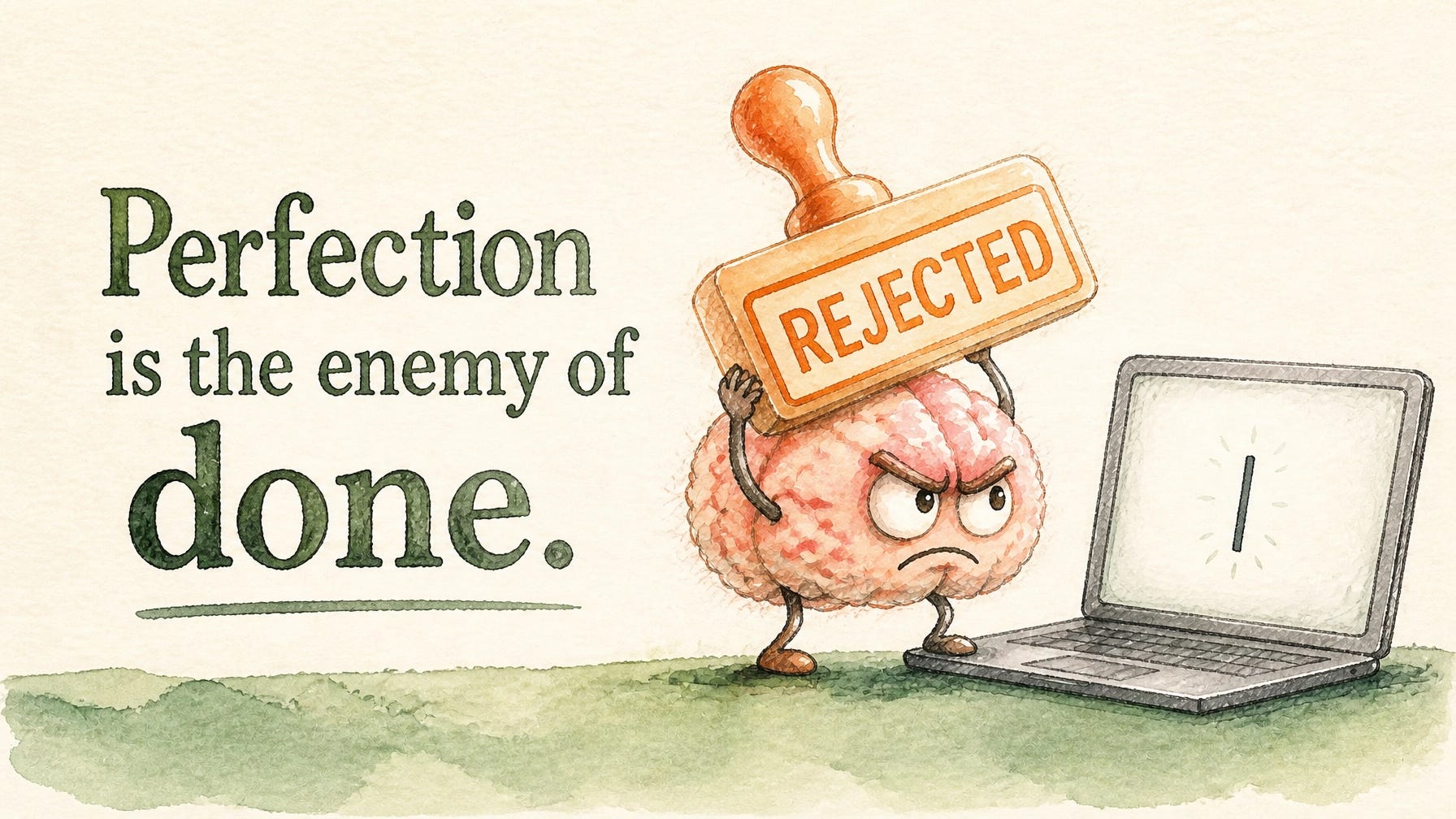
When you type, the editor in your brain turns on immediately. Every sentence gets judged before it’s finished. You write three words, delete two, write two more, decide the whole paragraph is stupid, close the laptop, make a coffee. You know how this goes.
I’m self-conscious about writing. Always have been. Which probably sounds strange coming from someone who publishes a newsletter. But the inner critic doesn’t care about your credentials — it just watches you stare at the cursor and waits.
What broke it for me was switching from typing to talking.
Not voice-to-text as a dictation trick. As a thinking method. There’s something that happens when you speak your thoughts instead of write them — a different part of your brain activates, the editor quiets down, and the ideas come out the way they actually live in your head: messy, jumping around, honest. My brain runs in about fifteen directions at once. Talking gets that out. Typing compresses it into something too neat too soon.
The workflow is simple. I use SuperWhisper to capture the voice dump — talk for five minutes about whatever I’m trying to write, don’t stop, don’t edit. Then the transcript goes into Claude, not to write for me, but to act as a thinking partner. To reflect my own ideas back at me in a shape I can react to.
That’s the key word: react. You’re not asking AI to write it. You’re using AI to make your thinking visible so you can edit it.
The bio I ended up with? Thirty minutes. Two decades at the intersection of technology, human experience, and data — long before AI made that combination fashionable. The through-line I’d never quite been able to articulate, from photographing NYC nightlife to building AI-powered experiences on event floors and factory floors, finally landed. Because I talked my way to it instead of trying to type my way there.
Here’s the full workflow, exactly how I run it.
