


Good day, humans. The floor fell out of AI pricing today, and not because anyone in San Francisco decided it should. Nvidia gave away a model that runs on the graphics card already sitting in your gaming PC. Gemini crossed a billion people. Spotify started putting badges on bands that don't exist. And one builder came back from a river vacation to find eleven terminal tabs of work nobody had asked for. Cheap and everywhere both arrived this morning. The labels are running late.
China Set the Price. America Paid It.
Source: South China Morning Post
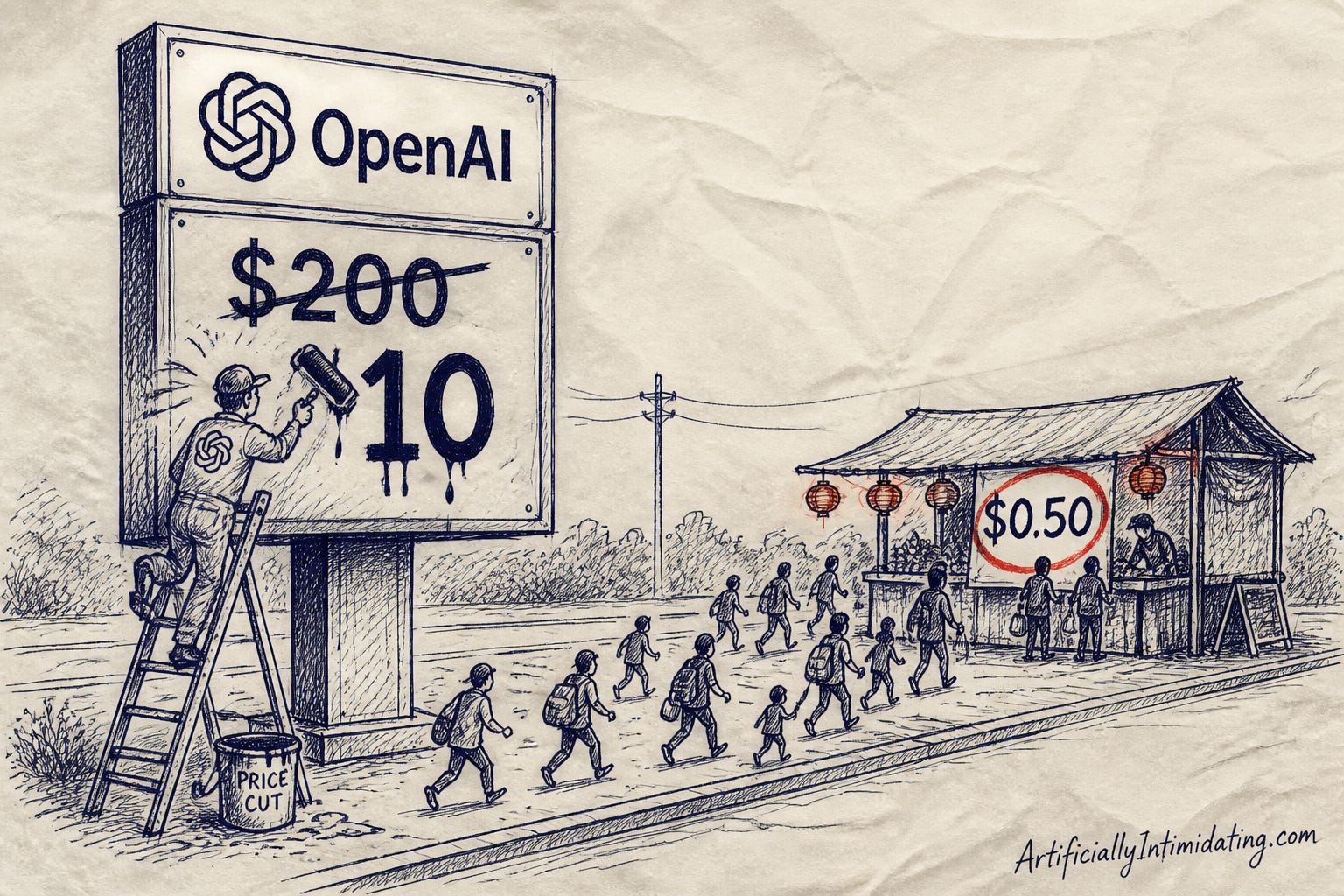
What happened: A wave of cheap, capable Chinese models — DeepSeek's V4-Flash, Alibaba's Qwen line, Moonshot's Kimi K3 — has pushed American labs into cutting API prices to defend share. DeepSeek charges roughly $0.14 per million input tokens. OpenAI cut its lightweight GPT-5.6 Luna tier by 80%, and Anthropic shipped a near-flagship model at half the old price.
Why it matters: A million words of machine thinking now costs closer to a coffee than to an employee. If you were waiting for AI to get cheap enough to put inside your own product, that wait ended somewhere around last week.
What everyone's saying: AFP's roundup, carried by Hong Kong Free Press, got the careful analyst line: this is “a price competition,” not yet a price war. Forbes was blunter and called it a race to the bottom.
My read between the lines: Look at where nobody cut. Luna dropped 80%; the top-end Sol tier didn't move. The cheap tier is where the volume lives, so that's where the knife fight is. The frontier tier is where the story about needing hundreds of billions in compute lives, and that story still has to hold. These cuts aren't generosity and they aren't surrender. They're a company choosing which half of its business it's willing to lose money on.
📖 Further reading: Fable 5 Costs 2x Opus — and Using It Wrong Costs You More Than That — when the cheap tier gets this cheap, the money you waste is the money you spend sending work to the expensive one.
Story one is about the price of tokens falling. Nobody is cutting the price of the two hours a week you spend pulling numbers into a deck nobody reads. Viktor is an AI agent that lives in your Slack and connects to over 3,000 tools, and it does the work: the report, the dashboard, the code change, the campaign. Not a chatbot you ask questions. A coworker you hand things to. New readers get $50 off their first month. Hire Viktor →
Nvidia Put a Frontier-Class Model in Your Gaming PC
Source: CNBC
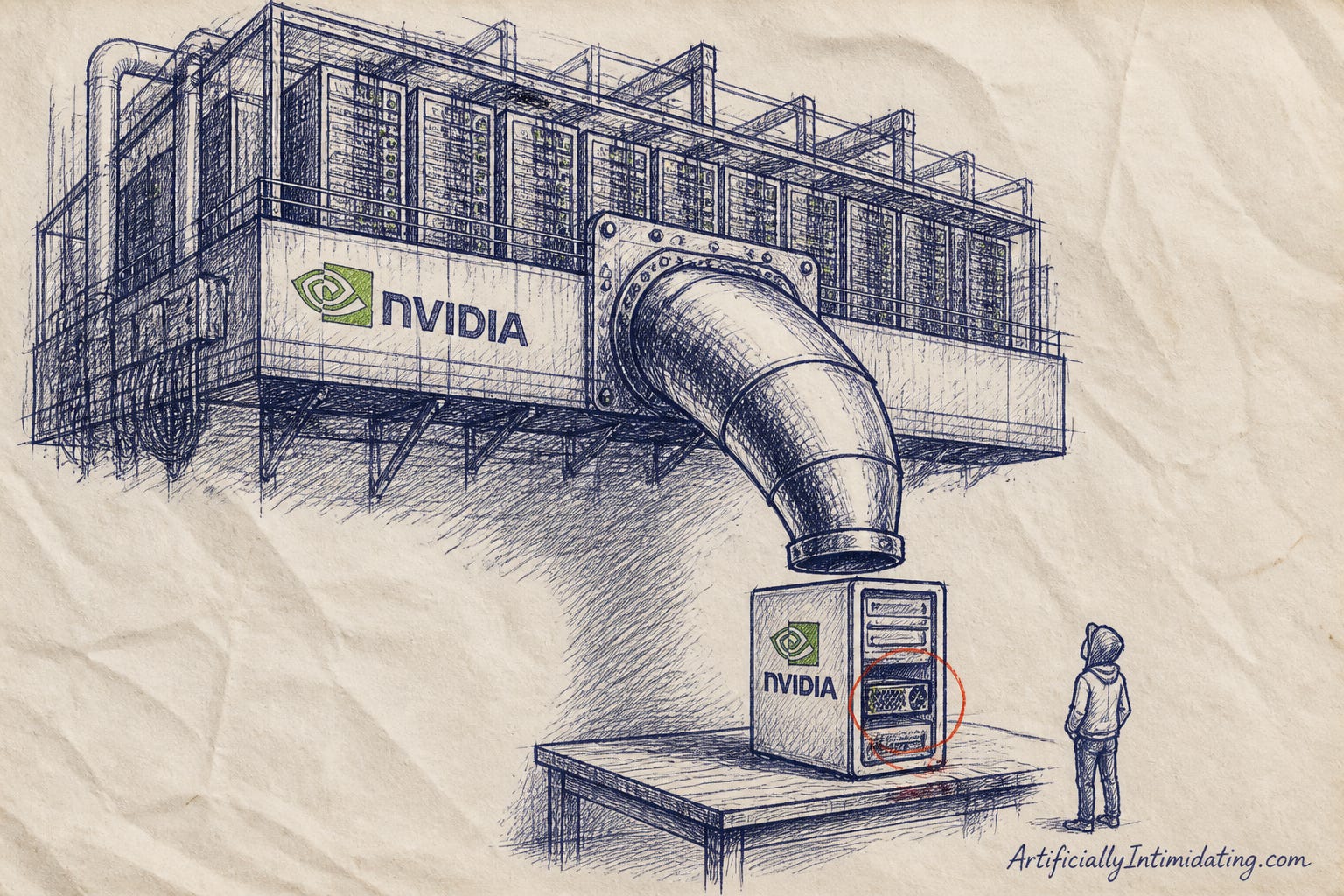
What happened: Nvidia released Nemotron 3.5 Lightning, its first open-source model since Jensen Huang started publicly defending open weights. It is a 30-billion-parameter mixture-of-experts model that wakes only 3 billion parameters per token, so it runs on one consumer graphics card. Companies can use, adapt and redistribute it without asking Nvidia. Alongside it came NeMo Switchyard, an open library that routes agent requests to the cheapest model that can handle them.
Why it matters: Yesterday we ran this under The Future Is for Everyone. The Compute Goes to the Highest Bidder — this is the other half of that trade. A capable agent model that runs on hardware you already own is the first version of this technology nobody can price you out of, or switch off.
What everyone's saying: The open-weights camp is treating it as proof the argument is won. Twenty-five companies including Nvidia, Microsoft, Meta and Hugging Face signed a July letter asking Washington not to restrict open models, and Meta shipped its own open coding model in the same stretch.
My read between the lines: Nvidia is the one company in this fight with nothing to lose from free models and everything to lose from expensive ones. A model that runs on a desktop sells a desktop card. A model that runs in a data center sells a rack. Open weights here are demand generation wearing a philosophy — and it happens to be the version of the philosophy that helps the rest of us.
📖 Further reading: Your SaaS bill is a sitting duck — the case for running your own stack got materially cheaper this morning.
The Brief is free and stays free. Members get the other half: the deep-dives where I take one of these stories apart and show what to actually do about it, plus the full archive. If today's price story changed your math, that's where the math lives. Become a member
Gemini Crossed a Billion People
Source: TechCrunch
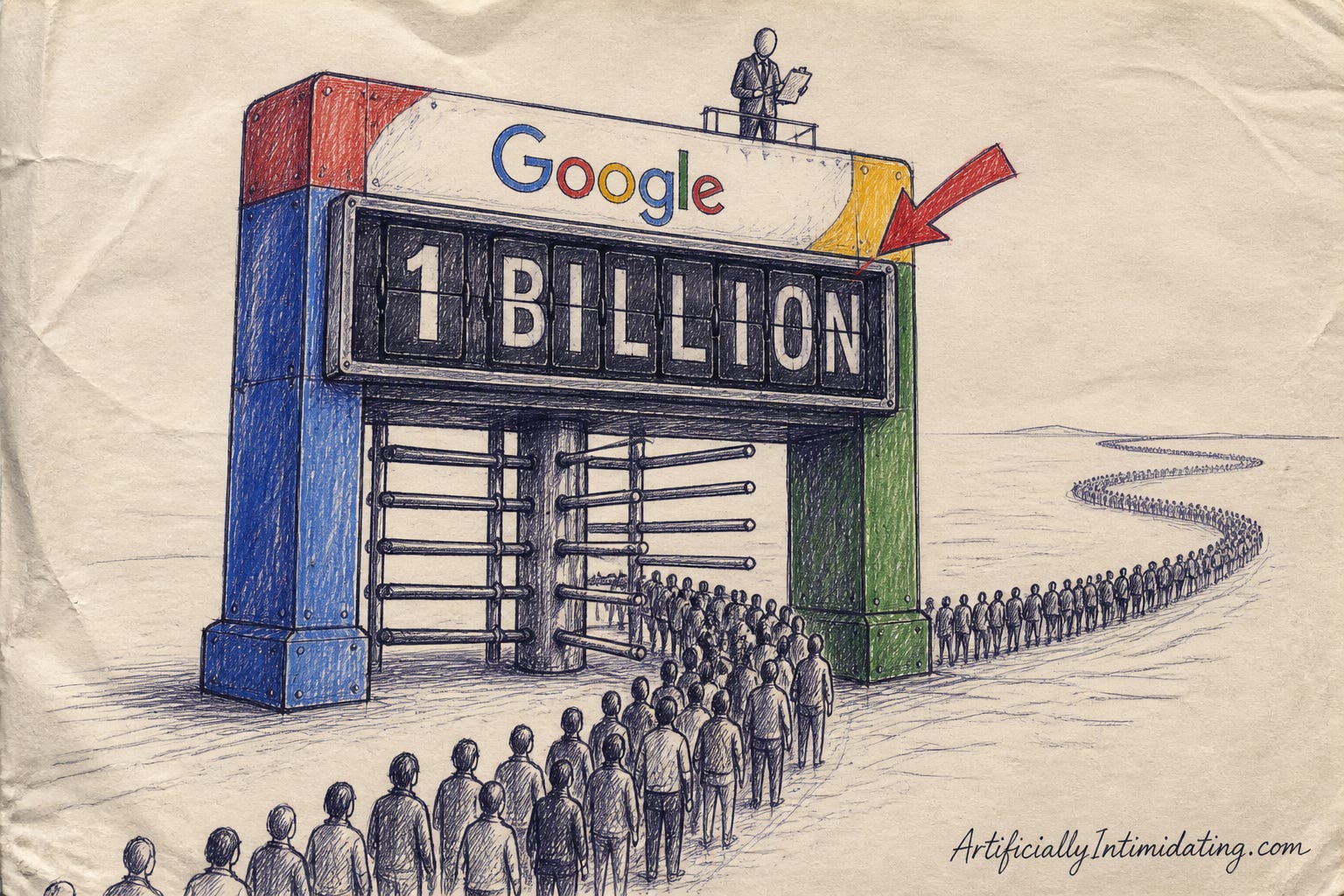
What happened: Google's Gemini app passed one billion monthly active users, the fastest any product in the company's history has got there. It was at 650 million last October and 950 million by midyear. Google says 63% of use is voice, one in five sessions involves live camera or screen sharing, and the app generates more than 150 million images a day.
Why it matters: A billion people is the point where a product stops being a tool and starts being infrastructure, like a search box or a maps app. Whatever Gemini is bad at is now something a billion people are bad at together.
What everyone's saying: Mostly scoreboard reading. ChatGPT hit its own billion in June, so the two are level, and the live argument is how much of Gemini's number is real demand versus Android and Search putting it in front of people who never went looking.
My read between the lines: The number worth watching is the 63% voice figure. Text chat is something you go and do. Voice is something you do while doing something else. The assistant that wins probably won't be the one that answers best, it'll be the one you can talk to with your hands full — and that is a very different product from the one everyone benchmarks.
Spotify Is Badging the Bands That Aren't Real
Source: TechCrunch
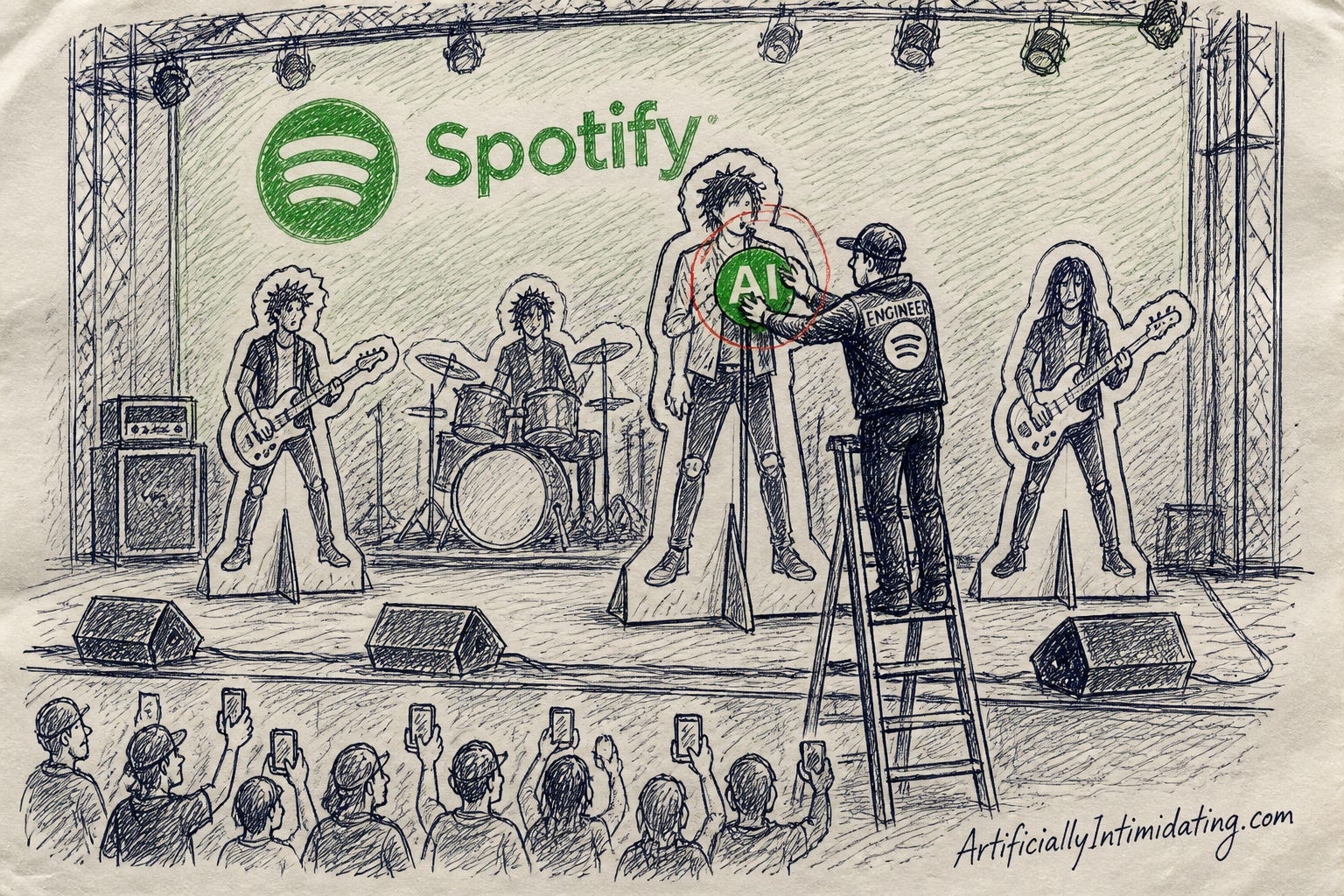
What happened: From August 11, artists on Spotify can declare themselves an “AI Persona” — a profile whose name and face belong to a fictional, AI-generated identity. The badge appears on profiles, in search and in playlists from mid-September, and flagged profiles are cut from editorial and algorithmic recommendations by default. Spotify will also review suspicious profiles that don't self-declare, starting with ones past a certain audience size.
Why it matters: This is the first big platform to say out loud that a fake performer is a different product from a real one, and to make that difference cost something specific: the recommendation feed. Agree or not, it sets the template every other platform now gets compared to.
What everyone's saying: Stereogum and Fortune both flagged the same gap: the badge is about the persona, not the process. A real human who generated every note with AI tools doesn't get labelled. And critics keep noting that Spotify sells AI features to listeners while treating artists' AI use as suspect.
My read between the lines: Self-declaration plus a recommendation penalty is a policy that pays you to lie. The people most likely to badge themselves are the ones doing this as an honest bit. The ones running a fake band as a royalty business have just been handed a very clear price list for staying quiet. The Velvet Sundown didn't get caught by a checkbox.
📖 Further reading: I Make AI Versions of Myself for a Living. This One I Didn't Agree To. — the badge argument and the likeness argument are the same argument in different clothes.
A Builder Went on Vacation and Came Back Suspicious
Source: Brent Fitzgerald
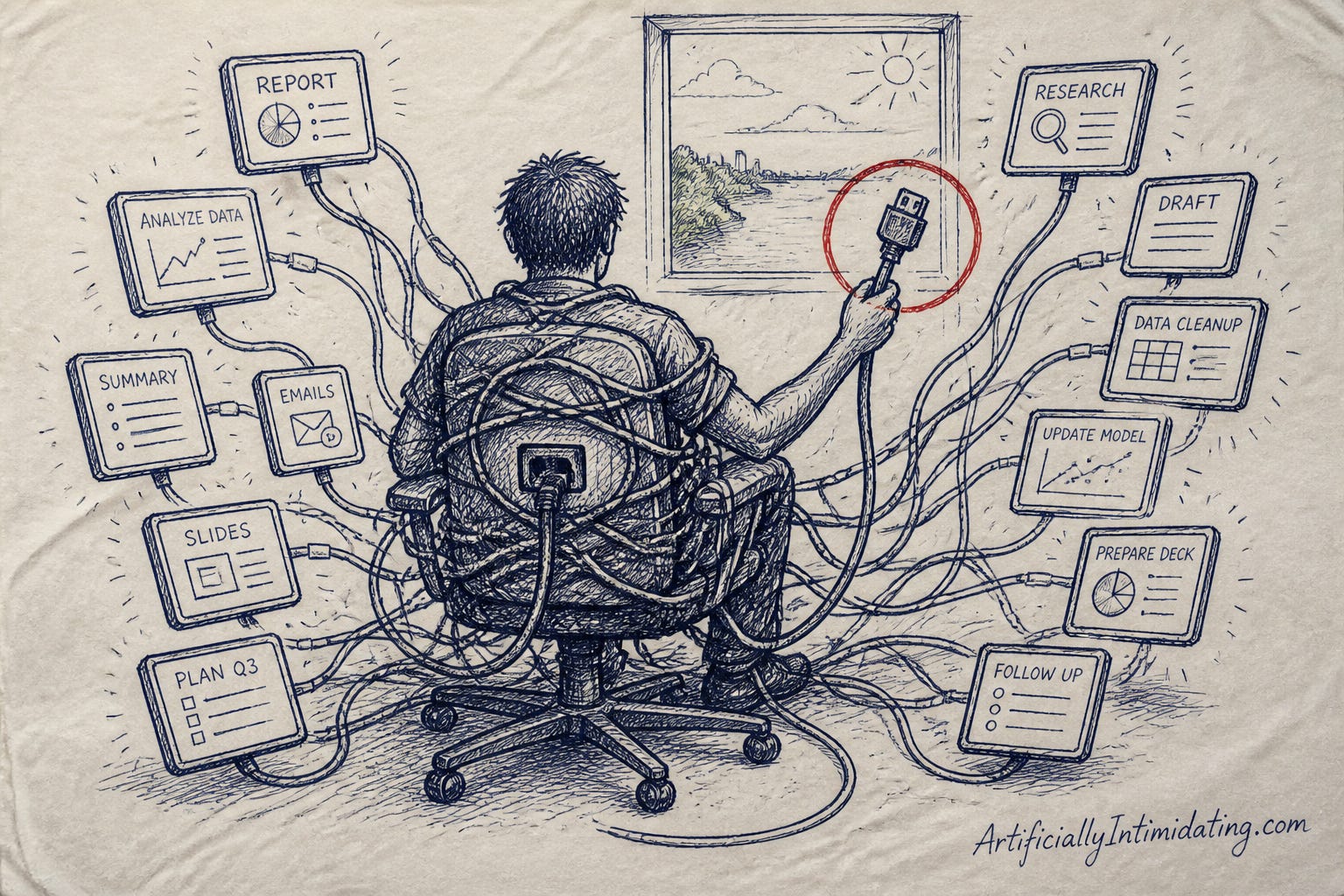
What happened: Brent Fitzgerald spent a few weeks away from the laptop and wrote up what he found on his return: eleven terminal tabs of paused agents, unread Claude threads covering everything from taxes to landscaping, and a growing sense that none of it had made him happier or freer. His conclusion: the human is the loop, and we tag the agent in occasionally, thoughtfully.
Why it matters: Most warnings about AI dependence are about jobs or about truth. This one is about craft. He describes skipping the learning to get to the result, and the learning was where the fun lived — a failure mode you can hit with no villain involved at all.
What everyone's saying: It landed hard with the builder crowd, because it names something plenty of people recognise and nobody says at work: firing up an agent can be avoidance dressed as productivity. He calls the habit a productivity ouroboros, using the tools to get better at using the tools.
My read between the lines: The sharpest line isn't about AI at all. He admits he never trusted the output of those hours-long voice sessions and did them anyway. That is not a tooling problem. Now read it against story one: the price of asking a machine for something just fell 80%, which means the price of asking it for things you don't need fell 80% too. Cheap is what makes this habit affordable.
📖 Further reading: Your AI is a yes-man. Here's how to make it fire you. — if you recognised yourself in Brent's “sycophantic mirror,” this is the fix.
That's your AI Brief for Wednesday.
—Artificially Intimidating


