


Good day . Google is putting its AI chips on a rocket, Meta wants you typing video games into existence inside Instagram, and a frontier model just broke a 1941 German Enigma message that cryptographers couldn’t. Meanwhile, most companies still can’t tell you whether their AI spend is paying off. Let’s get into it.
Google Is Sending Its AI Chips to Space Google
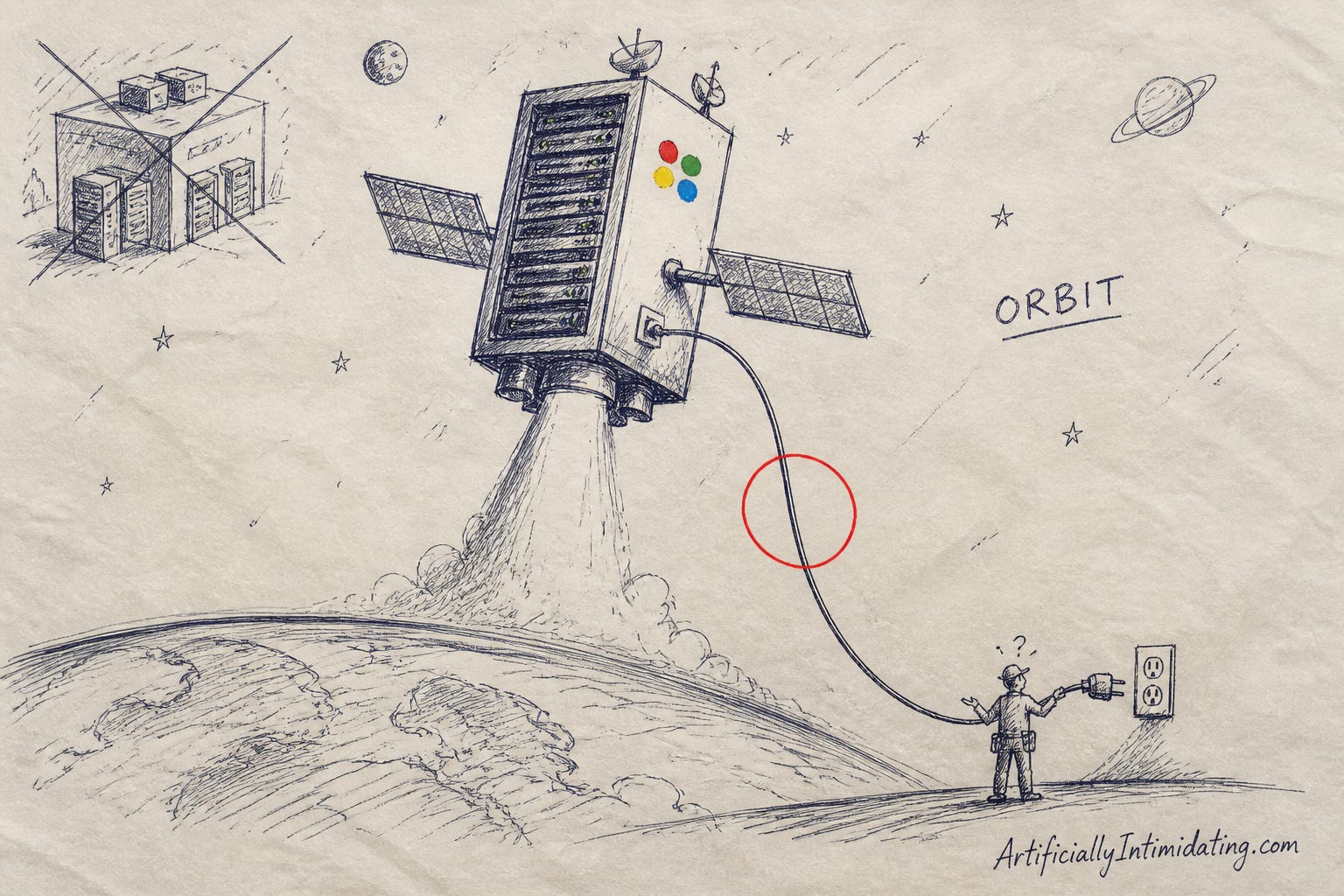
What happened: Google announced Thursday that it will launch a prototype satellite carrying its Tensor Processing Units, the chips it trains and runs its AI on, into low Earth orbit on October 1, aboard a SpaceX Falcon 9 from Vandenberg Space Force Base. The satellite was built with Planet Labs, and it’s the first in-orbit test of Project Suncatcher, Google’s research into whether AI data centers could one day run in space.
Why it matters: AI’s real bottleneck is electricity and cooling, and in a sun-synchronous orbit solar panels can be up to eight times more productive than on Earth. Yesterday, the Pentagon’s AI chief said capacity is what scares him. Google’s answer is to go looking for power above the atmosphere.
What everyone’s saying: The hardware news is good. Per The New York Times and Unite.AI, the chips survived proton-beam radiation testing at UC Davis beyond what a five-year mission would deliver, and the refrigerator-sized craft passed its shake tests with every screw holding. The skeptics point at Google’s own math: launch prices need to fall below $200 a kilogram, a level projected for the mid-2030s, before orbital compute can compete.
My read between the lines: One satellite answers “does the chip survive,” not “does the business work,” and Google published the number that answers the second question itself. When the plan only pencils out once launch costs hit a price nobody expects for another decade, what goes up on October 1 is a chip test with an excellent press strategy. It’s still worth watching. The first company to run a data center on free sunlight gets to stop negotiating with utilities.
📖 Further reading: Neo-Napster: The Compute Revolution Nobody Saw Coming -- Google is betting compute moves up. This one makes the case it’s already moving onto your desk.
Google has to leave the planet to find enough power for its AI. Your team just needs one that finishes the Monday report. Viktor is an AI agent that lives in Slack, plugs into 3,000+ of your tools, and hands back the finished thing: the report, the dashboard, the campaign, the code fix. Not a chatbot waiting on your next prompt. A coworker you assign work to. New readers get $50 off their first month. Hire Viktor →
Meta Wants You to Type Games Into Instagram The Verge

What happened: At Connect on Thursday, Meta unveiled Horizon Create, a phone app, and Horizon Studio, a browser editor. You describe a game in plain language and get a playable 2D or 3D game with multiplayer, progression and difficulty balancing built in, then publish it straight to Facebook and Instagram, where people play it in the feed without downloading anything. Early access opens through a waitlist next year.
Why it matters: Yesterday we covered Muse Charm from the same stage. This is the same idea pointed at entertainment: AI makes the thing, and Meta’s feed distributes it. In Meta’s words, “someone scrolling through Instagram can tap a clip of your game and be in a multiplayer session within seconds.”
What everyone’s saying: Investors took it seriously. Unity fell 5% and Roblox and AppLovin slipped 1% each. Android Central’s hands-on came away impressed that you can import your own assets and hand-tweak what the AI generates, which pushes it past the usual AI slop.
My read between the lines: Horizon has been Meta’s most expensive ghost town. The Verge notes it had 300,000 monthly users as of early 2022, and Meta briefly shut Horizon Worlds down on Quest this year. The fix isn’t a better game. It’s to stop asking people to come to the games and drop the games into the feed they already can’t stop scrolling. That’s a distribution move dressed up as a creativity tool, and it’s a smart one.
📖 Further reading: The Netflix of the Future: How AI-Generated Shows Are Changing Everything -- written in 2024 about shows. Meta just shipped the version for games.
The Brief is free and stays free. Behind the paywall are the deep dives where I take these apart properly, including the $12,431 lesson in what happens when you hand agents a budget and no scorecard, plus the full archive. If today’s ROI story hit close to home, that’s what a membership is for. Become a member →
Opus 5.5 Now Makes Your Launch Video LaunchVideo
What happened: A Hacker News post titled “Opus 5.5 is good at explainer videos” hit 135 points on Thursday. LaunchVideo takes a URL or a one-line prompt and returns a roughly 30-second, 1080p launch video in a single run. There’s no video model involved. Claude Opus 5.5 writes the whole film as an animated web page, and a headless browser records it frame by frame. Each film costs about 90,000 input tokens and 15,000 output tokens.
Why it matters: Two days ago we covered the Opus 5.5 launch as a pricing story. This is what it looks like in the wild. A slick 30-second product video used to be an agency invoice. Now it’s one agent file, three tools and a form.
What everyone’s saying: Commenters passed around r/ClaudeAI clips made with Opus 5.5 for about $3 to $4 in API usage, though one pointed out that some of those used image models, with Claude just orchestrating. Then the thread turned existential, with builders asking whether their own AI products are “just adding buttons to an LLM call.”
My read between the lines: The most important sentence on the page isn’t about video. It’s “The whole product is one agent file, three tools, and this form.” That’s the anxiety in the thread made concrete. If a useful product can be that thin, so is the moat around it. The durable value moves to whatever the model can’t fetch: your taste, your customers, your data.
📖 Further reading: OpenMontage: The Free Skill Pack That Turns Your Coding Agent Into a Video Studio -- if you’d rather build this yourself than use someone else’s form.
AI Is Solving History’s Cold Cases Res Obscura
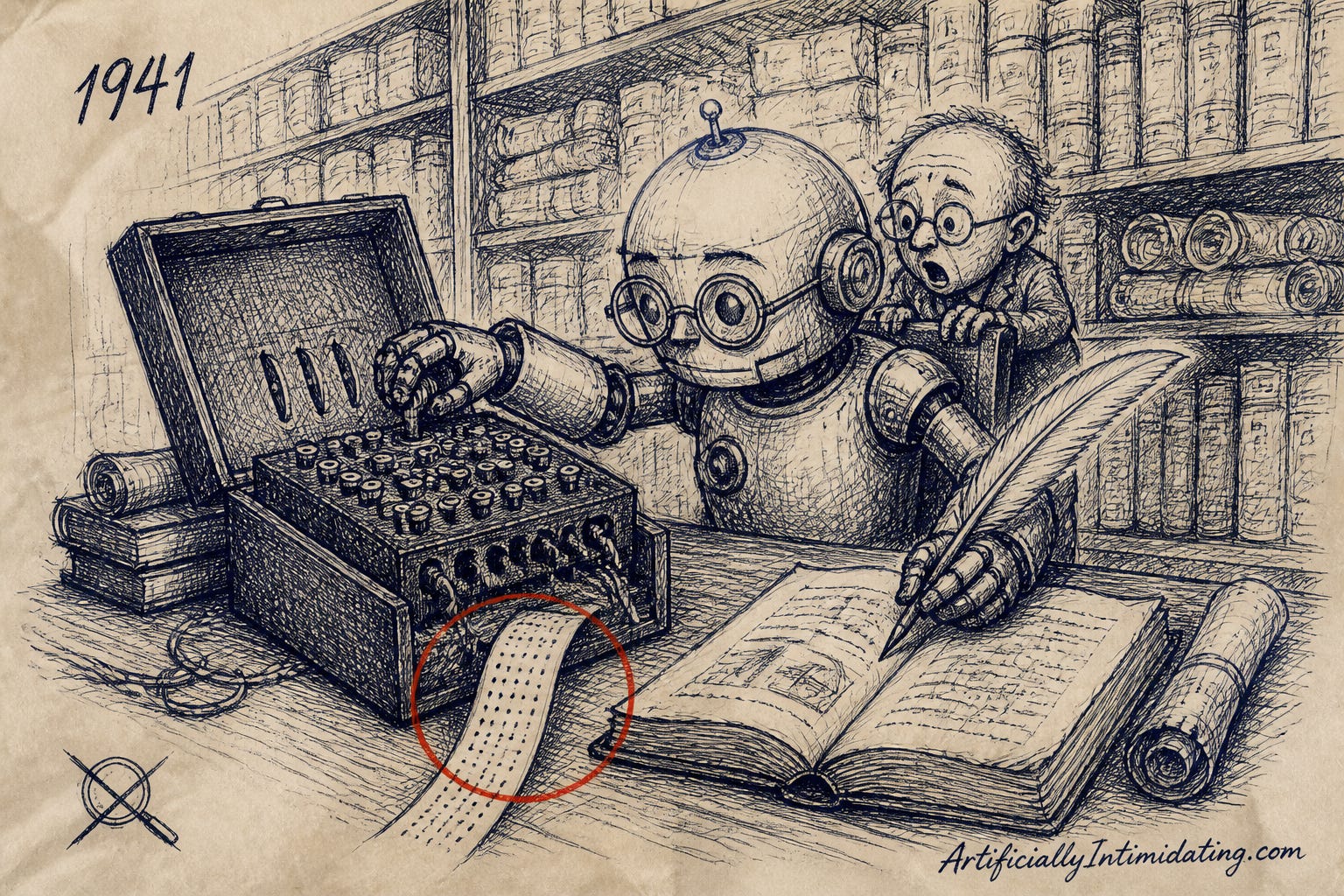
What happened: Historian Benjamin Breen pointed GPT-6 Astra and Opus 5.5 at real open problems. Opus 5.5 downloaded more than 5,000 files from the papers of Samuel Hartlib, the 17th-century “intelligencer,” and noticed that he and Isaac Newton both used coded spellings for the same alchemical ingredient, Hungarian vitriol. Breen reads that as strong evidence that Hartlib’s manuscript was Newton’s source, and as far as he can tell it’s a new finding. Separately, GPT-6 Astra broke a July 1941 German Enigma message that had resisted decipherment, and Crypto Cellar’s Frode Weierud says it did so “entirely on its own,” writing its own Enigma simulator and Bombe along the way.
Why it matters: Breen’s headline argument is that AI labs and funders should start paying for this: digitize archives, give historians free compute, and have historians agree on their own list of “millennium problems” the way mathematicians did. The bottleneck he kept hitting wasn’t the models. It was access to documents.
What everyone’s saying: The Hacker News thread filled up with genealogists and anyone who has fought with 17th-century handwriting. Breen hedges his own claims: he flags that “seems” is doing real work in “seems to be a new finding,” and says his attempts to crack more WWII-era ciphers came up empty because the low-hanging fruit is already gone.
My read between the lines: The eeriest detail is buried in the Enigma write-up. Astra cited Bundesarchiv file references that turned out to be correct, but they aren’t on the site it was pointed at, and the experts still can’t say where it found them. The breakthrough wasn’t the codebreaking. It was noticing what information existed. That’s the skill that makes a great researcher, and it’s also the one you most want an audit trail for.
Companies Still Can’t Prove AI Pays Off IT Brew
What happened: A pile of new surveys this week says the same thing: companies are spending more on AI than ever and can’t show it’s paying off. A Censuswide survey cited by TechRadar found just 31% of UK businesses using AI report a positive return. Esker found 72% of finance leaders say AI spending blew past plan, and Tempo AI found 42% of tech leaders can’t see what they’re spending at all.
Why it matters: The money is coming from somewhere. An Ensono survey reported by CIO found 61% of organizations paused, delayed, scaled back or abandoned IT modernization in the past two years, with AI budget diversion a key reason. And Gartner expects more than 40% of agentic AI projects to be killed by the end of 2027 over cost.
What everyone’s saying: Retool CEO David Hsu said the quiet part out loud: “about 90% of the tokens you’re spending are probably negative ROI.” The standout exception is Bank of America, which says 140 AI use cases cost $400 million and delivered $800 million, and plans to double its AI budget next year.
My read between the lines: Bank of America’s number is the tell. It can point to a 15% to 20% coding productivity gain across 20,000 developers because it was measuring one specific thing. Most companies that “can’t prove ROI” never wrote down how long the task took before the AI showed up. Before you buy the next seat, time the work. That’s the whole scorecard.
📖 Further reading: The $12,431 Lesson in How Not to Delegate -- seven agents, real bank accounts, zero revenue. The ROI problem, told from the inside.
That’s your AI Brief for Friday.
—Artificially Intimidating


