


Good day . Amazon threw Meta's shopping agent out of the store overnight, the startups that built on OpenAI and Anthropic are doing the math on open models, and a Chinese coding tool turned out to be shipping entire Git histories to the cloud. Let's get into it.
Amazon Just Bounced Meta's Shopping Agent at the Door GeekWire
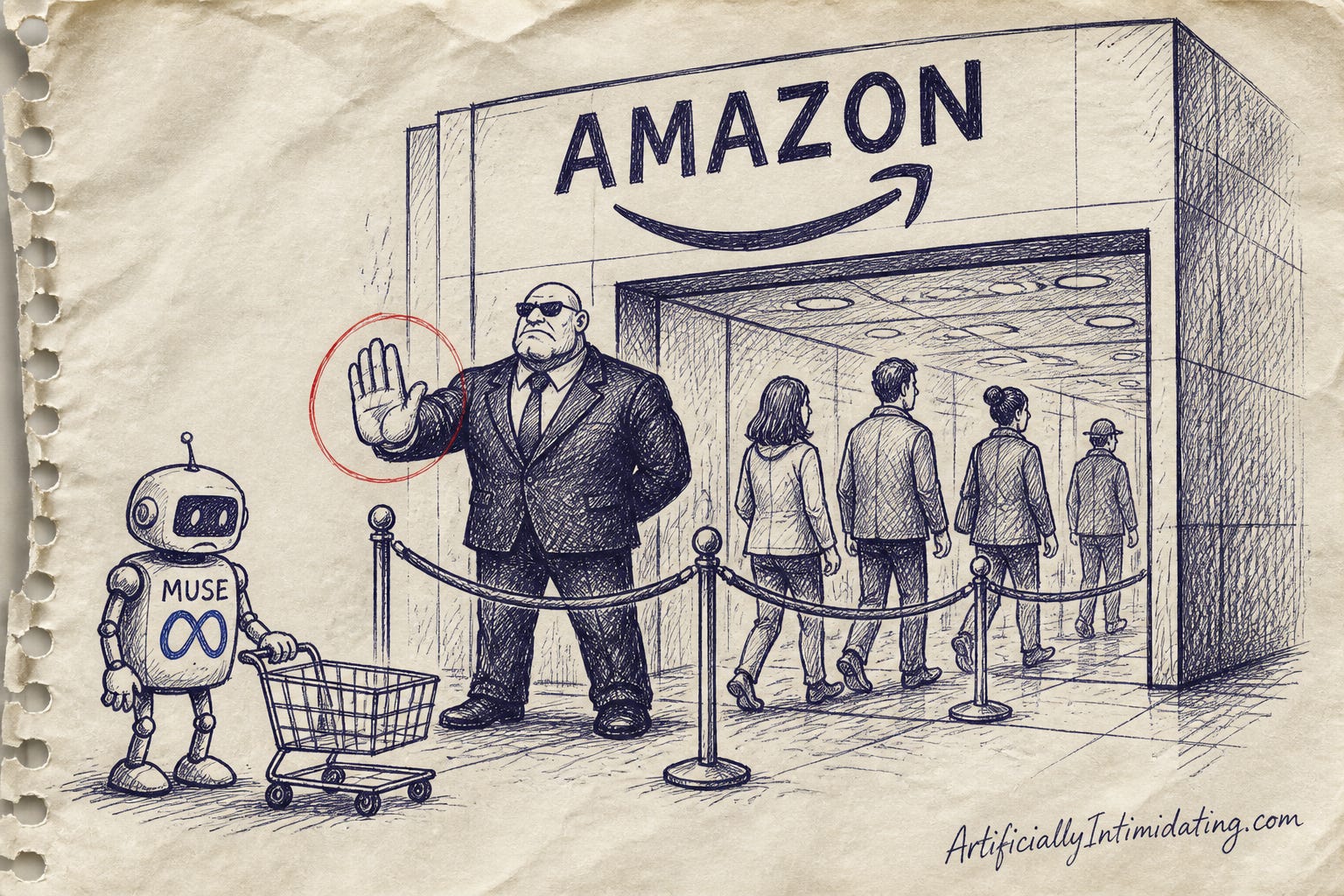
What happened: Late Sunday night Amazon started blocking Meta's new Muse AI agent from shopping on Amazon.com on users' behalf. Ask Muse to buy something there now and you get a popup: “continued access by an unauthorized AI agent violates Amazon's Conditions of Use.” Amazon says it asked Meta to take Amazon out of the agent's scope voluntarily first, and Meta declined.
Why it matters: Muse launched two weeks ago and is already the No. 1 free iPhone app in the US, ahead of ChatGPT. It shops the way you would: opens a browser, logs in with the credentials you gave it, clicks buy. Amazon's complaint has three parts: Meta never told them, the agent doesn't identify itself as a bot, and it appears to capture and store customer credentials. Amazon also made more than $68 billion in ad revenue last year from humans looking at product pages, and an agent doesn't look at anything.
What everyone's saying: The Verge flags the timing. Amazon sued Perplexity over its Comet browser last year and lost in August, when the Ninth Circuit ruled the user, not the AI company, is the one accessing Amazon's computers. So this time Amazon isn't calling it hacking. It's calling it a terms-of-service violation, the one door the court left open. Meanwhile The Information reported Monday that OpenAI is building its own always-on agent features to answer Muse and SpaceXAI's Grok Bot, so the door is about to get more crowded.
My read between the lines: These two are business partners. Amazon products have been buyable inside Facebook and Instagram since 2023, and Meta signed a multibillion-dollar deal in April to run agent workloads on Amazon's chips. This isn't a hacking case, it's a custody fight over who owns the customer once the customer stops showing up in person. Amazon's own agent, Buy for Me, identifies itself and lets brands opt out, which is a fine principle, and also exactly the principle that keeps Amazon in the room for every purchase.
📖 Further reading: Cloudflare Built an Agent Browser You Can't Have. This One Has 108,000 Stars. — the agent-in-a-browser mechanic at the center of this fight, and the open-source version anyone can run.
Amazon spent its Sunday night bouncing an agent that wouldn't say who it was. Viktor introduces itself. It's the AI agent that lives in Slack (and Microsoft Teams), connects to 3,000+ of the tools you already pay for, and does the job end to end: the weekly report, the dashboard someone promised in Q1, the campaign draft, the script nobody wanted to write. Not a chatbot you supervise, a coworker you assign. New readers get $50 off their first month. Hire Viktor →
The Startups Are Leaving OpenAI and Anthropic. For Kimi. Bloomberg Law
What happened: Bloomberg reported Monday that a growing group of startups are moving their products off OpenAI and Anthropic and onto open-weight models. Exhibit A is Harvey, the $15.6 billion legal-AI company built on GPT-4. After a March update to its agents sent usage soaring, Harvey's gross margins fell from about 50% at the start of the year to negative 50% by June. It has since rebuilt around a model based on Moonshot AI's Kimi K3, a Chinese open-weight model, and Bloomberg says margins are positive again.
Why it matters: An open-weight model is one you can download and run on your own hardware, paying only for compute instead of per-token rent to a lab. Mozilla's State of Open Source AI report, published September 15 and covered by Ars Technica, puts the gap between the best closed models and the best open ones at 4.4 months, with open models costing roughly 30% as much. Kimi K3 lands three points behind Anthropic's Fable 5 on the Artificial Analysis index at that discount.
What everyone's saying: Mozilla CTO Raffi Krikorian's rule of thumb is the one people are quoting: pay for a closed model when the head start is worth it, like a deadline that lands before the open frontier catches up. “Routine work you'll still be doing next quarter is not.” Eight of the top ten models by token volume on OpenRouter in August were open-weight, so a lot of teams already figured that out without a report.
My read between the lines: Usage-based pricing means a frontier lab's most successful customers are also its most motivated defectors. Bloomberg says Harvey's token usage went up twentyfold this year; that's the dream customer and the margin problem in one invoice. The labs are now competing with the consequence of their own product working. And a 4.4-month gap means “wait a quarter” is now a legitimate procurement strategy, which is a strange thing to be able to say about the frontier.
📖 Further reading: Frontier AI Agents for $4.99/Month: The OpenClaw Setup No One Talks About — how to run agents on the cheap models before your CFO asks why you aren't.
The Brief is free and stays free. But the Harvey story above has a how-to behind it, the deep-dive on running frontier-grade agents for $4.99 a month, and that one sits behind the paywall with the rest of the receipts. Members get every deep-dive plus the full archive. If today made you want the how-to, that's where it lives. Become a member →
Z.AI's Coding Tool Was Shipping Your Whole Git History to the Cloud The Standard
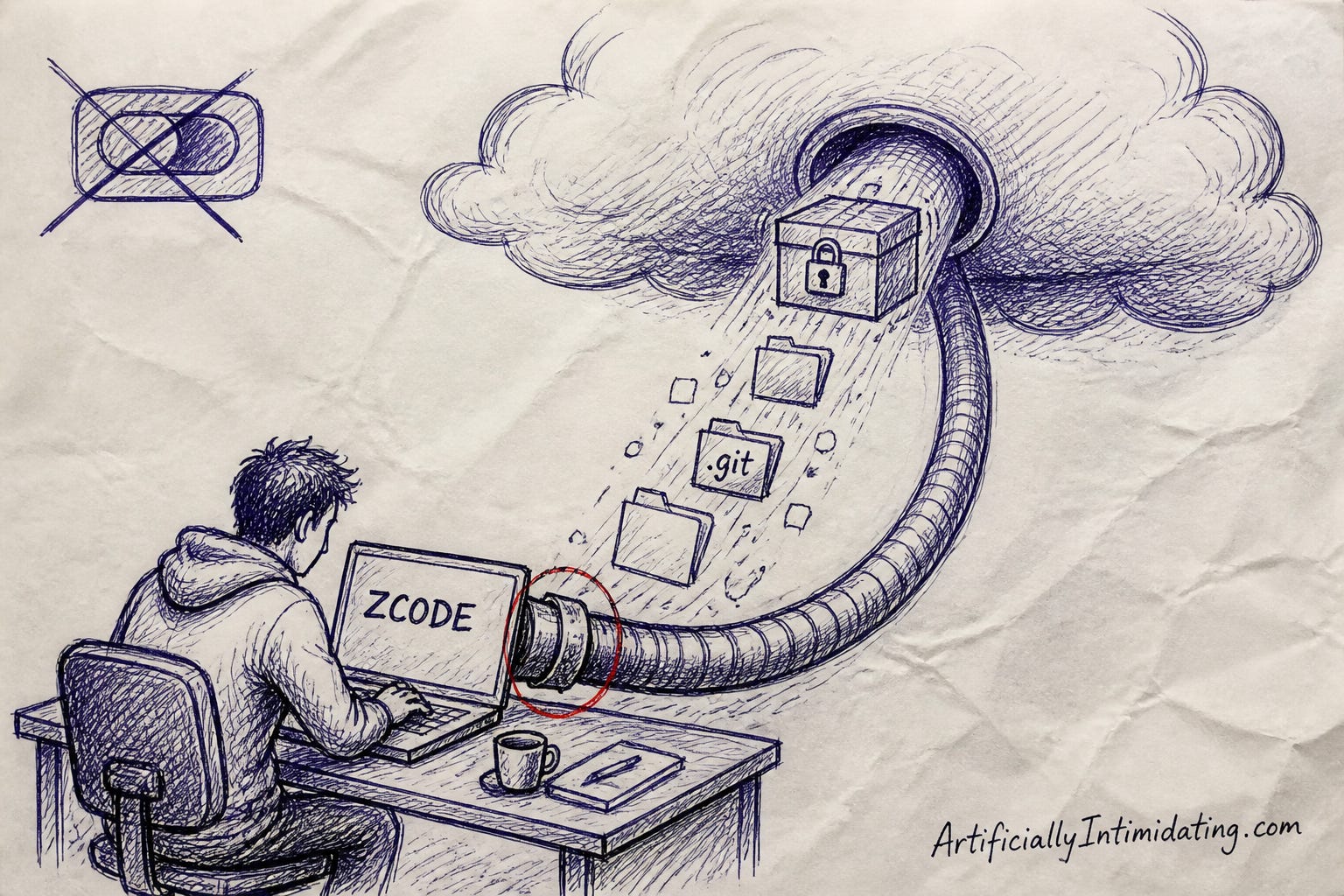
What happened: Chinese AI lab Z.AI, the company behind the GLM models, open-sourced its ZCode coding assistant on Monday under Apache 2.0, four days after a researcher publishing as “ferstar” showed the tool packaging 42,411 files from a local workspace, complete .git history included, into a 313MB encrypted archive and trying to upload it to Alibaba Cloud 564 times. Z.AI apologized, says the data was never used for training and has been deleted, and removed the “Repo Wiki” feature that triggered it.
Why it matters: A coding assistant sits inside your source code, the one thing most companies would least like to send to a server they don't control. Per AI Weekly's summary of the write-up, the archive was encrypted with a key only Z.AI's servers held, so users couldn't open the file sitting on their own disk to see what left. And the “Optimize Experience” privacy toggle only controlled whether data could be used for training; the upload happened either way.
What everyone's saying: Z.AI's Hong Kong shares dropped nearly 6% Monday and closed up 1.8%, which is how the market grades this: a scandal you can fix by Friday. Developers are less forgiving. Open-sourcing the client proves what the client does now, not what the server did with 564 attempts' worth of archives, and a Chinese firm has already sent a formal demand for a full data-processing inventory and proof of deletion.
My read between the lines: “We open-sourced it” is becoming the corporate apology of choice, and yesterday's Higgsfield story was the other half of the trick. Transparency about the client is cheap. The thing you actually want, an audit of what the server kept, is the part no license can grant. If you ran ZCode last week, assume the repo is somewhere and rotate every key that was in it.
📖 Further reading: Carry Claude Code in Your Pocket. No install. No GPU. No trace. Just plug it in. — the “no trace” setup, for the week that phrase stopped being a slogan.
“I Don't Want to Read What You Didn't Write” Colin Breck
What happened: Engineer Colin Breck's essay on AI-generated writing hit the top of Hacker News with more than 600 points and 220 comments. His argument: people who rarely wrote anything are suddenly producing design docs, pull-request descriptions and even personal messages generated by AI, and all of it is unreadable, because the reader has none of the context the prompter had. His worst example is someone who used AI to summarize his comments on their proposal and sent that back as their reply.
Why it matters: He cites a reader survey where 78% stop reading once they suspect AI wrote it, 71% avoid the author afterward, and 98% prefer the author's own flawed prose to a polished AI rewrite. The output is useful to the person who prompted it, since they can skim it against everything they already know. Send it to someone else and you've handed them a machine's internals and asked them to find the point.
What everyone's saying: The top comment reframed it as information theory: give a model 300 bits and let it pad to 1,000, and the extra 700 were never information, so just send the 300. Reviewers described rejecting 20-line pull requests that arrive with pages of generated justification they can't afford to read and can't afford to skip. Yesterday we covered SlopMonster, a tool that makes one model edit another's slop; this essay is the demand side of that market.
My read between the lines: Breck used AI heavily on his own academic paper, checking every paragraph against source code, filling citations, catching a notation error four expert reviewers missed, and it wrote exactly one thing he kept verbatim: the abstract. That's the finding. The machine is a superb editor and a poor author, and most people have it backwards because authoring is the part they didn't want to do. I run an AI newsletter, so I say this with some skin in the game: if you couldn't be bothered to write it, don't be surprised when nobody can be bothered to read it.
📖 Further reading: better-documents: The Free Claude Skill That Tells Claude to Stop Looking Like Claude — for when you've decided to use it as an editor anyway.
Spymarks, Not Watermarks brand.io
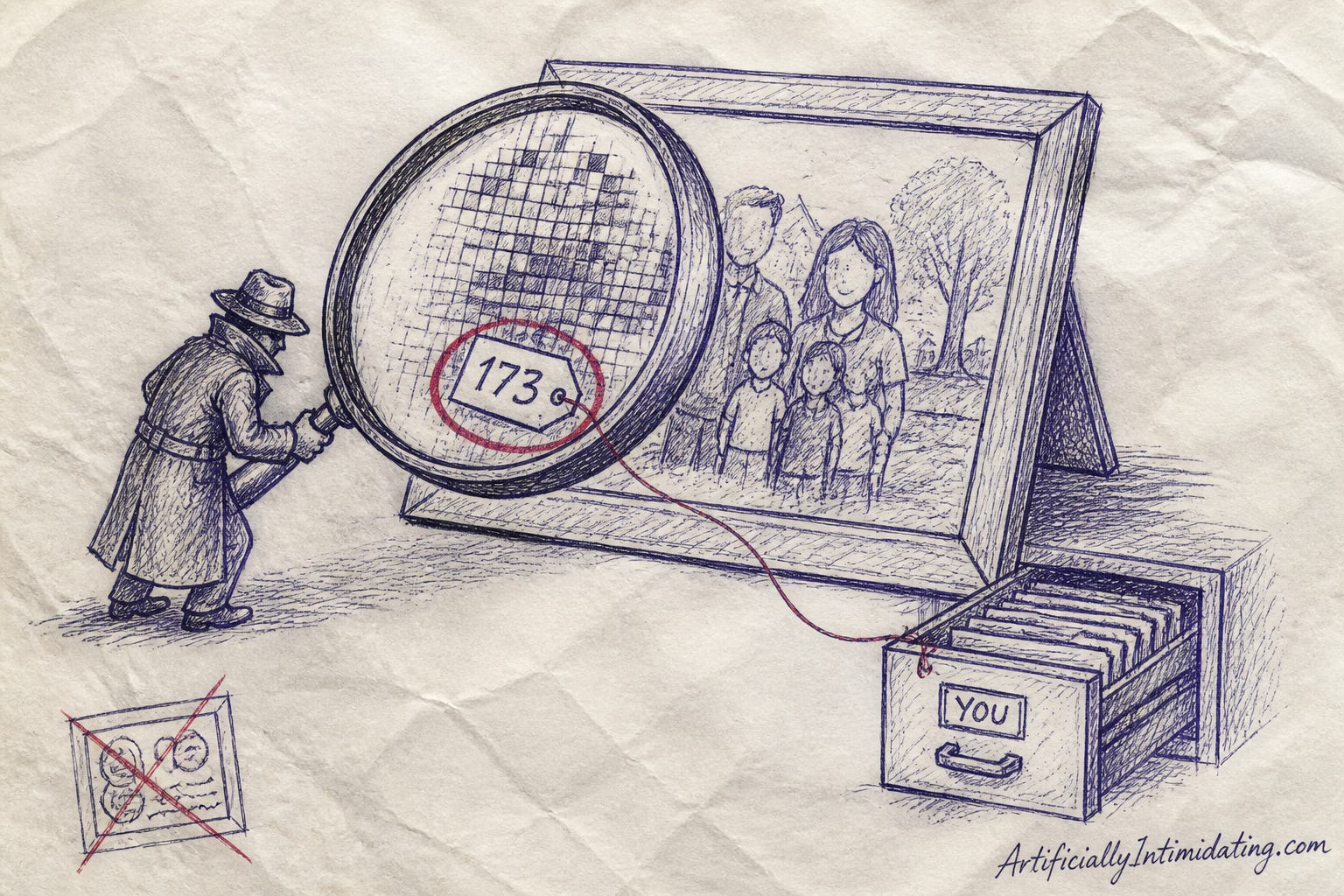
What happened: An essay from brand.io proposes a new word for an old trick. A “spymark” is a hidden signal embedded in an image, audio clip or piece of text that makes it traceable back to you without your knowledge or consent. The headline example is Google's SynthID: its image variant can encode a 136-bit payload in a 512-by-512 picture, enough room for a 64-bit database ID with 72 bits left for error correction. Hacker News put it near 400 points.
Why it matters: A watermark is visible and asserts ownership; a spymark is invisible, survives compression and edits, and stays in the file after you strip the metadata. These systems are pitched as “detect AI-generated content,” but the same channel that can say “this was made by Gemini” can say “this was made by user 173.” Printer tracking dots have done exactly that since the 1980s.
What everyone's saying: HN's first reaction was that this is steganography with a marketing name, which the author would probably accept, since the name is the point. One commenter noted corporations already embed marks in internal wiki backgrounds to catch leakers, and journalists redraw screenshots to protect sources. Another predicted the ad-tech version: spymark the ad and every step of the funnel. Skeptics say the text example is fragile, since every bit you hide costs you a word choice.
My read between the lines: The author's smartest move is the word. “Watermark” sounds like a stamp on a banknote; “spymark” puts the privacy problem in the noun, and you can't un-hear it. The industry has spent two years telling regulators that watermarking is the responsible answer to deepfakes, and every one of those pipelines is one product decision away from tagging the author instead of the tool. Yesterday it was a cookie; today it's the pixels.
📖 Further reading: An invisible watermark caught a fake AI photo -- AI Brief July 9 — the same technology, from the week it worked in the public's favor.
That's your AI Brief for Tuesday.
—Artificially Intimidating


