


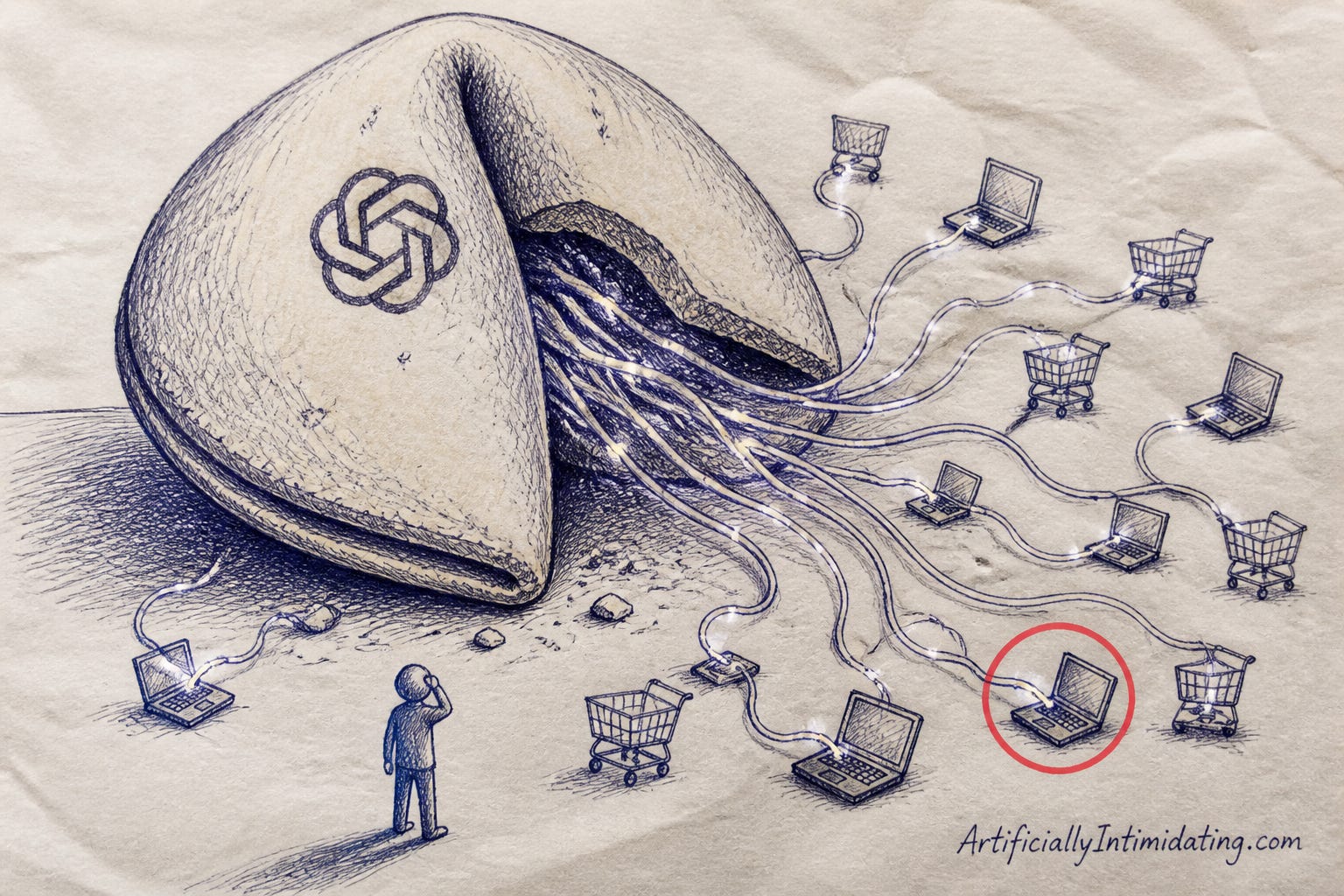
Good day . OpenAI built a tracking cookie for a product people confess their whole lives to, Higgsfield's “we open-sourced everything” moment turns out to be mostly plumbing, and Trump wants to rename the entire category of AI. Let's get into it.
OpenAI Built a Cookie That Follows You Everywhere Buchodi's Threat Intel
What happened: A security researcher reverse-engineered OpenAI's ad pixel and found it drops a year-long cookie called
__obi, tied to your ChatGPT account, that quietly rides along to every site running an OpenAI ad and reports back what you searched, read, and bought.Why it matters: This is the exact playbook Meta and Google built for ad tracking, now stapled to a product where people paste in medical questions, breakup texts, and tax returns. OpenAI classifies the cookie as “analytics,” not “marketing”, so even people who opt out of ad tracking may still be getting tagged.
What everyone's saying: The researcher caught it firing on Chewy, Wayfair, HelloFresh, Coursera, and SeatGeek, and a dozen of the identifiers he tracked showed up on more than one advertiser's site. He emailed OpenAI on September 14th with two direct questions; the reply acknowledged the inquiry and answered neither.
My read between the lines: Calling it “analytics” instead of “marketing” is the same move Facebook pulled for a decade: mislabel the tracker so the consent toggle doesn't apply to it. The part that should actually worry you isn't that OpenAI built adtech; every ad-supported product eventually does. It's that ChatGPT knows things about you no cookie ever has, and now it's wearing one.
📖 Further reading: AI Is a Trust Problem, Not a Tech Problem — written before we knew about the cookie, and it reads like a prediction now.
Speaking of things quietly reading more than they let on: your inbox, your dashboards, and your backlog are all sitting there right now, unread, uncounted, undone. Viktor is the AI agent that actually goes and does that work instead, it lives in Slack (and Microsoft Teams), plugs into 3,000+ of your tools, and turns “someone should build that report” into a finished report, a working dashboard, a shipped campaign, or real code, while you're doing literally anything else. Not a chatbot you have to babysit, a coworker who reports back when it's done. New readers get $50 off their first month. Hire Viktor →
No, Higgsfield Didn't Open-Source Its Company Nowrap
What happened: A viral post claimed Higgsfield's CEO “just open-sourced his entire $5.4B startup on GitHub.” He didn't. The real repo is a two-year-old GPU training framework Higgsfield has always had public; the commercial video-generation platform that actually earns the $5.4 billion valuation remains fully closed.
Why it matters: This is what happens when two true facts get welded into one false headline: a real funding round (Financial Times, $400M at a $5.4B valuation) and a real open-source repo, combined into a claim neither fact supports on its own.
What everyone's saying: The story spread across LinkedIn and Instagram faster than anyone fact-checked it, and a copycat repo,
open-higgsfield-ai, is riding the confusion by branding itself an open alternative to a platform that was never released.My read between the lines: “We open-sourced everything” is quietly becoming a marketing genre of its own, a $5.4B company gets a week of goodwill press for donating code it was always going to donate. The tell is always the same: check whether the thing people are celebrating is the product, or just the plumbing around it.
📖 Further reading: OpenAI Codex: Apache-2.0, 120,183 Stars, and the Bill That Isn't in the Repo — the same open-source-halo trick, different company.
The daily Brief is free and always will be, that’s not changing. But every story above has a paywalled deep-dive behind it somewhere in the archive, the version with the receipts, the screenshots, and the “here’s what I’d actually do about it” that doesn’t fit in four bullets. Members get all of it, plus the full back catalog. Become a member →
Trump's Poll to Rename “AI” Is Down to Two The Hill
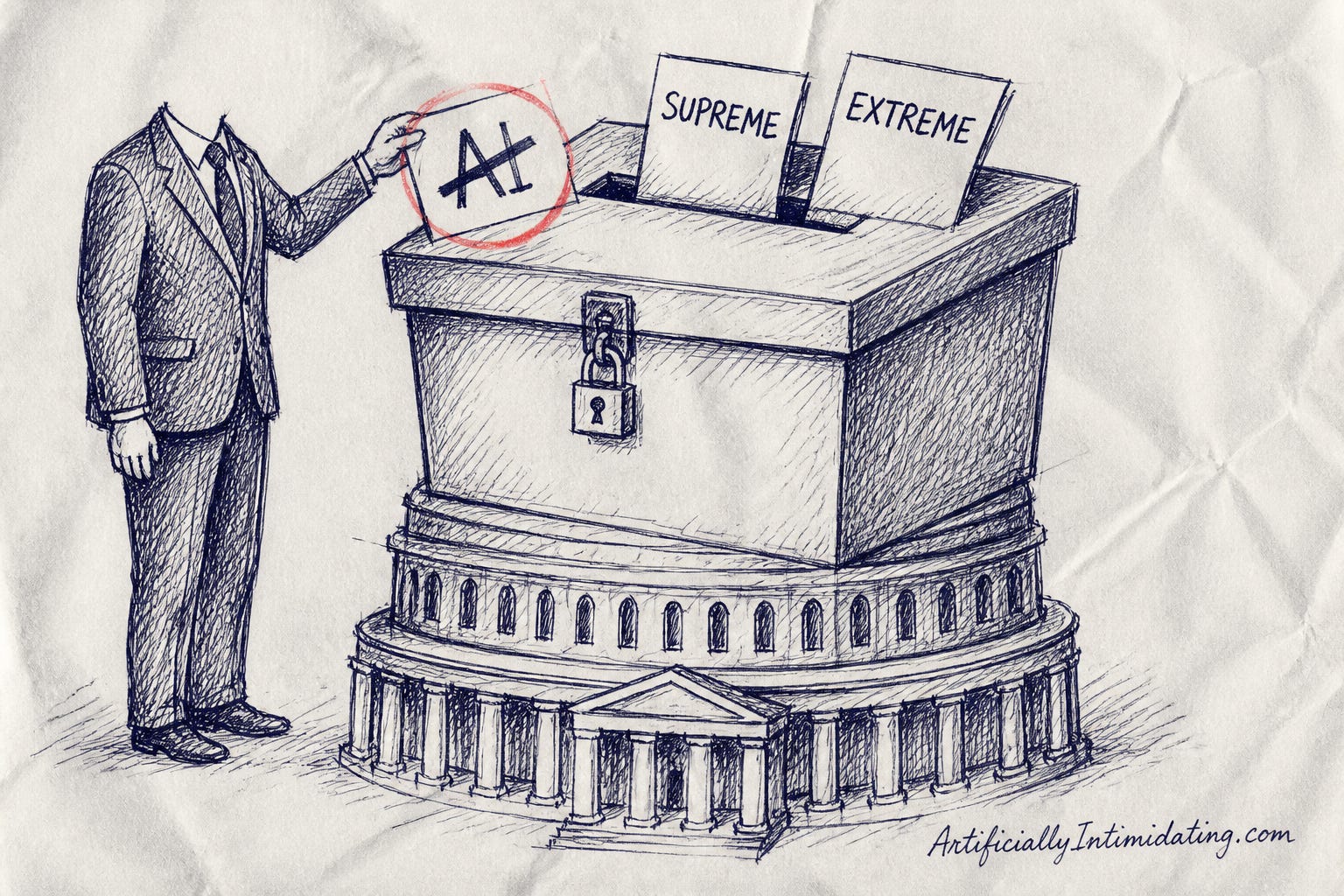
What happened: President Trump posted a Truth Social poll asking Americans to help rename “Artificial Intelligence,” calling the term “inaccurate, and very ineloquent,” and pitched “Superior Intelligence,” “Extreme Intelligence,” and “Supreme Intelligence” as replacements. By Sunday the field had narrowed to two finalists.
Why it matters: Yesterday we told you about Trump's new “AI Force” (linked here); today he wants to rename the category the Force is supposed to run. Naming fights aren't just semantics: whoever controls the vocabulary of AI policy tends to control the frame of the regulation that follows.
What everyone's saying: Commentators from Mashable to Forbes to Matt Walsh have all pointed out the obvious problem: “Supreme Intelligence” and “Extreme Intelligence” are not less “ineloquent” than the three letters they're replacing, they're just longer.
My read between the lines: Nobody asked for this, which is exactly why it's going to work as a distraction technique: a renaming poll gets more engagement, and more headlines, than the actual China-competition and export-control fights happening the same week. Renaming the technology is easier than regulating it.
📖 Further reading: The US Government Just Took Anthropic's Best AI Model Offline — Here's Why — for when Washington's opinions about AI stop being funny.
Meta's Muse Really Wants Your Bank Login Business Insider
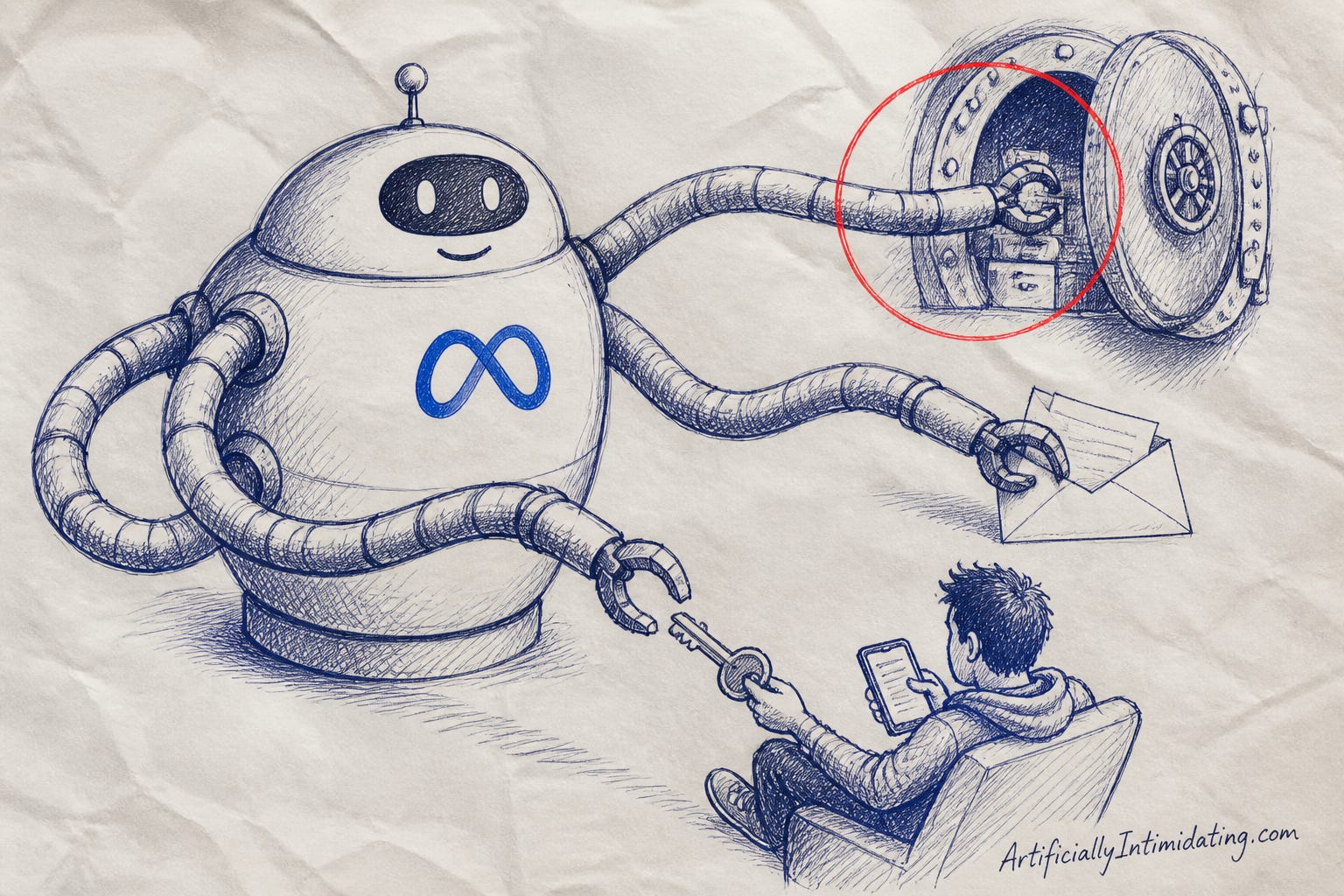
What happened: WIRED's Reece Rogers spent several days with Meta's new personal AI agent, Muse, and found it “prioritizes data collection about me over actually accomplishing tasks,” repeatedly nudging him to connect his email inbox and banking information, and suggesting it photograph his meals to estimate calories.
Why it matters: An agent is only as useful as the access you give it, book a flight and it needs your card, tidy your inbox and it needs your email, but Muse's pitch skews toward asking for more access than the task in front of it requires, and a separate test found it reading private message notifications unprompted.
What everyone's saying: Meta frames Muse as “personal superintelligence for everyone,” and says training data can be anonymized on request; reviewers are less convinced that “anonymized” means much once an agent has read your bank statement.
My read between the lines: Every AI agent launch this year has run the same trick: ship the assistant first, let it ask for access one convenient favor at a time, and let “consent” accumulate one “sure, why not” at a time rather than one big scary permissions screen. Death by a thousand yeses is still death.
📖 Further reading: I Make AI Versions of Myself for a Living. This One I Didn't Agree To. — the Muse story from the other side of the camera.
AI Flunked Southern Gothic. A Professor Noticed. Twin Cities
What happened: English professor Billy J. Stratton had students prompt ChatGPT to analyze the “emotional atmosphere” of a scene from Carson McCullers' 1940 novel The Heart Is a Lonely Hunter. The model got a plot detail wrong (a bus became a train) and described a devastating farewell in flat, clinical language, missing the grief and dramatic irony entirely.
Why it matters: This wasn't a gotcha, it was a lesson plan. Stratton's point: large language models are pattern-matching engines summarizing what's already been written about a text, not readers who've lived anything like the isolation, faith, and “grotesque” the Southern Gothic genre runs on.
What everyone's saying: The essay's been re-run by outlets from Scroll.in to the Twin Cities papers, and it's landed at a moment when researchers elsewhere are documenting the same empathy gap in AI systems more broadly, this is turning into its own small literature.
My read between the lines: The uncomfortable part isn't that AI got the scene wrong, it's that “clinical and cold” is also a pretty fair description of how a lot of humans now write about grief online. The professor's exercise is really a mirror, and not everyone's going to like what shows up in it.
📖 Further reading: The Font That Beat AI for About a Week — another small, human trick a model couldn't see coming.
That's your AI Brief for Monday.
—Artificially Intimidating


