

Good day . Somebody went looking inside the Claude iOS app yesterday and found a tab that is not supposed to exist yet, and it wants your bank login. That is the lead, and it turns out to be the theme: Google has quietly started paying publishers for the words it feeds into AI answers, and the cheques are being described as peanuts. The record labels have finally put a name to the 90,000 AI tracks a month landing on streaming services. Niall Ferguson looks at an industry that agreed on safety in under 48 hours and asks what else has ever moved that fast. And the data says your flawless AI-written resume has stopped working, which is either bad news or the best news you will read today.
Claude Would Like Your Bank Login Now
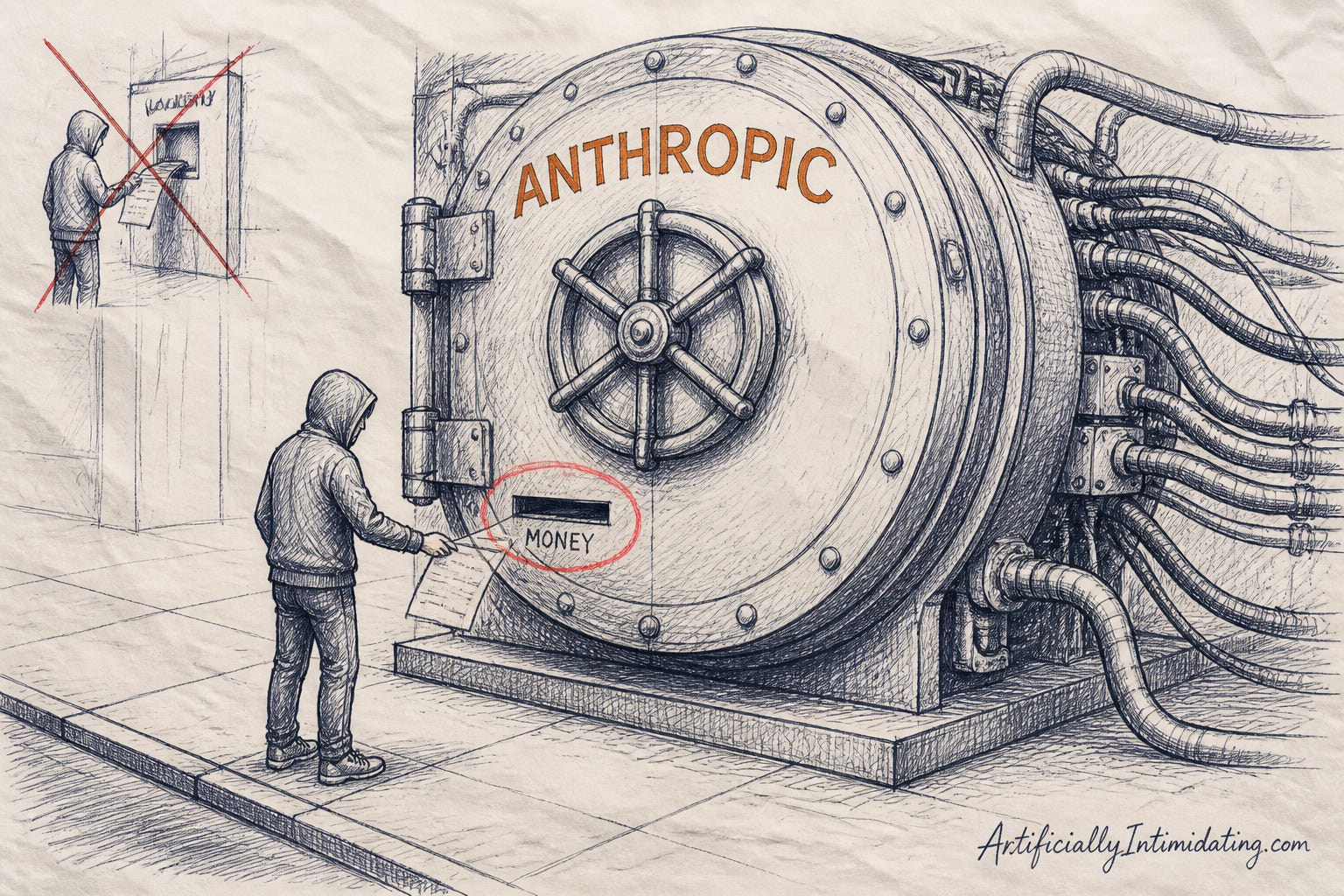
What happened: Unreleased interface components found in the Claude iOS app on Monday show Anthropic building a personal finance feature called Claude Money. TestingCatalog, which spotted it, describes a dedicated “Money” tab with an onboarding screen reading “Understand your money with Claude” and a prompt to link your bank accounts and ask about spending and plans. Nothing has been announced and there is no date. It surfaced the same day Anthropic launched Claude for Financial Advisors, a separate professional product wiring Claude into BlackRock, Charles Schwab and Addepar. No equivalent Money tab exists on the web version, which tells you where Anthropic thinks always-on financial monitoring belongs.
Why it matters: Think about the person in your life who keeps a shoebox of receipts and a spreadsheet they have not opened since March. The reason they never got anywhere with a budgeting app is the setup: exporting statements, tagging transactions, doing it again next month. A live bank connection deletes that step entirely, which is genuinely useful and is also the whole catch. The difference between uploading a statement and linking an account is the difference between showing someone a photo of your house and handing them a key.
What everyone's saying: The consensus is that this is table stakes, not a surprise -- ChatGPT already has a finance product, and Android Authority framed the leak as Anthropic catching up rather than breaking ground. TestingCatalog expects a US-only launch for the same reason. The interesting wrinkle, flagged by Crypto Briefing, is that Anthropic already integrates with Rocket Money and Intuit; Claude Money would pull that data layer in-house instead of renting it. And the privacy questions it raises -- storage, retention, Gramm-Leach-Bliley compliance -- have no published answers yet because there is no published product.
My read between the lines: Two finance products in one day is not two products. The advisor suite is the one with a compliance department attached, and it is the one that makes the consumer tab arguable later: we already handle regulated financial data for wealth managers, so of course we can hold your checking account. Watch the order. The unglamorous enterprise product is how you earn the right to ask a normal person for their bank password, and it shipped first on purpose.
📖 Further reading: Securo: The Self-Hosted YNAB Alternative That Costs $15 a Year to Sync Your Bank -- if you want AI on your spending without a frontier lab holding the connection, this is the version where the bank link stays on your own hardware
Every story below is somebody discovering that the boring middle of their job -- reconciling, verifying, chasing, formatting -- is where all the hours actually went. Viktor is an AI agent that lives in your Slack (or Teams) and connects to 3,000+ tools, and it does the middle: pulls the weekly report, refreshes the dashboard, writes the code, runs the campaign. You do not prompt it and wait. You hand it the task the way you would hand it to a coworker, and it comes back done. Not a chatbot -- a hire. New readers get $50 off their first month. Hire Viktor →
Google Starts Paying Publishers. In Peanuts.
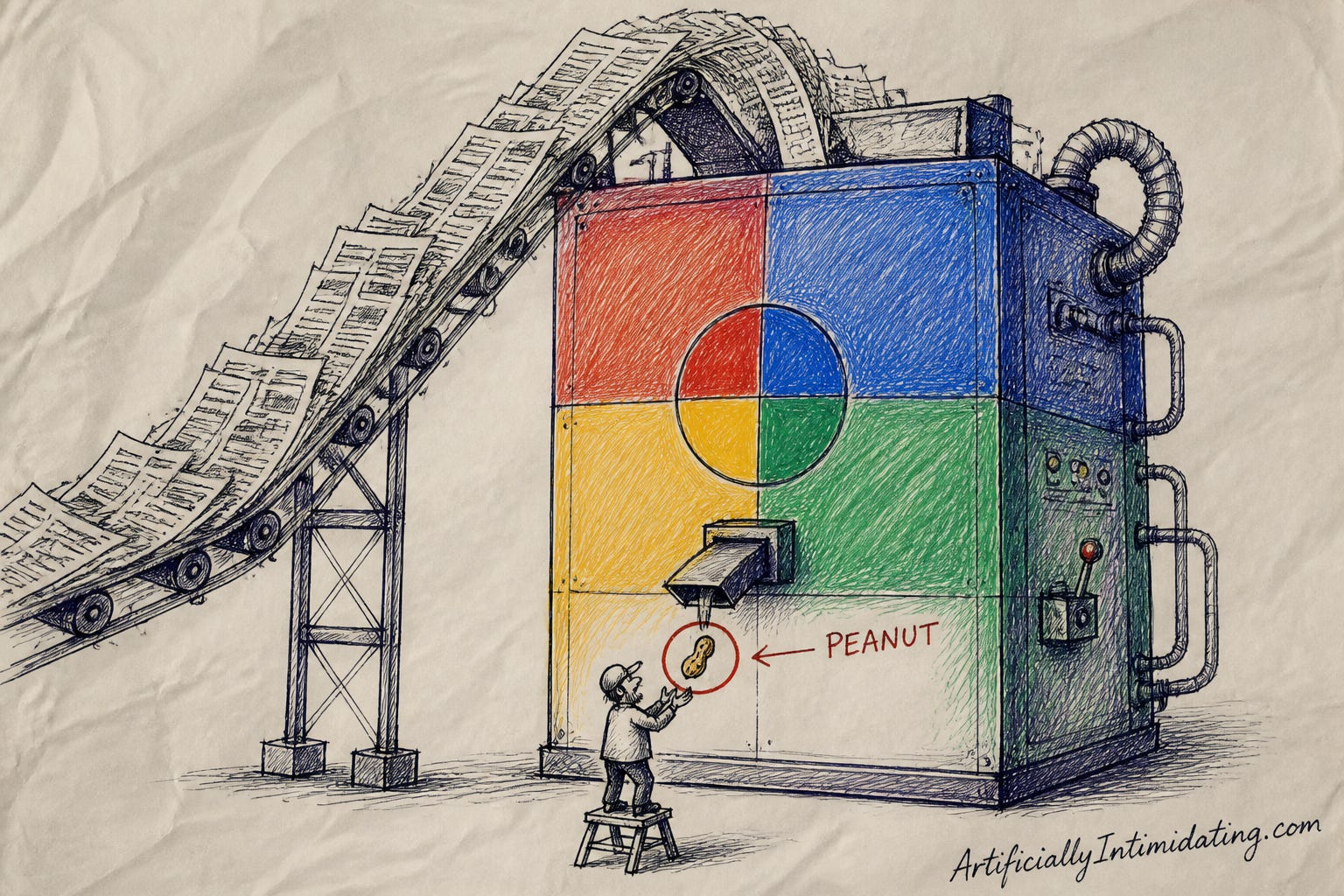
What happened: Google has quietly begun rolling out an “AI contribution pilot” that pays publishers when their content “significantly” contributes to a response generated by Gemini, AI Overviews or AI Mode. Digiday broke it on Monday; Search Engine Land confirmed Google acknowledged the pilot over the weekend. Publishers who opt in get an AI earnings widget inside Google Search Console showing a monthly payout figure and a thin payment history. At least dozens of sites have been approached, it extends well beyond news, and it has landed best with small and mid-sized publishers. You can opt in or out at any time.
Why it matters: If you run anything that lives on Google traffic -- a shop, a service business, a blog, a local listing -- you have watched the clicks go somewhere without being told where. This is the first time Google has attached a number to that. The number is the problem. One executive called the model “quite black box”; another described the offers as “lowball”; a third said the early returns were “peanuts” next to ad revenue. A payment you cannot audit is not really a payment. It is a receipt for something already taken.
What everyone's saying: Two camps, and both are pragmatic. Luke Stillman of Madison and Wall told Digiday publishers have “relatively little leverage” and are better off taking a new revenue line while one is on offer. Against that, David Buttle of the publisher coalition Spur reads it as a hedge rather than a market: Google “doesn't want a market where it has to pay on the basis of actual usage of journalism,” because that would be the thin end of the wedge for search itself. Search Engine Roundtable noted the pilot appeared in Search Console with no announcement at all.
My read between the lines: The design tell is “pay per value” instead of pay per use. Usage is countable and therefore arguable in a courtroom or a legislature; value is whatever Google says it is this month. By paying something, Google converts the question from “should they pay” -- which is a policy fight it could lose -- into “is the rate fair,” which is a negotiation it cannot lose, because it sets the rate and holds the dashboard. That is not a licensing programme. That is precedent management, and it costs about a peanut.
📖 Further reading: Google's Invisible Axe: The Silent Killer of Small Businesses -- Google unlisted a business of mine without notice or appeal, and that same asymmetry is what “pay per value” is built on
The Brief is free and it stays free -- five stories, every weekday, no gate. The membership buys the other half: the deep-dives where I install the thing, run it on my own business and publish what it actually cost, plus the full archive going back. If today made you want the version with receipts, become a member.
Ninety Thousand Fake Songs a Month
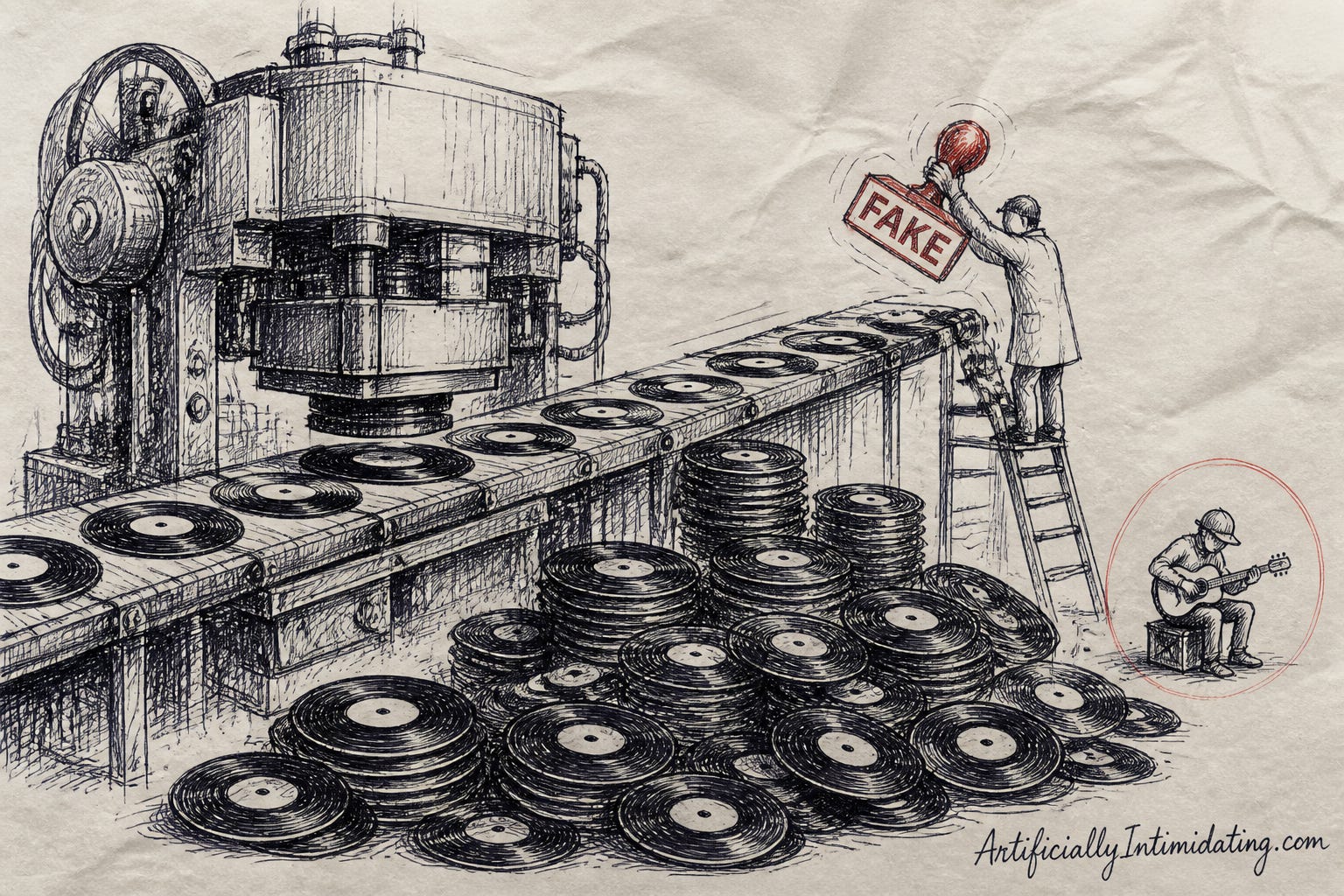
What happened: The IFPI, the global recorded-music trade body, launched a Streaming Integrity Initiative on Monday: more than a dozen labels and distributors, Sony, Universal, Warner and The Orchard among them, signing up to a shared set of anti-fraud commitments. Distributors will be expected to verify rights ownership and customer identity, screen uploads for infringement and fraud, assess AI-related risk, act against repeat offenders and share what they find with each other. The Financial Times reported it first (paywalled; Music Ally and Engadget have it free). Separately, Spotify begins attaching “AI Persona” labels to artist profiles it judges to be AI-generated identities, and Variety reports labelled profiles will be dropped from editorial and algorithmic recommendations by default.
Why it matters: Industry executives put roughly one in ten streams in the fraud column. Deezer says more than half of everything newly uploaded in July was AI-generated -- about 90,000 tracks a month -- and that around 85% of streams of fully AI tracks in 2025 were fraudulent. Streaming royalties come out of one shared pot, so a fake stream is not a victimless rounding error. It is a transfer, and it comes out of the pocket of whoever in your life is still gigging on weekends and uploading to Spotify on Mondays.
What everyone's saying: The framing everywhere is “finally,” with an asterisk. The five commitments are commitments, not rules -- no regulator, no penalty, no audit named. Supporters point at the Michael Smith case as proof the problem is real and prosecutable: the North Carolina man pleaded guilty in March to wire-fraud conspiracy after using AI to generate hundreds of thousands of songs and bots to stream them billions of times, collecting over $8 million. Skeptics point out that catalogue is now growing by about 106,000 uploads a day and that 88% of the 253 million tracks on streaming never cleared Spotify's 1,000-stream payout threshold in the last year.
My read between the lines: Notice the word the industry chose. Not AI-generated. Fraudulent. The initiative polices identity and streaming behaviour, not provenance -- so a human-fronted act using AI in the studio, signed to a major, sails straight through. That is the tell. This was never a fight about whether a machine helped make the record; if the labels had artists doing it, they would find the language to be fine with it. It is a fight about who is drawing from the royalty pool without a contract. Which is a completely legitimate thing to be angry about -- it is just not the thing the press release implies it is.
📖 Further reading: I Make AI Versions of Myself for a Living. This One I Didn't Agree To. -- the identity half of this -- who gets to be a person on a platform, and who decides -- is the exact problem I hit from the other direction

Repo Madness
Every day somebody makes and gives away a tool you are already paying for. This is where we keep them.
Stop paying for Loom. Loom Business is $216 a year. Screen Studio is $108, and only works on a Mac. OpenScreen records your screen, trims the clip, and costs nothing on any computer. One honest catch: its own homepage says it isn't finished yet. What it does well, and where it still breaks
Stop paying for TeamViewer. TeamViewer charges $1,450 a year to let you log into one computer at a time. RustDesk does the same job for free, and you can run it on your own server if you don't want a stranger's in the middle. How it works, and what the free version can see
The tools everyone says are coming for your job are the ones being handed to you for free. All of Repo Madness →
A Historian Checks the Room for Groupthink
What happened: Niall Ferguson used his Free Press column on Sunday to examine the speed of the AI industry's new safety consensus rather than its content. Dario Amodei published his case for slowing capability gains on Friday; Sam Altman and Elon Musk agreed within hours, and OpenAI shelved its IPO citing safety. Ferguson, a historian of financial manias and geopolitical miscalculation, treats near-unanimity arriving in under 48 hours as itself a data point -- the pattern that has preceded a long list of bad collective decisions. His own worry list is wider than the labs': not just an AI-enabled 9/11 but the next financial crisis, the next pandemic, possibly the next great-power war.
Why it matters: We covered the consensus itself in yesterday's lead story. This is the follow-up question, and it is the one that survives contact with ordinary life: when everybody in a room agrees quickly and loudly about a risk, you have learned something about the room, not necessarily about the risk. That heuristic works on a board meeting, a family decision and a national policy alike.
What everyone's saying: Ferguson is the polite version of this argument. The impolite version came from Michael Burry, who posted a four-part rebuttal on his Substack: large language models are not AI and will not become it; a slowdown protects whoever is currently ahead; declaring yourself dangerously powerful is also declaring yourself extremely valuable; and the timing conveniently masks slowing growth right before equity offerings. Against that sits the plain reading, which TechCrunch reported straight: the company that shipped hardest for two years is now volunteering to be evaluated by outsiders, which is a strange move to make purely for marketing.
My read between the lines: Both sceptics are making a motive argument, and motive arguments are unfalsifiable in both directions -- if a lab warns, it is talking its book; if it stays quiet, it is hiding something. The useful test is not why they said it but what it costs them. Outside evaluators with publication rights cost something real. A joint standards body run by the three biggest labs costs nothing and buys a moat. Ferguson is right that sudden unanimity deserves suspicion. Apply the suspicion line by line, not to the whole essay, and it sorts itself quickly.
📖 Further reading: AI Is a Trust Problem, Not a Tech Problem -- the question underneath Ferguson's column is who gets to be believed, which is the argument this post makes end to end
Your Perfect Resume Stopped Working
What happened: Analysis of 75 million job postings by Revelio Labs finds tech employers have cut the number of distinct skills they ask for by about 25% since early 2025, while raising the years of experience they want. Data organization roles now ask for five years, up from two in 2023. Postings that explicitly mention using AI list about 3% fewer skills and about 3% more required experience than comparable postings that do not. Writing from the hiring side, the founder of Relocate.me describes the same shift from the inbox: when every application is flawless and there are hundreds of them, polish stops being a signal at all.
Why it matters: If you have been mass-applying with an AI-tuned resume and hearing nothing, this is why, and it is not personal. The screen you were optimizing for has been devalued by everyone else optimizing for it too. The advice that follows is unusually concrete: fewer applications, more depth, one specific thing you have actually done for long enough to have opinions about. Breadth is now free, so nobody is paying for breadth.
What everyone's saying: The reading most people take is bleak -- entry-level roles are the ones that vanish when employers stop paying for breadth, and the skills dropping fastest out of postings are coding ones, the exact stuff a junior used to be hired to do. The more optimistic counter-read is that the bar moved sideways rather than up: depth in one unglamorous area is a cheaper thing to acquire deliberately than a fashionable stack you have to keep re-learning every eighteen months.
My read between the lines: Everyone is treating this as bad news and it is the most encouraging labour story of the month. For twenty years the game was keyword-matching against a machine, and the winners were people with time to game it. That game just deflated because the machines are free now. What replaces it is a question no model can answer on your behalf: what have you actually done, for long enough to have been wrong about it and learned something. Stop tuning the document. Go be five years deep in something boring.
📖 Further reading: He Got Laid Off and Built a Job Search Agent. It Got Him Hired in 69 Applications. -- the open-source tool from that write-up is the right way to use AI here -- targeting fewer, better applications instead of polishing more of them
That's your AI Brief for Tuesday.
—Artificially Intimidating


