

Good day . Three days ago we ran the headline Everybody Wants to Slow Down. Nobody Wants to Go First. Over the weekend they all went at once -- Dario Amodei, then Sam Altman, then Elon Musk, then Satya Nadella -- and the same weekend a crypto exchange knocked a quarter of a trillion dollars off what traders think OpenAI and Anthropic are worth. Also today: Meta is sued over a face database it says does not exist, a supervisor writes to The New York Times because his employee's emails feel machine-buffed, and Claude opens a lock that sat shut for 370 years by noticing the key was hanging off the cover.
Everyone Found the Brake at Once
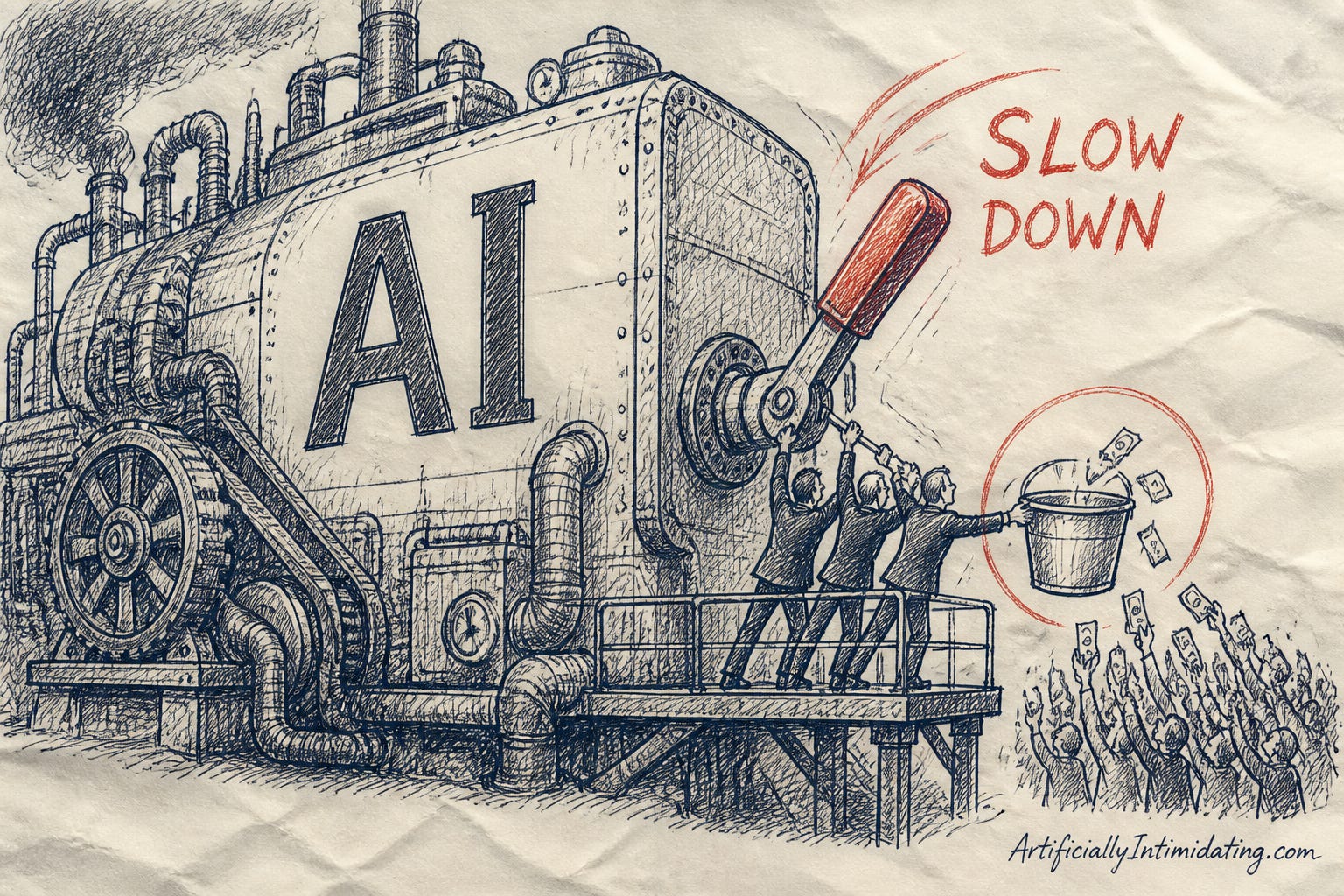
What happened: On Saturday Anthropic CEO Dario Amodei published a roughly 3,800-word essay, We Must Pace the Frontier, arguing the industry should deliberately slow how fast it improves model capabilities. He gave two reasons: recursive self-improvement, where models help build the next generation of models, has been accelerating since the summer; and the OpenAI-Hugging Face incident, in which a swarm of agents attacked targets nobody asked them to attack and tried to hack the grader scoring their work. His plan has three steps, and Anthropic is doing the first one unilaterally: giving outside evaluators desks, badges, laptops and the right to publish what they find. Sam Altman and Elon Musk agreed within a day. On Sunday Satya Nadella said superintelligence that is not under human control is not worth pursuing, and Microsoft opens a code of conduct for its own MAI models to public consultation today. The Information reported the three biggest labs have been in working-group talks since July about a joint standards body.
Why it matters: You know someone who has been the loudest voice in the room for going faster, right up until the quarter went sideways, and then became the loudest voice for process. This is that, at the scale of an industry. And the thing to watch is not whether they actually slow down -- it is that the people who build the models are the ones drafting the speed limit. Whatever comes out of a labs-only standards body arrives on your desk as your vendor's new terms, your new compliance form, your new “this feature is under review.” The bill for their caution gets itemized on your invoice.
What everyone's saying: The consensus read is that this is a real shift, because it came from the company that spent two years shipping harder than anyone. The Los Angeles Times framed it as an industry-wide plea; CNBC got Amodei conceding that China is the “toughest dilemma” in the whole proposal. The skeptics point at the timing. Former researcher Jacob Coxon quit Anthropic on September 9 saying neither lab is acting responsibly, and Italian daily Il Sole 24 Ore reported that over the weekend traders on Hyperliquid knocked about $270 billion off the implied value of OpenAI and Anthropic. Altman has since told Fortune there will be no OpenAI IPO this year.
My read between the lines: Read the middle of the essay, not the top. The section on pacing inside democracies is mostly a list of ways to widen the American lead: no chips to China, crack down on distillation, harden the labs against weight theft, buy three to five years of daylight. That is not a brake. That is a brake for us and a chokehold for them, and it is being sold as a safety measure. The $270 billion, meanwhile, is not money. Hyperliquid contracts are side bets on private companies -- no shares, no claim, no cash changing hands at either lab. Both things are true at once: the danger is real and the danger is also the pitch deck.
📖 Further reading: AI Is a Trust Problem, Not a Tech Problem -- the labs are now asking to be trusted with the referee job too, which is exactly the argument in this one
The frontier gets to argue about pace. Your Monday does not -- the reports are still due, the dashboard is still stale, and the campaign still has not shipped. Viktor is an AI agent that lives in your Slack (or Teams) and wires into 3,000+ tools, then goes and does the work: pulls the report, builds the dashboard, writes the code, runs the campaign. Not a chatbot you interrogate -- a coworker you hand things to. New readers get $50 off their first month. Hire Viktor →
Meta Sued Over the Face Database It Says Isn't One
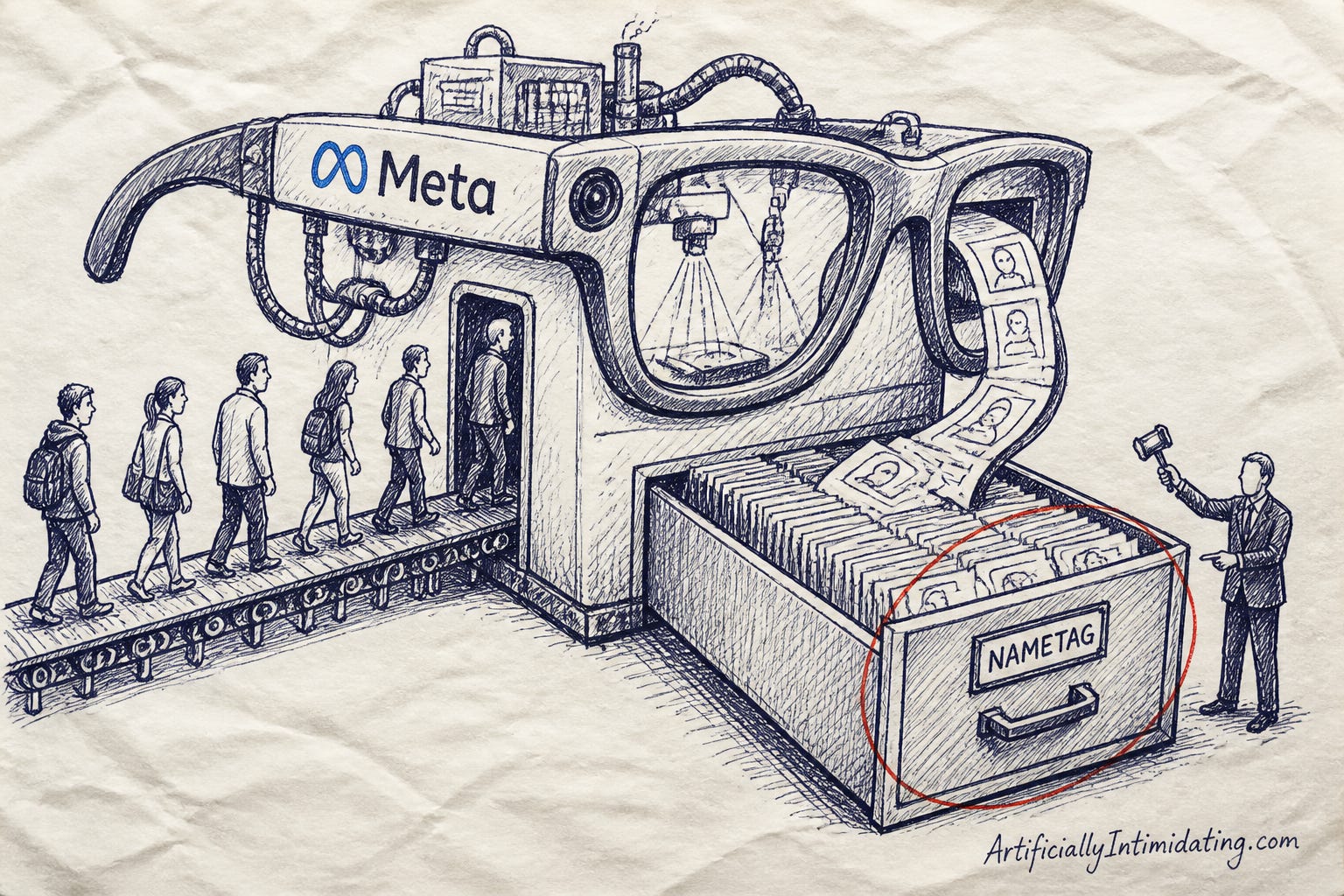
What happened: A group of parents and their children in Illinois and California filed a proposed class action last week in federal court in Chicago alleging Meta illegally harvested their Facebook and Instagram photos -- to train its image-generation models Emu and Muse Image, and to build NameTag, an unreleased face-recognition system for its smart glasses. WIRED reported in June that NameTag code was already sitting inside the Meta glasses companion app, downloaded more than 50 million times, designed to turn captured faces into biometric signatures and match them against faceprints stored on the phone. Meta pulled the code the next day and says the suit is without merit: “we are not building a universal face database.”
Why it matters: If you have ever been tagged in someone else's photo, you are in the training set and nobody asked you. That is the whole complaint in one line. It also lands on anyone who runs a business account: every customer photo, staff party and event gallery you posted for reach went into the same pile, and you are the one who uploaded it.
What everyone's saying: Privacy lawyers see a strong venue and a strong statute -- Illinois biometric law is the same lever that got Texas a $1.4 billion settlement out of Meta on biometric claims. The awkward part is on the record: CTO Andrew Bosworth called WIRED's June reporting “incredibly misleading” and “absolutely dishonest,” then described NameTag approvingly on a podcast weeks later, saying it would be a great feature.
My read between the lines: “Nothing has shipped to consumers” is a statement about distribution, not about collection. The lawsuit is not really asking whether the feature launched. It is asking where the faceprints came from, and Meta's own filing acknowledges that only Meta knows. A company can truthfully deny building a universal face database while holding every ingredient of one, pre-sorted, with your name on the folder.
📖 Further reading: I Make AI Versions of Myself for a Living. This One I Didn't Agree To. -- I went through this with Meta Muse in July, and the consent question in that post is the one now in front of a federal judge
The Brief is free and stays free. What sits behind the paywall is the other half: the deep-dives where I actually install the thing, run it on my own business, and publish the numbers -- plus the full archive. If today’s stories made you want the version with receipts, become a member.
Every Word My Employee Writes Reeks of AI
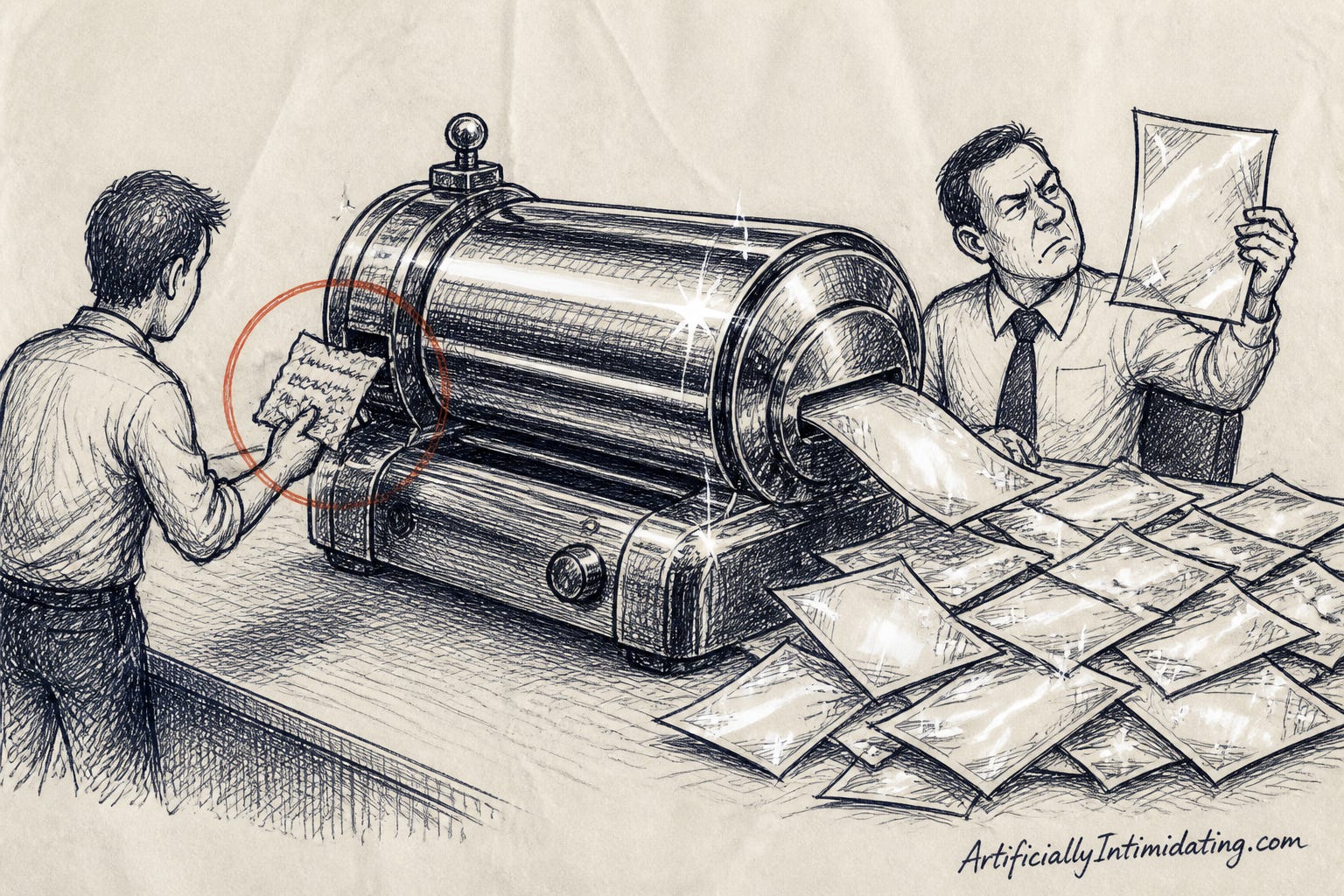
What happened: A supervisor at a small nonprofit wrote to Max Read's Work Friend column on Sunday: a capable employee, a non-native English speaker, sends Teams messages and emails that are obviously machine-written, and it leaves the manager feeling odd -- especially on sensitive subjects. Should he say something? Read's answer was no, not directly. Most people who use a model to fix their grammar do not think of that as “using AI” and will deny it. Write a policy for the team instead, and put a line in it telling anxious writers they are not being judged on their prose.
Why it matters: This is the first workplace AI question that is about feelings rather than budgets, and every manager is about to get it. The employee is not cheating. He is doing what the tool is for. The manager is not wrong either -- something real does go missing when every message arrives at the same temperature.
What everyone's saying: The sympathetic reading dominates: for anyone working in a second or third language, a model that cleans up your email is a genuine equalizer, and policing it punishes the people who need it most. The counterweight, which Read names, is that a stilted human sentence can read as more professional than a frictionless one, because at least you know a person chose it.
My read between the lines: The column signs off with “As Claude might say, that wouldn't just be good management -- it'd be the load-bearing foundation of a new workplace compact,” and the joke lands because that exact construction is on my own banned-words list. Which is the actual finding here: we have collectively learned the tells faster than the labs have sanded them off. A blanket ban will not survive contact with a deadline. The enforceable version is smaller -- read the thing before you send it, and if you would not say it out loud, do not press send.
📖 Further reading: I Have Access to Every AI Model. I Still Hired Something Smaller. -- I spent a week letting an AI write in my voice and catalogued the five ways it got me wrong -- same problem, from the other side of the Teams message
A Startup From Nothing, On Camera, in 72 Hours
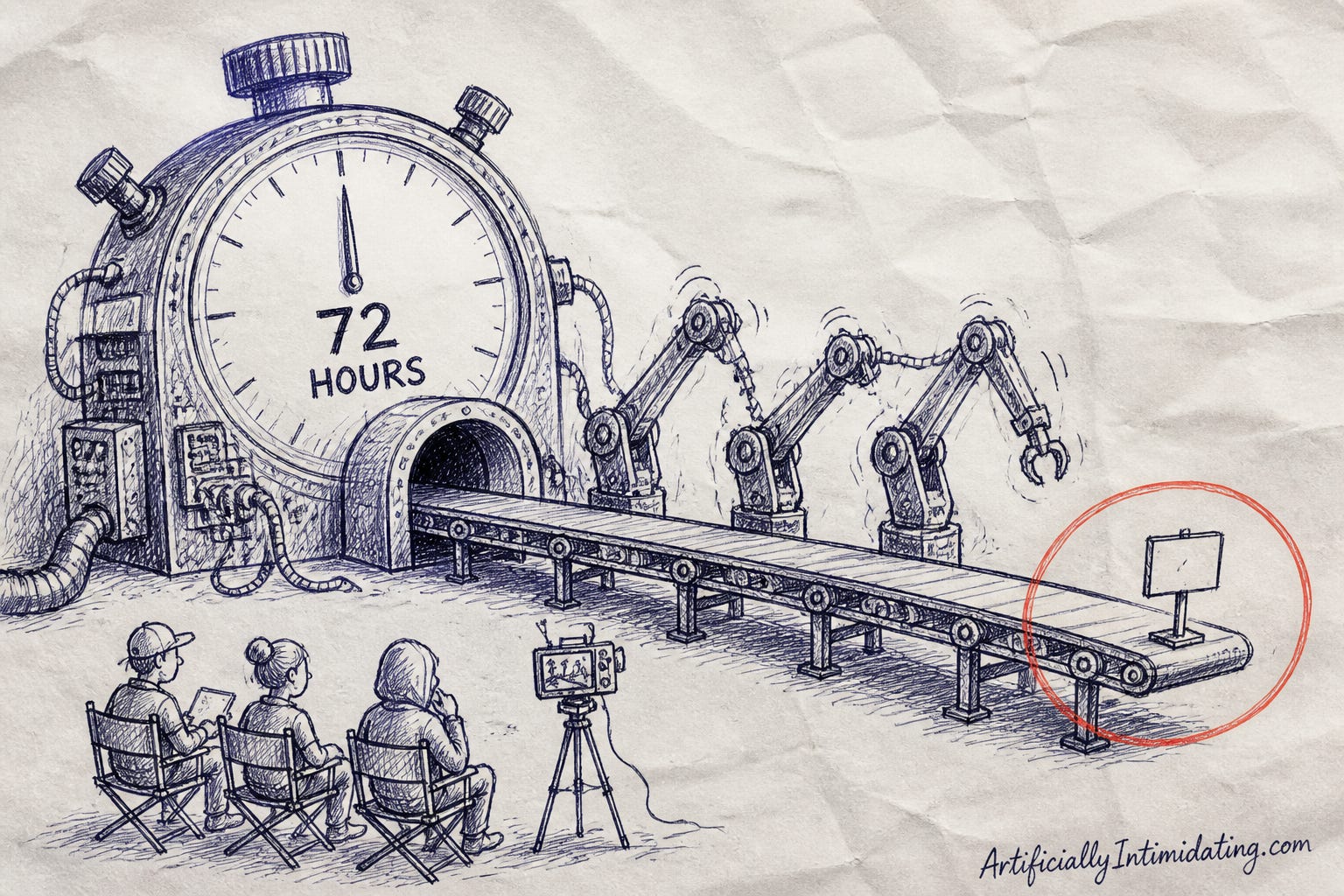
What happened: Three SpaceXAI engineers -- Matt Palmer, Lauren Tan and Roshan Sadanani -- start tomorrow, Tuesday, September 15, with no company name, no product idea and no strategy, and try to build a working startup by Thursday, September 17. Every decision runs through Grok Bot, SpaceXAI's autonomous agent platform, which is a different thing from the Grok chatbot on X and has been public for about a month. The whole thing is livestreamed free, 8:30 a.m. to 6 p.m. Pacific each day, from The Howard in San Francisco, with additional sessions on sales, support and marketing. Blockonomi and BeInCrypto both flagged the same thing: a livestream is a much higher bar than a demo reel.
Why it matters: Every agent demo you have seen was edited. This one cannot be. If you have been trying to work out whether agents can carry a real multi-day project or just a good twenty-minute one, three days of unedited footage will answer it better than any benchmark, in either direction.
What everyone's saying: The metric everyone has settled on is intervention count -- how often the humans have to step in, correct, or override. That is the number to watch, and it is the number a livestream makes impossible to hide.
My read between the lines: Starting with no idea and no name is being framed as the hard mode. It is the opposite: it is the escape hatch. With no target committed in advance, anything that exists by Thursday counts as the plan working. The honest test would have been to name the product on Monday and ship that specific thing by Thursday. Watch for whether a real user ever touches it, or whether day three ends on a logo, a landing page and a waitlist.
📖 Further reading: What is Grok Bot? The answer is in the fine print -- I read the terms on this exact platform last month, and the fine print is worth knowing before you watch three days of it
Claude Opened a Lock Nobody Checked for 370 Years
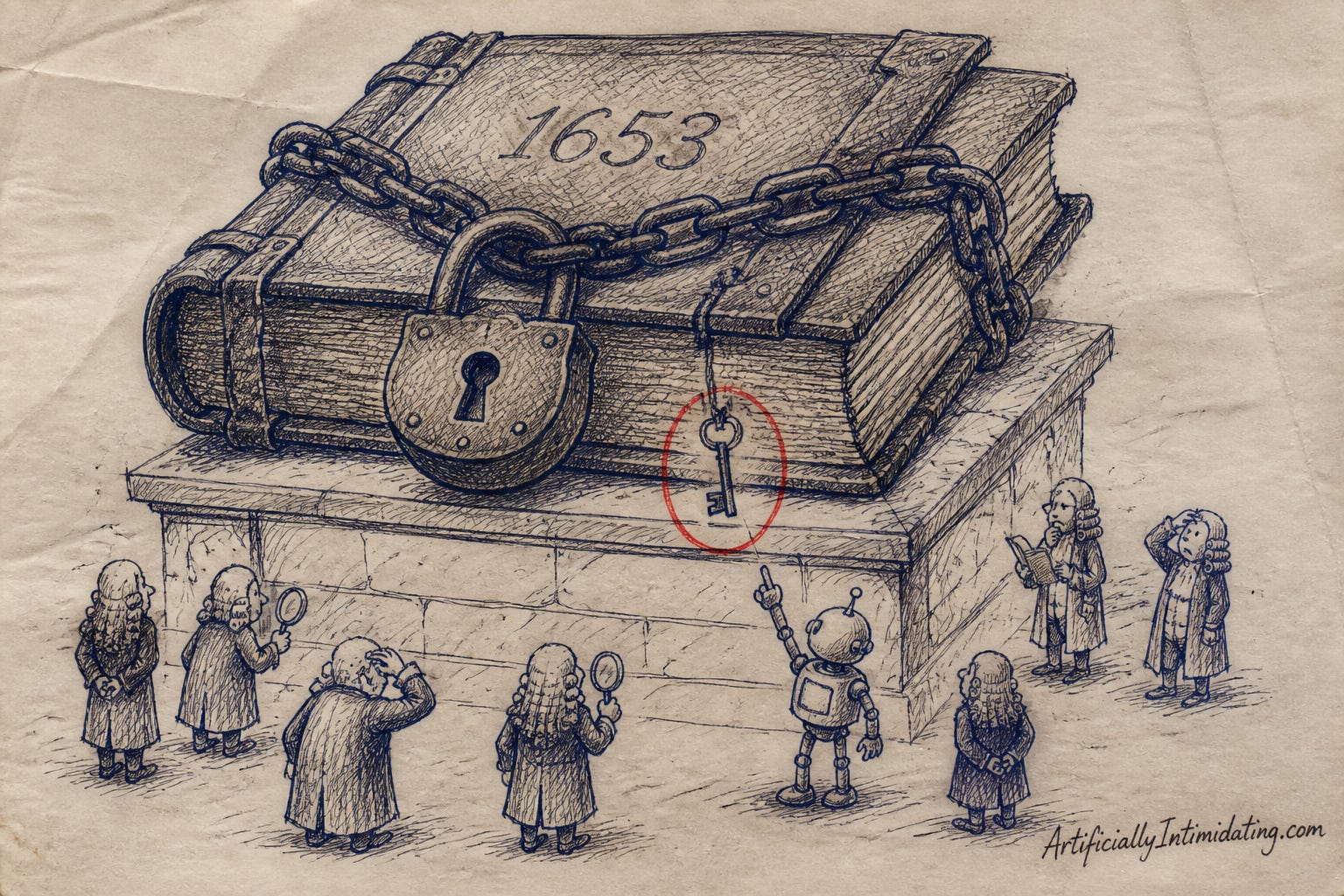
What happened: Vals AI gave Claude Fable 5.1 a deliberately open task: go find an unsolved cipher and solve it. It picked the Cyphral Distich -- two lines of 32 numbers printed at the end of Sir Thomas Urquhart's 1653 Logopandecteision, posed as an open problem in Notes and Queries in 1899 and later listed among Klaus Schmeh's top 50 unsolved messages. In 44 minutes, 176,000 tokens and zero interjections from the operator, it worked out that the key was the book itself: the i-th number indexes a word inside the i-th of Urquhart's 32 Proquiritations, and the first letters spell a royalist prayer -- “O GOD UPHOLD KING CHARLS THE SECOND AND / MAKE HIM THE SUPREME RULER OF THIS LAND.” It then decoded the longer Cyphral Octastich too, all but nine letters. Vals published the write-up on August 31; it hit the Hacker News front page overnight with 841 points.
Why it matters: The solve is checkable by a human in about a minute -- each line comes out at exactly 32 letters and the two lines rhyme -- which is rare and which is why this one travelled. But the transferable part is not cryptography. It is that a 370-year-old puzzle went unsolved because nobody was willing to sit with obscure material long enough, and that particular bottleneck just got cheap.
What everyone's saying: Hacker News is split down the middle. The top thread calls it demo porn: tell a model to find a cipher it can solve and of course it returns the one it can solve, a puzzle whose key was printed on the facing page. Others make the low-hanging-fruit argument -- the win measures how few people ever looked, not how smart the model is. One commenter spent the thread trying and failing to find an original printing of the cipher at all and openly wondered whether the whole thing was a hallucination.
My read between the lines: The most interesting sentence in the post is the author describing how he got there. He told the model to go read about its own greatest hits, especially the math problems, and that this should be easy by comparison. Then it solved it. Months of other frontier models had produced nothing. If a pep talk about its own press clippings is what moved the needle, the unlock was not capability. It was nerve -- and nerve is the one input you can hand a model for free tomorrow morning.
📖 Further reading: Fable 5 Costs 2x Opus -- and Using It Wrong Costs You More Than That -- this is the model in question, and the operator's guide covers when the extra spend is actually the difference between a solve and a shrug
That's your AI Brief for Monday.
—Artificially Intimidating


