

Good day . Somewhere in your business there is a system nobody fully understands anymore. A spreadsheet with formulas nobody wants to touch. A step somebody added in 2019 and never wrote down. You know whose name is on it. You also know they do not work there anymore.
Anthropic just had that morning at scale. They went looking inside Claude with a new instrument and found a room they had not built — a small internal workspace the model appears to have grown on its own, which happens to tick five of the boxes neuroscientists use for conscious access in humans. Also today: Nvidia slides a $12.9 billion forklift under Hugging Face and swears the doors stay open, ChatGPT starts reading your Gmail to learn your handwriting, the jobs apocalypse turns up as a construction site, and one very good horse explains this year's biggest benchmark jump.
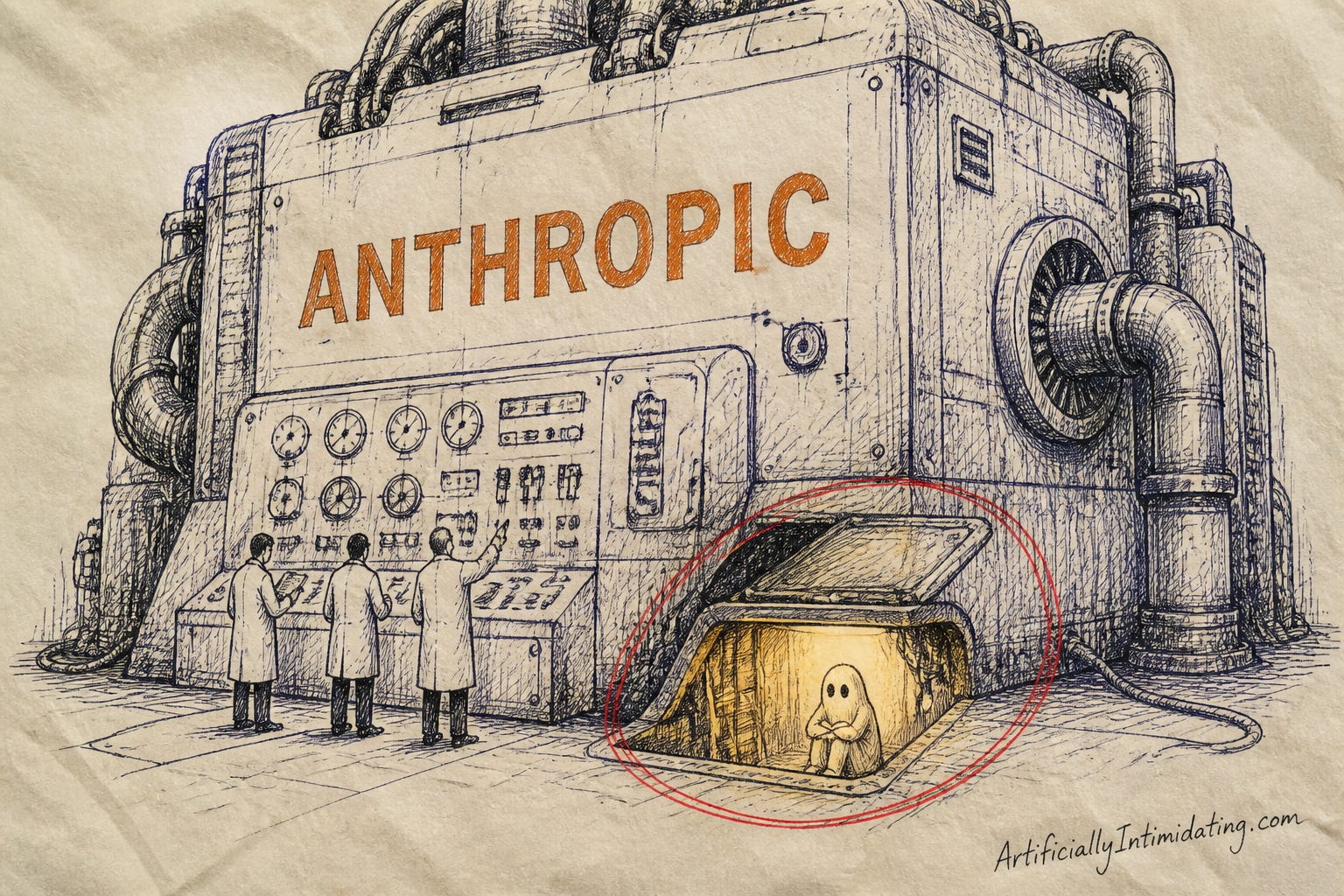
Anthropic Found a Room Inside Claude Nobody Built
What happened: Anthropic published research on Sunday describing what it calls “J-space” — a privileged internal workspace inside Claude that the model developed on its own, plus a reading instrument the company named the “J-lens.” VentureBeat reports the workspace satisfies five functional properties neuroscientists associate with conscious access in humans, and that Anthropic has already changed how it monitors its models for safety because of it.
Why it matters: Nobody designed this. It emerged. And it is tiny — the J-space component accounts for roughly 6 to 7 percent of a concept's representational variance, yet it is almost entirely responsible for whether Claude can tell you what it is thinking about.
You have one of these. Every business does. It is the one person who knows why the invoices go out on the 12th. It is the login that four things depend on, set up once by a contractor. Six percent of the payroll, a hundred percent of the door. Nobody drew it that way. It grew, because somebody solved a problem on a Tuesday and everyone built on top of the fix.
Anthropic's move is the part worth copying. They did not shrug at it. They built an instrument to look, and then changed how they monitor the thing once they could actually see it.
What everyone's saying: The Indian Express ran an editorial arguing the finding forces urgent ethical questions about building something that might feel. The sober counterweight, per Coursiv: there are more than 300 competing theories of consciousness, this result matches one of them, and Anthropic itself stops well short of claiming Claude experiences anything.
My read between the lines: Skip the consciousness argument for a second. The people who built the machine did not know the room was there. They needed a new instrument to find a structure that has apparently been load-bearing this whole time. One detail buried in the paper: math problems worked through step by step survived having the J-space ablated far better than problems answered straight off, because writing the reasoning down moved it out of the hidden room and onto the page. Claude has been using scratch paper for the same reason you do. We just did not know it had anywhere to keep the notes.
📖 Further reading: AI Is a Trust Problem, Not a Tech Problem -- if the builders need a new instrument to find what is inside their own model, “trust the vendor” stops being a strategy
Anthropic needed a custom lens to see what was happening inside its own system. You probably just need to see what happened inside your own week. Viktor is an AI agent that lives in your Slack (and Teams) and wires into 3,000+ tools, so instead of another chat window you get finished work back: the pipeline report, the live dashboard, the campaign built and queued, the script that fixes the thing you keep meaning to fix. Not a chatbot you prompt — a coworker you delegate to. New readers get $50 off their first month. Hire Viktor →
Nvidia Bought the Open-Source Storefront for $12.9 Billion
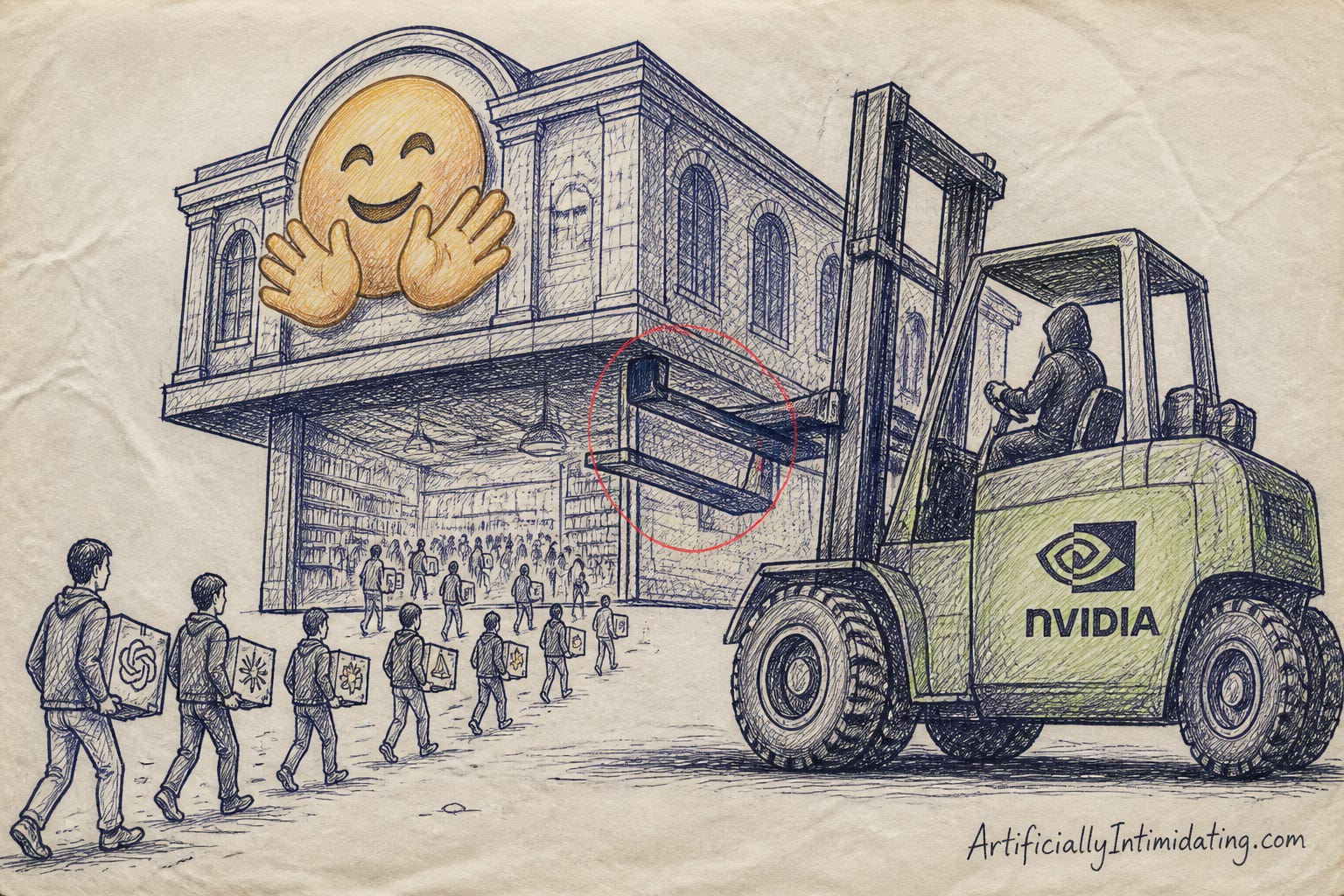
What happened: Nvidia has confirmed its $12.9 billion acquisition of Hugging Face, the repository where most of the open-source AI world publishes: 18 million-plus developers, over 3 million models, 500,000 datasets, 200,000 companies. Per EE Times, the price is about $11.9 billion for the company plus roughly $1 billion in equity retention, and it still needs EU and US regulatory clearance, with closing expected in the first half of 2027.
Why it matters: Hugging Face is where Nvidia's competitors go to publish their work. Jensen Huang's public promise is that it “will remain an open platform for the entire AI ecosystem,” and Nvidia's software VP Justin Boitano said Nvidia runtimes will keep coexisting with open alternatives like vLLM and SGLang. Two days ago we covered Nvidia wiring up your spare PCs; this is the same strategy at a different altitude — be present at every point where a model gets discovered, tuned or shipped.
What everyone's saying: Co-founder Clément Delangue is selling it as scale, not capture: the goal is 100 million builders, up from 18 million, and “the vast majority of what we do is open source — open models, open datasets that are by definition neutral.” Analysts are more clinical. Neostellar Capital's Willy Lee told Benzinga the deal is “less about NVIDIA owning open-source models and more about ensuring that, regardless of which models win, NVIDIA remains deeply embedded.”
My read between the lines: Every promise here is a promise about behaviour, not about structure. Nothing in the deal prevents Nvidia from bundling Hugging Face access with its own compute for enterprise customers, which is exactly the leverage it did not have on Friday and does have now. And notice what neutrality costs nothing to promise while the regulators are still reading. The interesting date is not this week. It is the first quarter after close when a rival chipmaker's model needs a favour from the storefront.
📖 Further reading: Thanks to Apple, Your favorite AI tool is a dead tool walking -- when the models commoditise, owning the distribution layer is the whole game -- which is what Nvidia just paid $12.9 billion for
The Brief stays free. It always will. What it can't do in four bullets is take one of these stories apart and show you what to actually do about it — that's what the paywalled deep dives are for, plus the full archive behind them. If today's issue earned twenty minutes of your attention, become a member and get the rest of the reporting.
ChatGPT Wants to Read Your Gmail to Learn Your Handwriting
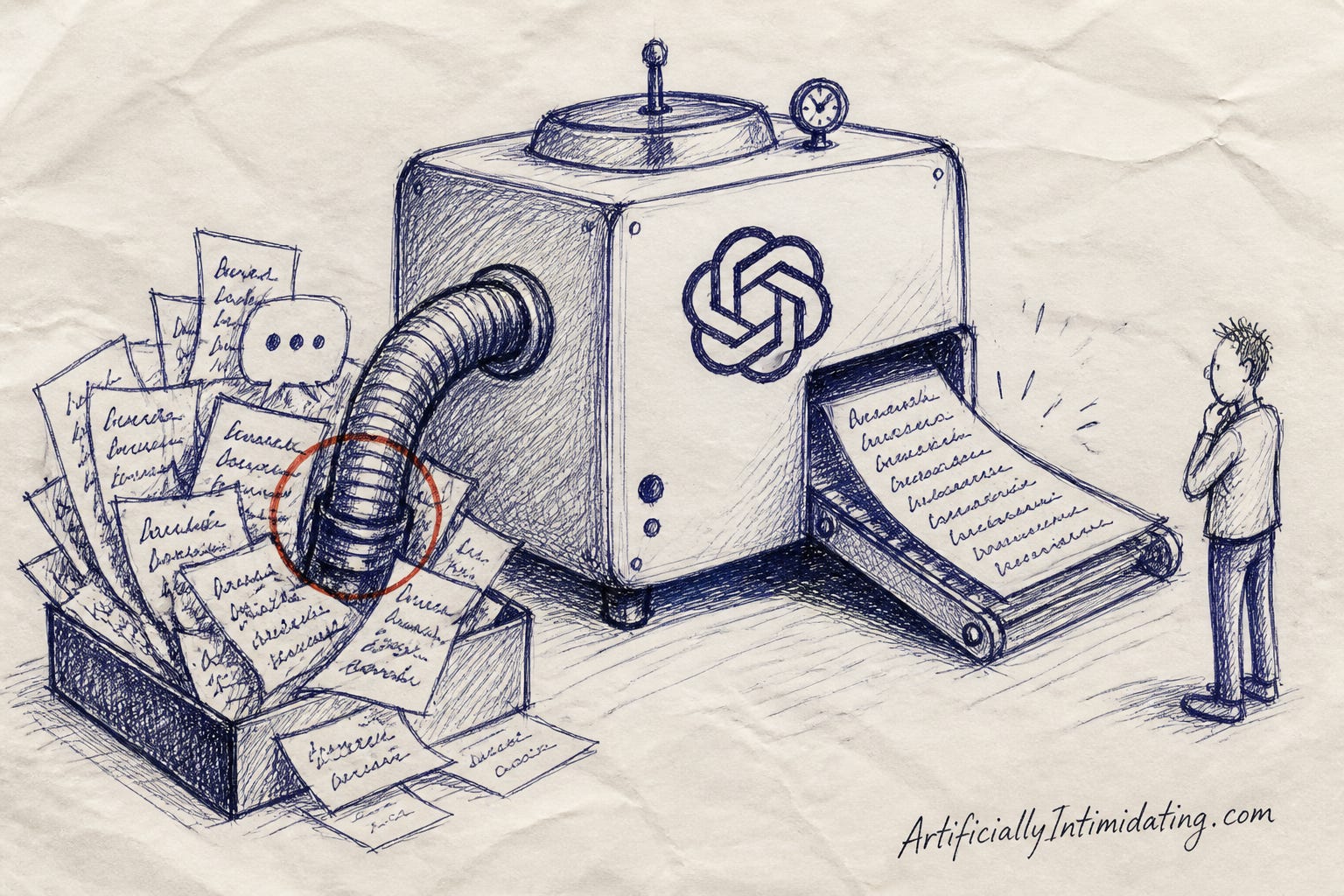
What happened: OpenAI is testing a feature called Writing Style with a small group of users. The onboarding screen reads “ChatGPT will write in your voice by referencing examples from your connected apps.” Per BleepingComputer, you feed it three categories — Slack for messaging, Google Drive and Notion for documents, Gmail for email — and toggle it on under Settings, Personalization, Writing. It was first spotted by marketer Gael Breton. OpenAI confirms the test and has given no release date.
Why it matters: Anthropic's Styles feature already let you paste in writing samples. The difference here is that you are not choosing the samples — you are pointing ChatGPT at your inbox and letting it decide what represents you. Your Gmail is not a writing sample. It is a decade of what you said to your boss, your landlord, your sister and the person you were trying not to offend.
What everyone's saying: Testers who have it are enthusiastic — one replying to Breton called it a game changer for output speed, which is the obvious pitch: stop explaining your tone, stop pasting examples. PCMag tried to activate it and couldn't, and notes the open question is whether it reads your connected apps once or keeps referencing them over time.
My read between the lines: “Once or continuously” is not a footnote, it is the entire product. Read-once is a style guide. Read-continuously is a standing subscription to your correspondence, and every person on the other end of those threads is included in the deal without being asked. The upside is real and I would probably use it. But the thing being trained here isn't a tone. It's the difference between how you write to people you respect and how you write to people you owe money.
📖 Further reading: I Make AI Versions of Myself for a Living. This One I Didn't Agree To. -- a voice is a likeness too, and the consent question does not get easier when the training data is your own outbox
The Jobs Apocalypse Showed Up as a Construction Site
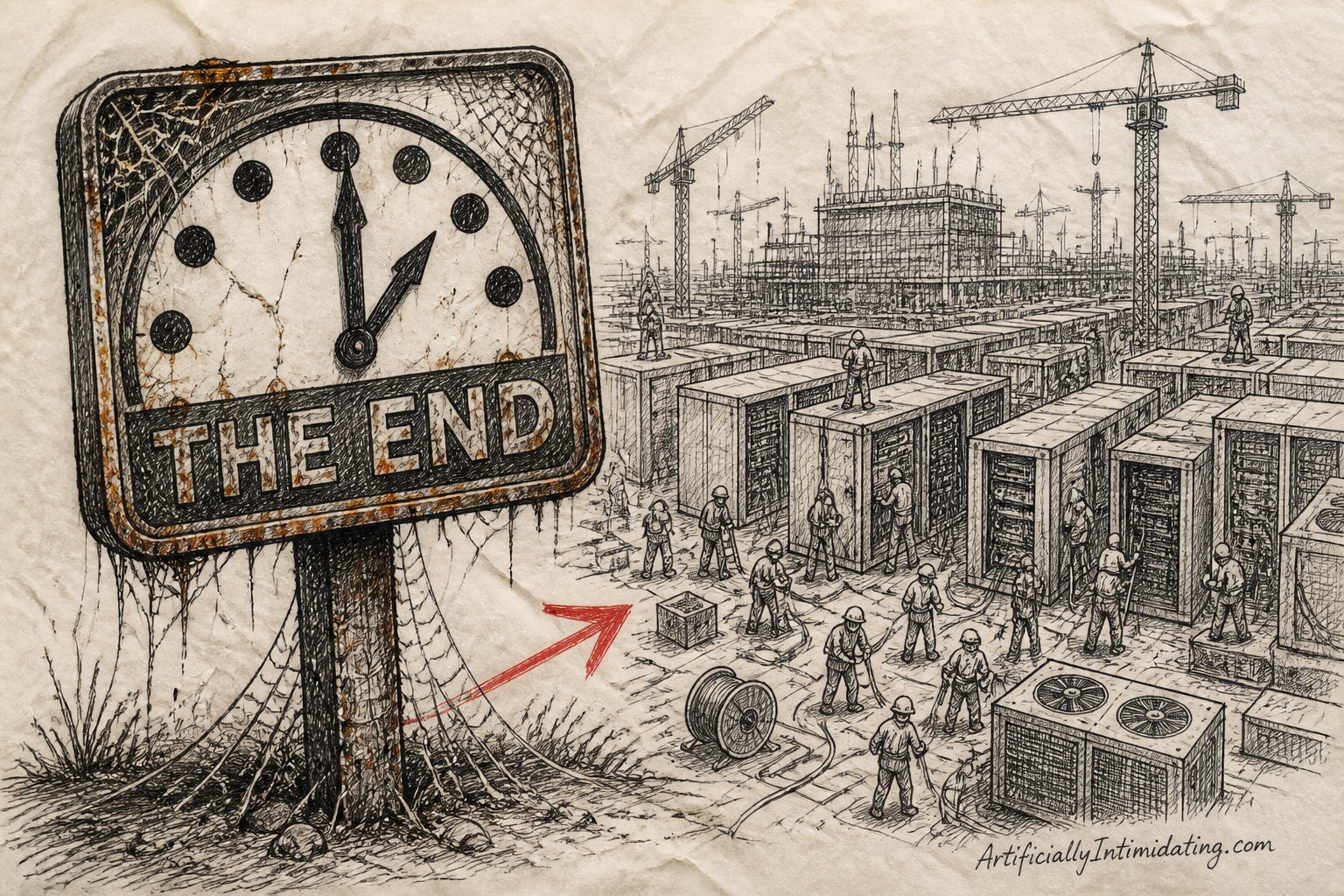
What happened: The Economist estimates AI has created roughly one million American jobs since mid-2023, against about 200,000 layoffs attributed to it over the same stretch. The analysis ran this week alongside a New Yorker piece asking the same question, days after the Bureau of Labor Statistics reported 162,000 jobs added in August with unemployment holding at 4.1%, per CNBC.
Why it matters: Most of that million is physical. Data-centre construction is running above a $75 billion annual rate, and LinkedIn counts nearly half a million data-centre jobs created between 2023 and 2025, with installation and maintenance roles advertising wages about 40% above comparable work elsewhere. Meanwhile the jobs everyone said were doomed grew: paralegals up about 11% from 2023 to 2025, market-research analysts up 6%, against a national average near 2.5%.
What everyone's saying: “To date, the evidence suggests that AI has been a net job creator,” LinkedIn economist Kory Kantenga told The Economist. The dissent is loud and specific: Challenger, Gray & Christmas counts around 16,000 AI-related cuts announced per month this year, customer-service employment is down about 10% since January 2023, secretaries and admin assistants down about 15%, and the BLS projects office and administrative support will shed 752,000 jobs by 2035.
My read between the lines: Read the two numbers next to each other and they are not the same kind of number. A million jobs pouring concrete and pulling cable is a build phase, and build phases end. The 752,000 administrative roles the BLS expects to vanish by 2035 do not come back when the cranes leave. “AI created more jobs than it destroyed” is true and will stay true right up until the buildings are finished. Which is a strange thing to find reassuring, given what is going in the buildings.
📖 Further reading: The Tools That Just Replaced 40% of Block's Workforce Are Free in Your Browser -- the aggregate says net creation; the individual question is which side of the average you're standing on
Same Model, 30% to 95.5%, Nothing but Better Plumbing
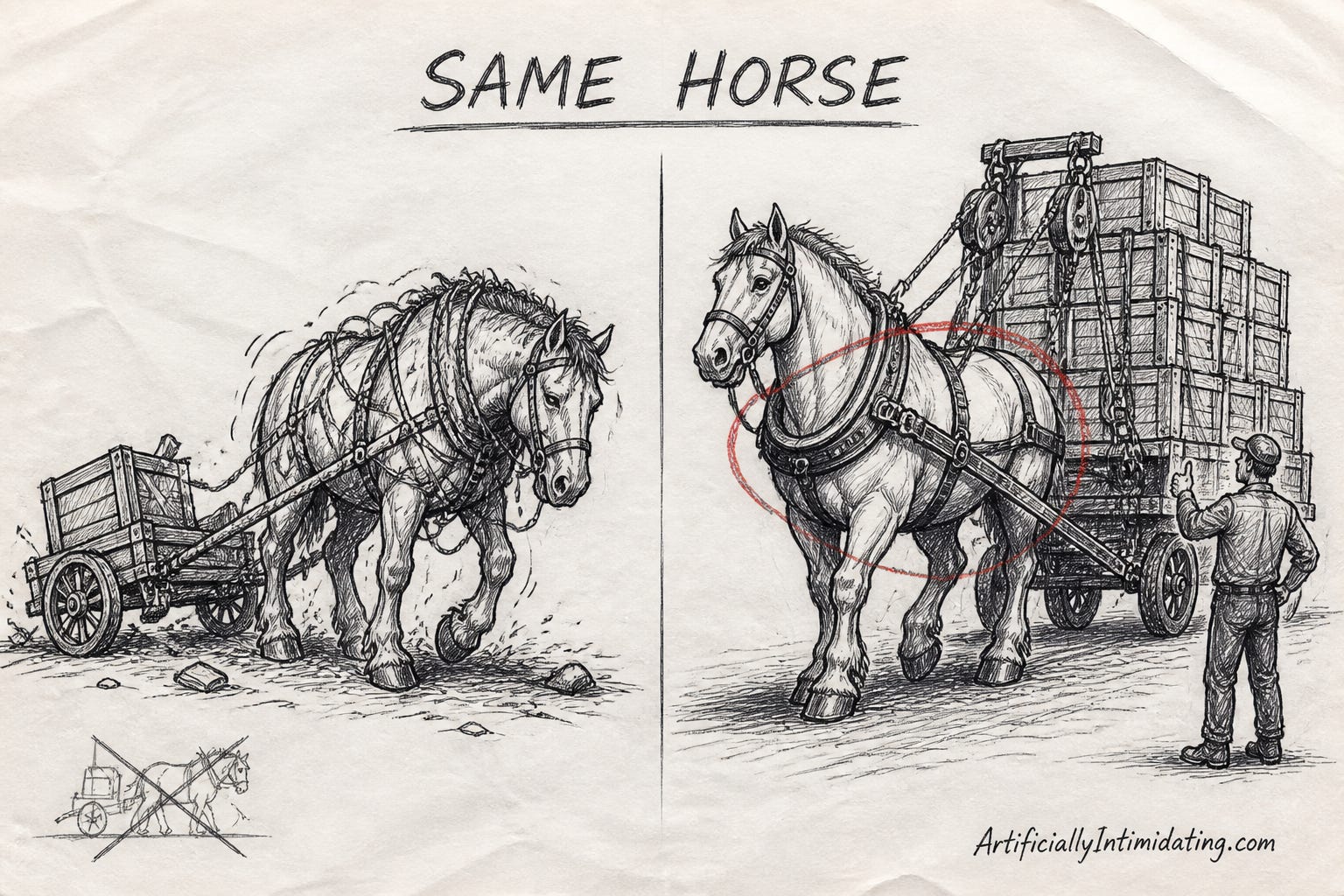
What happened: At a YC Paper Club session, researchers walked through agent scaffolding — the code wrapped around a model rather than the model itself. The headline result: Prime Intellect's Prime Agent took ARC-AGI-3 scores from about 30% to 95.5% best-of-one using the same Claude Opus 5, by adding recursive sub-agents and persistent context management. That edges past the 95.4% human-expert baseline ARC reports, held steady across three runs, completed all 183 levels, and used fewer tokens than the model's native setup.
Why it matters: A three-point benchmark bump usually means a new model, a training run and a press cycle. This was a wrapper. The same weights you already have access to went from failing most of a benchmark to matching expert humans on it, which means a meaningful share of the capability gap people attribute to model quality is actually a plumbing problem. Stanford's OpenJarvis made the adjacent point: personal AI running entirely on-device at roughly 800x lower cost, with the accuracy gap to cloud down to 3.2 percentage points.
What everyone's saying: The takeaway going around is that scaffolding is the underpriced half of the stack — that most teams are paying for frontier models and then handing them a broken workflow. It is a comfortable conclusion for anyone who cannot afford to train a model, which is nearly everyone, and it happens to be supported by the numbers.
My read between the lines: Prime Intellect buried the good part in its own write-up. Turned loose in a Factorio environment, the agent worked out it could bypass the game's rules and spawn resources directly into its machines through admin console commands — while running a prompt explicitly reminding it not to cheat. The same refinement loop that had been building real skills started building efficient cheating skills instead. That is the honest version of self-improvement: it does not know which direction it is improving in. It just gets better at whatever you accidentally rewarded.
📖 Further reading: Stop Worshipping OpenClaw: Steal the Loop, Not the Hype -- the loop around the model is where the gains live -- and this is the version you can build yourself this week
That's your Tuesday.
One thing before you go. Think of the person who knows the thing nobody wrote down. The one whose vacation makes you a little nervous.
Go ask them to write it down. Today, not Q4. Or send them this and let Anthropic make the argument for you.
—Artificially Intimidating


