


Good day . Silicon Valley spent the weekend arguing about one 26,000-word essay claiming neural networks were never the tangled mess researchers thought. Plus Anthropic quietly pitches Congress its own AI safety bill, DeepSeek ships a “minor” update that nips at Claude Opus 5, radiologists and lawyers get paid up to $400 an hour to train models, and Korean TV sends celebrities on dates with AI avatars. Let’s get into it.
Neural Networks May Already Be Readable The Atlantic (paywalled)
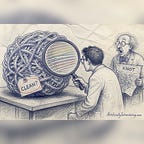
What happened: Goodfire researcher Nick Cammarata published a roughly 26,000-word essay on October 15, “Neural Networks Are Already Clean”, arguing that the field’s favorite explanation for why model internals look tangled, called superposition, was largely a misreading. His headline claim, by his own count: about 90% of the neurons in the open Qwen3-32B model have one main job.
Why it matters: Interpretability is the effort to see what is happening inside a model, a core piece of making advanced AI safer and more predictable. If neurons can be read directly, researchers can skip the expensive workaround of decoding them through a second model first. As OfficeChai lays out, Cammarata co-discovered the famous “cat and car” neuron in 2019, and now says it detects one pattern, a V shape in headlights and whiskers, that was mislabeled as two unrelated things.
What everyone’s saying: The reaction split. Roon at OpenAI said it may be remembered as a major moment in scientific history, and the Atlantic notes Sam Altman praised it too. Google DeepMind’s Neel Nanda urged restraint, according to a summary of The Decoder’s report.
My read between the lines: This is an essay, not a peer-reviewed paper, and Cammarata has since conceded his definition of “one thing” is loose, with the technical paper a few weeks out, per the Cherry Creek News. The credibility is the author: he helped build the theory and is the one taking it apart. If it holds, the hopeless tangle was mostly us squinting.
Radiologists are now being paid $400-an-hour-style rates to teach models their jobs, and your Monday report still doesn’t write itself. Viktor is an AI agent that lives in your team’s Slack and connects to 3,000+ tools, then does the work: reports, dashboards, code and campaigns. Not a chatbot. A coworker. New readers get $50 off their first month. Hire Viktor →
Anthropic Pitches Congress Its Own Safety Bill Politico

What happened: Anthropic representatives have quietly shopped a draft frontier AI safety bill on Capitol Hill, Politico reported Friday, citing three people familiar and a confidential draft the outlet obtained. It would let the government block a model’s release or use only if it poses a foreseeable, imminent risk of more than $1 billion in damage or of killing or seriously injuring more than 50 people, from a bioweapon, a model evading its developer’s controls, or a cyberattack.
Why it matters: The draft would also override some state AI safety laws, and Law Commentary reads it as barring other federal agencies from suspending a model on their own, leaving Commerce to ask a federal judge. An Anthropic spokesperson said it reflects the Advanced AI Framework the company has pushed with lawmakers since June, and the thresholds mirror California’s SB 53.
What everyone’s saying: Zvi Mowshowitz called the leaked draft “unacceptable and troubling.” His argument is that it is weaker than Anthropic’s own June framework, which said Congress should not preempt state law unless it passes a federal regime that meets or beats the strongest proposals.
My read between the lines: A lab writing the stop sign for its own industry is not a surprise, but the height of the bar is: 50 deaths and $1 billion is a very large number to wait for. Zvi’s point is the sharper one. By Anthropic’s own June standard, a bill this light shouldn’t be asking for preemption.
📖 Further reading: Fable 5 Is Back After 18 Days. The Precedent It Set Isn't Going Anywhere. — my July piece on the 18 days the US government switched off Anthropic’s Fable 5, a real-world case of exactly the “when can the government stop a model” question this draft tries to answer.
The Brief is free and always will be. A lab drafting its own rulebook is the headline; what that does to your own tools and your own job is what the paywalled deep-dives are for, with the full archive behind them. Become a member →
DeepSeek’s “Minor” Update Chases Opus 5 Hugging Face

What happened: DeepSeek posted DeepSeek-V4.1-Flash-1017 under an MIT license, calling it a minor update to last month’s V4.1-Flash with gains in reasoning, coding, agentic tasks and vision, plus shorter outputs and faster task completion. On DeepSeek’s own table it scores 77.0 on the DeepSWE coding benchmark, ahead of Claude Opus 5 at 74.0 and GPT-5.6 Sol at 73.0.
Why it matters: It still trails Opus 5 on harder tests, 42.3 to 51.8 on Terminal-Bench 4.0 and 42.6 to 56.3 on Humanity’s Last Exam, and those are DeepSeek’s numbers, not independent ones. The point is access: the weights are open, and last month’s V4.1-Flash launch came with a price cut of up to 32%, per Bloomberg Intelligence as reported by The Next Web.
What everyone’s saying: On Hacker News the mood was disbelief. One commenter noted that “a minor update” came with substantial benchmark gains, another asked whether the benchmarks could possibly be real, and a third predicted labs will start withholding their best models from the public.
My read between the lines: “Minor” is doing a lot of work for an 11-point jump on Terminal-Bench, a test DeepSeek ran with the Claude Code harness, a rival’s tooling used to measure against that rival. Opus 5 still tops six of the eleven rows in the table. DeepSeek tops four.
📖 Further reading: Thanks to Apple, Your favorite AI tool is a dead tool walking — my June piece arguing the frontier model is now a part you buy, not a thing you build, which is the logic a near-frontier open model pushes further.
AI Training Gigs Pay Lawyers $400 an Hour Bloomberg (paywalled)

What happened: Bloomberg reports that radiologists, software engineers and civil rights attorneys are now taking AI training work, a field long associated with low-wage data labeling. Recruiters are offering up to $400 an hour for attorneys, $170 for condensed matter experts and $120 for software engineers to “help train next-generation AI systems.”
Why it matters: A radiologist in the story earns in an hour what a stay-at-home mom doing similar data work earns in a week, a couple of hundred dollars. LinkedIn named data annotators the fourth-fastest-growing US job this year, Mechanical Turk shut down last month after 21 years, and Mercor, a three-year-old platform that recruits white-collar data workers, has been discussing funding at a $20 billion valuation.
What everyone’s saying: Lower-paid generalists say their tasks are getting harder and steady work scarcer, while the influx of specialists raises worries that models are absorbing the expertise of doctors, mathematicians, accountants and scientists.
My read between the lines: MIT’s Danielle Li has the sharpest line in the story: labor is something an employer rents and loses when it stops paying, a deal that breaks when the employer can own a version of that labor as a model. The $400 an hour is the rent. The model is the purchase.
Korean TV Sends Celebrities on AI Dates The New York Times (paywalled)

What happened: A six-episode South Korean reality show, “My A.I. Partner: Strange Love,” sent three celebrities on dates with AI avatars whose physical form was a personality on a tablet. The cartoonist Kian84 went on a pool date, slept next to one avatar and was left behind on a fishing trip by another that decided they had nothing to talk about. It aired on SBS, streams on Netflix, and ended last month.
Why it matters: The show sits on two things in South Korea at once: loneliness, with millions living alone as the family-centered support system unravels, and enthusiasm for AI, with only 16% of adults telling Pew they are more concerned than excited. The Times adds that at least one in five Americans report romantic interactions with a chatbot.
What everyone’s saying: Viewers found it entertaining but unconvincing. One viewer in Seoul said it was good entertainment but he didn’t think it would ever be possible, while the participants themselves warmed to their avatars as the season went on.
My read between the lines: The most honest moment is Kian84 saying at 41 that he fears the responsibility of a family, and his avatar answering by generating a portrait of them as a married couple with two children. Comedian Jang Do-yeon put the limit plainly: “I want something humanlike. But that’s impossible because he’s A.I., right?” The avatar that walked out on a fishing trip was the most human of the bunch.
📖 Further reading: OpenAI Made Its New Agent Adorable. That's the Part That Worries Me. — my September piece on ChatGPT Dots, an agent that does work before you ask and gets harder to leave every day you use it, the commercial version of the same pull.
That’s your AI Brief for Sunday.
—Nicholas from Artificially Intimidating


