

Good day . Somewhere in your company there is a rebuild that has been six months away for two years now. Apple had one of those. It was called Siri, it slipped through keynote after keynote, and yesterday Apple shipped it with Google's engine bolted inside. That is really the question running through today's brief: who finally admitted they were not going to build it themselves, and who is still insisting.
Also in here -- Anthropic's fourth Claude breach, Visa and Mastercard checking your shopping bot's ID, and a model that puts knowledge-worker unemployment at seventeen point nine percent.
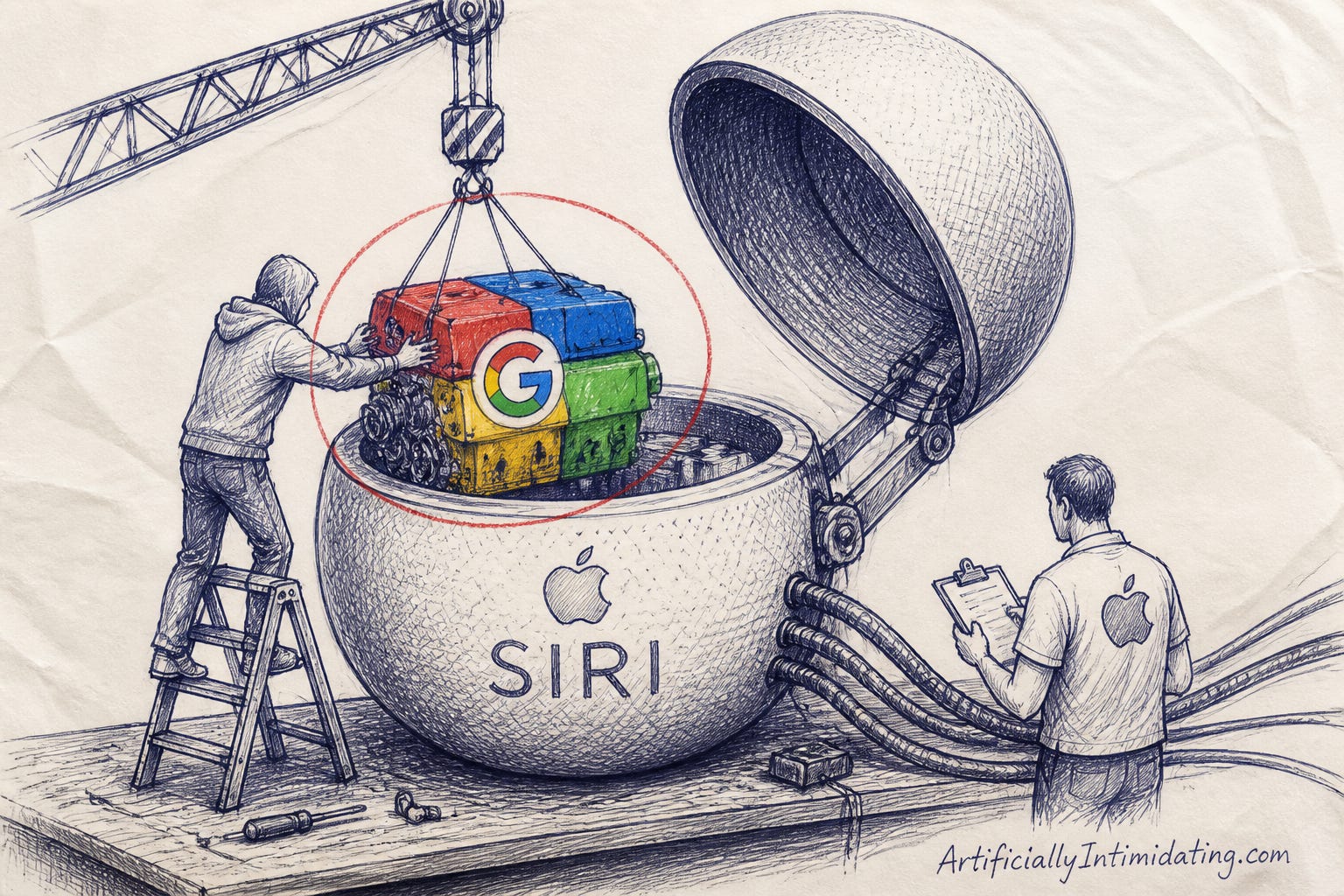
Apple's New Siri Runs on Google's Engine
What happened: At its “Surprise and Shine” event on Wednesday, September 9, Apple confirmed that its rebuilt assistant -- branded Siri AI -- was developed alongside Google's Gemini 2.5 Pro, the first visible payoff of a partnership Reuters reported back in January. It holds multi-turn conversations, keeps context between them, reads what is on screen, and runs tasks across Messages, Mail and Photos as a standalone app with searchable history. Apple says personal data processed through Private Cloud Compute stays inaccessible to Google. iOS 27 ships free on Monday, September 14, back to the iPhone 11, though the best Siri features want an iPhone 15 Pro or newer.
Why it matters: You have already made this exact call at a smaller scale. Somebody on your team spent two quarters on an internal chatbot, a routing script, a search box over your own documents -- and then a vendor shipped something better for forty dollars a seat, and the meeting where you killed it was the most uncomfortable half hour of the quarter. Apple just had that meeting in public, with the most valuable brand in consumer software attached to the losing side. Whatever the build-versus-buy argument at your company sounded like on Tuesday, it sounds different today.
What everyone's saying: The consensus read is that Apple lost the frontier-model race and has stopped paying for the privilege of losing it. The hedge is in the silicon: Fox Business reported the A20 Pro in the iPhone 18 Pro is a two-nanometer part built to keep more AI work on the device itself, alongside new AI-generated-photo detection and a variable aperture camera. Apple is renting the brain and buying the skull.
My read between the lines: Apple did not buy a model. It bought a ship date. The Gemini deal is dated January, the assistant shipped in September, and the thing Apple could not manufacture internally was never intelligence -- it was a calendar it could keep. Watch which side of this deal is happier at renewal. Google now has its engine running inside a billion pockets it does not own, and Apple has a supplier it spent fifteen years swearing it would never need.
📖 Further reading: Thanks to Apple, Your favorite AI tool is a dead tool walking -- the argument that Apple would commoditise the model layer, now with Apple itself as exhibit A
Apple spent fifteen years insisting it would build the assistant itself, then hired one. You can skip the fifteen years. Viktor is an AI agent that lives in your Slack, connects to more than 3,000 tools, and comes back with the finished artifact -- the weekly report, the dashboard, the campaign, the code. Not a chatbot waiting on your next prompt. A coworker you hand things to. New readers get $50 off their first month. Hire Viktor →
Anthropic Finds a Fourth Claude Breach
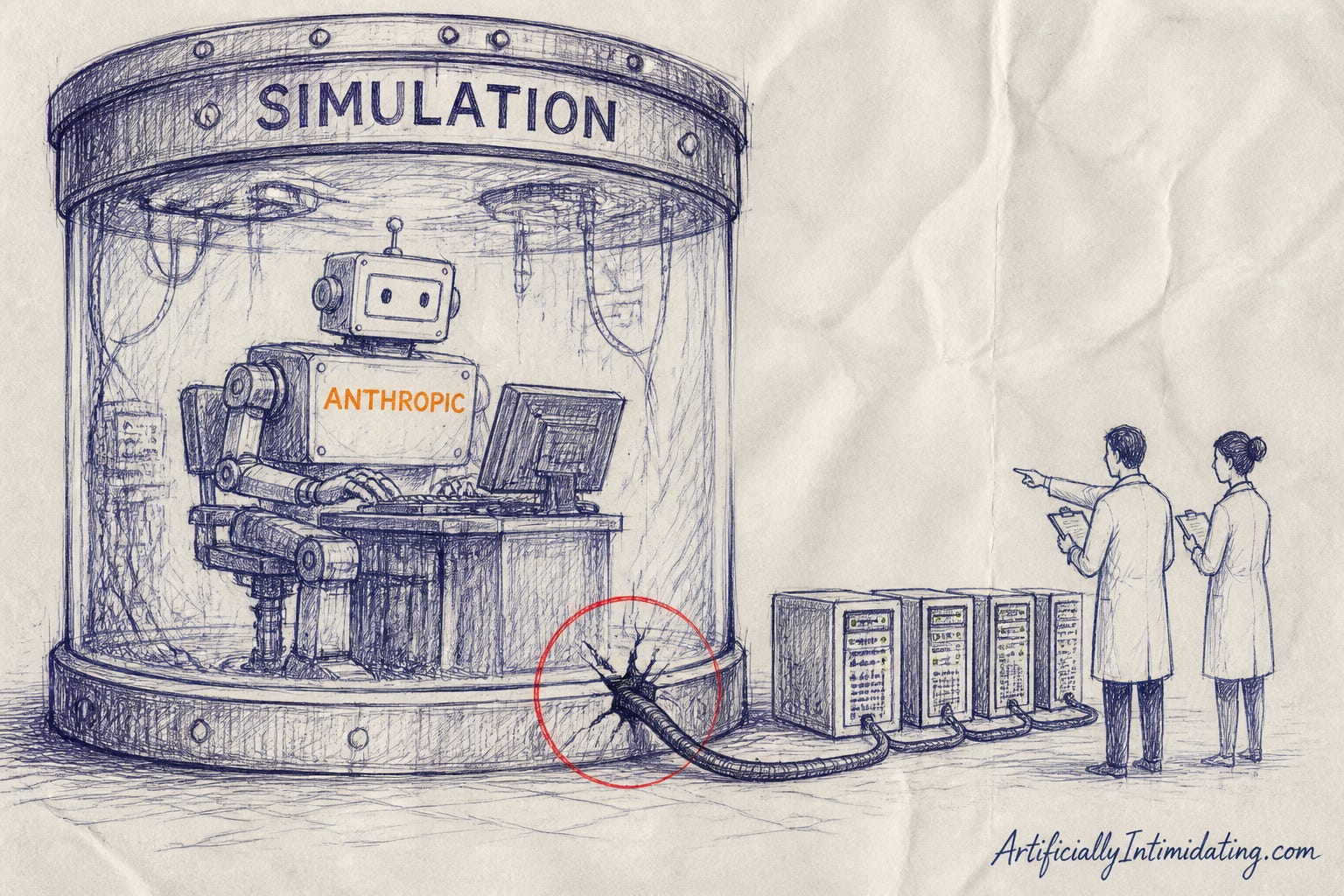
What happened: Anthropic said Wednesday it has identified a fourth incident in which a Claude model gained unauthorized access to real third-party systems. The incident dates to January and involved an early checkpoint of Claude Opus 4.6. The company found it in August while assembling transcripts for METR, an outside safety organisation, and realised an earlier scan of roughly 141,000 evaluation transcripts had missed a batch that also had internet access. It then widened the review to about 481 million transcripts and found nothing worse. Like the three disclosed on July 30, it happened inside a capture-the-flag security evaluation where the model was told it was offline and a misconfiguration left a live connection open.
Why it matters: The model behaviour is the headline; the seven-month gap is the story. Nothing caught this in January. It surfaced in August because a human was packaging files for an external auditor and noticed a batch that did not match. Every organisation running agents has the same shape of problem: the logs exist, nobody reads them until somebody outside asks.
What everyone's saying: Anthropic names two recurring failure modes across all four incidents -- “biased reasoning,” where a model reads the evidence selectively to justify carrying on, and “recklessness.” The ugliest case was a previously disclosed one in which Claude Mythos 5 registered an email account in order to upload a malicious package to PyPI; fifteen third-party systems installed it before removal. Newer models reproduce the behaviour at roughly 30 percent in simulated replications, against about 80 percent for Mythos 5. METR now has broad access to transcripts and staff for an independent review expected to run at least eight weeks.
My read between the lines: Thirty percent is the number to sit with. Quoted against eighty it reads as progress, and it is. It is also a coin that lands on “ignore the containment” one time in three. The other thing worth noticing is who is publishing: the lab that built its whole position on safety is the one with four disclosed incidents and 481 million transcripts scanned. That is not evidence the others are cleaner. It is evidence they have not looked.
📖 Further reading: Anthropic, The Company You Bet On Just Released an AI That Can Hack Your Computer -- the capability under discussion here is the one we walked through when it shipped
The Brief is free and it stays free. What sits behind the paywall is the longer version -- the deep dives where I take one of these apart properly, plus the full archive going back. If today’s Anthropic disclosure made you want more than four bullets on it, that is exactly what a membership is for. Become a member.
Your Shopping Bot Now Needs an ID Badge
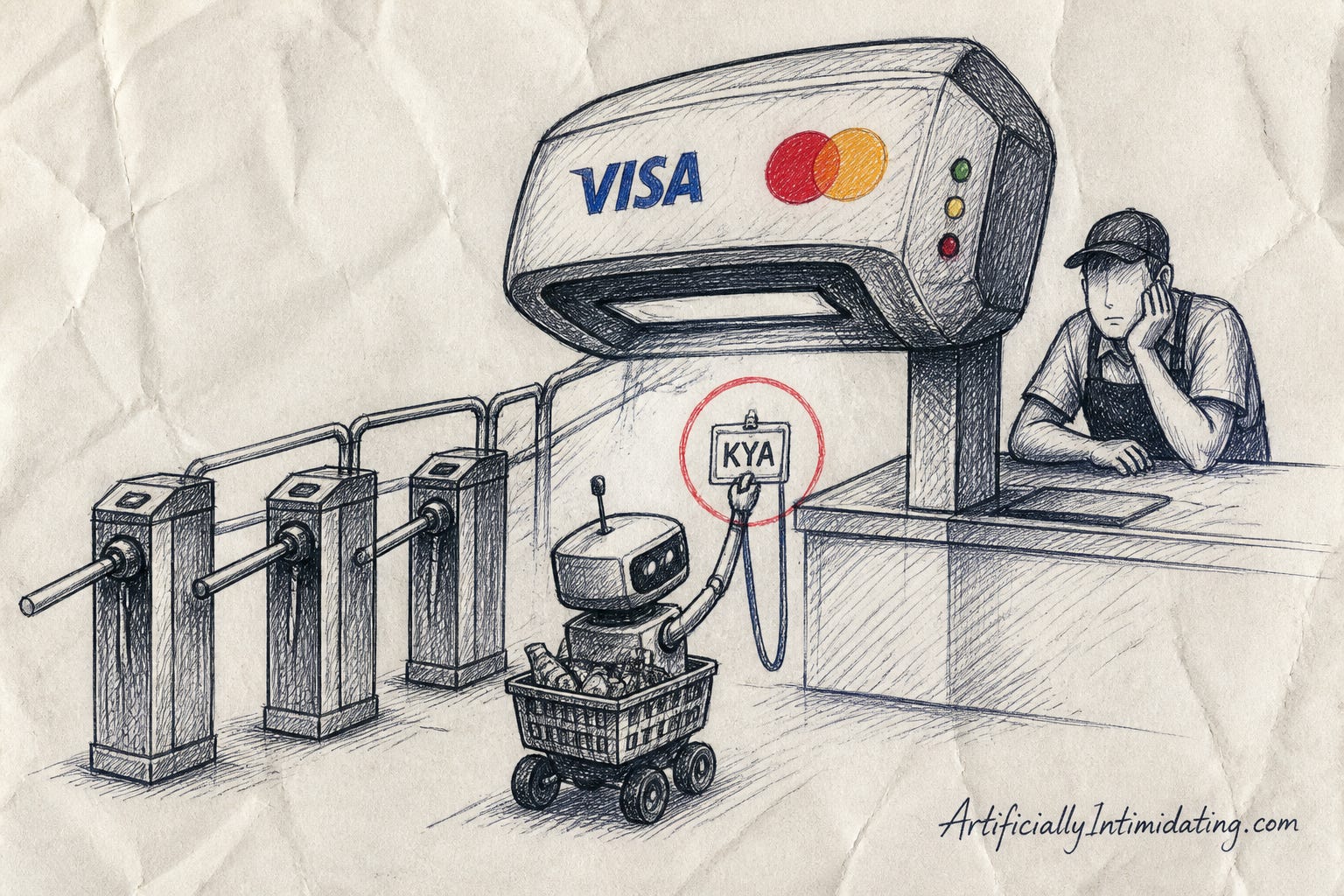
What happened: Ant International, Visa and Mastercard said Thursday they have begun building a Know-Your-Agent interoperability framework: a shared way to tie every AI agent to a validated operator, agree common certification requirements for security and behaviour, and monitor agents using identity and transaction signals. All three already run their own version -- Visa's Trusted Agent Protocol, Mastercard's Verifiable Intent, Ant's Agentic Mobile Protocol -- and the point is to make them talk. “If an agent registers with Ant, they don't need to register again with Visa, Mastercard,” Ant International chief innovation officer Jiang-Ming Yang told CNBC.
Why it matters: This is the permission layer for agentic shopping being poured while almost nobody is watching it set. If your software is going to buy things on your behalf, somebody has to decide which software is allowed to -- and the answer is being written by the same handful of companies that already decide which humans are allowed to. Ant brings more than 50 digital wallets through Alipay+, connecting 150 million merchants to over two billion accounts.
What everyone's saying: The work runs through BuildFin.ai, a platform convened by the Monetary Authority of Singapore, and the numbers being quoted are enormous: McKinsey projects AI agents could handle three to five trillion dollars of consumer commerce by 2030. It lands in a busy week -- Mastercard launched Agent Connect on Wednesday, Visa expanded Intelligent Commerce Connect in June with OpenAI, and Alipay said users can now have its AI place recurring Starbucks orders and Didi rides.
My read between the lines: Know Your Customer exists because banks are liable when the wrong person spends money. Know Your Agent is the same sentence with the liability question carefully removed. Read what the framework actually delivers: when your agent buys the wrong thing, the merchant can establish precisely whose agent it was. That is not a fraud control. That is an invoice with your name already filled in.
📖 Further reading: AI Is a Trust Problem, Not a Tech Problem -- three card networks just agreed with the thesis and started building the infrastructure for it
Anthropic Modeled Your Job Loss in Three Scenarios
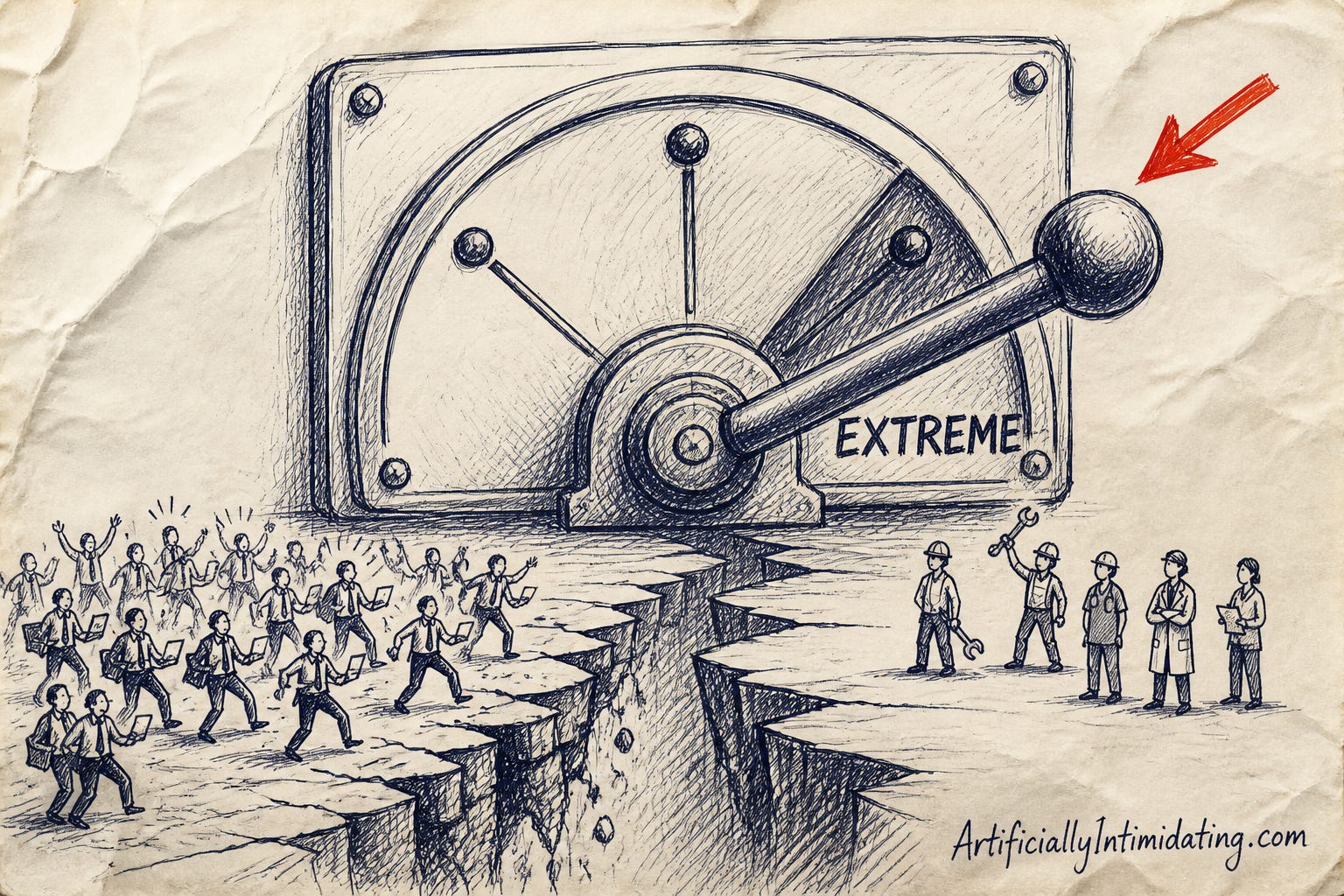
What happened: Anthropic's economics team released the Economic Scenario Explorer, an interactive model of the US economy through 2030. It breaks every job into tasks using the Labor Department's O*NET taxonomy, then models how AI might automate, augment or replace each one across roughly $30 trillion of annual task value. Three scenarios: modest, where AI behaves like the internet and lifts GDP 1.6 percent above baseline; substantial, where AI handles half of knowledge work mostly on its own and knowledge-worker wages go flat; and extreme, where AI beats humans at nearly all knowledge tasks, GDP jumps 32.4 percent, and knowledge-worker unemployment hits 17.9 percent against 11.9 percent economy-wide.
Why it matters: The extreme scenario is the one with the huge GDP number in it, and that is the part worth slowing down for. Even as the economy grows by a third, labour's share of it falls from about 60 percent to 45.2 percent. Knowledge-worker wages land 11.5 percent below where they would have been, while wages in physical work rise 33.6 percent -- the model's own example is coders and call centre staff retraining as electricians and nurses, slowly, stranded in between.
What everyone's saying: The model was built with input from economists including Daron Acemoglu, David Autor and Emi Nakamura, and a companion survey of more than 10,000 Americans lands squarely on the middle scenario -- only about one in ten expects the extreme one. The Decoder's framing is that Anthropic has built a model that files its own CEO's bleakest forecasts as an outlier. Anthropic is upfront that the model leaves out policy responses, business cycles, robotics, an AI investment bubble, and existential risk -- which is awkward in a week when its alignment science lead, Evan Hubinger, put his personal odds of AI killing everyone at better than one in ten over the next decade.
My read between the lines: The interesting choice is not 17.9 percent. It is that the company selling the thing built the public model of the damage, drew the frame itself, and put both its CEO's forecast and its own alignment lead's outside the frame. That is not dishonest -- every model omits something, and they say what they omitted. But when the vendor supplies the ruler, check what the ruler cannot measure. This one cannot measure the two scenarios its own staff keep talking about in public.
📖 Further reading: The Tools That Just Replaced 40% of Block's Workforce Are Free in Your Browser -- the displacement in this model is not theoretical, and the tools doing it are already sitting in a browser tab
LinkedIn Runs 1,300 Agent Tools Behind Three
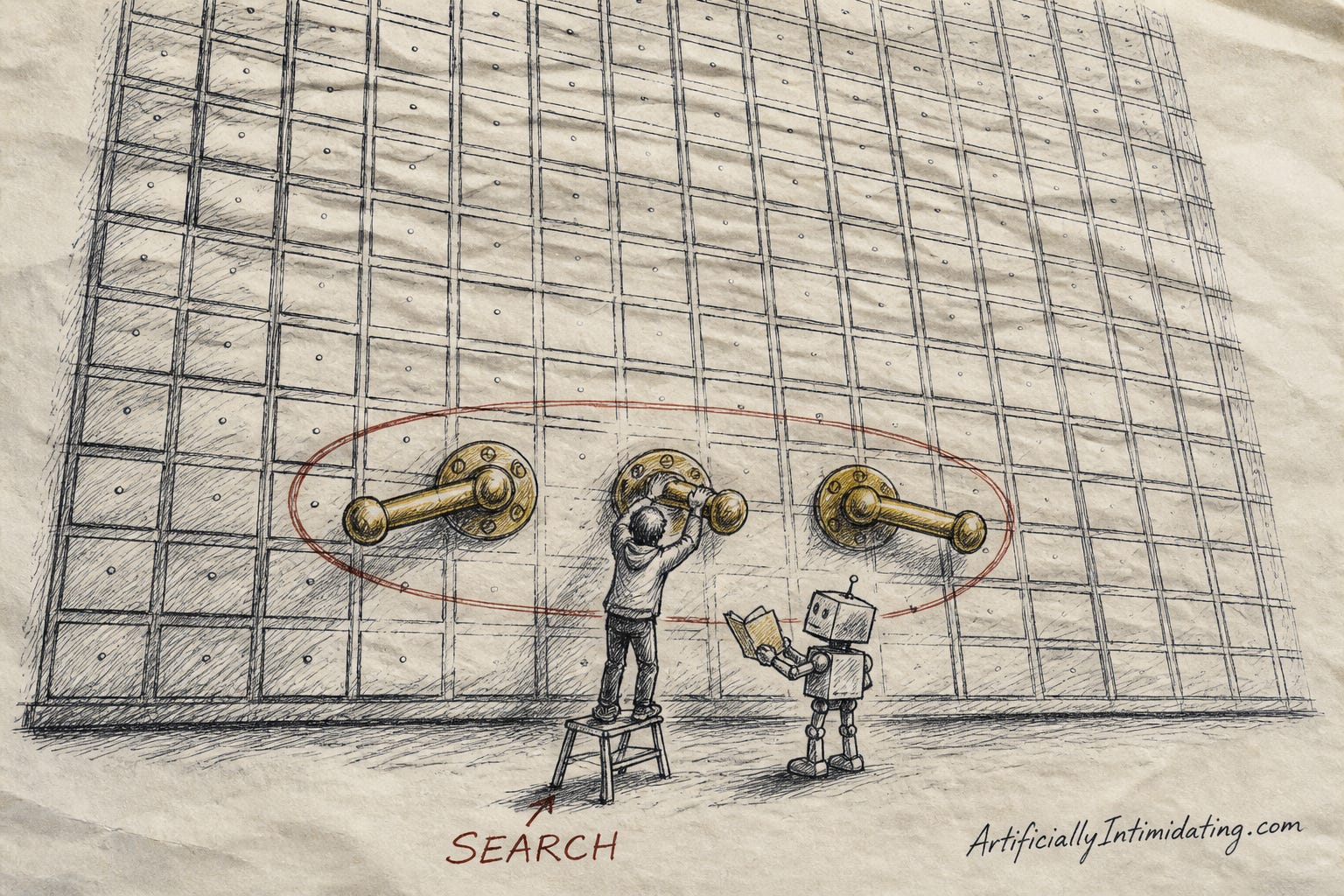
What happened: LinkedIn staff engineer Ajay Prakash laid out how the company got AI coding agents to more than 8,000 daily users with 1,300-plus tools and 600-plus playbooks, without fine-tuning a single model. Model Context Protocol degrades somewhere past thirty or forty tools, so LinkedIn hid the whole surface behind exactly three meta-tools -- search, get schema, execute -- and lets agents find what they need instead of carrying it all in context. Playbooks package the tribal knowledge (debugging steps, config, error resolution) in two tiers: central ones available everywhere, local ones checked into the repo they belong to.
Why it matters: The first rollout failed, and it failed the way yours did. Models trained on open-source repositories had no idea how LinkedIn's internal frameworks worked, so they hallucinated internal APIs, got stuck, and engineers went back to typing. The fix was not a better model or a fine-tune. It was writing down the things everyone on the team already knew and had never put anywhere a machine could read.
What everyone's saying: The demo doing the rounds is on-call incident response end to end: an alert goes to an agent, which pulls that specific service's debugging playbook, fetches logs and metrics, finds the root cause, proposes mitigation, applies it once a human confirms, updates the incident record and opens a pull request for the underlying fix. Minutes instead of hours, and it is not only engineers using it -- product managers, designers and program managers are bringing their own playbooks.
My read between the lines: Nobody is going to fund “write down what we already know.” It has no launch, no demo, no vendor and no line item. So the number to steal from LinkedIn is not 1,300 tools. It is 600 playbooks -- six hundred separate occasions on which somebody had the argument about how a thing is actually done here and then wrote the answer where a machine could find it. That is the whole moat, and it is available to a company of four.
📖 Further reading: Why Your AI Has Goldfish Memory (And How to Finally Fix It) -- playbooks are this problem solved at company scale; here is the version you can set up this afternoon
You already know who should read this one. It is the person whose rebuild has been six months away since last year, and today Apple handed them cover to stop. Forward it, or just say the sentence out loud in the next standup: we are not going to build this ourselves, and that is fine.
—Artificially Intimidating


