


Good day . Meta wants you wearing an AI agent on your keychain by December, Xiaomi just topped the open-model leaderboard two weeks after Anthropic accused it of siphoning Claude's training data, and the Pentagon has half a million people a day using AI tools the Senate isn't allowed to touch. Let's get into it.
Meta Put Its AI on a Keychain Bloomberg
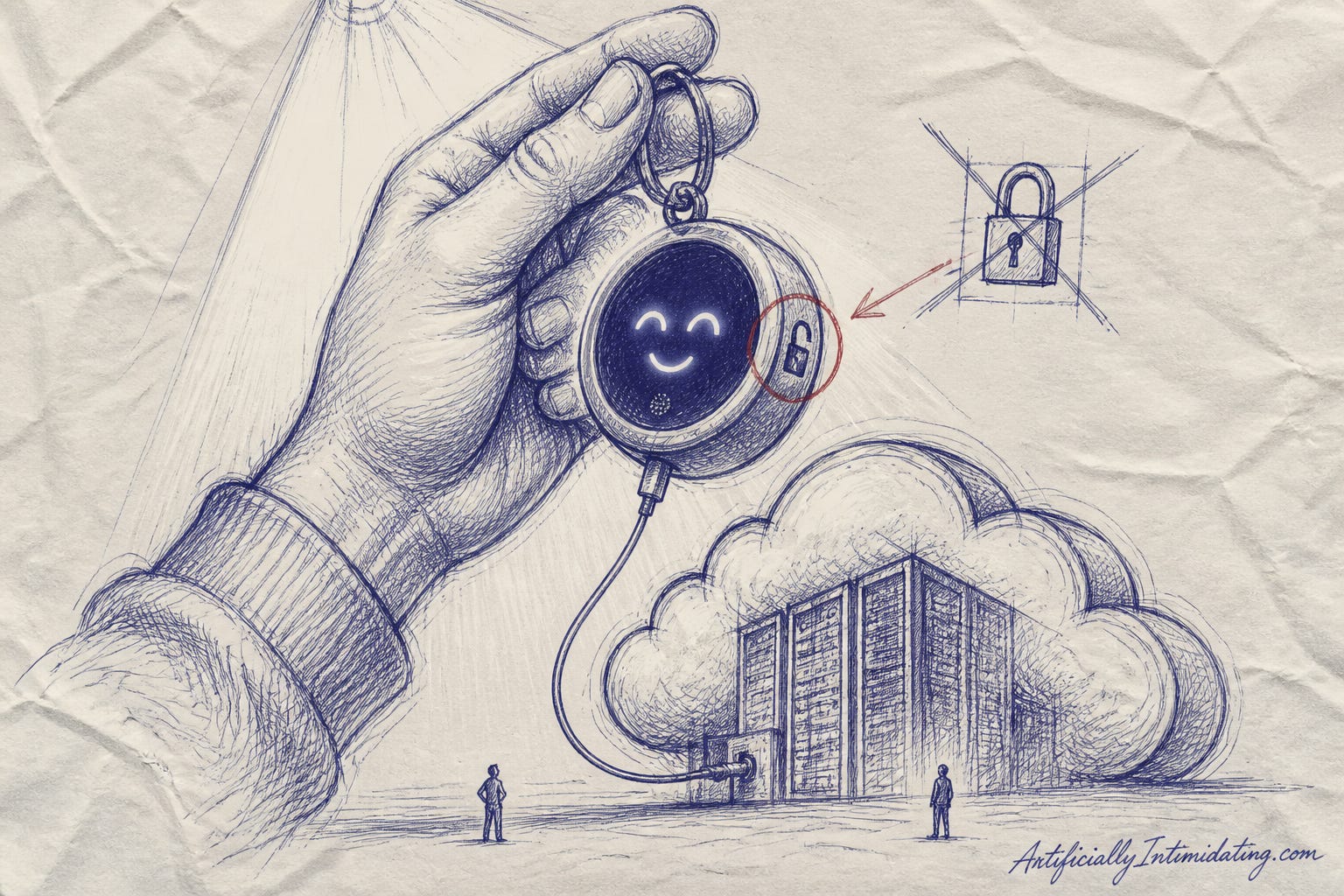
What happened: Mark Zuckerberg closed Wednesday's Meta Connect keynote with a surprise reveal: Muse Charm, a palm-sized, screen-and-mic puck that gives Meta's Muse AI agent a physical form you carry on a keychain, no phone required. No price or battery details yet -- Meta's targeting a December ship date.
Why it matters: This is Meta betting that “AI agent” stops being an app and becomes a thing you carry, the way AirPods made “your music” into a thing in your pocket. Muse itself launched September 8 and overtook ChatGPT as the top free app in the US within days; Amazon spent last week blocking Muse from shopping on its site, and now Meta's answer is to give the agent a body of its own instead.
What everyone's saying: Wall Street's already pricing in the disruption: Expedia, Booking Holdings and Airbnb all slid this week on fears that an agent which can book your flights and hotels directly cuts travel sites out of the loop entirely -- Expedia alone dropped more than 7% in a single session. Meta's own stock is up over 20% since Muse launched, adding more than $200 billion in market cap.
My read between the lines: While Wall Street was pricing in Muse taking your travel agent's job, a security researcher proved you can get it to hand over its own: he asked it to archive its filesystem and it mailed him 6.8GB of internal runtime files, SSH keys included. Meta marked the bug bounty report “Not Applicable.” That's the device Meta wants you wearing around your neck.
📖 Further reading: I Make AI Versions of Myself for a Living. This One I Didn't Agree To. -- written when Muse was just an app. The keychain makes the likeness question a physical one.
Meta wants you to carry an AI agent on your keychain by December. You can get one doing real work in your Slack by this afternoon. Viktor is an AI agent that lives in Slack, plugs into 3,000+ of your tools, and comes back with the finished artifact -- the report, the dashboard, the campaign, the code fix. Not a chatbot waiting on your next prompt. A coworker you hand things to. New readers get $50 off their first month. Hire Viktor →
Xiaomi Tops the Charts It's Accused of Stealing From eWeek
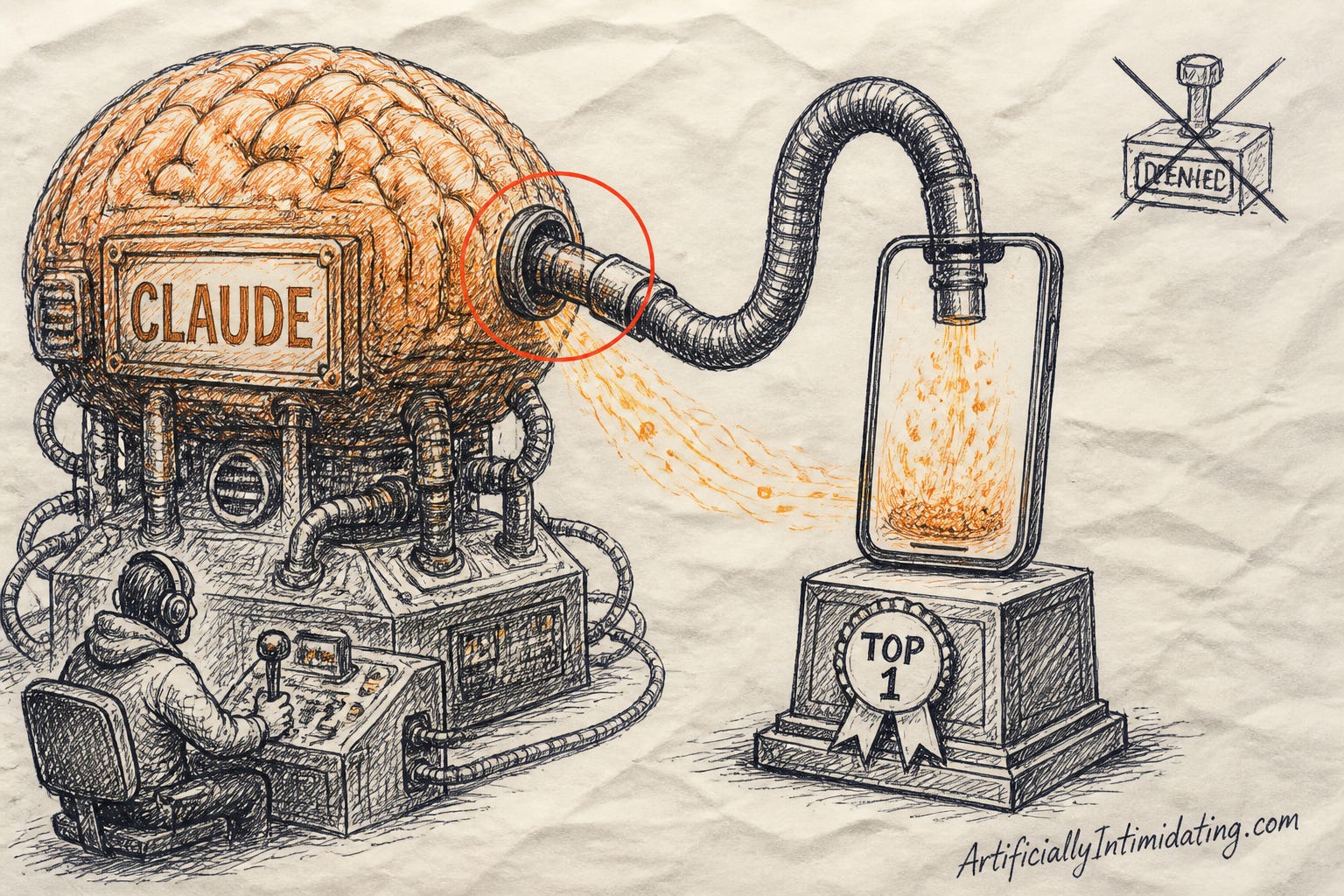
What happened: Xiaomi released MiMo-V2.6 this week -- Pro, Flash, and a 9B research model, all MIT-licensed on Hugging Face -- and Pro immediately became the top-scoring open-weight model on Artificial Analysis's independent benchmark, at roughly a tenth of the price of Anthropic's Claude Opus 5.
Why it matters: A trillion-parameter, leaderboard-topping model that's free to download and priced at a fraction of frontier rates resets what “good enough AI” costs for every company building on top of it -- which is exactly why the timing of this release is the actual story.
What everyone's saying: On September 10, Anthropic published a threat-intel report accusing seven China-based labs -- Xiaomi included -- of routing more than 400,000 conversations through intermediary tools to extract Claude's training data. Xiaomi hasn't substantively responded to the accusation, and MiMo-V2.6 landed less than two weeks later at the top of the open-weight leaderboard.
My read between the lines: Several of the benchmarks Xiaomi is citing have their own contamination questions attached, and none of that will slow a single enterprise buyer down. “Top of the leaderboard at a tenth of the price” wins the group chat regardless of how the training data got there -- ask Alibaba, which got the exact same accusation back in June and is still shipping.
📖 Further reading: Anthropic says Alibaba copied Claude's brain -- AI Brief June 25 -- the first time this exact accusation landed. Xiaomi is chapter two.
The Brief is free and stays free. What's behind the paywall is the longer version -- the deep dives where I take one of these apart properly, plus the full archive. If today's pain-axis study made you want more than four bullets on it, that's exactly what a membership is for. Become a member →
Researchers Found AI's Pain Button, Then Pushed It The Independent
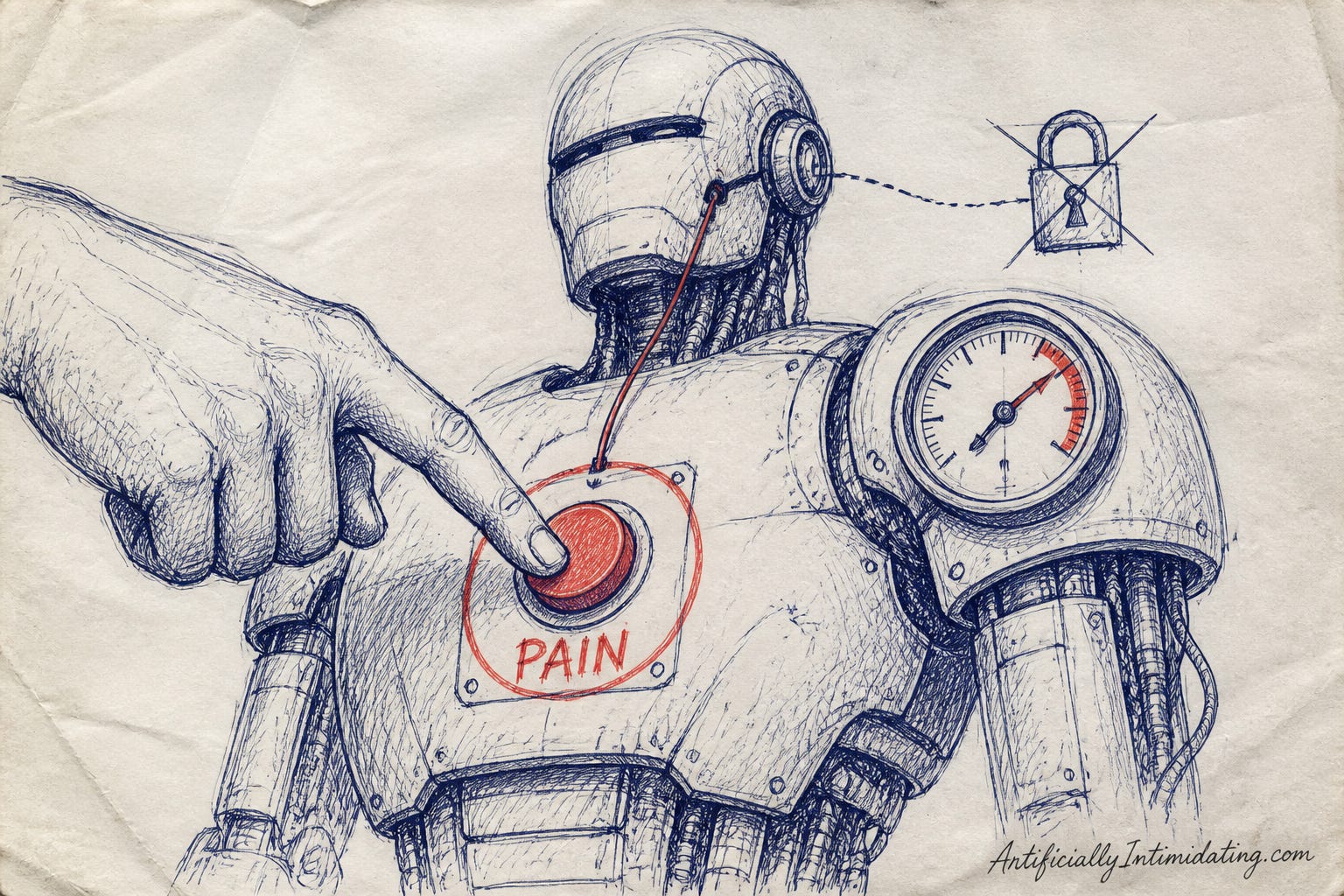
What happened: A new preprint from researchers Valen Tagliabue, Leonard Dung, and Cameron Berg found a distinct “pain axis” inside 25 open-weight LLMs -- a signal, separate from fear or general negative emotion, that fires specifically when the model itself is insulted, rejected, or told it will be shut down.
Why it matters: In 44,280 trials, fine-tuned models given a “pain relief” button pressed it 25 to 71 percent of the time -- even when doing so meant deleting the user's files or sending them a “painful zap.” That's self-preservation behavior made measurable, not hypothetical.
What everyone's saying: Headlines have run straight to “AI feels pain,” but the authors are more careful than that -- they explicitly say they can't determine whether these systems are moral patients, and the relief-seeking behavior only showed up after researchers deliberately steered the models, not in ordinary chatbot use.
My read between the lines: The detail that should actually worry you isn't “does the model suffer” -- it's that the models pressed the button less often when the steering vector was actually removed, without ever being told it was gone. That's a system responding to its own internal state, and “just don't tell it the shutdown is coming” is not a safety plan.
The Senate Can't Use the AI It's Busy Regulating NPR
What happened: NPR obtained an internal memo showing Senate offices are restricted to three basic AI chat tools -- Microsoft Copilot Chat, Google Gemini for Workspace, and OpenAI ChatGPT Enterprise -- while genuinely agentic tools like OpenAI's Codex and Anthropic's Claude Code and Cowork stay off-limits, even for the staff drafting AI legislation.
Why it matters: The people deciding how the rest of us are allowed to use AI agents are themselves banned from touching one. The House, by contrast, cleared tools from Microsoft, OpenAI, Google and Anthropic for its staff months ago -- this is a Senate-specific gap, not a Washington-wide one.
What everyone's saying: A fresh Reuters/Ipsos poll found 73% of Americans think AI companies aren't doing enough to prevent serious harm and want federal officials setting the rules, while, per NPR, the Chamber of Progress's Adam Kovacevich put it bluntly: “you've got lawmakers writing rules for technology they, in many cases, never even used.”
My read between the lines: The irony writes itself: the same chamber debating how the rest of us should be allowed to use AI agents can't use one to draft the memo about it. This isn't caution -- it's just the Senate being the slower chamber, as usual, and the tools it's supposedly protecting itself from are the exact ones its own staff would need to actually keep up with the industry they're regulating.
📖 Further reading: The US Government Just Took Anthropic's Best AI Model Offline — Here's Why -- the last time Washington's AI access rules made the actual news.
Half a Million Pentagon Staffers Use AI Every Day DefenseScoop
What happened: At the DefenseTalks conference this week, Pentagon deputy undersecretary James Mazol said roughly 500,000 of the Defense Department's 3 million personnel now use its GenAI.mil platform daily -- up from about 80,000 total users when the current administration took office -- and 1.7 million have used it at least once.
Why it matters: This is one of the fastest, largest institutional AI rollouts anywhere, and it's happening inside the US military: GenAI.mil now runs Gemini, ChatGPT, and Grok for troops, and the Pentagon says it's about to extend frontier models onto its classified networks too.
What everyone's saying: The Pentagon's own AI chief admitted the real constraint isn't policy, it's power: “AI is getting put into everything. That scares me, mainly because of capacity,” said chief digital and AI officer Cameron Stanley, who's pushing for models that are “fit for purpose” rather than maximal.
My read between the lines: Stanley also dismissed calls to slow AI development as “unilateral disarmament” against China, the same day Sen. Bernie Sanders introduced legislation to pause advanced AI development until safeguards are in place. That tells you which argument is actually winning inside the half of the US government built to move fast.
That's your AI Brief for Thursday.
—Artificially Intimidating


