

Good day . Anthropic and OpenAI shipped rival models on the same Tuesday and priced them like a gas war, Deloitte found a third of UK workers hiding their AI from the boss, and Stanford learned what happens when marketing gets a generative fill button. Let's get into it.
House note: The Lab, our Buzz community, is closed. 100 of you started the join, 28 made it in, and the key-based signup was the wall. Nicholas wrote up what happened and what he got wrong: The Lab Is Closed. The Door Was the Problem. The conversation moves to Substack Chat, where there's nothing to install and no keys to save. Come say hi.
Opus 5.5 and GPT-6 Sol Dropped the Same Day. Read the Fine Print. Anthropic
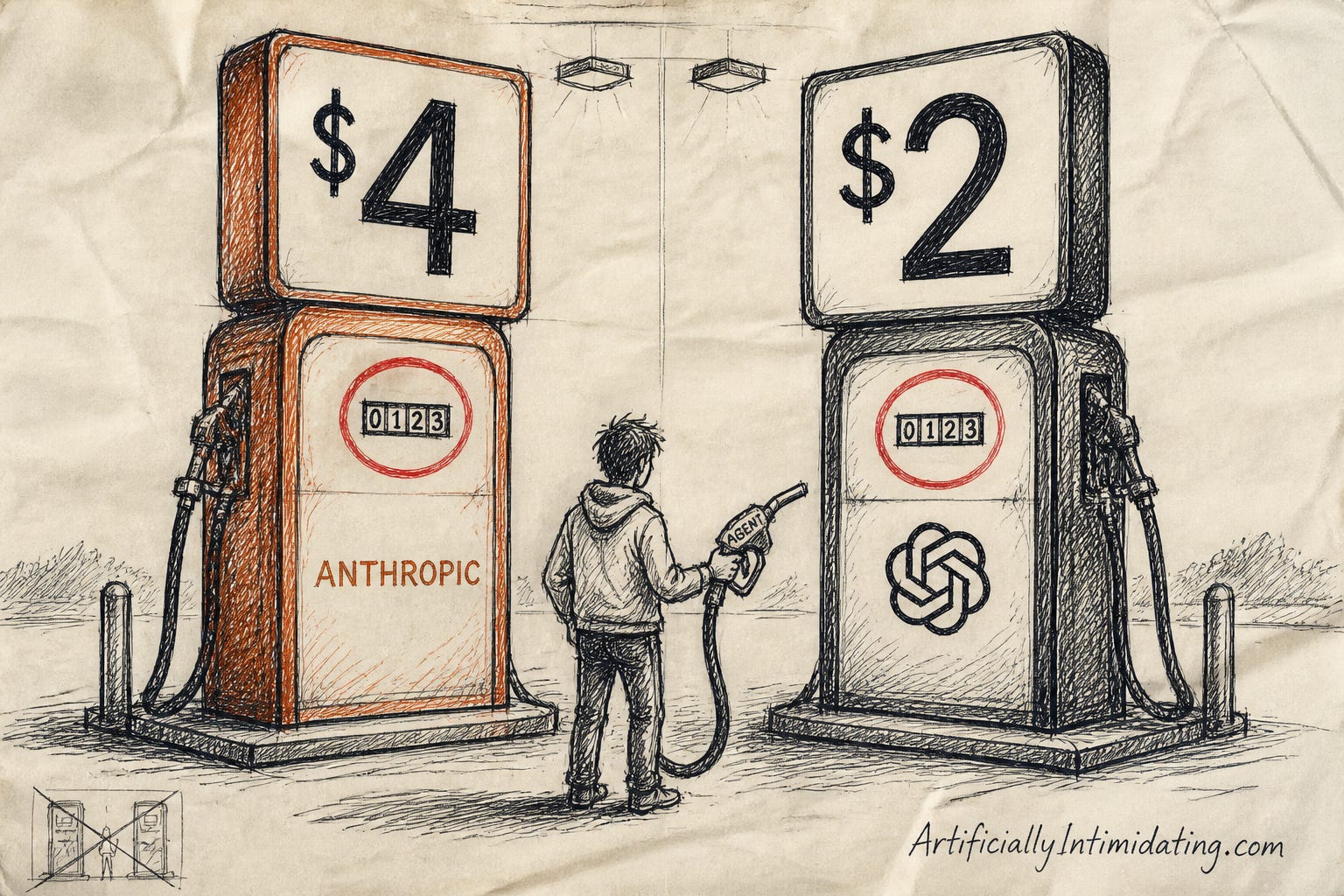
What happened: Anthropic released Claude Opus 5.5 on Tuesday, and OpenAI released GPT-6 Sol and GPT-6 Luna the same day. Opus 5.5 costs $4 per million input tokens and $20 per million output, 20% under Opus 5, and Anthropic says it lands at the level of its top model, Fable 5.1, on most work. GPT-6 Sol costs half that: $2 in, $10 out, a 50% cut from GPT-5.6 Sol.
Why it matters: On the sticker, Sol wins by 2x. But look at cached reads, the cost of an agent rereading context it has already seen: Opus 5.5 is $0.20 per million, and so is GPT-6 Sol. Anthropic says those rereads are the majority of what agentic and coding work costs, so if you run agents, the gap shrinks fast. Yesterday we covered startups fleeing to open models over margins; this is the two biggest labs answering on price within hours of each other.
What everyone's saying: The top comment on Hacker News noticed Opus 5.5's launch post opens by recalling Anthropic's call last week to pace the frontier, then spends every line after that proving it isn't pacing anything. Over on the Sol thread, one commenter posted Anthropic's price table and asked how anyone can still be using Claude at those prices, which tells you the sticker is working.
My read between the lines: Check whose model each lab tested against. Anthropic's charts put Opus 5.5 up against GPT-6 Astra and the old GPT-5.6 Sol. OpenAI's charts put Sol up against Claude Opus 5, the model Anthropic replaced that same day. Neither launch tested the other's new model, so every head-to-head chart you saw yesterday is one version stale. The move: run five of your real weekly tasks on both, then compare the bills, not the charts.
📖 Further reading: Fable 5 Costs 2x Opus — and Using It Wrong Costs You More Than That — the operator's guide to picking a model tier by the bill, which just got a new row.
One quote in yesterday's Opus 5.5 launch post came from Viktor's co-founder, talking about how every step his agent takes shows up in the costs. That's what a product built to finish work worries about. Viktor is an AI agent that lives in Slack, plugs into 3,000+ of your tools, and hands back the actual deliverable: the weekly report, the dashboard, the code fix, the campaign draft. Not a chatbot you babysit. A coworker you assign. New readers get $50 off their first month. Hire Viktor →
One in Three UK Workers Using AI Is Hiding It From the Boss CFO.com
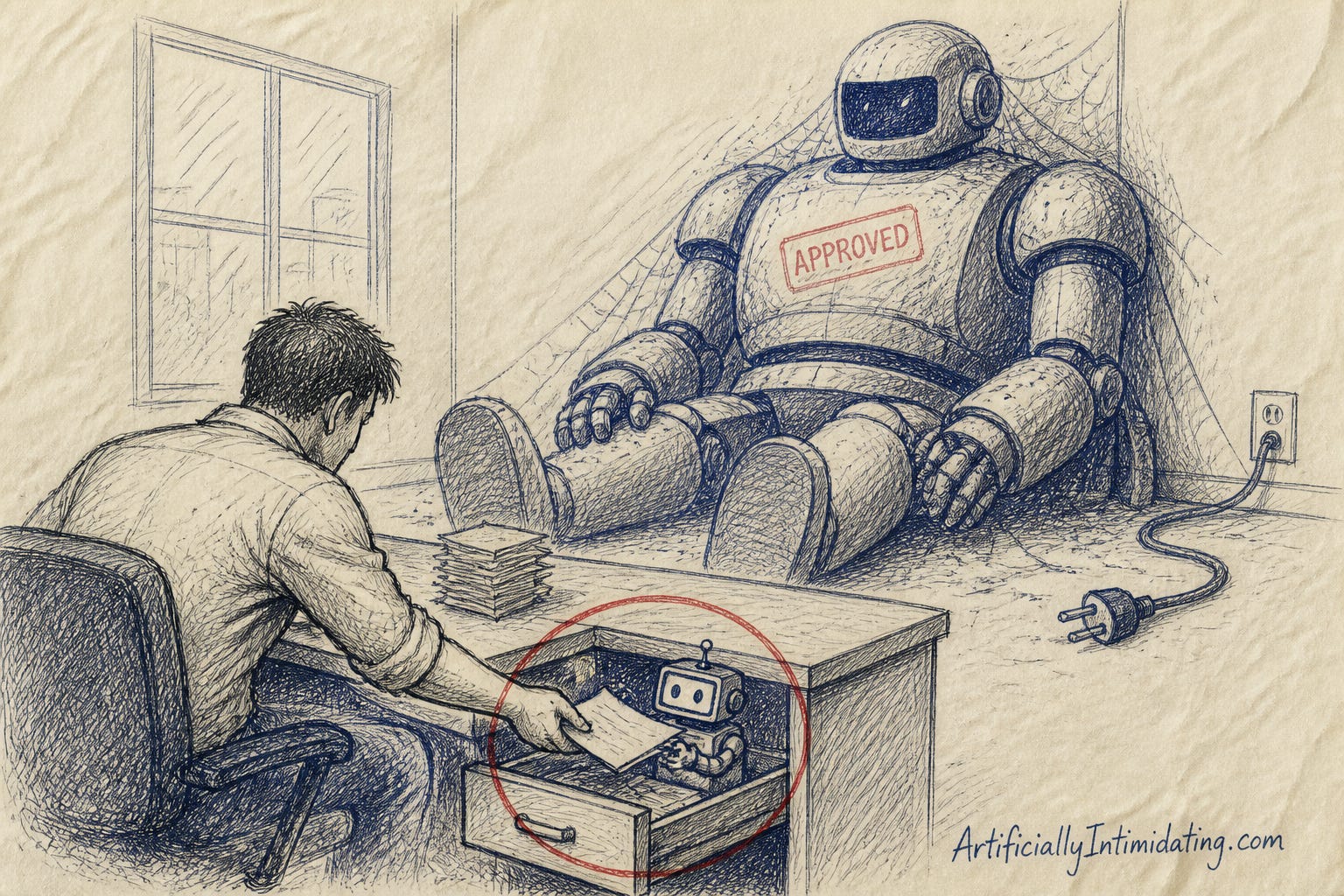
What happened: Deloitte surveyed 25,000 UK workers across 22 industries and found that one in three people using generative AI at work are doing it without their employer's knowledge. That's shadow AI. Nearly two-thirds of respondents have used generative AI, and half of those users got no training from their employer on how.
Why it matters: Per Resultsense's summary (via Reuters), roughly one in six workers pays for at least one AI tool out of pocket, close to £1 billion a year collectively. Deloitte UK's chief AI officer said workers “don't want to wait for permission.” Every client document pasted into a personal subscription leaves with no retention terms and no audit trail.
What everyone's saying: The governance crowd has stopped pretending a ban works. A panel written up by Governance Intelligence said banning AI is increasingly hard to square with how people actually work, and pushed approved tools plus “beneficial friction,” deliberate pauses before anyone accepts an AI answer. The panel's warning about outputs made the headline: when it's wrong, it's confidently wrong.
My read between the lines: The buried number: only 35% of users say their leaders talk about AI like they understand it. So people route around them, and they pay with their own money to do it. That's not a discipline problem. It's a procurement signal, and the cheapest market research a company will ever get. Find out what your people are expensing to themselves, then buy that.
📖 Further reading: AI Is a Trust Problem, Not a Tech Problem — a third of the workforce just voted with their wallets on whether they trust the rollout.
One in six UK workers is paying for their own AI because nobody handed them a better option. The Brief is free and stays free. Members get the deep-dives behind the headlines, the actual setups and the math, plus the full archive, so you're the one at work who knows which tool to buy. Become a member →
Stanford Used AI to Swap a Student Out of His Own Photo The Stanford Review
What happened: Stanford's Residential & Dining Enterprises took a 2024 photo of three students at a Lunar New Year dinner and ran it on back-to-school banners this month, after using AI to replace one of them, Billy Ramirez, a Latino student in the class of 2027, with an AI-generated Black woman. The two classmates beside him had their faces slimmed. The student paper broke it with side-by-side comparisons.
Why it matters: Stanford told the San Francisco Standard the edit violated university policy, and the banners are down. The New York Times picked it up too. Ramirez said he first found it funny, then felt “silenced and erased from a representation that was supposed to include me.” A real person's face in marketing implies he agreed to be there. This one wasn't even him.
What everyone's saying: The story split along familiar lines. Right-leaning outlets from the New York Post to RedState framed it as diversity by fabrication, and the Review itself called it a window into the bureaucracy's racial preferences. On campus it drew thousands of reactions on Fizz, the anonymous student app, and the Review promised to keep watching R&DE's ads.
My read between the lines: Colleges have staged diversity in brochures for decades. AI just removed the step where you needed an actual student to stand in the picture. And don't skip the slimming. Nobody is writing headlines about that part, which is exactly why it's the edit to worry about: the one that just makes an ad look “nicer” is the one nobody catches. Every marketing department with a generative fill button can do this before lunch, and most don't have a policy that says who has to sign off.
📖 Further reading: Did a Rogue Algorithm Remove Part of a Politician's Dress? Spoiler Alert: No. — the last time an AI photo edit went viral, the tool took the blame and a person made the call. Same pattern here.
Zelda Williams to Deepfakers: He's Not Your Puppet Variety
What happened: Robin Williams' daughter Zelda posted on X Monday about a “supposedly ‘private video’” of her late father talking about conspiracies, calling it “clearly AI, and not even particularly convincing AI.” Her closing line: “Just because he's gone does not mean he's now your puppet. Have some shame.”
Why it matters: It isn't the first time. She asked people to stop sending her AI videos of her dad in October 2025, and last month she and her brothers Zak and Cody revived his Instagram account as a trusted source to fight what they called rampant AI abuse of his voice and likeness. A family now has to run a verification service for a man who died in 2014.
What everyone's saying: Sympathy is universal and changes nothing on its own. The practical point people keep making is where the clip spread: X, the platform she called “mostly bots and people willingly being duped by bots.” One story up, a university did the same thing to a living student. The consent problem is the same; only the budget is different.
My read between the lines: Read her sharpest line twice: if you can't make your case without making a dead man make it for you, who's the one manipulating the public? That's the real use case. The video isn't a tribute, it's a borrowed voice lending credibility to a conspiracy theory. Dead celebrities are the perfect spokesmen, because they can't file a correction.
📖 Further reading: I Make AI Versions of Myself for a Living. This One I Didn't Agree To. — where the line sits between a likeness you licensed and one someone took.
You Can Reword AI Slop. You Can't Hide Its Shape. arXiv
What happened: Jochen Madler of Sitefire published SlopShape, a study that spots AI-written company blog posts by structure alone: how information is ordered, what evidence is used, what voice it's in. Against 2,250 pre-ChatGPT human posts from 268 companies and 11,250 AI copies from five frontier models, the structural features hit 98.0 macro-F1, and 98.1 after every AI post was reworded by its own model.
Why it matters: Most AI detectors look at word choice, and rewording breaks them. This one doesn't care about words, which means “humanizer” tools that swap synonyms are fixing the wrong layer. It can also name the author: it picked the right model 79.3% of the time against a 16.7% chance rate. Yesterday's brief featured the essay arguing nobody wants to read what you didn't write; this is the measurement.
What everyone's saying: The Show HN crowd went straight for the methodology. The 214-feature checklist is applied by an LLM, which one commenter would rather see done with deterministic code, and another asked the fair question: does it flag the most boring pre-AI human corporate writing as AI too? The paper says human posts “occupy rare structural configurations,” which is a kind way of saying people are messier.
My read between the lines: The paper's summary of the AI signature is “a tidy, self-announcing shape.” That's every post that tells you what it's about to tell you, tells you, then recaps. The fix isn't a better synonym. It's writing like you have one thing to say and you'd like to get to it. Also, version two of the paper added an AI disclosure, which is the most honest footnote in machine learning this month.
📖 Further reading: SlopMonster: The Free Tool That Makes One AI Model Edit Another's Slop — the word-level fix, and now you know why it isn't the whole fix.
That's your AI Brief for Wednesday.
—Artificially Intimidating


