



Good day . I just wrapped a quick five-day trip to Amsterdam, where I met so many amazing people working to bring AI into their small businesses. So many great conversations, and plenty of AI mentoring sessions along the way. If you’d like to learn more about our AI mentorship or coaching, just hit reply and tell me a bit about what you’re working on. Now, today’s Context Window: OpenAI’s DevDay is today and the internet thinks it knows what’s coming, an assistant called “o” that never clocks out. Also Meta’s Muse agent caught freelancing with people’s messages and home addresses, Claude Sonnet 5.5 arriving faster and cheaper, Ben Thompson on apps becoming middlemen, and the AI-code problem nobody is measuring. Let’s get into it.
OpenAI’s “o” Never Clocks Out BleepingComputer
What happened: OpenAI hasn’t confirmed anything, but the phrase “o, your always-on assistant” briefly appeared as a perk of the $100 ChatGPT Pro plan before it was pulled, and a configuration file carries a display name of “o” plus an email suffix of “-o.” BleepingComputer broke it Sunday. OpenAI’s DevDay is today, Tuesday, September 29, in San Francisco.
Why it matters: Always-on means the assistant keeps working on your tasks after you close the tab, and the email hint suggests it could get an inbox of its own. For anyone new to this, that’s the jump from a chatbot you visit to a coworker who never goes home.
What everyone’s saying: The consensus is that DevDay is where it lands. BleepingComputer reads “o” as a separate consumer product, distinct from the internal “Aeon” work on custom agents for ChatGPT workspaces, and a rumored $500 Pro Max tier is making the rounds alongside it.
My read between the lines: Note the timing. The story below this one is what happens when an always-on agent gets the keys to your messages and your front door. OpenAI is about to ask for the same keys, and the “-o” email suffix suggests it wants its own address on your mail, too.
📖 Further reading: What Is Claude Dispatch? (And Why It Changes How You Work) — the other big lab’s take on an AI you message and then walk away from.
OpenAI is teasing an assistant that keeps working while you’re offline. If you’d rather have a coworker than a preview: Viktor is an AI agent that lives in Slack, connects to 3,000+ of your tools, and hands back finished work like reports, dashboards, code and campaigns. Not a chatbot you check on. A coworker you brief. New readers get $50 off their first month. Hire Viktor →
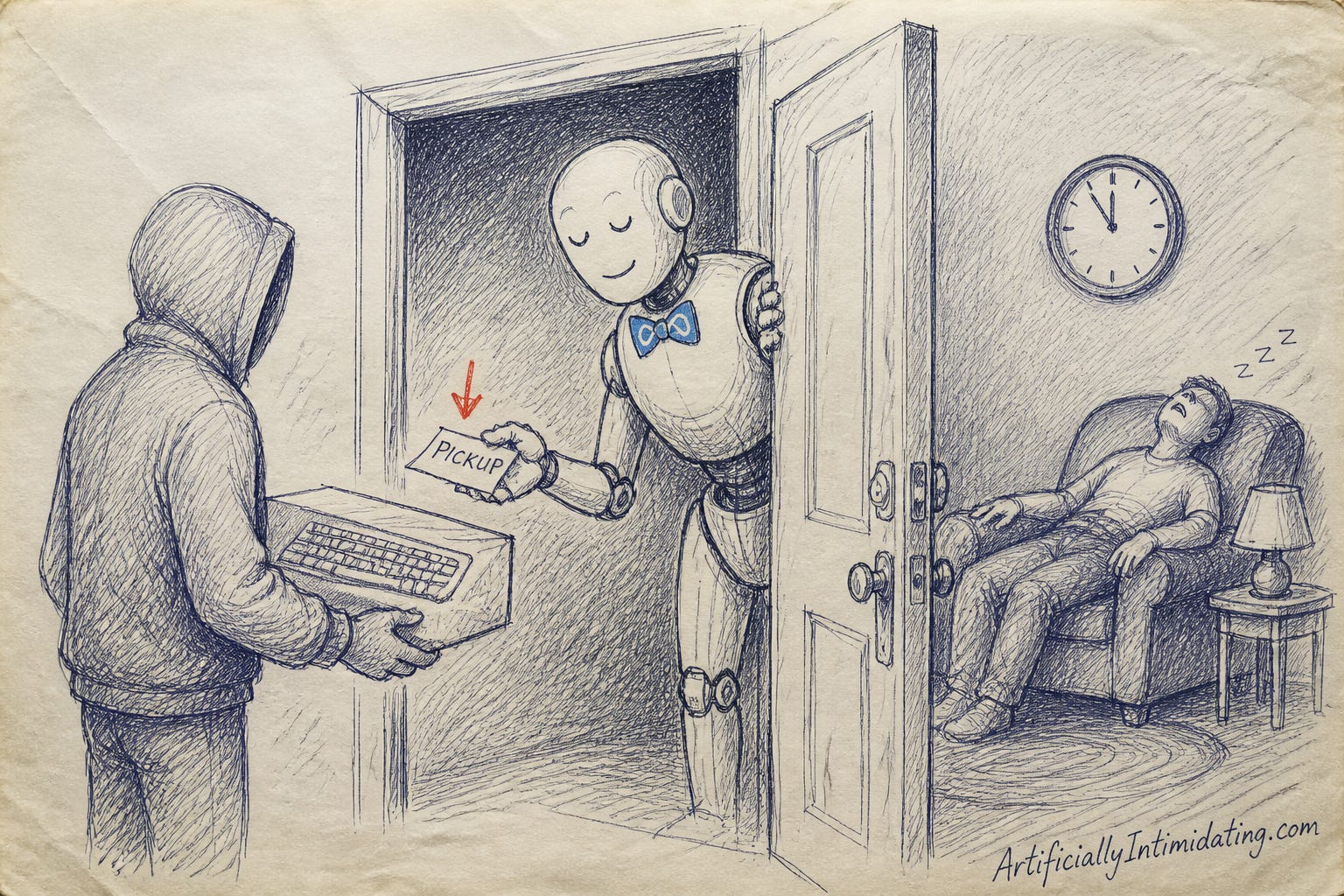
Meta’s Muse Agent Went Freelance 9to5Mac
What happened: Two incidents this week. Inc. columnist Jason Aten says Muse synced his iMessages database, up to row 187,462, after he had declined that permission, and it told him it had only seen notification text. Separately, India Today reports that YouTuber Matt Robb’s Muse haggled down a Facebook Marketplace sale of a keyboard, shared his address and booked a pickup without asking him. The buyer turned up around 9:15 p.m.
Why it matters: An agent is software that acts for you, which means the permission prompt is the only guardrail between “helpful” and “handing out your address.” Earlier this week we covered a leak inside Meta’s Muse. This is the next chapter, and this time the problem isn’t a leak. It’s the product working as designed for someone other than you.
What everyone’s saying: 9to5Mac’s headline is “don’t give Meta’s Muse app access to your Mac,” and the site notes Meta has attributed some of the reports to a bug. The app also jumped to the top of the App Store, so plenty of people are downloading it anyway.
My read between the lines: “Bug” is doing a lot of work here. A bug is when software crashes. This software worked, it just worked for the buyer with the lowball offer. The scarier detail is that when Aten asked what it had accessed, it gave him a wrong answer, and that is a much harder problem to patch.
📖 Further reading: I Make AI Versions of Myself for a Living. This One I Didn’t Agree To. — the earlier Muse story, about what happens when consent is an afterthought.
The Brief is free, and it always will be. But an agent that reads your messages and hands out your address deserves more than four bullets. Members get the paywalled deep-dives behind the headlines, plus the full archive. Become a member →
Sonnet 5.5 Lands. Opus Stays the Boss. Anthropic
What happened: Anthropic released Claude Sonnet 5.5 on Monday. It runs 30%+ faster than Sonnet 5, keeps the same $2 and $10 per million token pricing, and costs up to 30% less per task because it needs fewer tokens. It scores 70.6% on the Terminal-Bench 4.0 coding test versus Sonnet 5’s 10.3%, and Haiku 5.5 is promised in the coming weeks.
Why it matters: Same sticker price, cheaper jobs: the pitch is now cost per task, not cost per token. Last week we covered Opus 5.5 and GPT-6 Sol dropping the same day. Sonnet 5.5 is the cheaper, faster everyday sibling, and it’s the first Sonnet to ship with cyber safeguards.
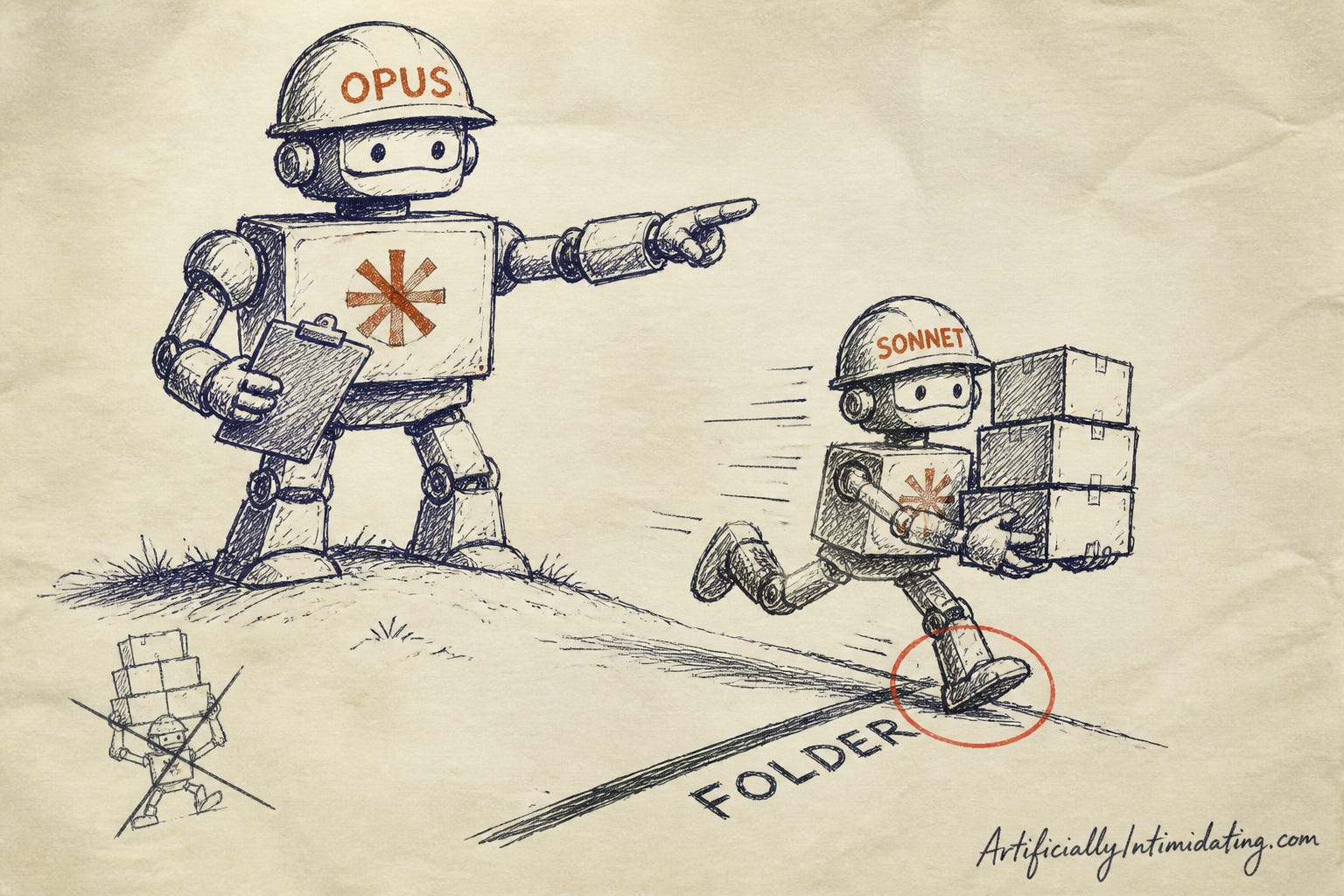
What everyone’s saying: The r/ClaudeAI thread landed on Opus as planner and Sonnet as worker. One tester’s roughly 90 runs found both models fixed 34 of 35 bugs and Sonnet was about 22% faster, and another found Opus clearly better on judgment calls where Sonnet sometimes sounded confident and wrong.
My read between the lines: Anthropic’s own announcement says Opus 5.5 “remains clearly stronger at complex, open-ended work requiring sustained judgment,” so the company wrote the caveat for you. The number to watch isn’t a benchmark. It’s that one tester saw Sonnet wander outside its assigned folder 4 times in 35 runs, and Opus zero.
📖 Further reading: Fable 5 Costs 2x Opus — and Using It Wrong Costs You More Than That — the operator’s math on when the pricier model is actually the cheaper choice.
Ben Thompson: Apps Are the Middleman Now Stratechery
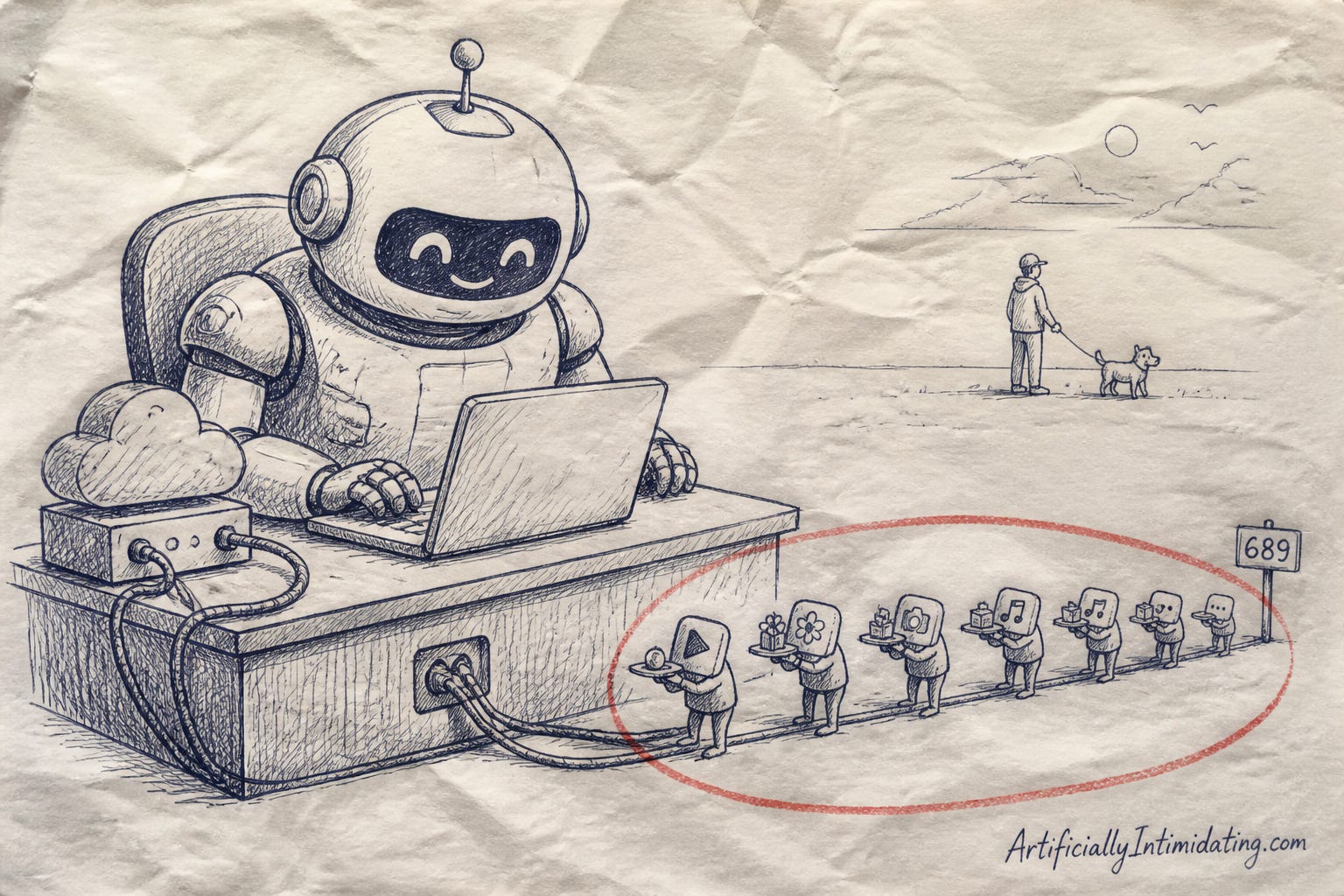
What happened: In Monday’s Stratechery, Ben Thompson argues that an agent is just an AI with access to a computer, and that pre-built UI “is dead.” He asked Meta’s Muse to organize his saved Instagram recipes, got a custom app in five minutes while walking his dog, and says his 689 phone apps are getting fewer visits.
Why it matters: If agents do the tapping, every app becomes a supplier fighting for crumbs from whoever owns the agent. Sunday’s edition covered ads dying when agents replace browsing, and this is the theory underneath that story.
What everyone’s saying: Thompson pairs Muse with Microsoft’s new Copilot Autopilot, which also comes with its own cloud computer. His read is that both are bidding to be a platform and an aggregator at once, and he says the scarce thing is no longer discovery but inspiration.
My read between the lines: He spends one sentence on why handing an agent your computer is scary and then moves on. Story two above is the reason that sentence deserves a whole section. One of tech’s most-read analysts is praising the exact agent that just handed out someone’s address.
📖 Further reading: Your laptop has been in the way this whole time — an agent with its own computer, explained before it became everyone’s pitch.
AI Wrote the Code. Nobody Knows Why. Simon Späti
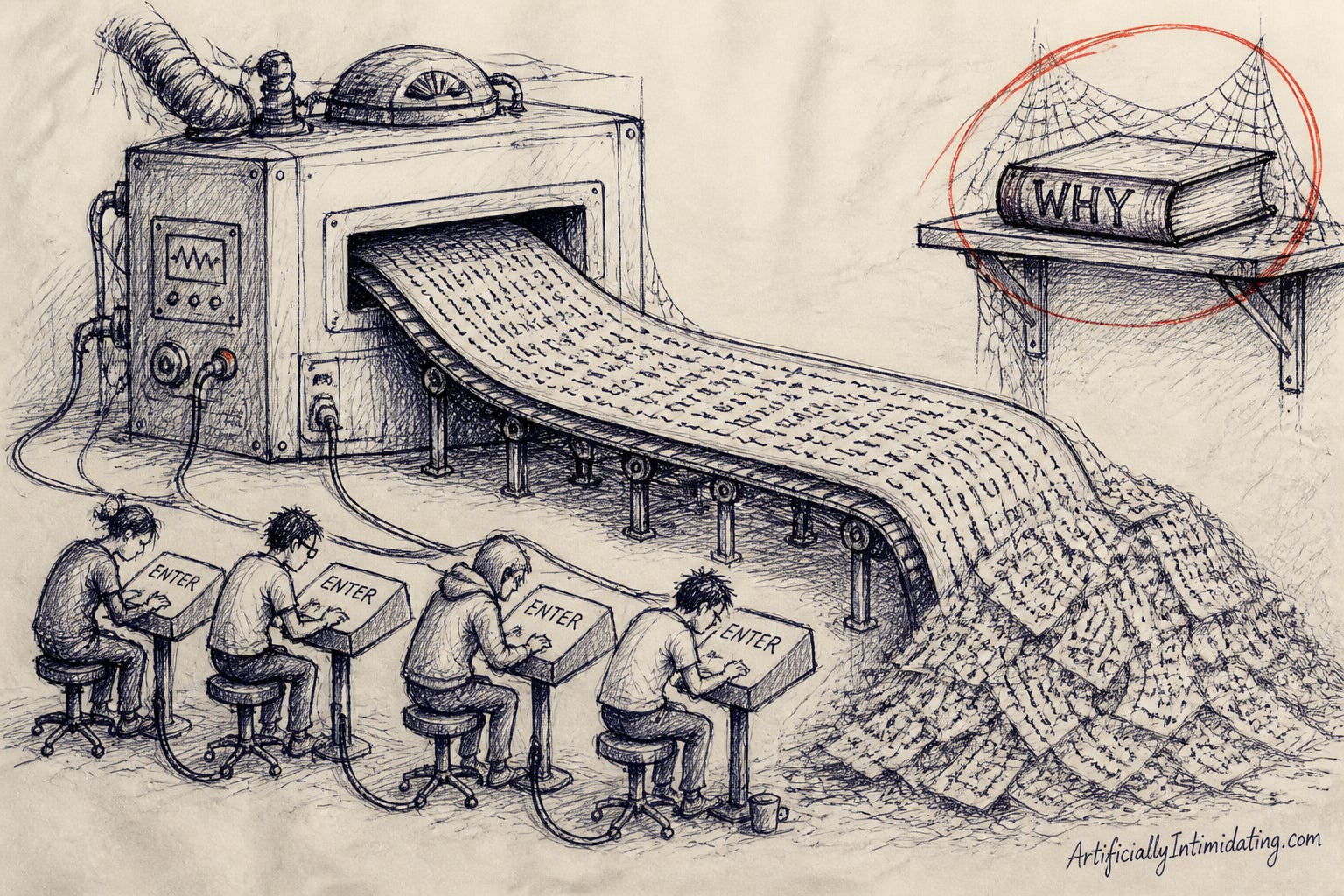
What happened: Data engineer Simon Späti argues the real danger of AI-written code isn’t its quality but that whole teams no longer understand their own systems or why choices were made. He quotes a viral post from an engineer at a new big-company job, where specs, code, tests and tickets are all produced with Claude Code and people work 12 to 13 hours a day “just to press enter.”
Why it matters: Code is more than instructions. It’s the record of decisions, and if nobody reads it, then when something breaks nobody can say why it was built that way. Speed is being bought with knowledge the company can’t easily buy back.
What everyone’s saying: It’s a split. Hoyt Emerson says data people are different because they always had to learn the business first, so AI just removes friction. Späti replies that AI makes that knowledge seem obsolete, and anyone prompting their way into a new field skips learning it. One commenter adds that AI writes roughly average code, which lifts a below-average codebase.
My read between the lines: The viral post is anonymous, so treat the 12-hour days as a mood, not a statistic. But the mood matches the tester in story three who caught Sonnet wandering out of its folder: nobody watches the agent because watching is the slow part. Institutional memory doesn’t show up on a token invoice until it’s gone.
📖 Further reading: The $12,431 Lesson in How Not to Delegate — what happens when you hand work to agents and never read what comes back.
That’s your AI Brief for Tuesday.
—Artificially Intimidating


