

Good day, humans. SpaceX now owns the editor a huge chunk of the software industry writes its code in, Alibaba gave away a 27-billion-parameter model for free on the same afternoon, and a German court looked at an AI-generated picture and decided it belongs to absolutely nobody. Ownership is the whole show today.
SpaceX Just Bought the Place Where Code Gets Written
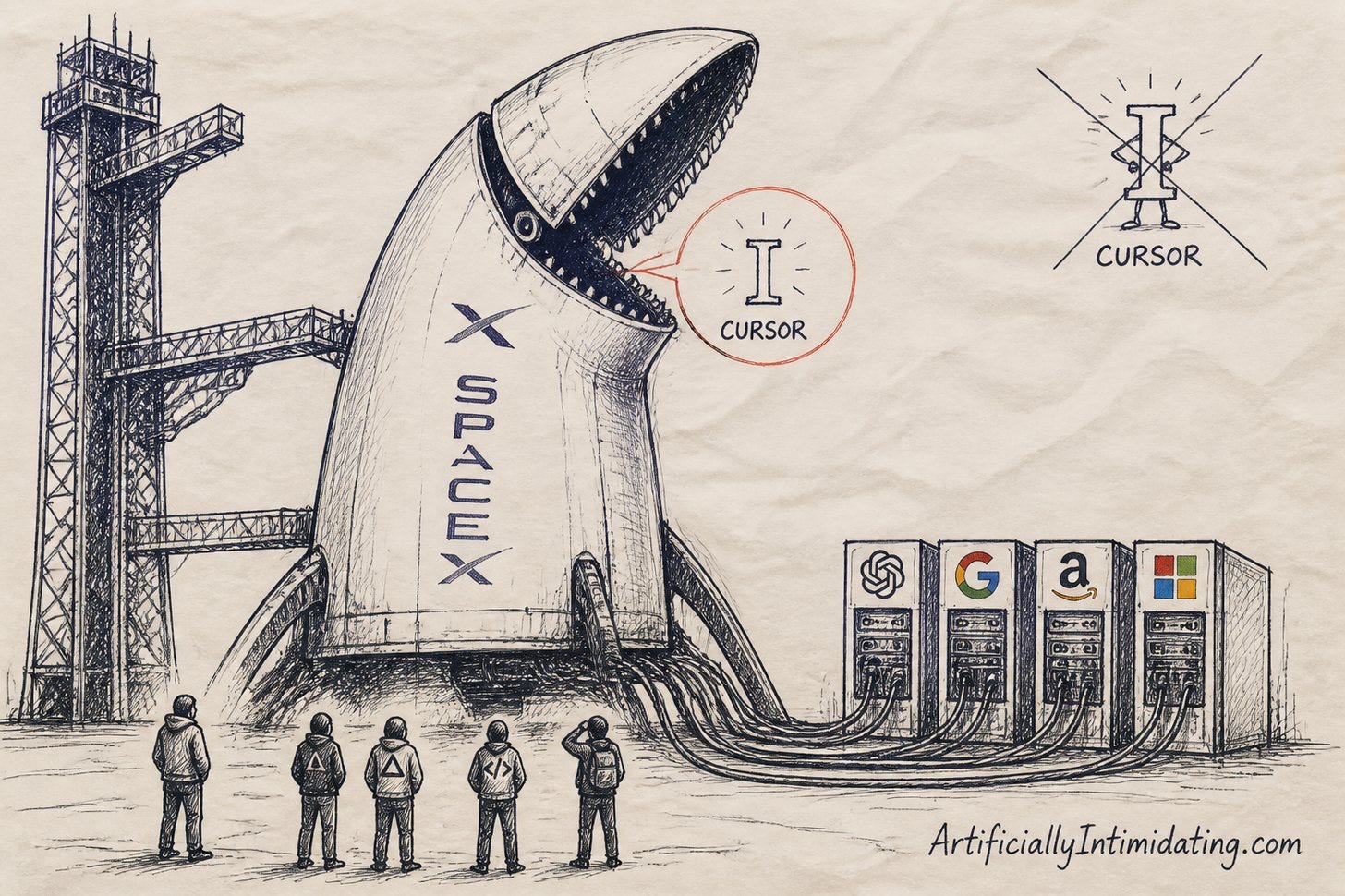
What happened: SpaceX closed its 60 billion dollar all-stock purchase of Anysphere, the company behind the AI coding tool Cursor, on August 14. Cursor shareholders take about 389 million SpaceX shares, and the startup is now a wholly owned subsidiary of a rocket company.
Why it matters: Cursor is where an enormous share of professional programmers now actually write software. The company that makes the tool your software is built in is the same company that owns Grok and the Colossus supercomputer those models train on -- and yesterday we walked through how the bots in that stack share one computer. Same ecosystem, one floor up.
What everyone's saying: It is the largest acquisition of a venture-backed startup ever recorded, and developers are asking the same three questions everywhere: does the roadmap slow down under a big owner, does the twenty-dollar Pro price hold, and does Cursor keep supporting Claude, GPT and Gemini or start favouring Grok?
My read between the lines: Sixty billion dollars does not buy a text editor. It buys the room where the work happens -- the running context of what every developer is building, breaking and pasting in at 2am. That is a far better dataset than anything you can scrape. The multi-model question answers itself the first quarter a number needs help.
📖 Further reading: What is Grok Bot? The answer is in the fine print -- the same playbook one layer down: a persistent agent, your logins, and a meter nobody capped.
Everybody in this issue is busy buying the place where the work happens. You could just get the work done. Viktor is an AI agent that lives in your Slack and connects to more than 3,000 tools -- it builds the dashboard, drafts the campaign, writes the code and files the report, then hands it back finished. Not a chatbot you have to prompt all day. A coworker you delegate to. New readers get $50 off their first month.
Alibaba Put a 27-Billion-Parameter Model on Your Desk, For Free
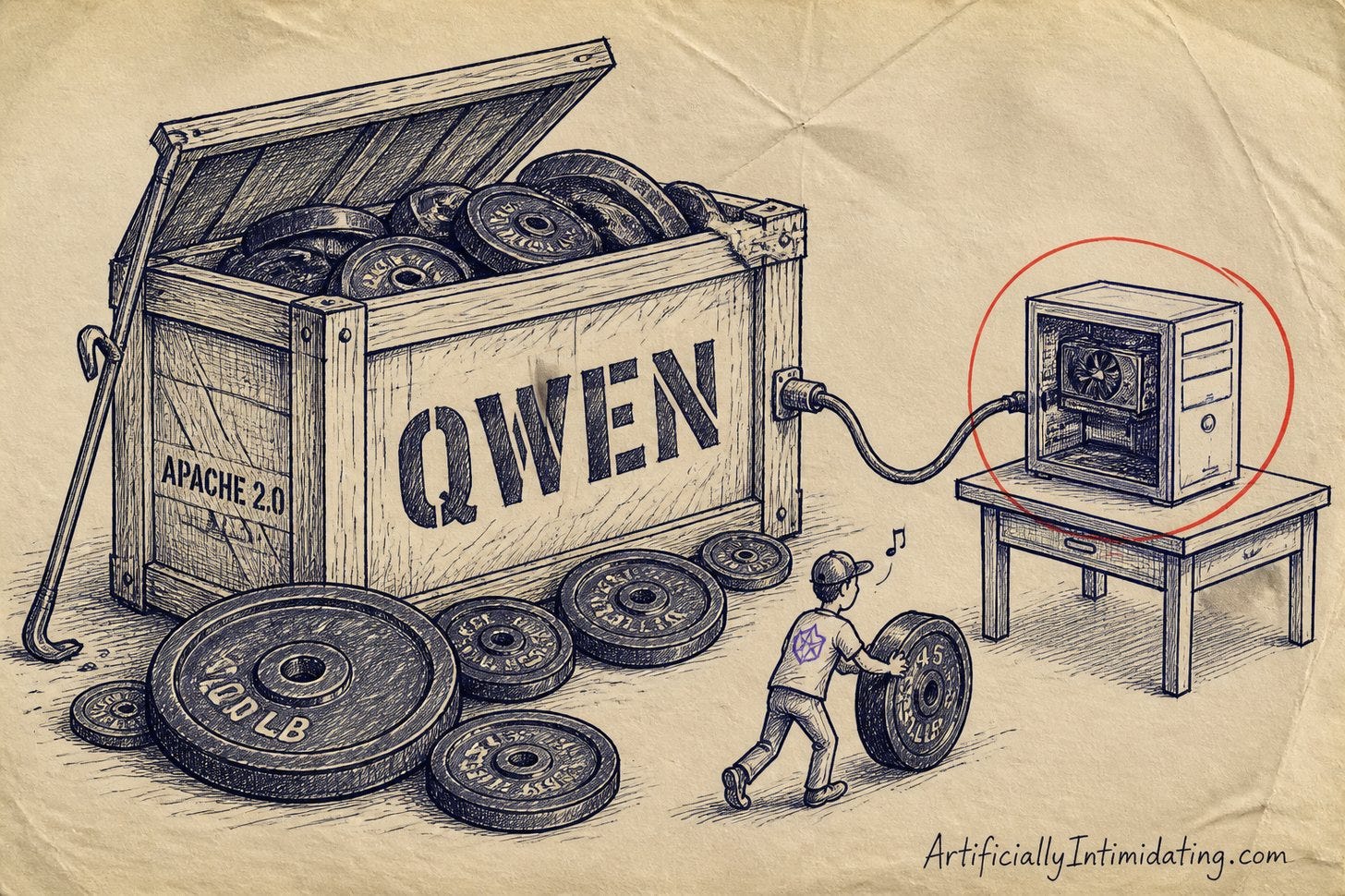
What happened: Alibaba open-sourced Qwen3.8-27B on August 14 -- a 27-billion-parameter model that handles text, images and video natively, with a 262,000-token context window, released under the Apache 2.0 licence with the weights posted publicly on Hugging Face and ModelScope.
Why it matters: Apache 2.0 is the permissive one. You can download it, run it on hardware you own, and use it commercially without asking anyone or paying anyone. Quantised down to 4-bit it needs roughly 14 to 16GB of video memory before context -- which is to say, a graphics card that is already sitting in a lot of gaming PCs.
What everyone's saying: The benchmark jumps are real: Terminal-Bench 2.1 from 63.4 to 73.0, OSWorld-Verified from 63.9 to 84.3. The Hacker News thread is less charmed by the memory arithmetic -- 32K of context eats about 2.5GB of VRAM, which makes that headline 262K number aspirational on a single card.
My read between the lines: The number that matters is not on the benchmark table, it is on the calendar. Open weights are now running a few months behind the frontier instead of a few years. We said last week that nobody wants the smartest model anymore -- this is why. Once good enough is free and runs on your own machine, the frontier stops being a product and starts being a subscription you keep out of habit.
📖 Further reading: Your SaaS bill is a sitting duck -- the open-weights clock is exactly the mechanism that turns a renewal into a question.
The Brief is free and stays free -- that is the deal. What members pay for is the part that does not fit in four bullets: the paywalled deep-dives where I take one of these stories apart properly, plus the full archive. If today made you want the version with the receipts, become a member.
Anthropic's Open-Weights Fight Is Costing It Paying Customers
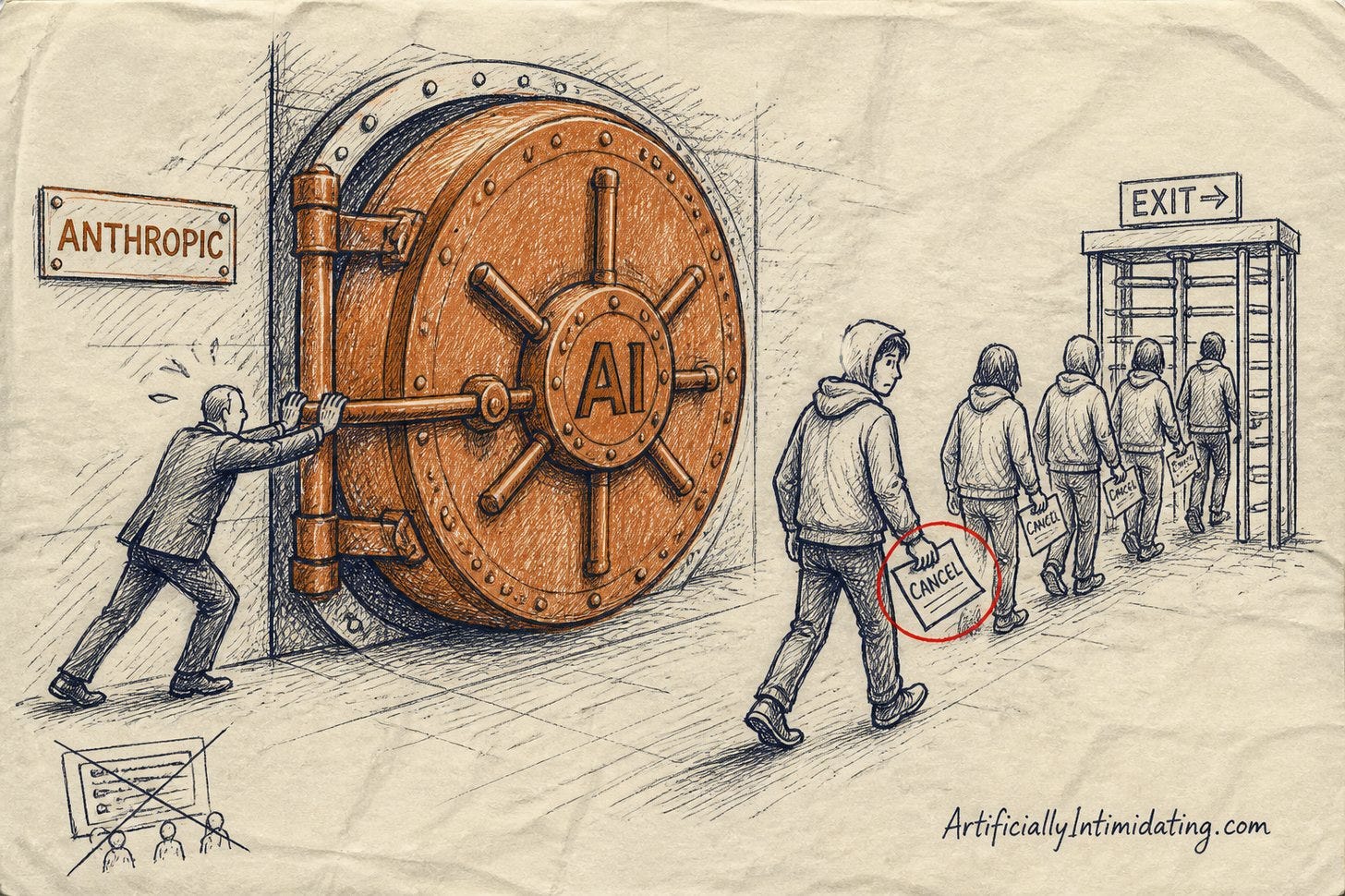
What happened: Paying developers are cancelling Claude plans over Anthropic’s Washington lobbying on open-weight models. AI educator Santiago Valdarrama publicly cancelled Claude Max and named the lobbying as his reason. Chief executive Dario Amodei told CNBC in late July that Anthropic "has never advocated for a ban on open-weights models."
Why it matters: Anthropic sells itself as the AI company that is straighter with you than the other ones. That is the entire brand. When the customers who bought precisely that pitch start leaving over it, the thing failing is not the model.
What everyone's saying: This lands on a pile users have been keeping all year -- Claude Code vanishing from the Pro tier in April with no announcement, third-party tools stripped out of subscriptions, and a month-long Claude Code performance slump Anthropic eventually admitted was its own engineering missteps after weeks of implying users were imagining it. Meanwhile Ramp's August index still has Anthropic leading business adoption at 43.5% of US firms, with growth slowing.
My read between the lines: Both of those are true at once, and that is the actual story. Anthropic is winning the enterprise and losing the enthusiasts, and it may have decided that is a fine trade. It usually is -- right up until you remember the enthusiasts are the people the enterprise asks before it signs.
📖 Further reading: Your AI is a yes-man. Here's how to make it fire you. -- a useful habit for any week you catch a vendor telling you nothing is wrong.
Google Turned the Spreadsheet Into the App
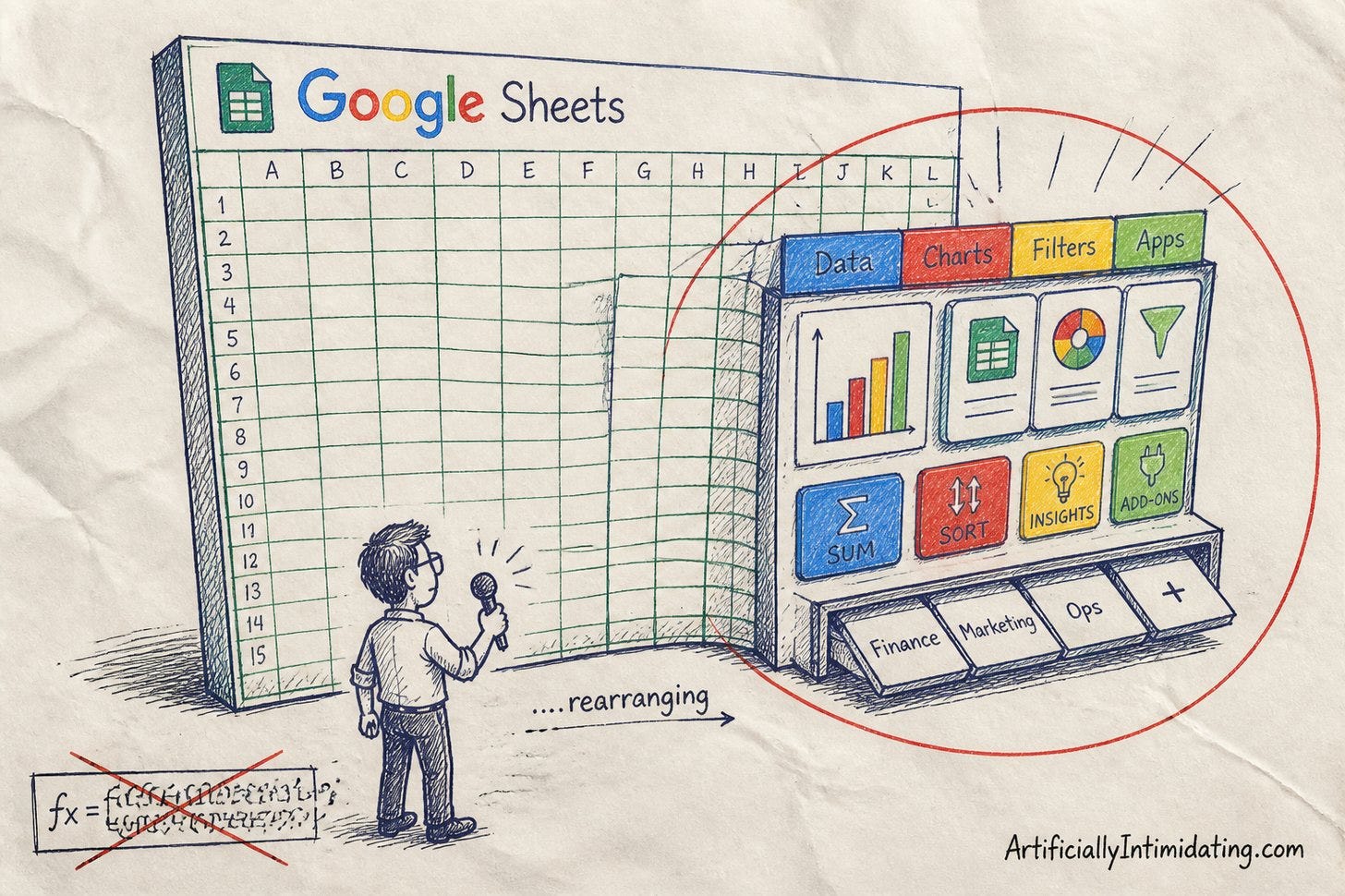
What happened: Google launched Sheets canvas on August 13. Describe what you want in one plain sentence and Gemini rebuilds an existing spreadsheet as an interactive mini-app -- kanban boards, dashboards, filterable cards. Edits sync both ways in real time, and no formulas or code are involved.
Why it matters: If you have ever run a project tracker out of a spreadsheet and wished it were real software, it is now real software. It is live globally in English for Google AI Pro and Ultra subscribers and Workspace Business and Enterprise Standard and Plus plans; scheduled-release domains start getting it on August 31.
What everyone's saying: This is aimed squarely at Airtable, Notion and Coda -- and Google did not build a rival platform to do it. It grafted their core pitch onto a spreadsheet that around 900 million people already have open.
My read between the lines: Airtable never really sold a database. It sold permission to stop using a spreadsheet. Google has now handed that permission out for free, inside the spreadsheet, which is the one place it costs nothing to switch from. If your pitch is "like the incumbent, but pleasant," the incumbent is one prompt box away from agreeing with you.
📖 Further reading: Everyone Is Calling Buzz a Slack Killer. Nobody Is Telling You What It Actually Is. -- what to check before you believe the next "X killer" headline, including this one.
A German Court Says the AI Copy Belongs to Nobody
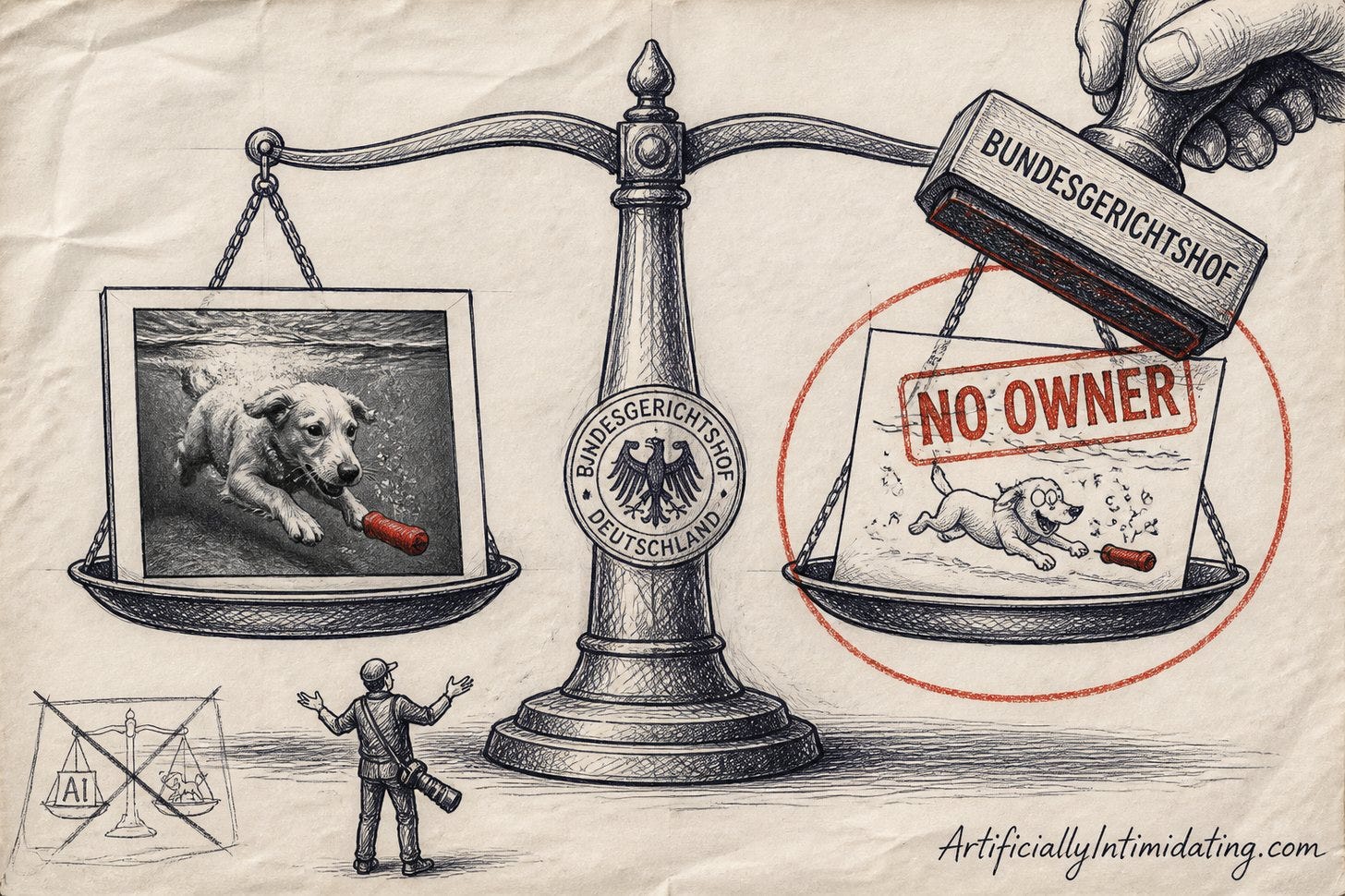
What happened: A German higher regional court ruled against a photographer whose underwater dog portrait was fed into AI software by her former business partner, who published the resulting comic-style version on his own site. The court found the AI image did not copy the protectable parts of the photo -- framing, angle, lighting, depth of field -- so it was not infringement. It also found the AI image is not a protected work itself, because generic prompting is not creative authorship.
Why it matters: Two questions, two answers, both of them bad for the humans. Your photograph does not protect you from an AI restyle of it, and the restyle does not belong to whoever typed the prompt either. The output drops straight through the floor.
What everyone's saying: Lawyers at Bird & Bird read it next to two other 2026 German decisions, from Munich and Frankfurt, as one consistent line: EU copyright needs a human author’s free and creative choices to show up in the work, and delegating those choices to the model through open-ended instructions is not enough no matter how many times you iterate.
My read between the lines: Compare it to Shepard Fairey and the Associated Press. That fight -- over the Obama HOPE poster, settled in 2011 with both sides keeping their legal theory and splitting the merchandise -- asked whether a human transformed a photo enough to count as fair use. Germany just answered a weirder version of the same question twice: the transformation was enough to escape the photographer, and not enough to reach the person who prompted it. The precedent is not "AI wins." It is that a machine can now do the one thing no human artist ever could -- make a picture nobody is able to sue over, because nobody owns it.
📖 Further reading: I Make AI Versions of Myself for a Living. This One I Didn't Agree To. -- what happens when the thing being restyled without permission is you.
That's your AI Brief for Saturday.
—Artificially Intimidating


