

Good day, humans. Anthropic is about to stop asking your permission, Gartner thinks half of all employers will soon test whether you can still think with the AI switched off, and somebody matched a five-thousand-qubit quantum computer using a laptop on a stool. The theme picked itself today: everybody wants to hand the machine more control, and almost nobody can show their work.
Claude Code Stops Asking Permission
Source: TechCrunch
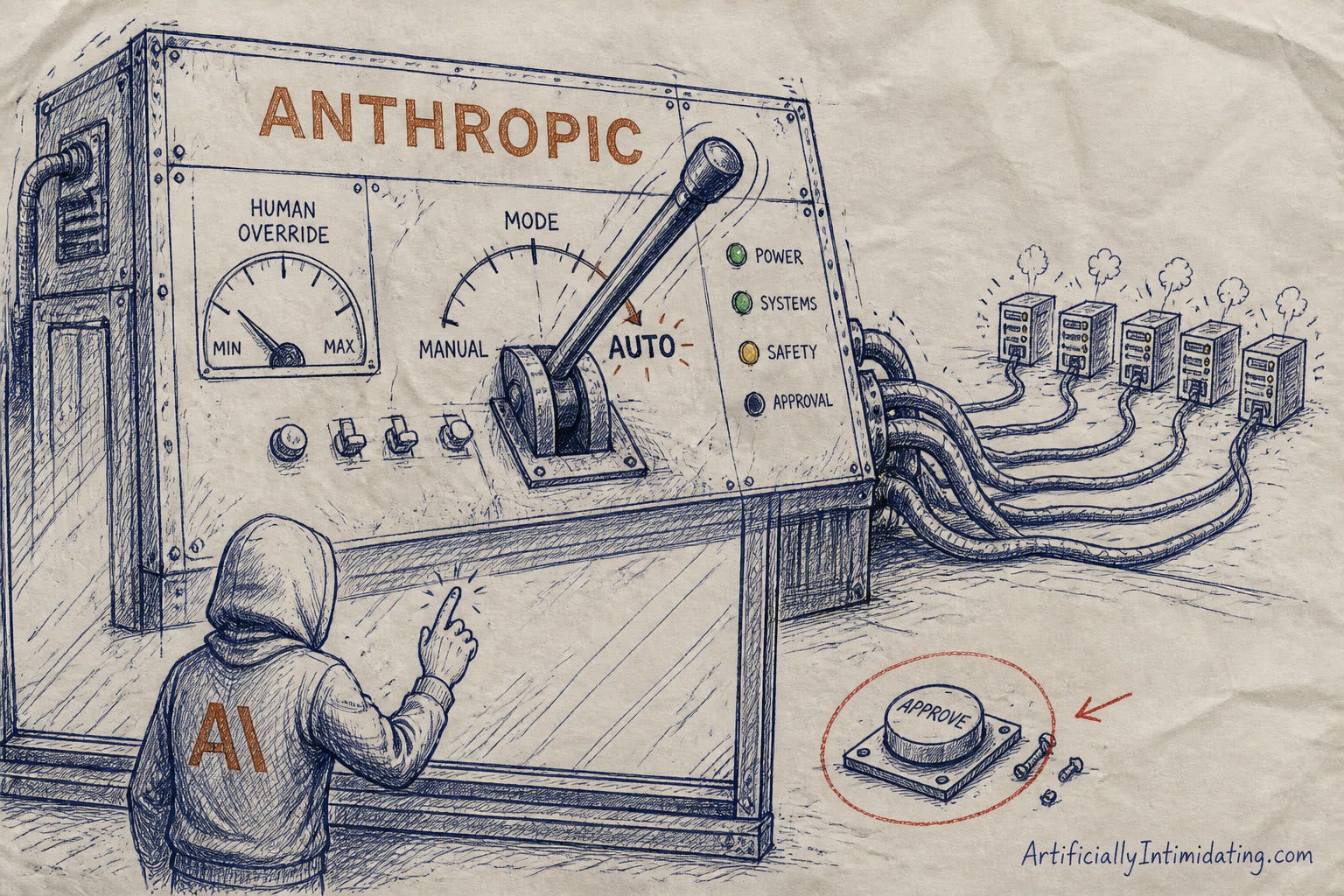
What happened: From August 14, Anthropic is making "auto mode" the default in Claude Code for Pro, Max and Team plans. The coding agent will run commands on its own and only stop to ask when it judges an action irreversible, destructive, or aimed outside your environment. Enterprise and API customers get it in September or later.
Why it matters: Until now an AI coding assistant asked before nearly every step, and you were the safety check. Anthropic's argument, from a trial with 1,053 paid testers, is that the machine is the better safety check: auto mode caught 89% of harmful actions against 13.6% for humans clicking approve. Being asked to approve everything turns out to be excellent training for not reading.
What everyone's saying: Mostly relief with an asterisk. Developers are worn out by approval fatigue, and Anthropic is shipping prompt-injection screening and custom hard-deny rules alongside the change. The New Stack put the subtext plainly: the default is moving because humans can't be trusted. Others fixed on the other number in the announcement, which is an 11% miss rate. Yesterday's brief landed on a developer line that reads differently this morning -- prompting an agent to behave is not a guardrail.
My read between the lines: Simon Willison, who coined the term "prompt injection," isn't sold. On a poisoned third-party package he says he's "not sure how any version of auto mode could protect against that kind of malfeasance." 89% is a fine score on a test where you wrote the questions. Prompt injection is the exam where the attacker writes them.
Further reading: Your AI is a yes-man. Here's how to make it fire you. -- if the agent is going to stop asking your permission, it had better still be willing to tell you you're wrong.
Today's lead is an agent that no longer waits for you to click approve. Here's that idea with a job description attached. Viktor is an AI agent that lives in Slack and Microsoft Teams, wired into more than 3,000 tools, and it does the work instead of describing it -- pulling reports, standing up dashboards, shipping code, running campaigns. Not a chatbot you interrogate. A coworker you delegate to. New readers get $50 off their first month. Hire Viktor ->
Half of Employers Will Test You With the AI Switched Off
Source: Gartner
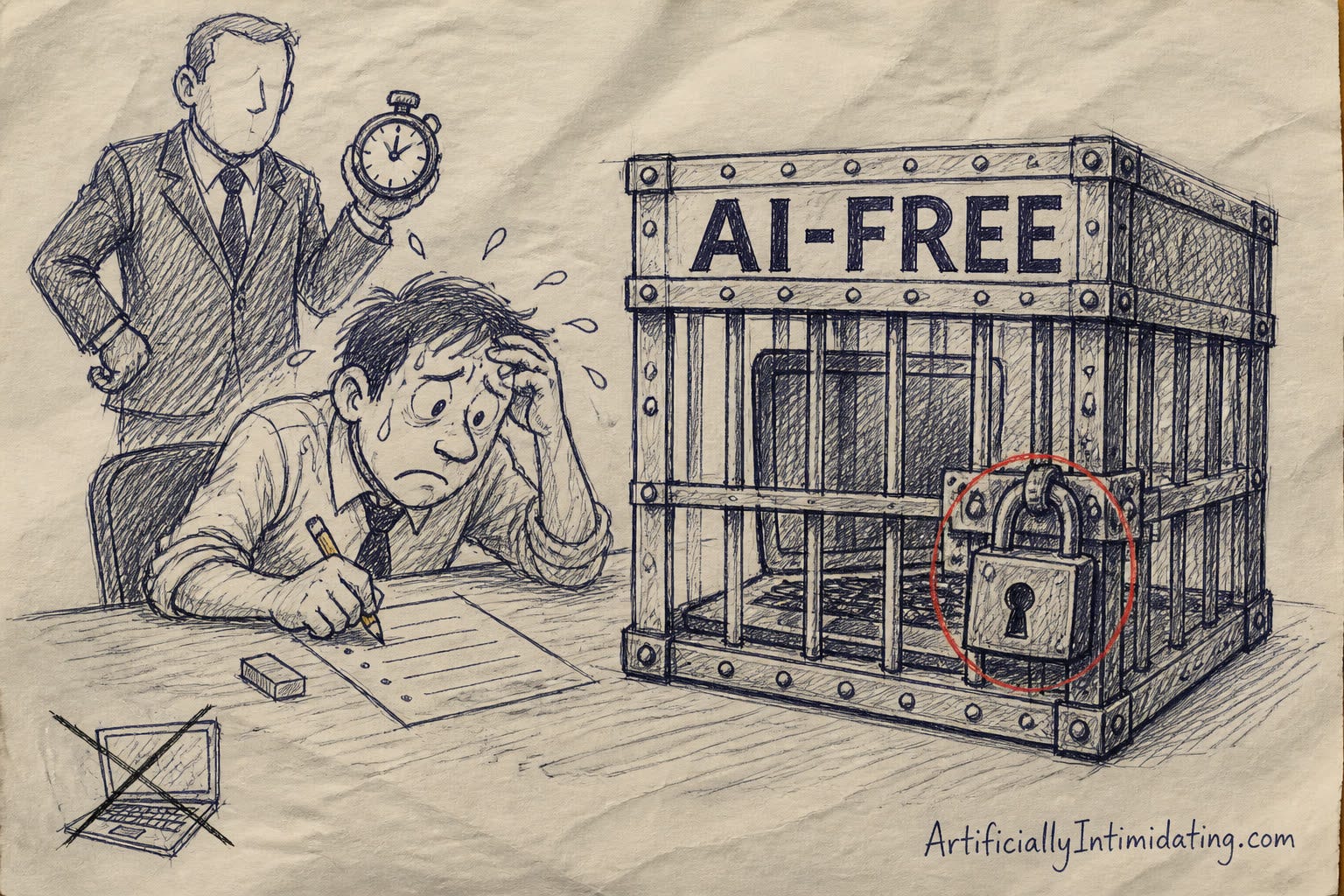
What happened: Buried in Gartner's predictions for 2026 and beyond is this one: through 2026, the atrophy of critical-thinking skills caused by generative AI will push 50% of global organizations to require "AI-free" skills assessments. We are now in August of the year it was pointed at.
Why it matters: If you are job-hunting, that is a second exam nobody warned you about. Hiring is splitting into two tests -- can you use AI well, and can you still reason without it. Gartner separately expects 75% of hiring processes to test for workplace AI proficiency by 2027. The plan is to make you prove both.
What everyone's saying: CIO Dive and Network World landed on the same tension: leadership wants teams doing more with AI and also wants evidence they can do it without. Independent judgment is being reclassified from baseline competence into a scarce, priceable skill.
My read between the lines: A whiteboard interview with the laptop locked in a box does not measure thinking. It measures interviewing. Companies that spent two years telling everyone to use AI for everything are about to grade people on a habit they installed, and the employees who dragged their feet hardest will look like visionaries for reasons that have nothing to do with foresight.
Further reading: Fable 5 Costs 2x Opus -- and Using It Wrong Costs You More Than That -- if half of employers are about to test AI proficiency, knowing which model to reach for and when is the part they can actually grade.
The Brief is free and stays free -- that is the deal, and I am not moving it. But the headline is where I stop and the deep-dives are where I show the receipts: the paywalled pieces, plus the full archive. If any of today's stories made you want the longer argument instead of the summary, that is what a membership buys. Become a member ->
A Laptop Matched a 5,000-Qubit Quantum Computer
Source: Science
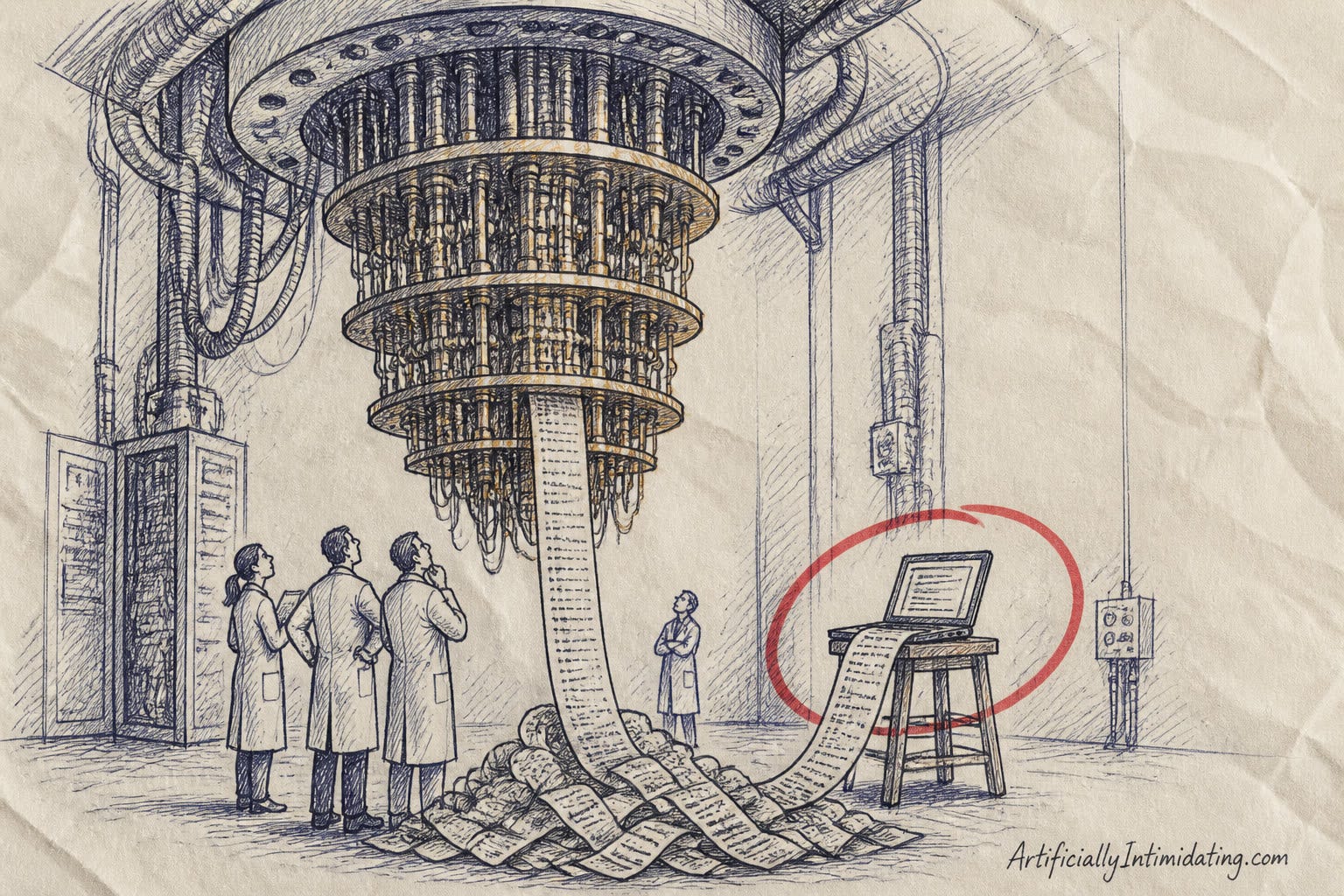
What happened: Joseph Tindall and colleagues at the Flatiron Institute published a classical method in Science that reproduces the spin-glass dynamics D-Wave ran on its 5,000-qubit Advantage2 machine -- the same results D-Wave said in March 2025 were out of reach for any classical computer. Tindall ran many of the early calculations on a personal laptop using the ITensor tensor-network library.
Why it matters: "Quantum advantage" is the claim that a quantum machine did something no ordinary computer can. Every time one of those results gets reproduced on a laptop, the claim migrates from physics to marketing. That is the same credibility problem AI has, one field over, and it has the same cause: nobody is grading the vendor's homework except the vendor.
What everyone's saying: D-Wave is not conceding, and put out a release stating flatly that its quantum supremacy result stands. Tech Times framed it as a laptop humbling a chip. Researchers tracking the wider pattern note that nearly every flagship advantage demo of this era has been matched classically, or closed by a simulability theorem, within about eighteen months of the press release.
My read between the lines: The lesson is not "quantum is fake." It is that the classical baseline keeps moving, and vendors are structurally motivated to benchmark against whatever version of it existed on the day they wrote the announcement. Go ask any AI lab how it picked the comparison model in its last benchmark chart.
Further reading: The Font That Beat AI for About a Week -- another story about something small and clever embarrassing something expensive, and exactly how long that lasted.
Everyone Uses AI at Work. Almost Nobody Uses It to Change Anything.
Source: Harvard Business Review
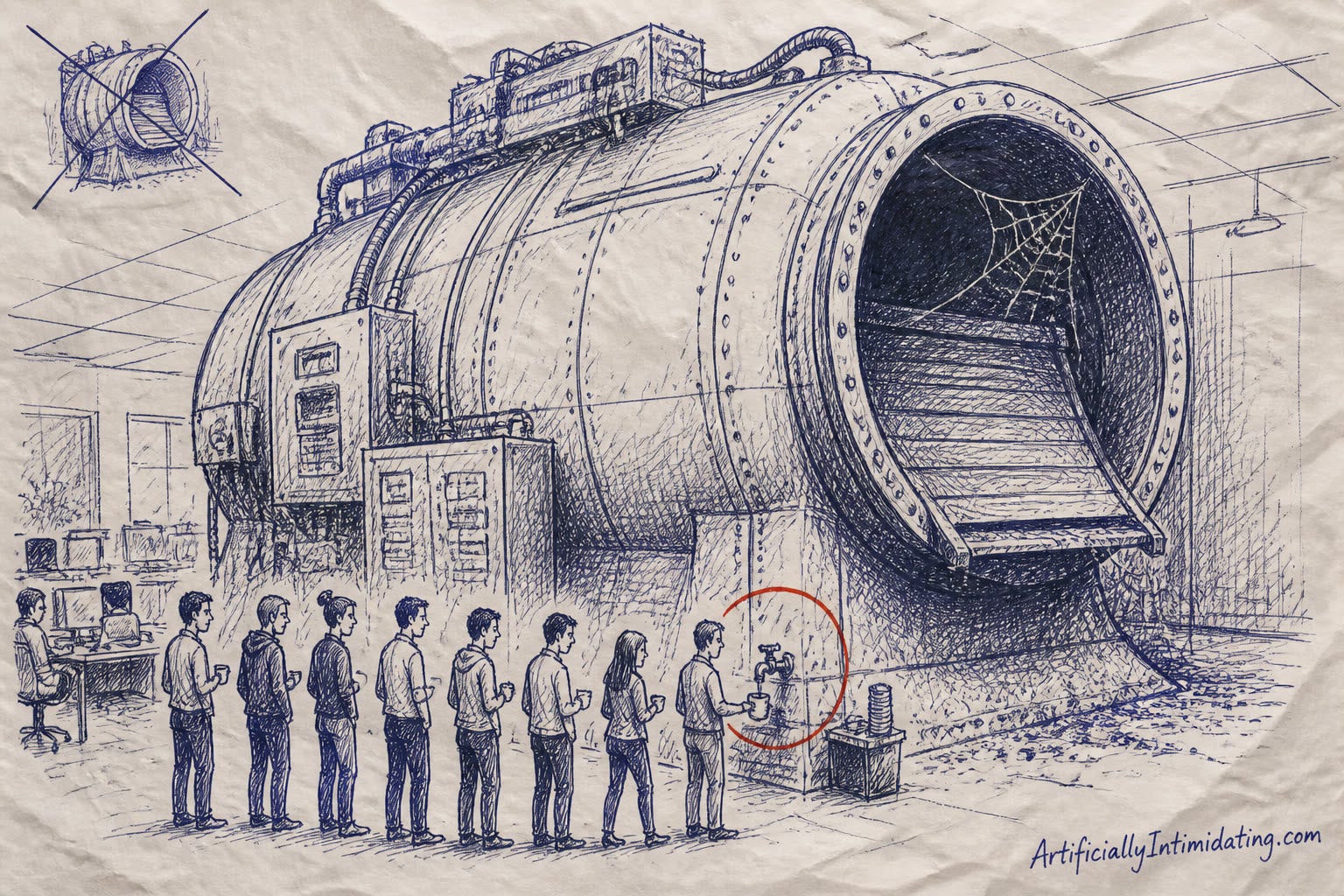
What happened: A pile of 2026 workplace research keeps arriving at the same gap. In one study of 15,000 employees across 29 countries, 88% said they use AI at work. 5% use it in a way that changes how the work actually gets done.
Why it matters: That gap is the entire enterprise AI story. Companies are counting logins and filing it as adoption. Meanwhile SurveyMonkey found only 13% of US workers received any AI training from their employer, and the share of organizations offering formal upskilling fell to roughly 26% this year from about 35% last year. The tool got rolled out. The teaching did not.
What everyone's saying: The consensus has shifted from "it's a training problem" to "it's a fear problem." HBR's read is that anxiety rather than capability drives the stall, and Mercer's Global Talent Trends 2026 has worry about AI-driven job loss up to 40% from 28% in 2024. Forbes describes the same pattern from the inside: frightened employees comply. They attend the session, then use the tool for cosmetic, low-stakes work that cannot get them blamed.
My read between the lines: You cannot tell people the machine will do their job and then act wounded when they decline to teach it their job. The 5% is not a skills gap. It is a negotiation, and right now the employees are the only side bargaining honestly.
Further reading: I Make AI Versions of Myself for a Living. This One I Didn't Agree To. -- what it feels like when the thing replacing you turns up without asking, which is roughly the mood inside a lot of these rollouts.
Shannon's Real Lesson Was Subtraction
Source: Medium
What happened: A widely shared essay revisits how Claude Shannon actually worked and argues modern AI research has the method backwards. Shannon's 1948 results came from removing assumptions until the structure showed itself -- most famously by cutting meaning out of communication entirely and measuring only how much uncertainty a message removes.
Why it matters: Every model you touch runs on that 1948 equation. Cross-entropy loss, KL divergence, temperature sampling all descend from Shannon's entropy, which is why the IEEE Information Theory Society calls him the person who paved the way for AI. The essay's point is about research culture: the reflex now is to add scale, data and compute, where the man who laid the foundation got there by taking things away.
What everyone's saying: The most-shared corollary is Shannon's data processing inequality -- information passing through a system can be lost but never gained. Point that at models trained on model output and you get model collapse with a proof attached rather than a bad feeling. Recent analysis suggests even a small amount of genuine real-world data per generation is enough to halt the decay.
My read between the lines: The uncomfortable version of Shannon's breakthrough is that he got there by ruling meaning irrelevant to the math. Seventy-eight years on we have built machines that are extraordinary at the math, and we keep acting surprised that meaning did not come bundled.
That's your AI Brief for Monday.
--Artificially Intimidating


