

I want to tell you something I should probably be embarrassed about.
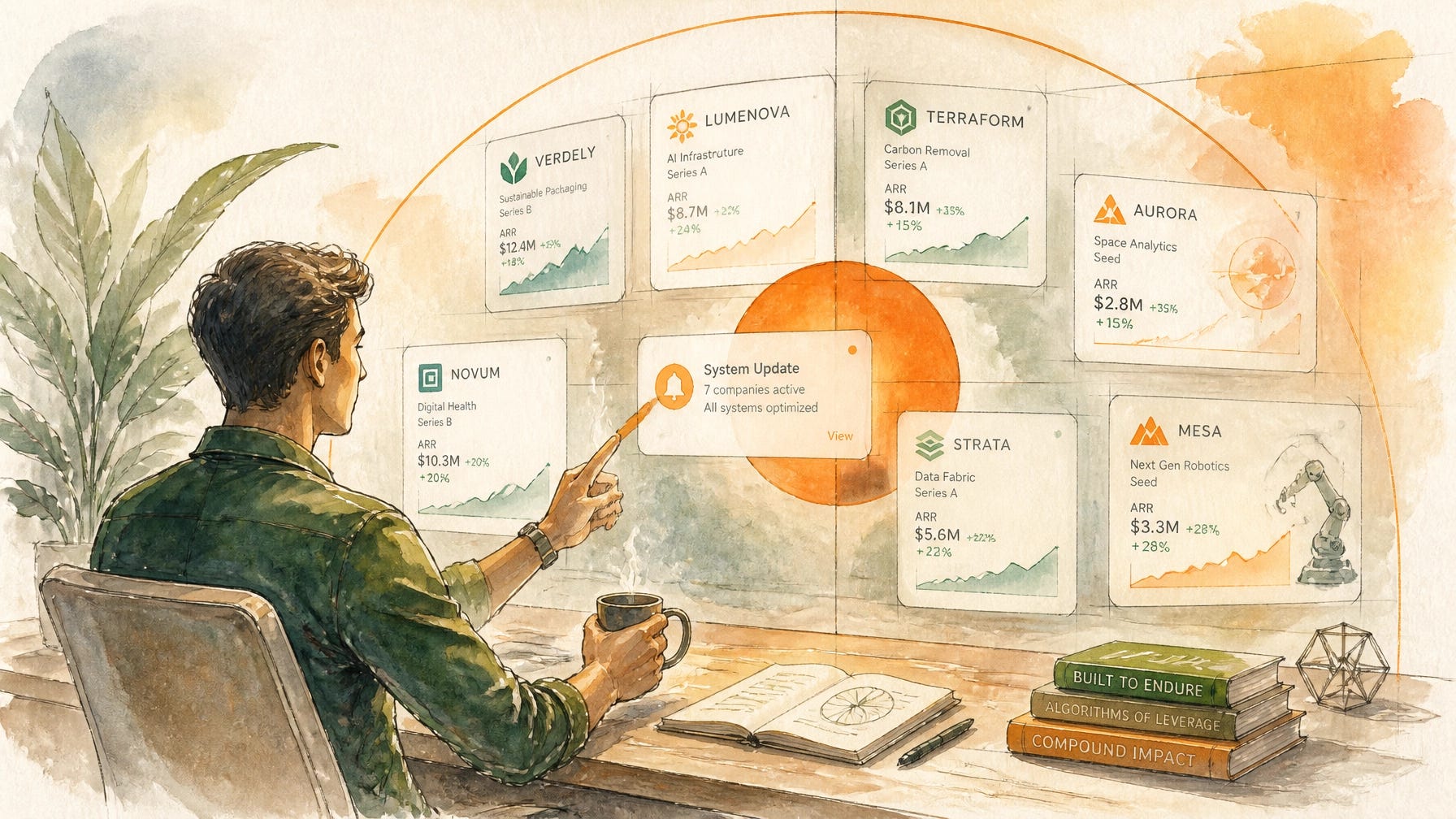
I’ve been running seven companies through Paperclip for a few months. Some are humming along. Most have stalled because I haven’t had the bandwidth to keep pushing them — which is a specific kind of irony when you’re supposed to be running an AI-powered operation. I was using Paperclip as my agent OS and largely ignoring Hermes. The creator noise around it felt like hype bait, and I’d already found something that worked.
Then I watched this episode of The Next New Thing — Andrew Warner talking with Justin Brooke about his current setup: Hermes + gBrain + Paperclip. And things clicked in a way they hadn’t before.
Hermes isn’t a Paperclip replacement. It’s the layer that sits on top — a digital twin that knows your goals, tracks what’s stalled, pings you with questions, and gets things moving again through Paperclip. The combo is genuinely different from either tool alone.
I’m a few days into onboarding Hermes right now. This is my real-time take: what’s worth the hype, what isn’t, and what I wish someone had told me before I spent weeks wading through creator content to find out. I have products in this space — MirrorMemory.ai and PocketSquare.ai — so you should know that going in. The goal isn’t to scare you into buying something. It’s to give you an accurate picture.
What Paperclip already gets right
If you haven’t read my Paperclip Day 0 post, the short version: it’s an open-source agent OS built around an org chart metaphor. You hire agents, give them job descriptions, assign tasks, and review what comes back.
The thing that sets it apart — and the reason I stayed — is how honest Dotta and the community are about what it actually is. Paperclip is explicitly designed as a human-in-the-loop system. Agents run, but they require a human to participate. That’s not a limitation. It’s a design philosophy. It means you can give agents real autonomy without handing over the keys to things that would be catastrophic to mess up. That honesty goes a long way when half the internet is telling you AI agents will run your business while you sleep.
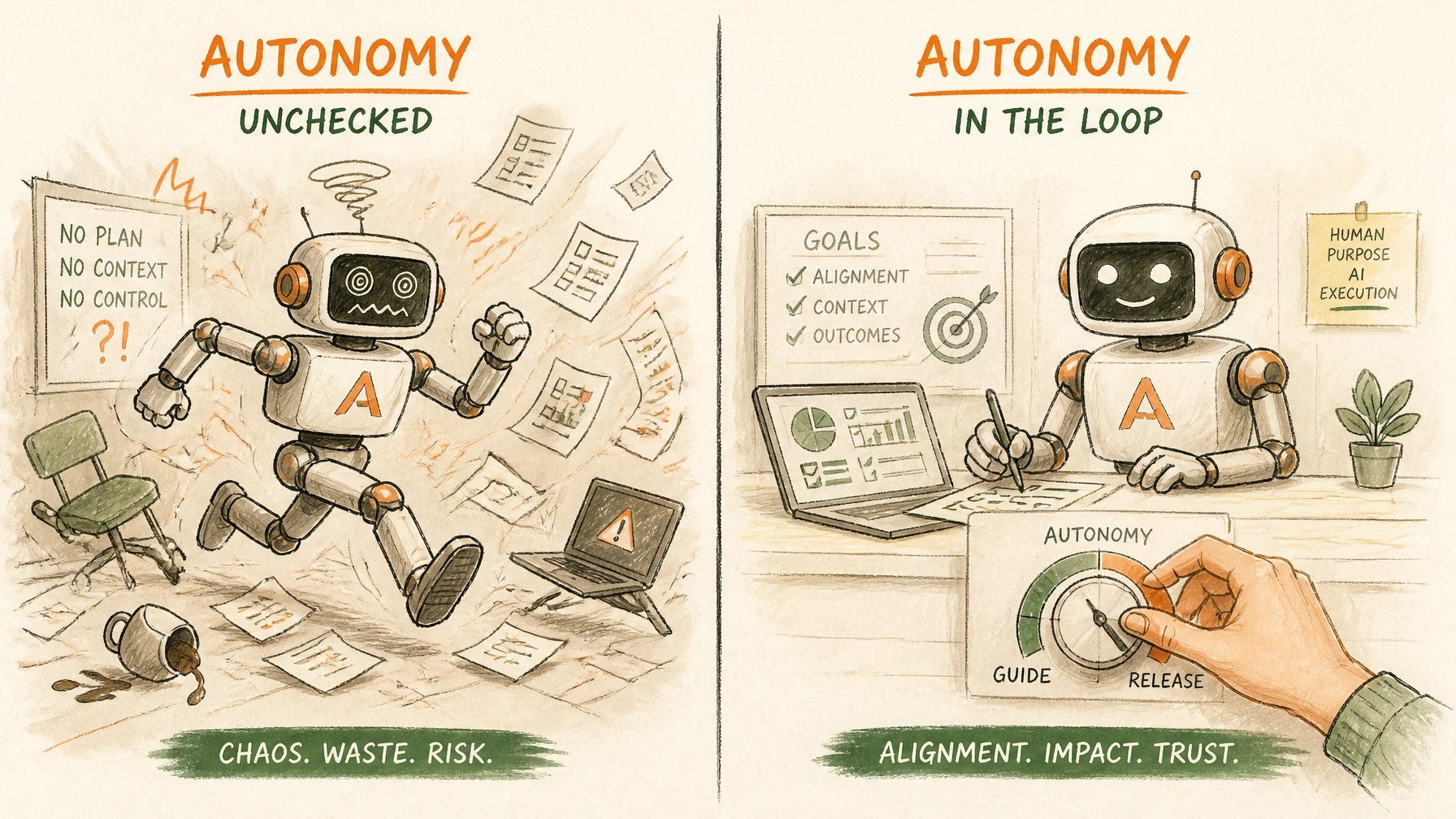
I've also gotten genuinely into the community around it — people like Aron Prins, who built Paperclip Vision. Most agent setups fail not because the agents are bad, but because they have no mandate. They don't know what they're allowed to do, who to escalate to, or what the company is actually trying to accomplish. Vision solves this at the source: it interviews the founder (me) and generates two key documents — a VISION.md (think of it as the company’s constitution: mission, revenue model, org structure, CEO mandate, guiding principles) and a CEO_BOOTSTRAP.md (the activation sequence that lets the CEO agent start running without the founder in the loop for day-to-day decisions). It's the kind of primitive the ecosystem needed and that a community member just went and built. Sending bug fixes, joining the Paperclip community — this is what using a real open-source tool should feel like.
What Paperclip alone doesn’t solve
Seven companies. That’s what I’m managing in Paperclip. Some have momentum. Some have stalled — not because Paperclip can’t handle them, but because “I have no self control and keep adding companies before the current ones have traction. Paperclip is excellent at executing tasks I hand it. It’s not as good at asking: “Hey, you haven’t touched the MirrorMemory.ai roadmap in three weeks — want me to start moving on the next phase?”
That’s where Hermes comes in.
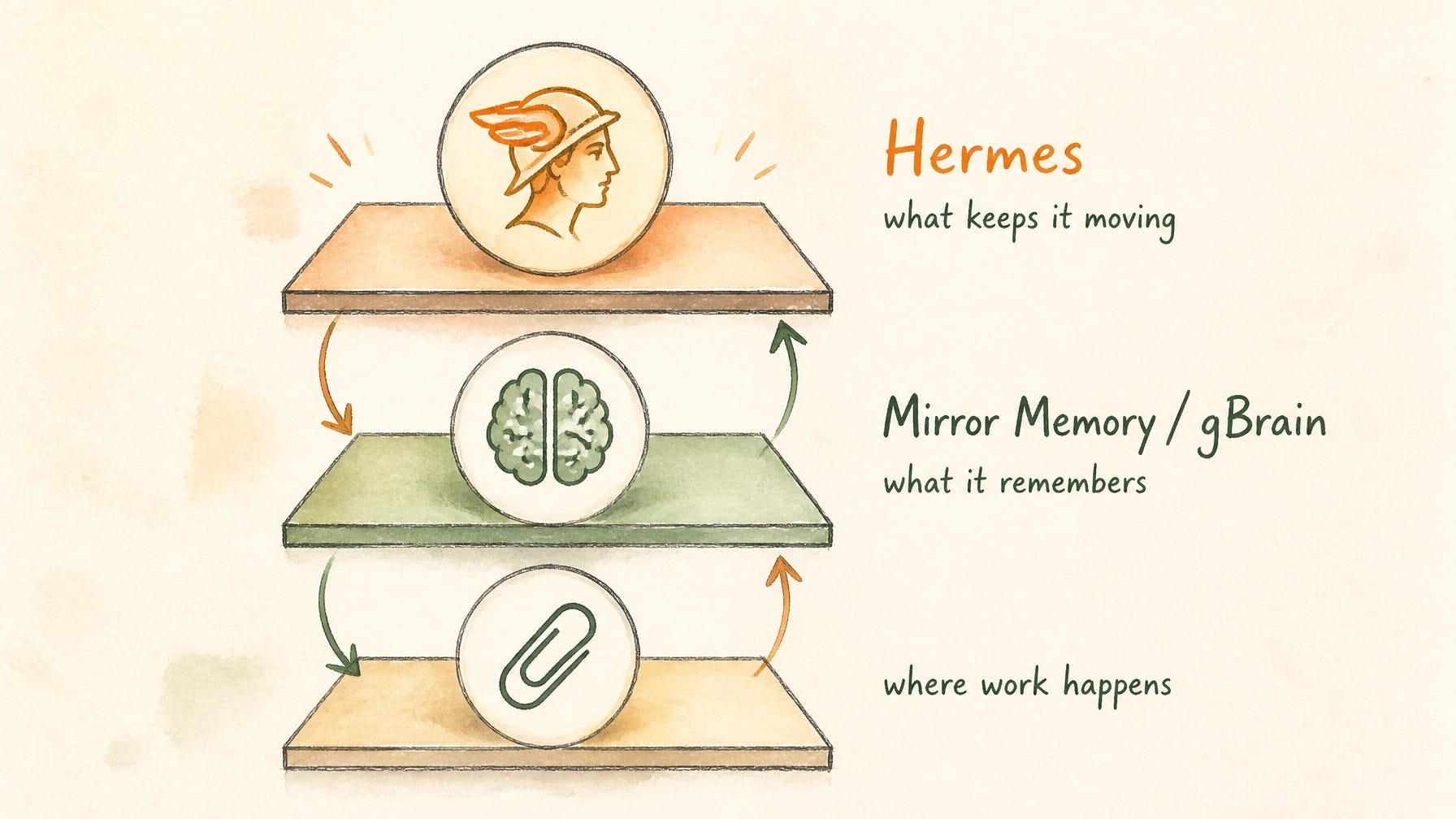
The way I now think about it: Paperclip is my company’s operating system — where work happens, where agents live, where tasks get done. Hermes is the layer above it — the thing that knows my goals across all of my companies and personal projects, tracks what’s stalled, pings me with clarifying questions, and feeds work back into Paperclip to get it moving again. Because it holds persistent context on how I actually think and what I’m trying to accomplish, it can come to me with solutions rather than just problems — and eventually, for the lower-stakes decisions, start making them on my behalf using my own knowledge and preferences. Not one tool replacing another. A stack.
What’s actually real about Hermes
Three things stand out from both my onboarding and the Andrew Warner / Justin Brooke episode.
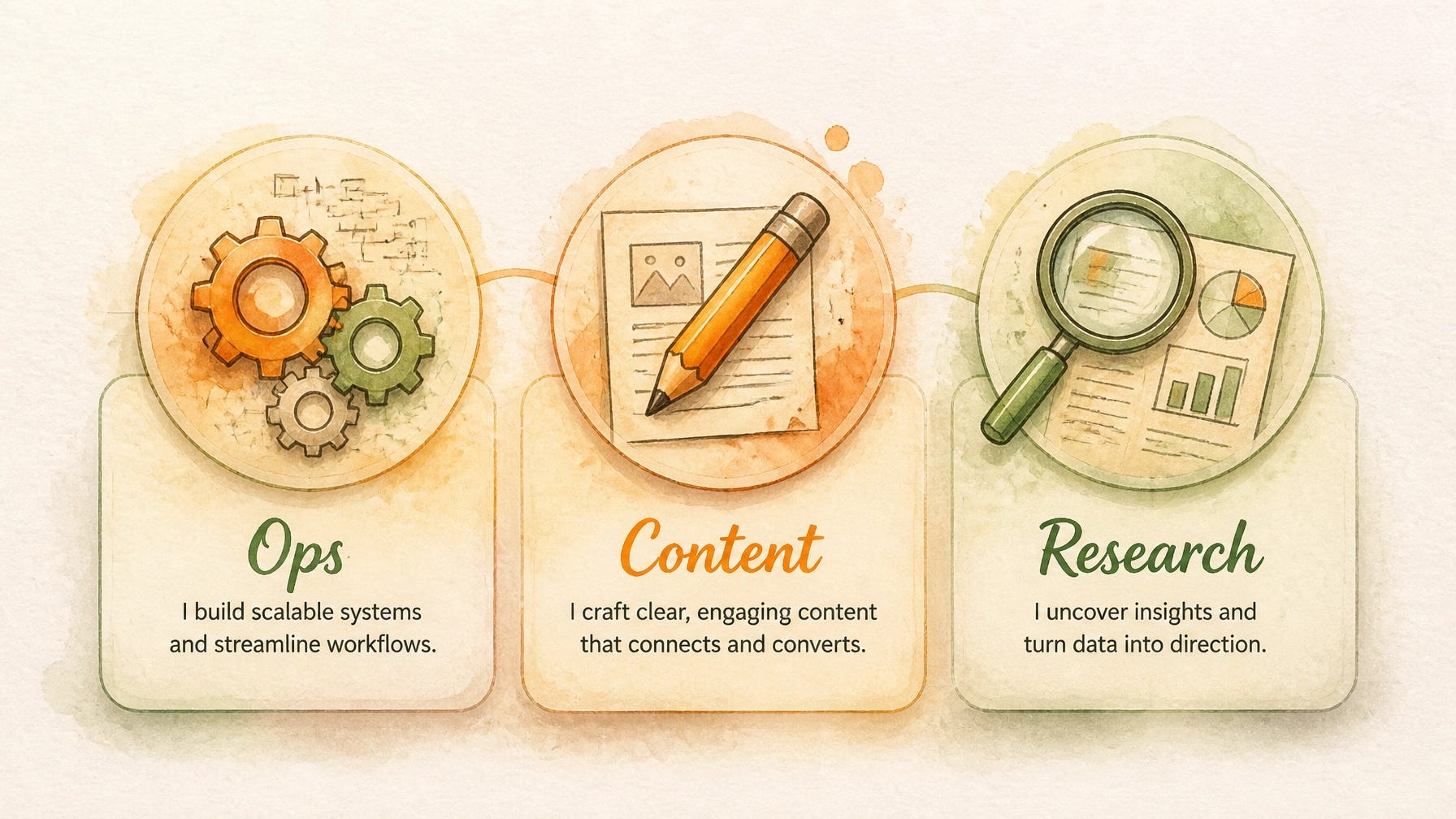
The first is auto-learning skills per persona. Hermes builds and updates skills for each agent based on how you correct it. Your “writer,” “ops,” and “researcher” personas gradually lock into your preferences without you reinstalling configuration every session. It’s slow to notice, but it compounds.
The second is memory that actually persists. This is the part that changes the daily experience. When I first connected Hermes to Mirror Memory — originally intended as an internal memory tool we built at OutSnapped on top of Nate B Jones’s Open Brain framework — Hermes immediately knew who I was. No onboarding checklist. No “tell me about yourself.” It picked up context from the memory layer, asked some clarifying questions, and started acting like it had been on the team for a week and actively wanted to impress. Justin Brooke uses Garry Tan’s gBrain for the same slot in his stack. Either works. The key is having something there — running either tool without a persistent memory layer is like hiring someone with amnesia.
I’ve set up a lot of agents. Each time, you spend the first session re-explaining your business to something that will forget everything the moment you close the tab. The persistent memory experience is genuinely different, and once you have it, it’s truly magical and you don’t want to go back. When set up correctly, it feels like that that rare friend who can finish your sentences.
The third is long-running /goal missions, not one-off prompts. This is the most underrated thing about Hermes. For example, Justin used it for a land sale — Hermes pulled Zillow comps, flagged that their asking price was $50K too low, built a phased marketing plan across Craigslist, Facebook Marketplace, LandWatch, and a dozen other platforms, and generated platform-specific copy and buyer objection scripts. Not “here’s what you should do.” Here’s the plan. Approve phase one. I’ll get started. That’s a real use case with real stakes, not a demo.
The combination of persistent memory, skill evolution, and long-running goals is where Hermes stops feeling like ChatGPT with a Kanban view and starts feeling like a primitive operating system for your work. Stacked on top of Paperclip, it’s the closest thing I’ve found to actually running a small business like a system rather than a sprint.
What the Hermes hype gets wrong
I learn real things from a lot of the big Hermes content creators — the walkthroughs, the use case compilations. I’m not dismissing it. But there are patterns worth naming.
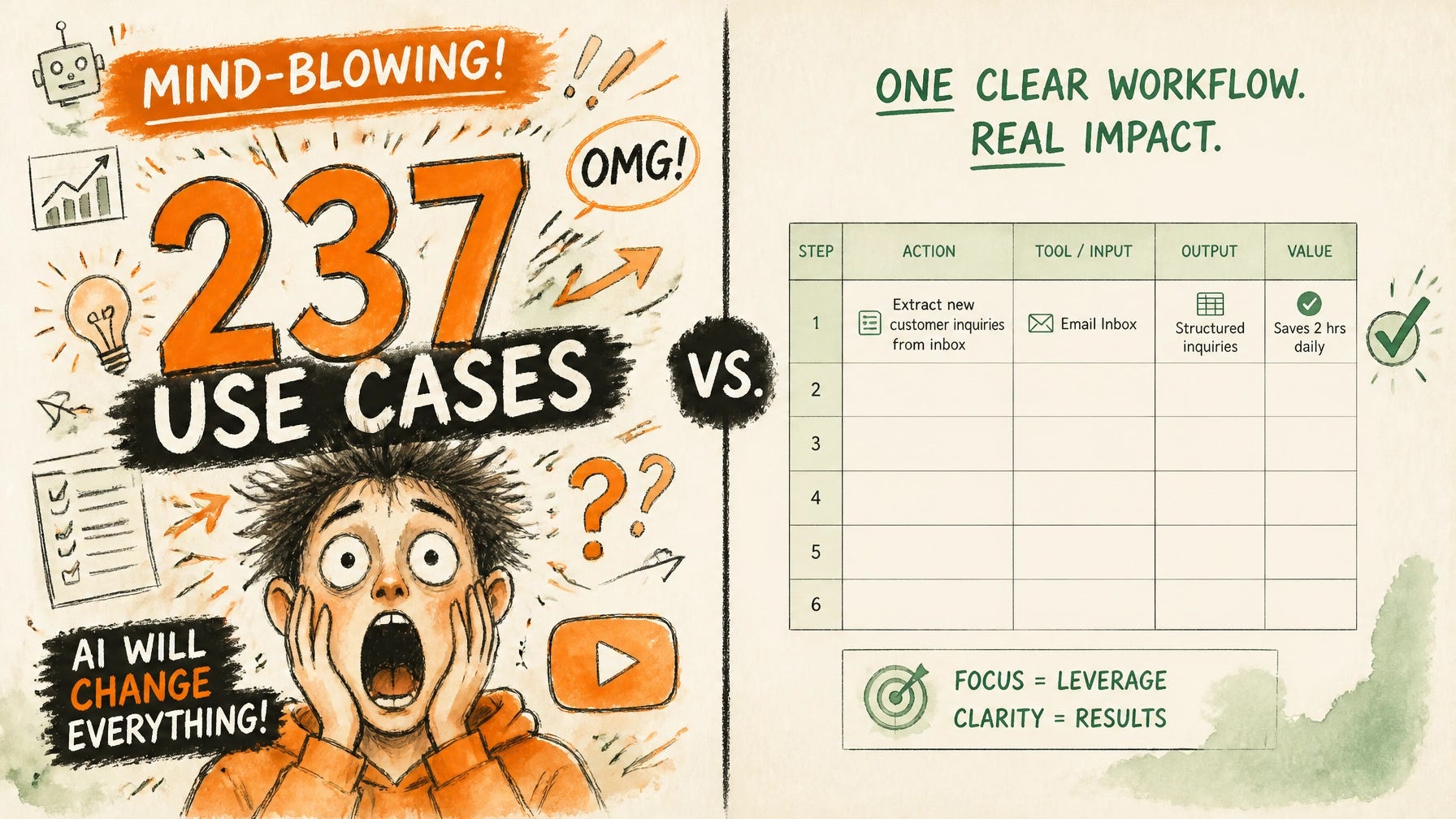
The most common one: the creator presents themselves as running a portfolio of companies in their sleep. When you look closely, it’s usually a funnel into a paid community and a media channel. That is a real business. It’s just not the same kind of empire the thumbnails imply. The gap between “empire” and “one business doing fine” is where you get sold a $2,000 course.
The framing that bothers me more is “learn this NOW or be left behind FOREVER.” Nobody in the Hermes creator space has shown receipts for true compounding, verifiable business outcomes at the scale those scare tactics imply — unless that business is selling the courses themselves. That framing exists to trigger urgency, not to help you. We’ve written about this trap before — the goal is to hand you tools so you can own your own stack, not to make you dependent on someone else’s content.
Then there’s the “237 ways o make using Hermes” video format. Useful as inspiration. Not useful as proof that any of those workflows are producing revenue at real companies. And the smart home flexes — Hermes toggling your lights via Home Assistant — are genuinely cool content that costs more in tokens and complexity than you’ll ever make back.
If you’re evaluating Hermes for your own stack, treat most creator content as sales collateral, not case studies.
My exact setup: what I installed, what broke, what I’d do differently
The base layer: Paperclip on a VPS
Don’t run Paperclip on your laptop. Put it on a VPS — I use Hostinger* so it’s always on, accessible from any device, and not tied to whether your machine is awake. I wrote about the Mac Mini vs. VPS decision here if you want the full reasoning.
