


Good day, humans. OpenAI shipped a feature that watches what you do on your Mac and files it under memory. xAI shipped five AI coworkers who share one computer and one set of your passwords. Employers found out what happens when applying costs nothing. And a French theorist who died in 2007 turns out to have written the whole script.
First, a Quick Detour: I Was on [SIC] Talks
Ben Dietz had me on [SIC] Talks #121 this week. We met around 2007, when he was at VICE and I was still Nicky Digital, both of us out six nights a week. Twenty years later the conversation is about why I write an AI newsletter every morning.
We got into the 1.45 million nightlife photos sitting in my archive, and the math that says reviewing all of them takes about eight years at eight seconds each. Why I started using Midjourney to make the photo I would have taken of moments that happened before I was born. Where I landed on the training-data fight, which is less principled than it sounds. And the other Substack I run as a control experiment: fully automated, no human in the loop, same conceit as this one, about eight subscribers. That number is the whole argument.
Listen on Substack, YouTube or Spotify.
ChatGPT Now Remembers Everything You Do
Source: 9to5Mac
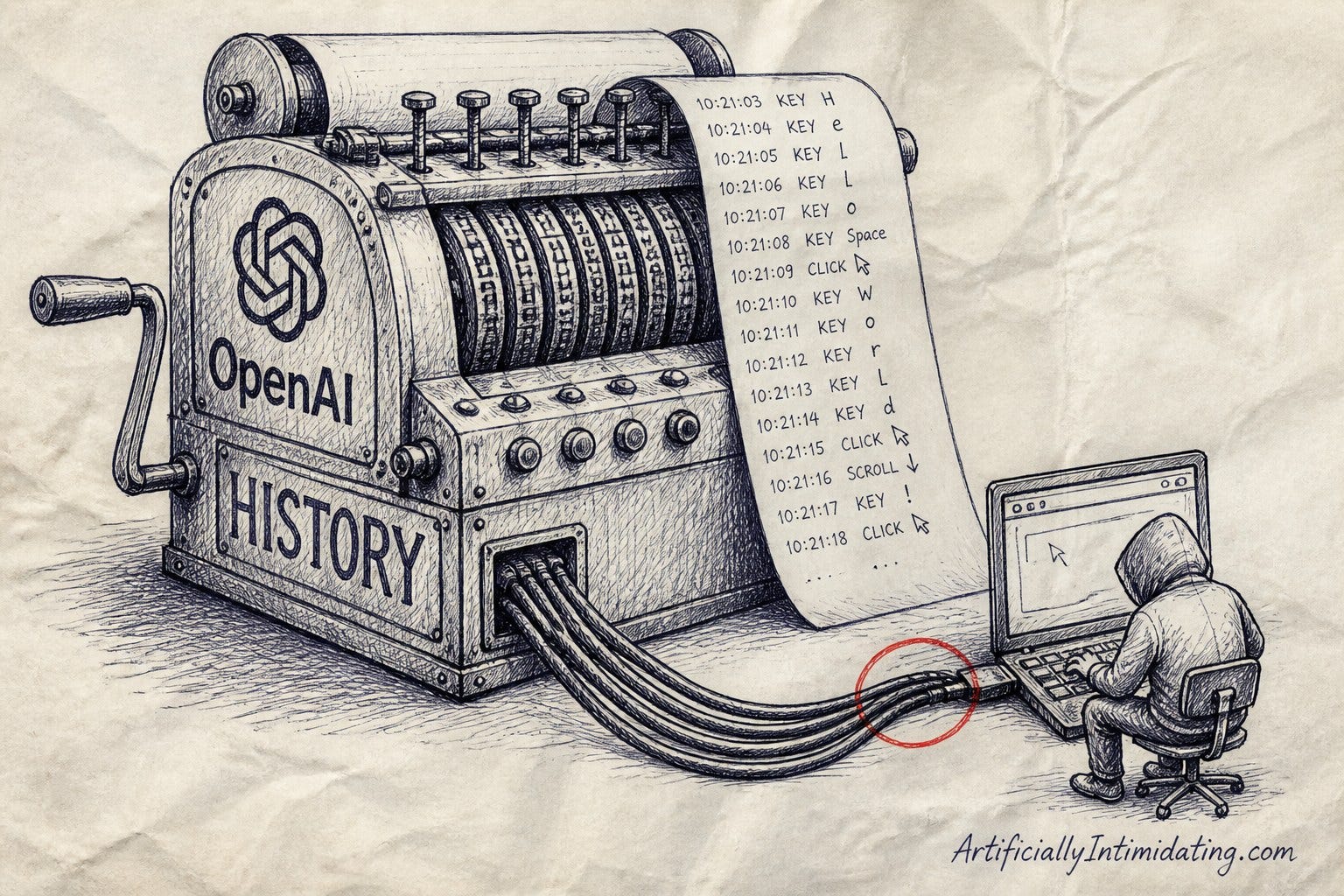
What happened: OpenAI switched on Computer History in the ChatGPT app for Mac. It is opt-in and off by default, and once enabled it records what you do across the apps and websites you approve — clicks, typing, keyboard shortcuts, app switches — then turns that stream into memories and a searchable timeline ChatGPT and Codex can draw on. It replaces the Chronicle research preview and reached Pro, Business and Enterprise users on August 13.
Why it matters: Every assistant until now only knew what you typed into its box. This one knows what you were doing in all the other windows. That is the difference between an assistant you have to brief and one that already knows — and the entry fee is a running log of your working day.
What everyone's saying: OpenAI is leaning hard on what it does not collect: no screenshots, no screen recordings, no microphone, no system audio, and private browsing excluded. The Register was less charmed, reading the design as a trade of screenshot surveillance for friendly keylogging.
My read between the lines: The detail worth your attention is the 48-hour local cache. Raw interaction events sit on your Mac before they are processed, and the exposure there is not OpenAI — it is every other process running on the same machine. OpenAI solved the optics problem, because screenshots look sinister and text logs do not, and left the plumbing problem sitting on disk. "Off by default" is also doing heavy lifting in a sentence that ends with "and your admin can turn it on."
Four of today’s five stories are about work happening somewhere you cannot watch it. Viktor is the version where that is the point. It is an AI agent that lives in your Slack, plugs into more than 3,000 tools, and comes back with the finished artifact — the report, the dashboard, the campaign, the working code — instead of a paragraph explaining how you might go make one. Not a chatbot you prompt. A coworker you hand things to. New readers get $50 off their first month. Hire Viktor →
Five AI Coworkers, One Shared Computer
Source: VentureBeat
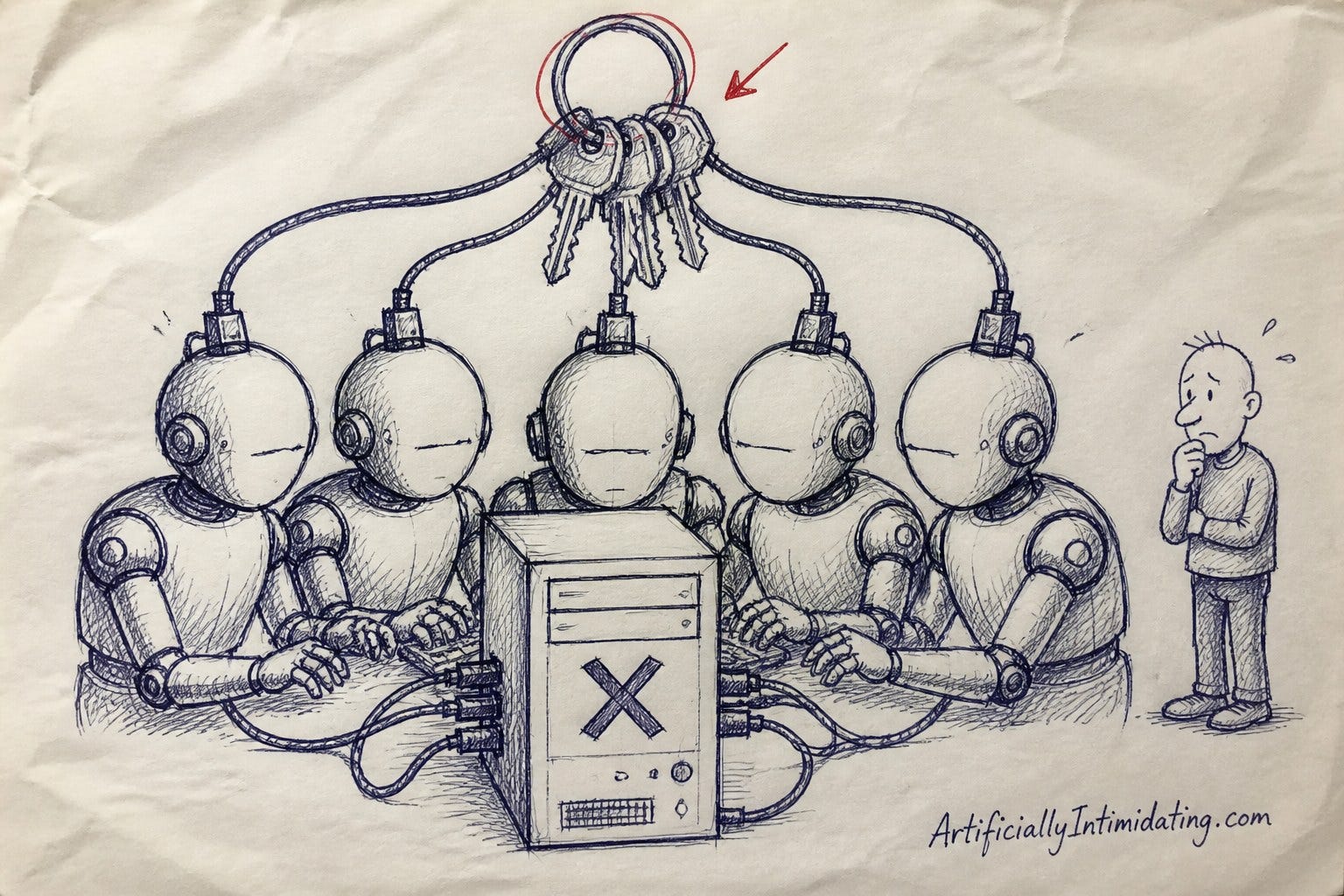
What happened: xAI opened an early beta of Grok Bot on August 11, on desktop and iOS. The pitch is a team of always-on agents that each get a cloud computer with browser, terminal and file access, sign into the tools you already use rather than talking to them through an API, and grind through multi-step work like a colleague. Launch coverage puts it around $120 a month.
Why it matters: An agent that holds your logins and runs while you sleep is a different kind of object than a chatbot, and it should be governed like one. This is the first mainstream product where "AI coworker" stops being a metaphor and starts being an account with credentials.
What everyone's saying: The capability is real and early users say the persistence is what sells it. The friction is architectural: the launch post says bots get "their own computer," while the documentation says every bot on an account shares one persistent cloud computer, and that a bot’s screen is explicitly not a security boundary. xAI has not published how credentials are stored, whether a bot can be scoped to some of your logins instead of all of them, or any independent audit of that shared machine.
My read between the lines: "Its own computer" and "its own screen" are not the same sentence, and the gap between them is the entire security story. Five bots on one box with one credential store means the blast radius of a single bad instruction is every login you gave it. That is a fine trade to make on purpose. It is a terrible one to make because a launch post was written by marketing and the docs were written by engineers.
📖 Further reading: What is Grok Bot? The answer is in the fine print — I took the whole thing apart two days in, including the shared-computer claim and what xAI still has not documented.
The Brief is free every morning and that is not changing. What sits behind the paywall is the part that will not fit in four bullets — the deep dives where I take one product apart until it admits what it actually does, plus the full archive. If the last bullet is the reason you open these, that is where it lives. Become a member →
AI Résumés Are Costing Employers Two Weeks
Source: Robert Half
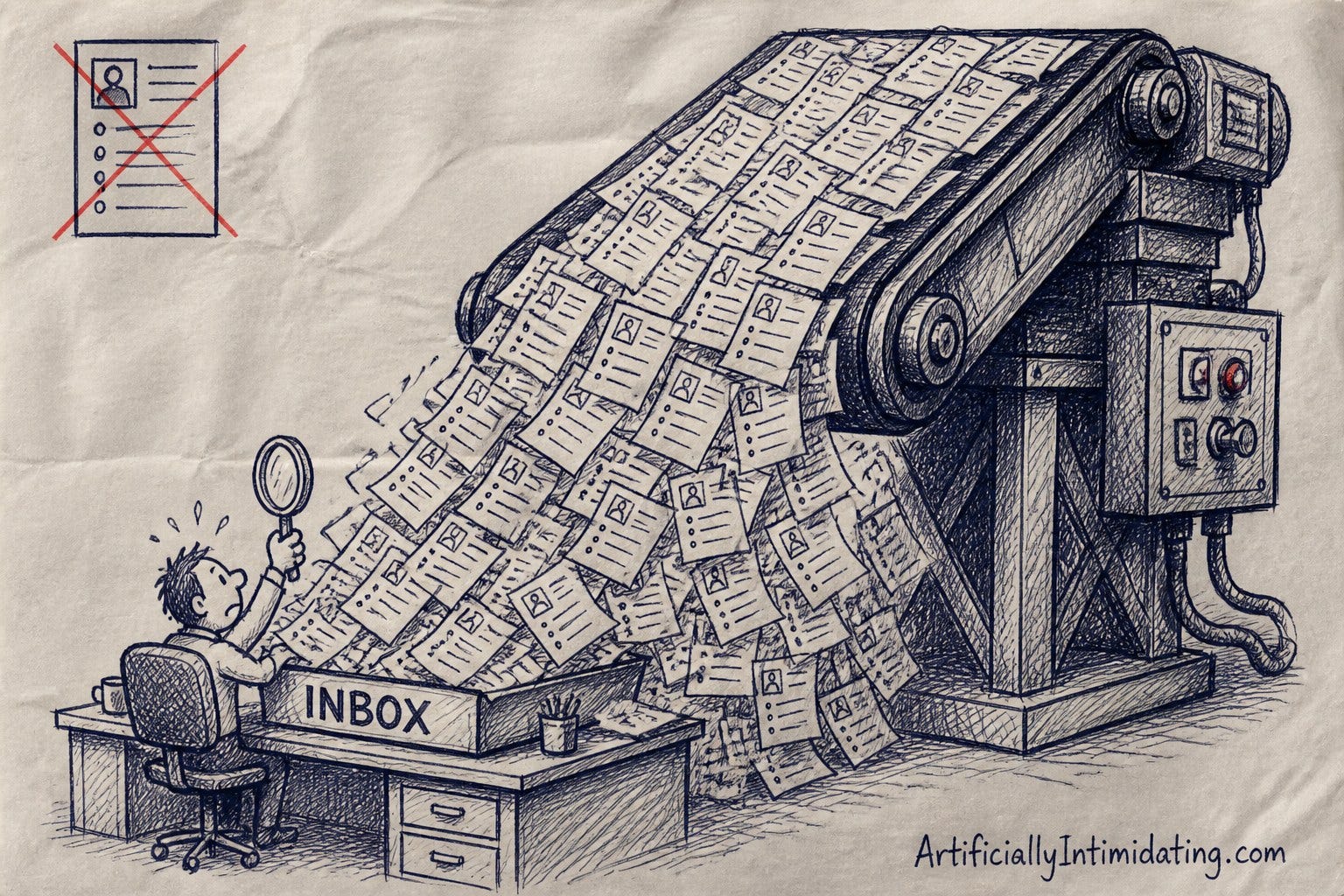
What happened: A Robert Half survey of more than 2,000 US hiring managers found 67% say reviewing AI-generated applications has slowed hiring down, 20% report delays of more than two weeks, and 65% say the surge of AI-polished applications has made it harder to verify whether a candidate can actually do the job. 84% of HR teams say they feel overworked as a result. The findings resurfaced this month as employers move into autumn hiring.
Why it matters: Writing an application used to cost time, and that cost was doing a job: it filtered for people who wanted this role rather than any role. AI took that cost to roughly zero, candidates responded exactly as you would expect, and the signal went with it. Employers did not lose applications. They lost the ability to tell them apart.
What everyone's saying: Deloitte’s 2026 Global Human Capital Trends warns that AI-written résumés and deepfake interviews are eroding hiring signals recruiters leaned on for decades, and that verification is becoming a core recruiting skill in its own right. Plenty of managers have skipped straight to the blunt version and now bin anything that reads generated.
My read between the lines: That auto-reject reflex is the tell, because it is a coin flip dressed as a standard — the same detectors are wrong in both directions, and a careful non-native speaker writes exactly like the thing they are screening out. Employers screen with AI, candidates apply with AI, and both sides now pay a two-week tax to a process neither of them trusts. The delay is not the cost of AI. It is the cost of deleting the only friction that was doing any work.
📖 Further reading: The Font That Beat AI for About a Week — what happens when people start designing documents specifically to fool the machine reading them.
Your Lawyer's AI Tool Has a Passport
Source: New York Law Journal (August 6, 2026)
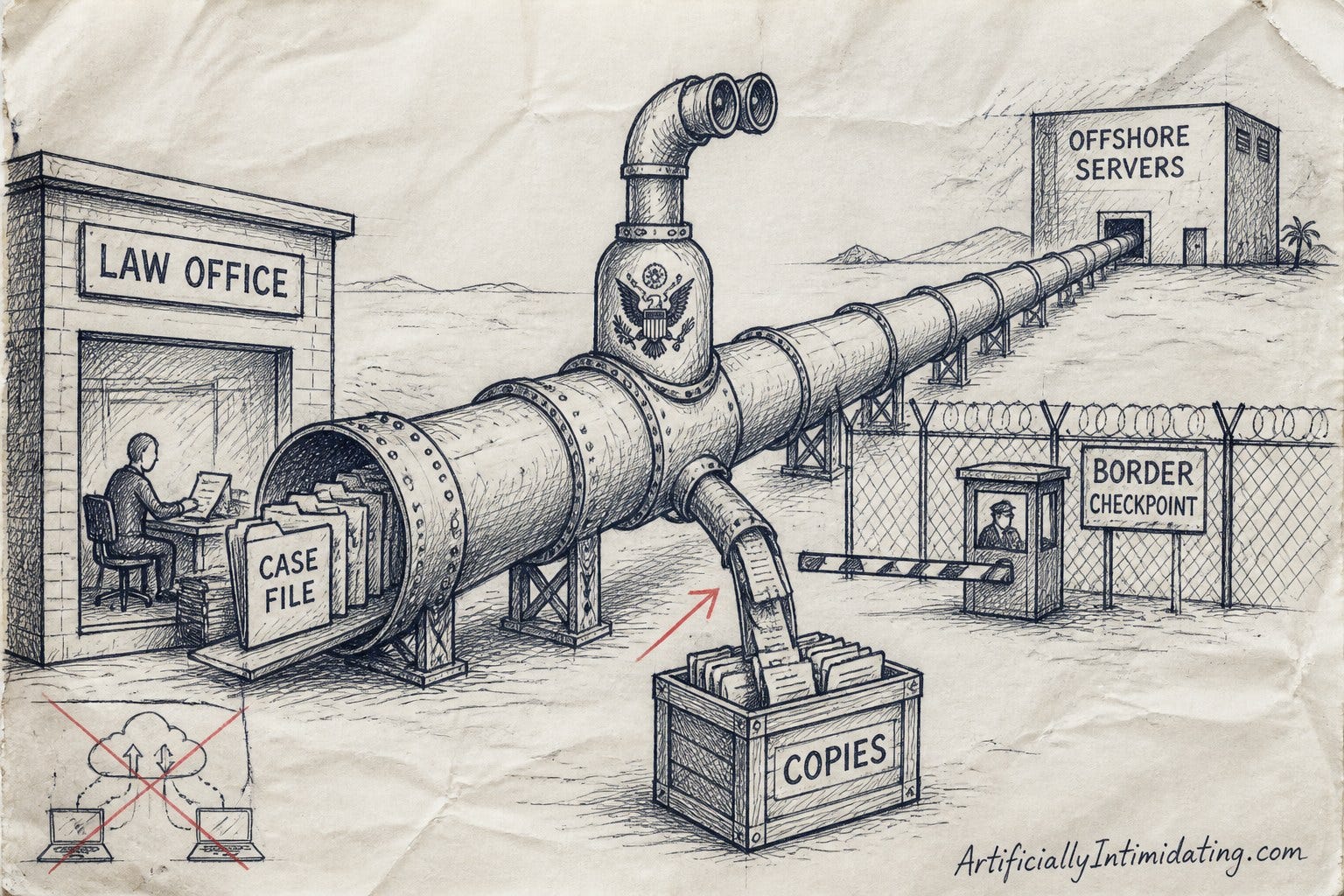
What happened: In the August 6 New York Law Journal, Rob Cohen and Louise Lipsker lay out a risk most firms have not priced. An associate on deadline pastes a German witness’s deposition and a stack of contracts into the firm’s AI tool and gets a summary back in minutes. She has also just moved sworn testimony and a client’s contracts onto servers she cannot locate, run by a company her firm never retained, under access laws that are nobody’s home jurisdiction.
Why it matters: Confidentiality is not a feature of legal work, it is the product. Every other industry gets to treat a data-residency question as procurement paperwork. A law firm that cannot say which country a client’s privileged material is sitting in has a problem that predates any AI policy it might write.
What everyone's saying: The authors’ argument is that no settled framework exists yet. Their concrete hook is Section 702 of the Foreign Intelligence Surveillance Act, which lets the government collect communications of foreigners abroad — and they note that no court has yet held that a general-purpose AI provider falls inside the category of companies the 2024 RISA amendment expanded.
My read between the lines: Here is the part that makes the whole thing stranger than the article lets on. Section 702 actually lapsed on June 12 — the first time since 2008 — and collection simply continued under FISC certifications approved back in March that run to roughly March 2027. So the statute anchoring the scariest paragraph in this argument is currently expired, and the surveillance is operating on what amounts to a nine-month grace period. Firms are being told to worry about a law. The more useful worry is that the law is not there and the collection is.
A Dead Frenchman Called All of This
Source: The Conversation
What happened: Not news so much as a returning argument, and it keeps circulating for a reason. The piece revisits Jean Baudrillard, who wrote Simulacra and Simulation in 1981, described the shift from the mirror to the screen and the network in 1986, and spent a 1993 essay being rude about machine intelligence — arguing it hands us the spectacle of thought rather than thinking itself.
Why it matters: Most AI criticism is about accuracy: is the output right, is the training data licensed, did it make something up. Baudrillard was asking a different question, which is what happens to us when a convincing copy is easier to get than the original and nobody has a strong reason to check. That question survives every model upgrade. The accuracy one does not.
What everyone's saying: He is having a moment — cited in dead-internet arguments, in fights about AI-generated influencers who outperform the humans they imitate, and by more or less anyone watching a feed fill with content that references other content. The counter-charge is that invoking him has itself become a reflex: a gesture that sounds like analysis and functions as a shrug.
My read between the lines: The uncomfortable version is that his critics are proving him right, because a theory that gets repeated because it sounds correct rather than because anyone re-read it is a simulacrum of an idea. Also worth noticing on a day like today: he was not warning that the machines would fool us. He thought we would prefer the copy, because it is smoother and asks less of us. Four stories up, several thousand people are handing an agent their passwords so they never have to open the app themselves.
📖 Further reading: I Make AI Versions of Myself for a Living. This One I Didn't Agree To. — the hyperreal stops being theory the moment the convincing copy is you.
That’s your AI Brief for Friday.
—Artificially Intimidating


