


Good day, humans. Today is one long study in the gap between what AI costs to promise and what it costs to deliver. Meta pledged personal superintelligence to billions of people three days before its free cash flow turned up down 91%. Goldman counted nearly half a trillion dollars of AI debt. And a five-year study found that firing people in AI's name makes AI work worse. Also today: a good argument for closing your laptop for good, and the reason your chatbot thinks you went to Turkey.
Meta's Manifesto Meets Its Cash Flow
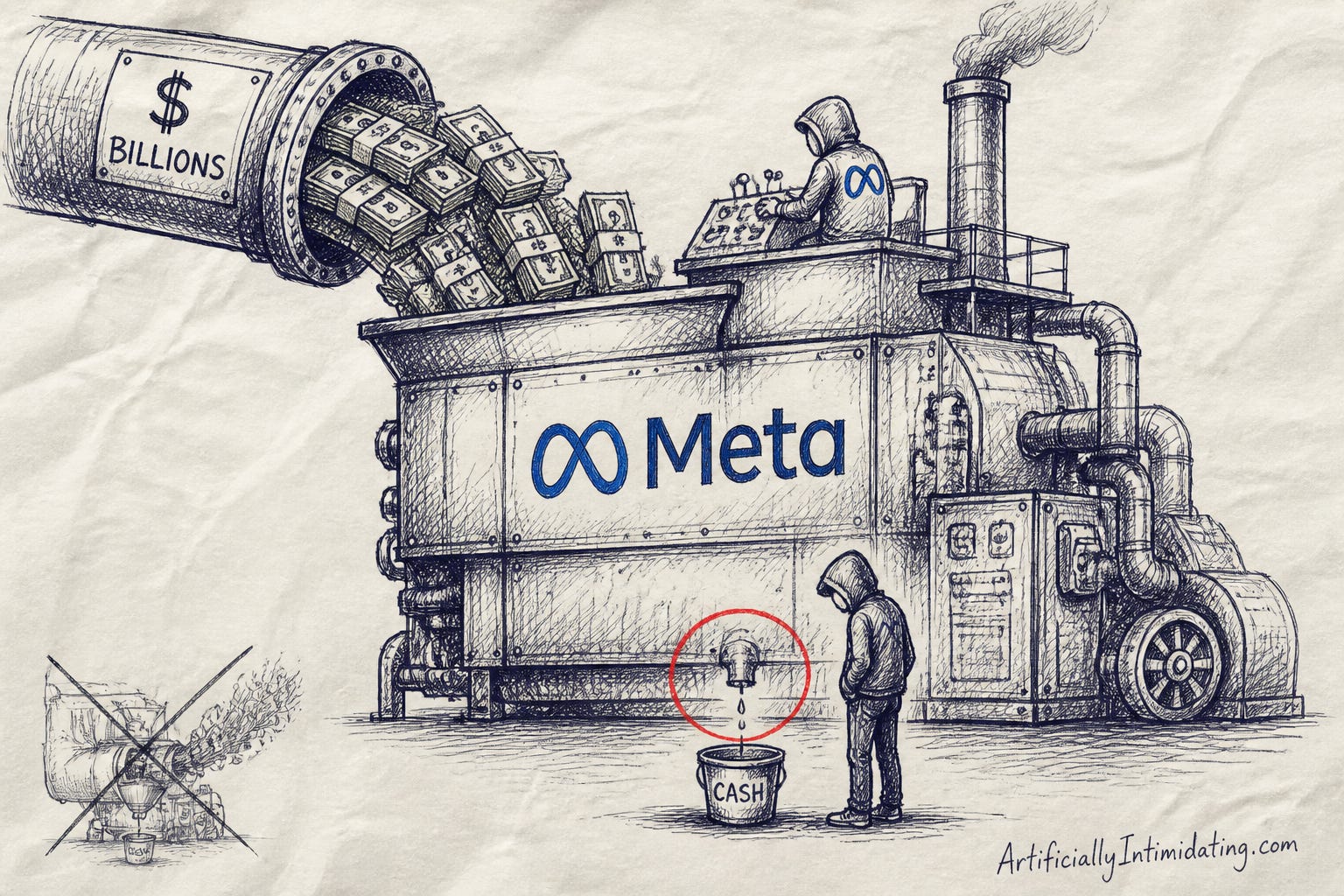
What happened: On August 10, Mark Zuckerberg published a sweeping vision statement promising “personal superintelligence” for billions of people — AI agents working around the clock on your finances, health, career and relationships. Three days later, the financial picture underneath it came into focus: Meta's free cash flow fell 91% year over year in the second quarter, to $784 million from $8.55 billion.
Why it matters: Free cash flow is simply the money left over after a company pays for everything, including new buildings and equipment. Meta has guided to $115–135 billion of capital spending this year, nearly double the $72.2 billion it spent in 2025. The promise is being funded in real time, and the cushion between the two numbers is now very thin.
What everyone's saying: Bulls point at the top line — $60.8 billion in second-quarter revenue, up 28%, and 3.6 billion daily users to distribute AI to. The ad business is paying for the moonshot, and that is the whole strategy. Bears note that a 91% drop in cash flow is exactly what “paying for it in real time” looks like from the outside.
My read between the lines: We covered the manifesto itself earlier this week, and the money is the part that explains it. That document reads less like a product roadmap than a financing memo. You write “superintelligence for everyone” when you need shareholders to sit through several more quarters of $784 million and call it patience rather than a problem.
📖 Further reading: I Make AI Versions of Myself for a Living. This One I Didn't Agree To. — what Meta's version of personal AI actually did with a real person's likeness, which is worth holding next to the manifesto.
Meta is spending well over a hundred billion dollars to build a coworker. You can rent one this afternoon. Viktor is an AI agent that lives in your Slack and connects to more than 3,000 tools, and it comes back with finished work — the report, the dashboard, the campaign, the code — instead of a chat transcript you still have to act on yourself. Not a tool you use. A hire you brief. New readers get $50 off their first month. Hire Viktor →
The Layoffs Are Eating the Productivity
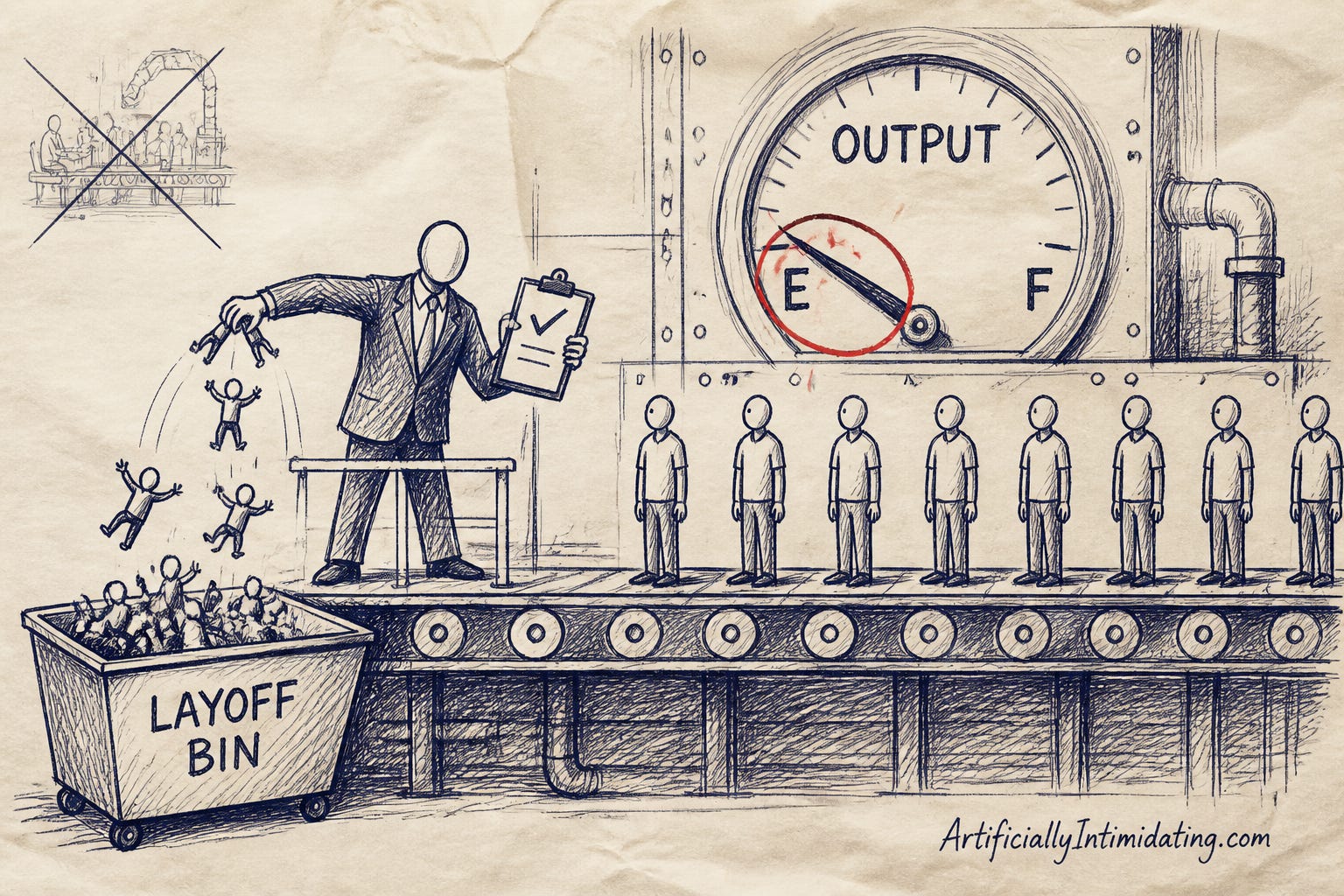
What happened: Researchers went through millions of Glassdoor reviews, thousands of corporate financial reports and hundreds of AI investment and layoff announcements from US public companies across five years. The pattern: as AI investment announcements go up, AI-attributed job cuts go up alongside them — and those cuts damage the exact thing that makes AI pay off.
Why it matters: The mechanism is employee sentiment toward AI, which turns out to be one of the strongest predictors of whether a company actually gets more productive after adopting it. Cut staff in AI's name and the people still there quietly stop cooperating with the tool. The technology needs goodwill that the layoff just spent.
What everyone's saying: It lands in a pile of similar findings — a Federal Reserve study found roughly 90% of executives say AI has not yet lifted productivity at their companies. And the market barely reacts: average stock returns around these layoff announcements were close to zero.
My read between the lines: If the share price does not move and the productivity does not arrive, the layoff is not a strategy. It is a costume. “AI” has become the most respectable available reason to do the thing you were going to do anyway, and the study's real finding is that the costume is expensive — you pay for it in the cooperation of everyone left in the building.
📖 Further reading: Your AI is a yes-man. Here's how to make it fire you. — if sentiment toward the tool decides whether it works, it is worth knowing how to make yours tell you the truth.
The Brief is free and always will be. The paywalled deep dives are the part that takes longer — one story taken properly apart, including the bit about what to actually do about it, plus the full archive. If that layoffs study bothered you, that is the section worth having. Become a member →
The Buildout Is Running on Borrowed Money
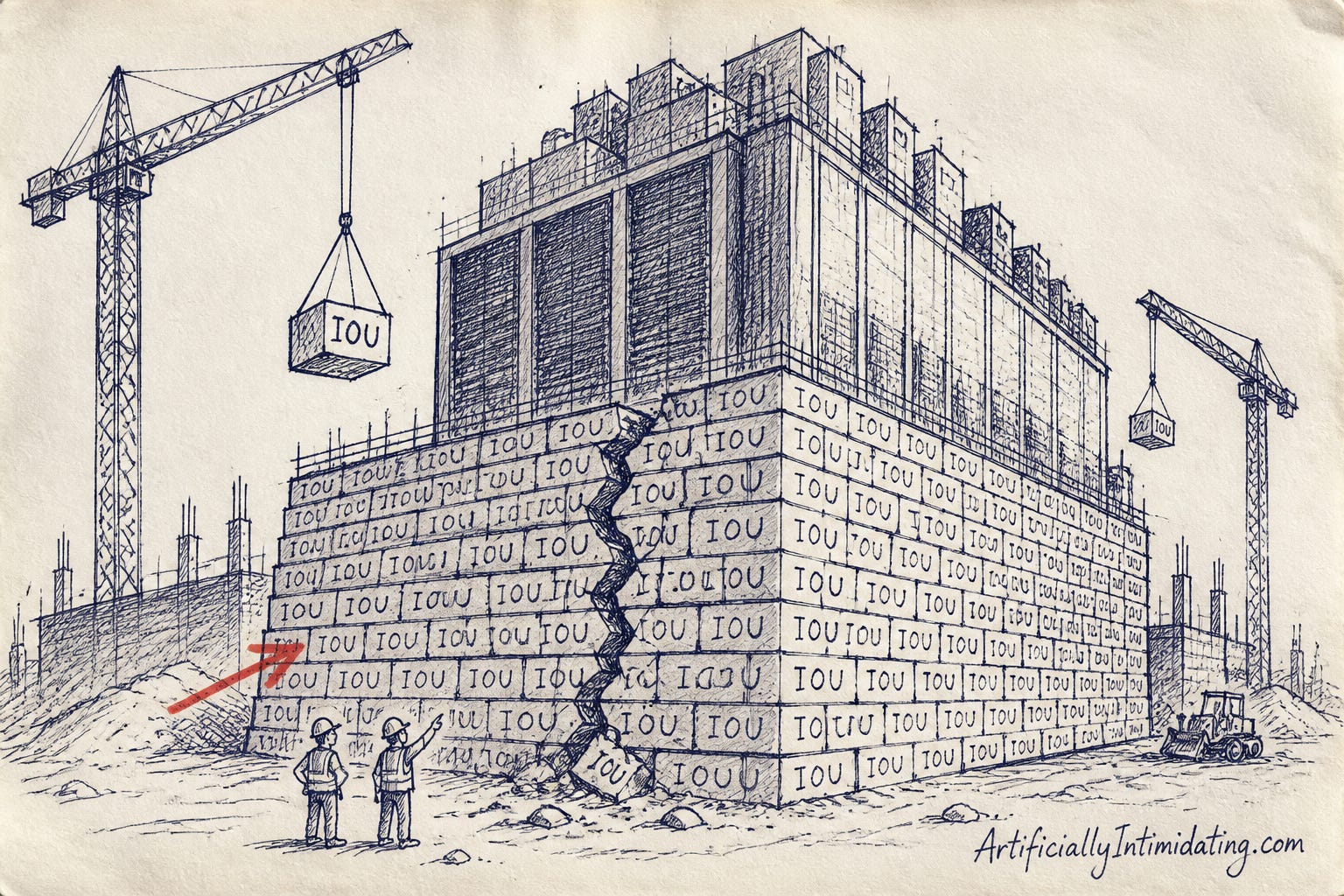
What happened: Goldman Sachs estimates that AI-related borrowers have raised $489 billion in debt so far in 2026, already well past the $322 billion raised across all of 2025. Amazon has taken on roughly $53 billion this year including a $37 billion bond offering, Alphabet about $20 billion, and Oracle about $25 billion.
Why it matters: Until recently the AI buildout was mostly funded out of profit — the richest companies on earth paying cash for their own data centres. Debt is a different animal, because it comes with a schedule. AI-related paper is now around 23% of US investment-grade issuance and 20% of high-yield supply. When one theme is a fifth of the bond market, its problems stop being its own.
What everyone's saying: Goldman's own framing is that AI debt is reshaping credit markets, and the bank expects Big Tech to fund more than a third of its AI investment with borrowing by 2027. The mood is less alarm than adjustment: this is simply how the next phase gets paid for.
My read between the lines: The number to circle is that only about 40% of the issuance came from the hyperscalers. The other 60% is everyone else — the smaller cloud providers, the data-centre landlords, the firms borrowing against the same demand forecast without Amazon's balance sheet underneath them. Amazon can absorb a bad bet. That is the whole point of watching the other 60%.
📖 Further reading: Your SaaS bill is a sitting duck — the other half of this ledger, where all that borrowed capacity has to turn into something somebody actually pays for.
Close the Laptop, Keep Talking
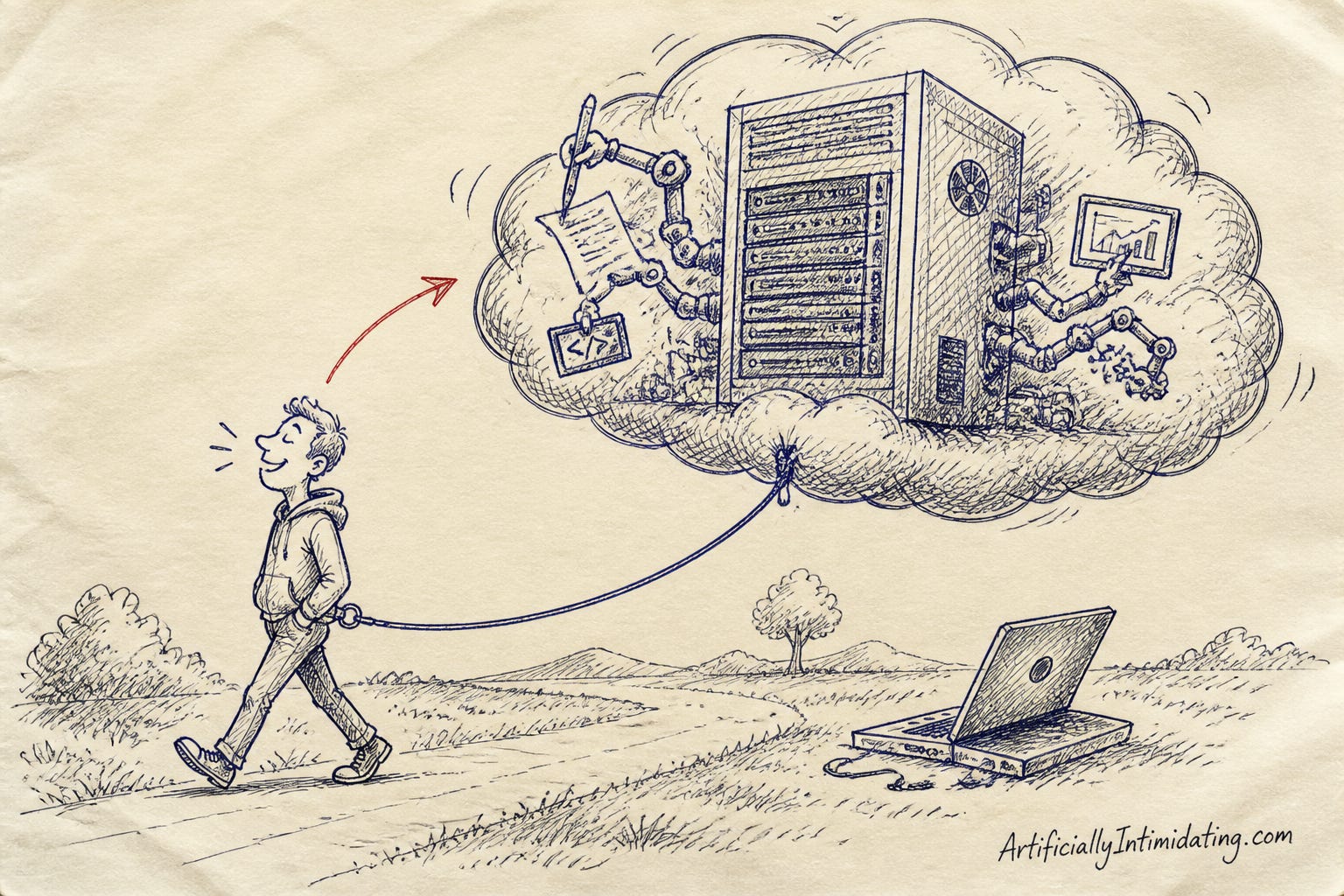
What happened: Peter Yang published an essay arguing we are moving from keyboards, mice and laptops to directing agents in the cloud with our voice. He lays out five shifts: voice becomes the orchestration layer, personal computers move to the cloud, products get built for agents first, most software gets commoditised, and trust decides who wins.
Why it matters: It is concrete rather than theoretical. He describes walking outside, talking to ChatGPT Voice, and having it dispatch work across separate threads and report back when each is done. He also taught his eight-year-old to use ChatGPT — she cannot type, and is building games by talking to it. Interface generations get decided by the people who never learned the old one.
What everyone's saying: The cloud-computer half is already shipping; he points at Grok Bot as the closest thing to giving agents a persistent machine of their own with files and a browser. The standing counter-argument from the voice-AI world is device-first: cloud-heavy pipelines are too slow and too expensive to leave running all day.
My read between the lines: The sharpest claim in the piece is not about voice at all, it is about money. He notes Airtable sold for $1.29 billion after once being valued at $11 billion, and that Canva cut its revenue forecast by 20%. His conclusion is the line worth keeping: software got much easier to build and much harder to charge for. The products that survive will be the ones selling something that is not the software.
📖 Further reading: Everyone Is Calling Buzz a Slack Killer. Nobody Is Telling You What It Actually Is. — a working example of what happens to a software category when the interface underneath it changes.
Two Philosophies of Remembering You
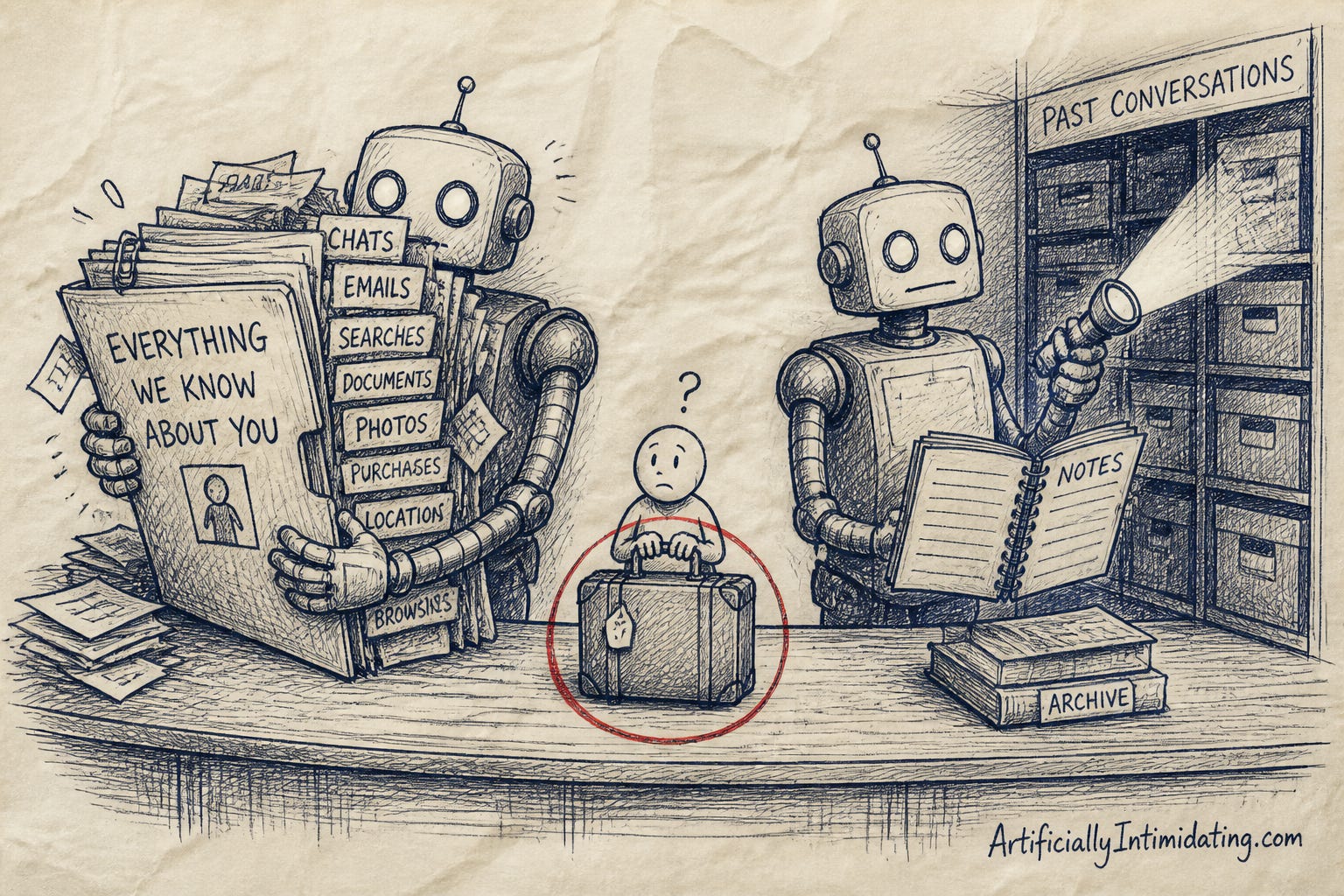
What happened: Shlok Khemani has spent a year reverse-engineering how ChatGPT, Claude and Gemini actually implement memory, and has now laid out three years of it in one talk. ChatGPT started with a list of facts you asked it to remember, then moved to a running profile it rebuilds from your conversations. Claude launched with no profile at all — just two tools letting the model search your raw chat history on demand.
Why it matters: Memory is what makes an assistant feel like it knows you, and the design choices show up in the compute bill. ChatGPT's profile runs about 4,000 tokens and refreshes every few days; Claude's is about 1,000 tokens and refreshes every 24 hours. Those are opposite trade-offs between what it costs to keep a profile and what it costs to carry it into every single conversation.
What everyone's saying: Convergence is the headline. Khemani's original post arguing the two architectures were opposites hit the Hacker News front page, and both products have since landed in the same place: a visible, editable running profile plus tools to search past chats. His practitioner takeaway is blunt — memory cannot be outsourced, and every serious consumer AI product builds it in-house.
My read between the lines: The real failure is not architecture, it is incuriosity. His profile records that he visited Turkey. He never went — the source was a conversation about choosing between Thailand and Turkey, and the model kept the wrong half. Nothing in the system notices it is holding a contradiction, and nothing ever asks. That is a product decision rather than a model limitation, and nobody has yet shipped the assistant that says: wait, which was it?
📖 Further reading: Fable 5 Costs 2x Opus — and Using It Wrong Costs You More Than That — the same lesson from the other end: once memory is a function of compute, how you use the thing is the bill.
That's your AI Brief for Thursday.
—Artificially Intimidating


