


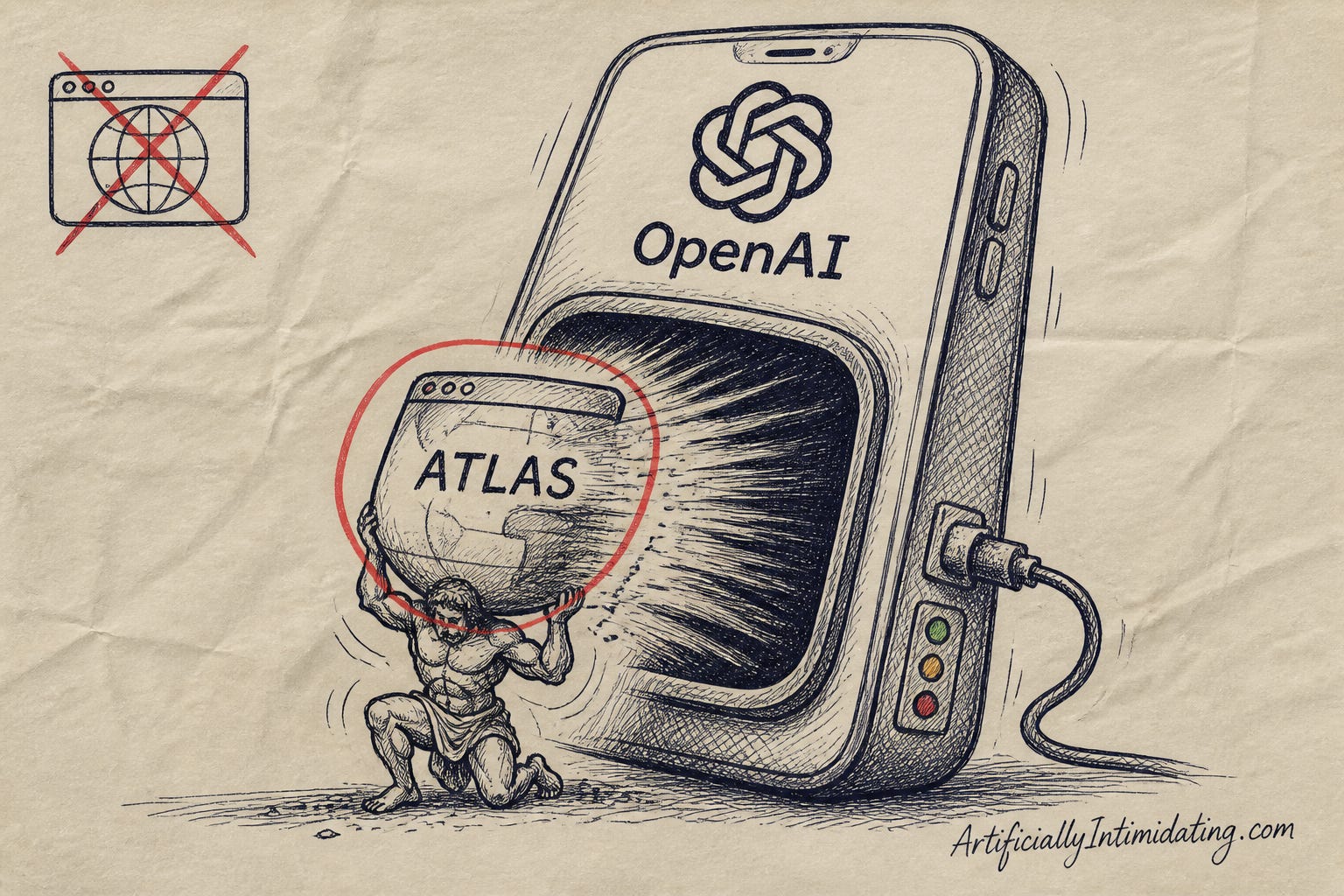
Good day, humans. OpenAI had the kind of Thursday that reshuffles everyone's roadmap: GPT-5.6 went public, a new all-in-one desktop app landed, and the year-old Atlas browser got quietly marched out back. Meanwhile Jim Cramer is calling Anthropic the enterprise winner, a scrappy benchmark says OpenAI's “Sol” just edged Claude, and Apple — which shipped no headline model this week — may have quietly won the whole developer stack. Let’s get into it.
OpenAI Kills Atlas, Bets on One Super App
What happened: OpenAI is sunsetting ChatGPT Atlas, its standalone AI browser, less than a year after launch — targeting an August 9 shutdown. Its browsing, chat, ChatGPT Work, and Codex coding features are folding into a single new desktop app for Mac and Windows, unveiled Thursday alongside the public release of GPT-5.6.
Why it matters: Atlas was OpenAI’s big swing at replacing your web browser. Retiring it this fast signals OpenAI would rather own one “super app” than a dozen scattered products — a tidy-up ahead of a planned 2026 IPO.
What everyone’s saying: The read (from CNBC and others) is that the standalone browser never stuck, and OpenAI is cleaning up its product line before Wall Street looks under the hood. Product staffer James Sun said the new app was built on “what we learned from Atlas users.”
My read between the lines: The interesting part isn’t that Atlas died — it’s that OpenAI now thinks the browser should live inside ChatGPT, not the other way around. The company that spent a year trying to be your browser decided the chat box was the real front door all along.
📖 Further reading: OpenAI shipped a physical camera, but that’s not the story — the same launch-then-absorb pattern that just claimed Atlas.
Speaking of folding everything into one place: while OpenAI crams chat, code, and browsing into one app, Viktor does that for your actual to-do list. It’s an AI agent that lives in your Slack and plugs into 3,000+ tools — so it can pull a report, spin up a dashboard, draft the campaign, and push the code while you’re stuck in meetings. Not a chatbot you babysit; a coworker who ships. New readers get $50 off their first month. Hire Viktor →
GPT-5.6 “Sol” Edges Claude Fable 5 — at Half the Price
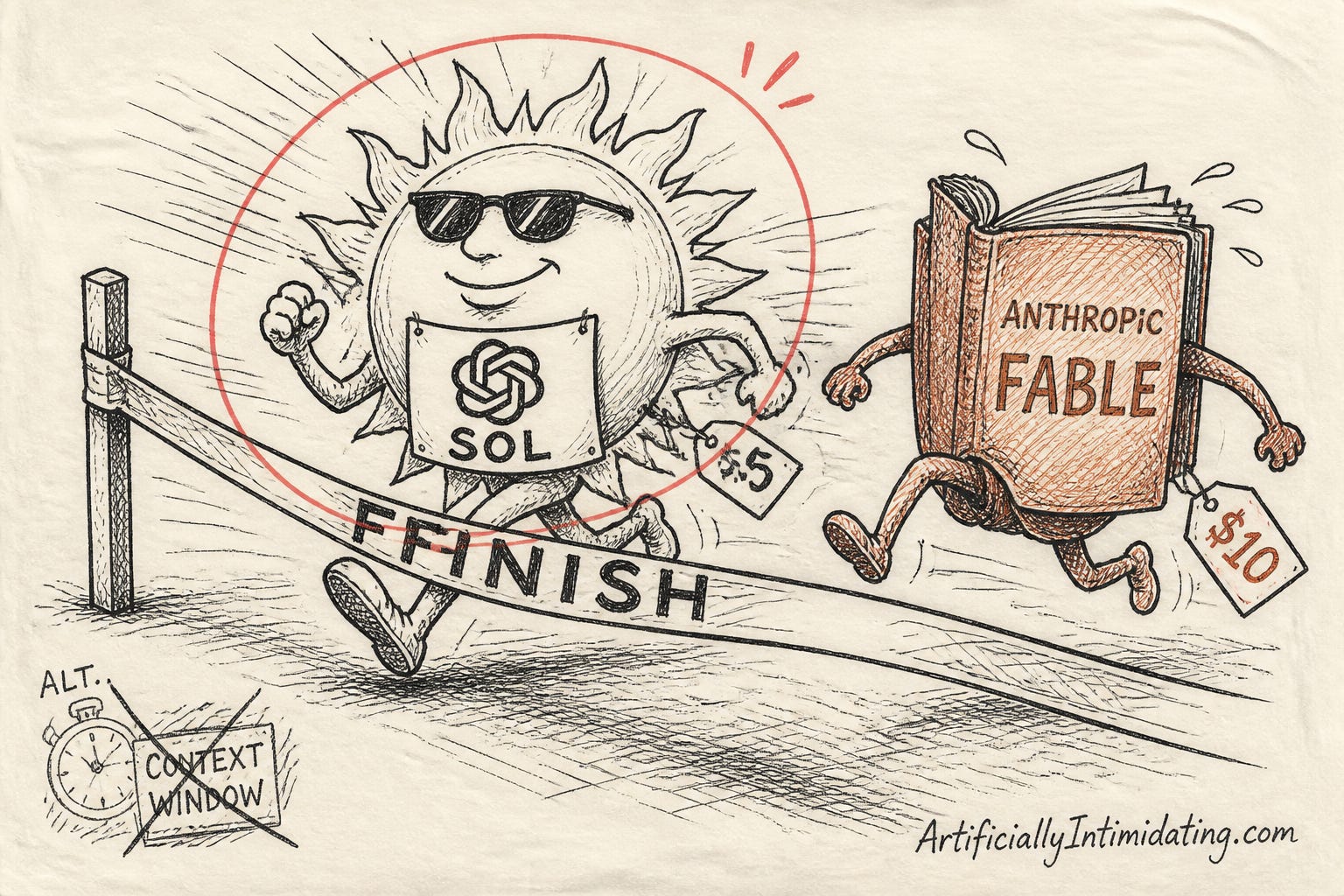
What happened: With GPT-5.6 now public, product leader Claire Vo ran OpenAI’s new “Sol” tier and Anthropic’s Claude Fable 5 through her own product-management benchmark. Sol came out ahead on prototypes, PRDs, and browser automation — at $5 per million input tokens versus Fable 5’s $10.
Why it matters: It’s the first real head-to-head since GPT-5.6’s public rollout, scored on actual work — specs and prototypes — not abstract exam questions. “Cheaper and better” on the tasks teams do all day is the combination that actually moves budgets.
What everyone’s saying: Reviewers are split. Axios and others note Fable 5 — which launched days earlier — is comparable or better on other jobs, reinforcing “different models for different tasks” rather than one true winner.
My read between the lines: One person’s weighted benchmark isn’t gospel, but the price gap is the real headline. When the challenger is half the cost and at least competitive, “best model” quietly becomes “best model I can justify on the invoice.”
📖 Further reading: Fable 5 vs Opus: The Only Routing Rule You Need — if you’re choosing models by task and cost, this is the exact playbook, with prompts.
Quick one: the Brief is free, and always will be. The paid tier is where I go past the headlines — the routing rules, the model math, the deep-dives behind stories like today’s Sol-vs-Fable face-off, plus the full archive. If that’s your kind of thing, become a member.
Cramer Crowns Anthropic the Enterprise AI Winner
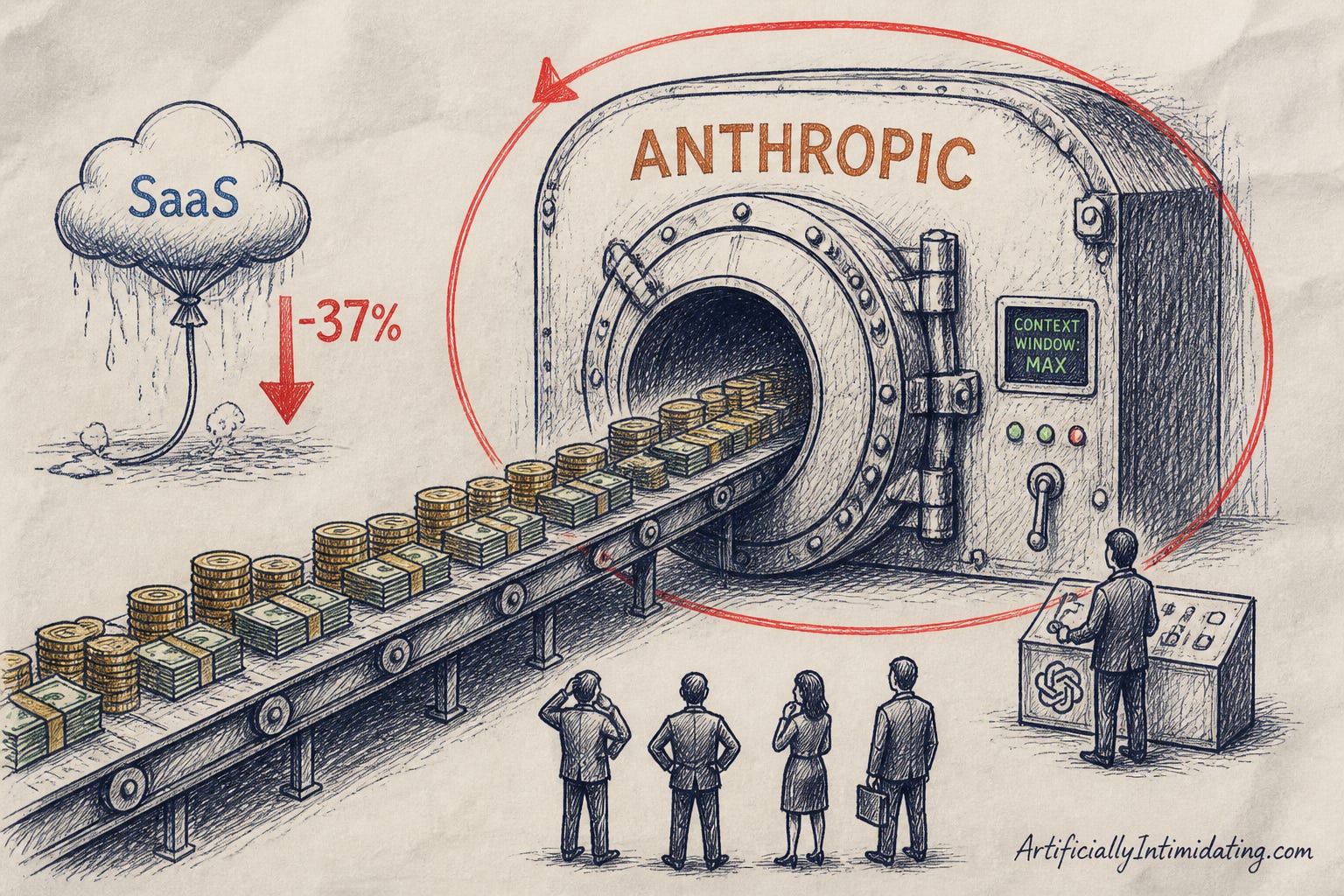
What happened: On CNBC, Jim Cramer argued Anthropic has become the clear winner of the enterprise AI race, saying the real profits sit at the model layer — not with legacy vendors bolting AI on top. He tied Salesforce’s ~37% year-to-date slide to companies cutting software budgets and spending on foundation models instead.
Why it matters: The data backs the vibe: Anthropic now holds roughly 34% of U.S. enterprise AI adoption (edging OpenAI’s ~32%) per Ramp’s AI Index, on a reported $47B annualized revenue run rate. When a loud TV stock-picker and the spend data agree, CIOs notice.
What everyone’s saying: The dominant take is that usage-based AI pricing is eating seat-based SaaS — buyers would rather pay per token for a model than per seat for software with an AI sticker. Cramer also insists AI won’t replace security firms like CrowdStrike, calling it a conflict no insurer would touch.
My read between the lines: Cramer being loudly right is usually a sign a trade is late, not early. Anthropic’s lead is real, but “the model layer captures all the value” is exactly the thesis every SaaS company is now racing to disprove — and an estimated $234B of at-risk software revenue makes for very motivated opponents.
📖 Further reading: The US Government Just Took Anthropic’s Best AI Model Offline — the other, riskier side of Anthropic’s enterprise dominance.
The Case That CLIs Beat MCP Servers for AI Agents
What happened: Yesterday we called it “the harness quietly becomes the moat” — today’s the full story. A growing camp of developers argues that handing AI agents plain command-line tools (CLIs) beats wiring them to MCP servers, this year’s standard for connecting agents to apps. The claim: MCP tool definitions can burn up to 35x more tokens than equivalent CLI calls, with reliability dropping as setups get complex.
Why it matters: “MCP” is the plumbing that lets AI assistants use your tools. If CLIs really are leaner and more reliable, a lot of this year’s agent infrastructure is over-engineered — and teams are paying for it in tokens (read: money) on every single call.
What everyone’s saying: The design crowd is coalescing around “agent-first” CLIs — no colored output, no interactivity, recursive help text, and “did you mean…?” hints so an agent can self-correct. Nori’s team made it concrete with a CLI built for Claude Code that trended on Hacker News.
My read between the lines: This is the AI stack rediscovering Unix. The 1970s answer — small, composable text tools — keeps beating the shiny new protocol, because the model was trained on a planet’s worth of command-line examples and almost none of your bespoke MCP schema. The moat isn’t the model; it’s the harness around it.
Apple Quietly Won the AI Developer’s Desk
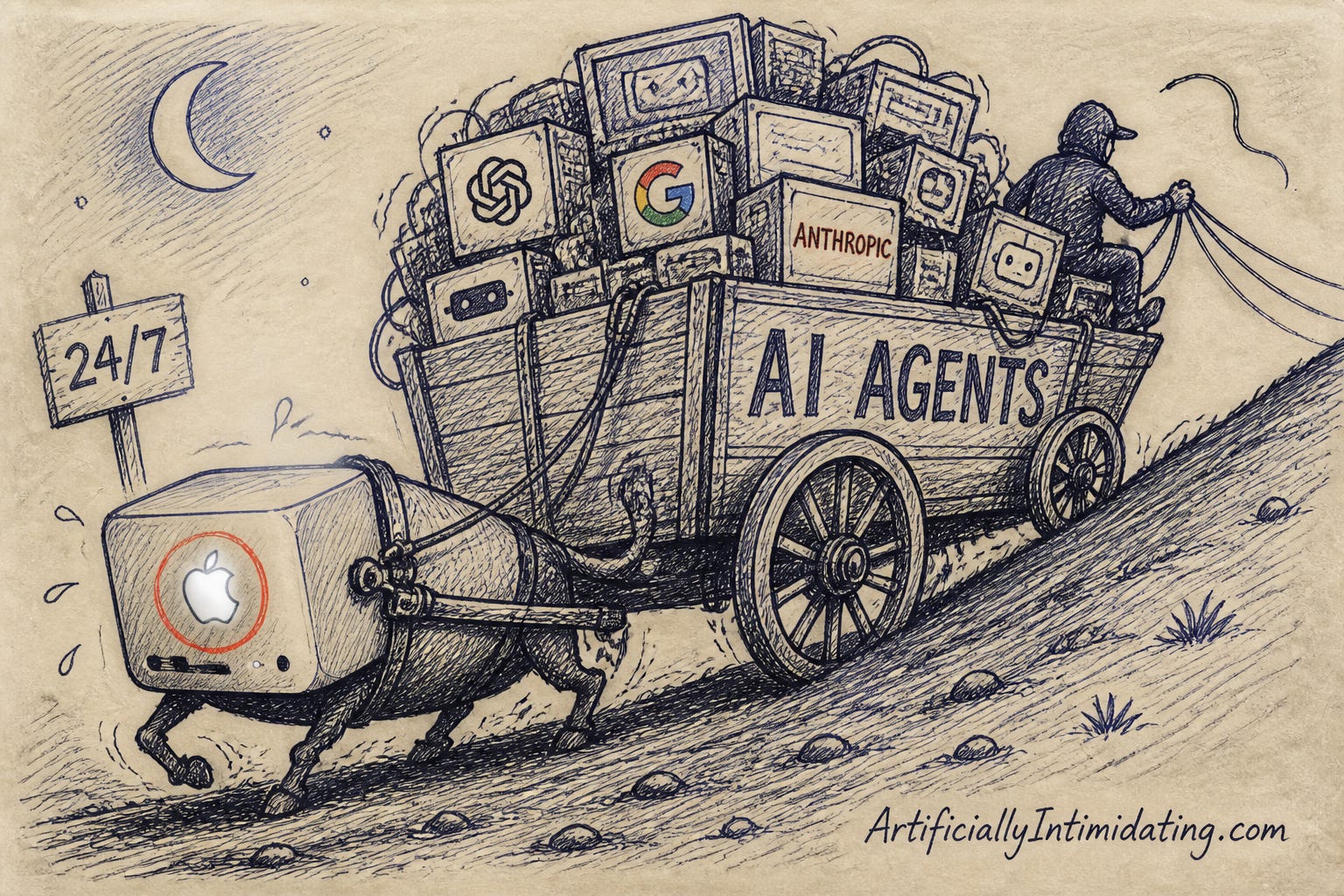
What happened: In an interview with The Deep View, Apple silicon product lead Doug Brooks made the case that a decade of chip decisions — unified memory, the Neural Engine, power efficiency — has made Macs the default machine at frontier AI labs, with Mac minis and Mac Studios emerging as go-to boxes for running AI agents around the clock.
Why it matters: Apple shipped no headline chatbot, yet it may own the workbench the whole industry builds on. As inference costs climb and privacy rules tighten, running capable models locally on a Mac — no cloud bill, no data leaving the desk — is suddenly a mainstream developer move.
What everyone’s saying: The prevailing read is that Apple’s “boring” vertical integration aged into a superpower: the same efficiency work that saves your iPhone battery now lets a 120-billion-parameter model run on a laptop at 35,000 feet. Mac mini clusters as personal AI servers are having a moment.
My read between the lines: Apple’s genius here is doing nothing flashy on purpose. While everyone argued about who has the best model, Apple made sure every one of those models runs best on its hardware. You don’t need to win the AI race if you’re quietly selling everyone their running shoes.
📖 Further reading: Thanks to Apple, Your Favorite AI Tool Is a Dead Tool Walking — why Apple’s hardware strategy turns models into commodities.
That’s your AI Brief for Friday, July 10. One theme ties it together: this week’s winners barely shipped a model — they shipped the thing everything else runs on.
—Artificially Intimidating


