

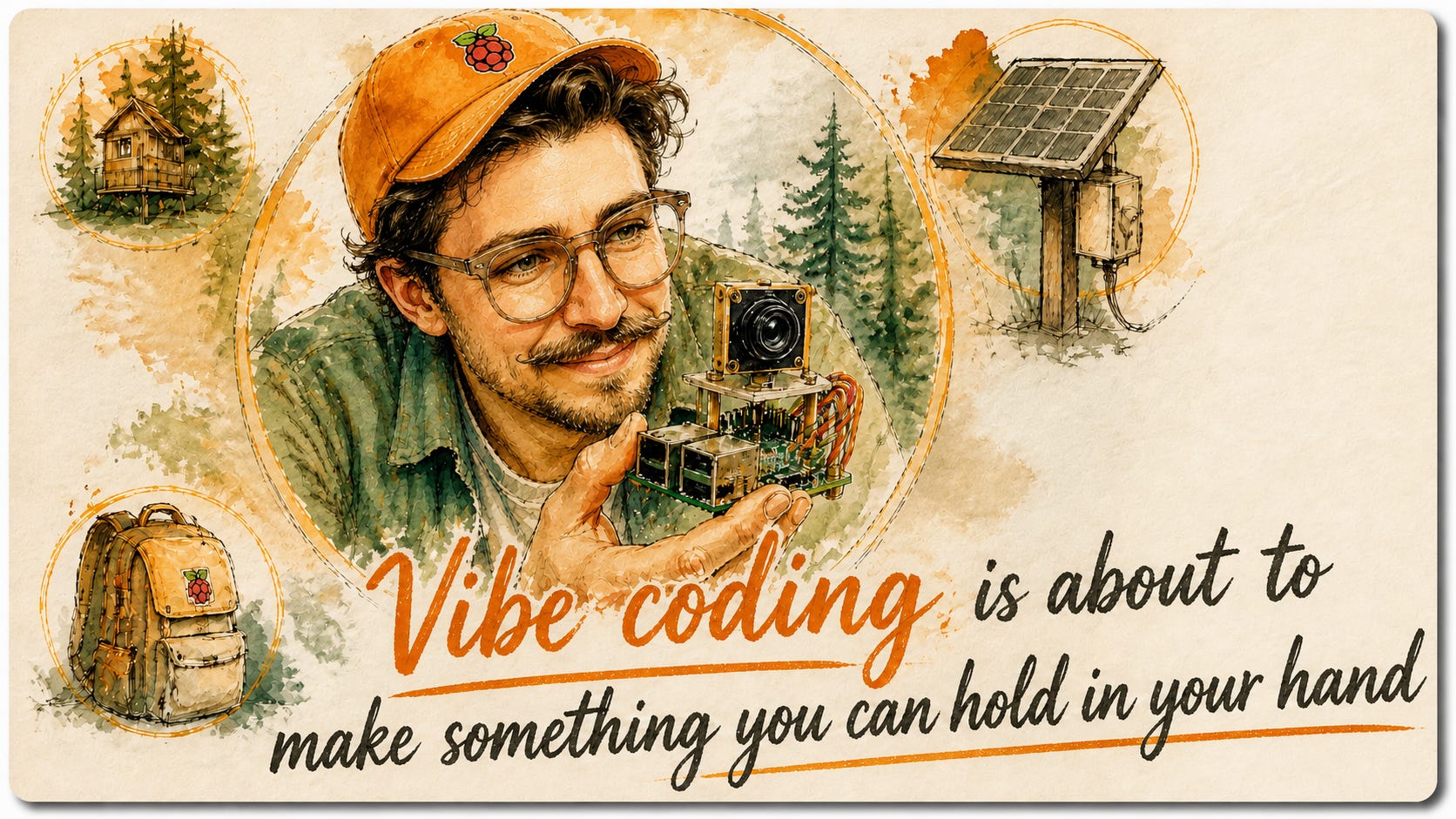
I have a lot of cameras. Like any amount you’re imagining … you should probably double or triple it.
Vintage rangefinders.
Fancy film cameras.
Point and shoot film cameras.
Medium format bodies.
Literal toy cameras (for adults and children).
I was a Lomo ambassador for years — shot an entire series of 30+ portraits with their Daguerreotype Achromat Art Lens, a recreation of one of the first double-element lenses ever made. Got published in their books. Documented nightlife and music scene for 15+ yeas and amassed an archive of 1.47 million photos of people at events. Currently run OutSnapped, a photo booth company known for inventing the AI Photo Booth. I’ve pined over cameras and photography longer than I’ve thought about almost anything.
So when OpenAI quietly dropped an open-source GitHub repo last week for something called ImageGenCam, I paid attention.
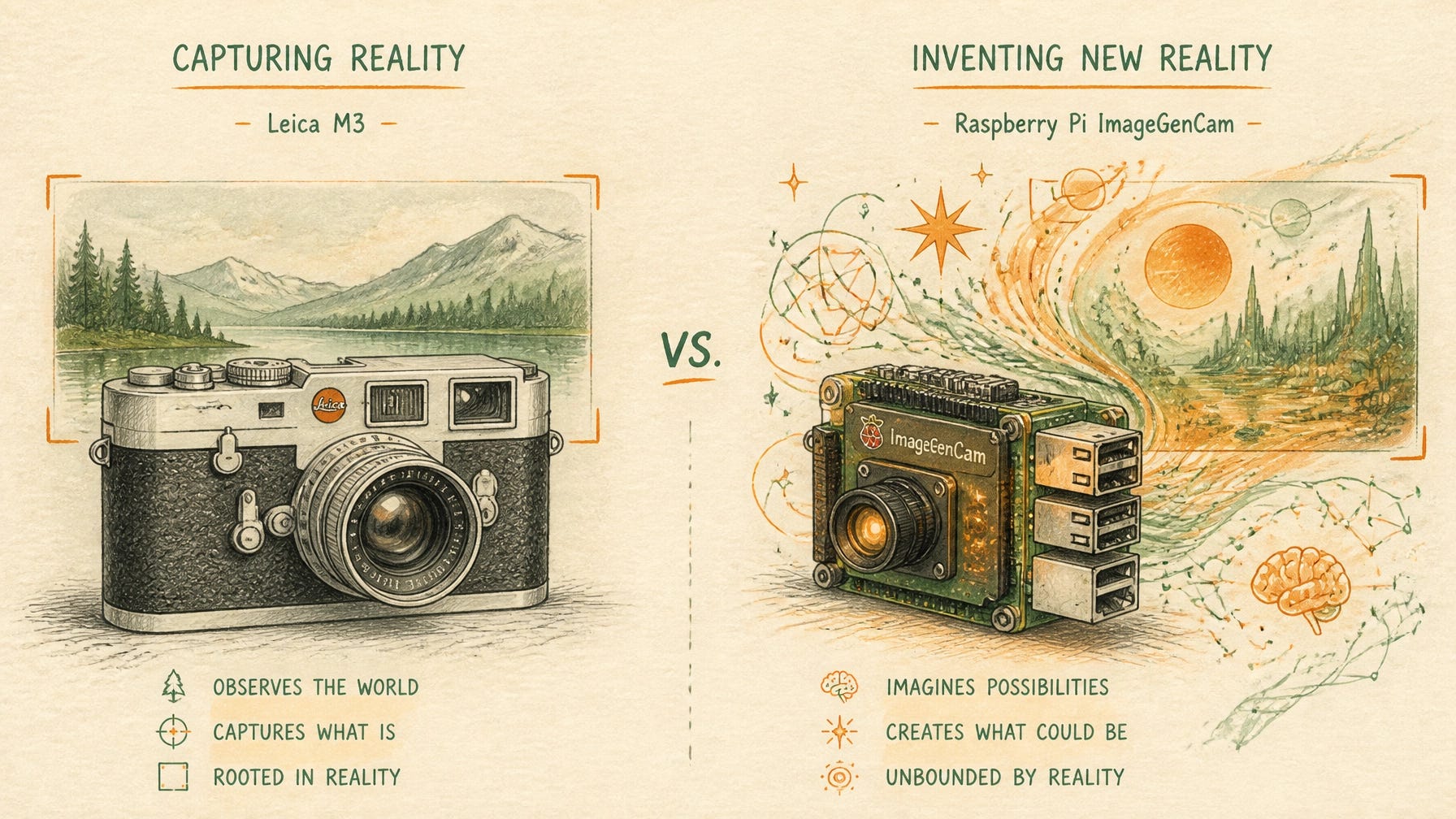
The concept: a camera you build yourself for around $100–150 in parts, using an AI coding agent to walk you through every step. You take a photo. The camera immediately transforms it with AI image generation. Instead of capturing reality, it uses reality as a prompt input. Pointless Scribble. Turn to Cheese. Goblin Mode. Every photo you take gets processed through whichever aesthetic you coded/loaded.

Here’s my honest reaction as a photographer: the intent still carries through. Your eye — what you point the camera at, how you frame it — still matters. But the creative discipline has shifted. You can now design your output before you shoot, not after.
Every snap, good or bad, can come back as a beautifully lit studio headshot. Or a children’s drawing. Your composition feeds the AI. The aesthetic is the prompt.
Witness vs. Inventor
People keep reaching for the Lomography comparison. I understand why — Lomo built a movement around cameras that distort reality, light leaks and vignette and unpredictable results. But that comparison undersells what’s different here. Lomo cameras still capture reality. Most of them are actually recreations of historic photographic technology. A Holga, a Polaroid, a Daguerreotype lens — these tools honor the act of recording the world.
The ImageGenCam doesn’t record. It witnesses, then literally reinvents.
And I find that exciting, not threatening. Different tools serve different purposes. I’ll keep my Canon. I’m also going to build this thing.
But the camera is almost beside the point.
The Vibe Hardware Revolution
The real story is what this camera signals about where we’re headed.
