


Good day, humans. While America argues over grill technique, Alibaba's AI agent quietly discovered four new superconductors — real ones, verified in real labs. Also in today's Context Window: Hollywood ships its most AI-made movie ever while suing over the same technology, and Peter Thiel calls the Pope a communist. The 250th-birthday fireworks are, for once, not the wildest thing happening.
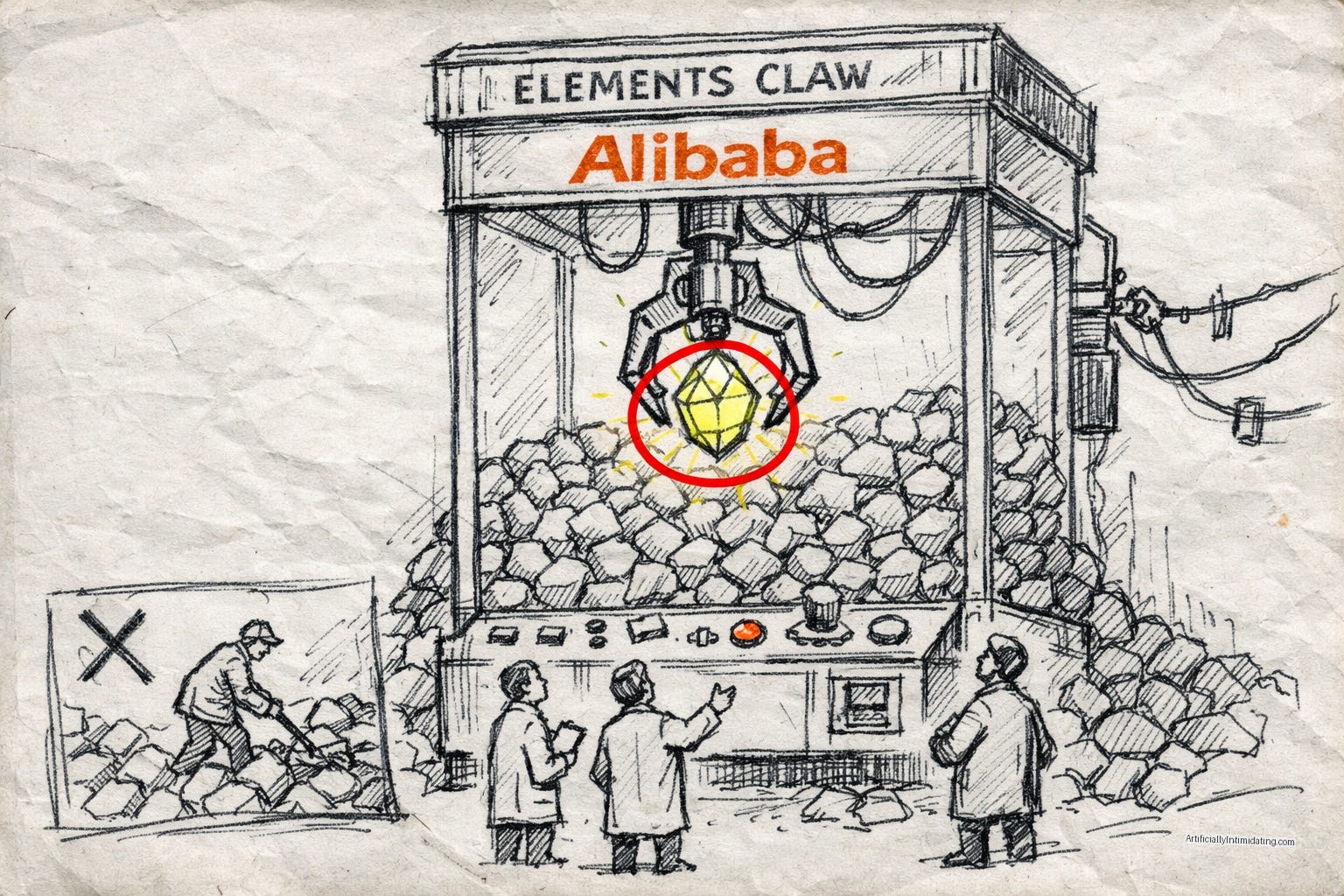
The Claw Machine That Does Science
Source: SCMP
What happened: Alibaba's research arm, DAMO Academy, unveiled Elements Claw — billed as the first AI agent built to hunt superconductors, the materials that carry electricity with zero energy loss. It screened 2.4 million crystal structures in just 28 GPU-hours, flagged 68,000 candidates, and four brand-new compounds were then synthesized and verified in physical labs.
Why it matters: Superconductors power MRI machines, quantum computers, and maglev trains, and finding a new one has historically taken decades of trial and error. The same week, the international SuperC consortium announced two more superconductors found via machine learning. AI-driven materials science just went from party trick to production line.
What everyone's saying: DAMO's researchers call these "the first superconducting materials discovered by an AI agent and validated experimentally," and the full database has been open-sourced for academics. The discourse: AI agents are graduating from booking your flights to doing your postdoc.
My read between the lines: One of the four "discoveries" was a compound whose crystal structure had simply been misrecorded in a database — so part of AI's scientific genius is cleaning up humanity's filing errors. And note that Alibaba was last in this newsletter accused of copying Claude's brain; discovering physics is a much better look. The claw, it turns out, was rigged all along — in science's favor.
📖 Further reading: Claude Tag vs Viktor: which one do you hire? — because AI agents doing actual jobs, postdoc or coworker, is no longer hypothetical.
An AI agent just spent 28 GPU-hours discovering superconductors. Yours could spend tonight building your Q3 report. Viktor is an AI agent that lives in Slack, connects to 3,000+ tools, and delivers finished work — reports, dashboards, code, campaigns — while you're off the clock. Not a chatbot; a coworker. New readers get $50 off their first month. Hire Viktor →
Agents Learn on the Job — Predictably
Source: ByteDance Seed (GitHub)
What happened: ByteDance's Seed research team released EdgeBench, a benchmark of 134 marathon tasks — 12 to 72+ hours each, spanning science, systems engineering, formal math, and games — that measures whether an AI agent gets better while it works. After nearly 38,000 logged hours of agent runs, they found improvement follows a log-sigmoid curve with an R² of 0.998 — an almost perfect fit.
Why it matters: Most benchmarks test what a model knows on day one; this one tests whether it improves like an employee. Expert humans averaged 57.2 hours per task, with the hardest demanding 320. And per the team's paper, frontier agents' learning speed has been doubling roughly every three months.
What everyone's saying: With pre-training scaling showing diminishing returns, the field is hungry for a new axis of progress — and "learning from experience" now has an empirical growth chart. The curve held across every frontier model tested, including Claude Opus 4.8 and GPT-5.5.
My read between the lines: An R² of 0.998 on anything involving LLMs should raise one eyebrow — nature is rarely that tidy, and benchmarks published by a company whose models climb them deserve a beat of skepticism. But the meta-story stands: the company that built an algorithm to learn you in 20 minutes of scrolling is now clocking how fast machines learn everything else. Every "AI can't do my job" argument just got an expiration-date calculator.
📖 Further reading: Microsoft's AI chief dates superintelligence — the last time the industry tried to put a date on machine self-improvement.
The Brief is free every day, and stays that way. Members get the part behind the curtain — the paywalled deep-dives on what these headlines actually mean, plus the full archive. If today's stories left you with questions, that's rather the point. Come backstage →
George Washington, Now With 100 AI Shots
Source: Variety (via Yahoo)
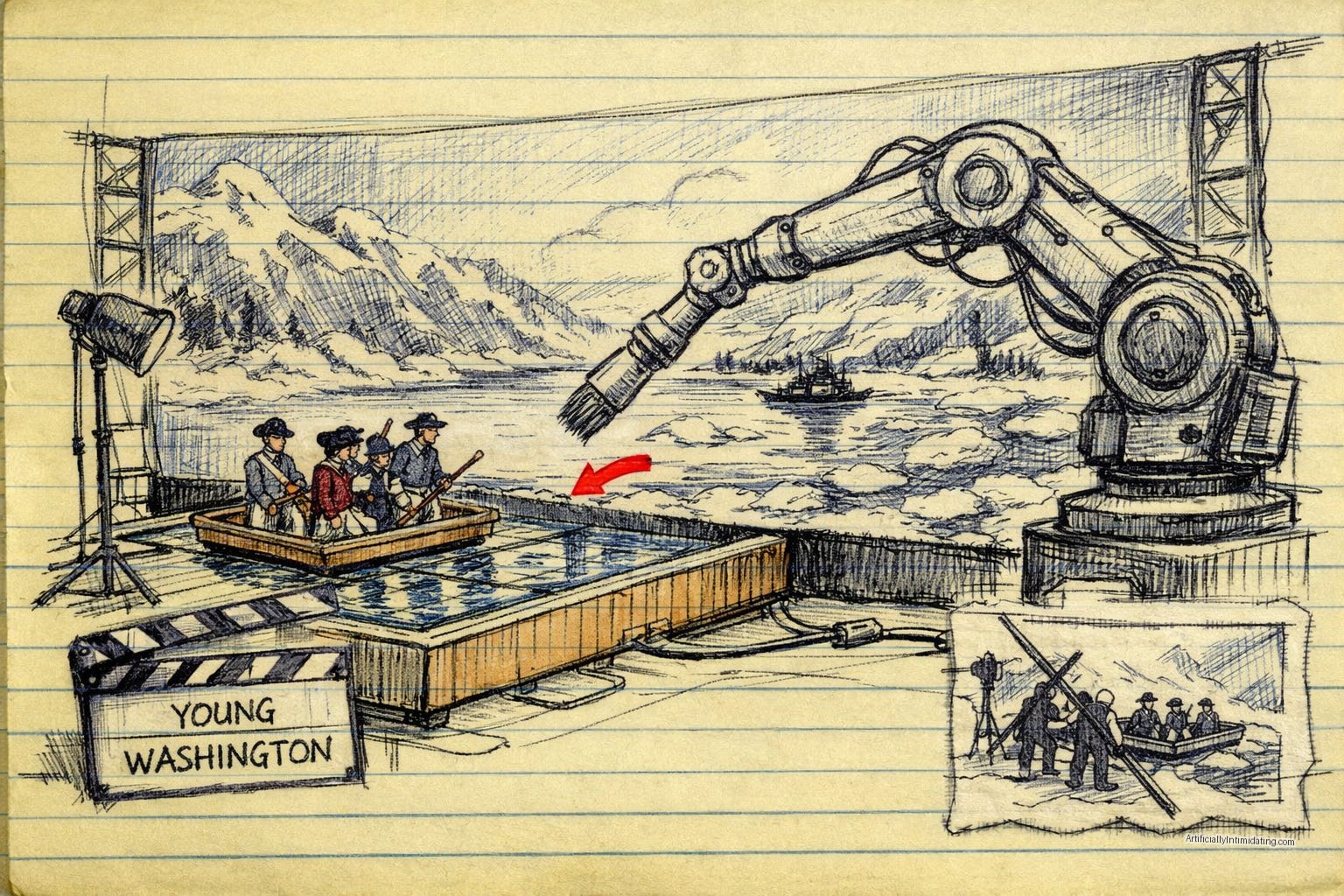
What happened: Young Washington, Angel Studios' George Washington biopic, opened on more than 2,500 screens July 3 — and director Jon Erwin told Variety that roughly 100 shots were augmented with AI, with five AI artists and an AI producer in the credits.
Why it matters: It's the most generative AI ever used in a wide theatrical release, per World of Reel. The showcase example: an icy river sequence shot in a 50-foot water tank in Ireland, with AI expanding it into a vast, deadly landscape — the pitch being safety and budget, not shortcuts. The film is targeting a $20 million opening weekend.
What everyone's saying: Backlash arrived before the film did. The Hollywood Reporter's review called it "stodgy," and critics fixated on one detail: live footage of two crew members was AI-converted into British soldiers on horseback — costume, casting, and history rewritten in post.
My read between the lines: Releasing this on the July 4th weekend of America's 250th birthday is the most on-the-nose test balloon imaginable. Angel Studios can absorb blowback a major studio can't — and every studio exec will be watching the $20 million number, not the reviews. If it hits, "AI artist" stops being an oxymoron and starts being a line item.
📖 Further reading: The real AI slop isn't Suno — it's Spotify — on what happens when AI content stops announcing itself.
Midjourney Wants Hollywood's AI Receipts
Source: Variety
What happened: Midjourney asked a federal district judge to overturn a magistrate's ruling that shielded Disney, Universal, and Warner Bros. from disclosing how they use AI internally. The image-generation company wants the studios' AI business plans, training datasets, model weights, and board presentations on AI.
Why it matters: The studios sued Midjourney for training its model on their copyrighted characters; Midjourney's fair-use defense hinges on showing Hollywood runs on the same technology it's suing over. The June 15 ruling limited discovery to "consumer-facing" AI — internal tools stayed off-limits.
What everyone's saying: Legal analysts at Shumaker caution that the ruling doesn't establish wrongdoing or decide whether AI training infringes copyright at all — the biggest question in AI law remains scrupulously undecided. The case is widely viewed as the first major test of copyright doctrine against image models.
My read between the lines: Read this next to the story above it: Hollywood is suing over AI the same weekend a 2,500-screen release ships 100 AI shots. Midjourney's motion isn't really about legal relevance — it's embarrassment leverage. Nothing accelerates a settlement like the prospect of your board decks being read aloud in open court.
📖 Further reading: Anthropic is getting sued over Claude's fine print — the AI lawsuit wave, from the other direction.
Thiel Says the Pope Works for Beijing
Source: CNN
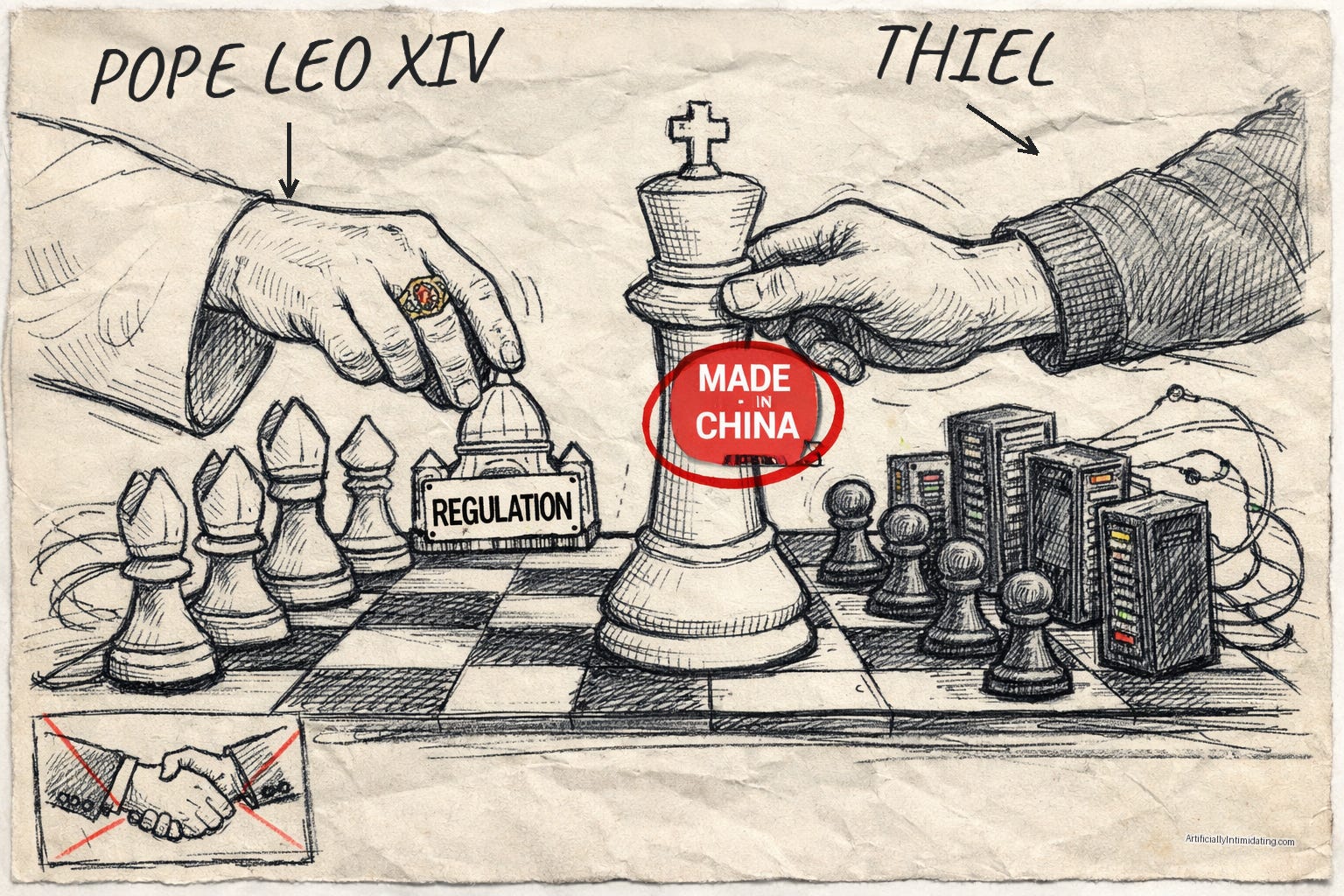
What happened: At the Aspen Ideas Festival, on a panel with political scientist Francis Fukuyama, Peter Thiel accused Pope Leo XIV of "working for the Chinese Communists" — his characterization of the pontiff's call for international AI regulation.
Why it matters: The target is Magnifica Humanitas, the Pope's 42,000-word May encyclical declaring AI "must be disarmed" and demanding legal frameworks, independent oversight, and limits on military use — including a flat refusal to let machines make lethal decisions. Thiel's logic: any brake on American AI is a strategic gift to China.
What everyone's saying: The reaction split on schedule. Accelerationists nodded along; everyone else noted that calling the first American-born pope a communist agent is a bold new entry in the genre. In the same session, Thiel also warned of a "democratic-socialist takeover" of the Democratic Party.
My read between the lines: The encyclical's sharpest passages aren't about slowing AI down — they're about the concentration of power and data in a handful of private hands, which reads rather more personally for a Palantir co-founder. When Washington found Anthropic's off switch last month, we learned AI regulation isn't hypothetical — the fight is over who holds the switch. Thiel would simply prefer the answer be "no one."
📖 Further reading: Fable 5 Is Back After 18 Days. The Precedent It Set Isn't Going Anywhere. — what actually happens when a government regulates a frontier model, blow by blow.
That's your AI Brief for Saturday. Go enjoy the human-made fireworks.
—Artificially Intimidating


