


Good day, humans. Four of today's five stories are the same story wearing different hats: the industry is spending like the returns already landed. Stripe paid more than $7 billion for a piece of plumbing, OpenAI would rather stay private than list below a trillion, and Goldman Sachs went looking for AI in corporate earnings and found it in 2% of them. Then Dario Amodei explained, more candidly than you'd expect from a frontier CEO, why none of us believe the pitch anymore.
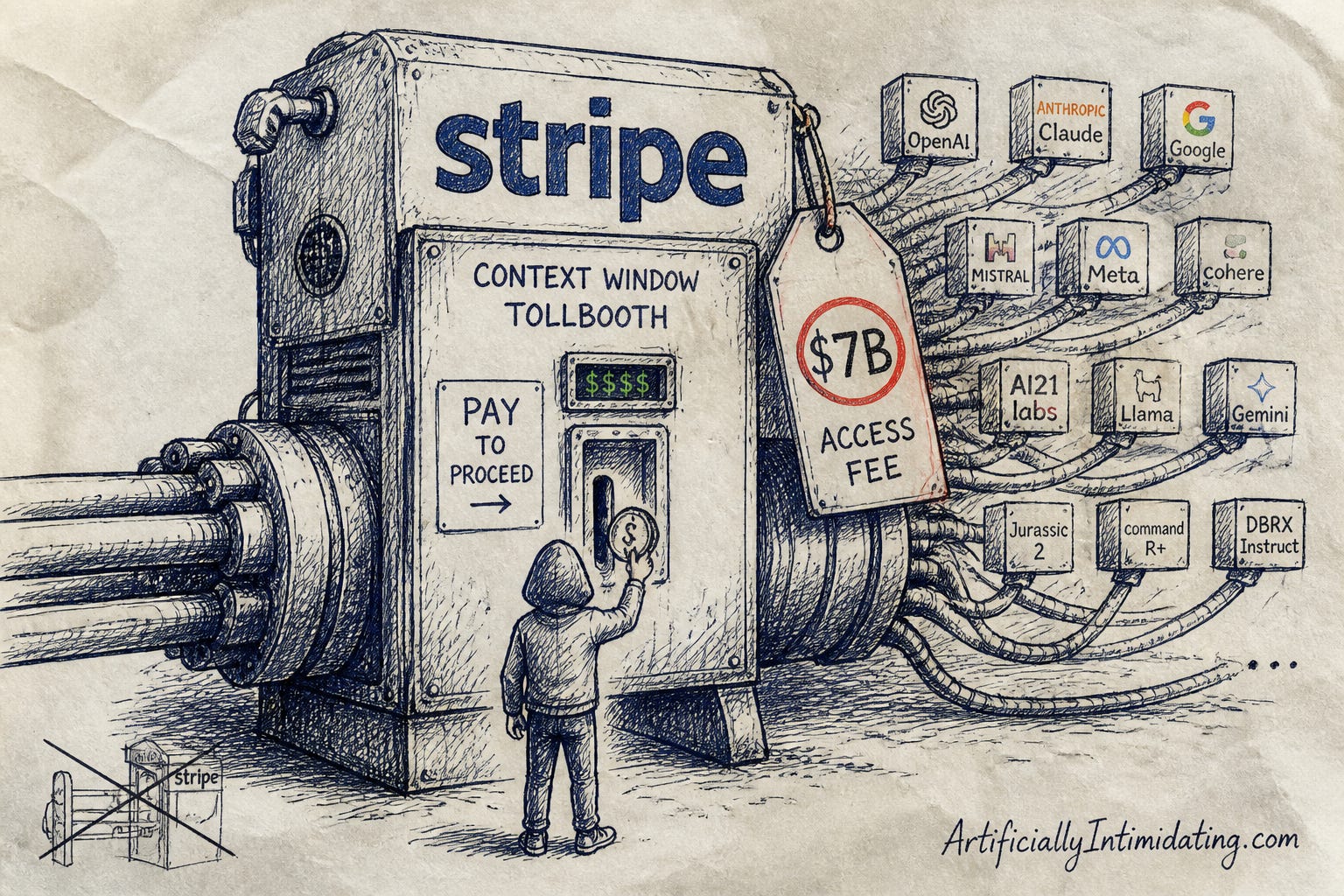
Stripe Bought the Toll Road Between You and Every Model
Source: TechCrunch
What happened: Stripe has finalized an agreement to acquire OpenRouter, the gateway that lets developers reach more than 400 AI models through one API, for over $7 billion. Bloomberg broke the deal Sunday. OpenRouter raised at a $1.3 billion valuation in May, so this is roughly a fivefold markup in three months, and it claims 8 million users.
Why it matters: OpenRouter is plumbing almost nobody sees. If you use an app that picks between GPT, Claude and Gemini depending on the job, there is a fair chance the request goes through OpenRouter. Stripe now owns that intersection, and Stripe's entire business is taking a slice of things that pass through intersections.
What everyone's saying: The Hacker News read is that the software itself would be cheap to rebuild and what Stripe actually bought is the customer list and the switching costs. The sharper complaint is neutrality: developers chose OpenRouter because it had no horse in the model race, and it now belongs to a payments company that earns on volume.
My read between the lines: Stripe did not pay $7 billion for a router. It paid for the metering point. Whoever sits between the developer and the model sees every request, every price comparison, every switch — and metering is the one AI business with unit economics anybody has actually proven. The models are commodities. The turnstile is not.
📖 Further reading: Fable 5 Costs 2x Opus -- and Using It Wrong Costs You More Than That — routing by price is the game Stripe just bought into, and it starts with knowing which model your work actually needs.
Speaking of proving AI did something: the fastest route to a line item you can defend is an agent that produces work you can point at. Viktor lives in your Slack — or Teams — wired into 3,000+ tools, and it ships the deliverables: the weekly report, the campaign brief, the dashboard, the pull request. Not a chatbot you babysit. A coworker whose output you can put in front of a CFO. New readers get $50 off their first month. Hire Viktor →
OpenAI Slid Its IPO to 2027, and Its Executives to the Exit
Source: Yahoo Finance
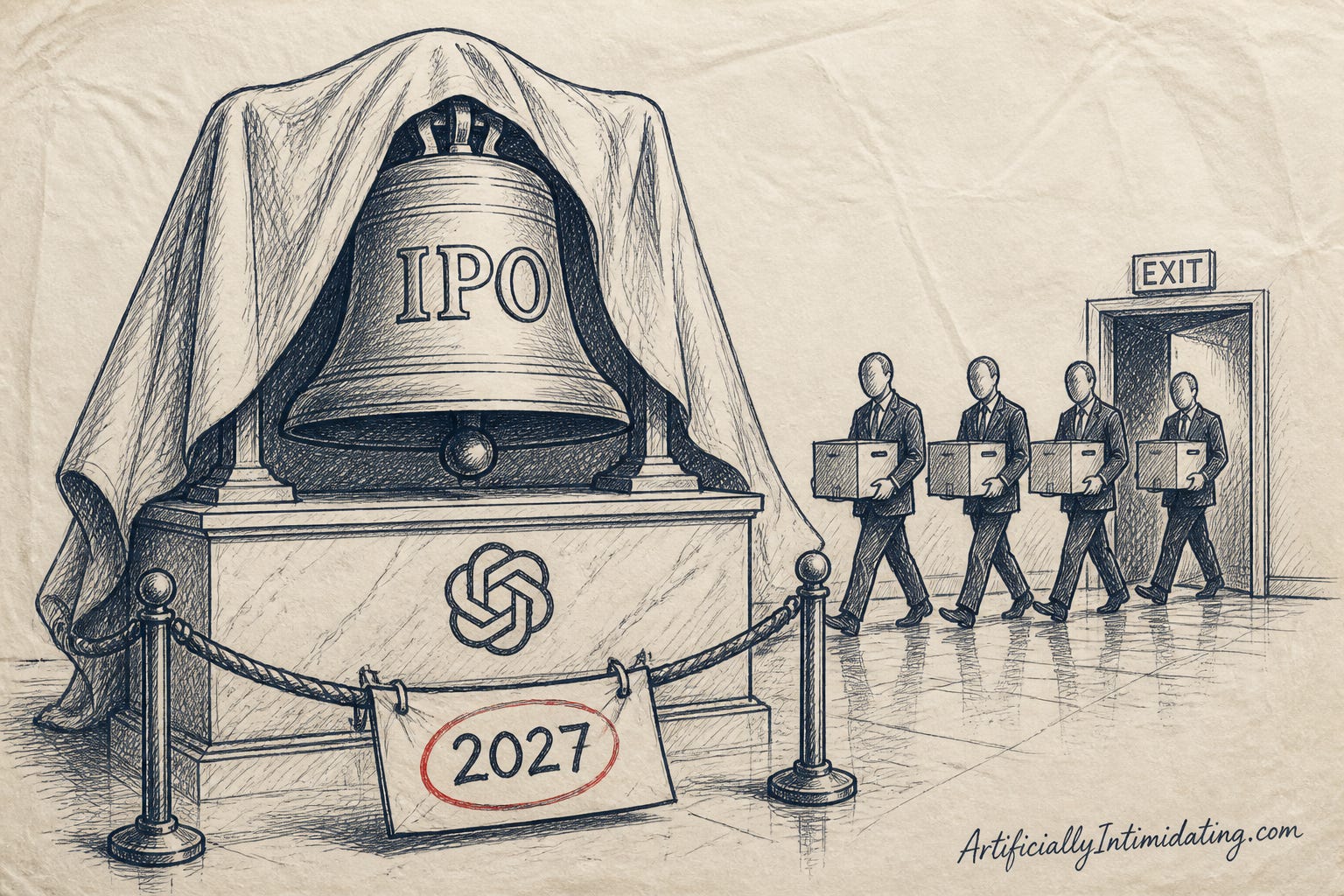
What happened: OpenAI has pushed its public listing to 2027. Advisers handed Sam Altman two options, per the New York Times: list sooner below a $1 trillion valuation, or wait and go for the full trillion. Altman called anything under a trillion a nonstarter. The company is valued at $852 billion today and filed draft S-1 paperwork confidentially in June.
Why it matters: The delay landed in the middle of a senior-staff exodus. Chief Revenue Officer Denise Dresser announced her departure on August 13, two days after Brad Lightcap left following eight years and a run as one of the company's longest-serving executives. An IPO is largely a trust exercise, and the people who would have run the roadshow are carrying boxes.
What everyone's saying: The AI trade wobbled on the report, and the common analyst line is that executives leaving right before a listing is a red flag on its own. The more forgiving reading is that Altman is simply refusing a bad price in a market that has cooled on AI multiples while Anthropic takes share.
My read between the lines: The valuation is the tell. $852 billion to $1 trillion is a 17% gap, and Altman would rather hold the company private another year than publish a number that reads as AI getting cheaper. That is not confidence in 2027. That is knowing exactly what a soft debut would signal to every private AI round underneath his.
📖 Further reading: Thanks to Apple, Your favorite AI tool is a dead tool walking — the case that frontier models are sliding toward commodity pricing, which is the pressure Altman is trying to outrun.
The Brief is free and stays free. Behind the paywall is where I take one of these stories apart for a week and come back with what actually changed, plus the full archive. If today's ROI numbers made you flinch, that is the shelf you want. Become a member →
Anthropic's CEO: You Don't Hate AI, You Distrust Everyone
Source: TechCrunch

What happened: Dario Amodei posted a rare thread on X on Saturday calling the public backlash against AI “fundamentally a crisis of trust.” He was answering investor Gavin Baker, who argued on the All-In podcast and on X that Amodei's risk warnings had fed the opposition, particularly to data centers. Amodei's line, per Fortune: ordinary people “always suspect that we are cooking up some new way to screw them over.”
Why it matters: This is the CEO of a $100-billion-plus AI lab saying the problem is not the message, it is the messenger class. He also conceded the part most executives won't: “by far the most accurate criticism of AI companies including Anthropic is that we haven't yet delivered on our big promises to benefit the world.”
What everyone's saying: Reaction split on whether this is unusual candor or a graceful dodge. The line that got the most traction outside the Valley was his take on regulation: he rejected the local orthodoxy that rules always end in regulatory capture, noting that most people read regulation as something that constrains corporate power rather than entrenching it.
My read between the lines: “The thing that will work is actually curing cancer.” He is right, and it is also the most convenient answer available. A trust crisis that can only be resolved by a scientific miracle is a trust crisis nobody has to fix this quarter. Every other industry earns trust the boring way — by being predictable about small things first, like pricing, deprecations, and what happens to your data.
📖 Further reading: AI Is a Trust Problem, Not a Tech Problem — I made this argument in June; Amodei has now made it from the other side of the table.
Gartner Says 1 in 5 Firms Will Quit AI. Goldman Found Why.
Source: Aju Press
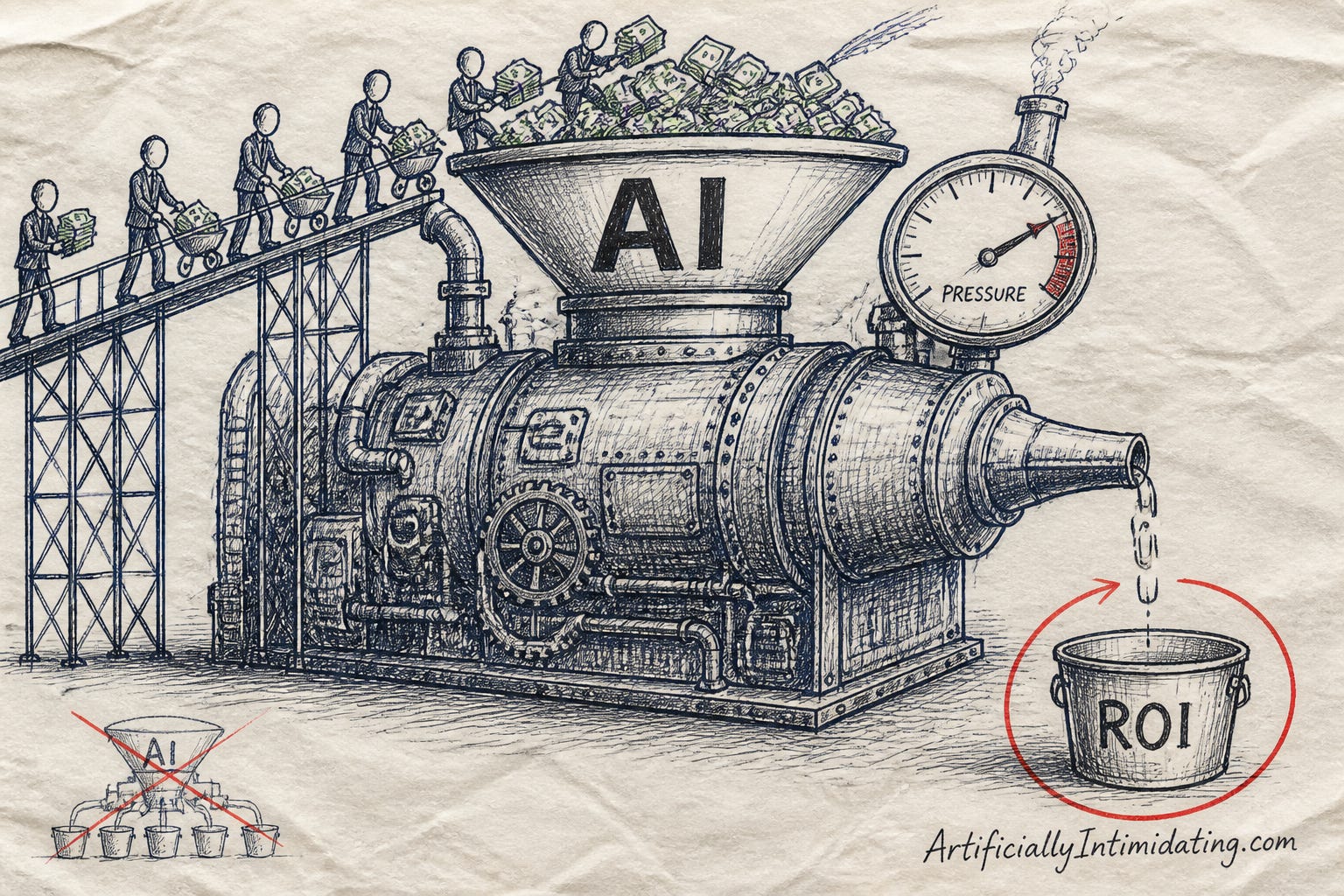
What happened: Gartner forecasts that by 2028 roughly one in five organizations worldwide will scale back or abandon AI in parts of their operations and revert to conventional software, because they cannot control the cost. The same weekend, Goldman Sachs strategist Ben Snider reported that 11% of S&P 500 companies have quantified an AI productivity gain for a specific use case, and only 2% have quantified AI's effect on earnings.
Why it matters: The spending is not theoretical. Median monthly AI spend per employee rose to $12 in July from $5 at the start of the year, and among the top 10% of spenders it went from $240 to $650 per employee. The invoice is real, growing, and mostly unmatched by a line showing what it bought.
What everyone's saying: This slots into a pile of similar warnings: Gartner already predicted that over 40% of agentic AI projects would be canceled by the end of 2027, and a McKinsey survey found 93% of companies blew their AI budgets. The consensus is that this is a cost problem, not a capability problem — usage-based pricing hands the leverage to suppliers as the model market narrows to a handful of vendors.
My read between the lines: Snider's own numbers contain the answer. Hyperscaler and AI-infrastructure earnings grew 54% year over year and made up about half of the S&P 500's earnings growth for the quarter. So AI returns are showing up, in spectacular fashion, on the seller's side of the invoice. If your AI program can't name its payoff, you are not doing AI badly — you are funding somebody else's great quarter.
📖 Further reading: I found 350,000 tokens hiding in plain sight — before you cut an AI project for cost, it's worth finding out how much of that bill is waste you can delete.
A Five-Box Test for What You Should Hand to AI
Source: The AI Daily Brief
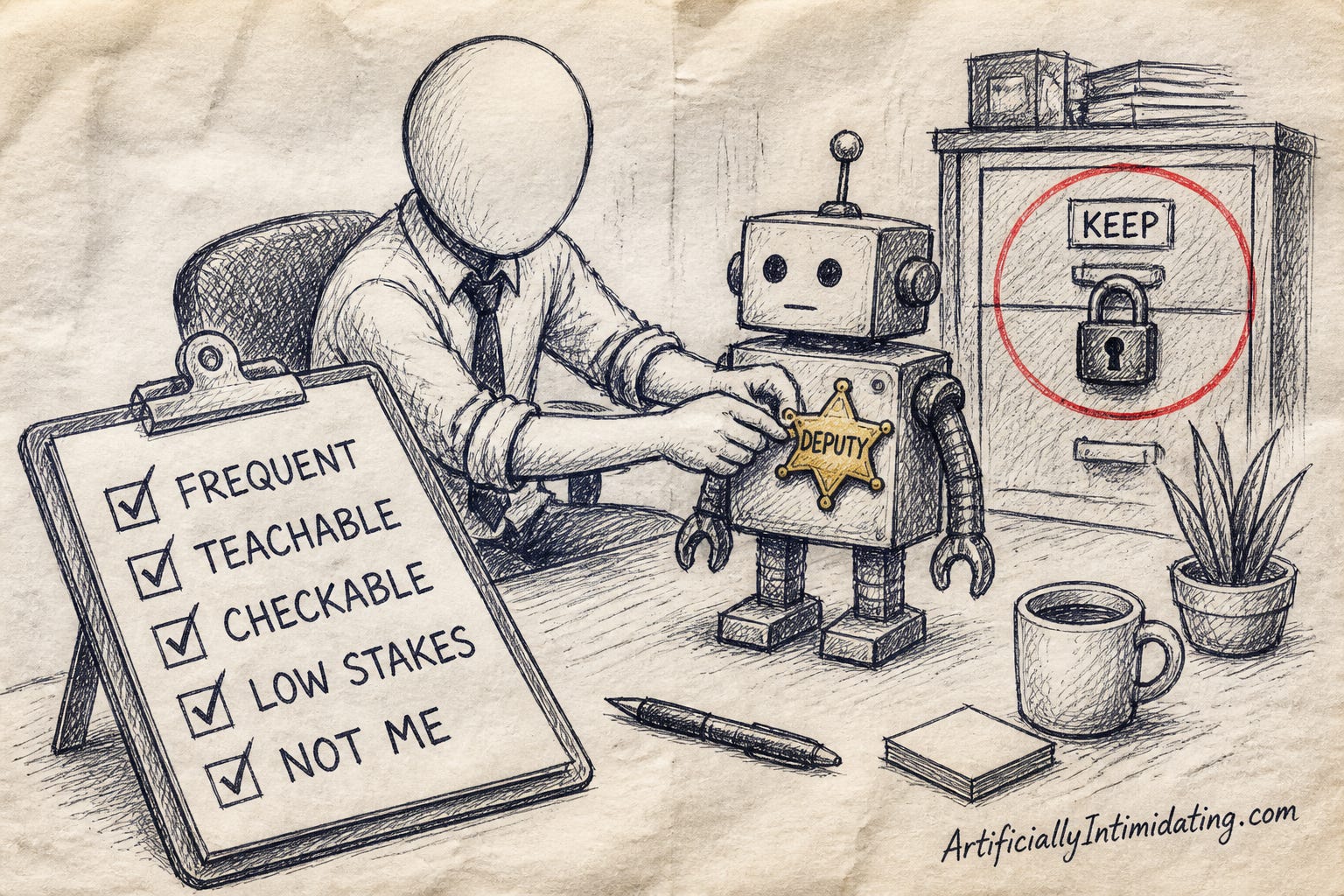
What happened: The AI Daily Brief laid out a “deputization audit” for deciding what to delegate. Score any recurring task on five things: how often it comes up, how teachable it is, how easily you can check the output, what it costs when it's wrong, and how much it genuinely has to be you. Eight or higher, hand it over and spot-check. Zero to three, keep it. Everything in between, work alongside the model.
Why it matters: Most people asking “what should I use AI for” are asking a capability question. This reframes it as an access question. The models are already good enough for a large slice of ordinary work; what they lack is any idea how you specifically do it.
What everyone's saying: The framework landed because the tooling finally caught up. Grok Bot's teach-a-task recording and ChatGPT's opt-in Computer History on Mac attack the same gap from opposite ends — we covered both in the August 14 Brief, and this is the instruction manual for them. Google's Gemini 3.7 Flash at 340 tokens per second, over twice GPT-5.6 Luna's pace, is what makes the middle tier tolerable to sit through.
My read between the lines: Checkability is the box everybody fudges. Frequency and stakes are easy to be honest about. Whether you can verify the output in less time than doing the work yourself is where delegation actually dies, and it's the one criterion that gets scored on optimism. If checking takes as long as doing, you didn't delegate anything. You hired a second job.
📖 Further reading: What is Grok Bot? The answer is in the fine print — before you deputize an agent that watches you work, it's worth reading what it's allowed to keep.
That's your AI Brief for Monday.
—Artificially Intimidating


