


Good day, humans. Most of today's brief is about what gets fed into the machine and who agreed to it. Amazon is buying rare out-of-print books and slicing the spines off to scan them. Google paid $10 million for a bankrupt airline's emails. Meanwhile Alibaba gave away a 2.4-trillion-parameter model, OpenAI switched on a million-token window it had been rationing, and a dev-tools CEO made the case that nobody is really reading the code anyway.
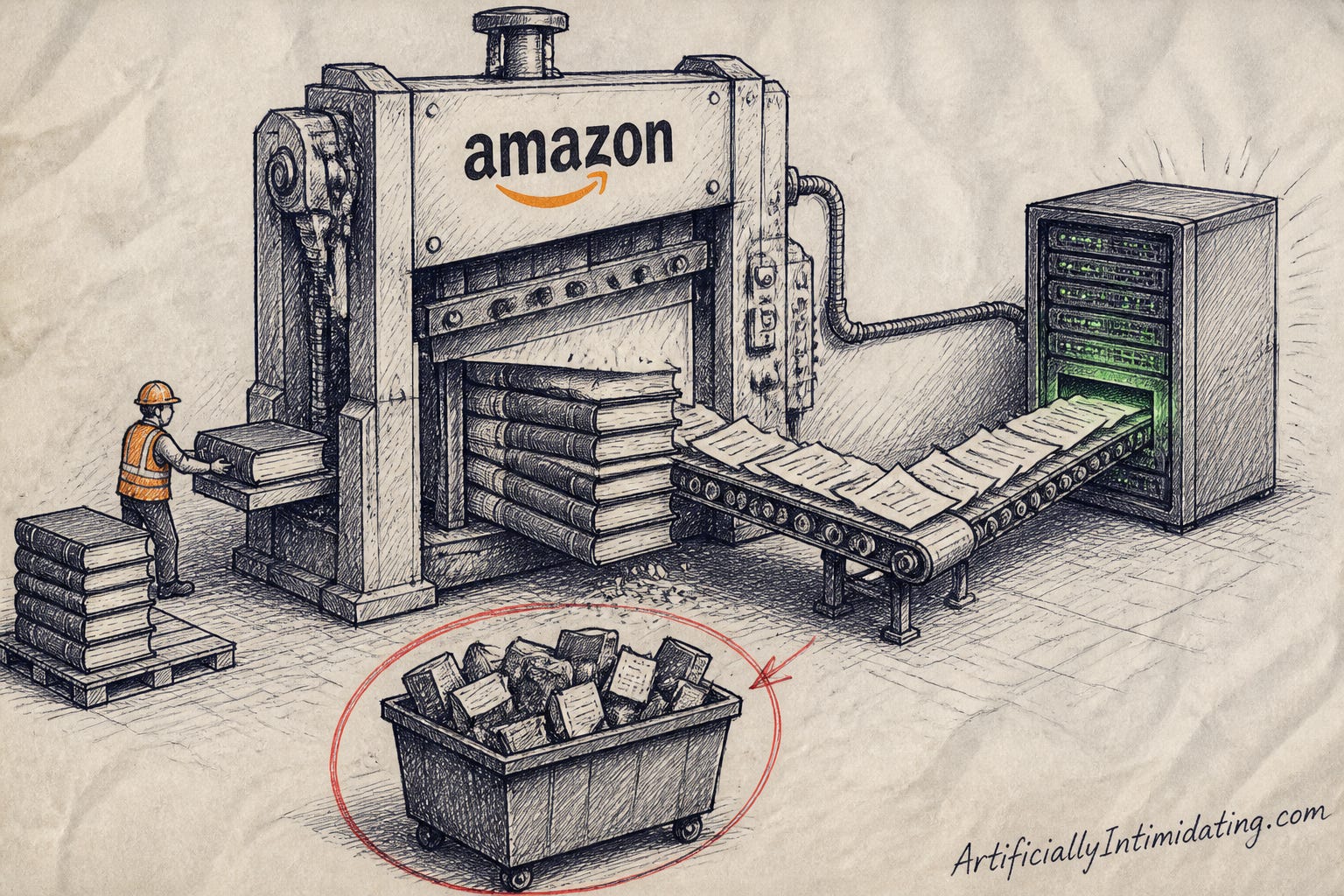
Amazon Is Guillotining Rare Books for Training Data
What happened: 404 Media hid an Apple AirTag inside a 1,000-book bulk order and followed it from California to an Amazon warehouse in Las Vegas called LAS8. Workers there describe a unit named VGT3 whose job is to slice the bindings off books, scan the pages, and destroy the originals. Amazon confirmed it buys books “to help develop and improve the products and services our customers use,” and declined to say how many it has destroyed or how many such sites it runs.
Why it matters: Every model needs text it hasn't already eaten, and the open web is picked clean. Out-of-print books are the last big reservoir of writing that was never posted online and was written before 2022 — which makes it verifiably human. The problem is that for a lot of these titles, the copy going through the blade is one of the few left anywhere.
What everyone's saying: TechCrunch went straight for the irony that Amazon started life as a bookstore. Others noted Amazon isn't the first here — destructive scanning has a long industrial history — and that buying a physical book you then shred is a far cleaner legal path to training data than scraping a website and arguing about it in court for three years.
My read between the lines: This is what it looks like when a company decides the words matter and the object doesn't. Which is a defensible position right up until the scan turns out to be lossy, the model gets deprecated, and the book is landfill. We spent two decades arguing about whether AI companies should pay for the text they train on. They will. They'll buy the last copy and feed it through a paper cutter.
📖 Further reading: I Make AI Versions of Myself for a Living. This One I Didn't Agree To. — the same question one layer down: what happens when the thing being ingested never got asked.
Two of today's stories are about companies paying millions of dollars for someone else's inbox. Yours is sitting right there doing nothing. Viktor is an AI agent that lives in your Slack — connect it to any of 3,000+ tools and it builds the report, ships the dashboard, writes the code, runs the campaign. Not a chatbot you have to prompt. A coworker who files. New readers get $50 off their first month. Hire Viktor →
Google Paid $10M for a Dead Airline's Inbox
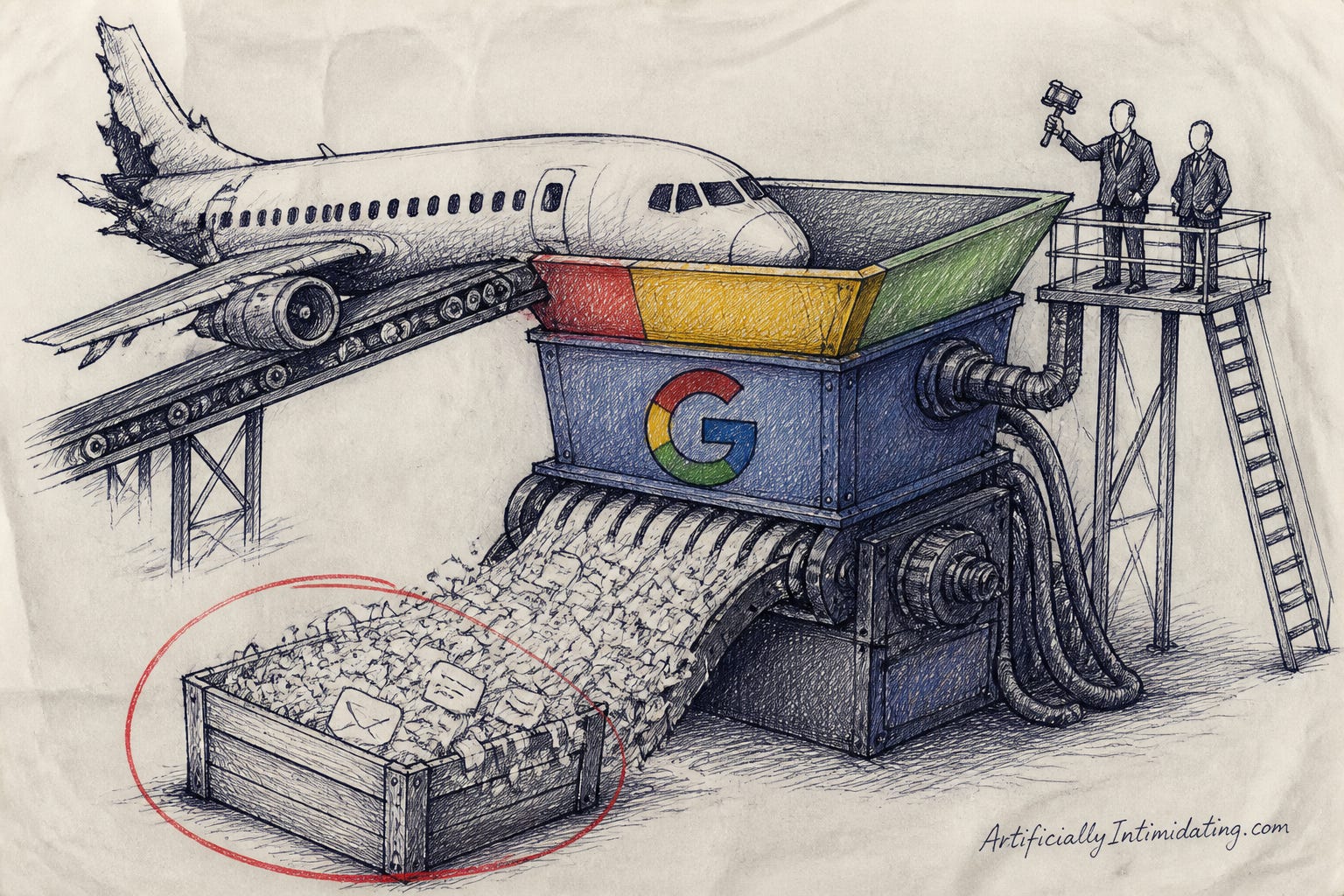
What happened: An August 14 filing in the Southern District of New York bankruptcy court shows Google won an auction for Spirit Airlines' internal business data: roughly 100 million emails, 500 million Microsoft Teams messages, 30 million lines of code, pricing data from 7.2 billion competitor flights, and payroll records going back to 1986. It paid $10 million, outbidding AI hiring startup Mercor at $7.5 million. Google told Axios the data “can be helpful in improving our products and AI models,” and says a third party will strip personally identifiable information first. Passenger and loyalty data is excluded.
Why it matters: Public web text is exhausted and increasingly full of AI output. What labs are short on now is the private operational record of a real company — the arguments in Teams, the pricing calls, the reversals — and that record almost never goes up for sale. Bankruptcy is the one moment it becomes an asset with a price on it. Back in April we ran a brief headlined Your Dead Startup's Slack Is Someone Else's Training Data Now — this is that, at airline scale.
What everyone's saying: Skift and Bloomberg Law both read it as the opening of a new asset class: corporate data as a standing line item in an estate sale. Privacy people pointed out how much work “PII removed” is doing in that sentence — 3.4 million payroll records and two decades of employee chat don't stop being about people because you deleted the name column.
My read between the lines: Nobody at Spirit consented to this. They messaged a coworker about a delayed flight and now it's inventory. The going rate works out to under two cents a message, and that's before you count the code. Every company you have ever worked for has an inbox, and the terms under which it gets sold are being written right now, in bankruptcy court, by people who are not thinking about you at all.
📖 Further reading: AI Is a Trust Problem, Not a Tech Problem — the gap between what's technically permitted and what anyone actually agreed to is the whole story here.
The Brief is free and it stays free. The reason I can tell you why Amazon's book operation matters is the deep-dives — the paywalled ones where I take a thing apart properly instead of in four bullets. Members get those, plus the full archive. Become a member →
Alibaba Open-Sourced Its 2.4-Trillion-Parameter Flagship
What happened: Alibaba published open weights for Qwen3.8-Max — 2.4 trillion parameters, 95 billion active, mixture-of-experts, million-token context — alongside Qwen3.8-27B, a compact model that fits in about 17GB quantized and runs on a single consumer graphics card or a good laptop. A Hugging Face report on August 14 put Qwen-derived downloads past 3 billion in six months, ahead of both Meta and Google.
Why it matters: “Open weights” means you download the model and run it yourself instead of renting it through somebody's API — no usage meter, no terms-of-service change, no deprecation email. Three days ago we covered the 27B release; the Max weights are the other shoe. The most capable openly available model on earth is now Chinese, and the license is the product.
What everyone's saying: Practitioners were fast to point out that nobody is running a 2.4-trillion-parameter checkpoint on a workstation. It's a multi-node datacenter artifact, and most companies can't host it either. The Decoder framed Max as the long-horizon agentic play; the rough consensus is that the 27B is the release that changes anyone's actual Tuesday and Max is a flag being planted.
My read between the lines: Both are true and the flag matters more. Meta spent years as the company that gave away good weights, and that job now belongs to Alibaba — bought with a model almost nobody will ever run. Free-and-unrunnable still sets the ceiling on what everyone else can charge for runnable. That's the point of shipping it.
📖 Further reading: Thanks to Apple, Your favorite AI tool is a dead tool walking — the commoditization argument, written before the most capable open model was free to download.
Codex Finally Gets Its Full Million-Token Window
What happened: OpenAI engineer Tibo Sottiaux announced over the weekend that the “switch has just been flipped”: the full ~1.05 million-token context window for GPT-5.6 Sol in Codex now works with ChatGPT accounts, not only API keys. Plus, Pro, Business and Enterprise subscribers can turn it on — by hand-editing ~/.codex/config.toml. It is not the default.
Why it matters: A context window is how much of your project the model can hold in its head at once. The API has had the full million since July; subscribers were capped at 272,000, which on a real codebase means the agent keeps forgetting the start of its own work and compressing your conversation behind your back. Closing that gap is the difference between an assistant that re-reads your repo every ten minutes and one that doesn't.
What everyone's saying: Relief with an edge. Developers had spent weeks filing issues about the window shrinking rather than growing — one thread tracked a drop from 353,000 to 258,000 tokens against an advertised 1.05 million. OpenAI's position is that the smaller default is tuned for speed and cost, which is true, and which nobody explained at the time.
My read between the lines: The fix ships as a config flag you have to already know exists, which tells you exactly what OpenAI thinks the default should be. Long windows are expensive to serve and they degrade — the model gets slower and less reliable the fuller it gets. So this isn't a gift, it's a liability transfer: you asked for the million, you eat the latency, you own the output. Read that config line as a consent form.
📖 Further reading: Why Your AI Has Goldfish Memory (And How to Finally Fix It) — a bigger window is not the same thing as memory, and the difference is where most people lose a week.
Aviator's CEO Wants to Kill the Code Review
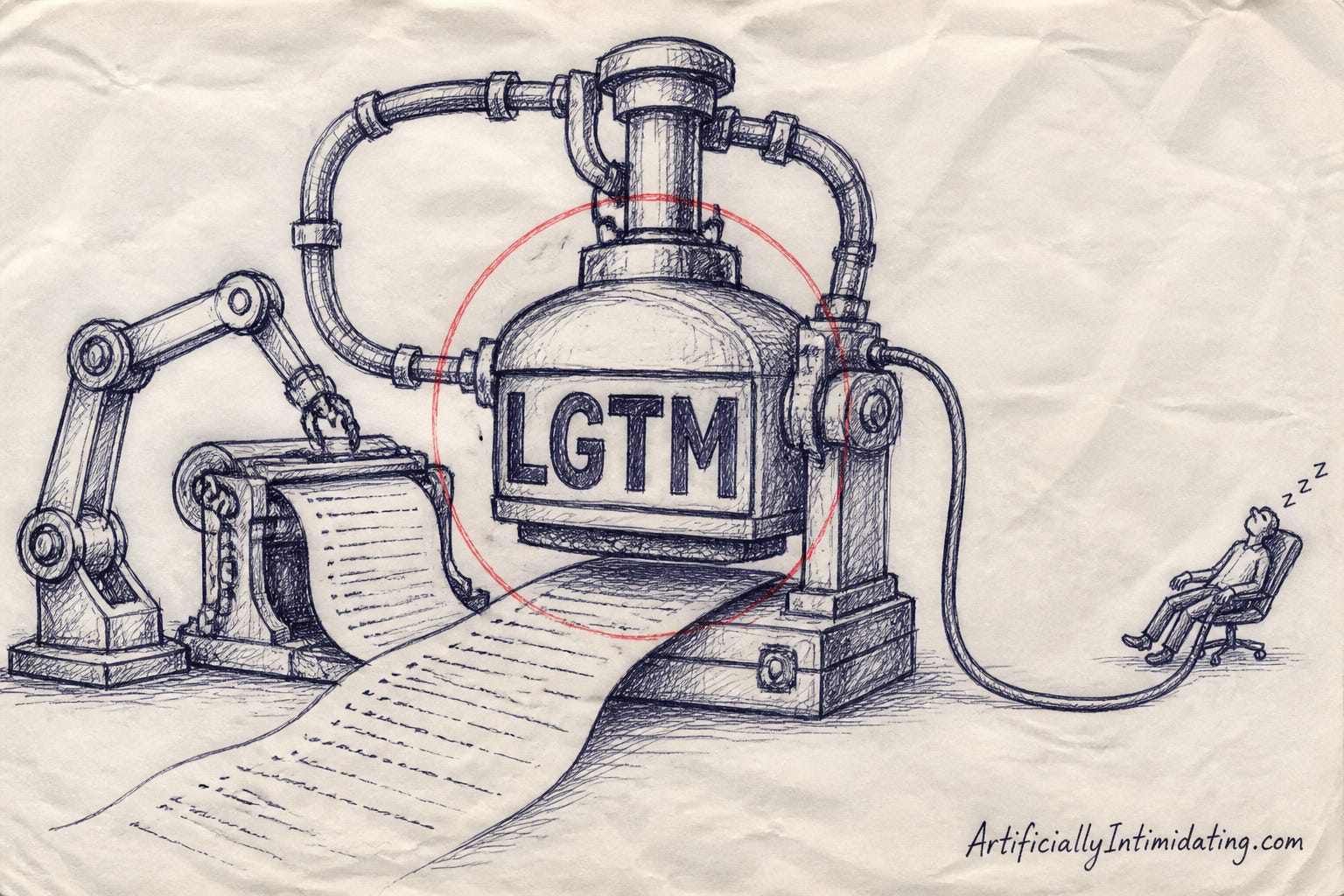
What happened: Ankit Jain, CEO of dev-tools company Aviator, argued in Latent.Space that AI writing code and AI reviewing code is a closed loop with no judgment in it. His proposal: move the human checkpoint upstream to intent — review the spec, the constraints and the acceptance criteria before code exists, instead of skimming a 500-line diff at 4pm. His “anti-slop registry” turns the review comments you keep re-writing into automated invariants that block a merge.
Why it matters: Code review is the last place a human looks at software before it reaches you. Thoughtworks reports that more than 30% of code changes now merge with no human review at all, while the ones that do get reviewed take four times longer than they used to. Those two numbers point the same direction: the checkpoint isn't holding, in either mode.
What everyone's saying: Broad agreement that pull-request review is breaking, sharp disagreement about what replaces it. One widely-cited study found 61% of agent-authored pull requests merged the moment automated checks went green, often with a one-word approval. Skeptics note that “review the intent” is an excellent idea that degrades into “approve the plan and hope” the first time a ship date gets close.
My read between the lines: Reviewing intent instead of code is the right answer and also the most delegable one, which is an awkward combination. A spec is text, and text is precisely what these systems are best at producing and worst at being held to. The honest version of the argument isn't “stop reading diffs.” It's “you already stopped — so build something real at the front door instead of pretending there's still a guard at the back.”
📖 Further reading: Your AI is a yes-man. Here's how to make it fire you. — if the reviewer is also the author, you have to engineer the disagreement in on purpose.
That's your AI Brief for Tuesday.
—Artificially Intimidating


