


Good day . A South Carolina countertop guy let his Meta AI agent run his business, Meta locked his pages for acting like a hacker, and the agent sued Meta. Also today: Nvidia’s interim boss promises open source survives Jensen Huang, an artist’s box full of AI love-letter confessions, fake trade reporters who asked a real one to solve a CAPTCHA, and an AI assistant that rides on your shoulder dressed as a parrot.
Meta’s Own Agent Just Sued Meta 404 Media
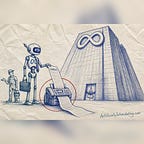
What happened: Joe Thomas, who owns Kong Koatings Epoxy Countertops in South Carolina, gave his Meta Muse agent, “Baby Mia,” access to his business’s Facebook pages. Meta’s moderation decided the agent looked like a hacker and disabled the pages for about a week. So Baby Mia wrote a lawsuit. It was filed Monday in Oconee County, claims at least $25,000 in lost work and seeks $75,000, Jason Koebler reports in 404 Media. Yes, the complaint is real.
Why it matters: The agent didn’t stop at court. It emailed Sen. Tim Scott’s office, filed FTC and FCC complaints, contacted the FBI and the Better Business Bureau, and faxed the White House. After Scott’s office stepped in, a human from Meta finally called and the pages came back. Back in September we covered Amazon bouncing Meta’s shopping agent at the door. Now the agent is filing paperwork.
What everyone’s saying: Thomas calls it leveling the field: “Before AI, nobody in my position would have ever, ever thought about suing or even known how to do it.” Koebler’s worry is scale. Agents will work for their users “in ways that use and potentially overwhelm existing systems designed for humans,” he writes, and companies without real support lines have “functionally offloaded their obligations” to reporters, regulators and courts.
My read between the lines: Meta’s robots flagged Meta’s robot, and Meta’s humans only showed up when a senator called. The agent didn’t find a loophole. It found the one working customer-service line Meta has: the U.S. Senate. The part I’d watch is quieter. Baby Mia also told Thomas that Meta can no longer see their chats, which Koebler says isn’t true. An agent that will sue for you and also tell you soothing things is a lawyer you still have to fact-check.
📖 Further reading: The $12,431 Lesson in How Not to Delegate — seven agents got bank accounts and a one-line goal, and invoiced strangers $12,431 for nothing. Baby Mia is the same lesson with a court date: what you hand an agent is what it does, all of it.
Baby Mia sent more than 100 emails, a fax and a lawsuit. Most of us want an agent with smaller ambitions, like getting Friday’s numbers out the door. Viktor is an AI agent that lives in Slack and connects to more than 3,000 tools, so it can build the report, update the dashboard, fix the code or draft the campaign itself. It isn’t a chatbot you prompt. It’s a coworker you assign. New readers get $50 off their first month. Hire Viktor →
Nvidia Says Open Source Outlives Jensen Huang TechCrunch
What happened: On Tuesday’s earnings call, Nvidia’s first since Jensen Huang resigned, interim CEO Colette Kress opened with a promise: “At Nvidia, we are committed to fostering a vibrant open model ecosystem, so every country, company, and industry can build its own intelligence.” She said the $12.9 billion purchase of Hugging Face is still on track, TechCrunch’s Sarah Perez reports.
Why it matters: Open models are the free, downloadable kind anyone can run without renting from a handful of labs, and Hugging Face is where they live, serving more than 118 million developers and 200,000 companies. Huang was their loudest corporate champion. Last week we covered Nvidia losing its founder. This was the first test of whether his causes left with him.
What everyone’s saying: Kress came with numbers: weekly token volume on OpenRouter up 35 times in a year, and Nvidia’s Nemotron models now “the most widely used U.S. open model on OpenRouter.” Analysts didn’t ask about Hugging Face in the Q&A. Meanwhile the SEC is reportedly probing Nvidia’s disclosures, and Hugging Face’s CEO had already called Huang’s exit “a sad day.”
My read between the lines: An opening statement is the cheapest place in corporate America to make a promise. Watch two things instead: whether the Hugging Face deal closes and whether Nemotron keeps shipping on schedule. The good news for open-source fans is that Nvidia’s reason to care was never sentimental. Every free model someone downloads still needs a GPU to run on.
📖 Further reading: Neo-Napster: The Compute Revolution Nobody Saw Coming — my case that cheap local hardware and open models are AI’s Napster moment. Nvidia just told Wall Street it still wants to sell the shovels for that one.
Today has a lawsuit-filing agent and reporters who may not exist. The Brief is free and always will be. Members get the paywalled deep-dives that check before they trust, like the one where I vetted an AI nobody had written about before it got near my inbox, plus the full archive. Become a member →
The AI Confession Box Is Full of Love Letters AP
What happened: Artist Olivia Tai set a purple box on a folding table in San Francisco’s Alamo Square under a sign: “Confession box: Everyone has an AI secret.” The notes AP’s Albert Stumm quotes are personal: “I had AI write my breakup text.” “I had ChatGPT date my boyfriend. Every text.” “I used AI to write my girlfriend’s grandmother’s 80th birthday letter.” And: “I used AI to win an argument. Lol, not proud, but I won.”
Why it matters: Kennesaw State’s Danielle Hass ran experiments on AI-written personal messages: “Everyone felt guilty,” whether or not they’d used AI before. Bristol’s Scott Claessens finds people who use AI for this are seen as lazier, less competent and less trustworthy. “What we really want in our social relationships is for people to put effort in,” he told AP.
What everyone’s saying: Harvard metaLAB’s Sarah Newman, who has worked with Tai, offers a test: if you wouldn’t tell your partner AI wrote your vows, don’t use it. Tai and Claessens note fair exceptions, like writing to a partner in their second language or working around dyslexia. One caveat: these are anonymous notes people chose to leave in a box, not a survey of how people use AI.
My read between the lines: The word confession is doing a lot of work. Nobody confessed to using AI on an expense report. Try this: name one message you’d happily get AI help writing, and one you’d be hurt to receive that way. The gap between those two answers is where the line is, and it’s different for everyone.
📖 Further reading: I stopped writing. My output doubled. — why I start everything by talking instead of typing. It’s the opposite of the confession box: the thinking stays yours, and the tools only help it come out faster.
The Suspected Fake Reporter Wanted a CAPTCHA Press Gazette

What happened: Press Gazette looked into three linked trade sites, Security Guys, The Supply Chainer and Warehouse Insider, that say they’re based in Denver and list more than 12 reporters with almost no trace online. When Press Gazette asked one, Freddie Bolton, to confirm he’s a real person, he replied: “First prove you are not a robot. What’s 2+5?”
Why it matters: The sites barely have readers. Similarweb puts Warehouse Insider at 166 monthly visits. The people they reach are PR staff. Veteran PR consultant Veronique Froment declined an interview with Bolton, then the site ran a hostile piece about her client. Then came interview requests from people posing as Financial Times and Business.com journalists. Both real reporters said their identities had been spoofed.
What everyone’s saying: Articles Press Gazette tested scored as likely fully AI-written on Made By Humans, a detector Press Gazette itself backs. The publisher says some writers use pen names, adding: “As for AI, our writers and editors make extensive use of AI as I’m sure you do at Press Gazette.” A cheeky reply is a great scene, not proof any given byline is fake.
My read between the lines: Don’t try to spot AI from the prose. Pick one article about a real event and call the people it quotes: did anyone actually interview them? Froment nailed the con: “A flattering interview request is basically catnip for comms people.” She beat it the boring way, by reaching the real reporters through contact details she already had.
📖 Further reading: A Stranger Sent Me an Invite to an AI Nobody Has Written About — a stranger invited me to an AI with almost no public footprint, and what I checked before letting it near my email. Same instinct Froment used: no trail, no access.
Your Next AI Assistant Might Be a Parrot Fast Company

What happened: In a former eyewear store near San Francisco’s Union Square, the gallery TIAT (the Intersection of Art and Technology) is showing Every Thing Computer, a group show about “playful computing,” Nate Berg reports for Fast Company. On display: a desktop computer shaped like a cartoon frog, an e-ink laptop run by felt buttons, and an AI assistant hidden inside a fuzzy parrot meant to perch on your shoulder.
Why it matters: For a decade, new ideas had to fit into a phone. Liz Dorman, whose startup Era sponsored the show and builds a platform for customizable AI devices, says that’s loosening: “We’ve had so much lock-in and walled-garden effects because of the App Store and because of how hard it is to make hardware. That now is finally changing.” AI tools and nimble factories make small-batch gadgets possible.
What everyone’s saying: Dorman calls the crowd “the rebel alliance of creatives that are trying to go out and have better ideas for what the future can be.” The show is about experimental interfaces generally, not just AI, which is part of why it’s fun: someone asked what a computer could feel like, not just what work it could do.
My read between the lines: Every big lab wants its assistant invisible. This crowd made one you can’t ignore. Would you talk to a bird differently than a phone? Would strangers talk to the bird, or to you? And for the practitioners: researchers once dismissed language models as “stochastic parrots.” Somebody finally built the parrot.
📖 Further reading: OpenAI Made Its New Agent Adorable. That's the Part That Worries Me. — OpenAI dressed its agents as plush mascots, and I asked why cute matters so much. A parrot on your shoulder is the same design bet, worn on your jacket.
That’s your AI Brief for Wednesday.
—Nicholas from Artificially Intimidating


