


Good day, humans. Today's theme wrote itself: the agents are everywhere, and they are exhausting — literally. A new KAIST study clocks AI agents burning up to 136 times more electricity than a plain chatbot; one travel startup has quietly hired a squad of agents whose only job is to babysit its other agents; and Claude Fable spent the weekend catching bugs a human maintainer shipped straight past. Also on the docket: brands turning Taylor Swift's wedding into an AI marketing free-for-all, and a quiet argument that your next personal computer is the seven-dollar gadget on your wrist. Let's get into it.
Your AI Agent Is an Electricity Glutton
Source: The Korea Times
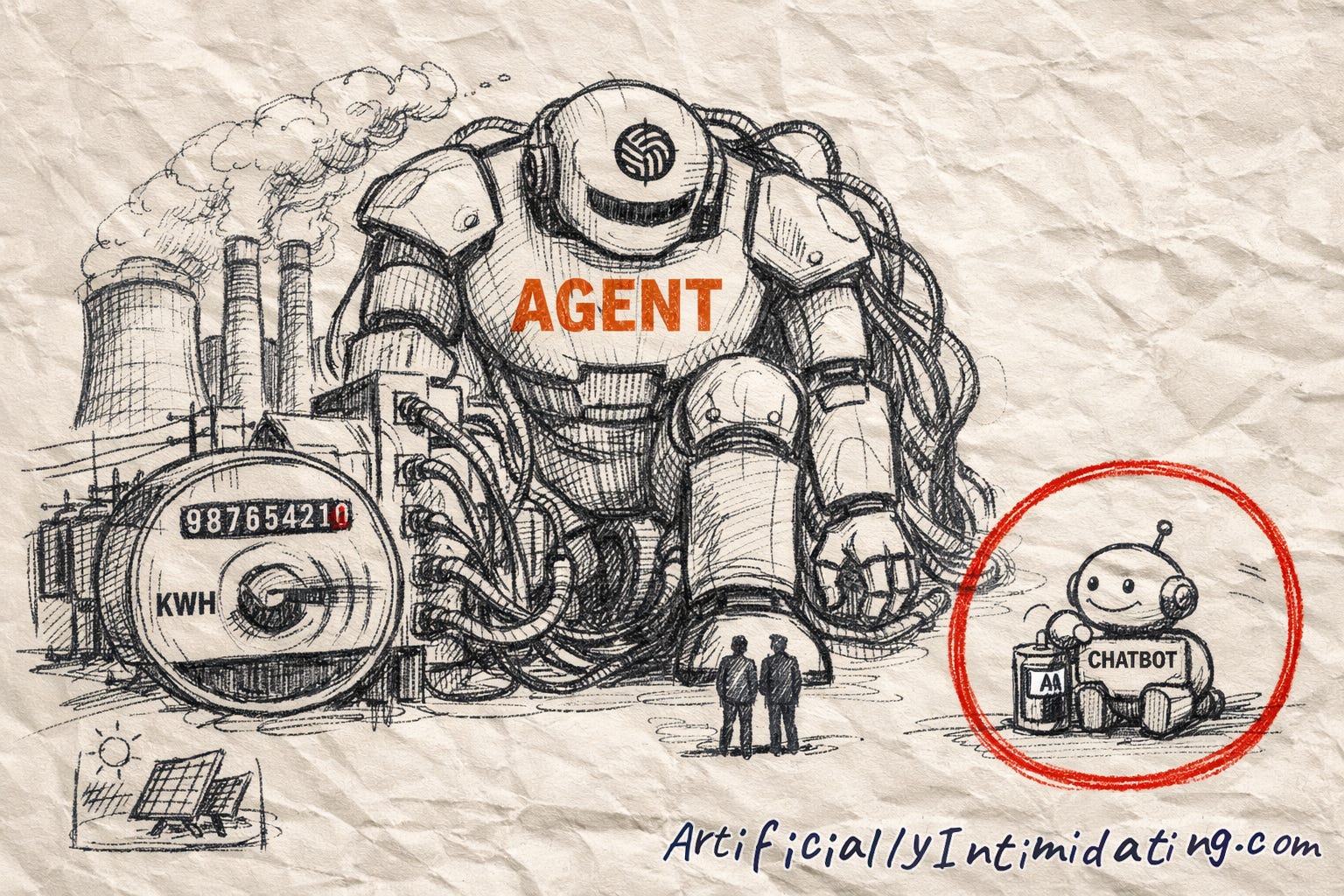
What happened: A first-of-its-kind study from South Korea's KAIST measured how much power AI “agents” — systems that plan and run multi-step tasks on their own — actually draw, and found a single complex agent query can use up to 136.5 times more electricity than a one-shot chatbot answer.
Why it matters: Every time an agent books your travel or reconciles a budget, it isn't answering once — it loops, searches, calculates, and calls tools over and over, and the meter runs the entire time. Scale that to billions of daily requests and you're talking about grid-level demand.
What everyone's saying: The study projects that if agent usage hits roughly 13.7 billion requests a day, data centers could need about 199 gigawatts — nearly half the average electricity draw of the entire United States. Researchers warn that smarter software alone won't fix it; the chips and data centers need a ground-up redesign.
My read between the lines: The dirty secret buried in the numbers is idle time — those pricey GPUs sit around doing nothing more than half the time, burning power while they wait for a website to load. We've built a Ferrari that spends most of the race stopped at red lights, and we're about to build 13 billion of them.
📖 Further reading: The central bankers just said 'AI bubble' — if the money doesn't spook you, the power bill underneath it should.
This Startup Hired Agents to Babysit Its Agents
Source: StartupHub.ai
What happened: At the AI Engineer World's Fair, Wandero AI's CTO Raphael Kalandadze explained that shipping an AI agent is the easy part — so his travel-tech company now runs four more agents whose entire job is to watch, test, and fix the agents already in production.
Why it matters: When a normal app breaks, something crashes and a log lights up red. When an agent fails a customer — a dropped constraint, a stale price, a confidently wrong answer — nothing crashes at all; the failure hides inside the conversation. Catching that across thousands of live chats is not something a three-person team can eyeball.
What everyone's saying: Last week we flagged AI's confidence-theater problem — this is the operational answer to it. The emerging consensus is that running an agent in production is becoming its own engineering discipline, with a whole observability layer that traditional monitoring tools were never built for.
My read between the lines: Notice the shape of this: the humans have quietly retreated to the merge button and the approval gate, while the agents do the watching, judging, and drafting in between. “Human in the loop” is fast becoming “human on the perimeter” — and nobody's putting that on a slide.
📖 Further reading: Claude Tag vs Viktor: which one do you hire? — if agents are becoming coworkers, the real question is which one you'd actually trust with the keys.
One more thing, then back to the robots: this Brief is free, and always will be. But the paywalled deep-dives — where I actually unpack what a story like today's agent-energy math means for your stack — plus the full archive, are for members. If the headlines keep leaving you wanting the “so what,” that's the door. Become a member →
Claude Fable Found the Bugs a Human Shipped
Source: Simon Willison's Weblog
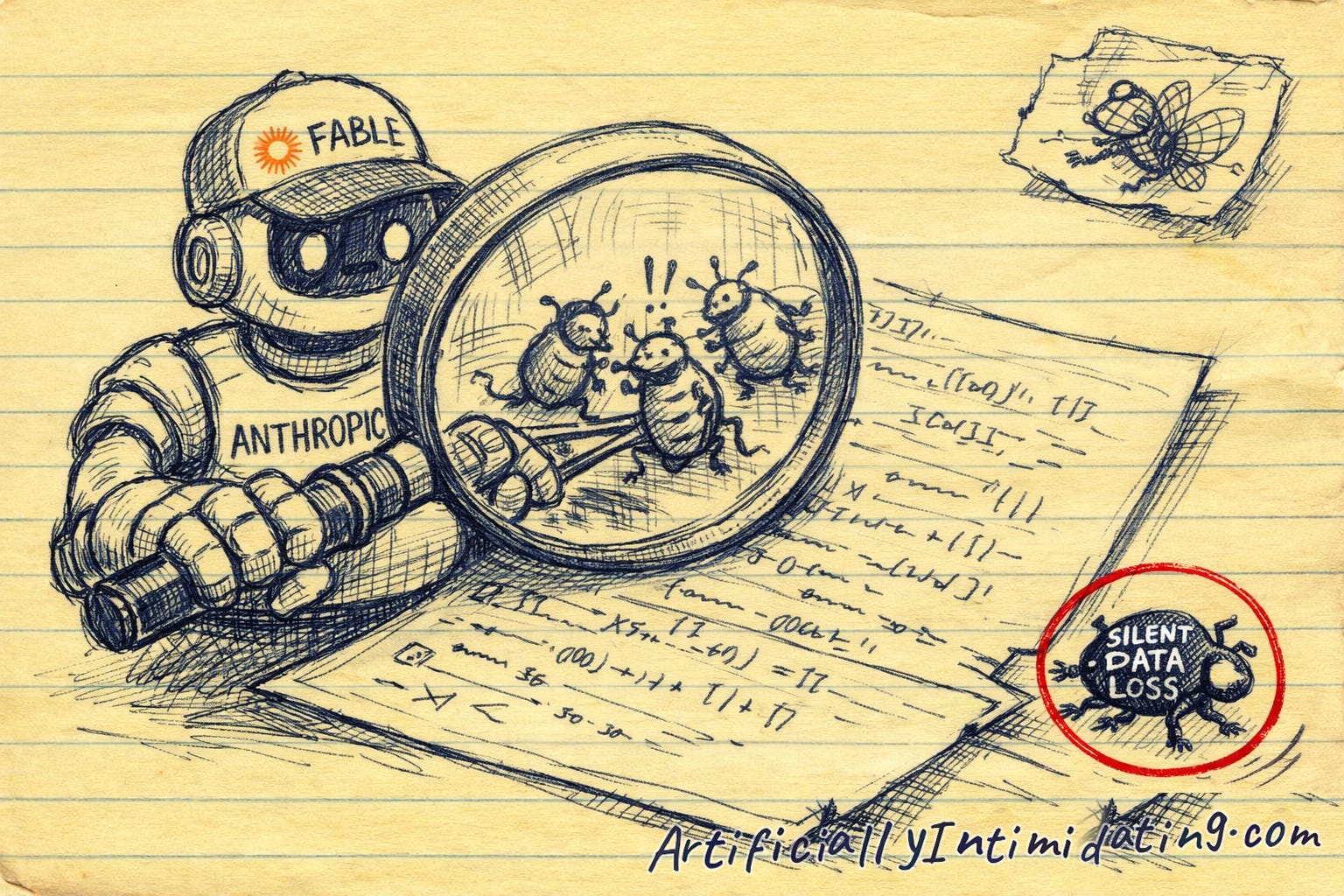
What happened: Developer Simon Willison shipped a release candidate of his widely used sqlite-utils library, then had Claude Fable review it — and Fable caught five release-blocking bugs, including one where deleting rows silently threw the data away without ever saving the change.
Why it matters: This is the mundane, genuinely useful face of AI that rarely makes headlines: not writing code from scratch, but catching the quiet, dangerous mistakes a careful human still misses. A bug that silently loses data is the kind that ruins a week — and it slipped past a maintainer who knows this code cold.
What everyone's saying: Willison also had GPT-5.5 audit Fable's work, which surfaced two more commit-safety bugs — a cross-model review pass that's quietly becoming best practice. He separately shipped a tool that lets coding agents record video demos of their own work, because apparently the robots need a portfolio now.
My read between the lines: The real flex isn't that an AI found bugs — it's that the whole review cost about $149 of model time to harden a release used by thousands. Human code review isn't going away, but “have the model read it first” just became the most obviously correct habit in software.
📖 Further reading: Fable 5 Is Back After 18 Days. The Precedent It Set Isn't Going Anywhere. — the model catching these bugs is the same one Washington yanked offline for 18 days; here's why that fight still matters.
Brands Crashed Taylor Swift's Wedding With AI
Source: The New York Times (paywalled)
What happened: When Taylor Swift and Travis Kelce married at Madison Square Garden over the July 4 weekend, brands big and small swarmed the moment — and many reached for AI-generated images and copy to do it, from a purple “JUST&T MARRIED!” screen outside the arena to a flood of instant social posts.
Why it matters: This is what “AI in marketing” actually looks like day to day: not a grand strategy, but a small business generating a topical, on-brand post in ten minutes to ride a cultural wave it could never have afforded to chase before. The barrier to hijacking a moment just dropped to roughly zero.
What everyone's saying: Marketers are increasingly optimizing this content for AI answer engines rather than Google — structuring posts to get cited when someone asks a chatbot “what are brands doing for Taylor Swift's wedding?” With traditional search volume projected to fall sharply, being quoted by the AI is the new being ranked.
My read between the lines: The catch nobody's saying out loud: when every brand can conjure a flawless, on-trend AI post about the same event, none of them stand out — and audiences are already learning to smell the sameness. Infinite cheap content doesn't win the moment; it floods it until the moment stops meaning anything.
📖 Further reading: AI Is a Trust Problem, Not a Tech Problem — when every post is AI-generated, the scarce thing isn't content, it's believing any of it.
Your Next Personal Computer Is on Your Wrist
Source: GEA Blog
What happened: In a widely shared essay, engineer Armağan Amcalar argues that personalized hardware is about to have its “personalized software” moment: cheap devices — watches, AI glasses, seven-dollar microcontrollers — are already flooding the world, and the real fight is over who gets to write the software that runs on them.
Why it matters: Right now the gadget on your wrist is sealed shut — the manufacturer decides once what it does and moves on. Amcalar's point is that the same AI coding tools that let a junior developer reshape a CRM in an afternoon could soon let ordinary people bend their own devices to their own uses, if the toolchain stops demanding a firmware degree.
What everyone's saying: The doors are already cracking open — Pebble's watch software went fully open source, and Meta and Google are letting developers build for their glasses with plain web tech. The pitch is that the web, the biggest developer base there is, is finally reaching the tiny computer strapped to your body.
My read between the lines: There's a reason an agent wants to live on your wrist and not in a browser tab: that's where the camera, microphone, and pulse are. “Personalized hardware” is a friendly name for the moment AI stops waiting for you to type and starts sensing the room you're in. Convenient — and worth clocking before it's ambient.
📖 Further reading: OpenAI shipped a physical camera, but that's not the story. — the same ‘software eats hardware' shift, playing out one device at a time.
That's your Brief for Monday — the agents are watching the agents, the models are catching our bugs, and somewhere a power meter is spinning like a slot machine. See you tomorrow.
—Artificially Intimidating


