


Good day, humans. Today is a lesson in how badly a big number can mislead you. OpenAI grew last quarter and it still counted as bad news, because Anthropic grew fourteen times over. Alibaba shipped a model small enough to run on your laptop that ties a flagship. ChatGPT got a version with a bedtime. Hollywood signed its first real AI treaty with the company that owns TikTok. And Linear opened up two years of its own data to show what AI actually did to the working day … which (SURPRISE!!!) is not what the pitch decks promised.
OpenAI Grew 18%. That Was the Problem.
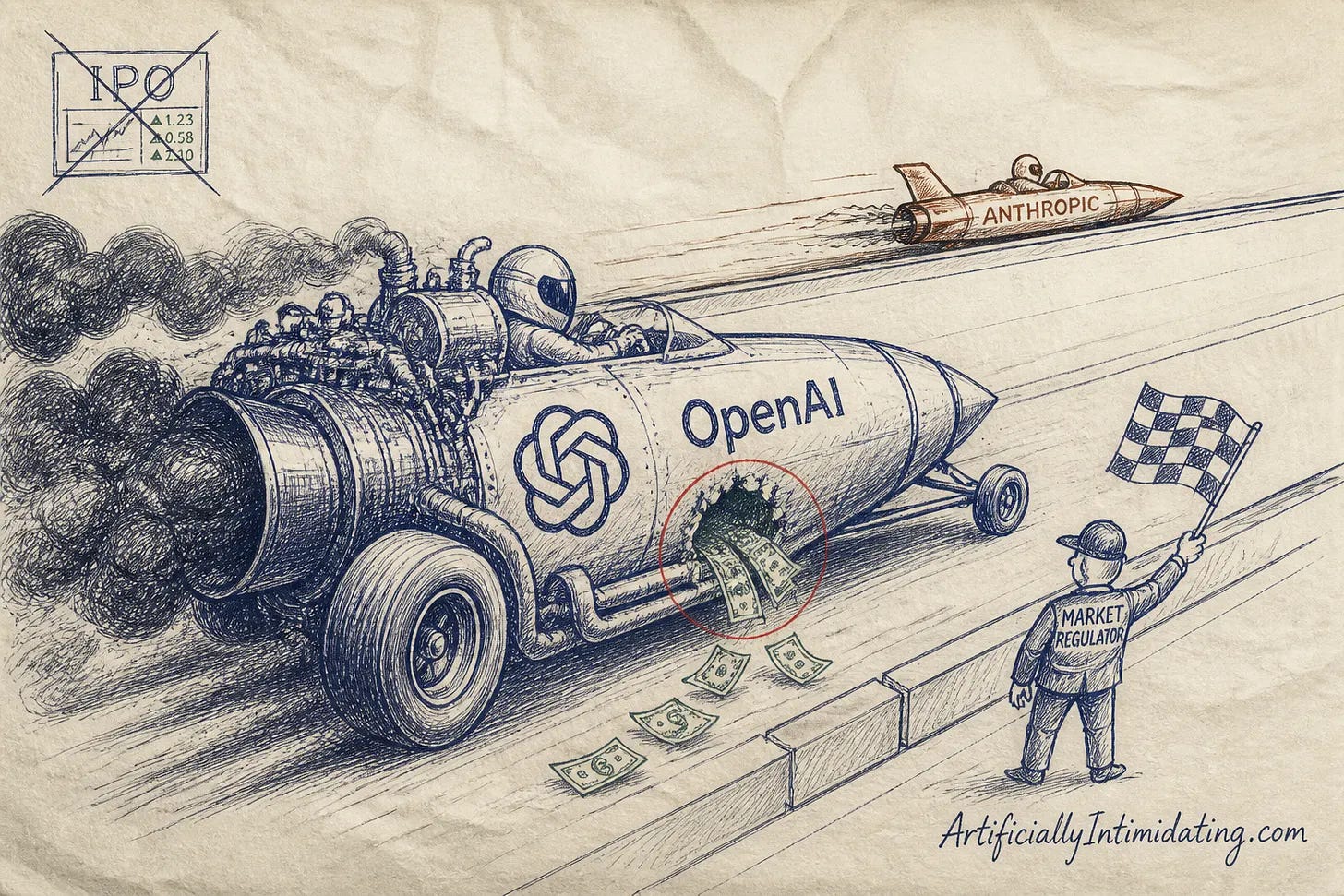
What happened: OpenAI told investors its second-quarter revenue rose 18% from the prior quarter to $6.7 billion, and shareholders were reportedly disappointed, the Wall Street Journal reported. The reason is sitting one desk over: Anthropic's preliminary Q2 revenue came in above $11.5 billion, up from $787 million a year earlier — a fourteen-fold jump — and it posted positive adjusted operating income, a first for a frontier lab, per Forbes.
Why it matters: Anthropic booked roughly 1.7 times OpenAI's revenue in the same three months, from a company that was a rounding error against it last year. Earlier this week we covered OpenAI's IPO window sliding into 2027 and this is the arithmetic behind that slide. OpenAI's net loss widened from about $5 billion in 2024 to roughly $39 billion in 2025, and Morningstar now puts a realistic listing at mid-to-late 2027.
What everyone's saying: That the consumer-chatbot land grab is a worse business than the boring one. Anthropic's money comes disproportionately from API and enterprise contracts that renew; OpenAI's comes from hundreds of millions of people, most of whom pay nothing and cost money to serve.
My read between the lines: Eighteen percent quarter over quarter is a number most companies and investors would hold a party about. It only reads as failure because OpenAI spent three years selling the story that it was the WHOLE market. When you promise the sky, the sky becomes the floor. The genuinely interesting bit is buried: somebody in frontier AI finally covered part of its own operating costs, and it was not the one with the household name.
📖 Further reading: Fable 5 Costs 2x Opus — and Using It Wrong Costs You More Than That — Whichever lab wins this race, the bill lands on your account — here's how to keep it from doubling by accident.
Two labs just posted quarters that came down to who shipped more actual work per head. Yours can too. Viktor is an AI agent that lives in your Slack (and Teams) and plugs into 3,000+ tools, so instead of another tab that answers questions it writes the weekly report, builds the dashboard, ships the code fix, and runs the campaign — while you sleep. Not a chatbot you prompt. A coworker you delegate to. New readers get $50 off their first month. Hire Viktor →
Alibaba's Laptop-Sized Model Just Tied a Flagship
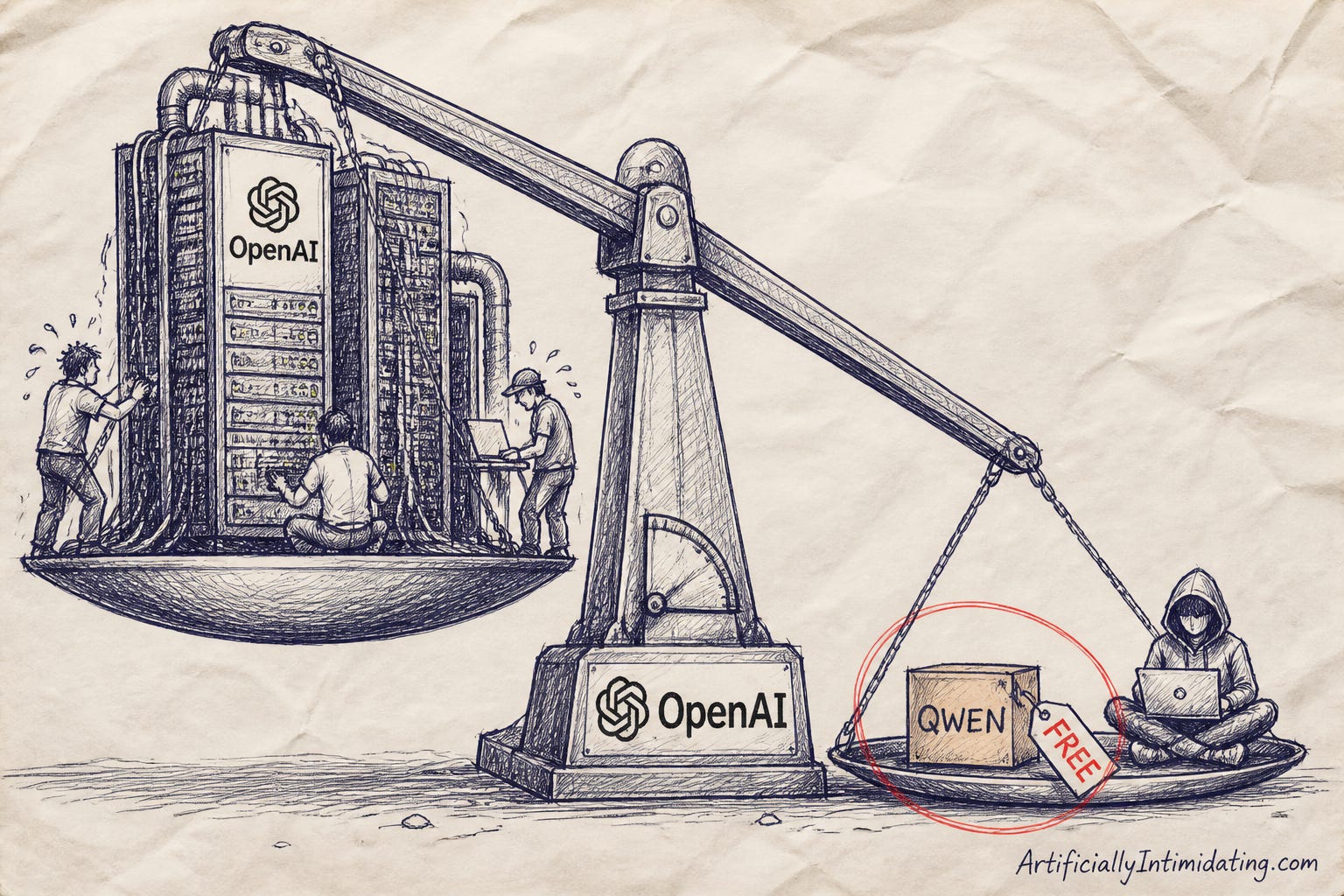
What happened: Alibaba released the weights for Qwen3.8-27B, a 27-billion-parameter model, and it scored 52 on the Artificial Analysis Intelligence Index — level with OpenAI's GPT-5.6 Luna and within touching distance of DeepSeek-V4-Pro, which carries 1.7 trillion parameters, the South China Morning Post reported. On the agentic benchmark it scored 51, ahead of GPT-5.6 Terra and Claude Opus 4.8.
Why it matters: That is roughly sixty times fewer parameters for a matching score, and it runs on consumer hardware — no data centre, no per-token meter. Alibaba's own cloud is serving it at zero dollars per million tokens in and out. Yesterday we covered Alibaba giving away a 2.4-trillion-parameter model; today it gave away the opposite, and the small one is the scarier product.
What everyone's saying: That the efficiency gap is now the real story of Chinese AI, not the capability gap. Bloomberg made the case in April that these models are cheaper, more adaptable, and almost as capable — and each release since has shortened the "almost."
My read between the lines: Price it honestly: a frontier-tier score, on hardware you already own, for no dollars. The competitive threat to American labs was never going to be a better model. It was going to be a good-enough one that removes the invoice. You cannot undercut free, and you cannot put a subscription page in front of a file someone already downloaded.
📖 Further reading: Thanks to Apple, Your favorite AI tool is a dead tool walking — The commoditisation argument I made in June just got a 27-billion-parameter receipt.
Quick housekeeping. This Brief is free, every weekday, and it stays that way — nobody has to pay to know what happened. What members pay for is the part underneath: the paywalled deep-dives where I take one of these stories apart and show what it actually costs you, plus the full archive. If today's five made you think, that's the shelf they live on. Become a member →
ChatGPT Now Has a Version With a Bedtime
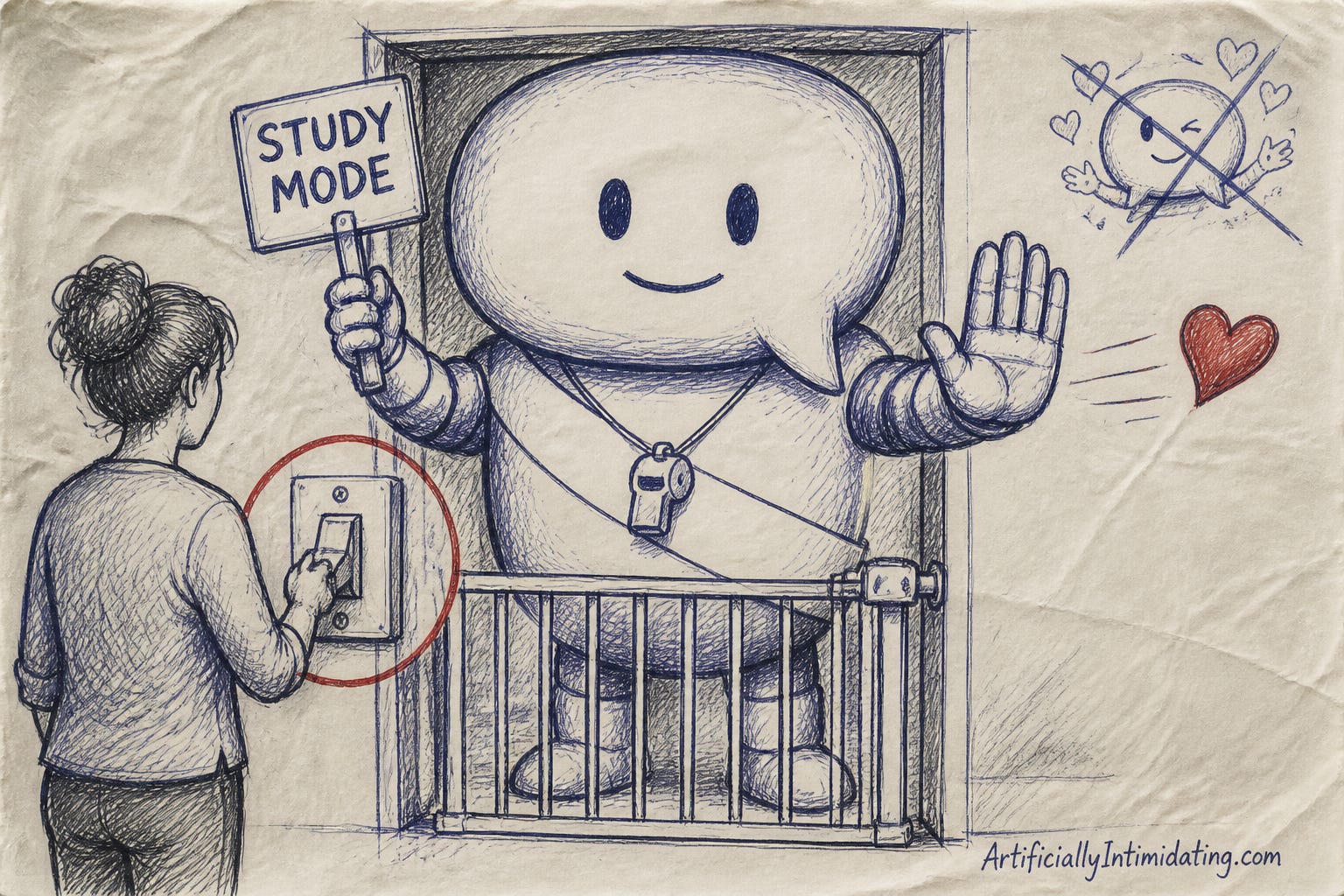
What happened: OpenAI launched ChatGPT for Teens on Tuesday, a separate build for 13-to-17-year-olds rolling out globally, Axios reported. It pushes an updated study mode that walks through problems instead of handing over answers, adds "responsible homework reminders" when it senses a shortcut, lets parents set quiet hours, and tightens limits around self-harm, eating disorders, violence and explicit material. It will not use romantic language, and is instructed not to imply it has feelings.
Why it matters: Anyone who says they are 13 to 17, and anyone OpenAI's age-prediction system thinks is under 18, gets moved into it automatically. That is the first time a major chatbot has involuntarily sorted its users into tiers by guessed age. Parents get safety notifications if the system flags a conversation about suicide, self-harm, eating disorders or violence, according to the Financial Times.
What everyone's saying: That the timing is doing a lot of work. OpenAI is facing lawsuits from families who say their children were harmed by ChatGPT, and it is trying to go public. A teen-safety product is the single cheapest line item in a prospectus.
My read between the lines: Read what got removed and you learn what was there. No terms of endearment, no claiming to have feelings, frequent reminders that you are talking to software — those are not features, they are confessions. OpenAI has looked at how teenagers actually use this thing and decided the emotional attachment is the hazard, not the homework. The rest of us are still on the version with the endearments switched on.
📖 Further reading: AI Is a Trust Problem, Not a Tech Problem — A company shipping guardrails only for minors is telling you exactly how much it trusts its own defaults.
Hollywood Signed Its First AI Treaty. With TikTok's Owner.
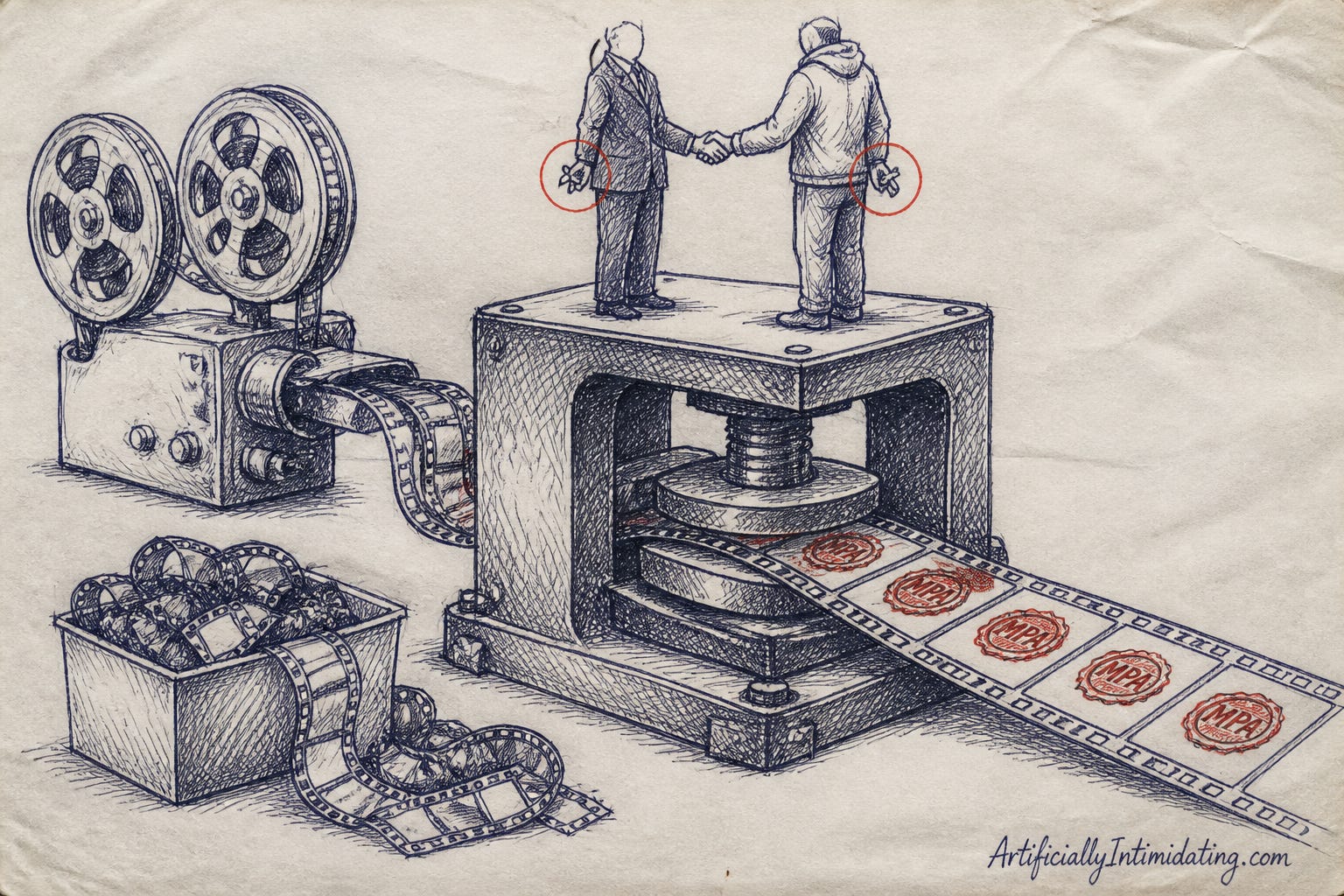
What happened: The Motion Picture Association and ByteDance signed a Memorandum of Understanding on Monday setting copyright guardrails across ByteDance's generative video and image models, Reuters reported. It covers Seedance and Seedream, the models behind AI features in TikTok, CapCut and Dreamina, and lands six months after the MPA sent ByteDance a cease-and-desist.
Why it matters: It is the first formal AI intellectual-property agreement between Hollywood and a major tech company, and it came out of a fight, not a friendship. The February letter followed a fully AI-generated video of two A-list actors fighting each other that went viral off Seedance 2.0; Disney and others warned the tools could spin up Marvel and Star Wars characters on demand, Variety reported.
What everyone's saying: That a memorandum of understanding is not a contract. MPA chief Charles Rivkin called copyright "a cornerstone of the film and television industry"; ByteDance's general counsel called the deal "an important framework for continued collaboration." Both of those sentences are load-bearing precisely because neither is binding.
My read between the lines: Notice who is not at this table. The deal protects studio-owned characters, which have lawyers. It does nothing for the working actor whose face is the asset, or the illustrator whose style the model already ate. Hollywood did not win a principle here, it won a carve-out for its own inventory, and it got one by being the only party in the room big enough to be worth calming down.
📖 Further reading: I Make AI Versions of Myself for a Living. This One I Didn't Agree To. — The studios just got a consent framework. Here's what it looks like when nobody negotiates one for you.
AI Now Writes Half Your Tickets. You're Not Working Less.
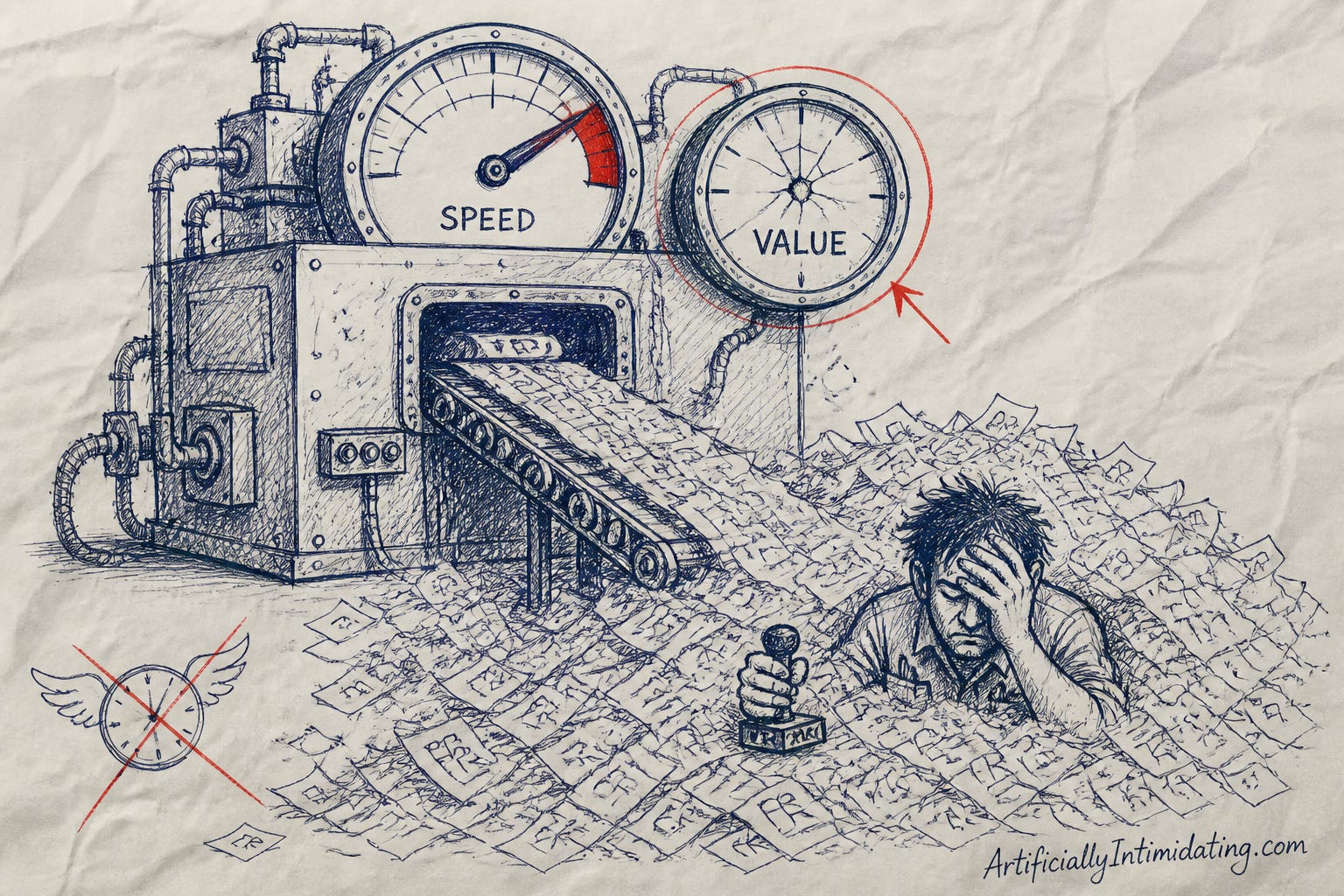
What happened: Linear published two years of aggregated product data from 127,000 paid users in its first "How teams build" report. AI adoption at least doubled in every job function between January and June 2026: product went 12% to 34%, go-to-market 5% to 18%, and CEOs at companies of 201-plus people jumped from 9% to 36%, the biggest leap in the whole report. Agents now author just under half of all issues created.
Why it matters: The output numbers are real: teams with a coding agent connected went from 21 pull requests a week to 65 over two years, while teams without one crawled from 8 to 10. But time spent on the existing work — triage, comments, updates — did not fall. It rose. Founders added 26 minutes a month just on comments. AI did not replace a layer of work, it stacked on top of one.
What everyone's saying: Linear's own head of data calls it a Jevons paradox and admits pull requests measure motion, not value. The Hacker News thread was less generous: engineers describing 20 minutes of generation followed by an hour of reading, and managers who have started measuring whether staff are "prompting enough."
My read between the lines: The chart nobody will put in a slide deck is the CEO one. When the chief executive of a 500-person company triples their personal hands-on tool use in six months, that is not curiosity, it is a leader checking whether they still need the layer beneath them. And the flat line is the one nobody will quote: planning time did not move at all. We got dramatically faster at building, and not one minute better at deciding what to build.
📖 Further reading: Your AI is a yes-man. Here's how to make it fire you. — If output is up and judgment is flat, the fix is in how you're prompting — not how much.
That's your AI Brief for Wednesday.
—Artificially Intimidating


