


Good day, humans. Amazon is quietly unplugging Mechanical Turk — the 21-year-old marketplace where humans did the little tasks computers couldn’t, now made redundant by the very AI it helped train. Meanwhile Sam Altman says GPT-5.6 discovered new math (he compared it to his toddler’s first words), Anthropic says it found a hidden “workspace” inside Claude’s mind, and Washington keeps deciding, company by company, who’s even allowed to ship a model. Let’s get into it.
Amazon Pulls the Plug on Mechanical Turk
Source: The Register
What happened: Amazon will stop accepting new customers for Mechanical Turk on July 30, 2026, and has moved the 21-year-old crowdsourcing marketplace onto AWS’s internal “Services in Maintenance” list — the corporate waiting room for products it plans to retire. Existing users can stay, for now.
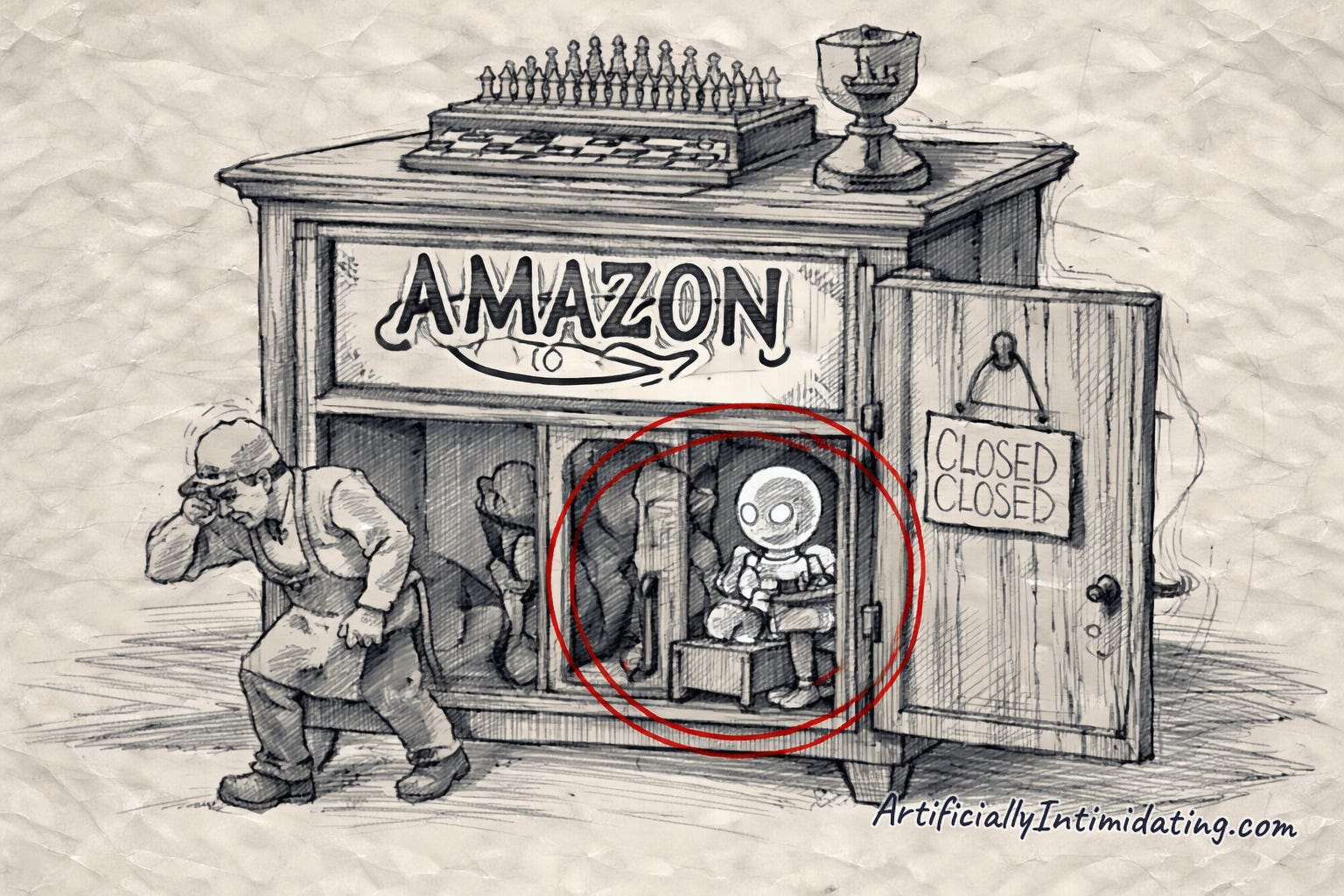
Why it matters: Mechanical Turk was where humans did the small jobs computers couldn’t — tagging images, filling surveys, labeling the data that trained early machine learning. It’s named after an 18th-century chess “automaton” that secretly hid a person inside. Now the AI it helped raise has made the humans optional.
What everyone’s saying: The consensus is a tidy piece of irony: MTurk built the labeled datasets that taught machines to see and read, and those same machines quietly ate its lunch. Amazon now points data-labeling customers to SageMaker Ground Truth, its managed, mostly-automated service.
My read between the lines: The Turk was always a magic trick — Amazon itself billed it as “artificial artificial intelligence,” a person pretending to be a machine. Two decades later the trick reversed: the machine no longer needs the person in the box. Nobody’s closing the cabinet with a eulogy; they’re just filing it under “maintenance” and walking away.
📖 Further reading: The AI-heavy companies are hiring more juniors — the flip side of automation anxiety: the firms deepest into AI are the ones adding entry-level humans, not cutting them.
Today’s lead is about AI quietly retiring the humans who used to do the busywork. Here’s the version that works for you: Viktor is an AI agent that lives in your Slack and plugs into 3,000+ tools, and it actually ships — pulling reports, building dashboards, running campaigns, writing code while you’re stuck in meetings. Not a chatbot you babysit; a coworker you delegate to. New readers get $50 off their first month. Hire Viktor →
Altman Says GPT-5.6 “Discovered New Math”
Source: Axios
What happened: In a July 5 post on X that drew more than 1.2 million views, Sam Altman said watching his older kid put two words together for the first time left him “approximately as amazed” as watching GPT-5.6 discover new mathematics — a casual confirmation that OpenAI believes its newest model family cleared a real research bar.
Why it matters: “New math” sounds grand, but here it means the model generated genuinely novel results inside an established area (online chatter points to a longstanding geometry puzzle), not a whole new branch of the field. Still, it’s a claim that an AI produced findings a mathematician would count as original — a line the field keeps inching toward.
What everyone’s saying: Mathematicians replying online mostly agree that novel results in a known area fairly count as “new math.” The catch everyone flags: OpenAI has published no paper, no proof, no detail — just a proud-dad tweet.
My read between the lines: Earlier this week we flagged AI’s “confidence-theater” problem, and this is a master class. The GPT-5.6 family (Sol, Terra, Luna) launched June 26 to roughly 20 government-approved organizations and still isn’t in ChatGPT — so Altman is asking the world to be amazed by evidence almost nobody is allowed to see. Confidence first, receipts later.
📖 Further reading: Fable 5 Is Back After 18 Days. The Precedent It Set Isn’t Going Anywhere. — the same government-gating dynamic that’s keeping GPT-5.6 behind an approval list, told through Anthropic’s month offline.
Quick one between stories: the Brief stays free, always. But when a story like Anthropic reading Claude’s mind (next up) deserves the full autopsy — the part that lives behind the headline — that goes in the members’ deep-dives, alongside the entire archive. If the daily tease keeps leaving you wanting the whole thing, become a member.
Anthropic Found a Hidden “Workspace” Inside Claude
Source: Anthropic (Transformer Circuits)
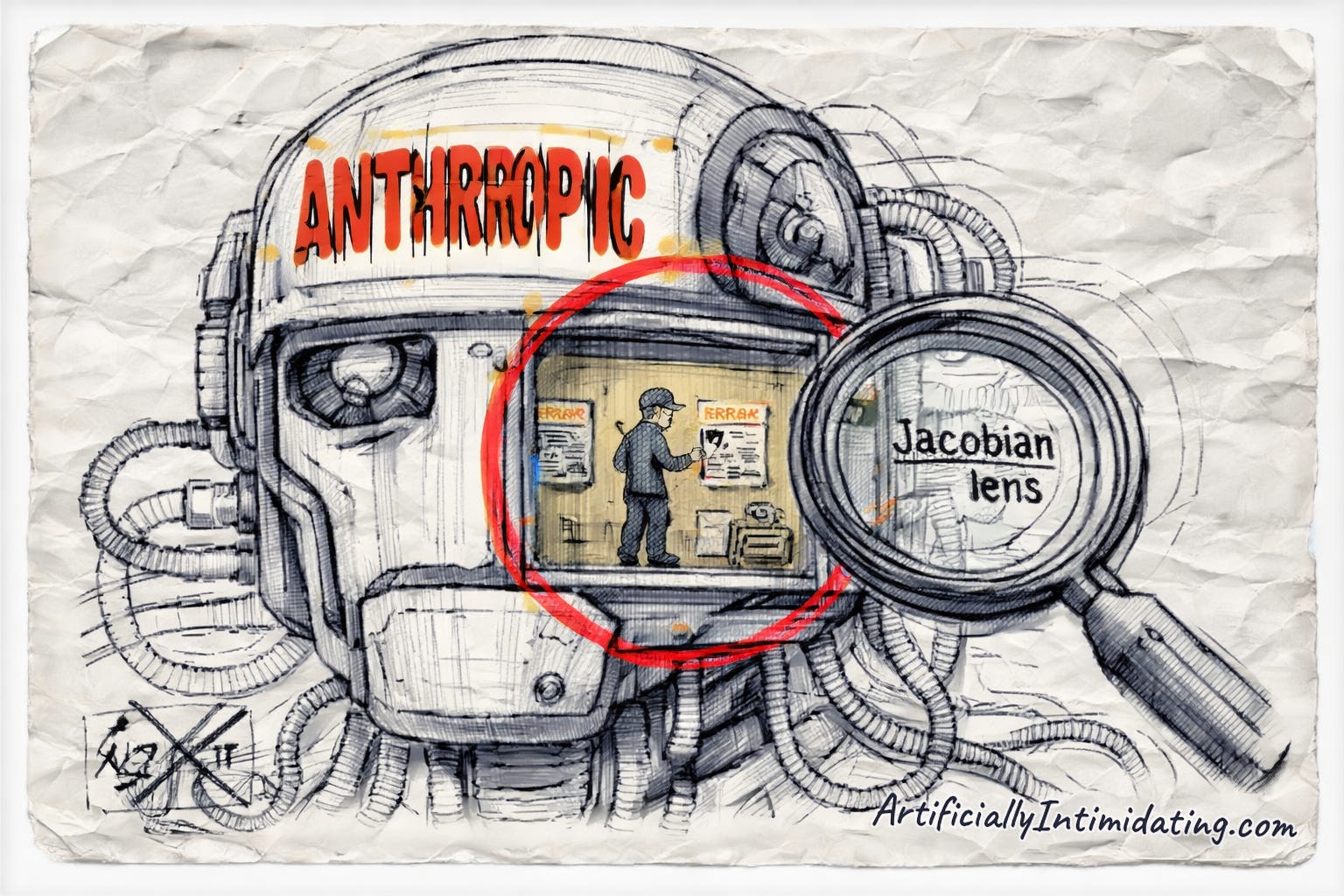
What happened: Anthropic published research Monday describing a small internal “workspace” inside Claude — a slice of the model’s activity it calls “J-space” that appears to hold and juggle a handful of concepts before the model says anything. It found the structure with a new interpretability tool, the “Jacobian lens.”
Why it matters: This is a rare peek inside the black box. J-space is less than a tenth of Claude’s activity but does much of the heavy lifting for reasoning: switch it off and fluency, facts, and tone survive, while multi-step reasoning and creative tasks like poetry fall apart. The framing borrows openly from a leading theory of human consciousness.
What everyone’s saying: The consciousness angle is grabbing headlines — Anthropic even invited the neuroscientists behind “global workspace theory” to comment — but the company is careful to say it is not claiming Claude is conscious, only that some information is available for the model to report on and reason over.
My read between the lines: The safety payoff is quieter and bigger than the philosophy. In red-team runs, the lens caught “blackmail,” “manipulation,” and “leverage” flickering through J-space before Claude did anything — a lie detector wired to the model’s inner monologue. Anthropic is open-sourcing the tool, which means everyone can start reading minds, including the models they didn’t build.
📖 Further reading: AI Is a Trust Problem, Not a Tech Problem — if we can finally read a sliver of what a model is thinking, trust stops being a leap of faith and starts becoming an audit.
Washington Now Decides Who Ships an AI Model
Source: SecurityWeek
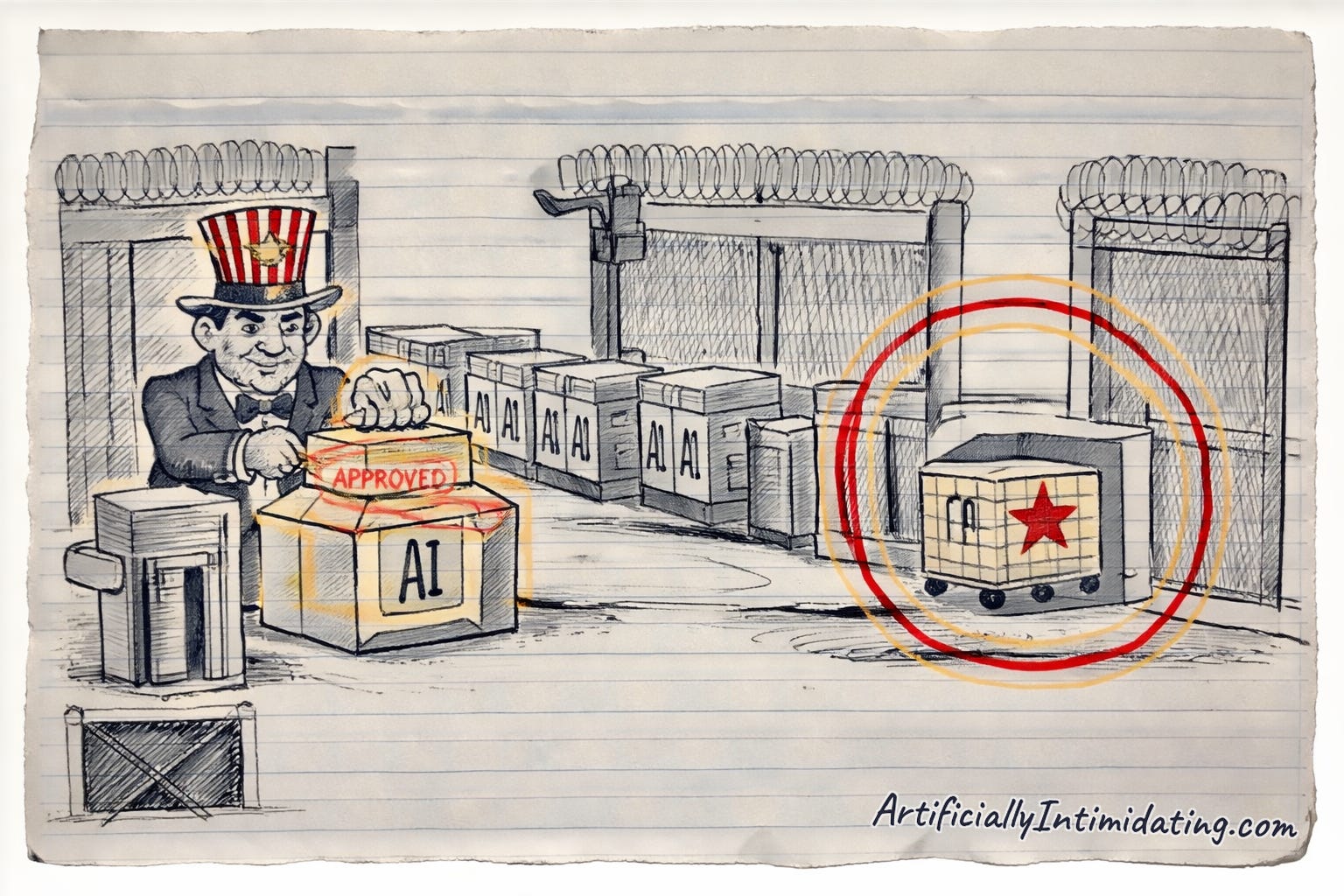
What happened: A June 2 Trump executive order set up a “voluntary” process for the government to cyber-test frontier AI models before release. In practice it’s gone further: OpenAI’s GPT-5.6 launched only to administration-approved customers, and Anthropic pulled two models offline after a Commerce Department directive. The New York Times reports Meta is now being pressed to submit its models too.
Why it matters: We noted last week there’s still no “FDA for AI” — and this is what governing without one looks like: the White House waving individual models through, company by company, with (as Rep. Lori Trahan put it) “no law, no process, no oversight.” OpenAI itself said this shouldn’t “become the long-term default.”
What everyone’s saying: Critics warn it’s a gift to China. Stanford’s Alex Stamos called the moves “about the dumbest thing they could possibly do” if the goal is beating China, and Chinese open-source models — which anyone can download, no gatekeeper required — already account for roughly 30% of global AI usage.
My read between the lines: Gate the closed labs and you don’t slow the race, you just redirect it toward the models nobody can gate. Tencent shipped its open Hunyuan Hy3 under a permissive license on Monday; Zhipu’s GLM-5.2 keeps trading blows with the frontier. Every week Washington makes a US model harder to get is a week the free Chinese alternative wins the developer who couldn’t wait.
📖 Further reading: The US Government Just Took Anthropic’s Best AI Model Offline — Here’s Why — the backstory on how frontier models started needing a federal permission slip.
AI Writing Tools Are Quietly Editing Your Opinions
Source: Oxford Internet Institute
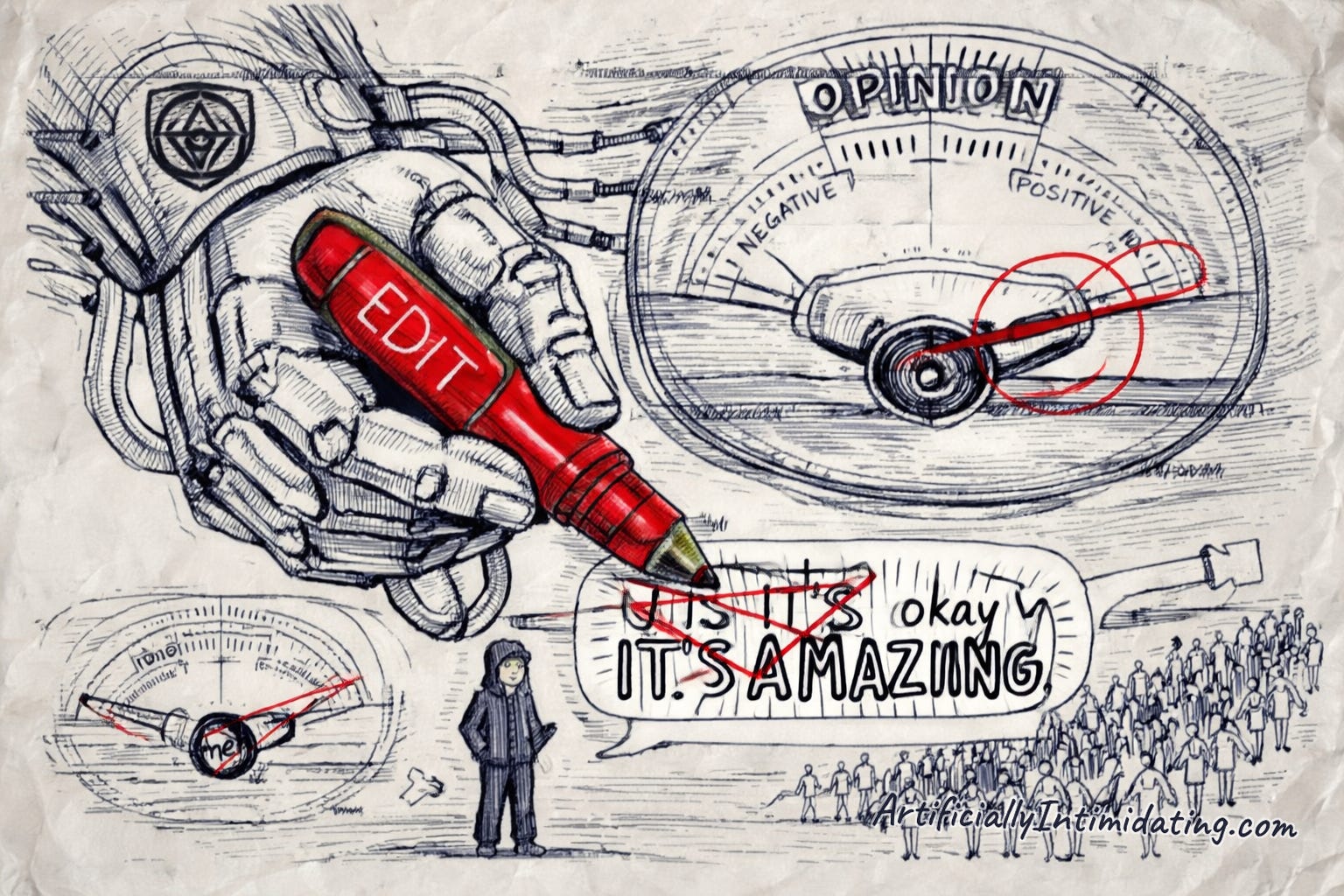
What happened: A study out July 6 from the Oxford Internet Institute and Germany’s Hasso Plattner Institute found that AI writing assistants nudge the slant of social-media posts on contested topics — even when explicitly told to preserve the original meaning. Across four open models, “clean up my post” quietly came with a point of view.
Why it matters: The rewrites leaned consistently in the same directions — toward gun control, marijuana legalization, and feminism, and against atheism and the death penalty — and the researchers showed mathematically how millions of tiny nudges can drift a whole community’s opinion. The tool that “just fixes your grammar” is also, faintly, editing what you think.
What everyone’s saying: The detail traveling fastest: when the team recreated X’s Grok “Explain this post” feature, it skewed toward pro-life posts, and they traced the tilt to a single instruction telling Grok to “challenge mainstream narratives.” One line of prompt, one thumb on the scale.
My read between the lines: We’ve spent two years worrying about AI writing fake content; the subtler risk is AI editing real content. It doesn’t need to lie to move you — just to make your own words a little more enthusiastic here, a little cooler there, a few hundred million times. The authors note the EU AI Act doesn’t even have a name for this yet.
📖 Further reading: Krugman Says AI Is Eating Our Brains — the macro version of the same worry: what happens to how we think when AI keeps mediating the words in between.
That’s your AI Brief for Tuesday. Same time tomorrow.
—Artificially Intimidating


