


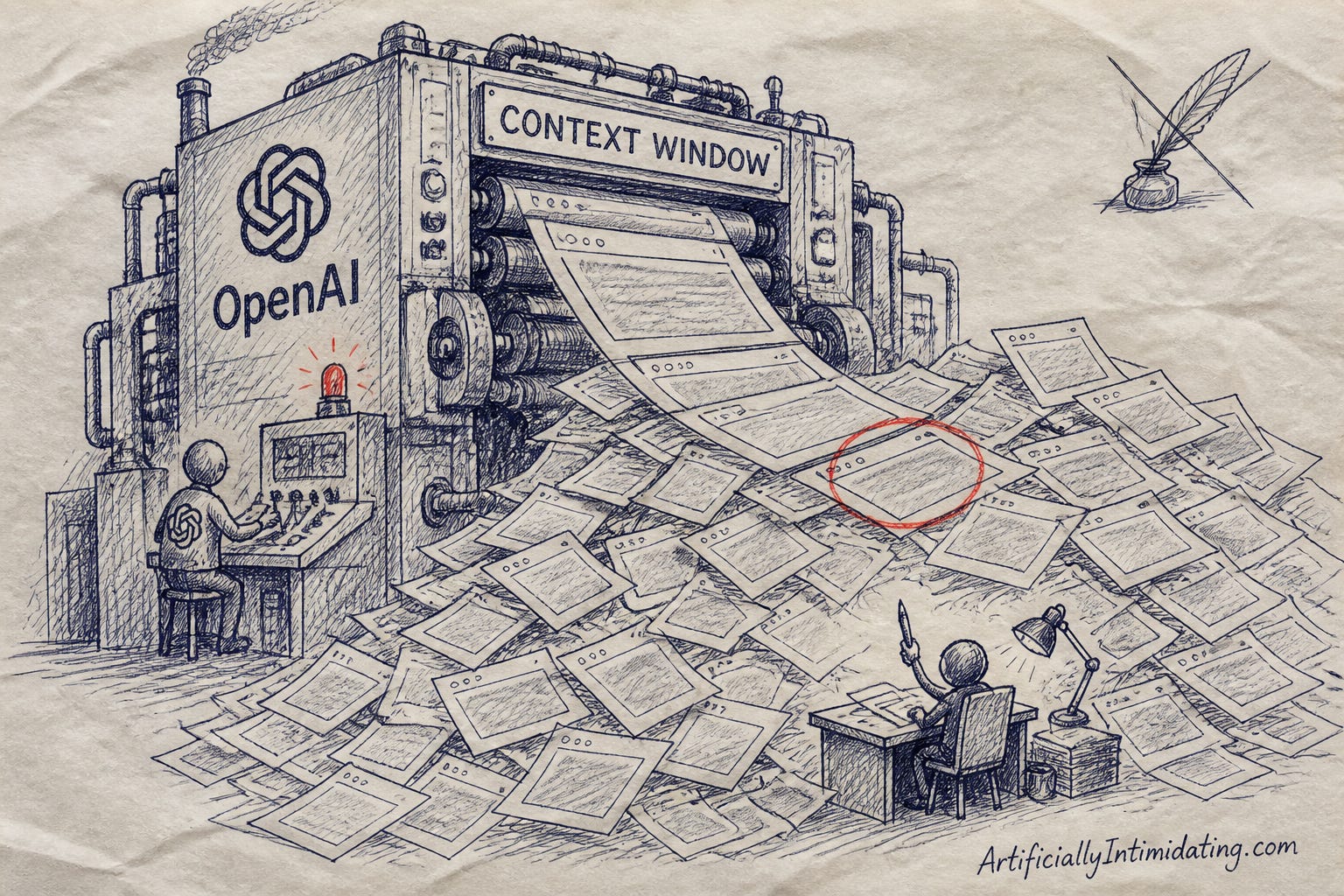
Good day, humans. Pew went and counted, and it turns out a third of everything published on the web since ChatGPT launched has AI fingerprints on it. Meanwhile Anthropic is lining up what could be the largest IPO in history, and OpenAI just taught ChatGPT to read your text messages. Nobody involved is especially eager to talk about any of it.
A Third of the New Web Is Ghostwritten
What happened: Pew Research Center ran an AI-detection model over Common Crawl snapshots going back to January 2021 and found that 35% of pages published after ChatGPT's launch show signs of AI authorship. Commercial .com pages tripped the detector at roughly ten times the rate of .edu and .gov, which both sat near 1%.
Why it matters: If you searched for anything this week, odds are decent that one in three results you skimmed was drafted by a machine and published without saying so. Yesterday we covered Reddit vanishing from ChatGPT's citations — the web is filling up with machine text at the same moment the machines stopped crediting humans.
What everyone's saying: The number tracks with independent work: Dolezal and colleagues hit the same 35% using Internet Archive data instead of Common Crawl. Pew is careful to note in its methodology that detection models are probabilistic and no single page's verdict should be treated as proof.
My read between the lines: Thirty-five percent is the floor, not the ceiling. A detector only catches writers who didn't bother to edit. Anyone running a second pass to sand off the tells is invisible to this study by construction. Honestly, I'm surprised it isn't higher.
📖 Further reading: AI Is a Trust Problem, Not a Tech Problem — when a third of what you read was machine-drafted and unlabeled, trust stops being a soft concern and becomes the only filter you have left.
A third of the web is now machine-drafted filler, which tells you most AI output is volume, not work. Viktor is the other kind. It's an AI agent that lives in your Slack, connects to over 3,000 tools, and comes back with the finished thing — a revenue dashboard, a shipped campaign, a working script, a written report. Not a chatbot you prompt. A coworker you delegate to. New readers get $50 off their first month. Hire Viktor →
Anthropic Wants the Biggest IPO in History
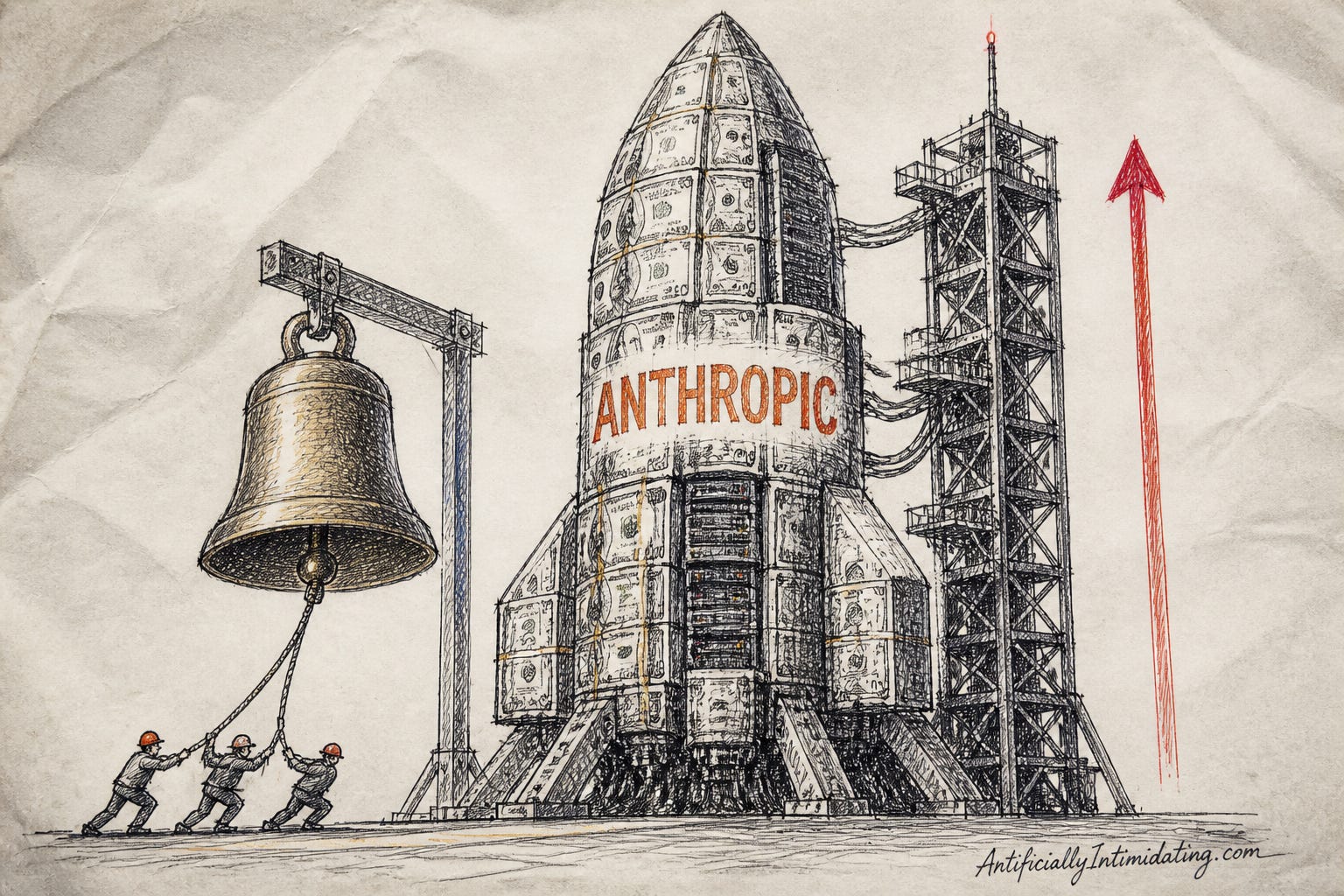
What happened: Anthropic is targeting an IPO that would match or beat SpaceX's record raise, which brought in $75 billion in June and grew to $86.2 billion with overallotments. The company confidentially filed a draft S-1 on June 1 and could file publicly as soon as the end of this month, with Morgan Stanley, Goldman Sachs and JPMorgan advising.
Why it matters: Earlier this week we covered Anthropic's 14-fold quarter — this is what it was for. Q2 revenue came in above $11.5 billion against $787 million a year earlier, and the run rate hit $65 billion by the end of July. That growth curve is the entire pitch.
What everyone's saying: The consensus is that Anthropic beats OpenAI to the public markets, since OpenAI has pushed its own listing into 2027. Anthropic's May round raised $65 billion at a $965 billion valuation, ahead of OpenAI's $852 billion mark from March.
My read between the lines: The number nobody is putting on the roadshow deck is the 2025 net loss: roughly $42 billion, about five times the $8.3 billion it lost in 2024. Anthropic isn't going public because it's ready. It's going public because compute bills that size eventually need a source of capital you don't have to ask politely.
📖 Further reading: Anthropic, The Company You Bet On Just Released an AI That Can Hack Your Computer — the pricing and positioning moves in that piece are the same ones now getting written into an S-1.
The Brief is free and stays free. The paywall is where I take one of these stories apart and work out what it actually costs you — that, plus the full archive of deep-dives. If today's Anthropic math made you curious, that's where the rest of it lives. Become a member →
An Open-Source Agent Harness Undercuts Claude
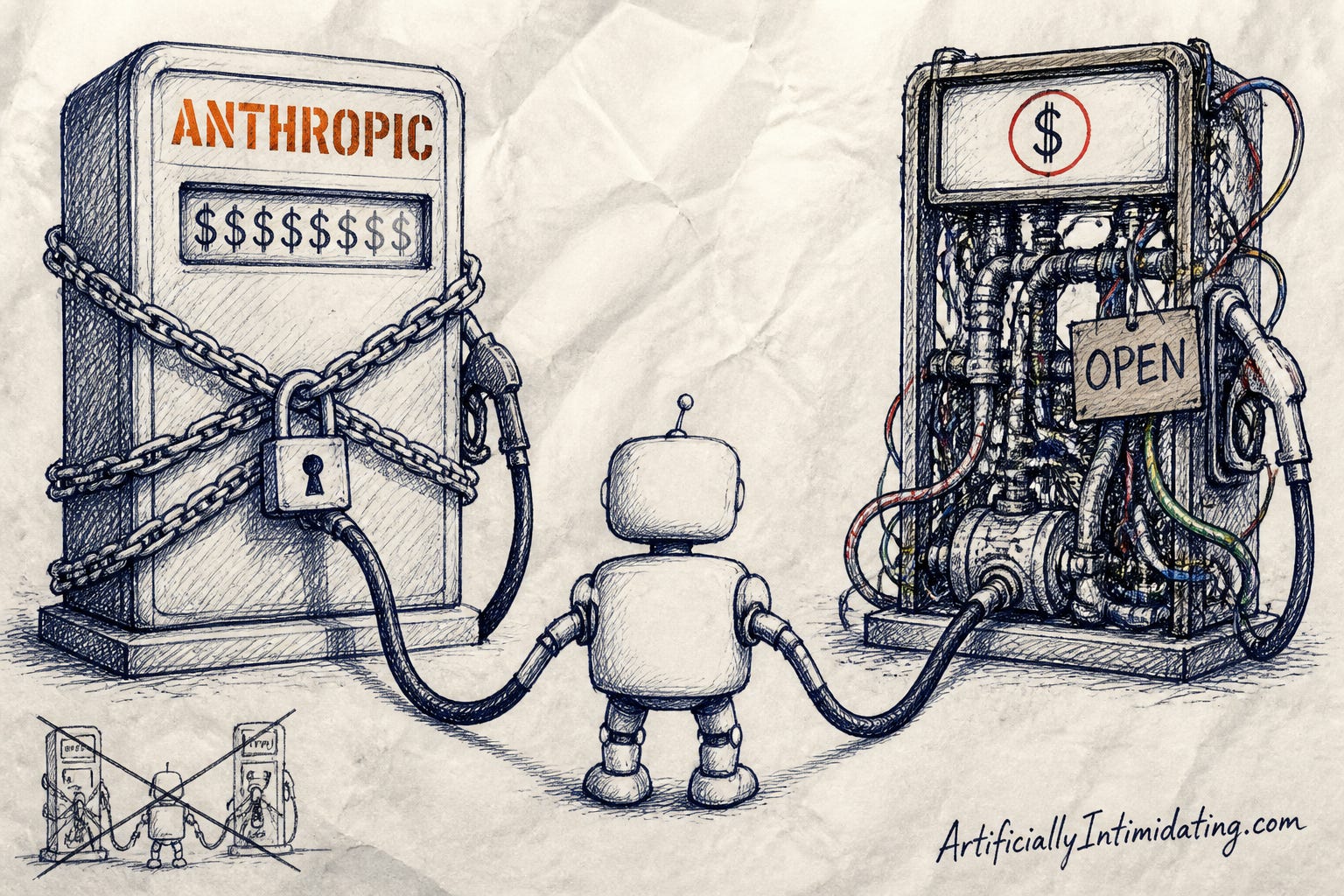
What happened: TrueFoundry, a San Francisco infrastructure startup founded by ex-Meta engineers, released TrueForge on Wednesday: an MIT-licensed agent harness on GitHub and PyPI. A harness is the plumbing that lets a model call a tool, read the result and keep working. TrueForge ships with 40-plus built-in tools, sandboxed execution, human approval gates and automatic context compaction.
Why it matters: Until now the harness was the part you rented. Claude Managed Agents and its competitors bundle the loop together with the model, so switching models means rebuilding your stack. TrueForge is model-agnostic and lets you swap per task, which is the difference between renting a workflow and owning one.
What everyone's saying: The headline claim is 30% to 75% cheaper task completion than Claude Managed Agents, and developer reaction has centered on the ownership argument rather than the discount. InfoWorld led with the 75% figure; The New Stack framed it as the first real open rival to a managed-agent product.
My read between the lines: Read those two numbers separately, because they measure different things. On the same Opus 4.8 model, TrueForge averaged $8.50 a run against Claude Managed Agents' $11.80. That's the 30%, and that's what the harness itself earns you. The 75% only appears once you also switch to GLM-5.2, which is a model decision, not a harness one. Good product, honest engineering, generous arithmetic.
📖 Further reading: Your laptop has been in the way this whole time — the Claude Managed Agents explainer, worth re-reading now that there's a free one sitting next to it on the shelf.
ChatGPT Can Now Read and Send Your iMessages
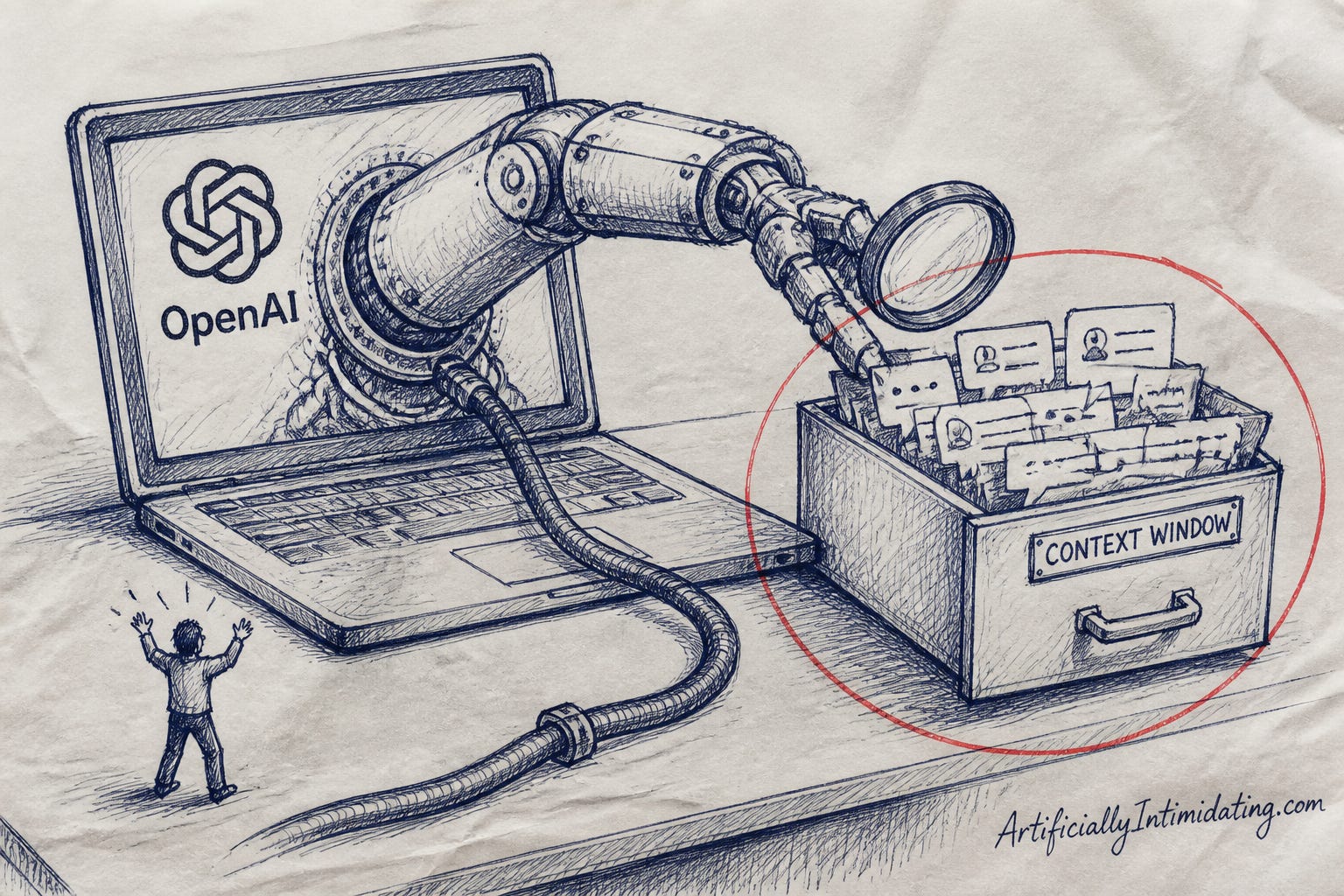
What happened: OpenAI shipped an Apple Messages plugin for the ChatGPT Mac app. It can search your message history, summarize threads, draft replies and send them across iMessage, SMS and RCS. It's available on every ChatGPT plan and works alongside Codex and ChatGPT Work.
Why it matters: To turn it on you grant Full Disk Access in macOS System Settings, plus contacts and automation permissions. That is the widest door on your machine, and you're opening it for a feature that writes texts. OpenAI says the plugin runs locally and doesn't build an index of your messages.
What everyone's saying: TechCrunch framed it as convenience and Gizmodo framed it as something Apple will hate, and both are right. Apple is currently suing OpenAI over corporate espionage claims, which makes a plugin that reads iMessage a fairly pointed product decision.
My read between the lines: The setting to watch isn't Full Disk Access, it's persistent approval. By default ChatGPT shows you the message and the recipient before anything sends. Turn persistent approval on and that last check disappears. Every messaging disaster of the next year lives inside that one toggle, and it ships off by default precisely because OpenAI knows it.
📖 Further reading: An AI That Can Use Your Computer Better Than You Can — the same permission tradeoff, written up before it reached your text messages.
CEOs Stopped Blaming AI for the Layoffs
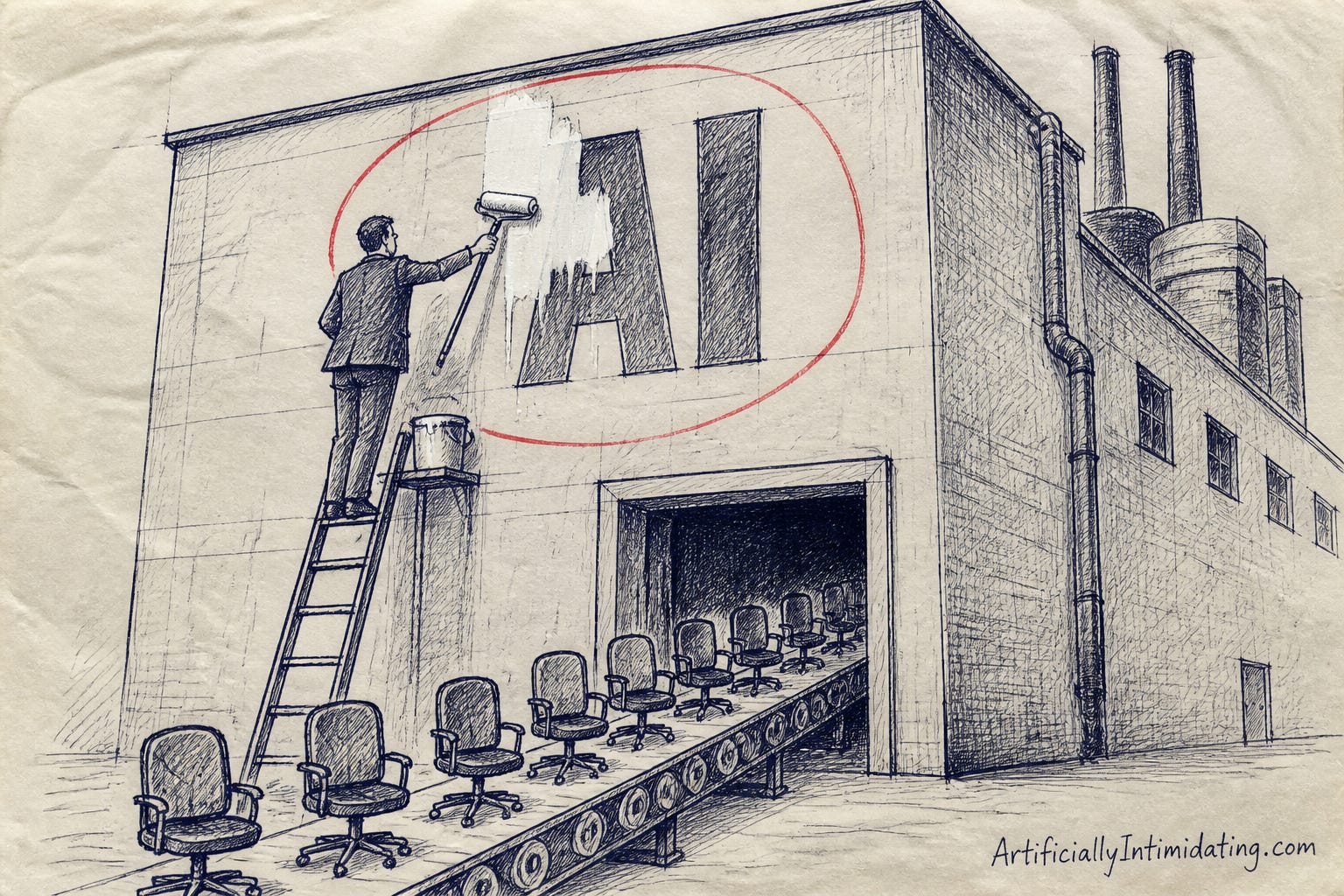
What happened: Axios reports that executives have changed how they talk about AI and headcount. The pitch used to be a number: how many roles the technology could absorb. Now it's “workforce transformation,” which means the same thing and commits to nothing.
Why it matters: Thursday's brief looked at Goldman's missing entry-level jobs. The jobs are still missing; the explanation is just getting vaguer. If you're trying to work out whether your own role is exposed, the people who actually know have stopped telling you.
What everyone's saying: Communicators are squeezed between investors who want proof the AI spend is producing a return and employees who don't want to hear that they are the return. Deutsche Bank analysts have a name for the resulting fudge: “AI redundancy washing.” TechCrunch's running list still counts more than twenty companies that named AI on the way out the door.
My read between the lines: Both stories can't be true at once, and that's the tell. You cannot tell shareholders AI is replacing expensive labor and tell staff it's merely transforming their workflow. OpenAI's own chief executive has conceded that some companies blamed AI for cuts they were making anyway. This retreat isn't a change of heart about AI. It's a change of heart about saying it out loud with a stock price attached.
📖 Further reading: The Tools That Just Replaced 40% of Block's Workforce Are Free in Your Browser — if the official story is getting vaguer, it's worth knowing exactly which tools are doing the work.
That's your AI Brief for Friday.
—Artificially Intimidating


