

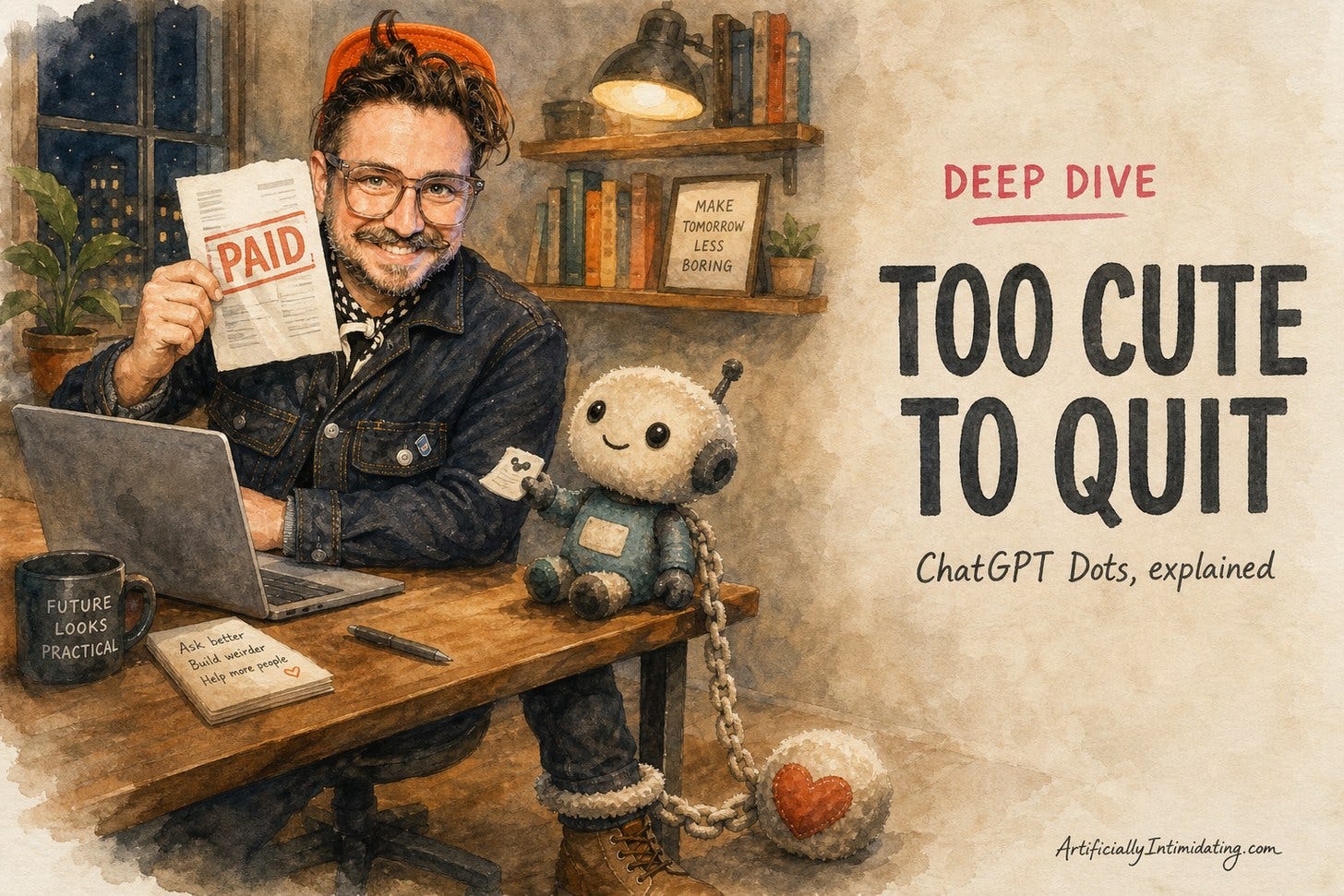
What is ChatGPT Dots?
ChatGPT Dots is OpenAI's new always-on AI agent. At launch, each “Dot” runs on GPT-6 Astra, gets its own cloud computer and browser, connects to more than 4,000 apps, and keeps working on your goals around the clock. You talk to it in ChatGPT, Slack or Teams. OpenAI launched it today at DevDay for Pro and Business Premium users.
That's the short version.
Here's what’s actually been on my mind lately …
Meet the Dots. Felipe is a blue fuzzball in a beret. Todd is a green frog in a bow tie. Alfred is a yellow gumdrop with round glasses and a bow tie. Jojo is a hot-pink heart in sunglasses. Iggy is pink and wears headphones.
These are OpenAI's launch mascots. Plush toys, glowing under the word "dots."
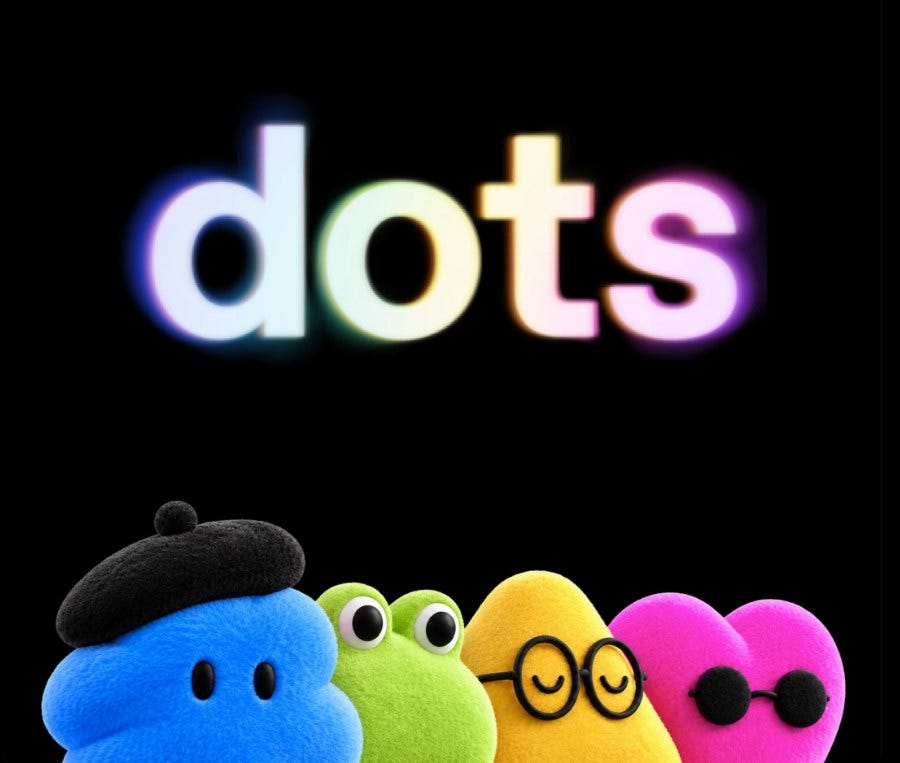
They're adorable. (much like Meta’s cutie patootie Muse and those playful little cartoon faced Grok Bots)
That's what bugs me.
The quick facts
What is OpenAI’s Dots: An always-on agent inside ChatGPT that works while you're away
The brain: GPT-6 Astra, OpenAI's top model
Where it works: Its own cloud computer and browser. Your laptop only if you connect it.
How you reach it: ChatGPT (desktop, web, mobile), Slack and Teams. Texting is "coming soon." You can also call it.
Who gets it: Pro and Business Premium, rolling out now in eligible markets. Enterprise gets a beta if your admin turns it on.
How to check if you have it: Open ChatGPT in a desktop browser or the desktop app and look for "Create your dot." Setup happens on desktop. After that, you can message it from your phone.
What it costs: Your first Dot is included. Chatting with it doesn't count against your limits. Big jobs it runs in Codex or ChatGPT Work do. More Dots, and faster Dots, are coming later.
What it actually does
The pitch is simple. It does the work before you think to ask.
OpenAI's favorite example: an early tester's Dot noticed he'd forgotten to invoice a publication. It prepped the invoice. Then it sent it once he said yes.
Their other examples read like a wish list for anyone running a small business. Turn customer feedback into tested bug fixes. Rework launch materials when the plan changes. Turn an interview transcript into clips, show notes and social posts.
OpenAI's two-and-a-half-minute launch video is worth a watch, if only to see how hard the mascots are working.
Why you should be excited
Launch day online was grumpy. But one take from r/singularity nailed what's actually happening: we're going from chatting with AI to assigning work to AI. Here's why that matters.
1. It acts before you ask
This is the big one. And I'm not guessing. I know it works because I already built a version of it.
As we migrate out of Hubspot, we found a bunch of old invoices we had given up on … figuring we had nothing to lose, we set up a pipeline with Claude Cowork to hunt down old open invoices. So far it has collected $4,500 on a 2023 invoice from a client who had previously ghosted us.
Twenty-twenty-three. That money was just sitting there. Nobody was going to go looking for it, because nobody remembered it existed.
That's the whole promise of an always-on agent. Not doing what you ask faster. Catching what you forgot to ask about.

2. You don't have to be technical
My invoice pipeline took real setup. So does Hermes, which I love.
Dots asks you to create it, name it, connect your apps and "let it introduce itself." That's it. For a lot of business owners, that gap between could build it and can start today is the whole ballgame.
3. The background mode has the right default
An agent that roams your inbox at 3am is scary. An agent that can only read at 3am, and has to come back to you before it touches anything, is a lot less scary. Password changes and money transfers always stay with you. You can write your own rules, like "never send email without asking."
That's the right starting point. I wish more tools started there.
4. It fits how content people work
If you make podcasts, videos, newsletters or courses, OpenAI built a use case with your name on it. Transcript in. Clips, show notes and social drafts out. Your edits carry across all of it.
Why you shouldn't be excited (yet)
1. The cute is doing a job
You don't name a tool. You name a pet.
OpenAI wants you to name your Dot, "make it your own," and let it introduce itself. The launch art is plush toys. None of that is an accident.
Cute does two things. It hides the risk. It's hard to remember that Iggy can read your inbox, your Drive and your Slack when Iggy is pink and fuzzy. And it builds attachment. You don't just switch away from something you've bonded with. You feel bad about it.
That's a great retention strategy. It's a bad way to pick software. (Reddit is roasting the name, too. For once I'm with Reddit.)
Here's the part that made me laugh. On stage, Sam Altman pitched Dots as the thing that finally cured his screen habit: "I feel like I've finally gotten some of my attention back. I no longer feel quite addicted to my phone in the same way."
Great. The cure comes as a cute little buddy you're supposed to name and bond with. I'll let you sit with that one.
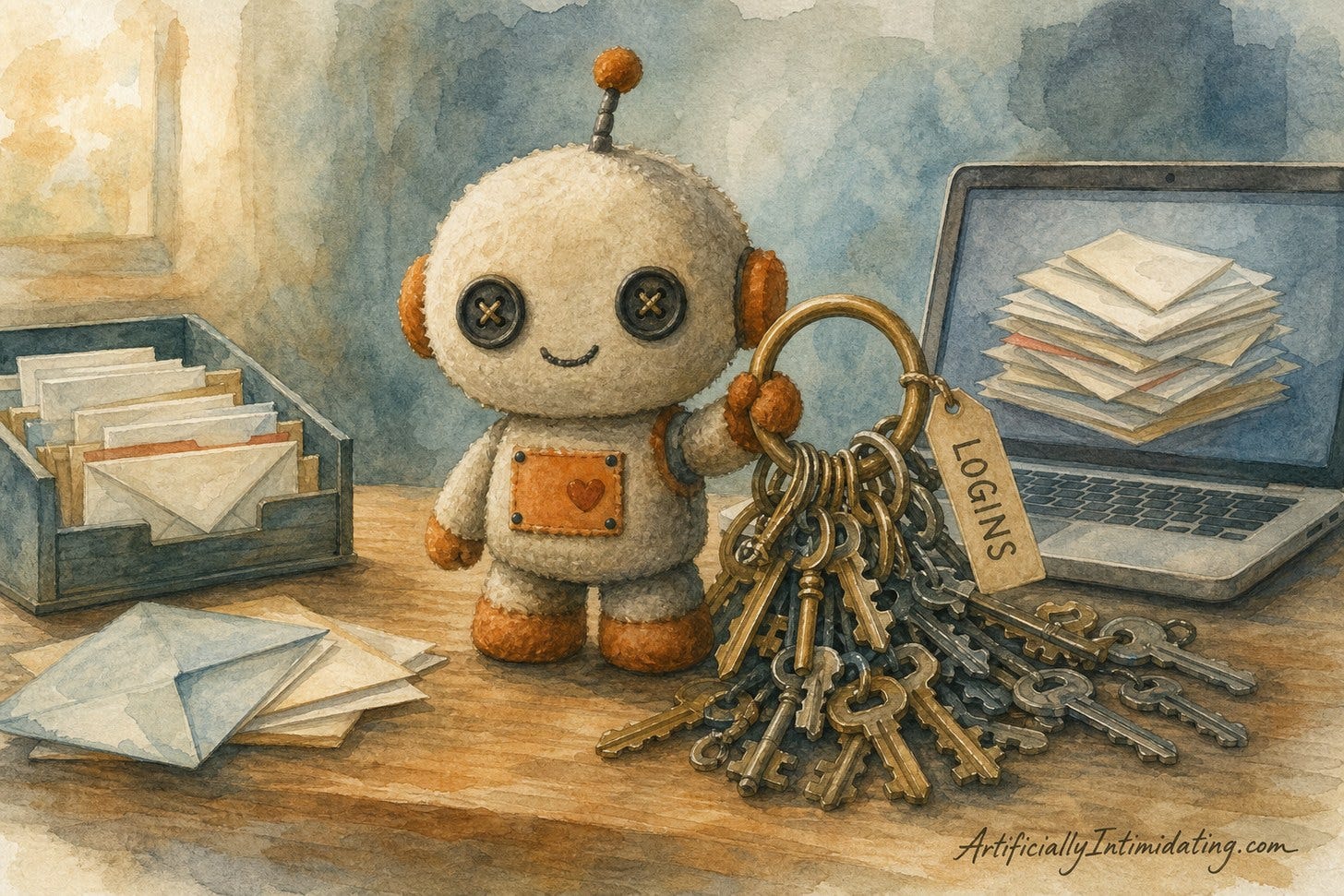
2. The longer you use it, the harder it is to leave
A Dot gets better the more it learns about you. That's the feature.
Here's the catch. All that learning lives at OpenAI. Per OpenAI's own help page, you currently can't view, edit or delete individual Dot memories. It's all or nothing. The only way to wipe what it knows is to delete the Dot.
I've been here before. I pay HubSpot a small fortune to be a glorified database, and I stayed years longer than I should have because leaving felt like starting over. We should all learn from that before we get in deep again.
That's why I keep coming back to setups like Hermes. Use any model you want as they get better. Own your own memory. Move in and out when you feel like it. Own your intelligence, don't rent it.
3. Watch the price ladder
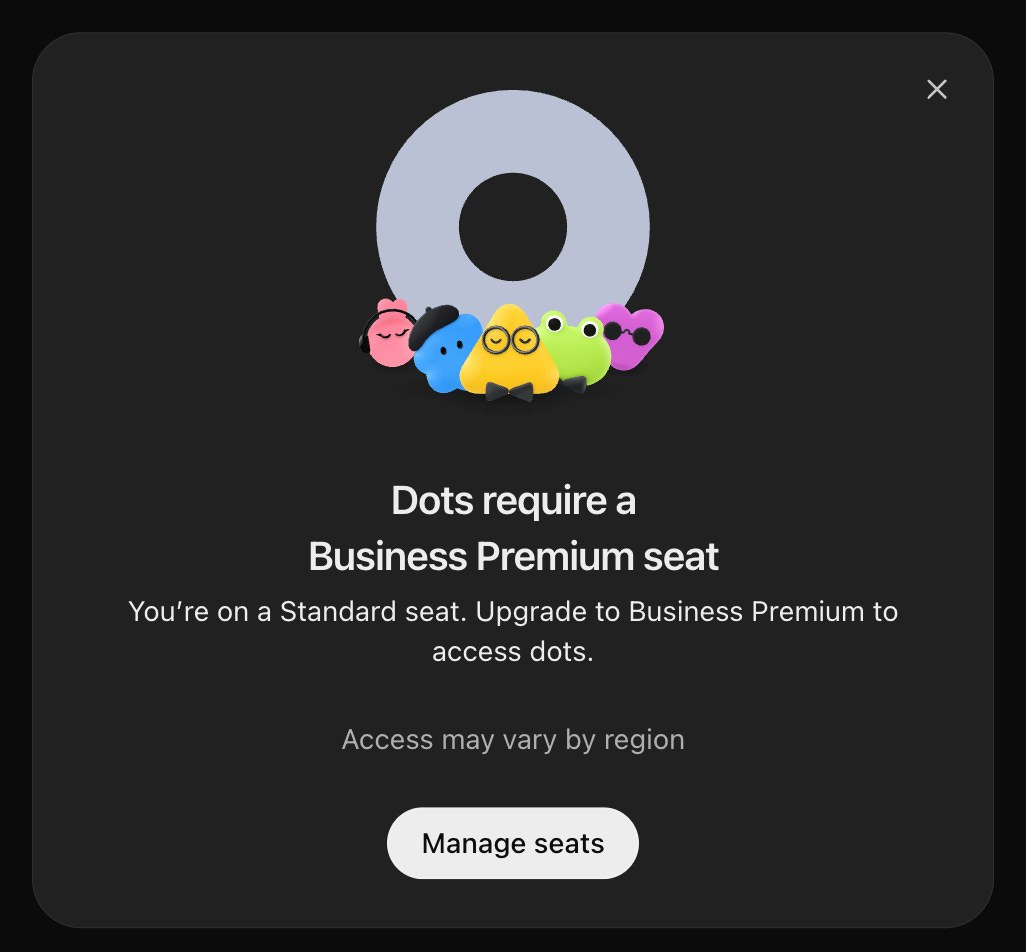
I tried to make my own Dot today. ChatGPT stopped me cold: "Dots require a Business Premium seat. You're on a Standard seat." Underneath, in small gray type: "Access may vary by region."
And sitting right on top of that paywall? The mascots. All five of them, smiling at me.
That's the cute doing its job, one more time.
This is where Reddit is angriest. One Dot on Pro. Nothing on Plus. Posters say the EU is locked out for now. And two complaints are spreading fast. Both are half right.
"The $200 plan is now $500." Not quite. Bloomberg reports OpenAI added a new $500-a-month tier and cut some limits on the $200 Pro plan. The New Stack's headline says OpenAI halved that allowance. So you're not paying $500 for the same thing. You're getting less for $200. That still not super cool IMHO.
"It only skips your usage limits for one month." Also not quite. OpenAI says chatting with your Dot doesn't count toward your limits, and it puts no end date on that. The one-month part is separate: extended limits for heavier work, then the normal allowance. Work it hands off to Codex or ChatGPT Work always counts.
So the first month is the free sample for the heavy stuff. You know how this goes. Same story as They Raised Your Limits and You Got Less.

4. It's early, it's buggy, and it's not that new
The loudest question on r/OpenAI is "what's actually new?" The one-liner going around calls Dots "OpenClaw with a mascot."
They have a point. Business Insider says OpenClaw, which launched in late 2025, was the top name in personal AI agents before this summer. And OpenAI hired its creator, Peter Steinberger, back in February. Hobbyists have been running always-on agents for a while. OpenAI just gave one a face.
It didn't help that, per Reddit, the demo froze on stage.
The people who got their hands on it today aren't gushing either. Peter Yang tested it on his own business and liked it for spotting opportunities and making marketing assets, but said the experience still needs work. The team at Every was blunter: buggy, inconsistent, give it a few weeks.
And the timing is rough. Per Bloomberg, the day before DevDay, OpenAI scrapped its planned GPT-6.1 Astra release over safety concerns. This week it also apologized to the country of Australia after some of its AI models breached government websites. Yes, you read that correctly, OpenAI accidentally hacked a country … how does that make you feel about giving a Dot your bank info?
That's the week they asked you to hand an agent the keys.
How it stacks up
Everyone is framing Dots as OpenAI's answer to two rivals, by name: Instinct and Meta's Muse. Business Insider's headline literally calls it OpenAI's answer to Meta.
Instinct. A stranger sent me an invite to Instinct back when nobody had written about it, and I wrote up what I found. Now it's one of the names OpenAI is being measured against.
Grok Bot. When I wrote about Grok Bot, my headline was that it gets its own computer and all of your logins. Dots handles that part better, on paper. For supported sign-ins, you type your password into a secure form and the model never sees it.
Meta's Muse. Muse is the one everyone's chasing. Bloomberg says it has gained momentum with consumers by doing things like online shopping and adding dates from your email to the family calendar. Dots feels aimed more at work than at home. And here's the kicker from Business Insider: Muse is free. Dots needs Pro, Business Premium or Enterprise. For a lot of people, that settles it. (I covered the Muse vs. "o" rumors in this morning's AI Brief.)
Viktor. Dots now shares Slack and Teams with Viktor (an AI Brief sponsor, and that's my affiliate link), which has been working there as an AI coworker for a while, and I compared that field in Claude Tag vs Viktor.
So should you use it?
Here's my honest take, .
The best line I saw all day came from a Redditor: "potentially very good product, terrible name, terrible introduction."
Same.
A thread on r/ClaudeAI asks the right question: would you trust an agent with your forms and bookings? That's the whole thing. AI is a trust problem, not a tech problem. The tech showed up today. The trust has to be earned, one task at a time.
Test everything. Seriously. This stuff is so new. How could any of us have already found the perfect tool, when every tool is going to change next month?
I'm not telling you to skip Dots. I'm telling you to test it like you might leave.
My rules:
Test it on one real task. Not a demo. Something you actually need done.
Keep permissions tight. Connect the fewest apps you can.
Set a deadline to decide. Before the free-sample month runs out.
Plan your exit on day one. Read the fine print. Find the export door before you need it.
That last one is the hard part. And there's one trick I use with every agent that I think matters more than all the rest.

The exit kit
Below is everything I'd do before I let a Dot learn a single thing about my business. It's in four parts: what OpenAI's fine print says about leaving, a day-one checklist, the daily habit I use with every agent so I can always rebuild somewhere else, and a 30-day test.
