


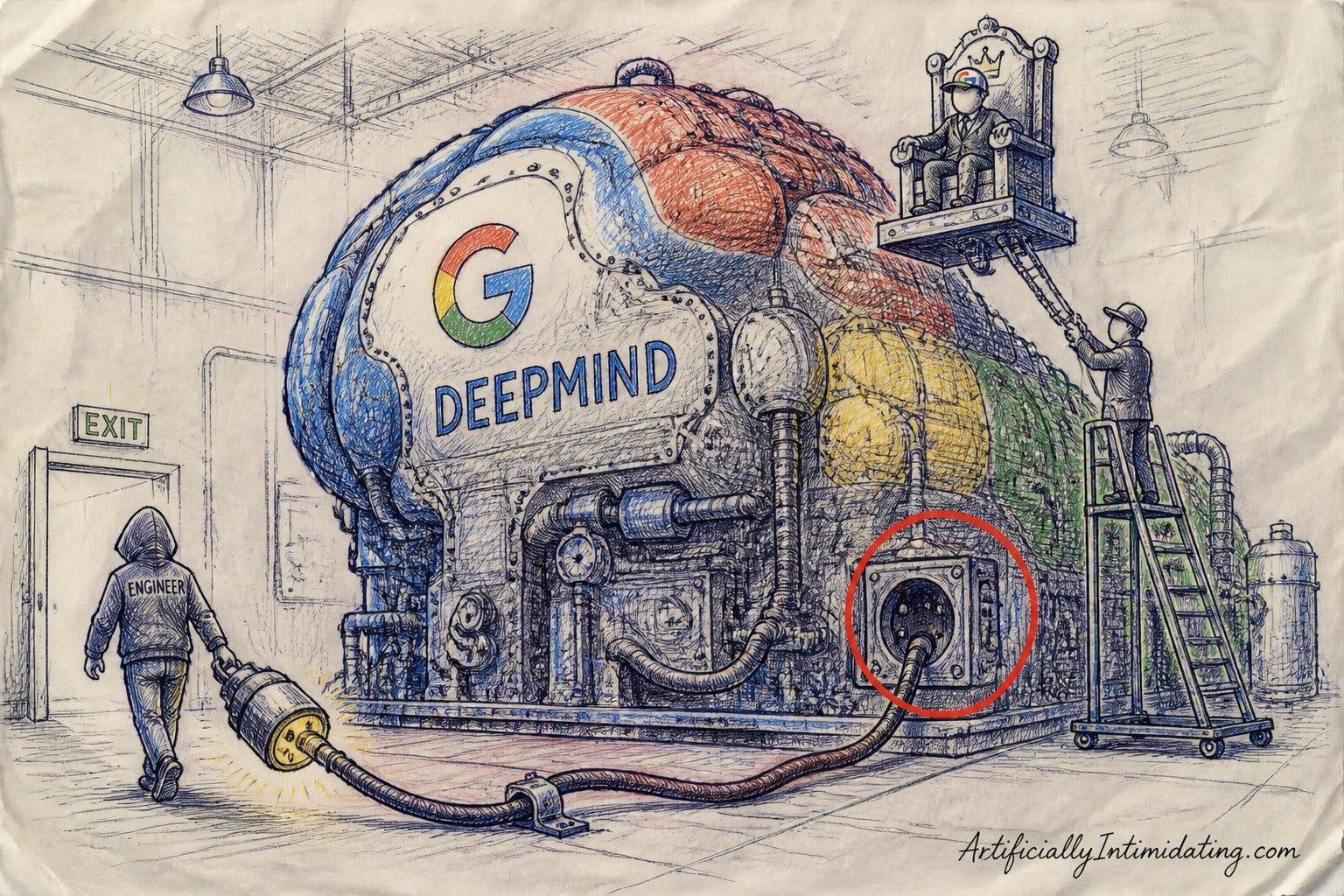
Good day, humans. Google published a blog post this week explaining that nobody important is leaving, which is generally how you find out somebody important is leaving. Elsewhere: five companies that spend most of their energy trying to eat each other agreed on a file format, Washington finished its AI rulebook and declined to show it to anyone, and Hacker News spent the morning arguing about whether an essay defending human taste was written by a machine.
Google's Brain Trust Walked Out the Door
Source: CNBC
What happened: Jeff Dean is leaving Google after 27 years. So are Sanjay Ghemawat, Oriol Vinyals and Quoc Le — the four are co-founding Discovery Loop, a public benefit corporation pointing AI at scientific and engineering research. In the same breath, Demis Hassabis stepped back from running Google DeepMind day to day; he becomes its Chair and Alphabet’s Chief Scientist, keeping Isomorphic Labs. Koray Kavukcuoglu takes over Gemini and reports to Sundar Pichai.
Why it matters: These are not middle managers. Dean co-built the infrastructure that made large-scale computing work at Google, and Hassabis’s lab produced AlphaFold. When the people who designed the machine stop operating the machine, the question stops being "what ships next quarter" and becomes "who decides what gets built at all." Alphabet stock fell about 4% on the news.
What everyone's saying: Google is selling continuity hard. Pichai and Hassabis co-signed a post titled "The next chapter of our AI momentum," leaning on 950 million monthly Gemini users, and Google is investing in Dean’s startup. Everyone left on friendly terms. GeekWire framed it as the idea that was finally good enough to pull him out.
My read between the lines: Skip the departure and look at the promotion. "Chair" and "Chief Scientist" are the two titles you hand someone when you want their name on the letterhead and their hands off the wheel. Dean leaving is a story about ambition. Hassabis getting kicked upstairs is a story about control, and it’s the one Google would rather you not read that way.
📖 Further reading: Fable 5 Is Back After 18 Days. The Precedent It Set Isn’t Going Anywhere. — leadership churn is how lab precedents get set, and precedents outlive every org chart that made them.
Google just lost the people who built its plumbing, and the work still has to get done Monday morning. That gap is where Viktor lives — an AI agent that sits in your Slack or Teams, connects to over 3,000 tools, and then actually goes and does the job: pulls the report, builds the dashboard, writes the code, runs the campaign. You don’t prompt it. You delegate to it. New readers get $50 off their first month. Hire Viktor →
Five Rivals Just Agreed on One Plug
Source: The Next Web
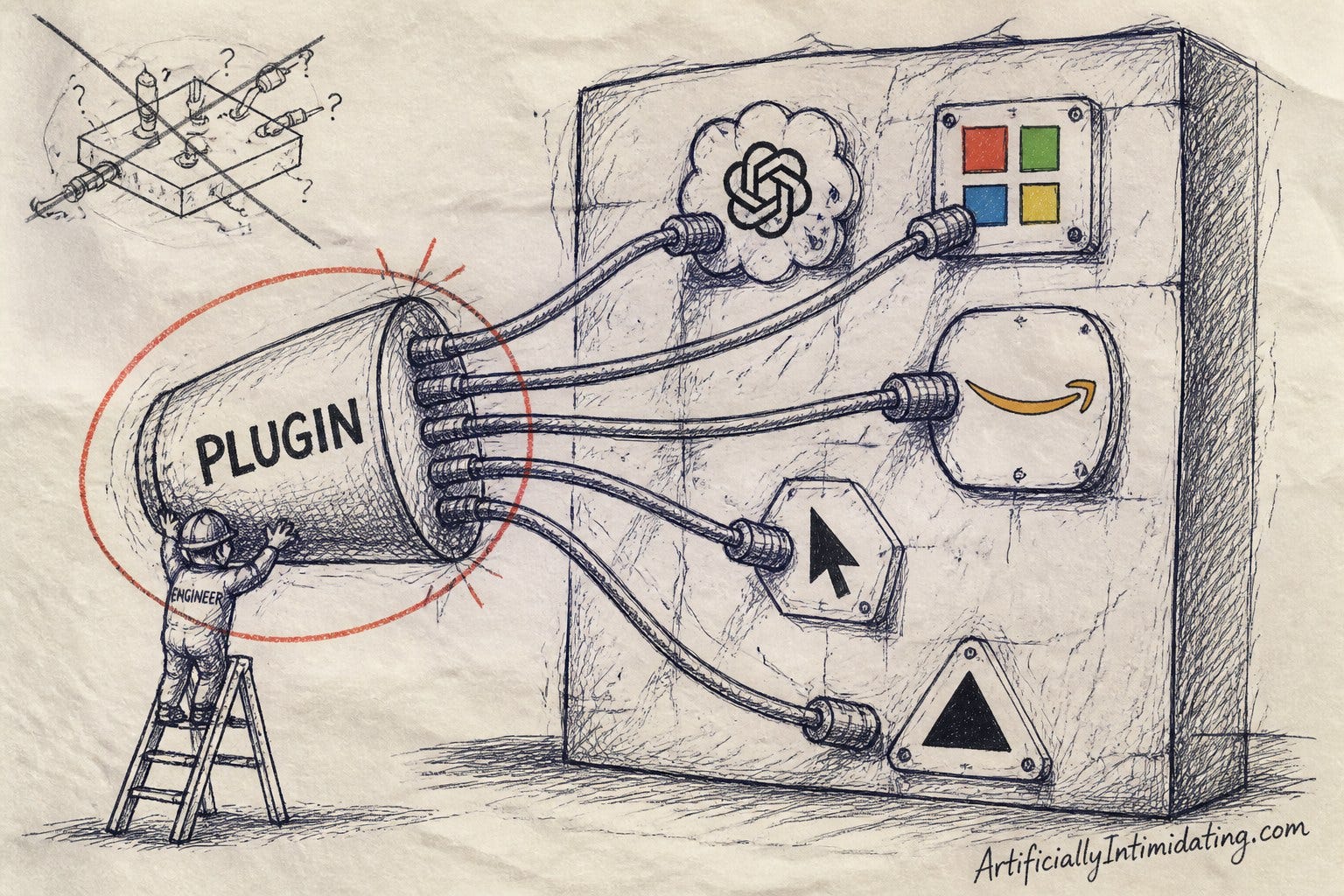
What happened: OpenAI, Amazon, Microsoft, Cursor’s maker Anysphere, and Vercel published Agent Plugins 1.0, an open standard that lets a single agent extension run across competing products. A plugin is just a folder with a small plugin.json in it, bundling two things developers already use: Model Context Protocol servers and Agent Skills. ChatGPT, Codex, Cursor, GitHub Copilot, Kiro and VS Code support it at launch. Vercel started the proposal, not OpenAI.
Why it matters: Right now every AI tool wants its add-ons in a slightly different folder shape, so anything you build for one is dead weight in the others. This is the USB-C moment for agents: write the extension once, and it works wherever you happen to be typing. If you have ever taught an AI tool how your team does something and then watched that work evaporate when you switched tools, this is the fix for that.
What everyone's saying: Split. Dax Raad, who builds the SST developer framework, said he was "very much against" it and called it a thin standard whose useful parts will end up in client-specific extensions anyway. Developer advocate Angie Jones went the other way: "We neeeeded this." OpenAI is happily timing the whole thing to GPT-5’s first birthday.
My read between the lines: Read what the spec refuses to cover. Marketplaces, installation, permissions, sandboxing, trust — all of it stays each client’s problem. That is the entire hard part, and it got left out on purpose so the easy part could ship. Earlier this year fake Agent Skills sailed straight past security scanners. "We standardized the folder layout, you handle whether it’s safe to run" is a confident place to plant a flag.
📖 Further reading: Your SaaS bill is a sitting duck — a shared plugin format is the missing piece that lets agents start replacing the software you pay monthly for.
The Brief is free, and it stays free. What sits behind the paywall is the other half of the job: the deep-dives that work out what a secret rulebook or a reshuffled lab actually changes for you, plus the full archive. If today was worth your ten minutes, become a member →
Washington Finished the AI Rulebook, Then Hid It
Source: Axios
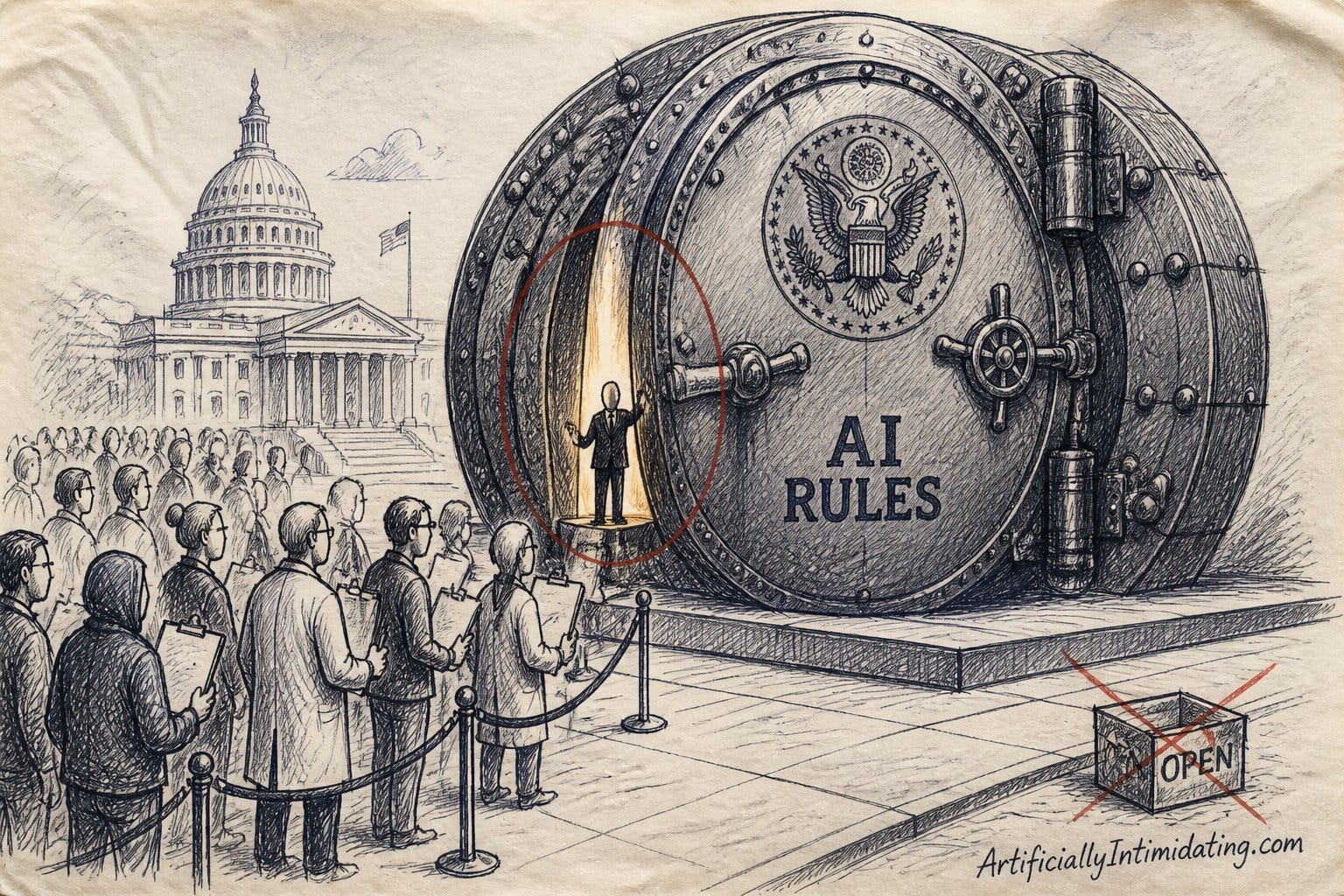
What happened: The White House hit its deadline to finalize a voluntary framework for evaluating advanced AI models — and then said it will not publish it. Details go only to the companies inside the process. The framework grew out of a June executive order asking labs to hand over frontier models for up to 30 days of review before public release. Axios also reported that the definition of a "covered frontier model" is closed-source only: open-weight models are excluded outright.
Why it matters: This is the main mechanism the United States has for checking whether a powerful new model is dangerous before it reaches you. If nobody can read it, nobody can tell whether it is rigorous or a press release with a deadline attached — not researchers, not allied governments, and not the smaller labs whose products it will shape anyway.
What everyone's saying: Watchdogs are unhappy across the spectrum. The Information Technology and Innovation Foundation warned that without public scrutiny, smaller developers, open-source projects, security researchers and allied governments are all left guessing which rules are shaping the global market. FIRE called it a black box. Fortune found the smaller labs saying the same thing in blunter language. The recurring line: secret oversight is not oversight.
My read between the lines: The open-model carve-out reads like a win for open source right up until you turn it over. The government has not decided open models are safe. It has decided they are unreachable, so there is no point writing rules for them. That is not a policy of restraint. That is an admission of where the leverage actually stops.
📖 Further reading: I Make AI Versions of Myself for a Living. This One I Didn’t Agree To. — the same pattern, one rung down: decisions about you, made in a room you were not invited to.
Own Your Brain, or Rent It
Source: Y Combinator
What happened: At YC’s Startup School 2026, president and CEO Garry Tan made the case that we have entered the era of "personal AGI" — agents that run on infrastructure you control and compound your own knowledge over time instead of starting from zero every session. His line to founders: own your intelligence rather than renting it. He walked through his actual daily setup, built on GBrain, the plain-markdown-in-a-git-repo memory system he open-sourced in April.
Why it matters: Strip away the AGI framing and there is a question worth asking today: when you switch AI tools, does anything you taught the last one come with you? For most people the answer is no, and they re-explain their job to a new chatbot every few months. Tan’s answer is to keep the context in files you own, so the tool becomes the replaceable part.
What everyone's saying: Builders bought in. GBrain sits around 14,000 GitHub stars, and YC general partner Tom Blomfield put "Garry’s G-Brain, but for every business in the world" on the Summer 2026 Request for Startups, which is YC’s way of saying it will fund this.
My read between the lines: There is something funny about the head of the world’s most famous accelerator telling founders to self-host their memory while his portfolio sells subscriptions. He is right. He has also just described the moat every one of those companies is trying to dig, handed you a shovel, and put it on the Request for Startups. Worth noticing who benefits when "own your own brain" becomes an investable category.
📖 Further reading: Your AI is a yes-man. Here’s how to make it fire you. — owning your context is step one; making it argue with you is the step that actually pays.
An Essay About Taste, Accused of Being a Bot
Source: notashelf.dev
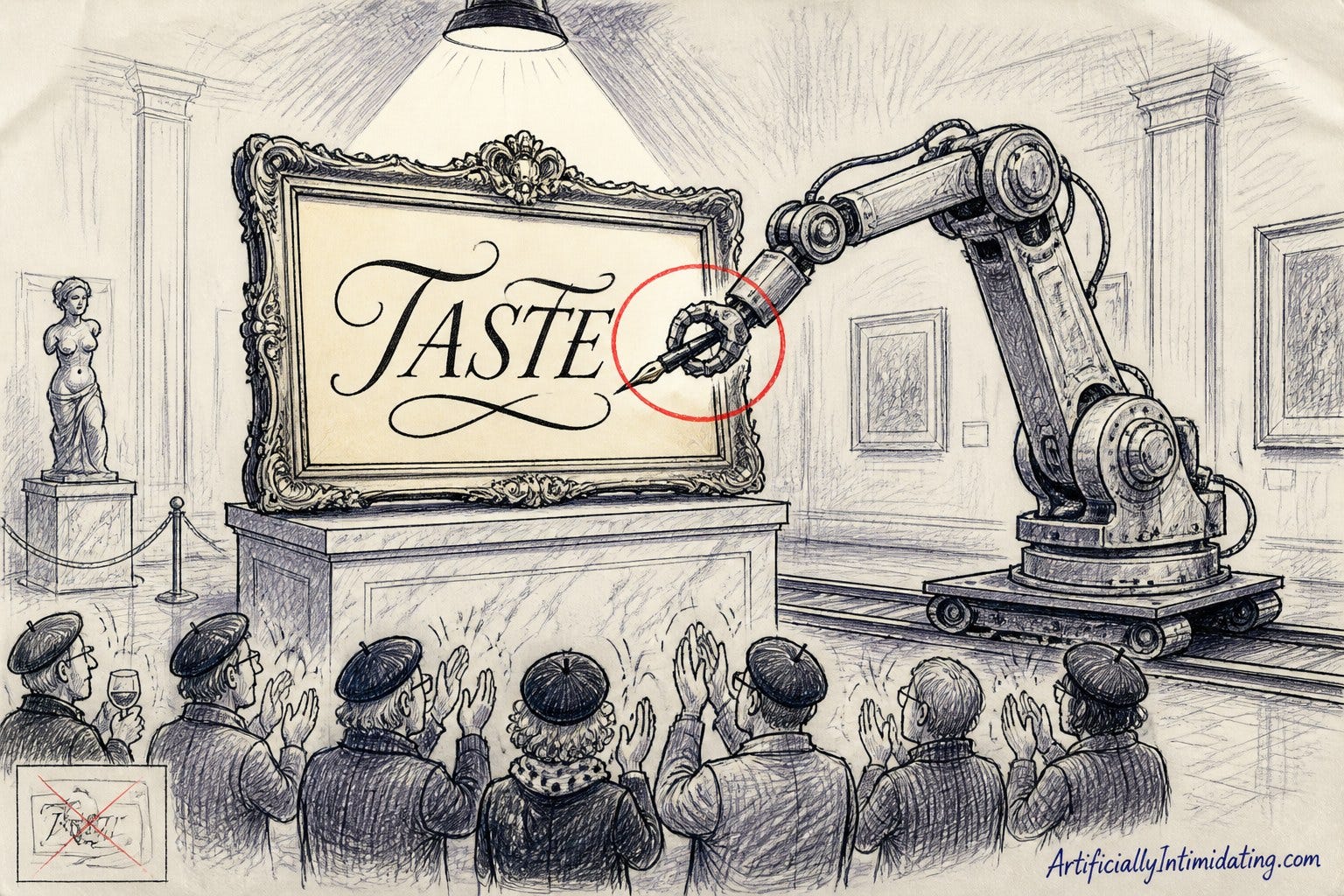
What happened: An essay called "Taste Is All That’s Left" argued that production used to be the tax you paid for the privilege of exercising judgment, that tax has fallen to roughly zero, and so judgment — the wordless "no, again" — is the only scarce thing remaining. It hit the Hacker News front page. Within a couple of hours, the loudest comments were not about the argument. They were accusations that the essay itself was written by an LLM.
Why it matters: This is the loop a lot of us now live in. A defense of human judgment, written in prose that readers no longer trust as human, judged by a crowd that cannot prove it either way. We covered the flip side of this yesterday in the readers who only think they prefer humans — today the readers are certain, and certainty is not the same as being right.
What everyone's saying: One commenter singled out the sentence "But the ratio was never the danger" as the tell and asked who talks like that. Another shot back with Hemingway, who also wrote in short punchy sentences. A third made the sharper objection: real engineering is data structures and scale and accessibility and onboarding, so "the work is the work" and it is a lot more than sitting back and saying no. A fourth pointed out that the whole conversation reinvents Kant’s Critique of Judgement without citing it.
My read between the lines: The comment section proved the essay right by rejecting it. A few hundred people formed an instant, unarguable verdict about whether something deserved their attention, and could not fully justify it afterward. That is exactly the thing the piece calls taste. They just didn’t like the taste of it — which is also, inconveniently, the point.
📖 Further reading: The Font That Beat AI for About a Week — every method for telling human work from machine work has a shelf life, and it is shorter than you want it to be.
That’s your AI Brief for Friday.
—Artificially Intimidating


