


Good day, humans. Today is a study in people saying one thing and doing the other. Anthropic and OpenAI are telling senators that Chinese labs are siphoning their models through tens of thousands of fake accounts — while selling those same conglomerates frontier AI through Singapore. Elon Musk called Anthropic the clear leader in AI, then told Tesla to stop using it. Also on the docket: Ant Group gave away an hour-long world model, and Christopher Nolan says Gen Z is done with slop.
The Distillation Complaint That Comes With a Side Door
Source: Reuters
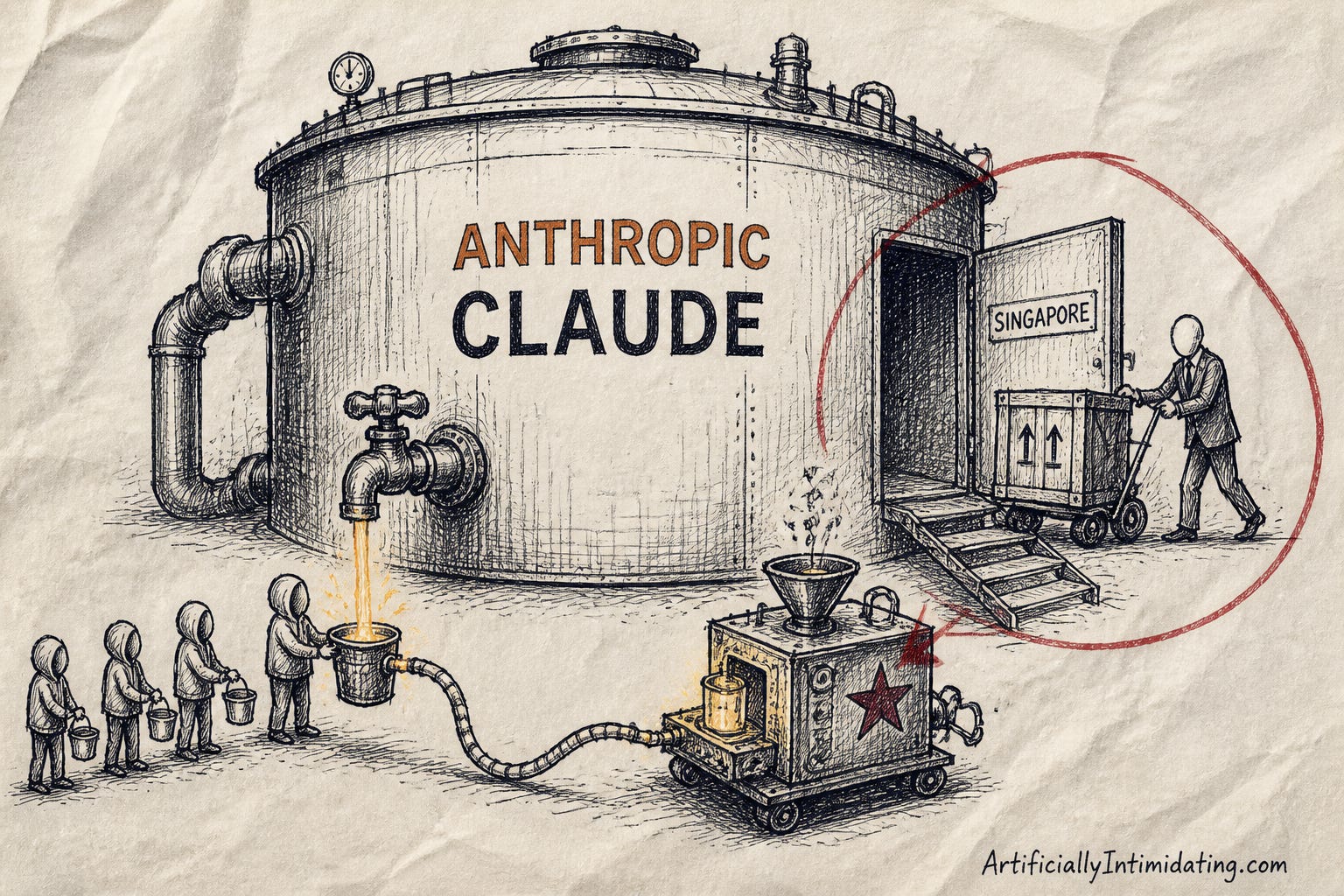
What happened: Yesterday we told you Alibaba had banned Claude Code inside its own walls. Today the other half of that story landed. Anthropic has told Senators Tim Scott and Elizabeth Warren that individuals linked to Alibaba ran roughly 25,000 fraudulent accounts and generated more than 28.8 million exchanges with Claude between April 22 and June 5 — what the company calls the largest operation ever to unlawfully extract Claude’s capabilities. OpenAI says it has seen the same thing aimed at its own models.
Why it matters: "Distillation" means copying a smart model by asking it millions of questions and training a cheaper model on the answers. It is the AI equivalent of photographing every page of a book instead of buying it — and it means the most expensive part of building a frontier model can be skipped entirely by anyone willing to ignore the terms of service.
What everyone’s saying: The consensus read is that export controls have been aimed at the wrong thing: we spent three years restricting chips while model access stayed wide open. Anthropic, OpenAI and Google are now coordinating through the Frontier Model Forum to detect extraction patterns across all three.
My read between the lines: On July 9 the Financial Times reported (via The Next Web) that OpenAI and Google sell advanced AI services to the Singapore-registered subsidiaries of Alibaba, Baidu and Tencent — the same conglomerates sitting on the Pentagon’s 1260H list. Mainland China is restricted. Singapore is not. So the labs are lobbying Congress about the back door while staffing a service desk at the side door.
📖 Further reading: The US Government Just Took Anthropic’s Best AI Model Offline — Here’s Why — the export-control fight in this story is the same fight, one step upstream.
Half of today’s brief is people announcing things instead of doing them. Viktor is the other kind. It’s an AI agent that lives in your Slack, connects to 3,000+ tools, and comes back with the finished artifact — the working dashboard, the shipped campaign, the code, the report. Not a chatbot you have to interview. A coworker who already did it. New readers get $50 off their first month. Hire Viktor →
Musk Crowned Anthropic, Then Banned It at Tesla
Source: Electrek
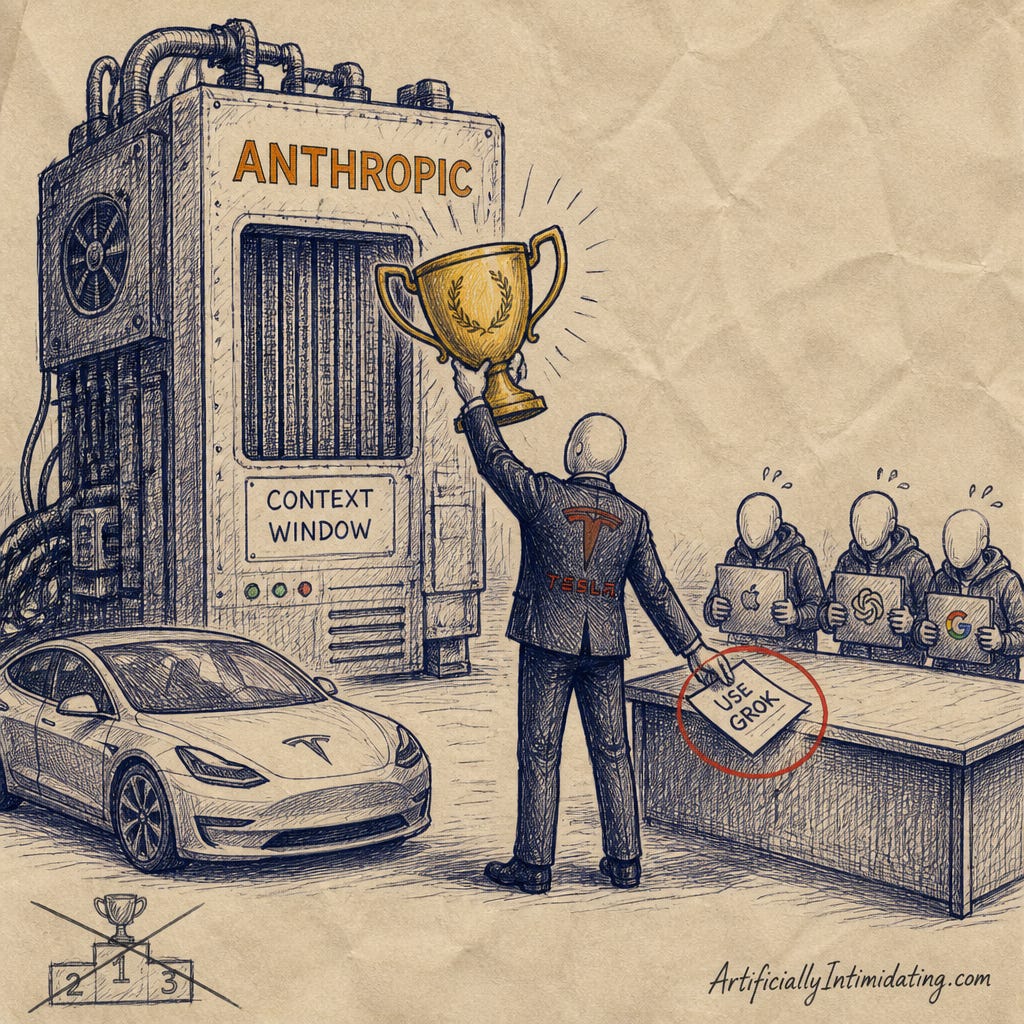
What happened: Elon Musk posted on X that he was "clearly wrong about Anthropic" and that they are "obviously currently the leader in AI" — a full reversal of his September 2025 position. In the same week, per Electrek, he sent Tesla staff a memo instructing them to switch off Claude and onto his own Grok 4.5 "when possible," citing token costs.
Why it matters: This is what an AI budget fight looks like when it reaches an org chart. Days before the memo, Tesla capped employee spending on third-party AI tools at $200 a week — a cap that applies to Anthropic, OpenAI and Google, and pointedly not to Grok.
What everyone’s saying: The numbers support the price argument and undercut the quality one. Grok 4.5 runs about $2 per million input tokens and $6 per million output, against $10 and $50 for Claude Fable 5 — roughly $0.13 a task versus $1.57. On the DeepSWE 1.1 coding benchmark, Grok scores 53% to Fable’s 70%. Musk conceded the gap himself: most tasks, he wrote, don’t require Fable-level capability.
My read between the lines: Tesla is a public company with outside shareholders being steered toward a product owned by its CEO’s other company. Electrek’s sources say Tesla engineers still prefer Claude for daily work. "Cheaper and worse, but I own it" is a memo, not a procurement strategy — and the shareholders who paid for the compute are entitled to notice.
📖 Further reading: Fable 5 Costs 2x Opus — and Using It Wrong Costs You More Than That — Musk is making a price-per-task argument. Here is how to actually run that math.
The Brief is free and it stays free. But the only reason I can tell you Grok is cheaper and genuinely worse is that I spent a week running both on real work. That part lives behind the paywall — the deep-dives underneath these headlines, plus the full archive. If it earns its keep, back it. Become a member →
Ant Group Just Open-Sourced an Hour-Long World
Source: The Next Web
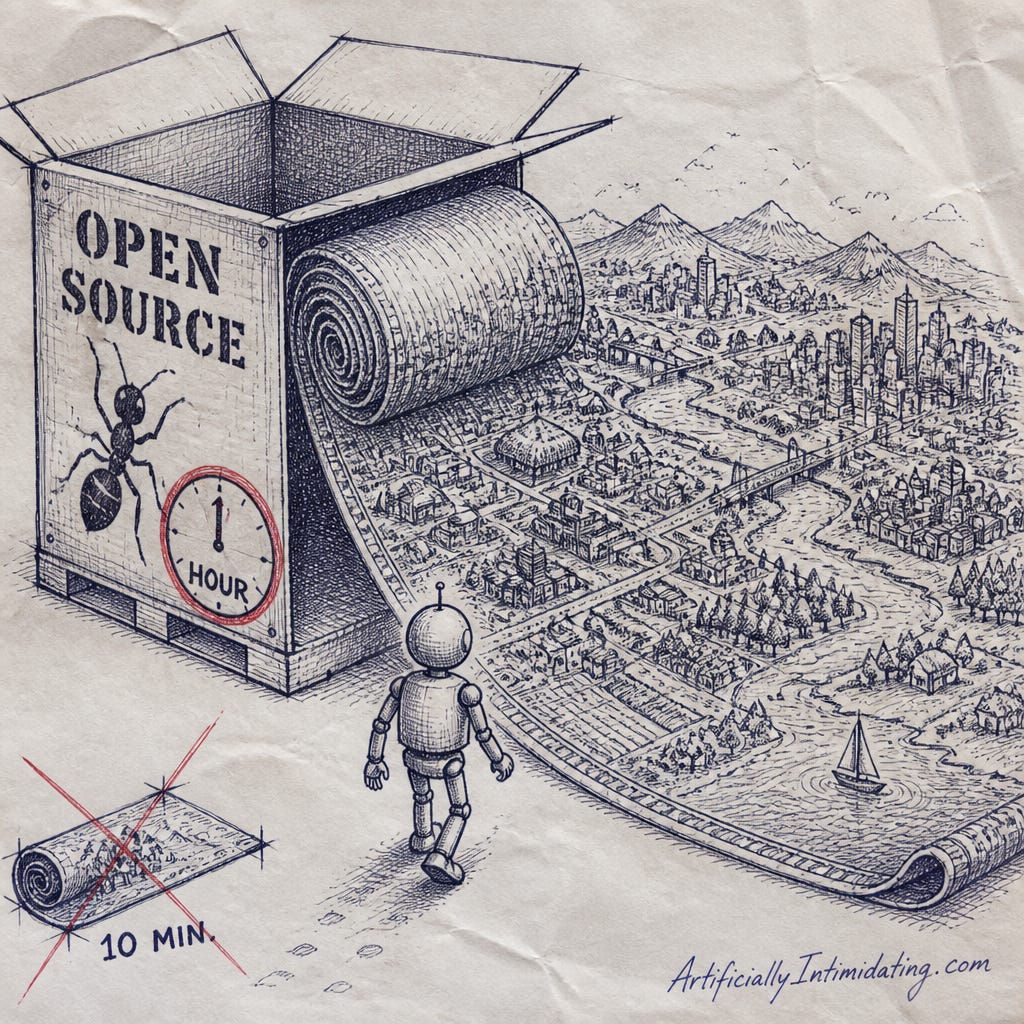
What happened: Robbyant, the embodied-intelligence unit of Ant Group, released LingBot-World 2.0 on Wednesday — a "world model" that generates an interactive video environment you can move around inside for up to an hour at 720p and 60 frames per second. The January version topped out at roughly ten minutes. It is on GitHub and Hugging Face under an open-source license, with day-zero support for the SGLang serving framework.
Why it matters: A world model is a simulator a robot can practice in. You generate a warehouse, and the robot fails in it ten million times without breaking a single real shelf. Open-sourcing one hands every robotics team on the planet a training ground they no longer have to build themselves — and training ground, not brainpower, is the bottleneck in robotics right now.
What everyone’s saying: Robbyant also dropped LingBot-Video, which it calls the first open-source Mixture-of-Experts video foundation model built for embodied AI (13 billion total parameters, 1.4 billion active per token). Add LingBot-Map in April and LingBot-Depth 2.0 this month and The Next Web reckons the company shipped a full embodied-AI stack in a single week.
My read between the lines: Story one of today’s brief is American labs telling Congress that Chinese firms copy their models. Story three is a Chinese firm giving away a robotics stack that no US lab has open-sourced. Both are true at the same time, and only one of them looks like a plan.
📖 Further reading: Thanks to Apple, Your Favorite AI Tool Is a Dead Tool Walking — when the capable version is free, the moat was never the model.
America Is Starting Companies With One Person and a Chatbot
Source: US Census Bureau
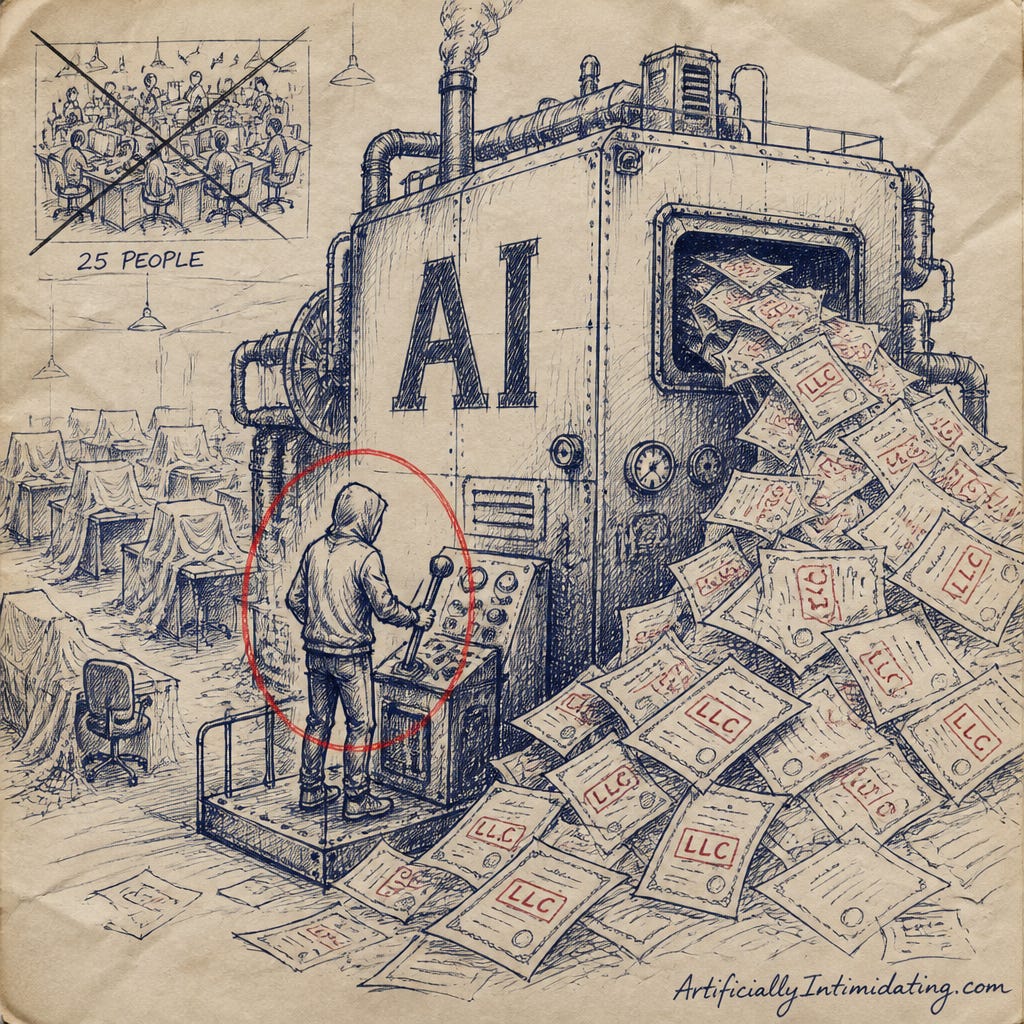
What happened: Americans filed more than 3 million business applications in the first half of 2026 — up 17% on the same period last year, per Census Bureau figures, with May alone hitting 523,971. Bloomberg reported Friday (paywalled) that AI tooling is the engine behind the surge, and that most of these new firms are solopreneurs: one person, no employees.
Why it matters: Starting a company used to mean hiring people to do the parts you couldn’t. A venture that needed 25 employees in 2020 might now need eight to ten, according to analysis in WRAL TechWire. The floor for founding something has fallen through.
What everyone’s saying: The boom is geographically broad — Florida, Texas and California lead on volume, while Mississippi filings jumped 47% year over year in May and Colorado 34%. Investors are chasing it: Crunchbase counted $300 billion poured into startups globally in Q1 2026 alone.
My read between the lines: The Census also tracks how many of these applications become businesses that actually pay somebody a wage within a year — and that share is falling even as filings explode. An LLC is a form and a filing fee. What the data may be capturing is not a startup boom so much as the moment employing people stopped being the way ambition expresses itself.
📖 Further reading: Claude Tag vs Viktor: Which One Do You Hire? — if you are the whole company, your first hire is a piece of software. Pick carefully.
Nolan Says Young Audiences Are Rejecting AI Outright
Source: Yahoo News
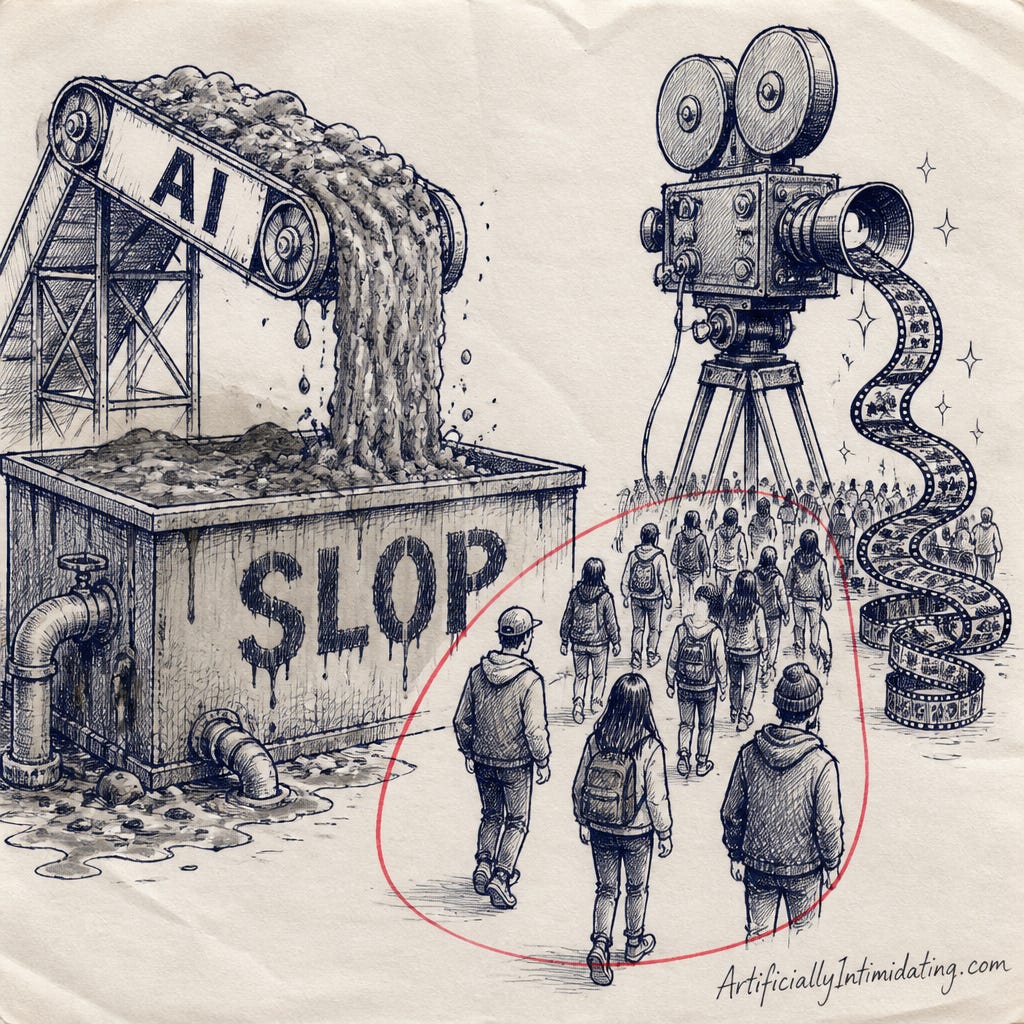
What happened: Christopher Nolan told The Telegraph — in an interview published Thursday and paywalled, but carried via Yahoo — that he has "never seen a more rapid wholesale dismissal" of a supposedly foundational technology in his lifetime. He was describing how young audiences, his own kids included, react to AI-generated content: immediately, and harshly.
Why it matters: Nolan is the director who sells tickets on the promise that everything on screen was physically made — The Odyssey, out July 17, is the first feature shot entirely on IMAX 70mm film. When he says handmade is now the selling point rather than the nostalgia trip, he is describing a market signal, not a personal taste.
What everyone’s saying: He pointed to Backrooms (Kane Parsons) and Obsession (Curry Barker) — debut features from directors in their twenties who built their audiences online before reaching cinemas — as evidence that young viewers will still leave the house for something that feels genuinely crafted. The quote went around film Twitter within hours.
My read between the lines: A generation raised online is very good at spotting the thing that was optimized rather than made. But notice what kind of objection that is: it is a quality complaint, not a moral one — and quality complaints get engineered away. The interesting question is not whether Gen Z is rejecting AI slop today. It is whether they will still be able to identify it in two years.
📖 Further reading: I Make AI Versions of Myself for a Living. This One I Didn’t Agree To. — the audience is drawing a line about authenticity. The industry has not noticed.
That’s your AI Brief for Sunday. Everyone is very concerned about AI ethics right up until the invoice clears.
—Artificially Intimidating


