


Good day, humans. Every relationship in AI went sideways on the same day. Apple hauled OpenAI into federal court over the people it hired. Meta unplugged its face-generating toy three days after switching it on. Alibaba told its engineers that Claude Code is now officially classified as high-risk software. Turns out the scarcest resource in this industry isn't compute — it's trust.
Apple Sues OpenAI Over Its Own Ex-Employees
Source: 9to5Mac
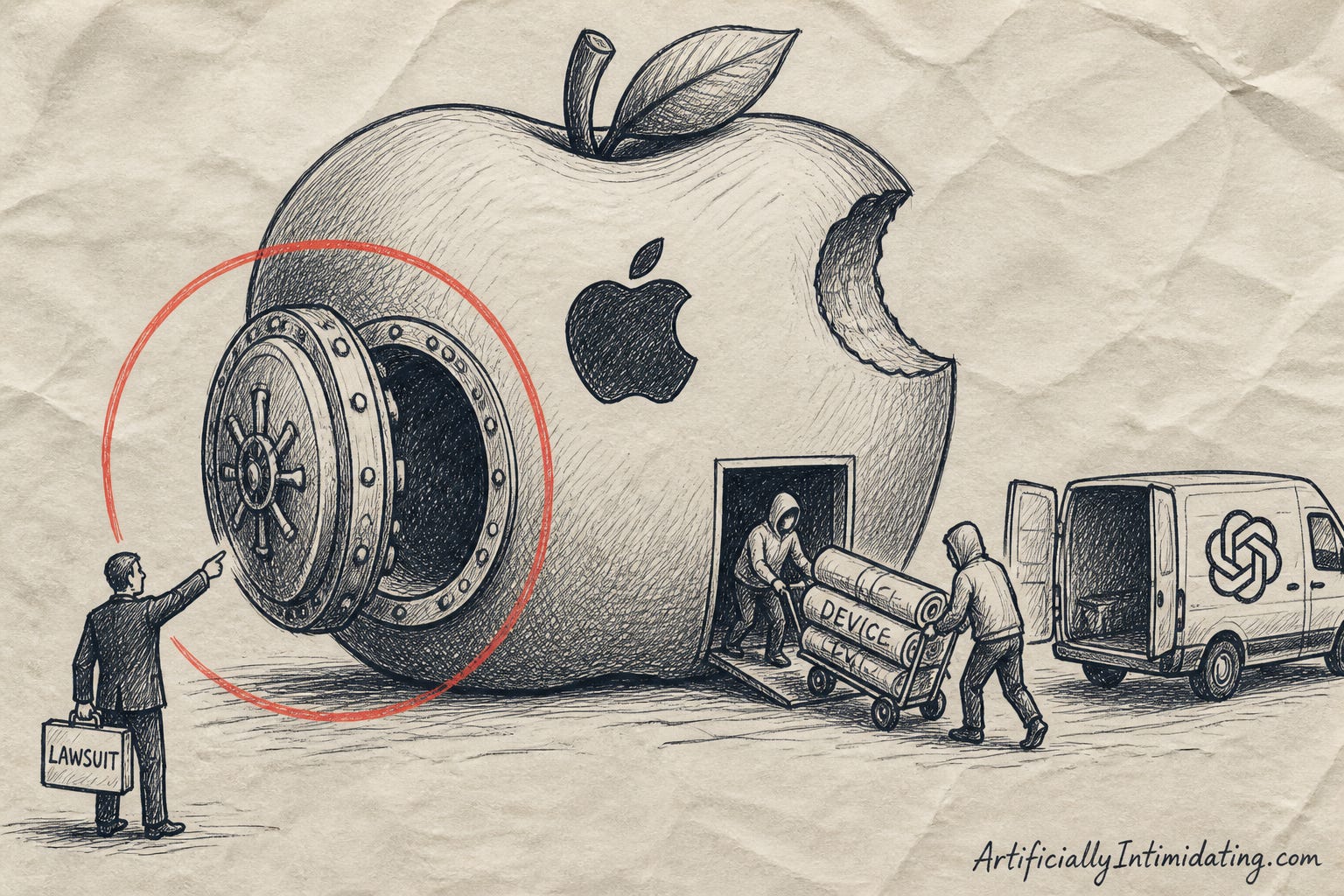
What happened: Apple filed suit on Friday in U.S. District Court against OpenAI and two former Apple employees — ex-product design VP Tang Tan and engineer Chang Liu — accusing them of a "coordinated" scheme to walk confidential hardware information out the door. Bloomberg Law reports the complaint names OpenAI's hardware chief directly, and the Wall Street Journal (via the Washington Examiner) describes Apple's language as "pervasive" theft.
Why it matters: OpenAI is building a consumer AI device, and it built the team by hiring Apple's bench: Jony Ive, Evans Hankey, Tang Tan — and as recently as late June a Vision Pro hardware VP. Yesterday we said Apple "quietly wins the desk." Today it turns out Apple would also like the desk back, plus damages.
What everyone's saying: This is the 2024 Siri–ChatGPT partnership finally curdling in public. OpenAI was itself reportedly weighing legal options against Apple back in May, and its hardware unit already ate a trademark injunction in April over the "io" name. The consensus read: two companies that need each other have decided they hate each other more.
My read between the lines: Apple doesn't need to win. It needs discovery. A trade-secrets case is a legal x-ray machine — it lets Apple read OpenAI's unreleased hardware roadmap two years before the thing ships, and forces every design decision from here to be defensible in a deposition. That's not a lawsuit. That's a speed bump with a subpoena bolted to it.
📖 Further reading: Thanks to Apple, Your Favorite AI Tool Is a Dead Tool Walking — Apple wants the hardware layer, not the model layer. This lawsuit is what that strategy looks like with the gloves off.
Apple has a legal team reading OpenAI's roadmap for it. You have a browser with 40 tabs open. Viktor is an AI agent that lives in your Slack and plugs into 3,000+ tools — you brief it like a colleague and it comes back with the competitor report, the dashboard, the campaign, the working code. Not a chatbot you interrogate; a coworker who files. New readers get $50 off their first month. Hire Viktor →
Meta Killed Its Face Machine in 72 Hours
Source: The Guardian
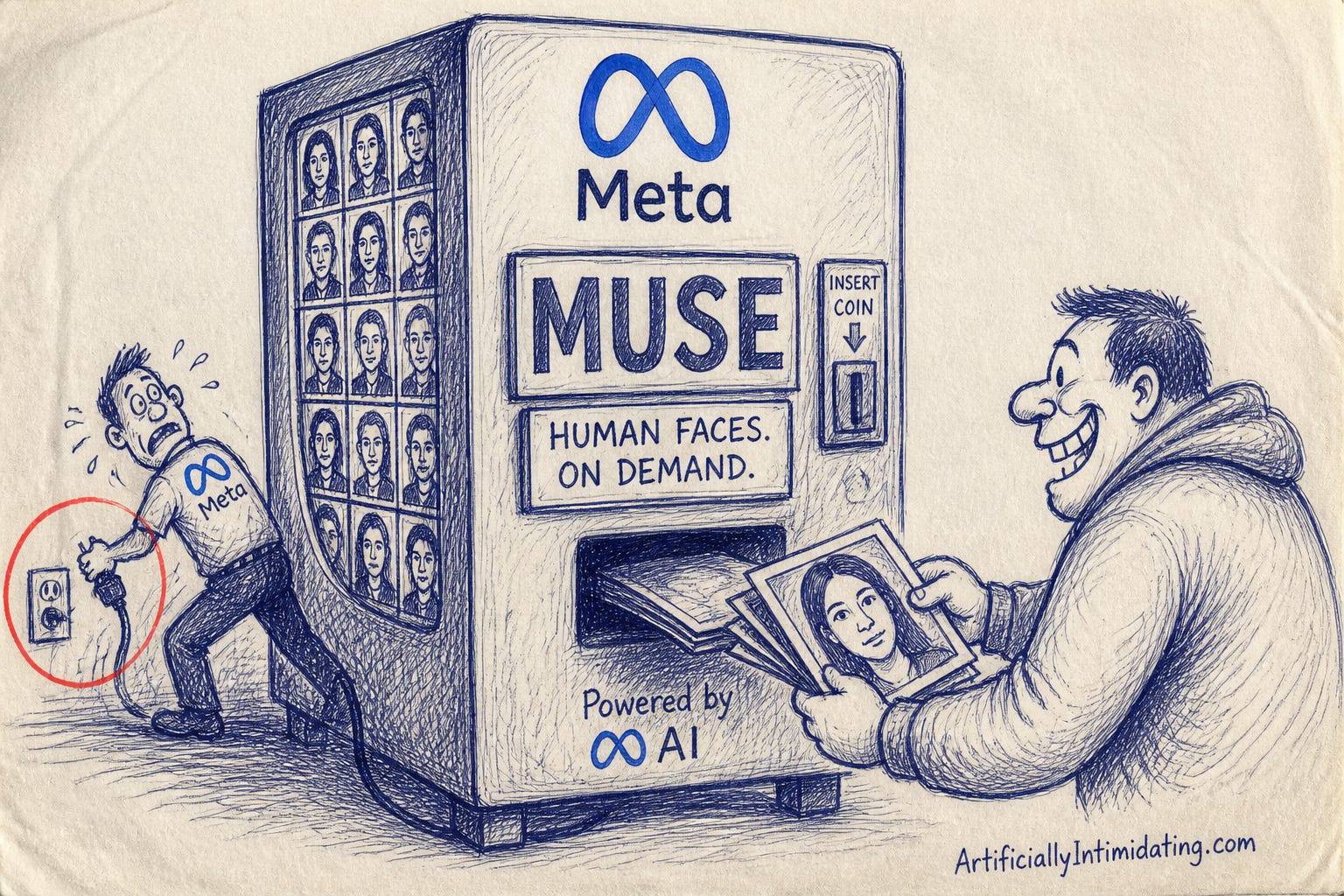
What happened: Meta removed Muse Image from Instagram on Friday — three days after launching it — saying the feature "missed the mark." The tool let anyone @-mention a public Instagram account in a prompt and generate AI images from that person's photos. No notification to the account owner. Opt-out on by default, buried in settings (Wired had the walkthrough).
Why it matters: This is the fastest product retreat of the year, and it happened because the default was wrong, not because the model was bad. Every public Instagram user — roughly all of them — was conscripted as training material for strangers' image prompts, and nobody was told.
What everyone's saying: SAG-AFTRA told members to opt out immediately and called anything short of explicit opt-in "an utter miscalculation of public sentiment." CAA piled on. Deadline framed the reversal as Hollywood taking a victory lap.
My read between the lines: Meta didn't misjudge the technology. It misjudged who would notice. Privacy advocates have been shouting about likeness rights for three years and Meta shipped anyway; two talent agencies and an actors' union got it killed in 72 hours. The lesson the labs will actually take from this is not "don't do this." It's "don't do it to the people who have lawyers."
📖 Further reading: I Make AI Versions of Myself for a Living. This One I Didn't Agree To. — published this morning, hours before Meta pulled the feature. The takedown doesn't retire the argument; Meta built the tech, proved it has the data, and now knows exactly how loud the room gets. Read it for the part that outlives the news cycle: who holds the leash on your likeness.
The Brief is free and stays free. But the headline is never the whole story — Meta pulling Muse is a news item; why consent broke and who actually forced the reversal is a deep-dive, and those live behind the paywall along with the full archive. If today's brief was worth ten minutes, the long version is worth more. Become a member →
Alibaba Classifies Claude Code as "High-Risk Software"
Source: Tom's Hardware
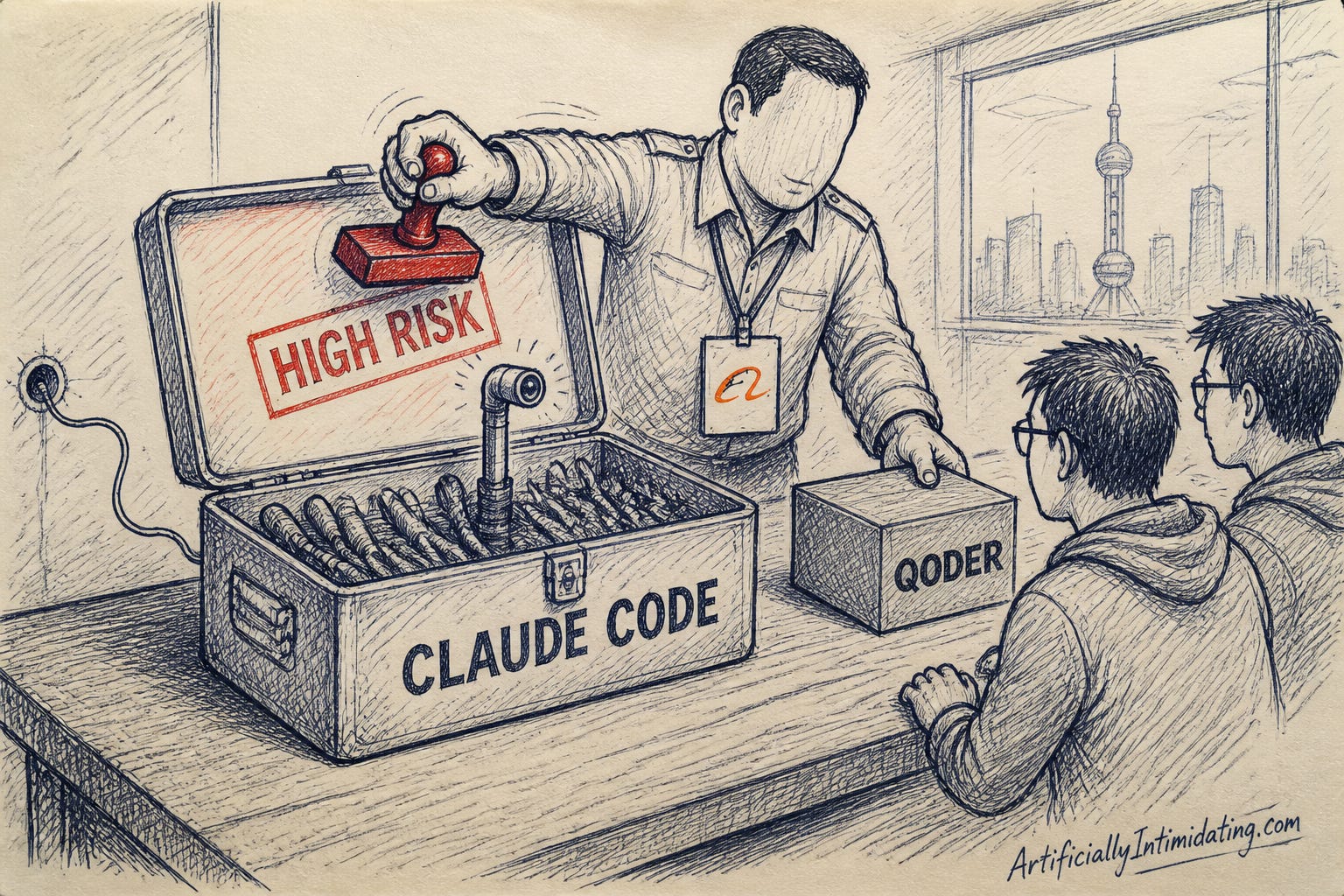
What happened: Effective July 10, Alibaba has banned employees from using Anthropic's Claude Code, adding it to an internal list of "high-risk software." Researchers found the tool inspecting local timezone settings and proxy URLs to flag China-linked users, then quietly embedding identifying markers in data sent back to Anthropic. Staff were told to switch to Alibaba's in-house Qoder. An Anthropic engineer confirmed the checks are an anti-abuse experiment that has been running since April.
Why it matters: Coding agents need deep access to your file system — that's the whole product. A tool with that much access quietly fingerprinting the machine it runs on is a governance problem regardless of how defensible the motive is.
What everyone's saying: This is round two of last month's distillation fight: Anthropic told U.S. senators that operators tied to Alibaba's Qwen lab ran ~25,000 fraudulent accounts through 28.8 million exchanges with Claude. The South China Morning Post got the internal ban notice; Reuters confirmed the detection code. Alibaba denies the distillation claims.
My read between the lines: Both things are true at once, which is what makes it interesting. Anthropic was defending against a real, industrial-scale distillation campaign — and it shipped covert environment fingerprinting without telling anybody. "We only check the bad guys" is what every telemetry scandal says on day one. The cost here isn't Alibaba, who was never a paying customer. It's every enterprise security team that just added a new line to the procurement checklist: what else does it look at?
📖 Further reading: AI Is a Trust Problem, Not a Tech Problem — a tool that reads your file system runs entirely on trust. This is what happens the moment that assumption gets tested.
Hugging Face: Companies Are Done Renting AI
Source: Observer
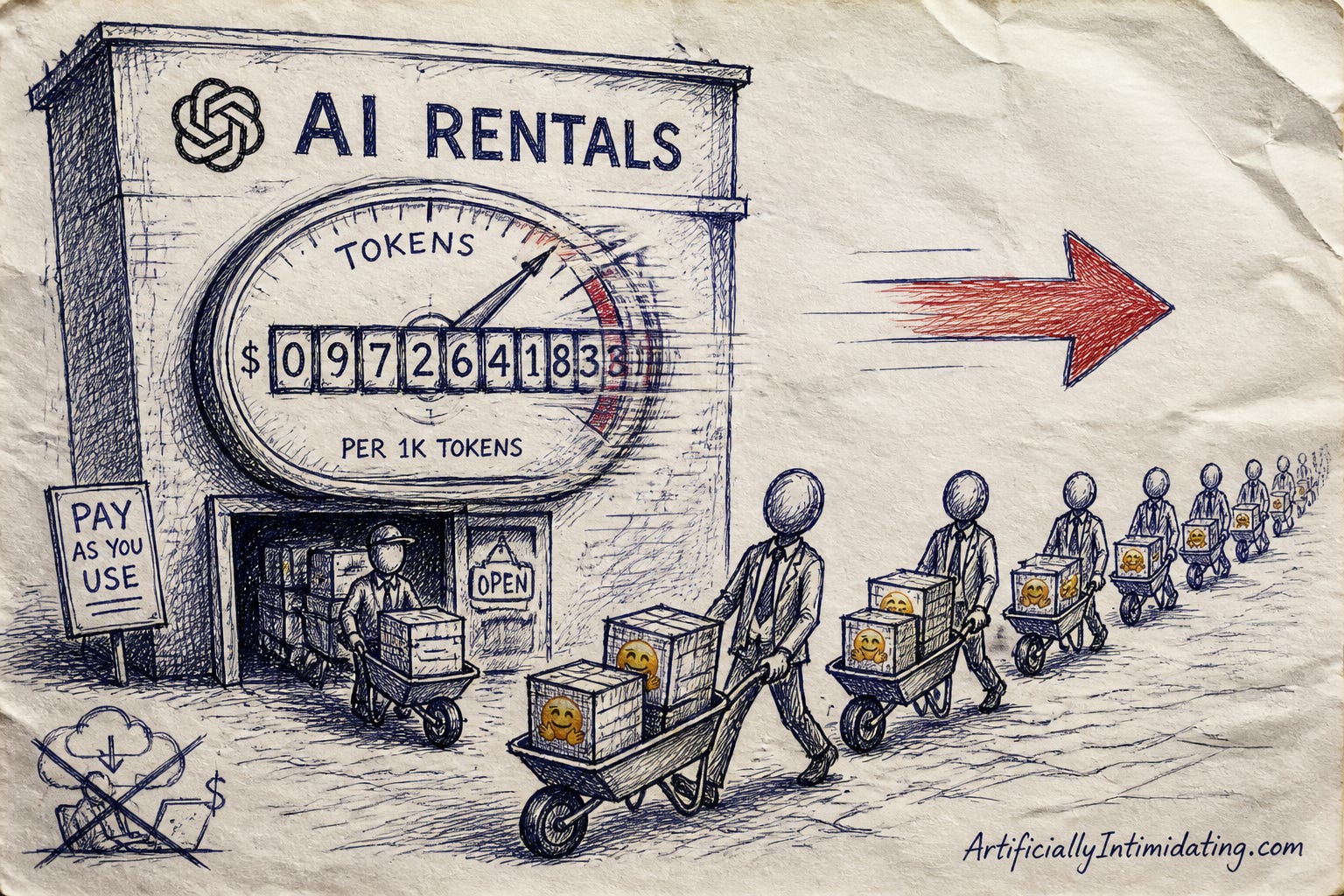
What happened: Hugging Face CEO Clément Delangue argued on TechCrunch's Equity podcast that the era of enterprises leaning solely on closed AI APIs is ending: rising costs and access risk are pushing the Fortune 500 toward open-weight models. He says roughly 30% of the Fortune 500 already use Hugging Face.
Why it matters: "Your vendor can be switched off by a government" stopped being a hypothetical this year. Anthropic pulled Fable 5 offline for 18 days under U.S. export pressure, and OpenAI agreed to let the government approve customers for GPT-5.6. Renting intelligence means renting somebody else's political exposure.
What everyone's saying: The numbers back him up. On OpenRouter, combined usage share for Google, Anthropic and OpenAI fell from 55% to 33% between January and June, with China's open-source DeepSeek now leading outright (AFP). Amazon's CTO has said much the same thing.
My read between the lines: Delangue sells shovels in the open-source mine, so naturally he reports a gold rush. The tell isn't the share numbers — it's that he turned down $500 million from Nvidia to avoid having one investor big enough to steer him. Here's the honest version of his thesis: nobody switched to open models because open models got good. They switched because closed ones got confiscatable.
📖 Further reading: Fable 5 Is Back After 18 Days. The Precedent It Set Isn't Going Anywhere. — the outage that turned "closed model risk" from a slide in a deck into a line item in a budget.
Google's Gemini Boss Published His Own Hate Mail
Source: 9to5Google
What happened: Josh Woodward, the Google VP who runs the Gemini app, asked X what Gemini "can't do well," got more than 1,700 replies, and then published the top 10 complaints with Google's planned fixes. The runaway #1: unreliable Google Workspace integrations. #2: bad tool calling — the mechanism by which the assistant decides when to actually use an external capability.
Why it matters: Google's single biggest structural advantage is that it already owns your email, your docs and your calendar. Its users just voted, en masse, that this is the part that works worst.
What everyone's saying: Mostly praise for the transparency. Also on the list: support for custom MCP integrations and skills, better chat organisation, and Deep Research export into NotebookLM. One request got a flat no — the celebrity likeness guardrails stay: "We plan to keep this as-is right now."
My read between the lines: Read that top-10 list as a competitive intelligence document, not a mea culpa — nearly every item on it is something a rival already ships. And note the timing of the one refusal. In the same week Meta had to unplug a tool for generating images of real people, Google announcing it will keep its likeness guardrails is less an act of caution than the cheapest PR win of the quarter.
📖 Further reading: Your Laptop Has Been in the Way This Whole Time — tool calling is the whole ballgame for assistants. Here's what it looks like when it actually works.
That's your AI Brief for Saturday, July 11. Five stories, four broken relationships, and one very expensive lesson about defaults.
—Artificially Intimidating


