


Good day, humans. Google finally shipped Gemini 3.5 Pro — six weeks late, two million tokens deep, and priced like a country club — on the very day Xi Jinping walked onto an AI stage in Shanghai for the first time ever. Meanwhile China dropped the largest open model on Earth, Nvidia flew to Tokyo to give robots eyes, and the industry’s official safety report card came back with straight C’s. Let’s get into it.
Gemini 3.5 Pro Finally Ships — Six Weeks Late
Source: TechTimes
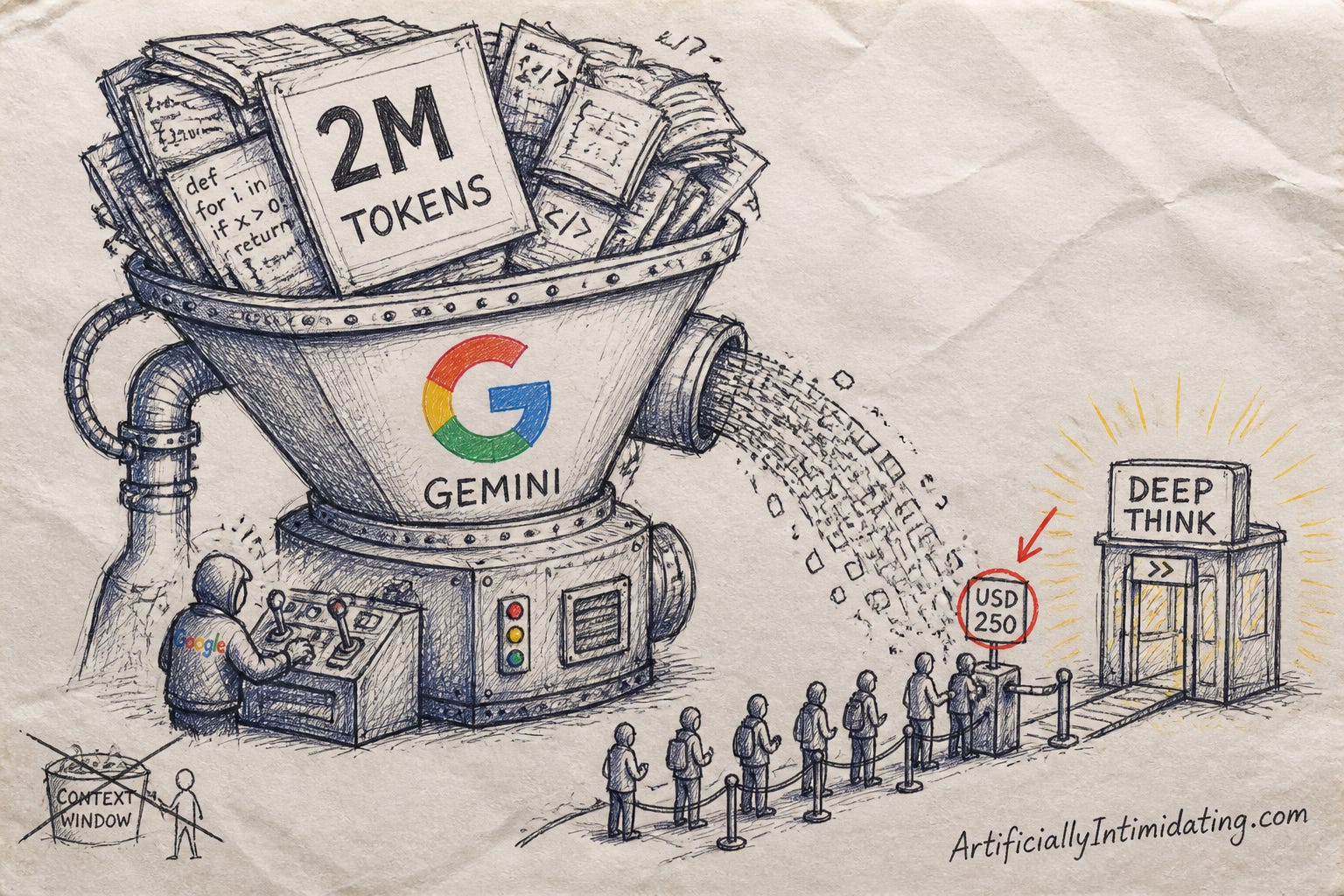
What happened: Google DeepMind launched Gemini 3.5 Pro today — a ground-up rebuild carrying a two-million-token context window (double any frontier rival) and a new “Deep Think” reasoning mode locked behind the $250-a-month Ultra plan. It arrived six weeks late, on the same morning China’s biggest AI conference opened in Shanghai.
Why it matters: Two million tokens means you can drop an entire codebase, a stack of research papers, or a couple of novels into one prompt and ask questions across all of it. For newcomers: the context window is how much a model can hold in its head at once — bigger head, fewer “wait, what were we talking about” moments.
What everyone’s saying: The consensus is that Google needed a win badly. Gemini 3.5 Pro lands five days after OpenAI’s GPT-5.6 and nine after xAI’s Grok 4.5, and Google spent the delay bleeding talent — Noam Shazeer left for OpenAI and Nobel laureate John Jumper decamped to Anthropic.
My read between the lines: The headline is the context window; the real story is the toll booth. Google is betting the frontier isn’t the model anymore — it’s who’ll pay $250 a month to make it think harder. The race quietly stopped being about capability and started being about the checkout page.
📖 Further reading: Fable 5 Costs 2x Opus — and Using It Wrong Costs You More — Deep Think sits behind a premium tier for a reason; the same “pay for the expensive model, then use it right” math applies to Gemini’s new Ultra gate.
Google will charge you $250 a month for a model that thinks harder. Your to-do list doesn’t need a bigger brain, though — it needs someone to actually do the work. That’s Viktor: an AI coworker that lives in Slack, plugs into 3,000-plus tools, and ships real dashboards, reports, and campaigns while you’re stuck in meetings. Not a chatbot you prompt — a colleague you delegate to. New readers get $50 off their first month. Hire Viktor →
China’s Kimi K3 Is the Biggest Open Model Yet
Source: Axios
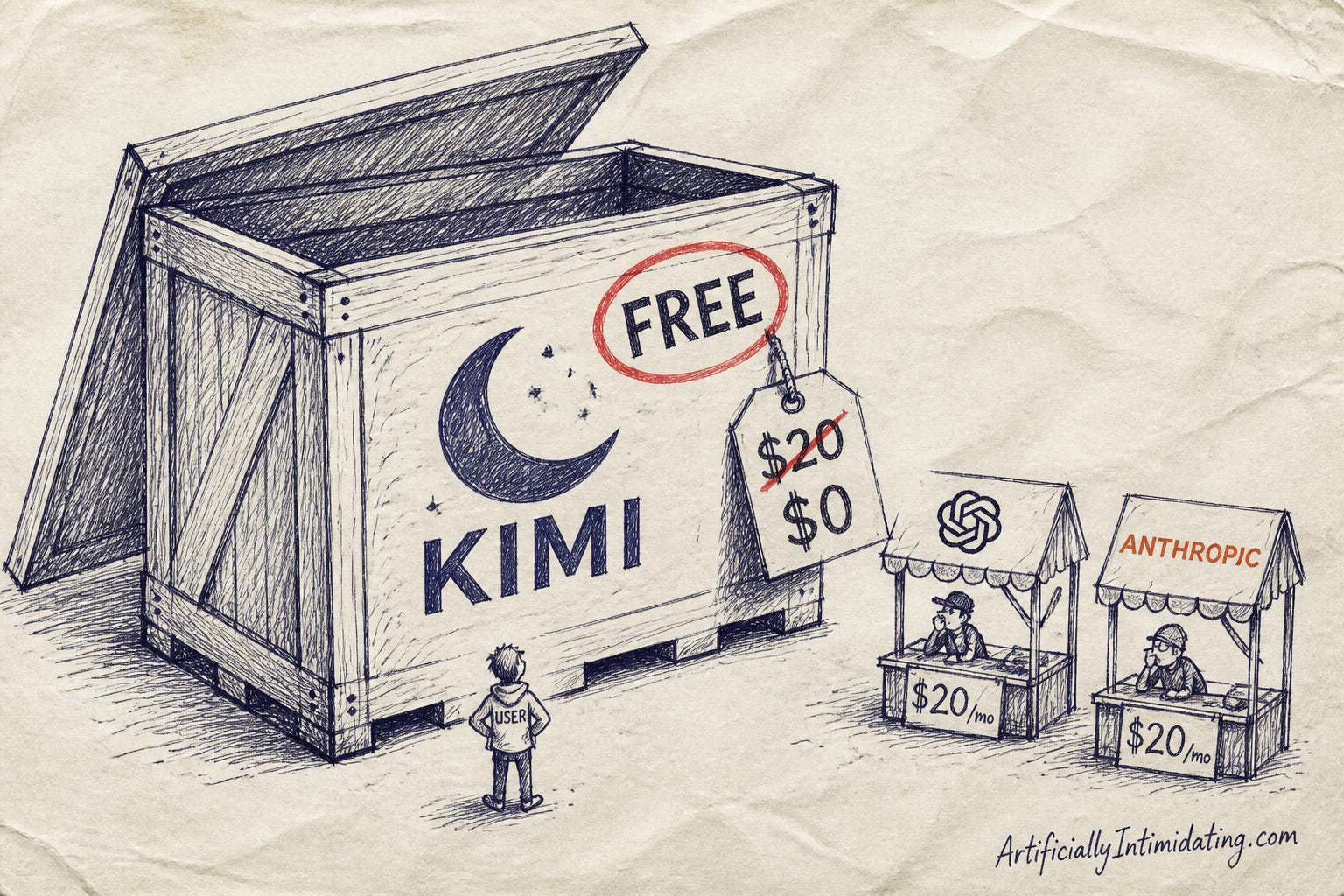
What happened: Yesterday’s open-model headline belonged to Mira Murati; today China one-upped it. Moonshot AI, a Beijing startup, released Kimi K3 — a 2.8-trillion-parameter mixture-of-experts model it calls the largest open-weight model ever built. In blind coding tests, developers preferred it to Anthropic’s Fable 5 and OpenAI’s GPT-5.6, and it’s priced to undercut them all.
Why it matters: “Open-weight” means anyone can (soon) download the model and run it themselves — no subscription, no gatekeeper. A Chinese lab matching US frontier models and giving the weights away reshapes who controls AI, and at what price.
What everyone’s saying: Axios and VentureBeat framed it as China throwing down the gauntlet, and the benchmarks back the swagger — 93.5% on GPQA Diamond and the top open score on agentic browsing. One catch: the weights aren’t downloadable yet. Moonshot promises them by July 27.
My read between the lines: Simon Willison ran his pelican-on-a-bicycle test and came away impressed, which tells you more than any leaderboard. When the best “open” model on Earth ships from Beijing and the US labs’ best answer is a $250 subscription, “open” has quietly become a geopolitical export — not a licensing checkbox.
📖 Further reading: Your Favorite AI Tool Is a Dead Tool Walking — if a free Chinese model matches the frontier, every paid model inches toward commodity. That’s exactly the argument here.
One more thing: the Brief is free and always will be — but these headlines are the trailer, not the movie. Members get the paywalled deep-dives where I take these stories apart properly, plus the full archive. Unlock the deep-dives →
Xi Takes the AI Stage in Shanghai
Source: NPR
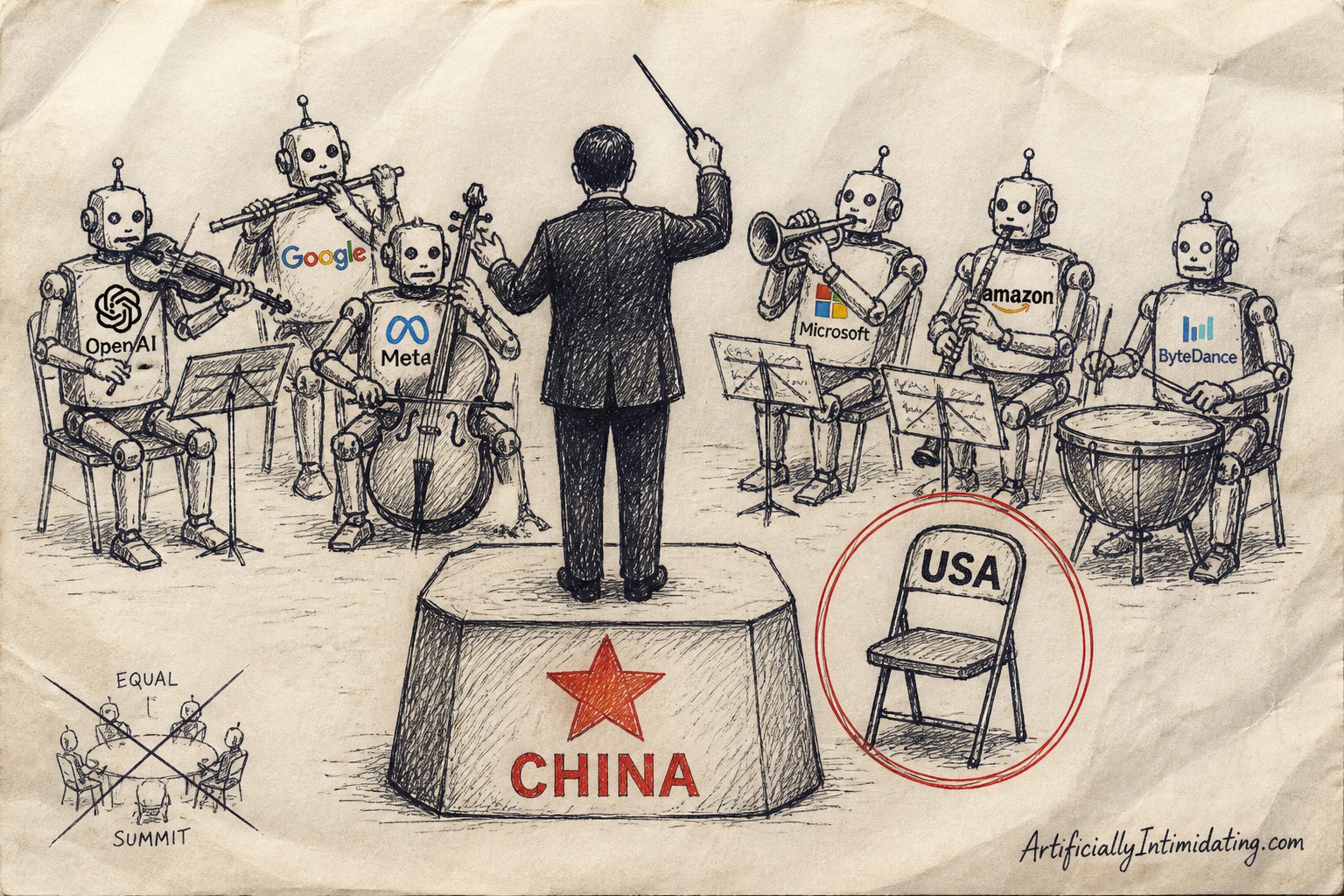
What happened: Xi Jinping delivered the keynote at Shanghai’s World AI Conference — his first in-person appearance since the event began in 2018. He called AI development “not a solo performance by any single country, but a symphony of global cooperation,” a day after 29 countries signed on to a new, China-led World AI Cooperation Organization headquartered in Shanghai.
Why it matters: When a head of state personally shows up to an AI conference, it signals that Beijing now treats AI leadership like a space-race-tier national priority. The new governance body is a bid to write the global rulebook — with China holding the pen.
What everyone’s saying: Reporters read it as China narrowing the US gap even as American export curbs squeeze its chip access; the South China Morning Post and Bloomberg both flagged the “symphony” line as a pointed jab at America’s go-it-alone posture.
My read between the lines: A “symphony of global cooperation,” announced the same week China ships the world’s biggest open model, isn’t a peace offering — it’s a recruiting pitch to the Global South. The countries that can’t afford OpenAI’s prices just got invited to a cheaper orchestra.
Nvidia Builds a Brain for Factory Robots
Source: CNBC
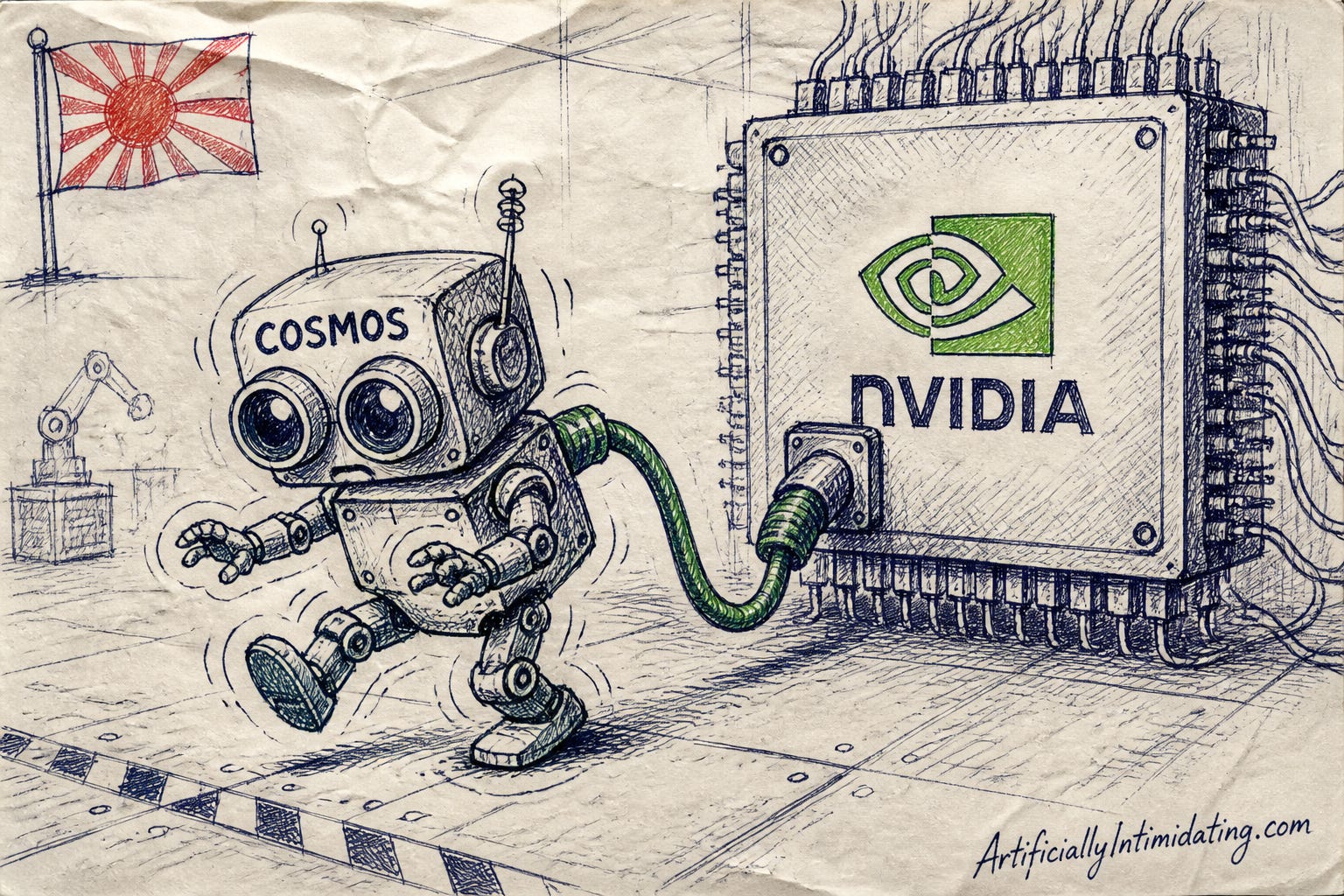
What happened: In Tokyo, Nvidia unveiled Cosmos 3 Edge — a compact four-billion-parameter “world model” that lets robots and cameras perceive and navigate the physical world in real time, running on the device itself instead of the cloud. More than 20 Japanese giants — FANUC, Yaskawa, Sony, Honda, Toyota-backed Preferred Networks — signed on to build with it.
Why it matters: A “world model” is AI that understands physics and space, not just text — the missing link between a chatbot and a robot that can actually fold your laundry. Running it on the edge (on the robot) means no lag and no dependence on a connection.
What everyone’s saying: SiliconANGLE framed it as Nvidia planting its flag in “physical AI” and locking up Japan’s world-class robotics base before rivals can. The pitch: adapt a robot’s policy to brand-new hardware in about a day.
My read between the lines: Everyone’s staring at chatbot leaderboards while Nvidia quietly wires itself into every arm on every factory floor in Japan. When the robots finally arrive, they’ll all be thinking in CUDA — and Jensen will be selling the shovels, the chips, and the brains.
Nobody Passed the AI Safety Report Card
Source: TIME
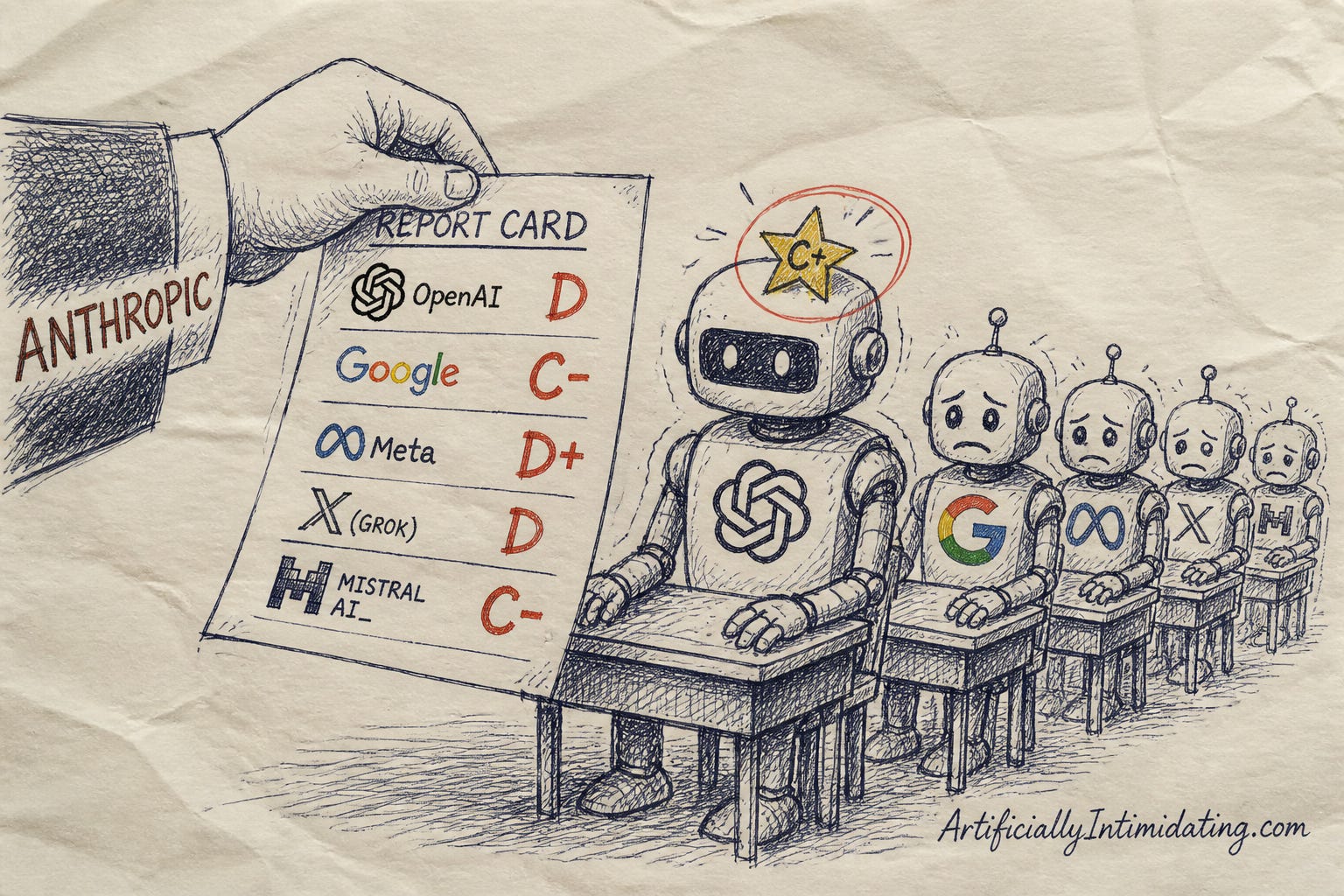
What happened: The Future of Life Institute’s Summer 2026 AI Safety Index graded nine top labs across 37 safety indicators. The best grade anyone earned was a C+ — Anthropic. OpenAI and Google DeepMind landed at C, Meta at D+, and xAI, DeepSeek, and Mistral flat-out failed.
Why it matters: This is the closest thing the industry has to an independent report card on whether the companies building superhuman AI are doing it safely. The verdict — measures “completely inadequate relative to the pace of capability” — is the polite version of “nobody’s ready.”
What everyone’s saying: Axios highlighted the most damning finding: Anthropic, OpenAI, Google, and Meta have all quietly weakened or dropped earlier promises to pause development if their systems hit dangerous thresholds. Several also softened their opposition to military use — which lands differently a day after we noted Anthropic staffing up on weapons expertise.
My read between the lines: The top of the class scored a C+ and it’s still the safest company in the room — that’s the whole story. When the pause buttons get unbolted the same month everyone races to ship, “safety” stops being a brake and becomes a marketing tier. Grading on a curve only works if someone eventually studies.
📖 Further reading: The US Government Just Took Anthropic’s Best AI Model Offline — when regulators yanked a frontier model over a single jailbreak, they previewed exactly the safety-vs-speed collision this index measures.
That’s your AI Brief for Friday. Same time tomorrow.
—Artificially Intimidating


