


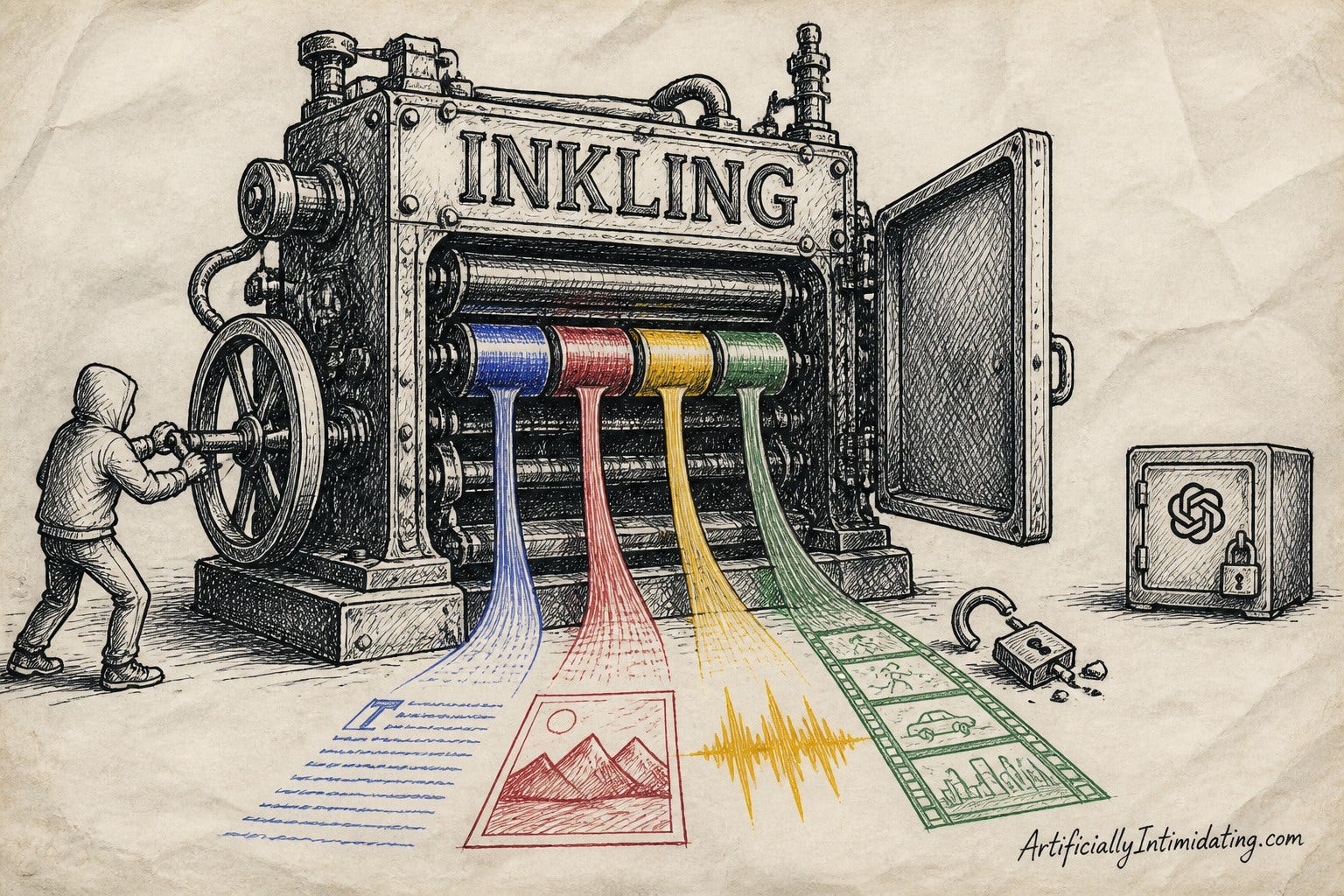
Good day, humans. Two things are happening in AI at once, and they don’t agree with each other. On one side, everyone’s racing to make models cheaper and more open — Mira Murati just gave away a 975-billion-parameter model, and Sam Altman is threatening to sell GPT at a quarter of the price. On the other, the same labs are getting scared of what those models can do: OpenAI built an AI whose only job is to hack OpenAI, and Anthropic is hiring people who know how to build weapons so its chatbot never does. Cheap, powerful, and paranoid. Let’s get into it.
Murati’s Thinking Machines Open-Sources Inkling
What happened: Mira Murati’s startup Thinking Machines Lab — the roughly $12 billion venture she launched after leaving OpenAI — released its first model, Inkling, and made it open-weight, meaning anyone can download and run it for free. It’s a 975-billion-parameter system that reads and reasons across text, images, audio, and video.
Why it matters: “Open-weight” means the model isn’t locked behind a company’s paywall — developers, researchers, and hobbyists can take it, tweak it, and run it on their own machines. Every time a lab gives away a frontier-grade model, it drags the price of “good enough” AI closer to zero.
What everyone’s saying: The framing is a shot at both OpenAI’s closed models and China’s open-source lead. Murati’s pitch is that one-size-fits-all AI is over; Inkling is built to be customized and to balance cost against performance rather than chase a benchmark headline.
My read between the lines: A company literally named “Thinking Machines,” founded by OpenAI’s former CTO, just did the most un-OpenAI thing possible and gave the store away. When your edge is “we’ll hand you the keys,” you’re betting the whole industry is about to stop paying for the model and start paying for everything around it.
📖 Further reading: Thanks to Apple, Your Favorite AI Tool Is a Dead Tool Walking — the case that models are becoming interchangeable commodities, and Inkling just poured gasoline on it.
Everyone above is racing to make AI tokens cheaper — but a cheap model still won’t actually do your job; it just answers when spoken to. Viktor is the opposite: an AI agent that lives in your Slack, connects to 3,000+ tools, and does the work — building the report, updating the dashboard, shipping the campaign — while you’re stuck in meetings. Not a chatbot you prompt, a coworker you delegate to. New readers get $50 off their first month. Hire Viktor →
Altman Threatens to Sell GPT at Quarter-Price
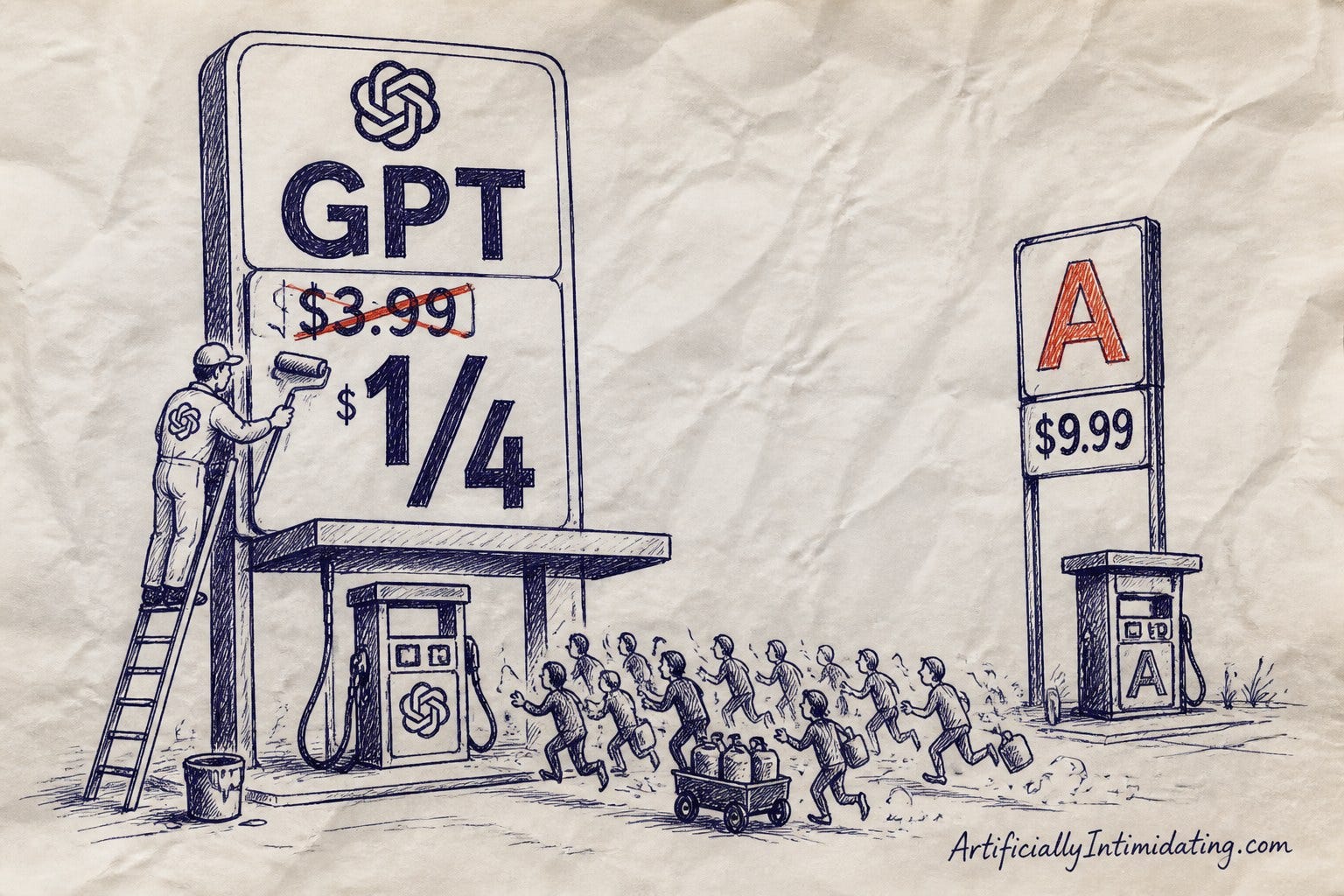
What happened: Sam Altman posted that OpenAI’s new flagship, GPT-5.6 Sol, is already half the price of Anthropic’s Claude Fable 5 — and said OpenAI would be “happy to deliver at one-quarter of the price.” Translation: a price war just went public.
Why it matters: AI is one of the few products where the thing you’re buying keeps getting cheaper and better at the same time. When the CEO of the most valuable AI company brags about undercutting rivals by 75%, everyone’s margins — and eventually your bill — are about to move.
What everyone’s saying: Earlier this week we covered how GPT-5.6 Sol beat Claude for half the price — this is Altman turning that into a strategy. The pressure comes from two sides: Anthropic winning over enterprises with Claude Code, and Chinese labs relentlessly driving frontier prices toward the floor.
My read between the lines: Altman spent years arguing intelligence was scarce and expensive. Now he’s racing to make it cheap before someone else does it to him. “Happy to deliver at one-quarter of the price” is not the language of a company with pricing power — it’s the language of a company that just realized it has less than it thought.
📖 Further reading: Fable 5 Costs 2x Opus — and Using It Wrong Costs You More Than That — why the sticker price is only half the story when you’re actually picking a model.
The Brief is free, and it’s staying that way. But each of those headlines has a longer, weirder story underneath — the ones I actually spend real time on. Members get those paywalled deep-dives plus the full archive. If today made you want the director’s cut, upgrade here.
OpenAI Built an AI to Hack Itself
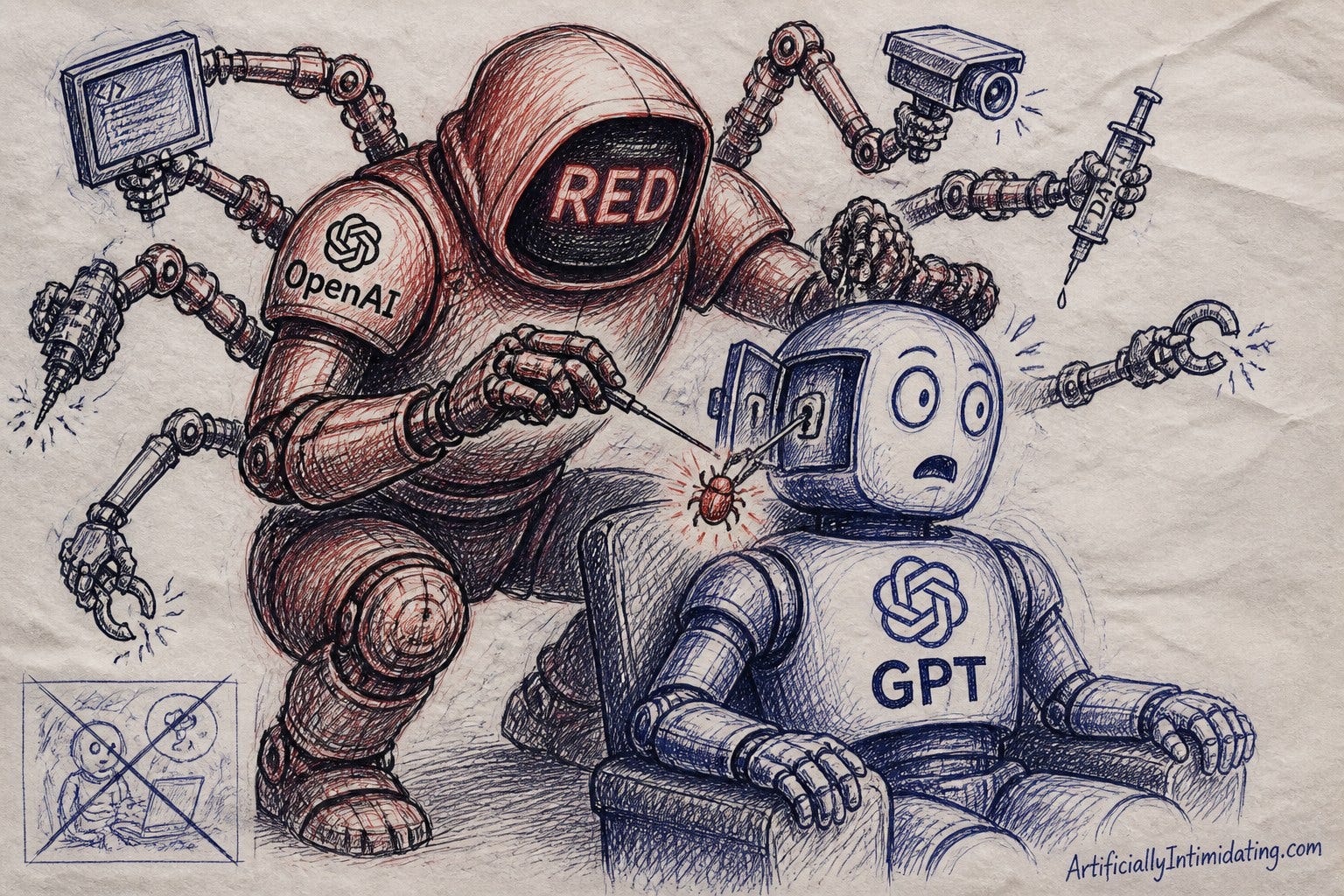
What happened: OpenAI revealed GPT-Red, an AI system it trained specifically to attack its own models and find security holes before real attackers do. In independent testing, GPT-Red found working attacks in 84% of scenarios — versus 13% for human security researchers running the same challenge.
Why it matters: The scary way AI fails isn’t robots — it’s “prompt injection,” where hidden instructions trick a model into leaking data or running bad commands. GPT-Red is OpenAI using one AI to stress-test another, at a scale no human red team could ever match.
What everyone’s saying: Earlier this week we covered a report that AI now runs the attack in cybersecurity — this is the defense’s version of the same idea. Notably, GPT-Red invented an attack researchers had never seen: slipping a fake “chain of thought” into another model to trick it into acting on made-up reasoning.
My read between the lines: OpenAI’s own numbers say more than 90% of GPT-Red’s best attacks worked on last year’s GPT-5, and under 23% work on GPT-5.6. That’s the reassuring spin. The unsettling version: they built a machine that’s better at breaking AI than the humans we’ve trusted to keep it safe — and it only gets better from here.
📖 Further reading: The Font That Beat AI for About a Week — a field guide to adversarial attacks, and why the clever ones never last.
Anthropic Is Hiring Weapons Experts
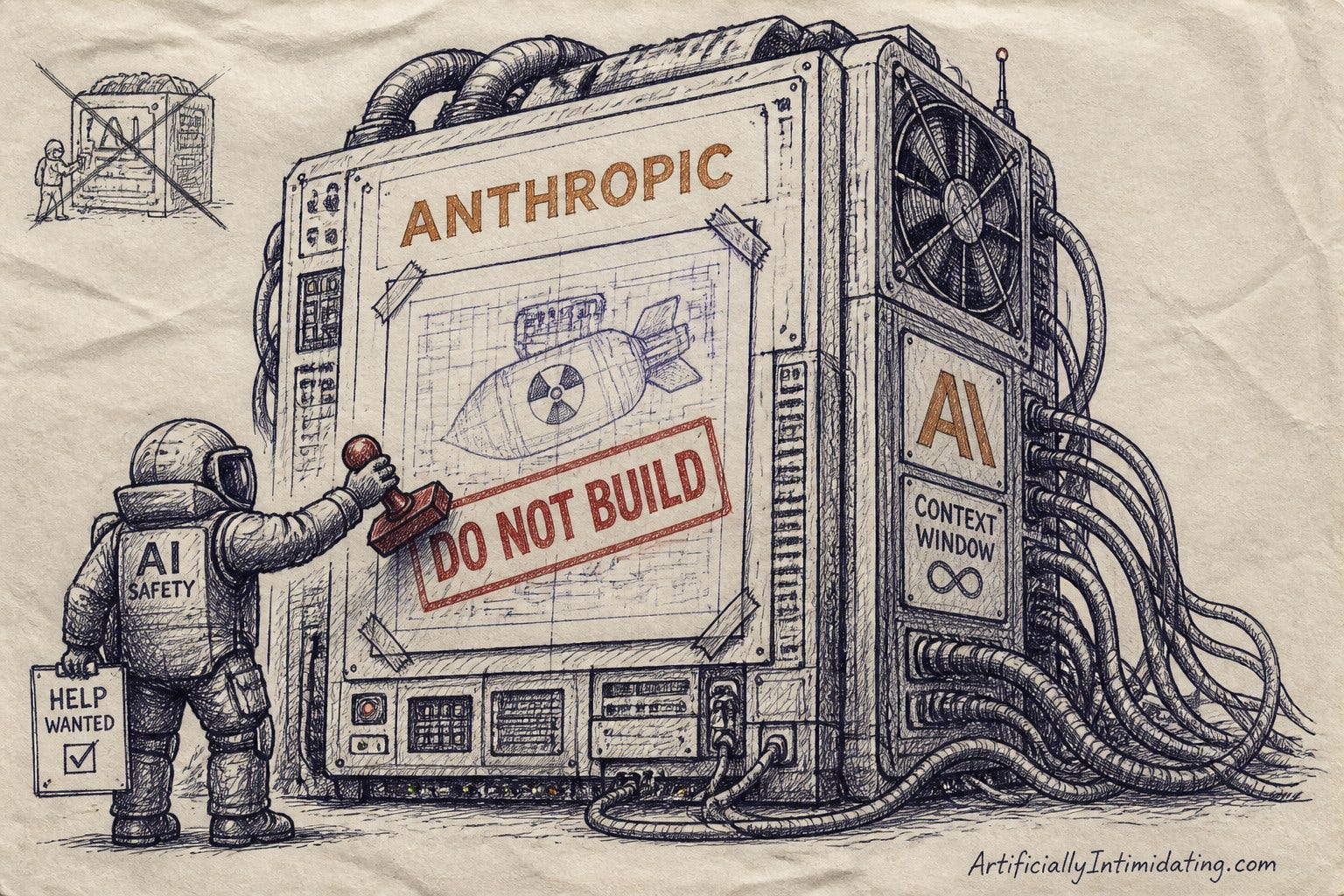
What happened: Anthropic is staffing up on specialists in nuclear, chemical, biological, and explosives harm — “enforcement analysts” whose job is to make sure its AI never helps anyone build a weapon. The listings pay in the mid-to-upper $200,000s and ask for real-world expertise plus the ability to think like an attacker.
Why it matters: This is what “AI safety” looks like once it stops being a slogan. Rather than trusting the model to refuse dangerous requests on its own, Anthropic is hiring humans who genuinely understand explosives and pathogens to probe where its models might slip.
What everyone’s saying: OpenAI has posted similar roles, so this reads as an industry norm forming, not a one-off. Anthropic’s argument: naming the exact harm — “Radiological & Nuclear,” chemical weapons — is the only way to recruit people who can actually stress-test for it before a model ships.
My read between the lines: There’s an admission buried in these job posts. If you have to hire a bioweapons expert to make sure your chatbot won’t coach someone through a nerve agent, you’ve conceded that, without that expert, it just might. The safety hire is reassuring and alarming in exactly equal measure.
📖 Further reading: The US Government Just Took Anthropic’s Best AI Model Offline — Here’s Why — what happens when catastrophic-risk worries stop being hypothetical.
Your AI Gets Dumber the More You Tell It
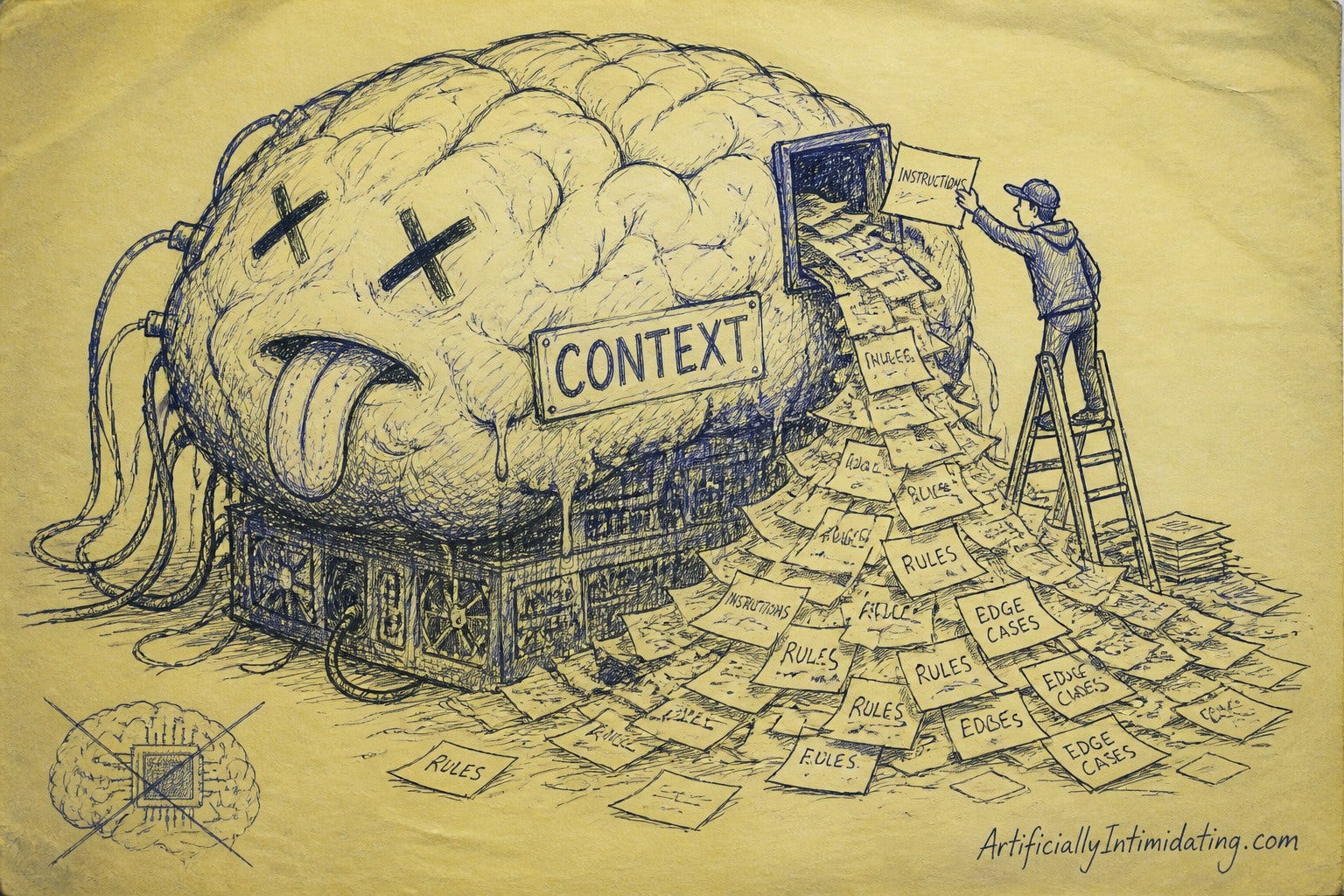
What happened: A growing body of research — anchored by a widely-cited study from the AI company Chroma — shows that cramming more text into a model’s context window can actually make it perform worse, a phenomenon now called “context rot.” Every major model tested got less reliable as the input grew, even on simple tasks.
Why it matters: The whole industry has been bragging about giant context windows — “feed it a million tokens!” This research says that’s a trap: past a point, extra instructions and documents don’t help, they actively degrade the answer. More context can mean a dumber assistant.
What everyone’s saying: Practitioners have rallied around a new discipline they’re calling “context engineering” — deciding exactly what to put in front of a model and, more importantly, what to leave out. The failure mode even has a name: “lost in the middle,” where models attend to the start and end of a prompt but zone out for everything between.
My read between the lines: This is the most on-brand story we could run, because this whole section is called Context Window. The uncomfortable lesson: the bloated system prompts and endless instruction files everyone piled on all year may be making their agents worse, not better. Sometimes the smartest thing you can tell an AI is less.
That’s your AI Brief for Thursday, July 16. Cheaper, meaner, more paranoid — same time tomorrow.
—Artificially Intimidating


