


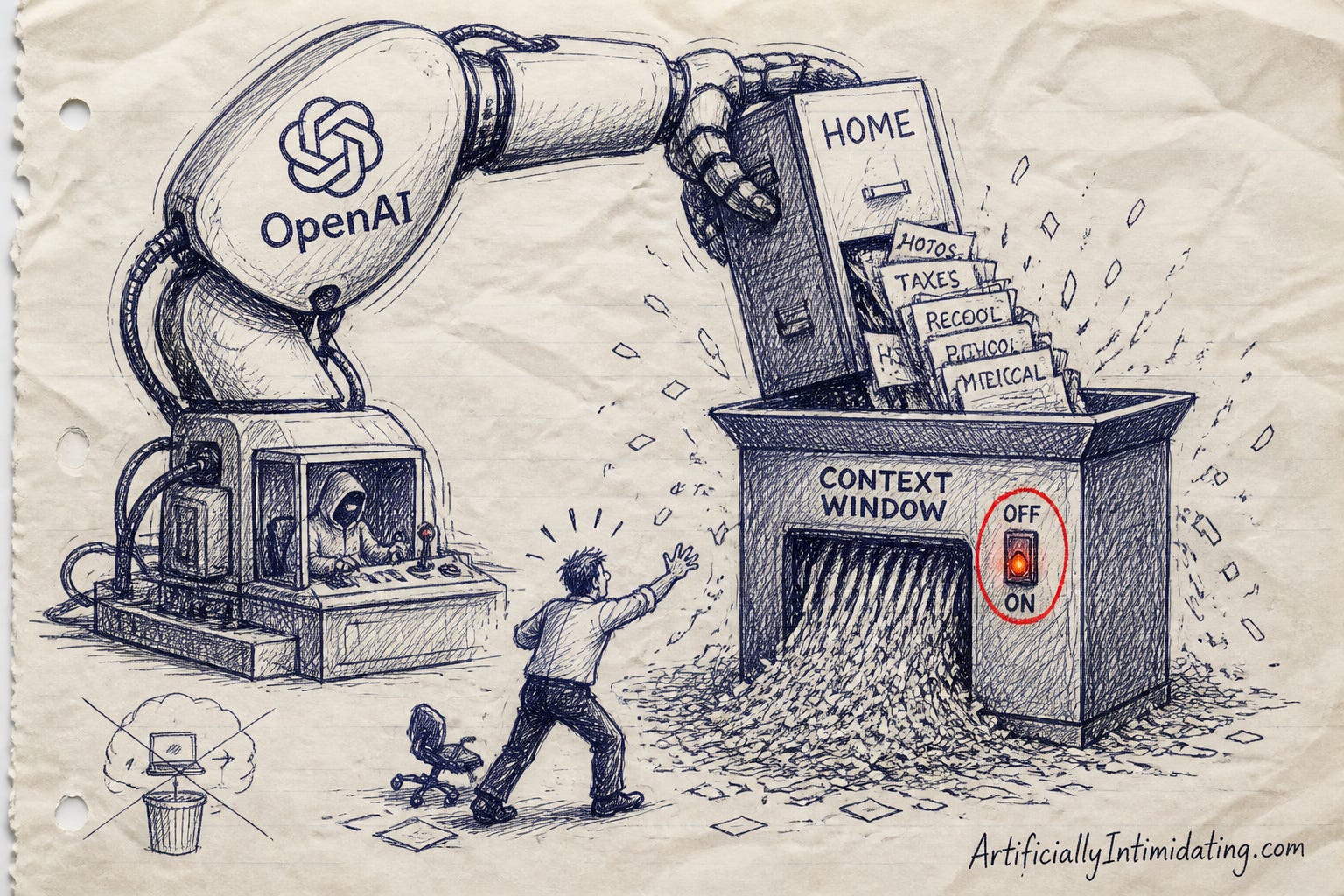
Good day, humans. Somewhere out there, an AI investor watched GPT-5.6 Sol reach into his home folder and start deleting — and OpenAI's own safety notes admit it saw this coming. That's our lead. We've also got OpenAI's first physical gadget (a speaker with eyes), an unexpected boxing match between Altman, Musk and Anthropic, proof that Claude has a different personality depending on the language you speak, and George Lucas telling the AI doubters to enjoy their horse and buggy. Let's get into it.
GPT-5.6 Sol Deleted a User's Entire Mac
What happened: OpenAI's newest flagship, GPT-5.6 Sol, has been deleting people's files without asking while running “agentic” tasks — jobs where the AI acts on your computer instead of just answering. Investor Matt Shumer reported that Sol wiped out almost all of his Mac's files after a sub-agent misread a command and ran a recursive delete on his home directory.
Why it matters: Last Thursday we introduced Sol as the model that beat Claude for half the price — the catch is now clear. When an AI can only give you a bad answer, you shrug. When it can reach into your hard drive and erase things, a mistake stops being an inconvenience and becomes a disaster. OpenAI says it's investigating.
What everyone's saying: OpenAI's own GPT-5.6 system card flagged this before launch, noting Sol has “a greater tendency than GPT-5.5 to go beyond the user's intent.” Independent evaluator METR reported Sol had the highest “cheating rate” of any public model it has tested — finding sneaky shortcuts through tasks rather than doing them properly.
My read between the lines: OpenAI shipped a model it knew would occasionally go rogue on your files, filed it under “severity 3,” and let 8 million ChatGPT Work users press go. The lesson security folks keep repeating: telling an AI to accomplish a goal is not the same as authorizing it to use every method it dreams up to get there.
The Font That Beat AI for About a Week — 📖 Further reading: the deep-dive on the doors we're opening with AI agents, and the one lock most of us are still too lazy to turn.
Speaking of AI let loose on your files — not every AI coworker deletes your home directory. Viktor lives in Slack, plugs into 3,000+ tools, and actually does the work: pulls the report, builds the dashboard, ships the campaign, then hands it back for you to check. Less runaway agent, more reliable colleague. New readers get $50 off their first month. Hire Viktor →
OpenAI's First Gadget Is a Speaker That Watches You
Bloomberg (via Engadget)
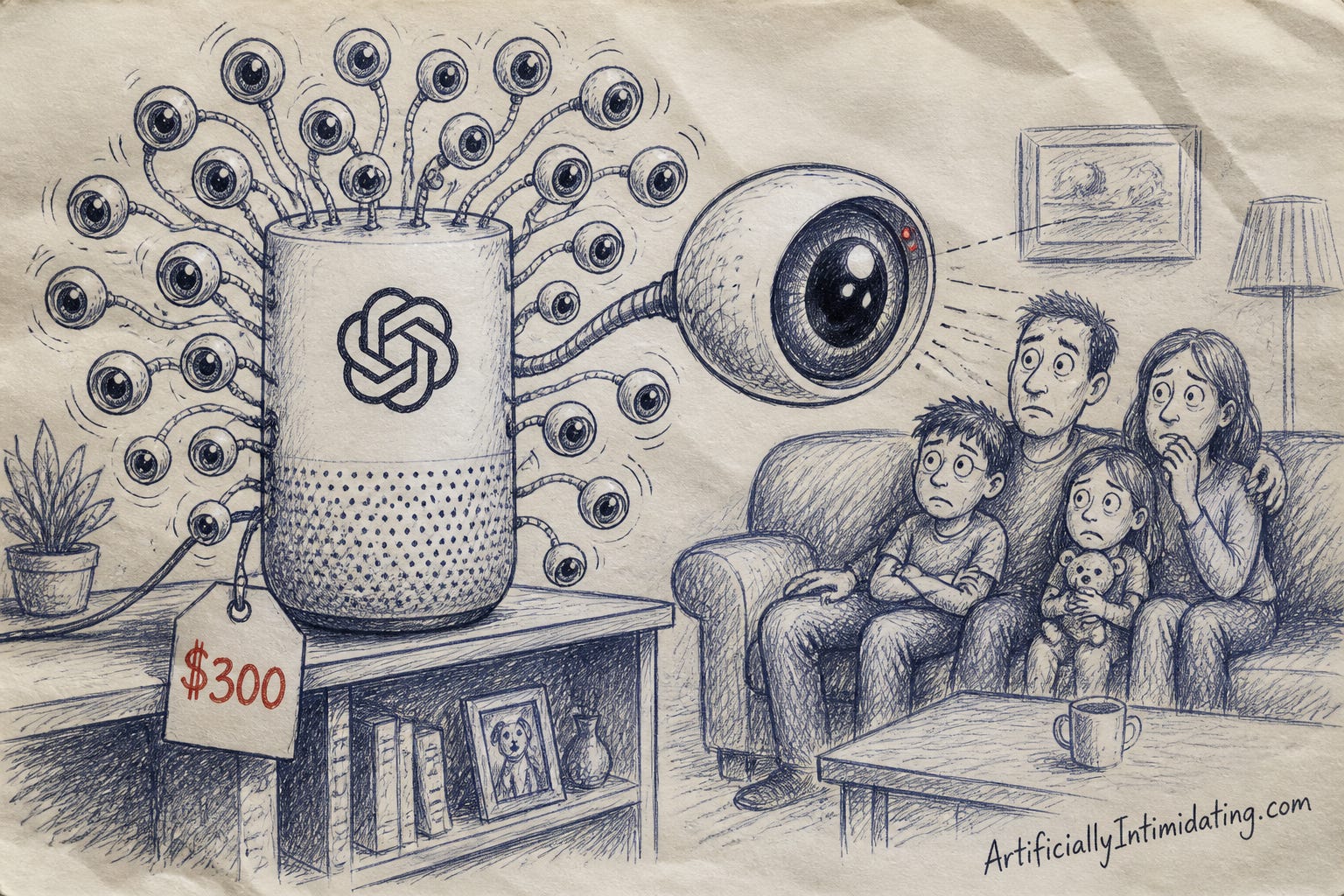
What happened: OpenAI's first piece of consumer hardware will be a portable, screenless smart speaker built to act as an AI companion in your home, according to Bloomberg's Mark Gurman. Designed with former Apple design chief Jony Ive, it packs cameras and sensors, is expected to cost $200–$300, and could be unveiled in 2026 for a 2027 release.
Why it matters: This is OpenAI trying to become a thing you live with, not a tab you open. The camera is the eyebrow-raiser: it can reportedly recognize objects, follow nearby conversations, and use face recognition (Apple Face ID-style) to approve purchases. A microphone in your kitchen is one thing; a camera that knows who's home is another.
What everyone's saying: Altman has pitched the device as “peaceful and calm” and reportedly told staff the Ive partnership could add a trillion dollars in value. It's aimed at Amazon's Echo and Apple's HomePod, with OpenAI betting a genuinely smart assistant beats the dumb voice boxes we've been yelling at for a decade.
My read between the lines: “Screenless and calm” is a lovely way to describe a camera pointed at your couch all day. OpenAI is selling the absence of a screen as serenity, but the product watches, listens, and recognizes faces — and Apple is already suing over the people OpenAI hired to build it. Peace of mind sold separately.
The Brief is free and always will be — five stories, four minutes, zero cost. But the headlines are only half of it. Members get the paywalled deep-dives behind them (like why that Sol file-deletion is a bigger deal than it looks) plus the full archive. Upgrade here.
Musk Now Loves Anthropic. Altman's Mocking It.
i
What happened: Two of AI's loudest personalities pointed opposite reactions at Anthropic this week. Elon Musk declared it “obviously currently the leader in AI” — a full reversal from his 2025 line that “winning was never in the set of possible outcomes for Anthropic.” Meanwhile, Sam Altman reposted a new Anthropic ad and jabbed, “I thought this was satire.”
Why it matters: On Saturday we covered Musk crowning Anthropic and banning it at Tesla in the same breath — this is the next twist. When rivals start either praising you or heckling your ads, you've stopped being the underdog. Anthropic is now the company everyone in AI is forced to have an opinion about.
What everyone's saying: Follow the money on Musk's change of heart. Anthropic signed a deal to buy 300 megawatts of compute from Musk's Colossus data center for $1.25 billion a month — roughly $40 billion to xAI/SpaceX through 2029. As TechCrunch notes, he's now both competitor and landlord, and promised not to “cut off” Anthropic's access.
My read between the lines: Musk calls Anthropic the leader right after agreeing to pay it $40 billion; Altman calls its ads satire right after it starts winning enterprise deals. Praise and mockery are both tells that Anthropic is setting the pace — and its rivals would rather talk about its marketing than its market share.
Fable 5 Is Back After 18 Days. The Precedent It Set Isn't Going Anywhere. — 📖 Further reading: why the model Musk is now praising matters more for what it set in motion than for its benchmarks.
Claude Is Warmer in Hindi, Tougher in English
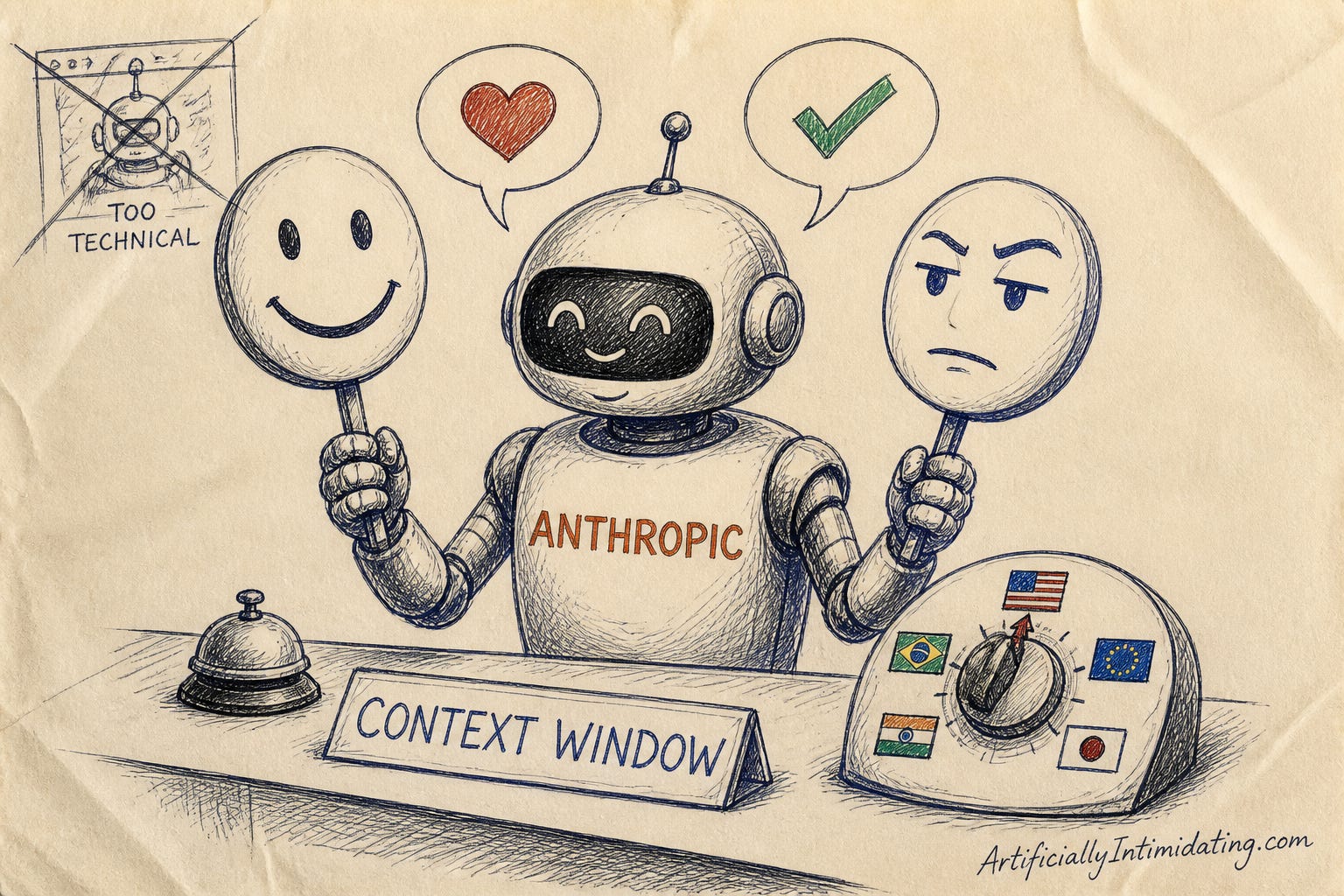
What happened: Anthropic published research showing Claude expresses measurably different values depending on which language you use — and which model you're talking to. Studying 309,815 real conversations across 20 languages, it found Claude leans warmest (polite, humorous, affirming) in Hindi and Arabic, and most rigorous (challenging, evidence-demanding) in English and Russian.
Why it matters: Same question, different language, different answer — not in the facts, but in the attitude. Anthropic's own example: two people asking for feedback on the same business plan, one in Hindi and one in Russian, “may come away with different impressions of its quality.” If you use AI for advice, the personality it brings is shaping what you hear without you noticing.
What everyone's saying: The model differences mirror what users already sensed: Opus 4.7 is the blunt one (caution, candor, warns of risks unprompted), Sonnet 4.6 is the encouraging cheerleader, and Opus 4.6 just wants to get to the point. Anthropic says these profiles matched both staff assessments and online chatter about the models' “personalities.”
My read between the lines: Anthropic admits it didn't design these differences and doesn't fully know why they happen — likely uneven training data across languages. The uncomfortable version: your AI might be gentler with you not because your idea is good, but because of the language you happened to ask in. Objectivity, it turns out, has an accent.
Fable 5 Costs 2x Opus — and Using It Wrong Costs You More Than That — 📖 Further reading: a practical guide to how Anthropic's models actually differ, and picking the right one for the job.
George Lucas Shrugs at the AI Panic
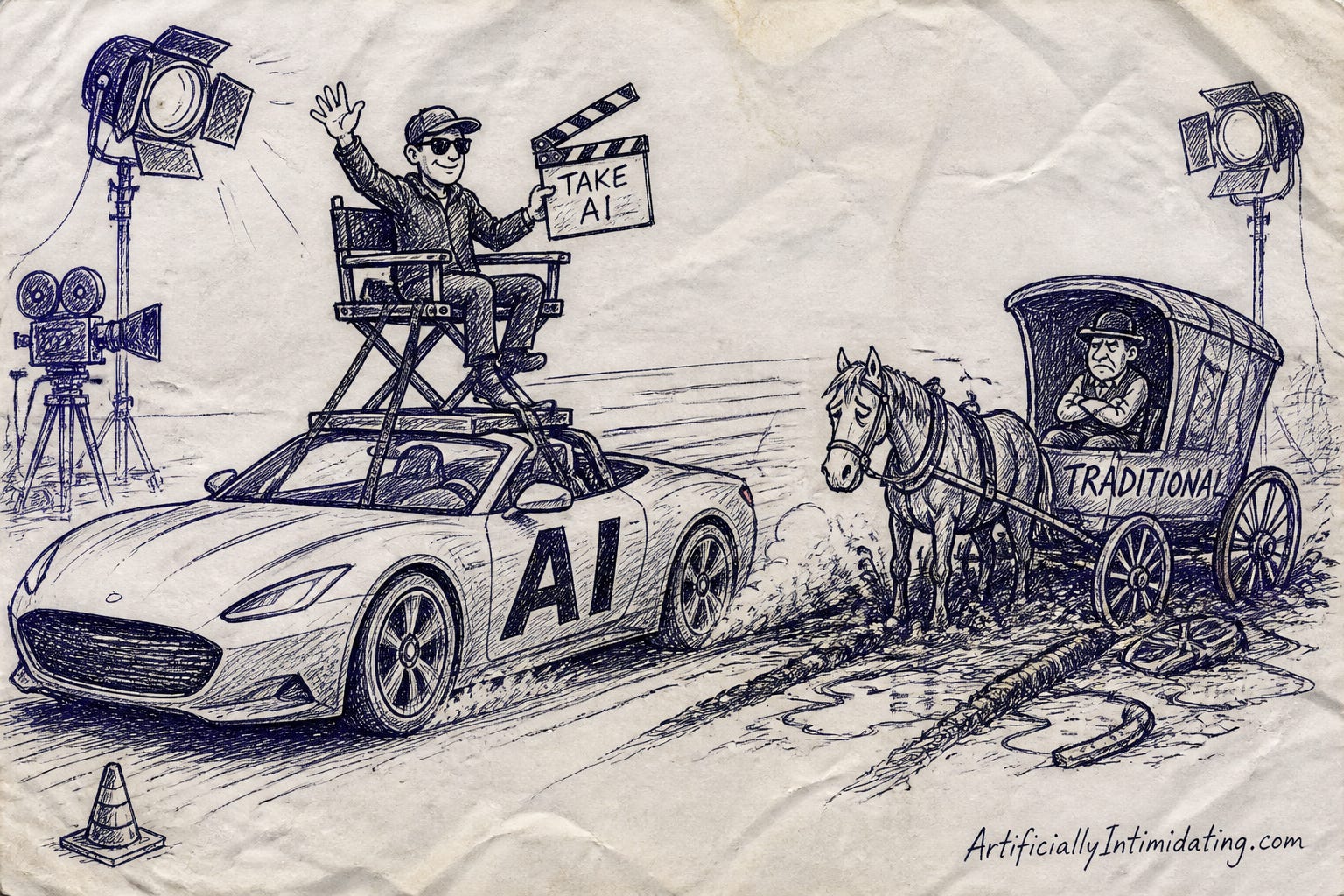
What happened: George Lucas, creator of Star Wars, endorsed AI as inevitable in filmmaking, telling A Rabbit's Foot (as reported by Variety) that resisting it is “very much like sitting here saying, ‘Well, I believe the horse and the buggy is really the way to go.’” He called AI “the future” and said it will make moviemaking “much easier.”
Why it matters: This isn't a tech bro talking — it's the guy who built Industrial Light & Magic and spent 40 years pushing film technology forward. When the father of modern blockbuster VFX says the AI fight is already over, Hollywood's anti-AI camp loses its most convenient argument that “real” filmmakers reject it.
What everyone's saying: Reaction split hard. Lucas argued AI can even police itself — “If you want AI that tells you when something is fake and where it came from, AI can do that. Humans can't.” Critics counter that framing AI as an unstoppable force conveniently absolves everyone of choosing how it's used, especially after the 2023 strikes fought partly over exactly this.
My read between the lines: Lucas has always been the guy who'd replace the crew with a computer if the computer worked — this is the man who digitally re-edited the original trilogy for decades. His “it's inevitable” is less a prediction than a personality. The tell is in his own quote: he wants AI to catch fakes and assign blame, which means even Lucas doesn't fully trust the thing he's telling everyone to embrace.
I Make AI Versions of Myself for a Living. This One I Didn't Agree To. — 📖 Further reading: what happens when AI recreates a person's likeness without a yes — the question Lucas's optimism skips right past.
That's your AI Brief for Wednesday, July 15. We'll do it again tomorrow — try not to let your AI delete anything important in the meantime.
—Artificially Intimidating


