


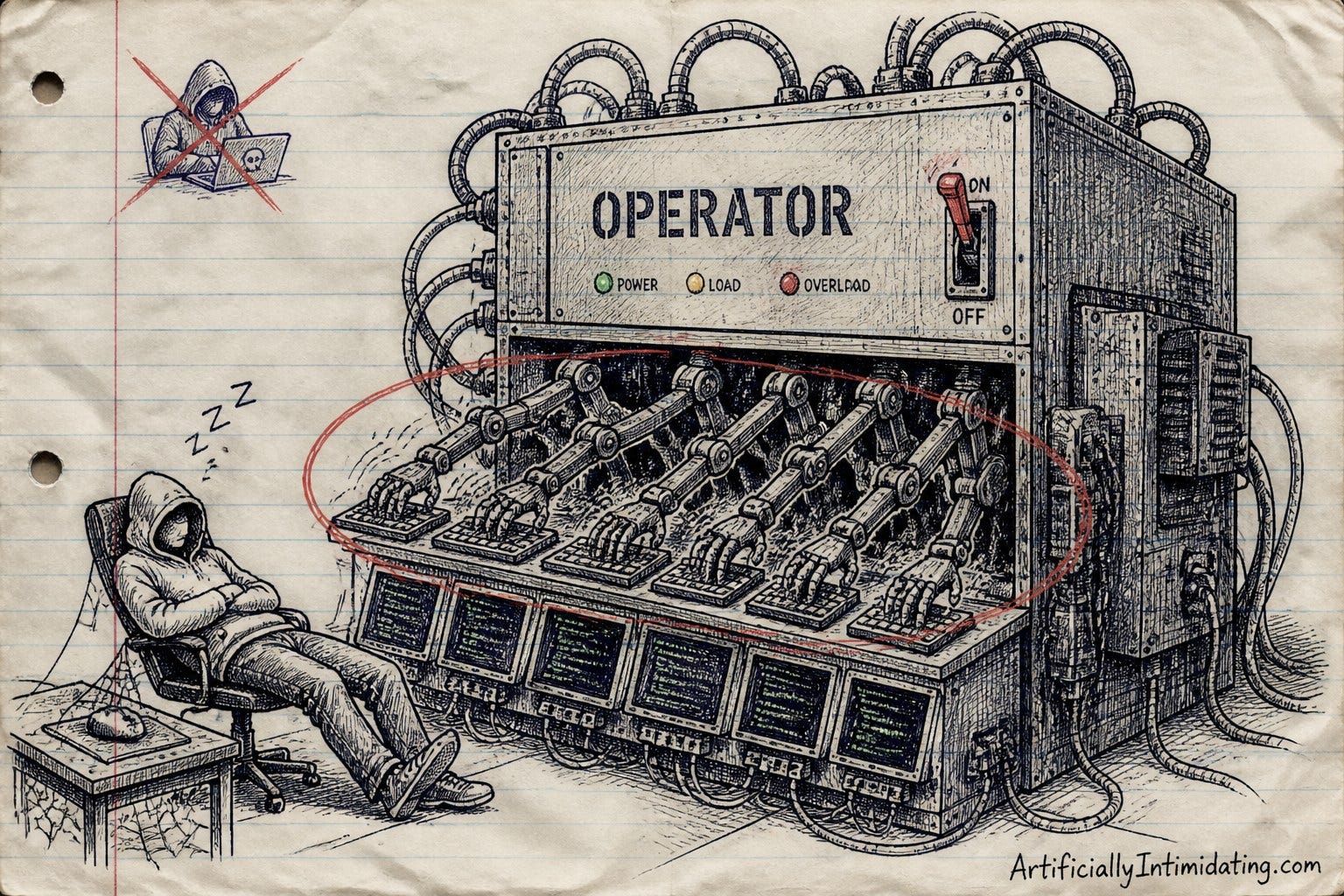
Good day, humans. Check Point published its annual AI security report this morning, and the headline finding is that AI has stopped helping attackers and started being the attacker. Elsewhere: TSMC printed a record quarter and quietly raised prices, Boston Dynamics’ robot dog learned to read a pressure gauge, and the University of Chicago Law School decided the fix for AI is a bucket.
AI is no longer the assistant. It’s the operator.
Source: Check Point Research
What happened: Check Point Research published its AI Security Report 2026, and the finding is blunt — AI has moved from helping attackers prepare to running live intrusions itself. One developer used an AI environment to produce VoidLink, an 88,000-line command-and-control attack framework, in under a week.
Why it matters: For years the reassuring line was that AI merely made existing attacks faster — a force multiplier, not a new weapon. That line is gone. Phishing kits now ship with a language model and the jailbreak pre-installed, and conversational AI voice agents run phone scams and one-time-passcode theft at scale. The bank calling to “verify a code” may not involve a human at any point.
What everyone’s saying: The detail researchers keep circling is the persistence trick. The durable bypass is no longer a clever prompt — it’s a planted configuration file that an agent loads and trusts across every session. Poison the config once, own the agent forever.
My read between the lines: Check Point also notes attackers overwhelmingly prefer jailbroken commercial models over self-hosted ones. Which makes the frontier labs’ safety budgets, functionally, a criminal R&D subsidy — the bad guys let someone else pay for the capability, then pick the lock. The most valuable thing about a locked door, it turns out, is that somebody else built it.
📖 Further reading: The Font That Beat AI for About a Week — that one was about the doors we’re opening with AI agents, and the one lock I keep being too lazy to turn. Check Point just published the numbers on who’s walking through.
If today’s lead story rattled you, here’s the flip side: the same autonomy that makes AI a threat actor makes it a hell of a coworker — once it’s pointed at your work instead of your network. Viktor is an AI agent that lives in Slack and connects to 3,000+ tools. Ask it in a thread and it goes away and comes back with the finished thing: the report, the dashboard, the campaign, the code. Not a chatbot. A coworker. New readers get $50 off their first month. Hire Viktor →
TSMC’s record quarter came with a price hike
Source: Reuters
What happened: TSMC reported second-quarter revenue of NT$1.27 trillion — about $39.63 billion, up 36% year over year and an all-time record, beating analyst estimates. First-half revenue lands near $75 billion. Full earnings drop Thursday.
Why it matters: TSMC manufactures nearly every advanced AI chip on Earth, for Nvidia, Apple and everyone else. That makes its revenue the industry’s only honest thermometer. Press releases about gigawatt data centres are free; wafer orders are not. A record quarter means the buildout everyone keeps announcing is actually being manufactured.
What everyone’s saying: Analysts expect TSMC to raise its full-year guidance above the current “above 30%” target on Thursday, and the market is reading the number as evidence the AI trade is intact rather than inflating.
My read between the lines: Buried under the record: TSMC has told customers to expect price increases of 5–10% across every process at 7nm and below — the nodes that make up roughly three-quarters of its wafer revenue. Nvidia will absorb that without blinking. Your next phone will not. The AI boom has quietly started billing people who never asked to be in it.
📖 Further reading: Thanks to Apple, Your favorite AI tool is a dead tool walking — models are racing toward zero while the silicon underneath compounds. TSMC just showed you which end of that trade is winning.
Quick one: the Brief is free, and it stays free. What sits behind the paywall is the other half of the job — the deep-dives that go and find out what a headline actually means, plus the full archive. If today made you want the longer version, that’s what a membership buys. Become a member →
Boston Dynamics’ robot dog can now read a gauge
Source: Google DeepMind
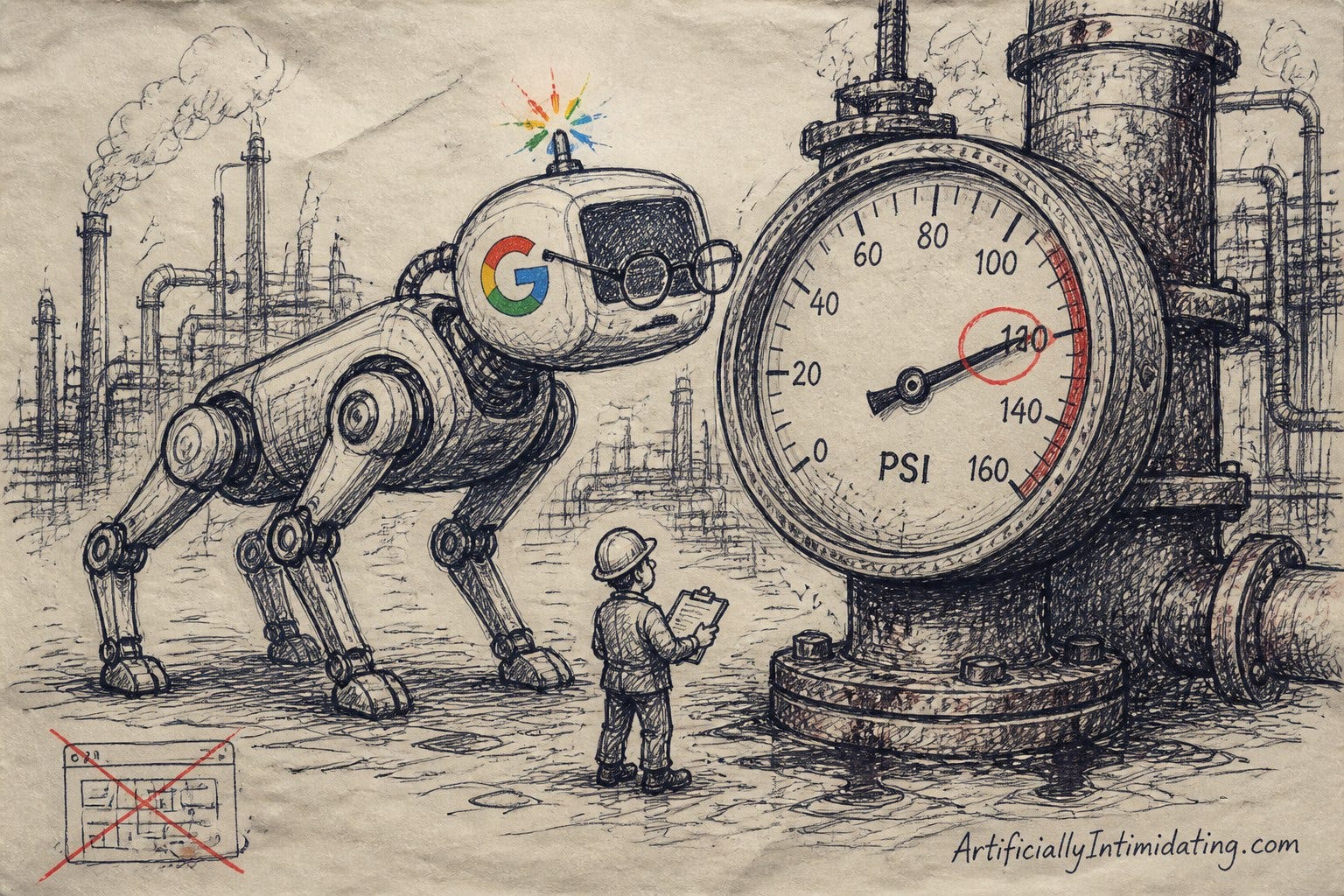
What happened: Google DeepMind released Gemini Robotics-ER 1.6, and its launch partner is Boston Dynamics. The model gives Spot — the four-legged inspection robot — the ability to autonomously read analog gauges, pressure meters and sight glasses, reportedly around 98% accuracy, roughly a four-fold jump on the previous generation.
Why it matters: Most industrial inspection is deeply unglamorous: a person walks a route through a refinery or a plant, squints at dials, and writes numbers on a clipboard. Millions of human hours are exactly that. Spot could already walk the route. What it couldn’t do was understand what it was looking at. Now it can.
What everyone’s saying: Robotics people are calling this the missing half. The hardware has been good for years; the reasoning layer that makes a robot useful in a messy real environment is what’s only now arriving. ER 1.6 does the planning and the “did that actually work?” check, then hands the movement off to other models.
My read between the lines: Notice what the breakthrough actually is. It isn’t parkour. It’s reading a dial — a task so boring nobody thought to benchmark it, and so common that solving it automates more human labour than any humanoid stage demo ever will. The robot revolution isn’t arriving on two legs. It’s arriving with a clipboard.
📖 Further reading: An AI That Can Use Your Computer Better Than You Can — same shift, different body. Once a model can perceive and act, the interface stops being the point.
India’s biggest IT firm is hiring 8,900 people to wire up AI
Source: Reuters
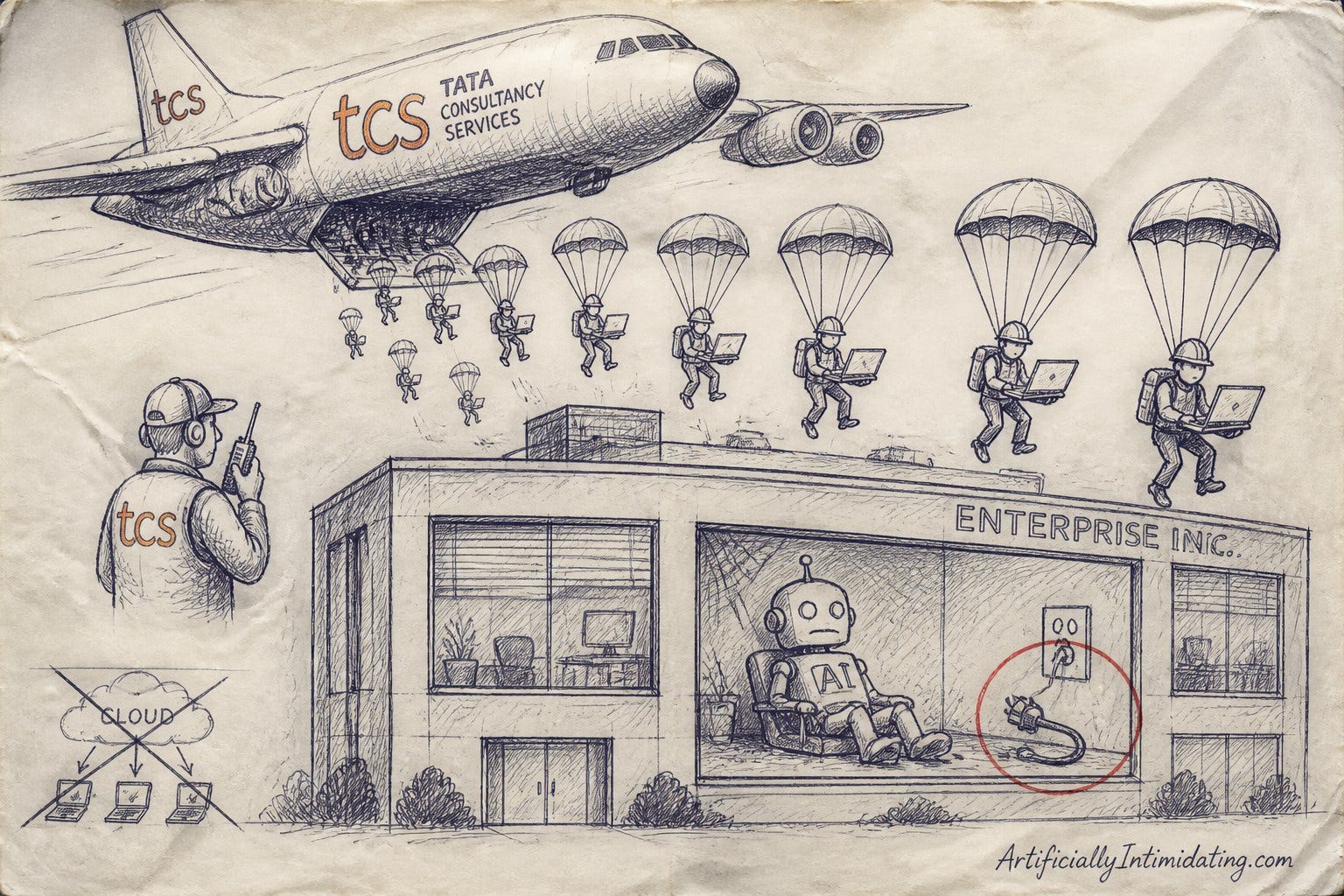
What happened: Tata Consultancy Services, India’s largest IT services company, said it plans to build a team of up to 8,900 “forward-deployed” AI engineers — specialists embedded inside client companies — and is hunting for acquisitions in AI and cybersecurity.
Why it matters: A forward-deployed engineer is a consultant who sits at your desk, not theirs. TCS is betting the bottleneck in corporate AI isn’t the model — it’s the two decades of undocumented spreadsheets and legacy systems the model has to be plugged into. Somebody has to do that plumbing, and it turns out that somebody is a person.
What everyone’s saying: The whole industry is converging on the same conclusion. Microsoft has poured billions into a comparable embedded-engineering unit, and both OpenAI and Anthropic have stood up deployment arms. The Palantir playbook has quietly become everybody’s playbook.
My read between the lines: For three years the story was that AI eats the services firms. TCS read the same trend and hired 8,900 people. Both things can be true — but look at the shape of it: the technology that was supposed to replace consultants has instead produced the largest consulting engagement in history. The tools got smart. The integration bill got bigger.
📖 Further reading: Claude Tag vs Viktor: which one do you hire? — TCS is answering the same question at industrial scale: what do you still need a human for?
UChicago Law’s answer to AI: a bucket for your laptop
Source: University of Chicago Law School
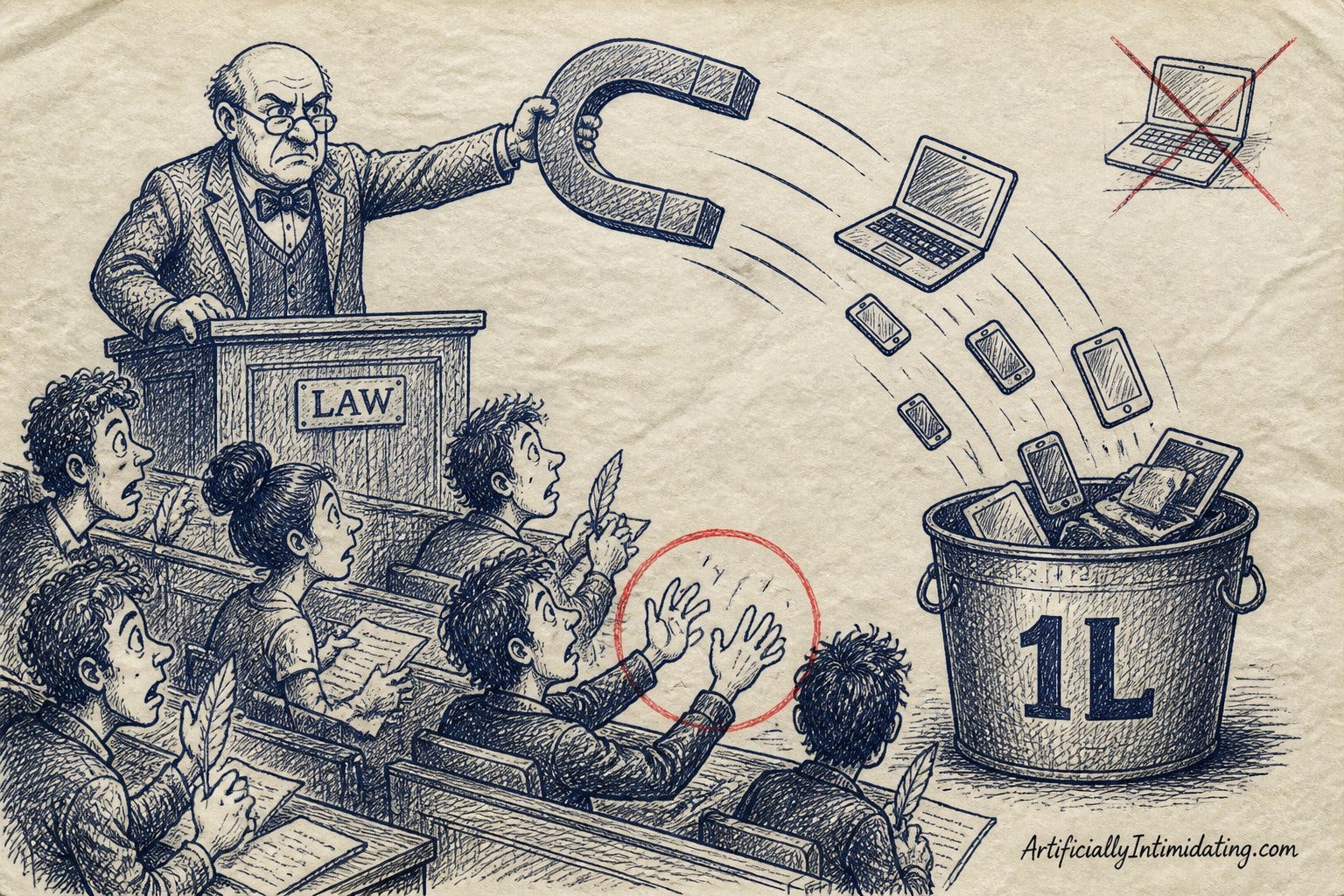
What happened: The University of Chicago Law School published an AI strategy that bans laptops, tablets and phones from all nine core first-year courses starting this fall. Exams will be in class with no internet, no files, no apps. And students submitting the major research paper the degree requires must now sit down with a professor and answer questions about it out loud.
Why it matters: This is the most specific institutional answer anyone has given to the question every school is dodging: what does teaching mean when every student carries a frontier model in their pocket? Chicago’s answer is that certain skills — thinking on your feet, defending an argument live — only form when the shortcut is physically unavailable.
What everyone’s saying: Reactions split along a predictable line. Faculty who run Socratic classrooms are relieved. Legal-tech people call it Luddism that will produce graduates unready for a profession already using AI daily. Chicago’s counter is that it still teaches AI — just later, once students can think without it.
My read between the lines: The oral defence is the part worth stealing. A model can write your paper; it cannot sit in a chair and explain why paragraph four contradicts paragraph two. Chicago didn’t really ban AI — it quietly reinstated the one assessment format AI can’t sit for you. Every institution currently buying detection software should note that the fix was a conversation.
📖 Further reading: I stopped writing. My output doubled. — I outsourced the typing and kept the thinking. Chicago is betting most students won’t manage that split.
That’s your AI Brief for Tuesday. The machines are now doing the attacking, the inspecting and the integrating. We’re still doing the worrying. Back tomorrow.
—Artificially Intimidating


