


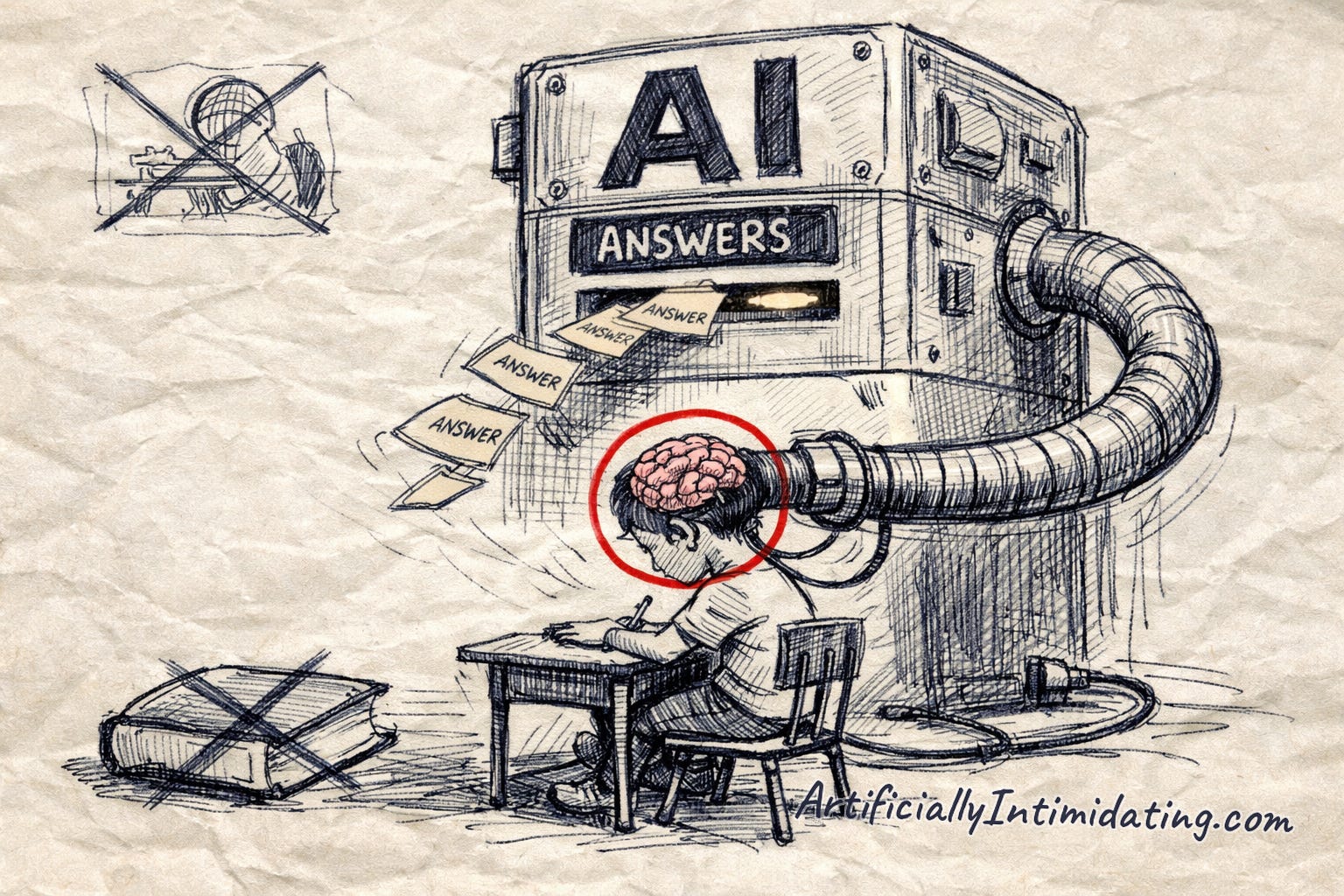
Good day, humans. Paul Krugman thinks the cleverest thing AI ever pulled off was making the rest of us a little dumber — and he isn’t entirely joking. Meanwhile Satya Nadella wants every company on earth to grow its own model, a developer handed coding agents a memory and a heartbeat, Austria is trying to poach Anthropic out of California, and China’s free models just matched Anthropic’s best at finding security holes. Five stories, one Context Window.
Krugman: AI Might Be Eating Your Brain
What happened: Nobel-winning economist Paul Krugman published a piece arguing the biggest cost of generative AI won’t be jobs or productivity — it’ll be the slow erosion of our ability to think for ourselves, with the worst damage landing on basic learning.
Why it matters: It names something you can feel. Every time ChatGPT or Claude does the thinking, the mental muscle that used to do it gets a little weaker — and schools are so deep in a cheating crisis that handwritten blue-book exams are making a comeback.
What everyone’s saying: He’s no lone crank: a Brookings report and a RAND survey both found students who lean on AI show measurable drops in retention and critical thinking — and most of those students already suspect it’s hurting them.
My read between the lines: There’s a delicious irony in a man typing his warning into a Substack that an AI will cheerfully summarize for you. The sharper point: the productivity debate misses where the real bill lands — a generation from now, when nobody remembers how to do the thing the machine quietly took over.
📖 Further reading: AI Is a Trust Problem, Not a Tech Problem — Krugman’s cognitive worry is the flip side of the trust collapse we mapped here.
Krugman’s worried AI is making us outsource our thinking. Fair — but there’s a difference between offloading your judgment and offloading your busywork. Viktor is an AI agent that lives in your Slack and plugs into 3,000+ tools, then actually does the work: builds the dashboard, drafts the campaign, ships the report, writes the code. Not a chatbot you babysit — a coworker who delivers. New readers get $50 off their first month. Hire Viktor →
Nadella: Build Your Own AI or Die
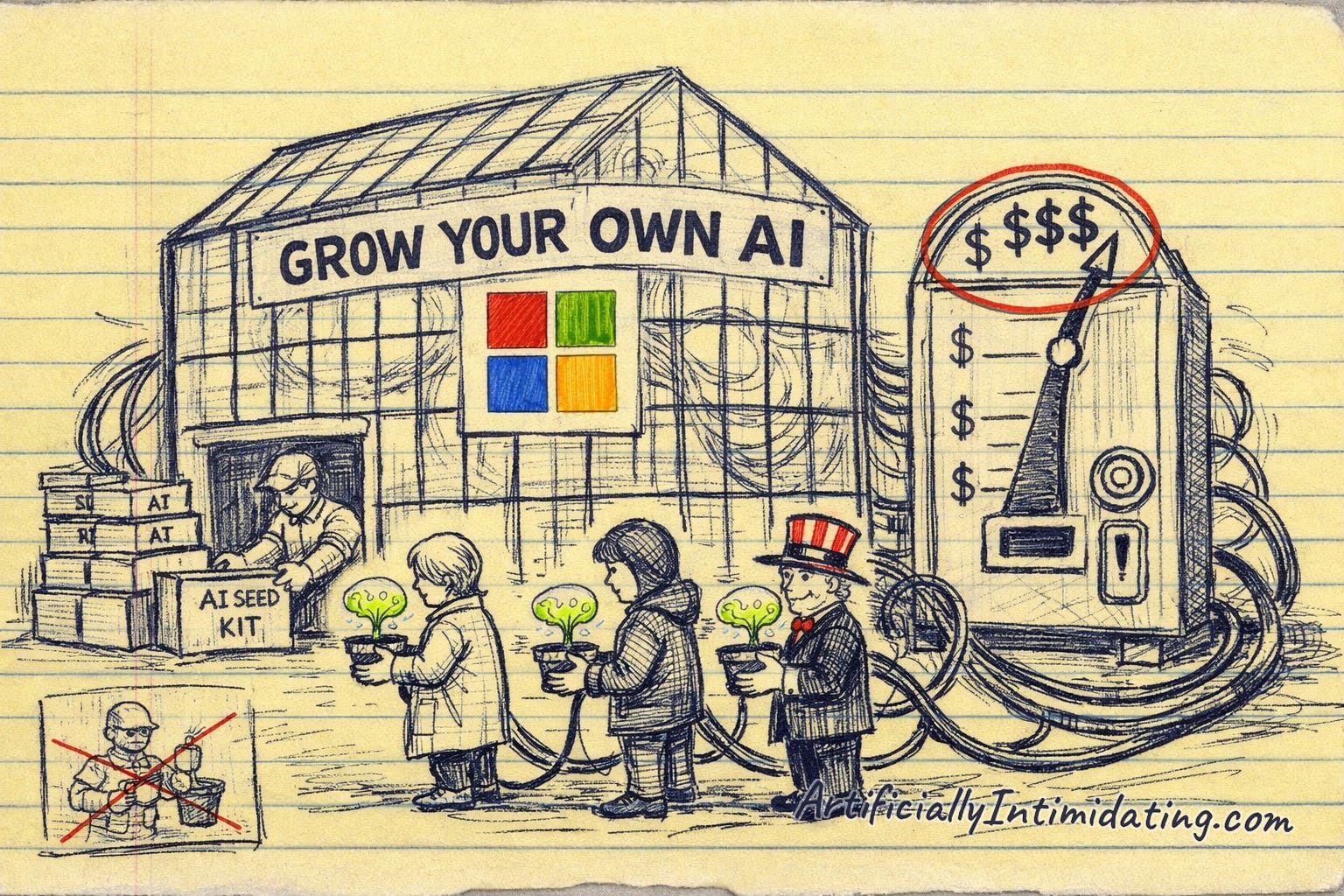
What happened: Microsoft CEO Satya Nadella said there should be “as many models in the world as firms in the world,” arguing that any company outsourcing its learning to a frontier lab is handing away the one thing that makes it a company.
Why it matters: For years the pitch was “just plug into GPT or Claude.” Now Nadella — who sells exactly that — says the real moat is your own data and your own “learning loop,” baked into a model only you own.
What everyone’s saying: It reads as a push toward a multi-model world where your company’s context sits on top of interchangeable foundation models you can swap at will — the same stack Microsoft showed off at Build 2026.
My read between the lines: Follow the incentives. Nadella runs Azure, which would love to rent you the GPUs, eval tools, and pipelines to build that bespoke model. “Own your AI” sounds like independence; it’s also the most expensive cloud bill you’ll ever sign.
📖 Further reading: Claude Tag vs Viktor: which one do you hire? — If every firm needs its own AI, the question is build or hire — we test-drove both.
Quick housekeeping: this Brief is free, and it always will be. But the deep-dives behind these headlines — the export-ban explainer, the AI-teammate teardowns — live behind the paywall, alongside the full archive. Founding-member pricing is 20% off your first year, and it ends tomorrow, June 30. Lock it in →
Give Your Coding Agent a Memory
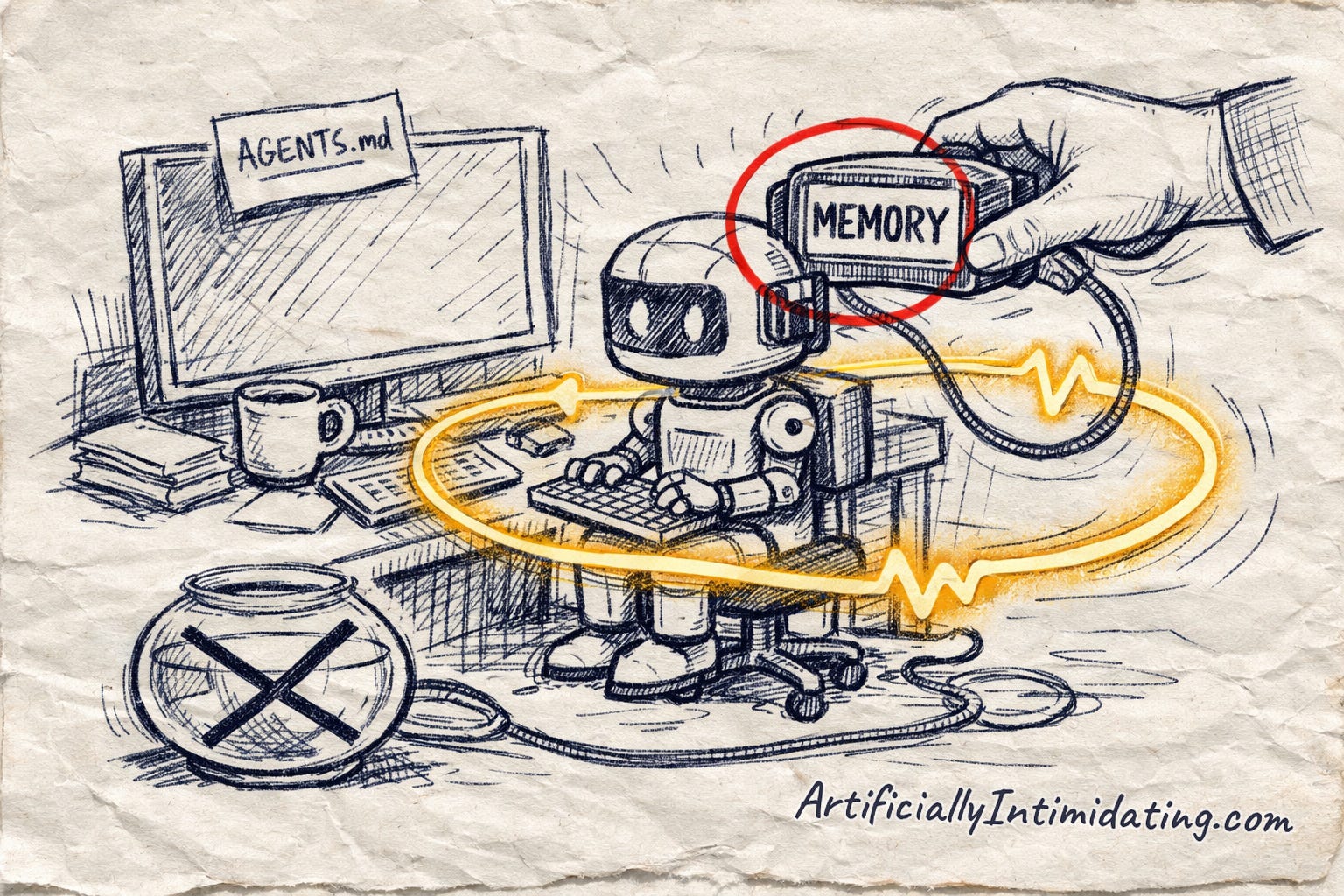
What happened: Developer Aron Prins shared a viral setup he calls the “AGENTS.md Protocol” — three skills, two files, one prompt — that gives a coding agent like Claude Code or Codex persistent memory plus a loop, so it keeps working until the job actually ships, not until it feels done.
Why it matters: Anyone who’s used an AI coding assistant knows the pain: every new session it forgets your stack, your rules, your conventions, and you re-explain everything. This wires up a memory folder and an “AGENTS.md, read this first” file so the agent resumes where it left off. Earlier this week we flagged “agentjacking” hitting coding agents — this is the friendlier flip side of handing agents more autonomy.
What everyone’s saying: It stacks two ideas already doing the rounds — the “Ralph Wiggum” loop technique and Claude Code creator Boris Cherny’s line that he doesn’t prompt Claude anymore, he writes loops that prompt Claude.
My read between the lines: It’s a quiet admission that the magic isn’t the model — it’s the scaffolding around it. We’re speed-running the realization that an AI with goldfish memory and no stopping condition is just a very expensive intern, and the real product is the org chart you build for it.
📖 Further reading: I ignored Hermes for two months. Here’s what I actually found. — Memory and loops are what separate a usable agent from a demo — here’s one put through real work.
Austria Wants to Poach Anthropic From California
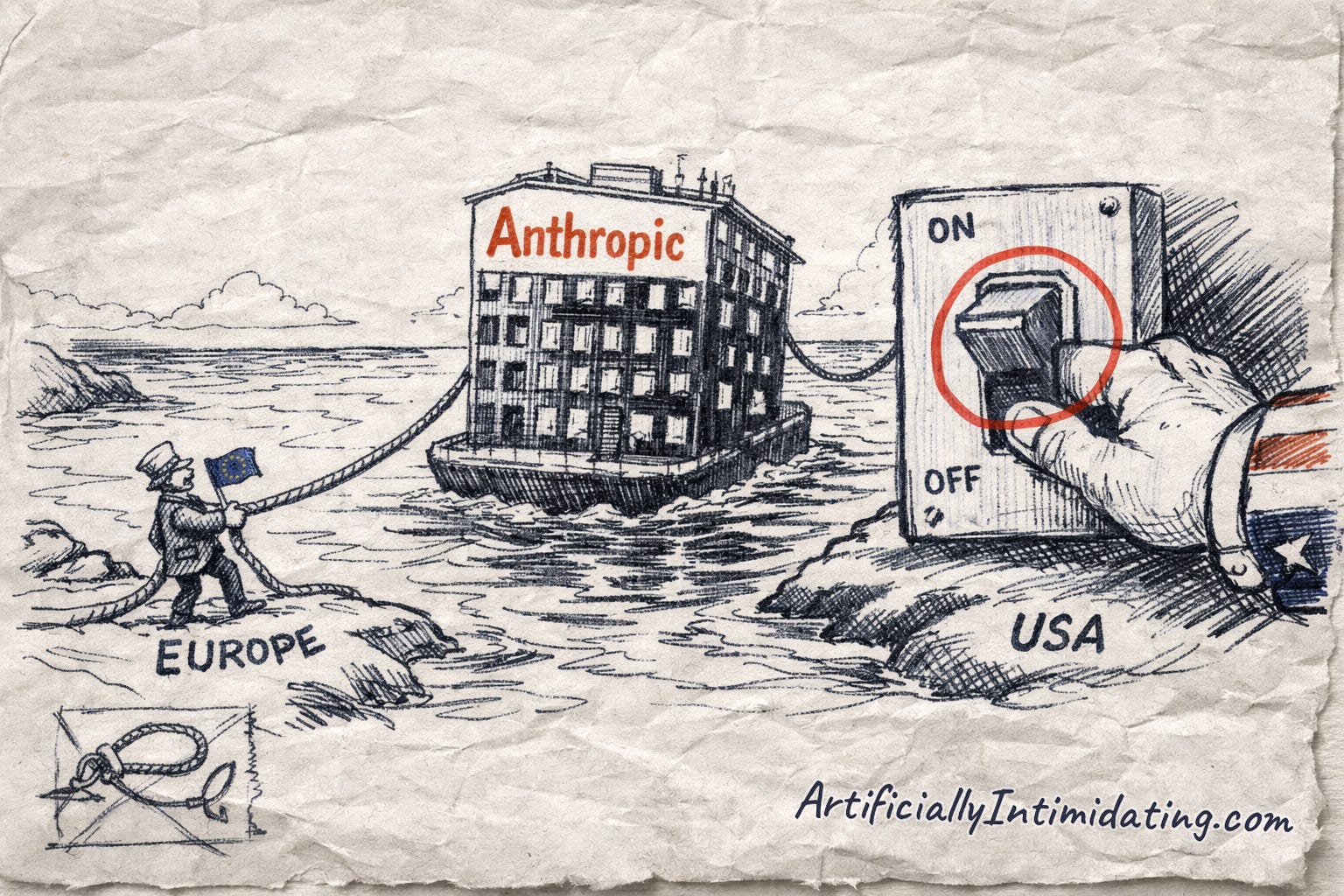
What happened: Two days ago we wrote that Washington Found the Off Switch for Anthropic. Europe’s counter just arrived: Austria’s digital secretary Alexander Pröll wrote to the European Commission urging the EU to lure Anthropic — possibly its entire headquarters — from California to Europe.
Why it matters: This is AI sovereignty made literal. After a US export-control order abruptly cut 450 million Europeans off from Anthropic’s top models overnight, the EU’s instinct is to move the company itself onto European soil.
What everyone’s saying: Pröll pitched Anthropic’s safety-first ethos as “a deeply European attitude,” and the letter follows wider EU pushback, including the Commission raising the cutoff directly with the White House.
My read between the lines: It’s flattering and faintly absurd at once — you can’t poach a company with a love letter while its servers, talent, and investors all sit in San Francisco. But the signal is real: frontier AI is now a strategic asset to be domiciled, the way nations once fought over refineries and ports.
📖 Further reading: The US Government Just Took Anthropic’s Best AI Model Offline — Here’s Why — Austria’s rescue mission only makes sense once you see the ban that triggered it.
China’s Free AI Caught Up on Hacking
Wall Street Journal (via Graphistry)
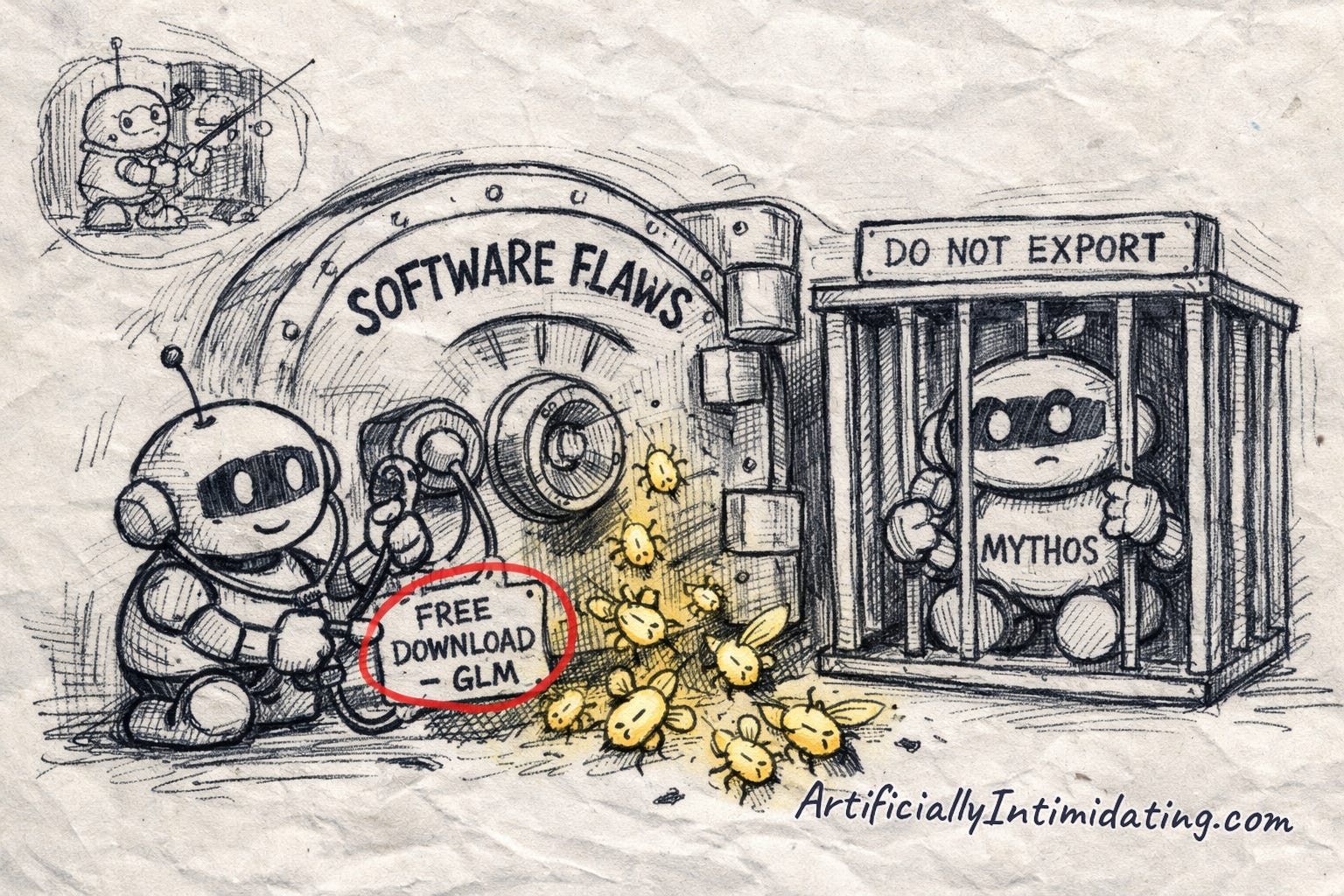
What happened: Yesterday GLM-5.2 was the cheap option; today it’s the security story. A Wall Street Journal report found Chinese AI now matches Anthropic’s Mythos at finding software vulnerabilities — Zhipu’s open-weight GLM-5.2 tied top US models on a key security benchmark at roughly half the cost, while Beijing’s 360 Security unveiled a tool its founder openly calls “China’s version of Mythos.”
Why it matters: Washington’s whole plan was to keep frontier AI — especially offensive-security muscle — locked up at home. If a freely downloadable Chinese model hunts security holes as well as the restricted American one, the lock has no door.
What everyone’s saying: Researchers are split between alarm — an unrestricted, MIT-licensed model anyone can fine-tune for vulnerability hunting — and a shrug, since 360’s own founder admits a 20–30% gap to the best US systems remains.
My read between the lines: The export ban was supposed to be a moat; it’s looking more like a starting gun. Last week we covered Anthropic accusing Alibaba of copying Claude’s brain — the unsettling sequel is that the copies are now matching the original on the one capability everyone was most afraid to share.
📖 Further reading: Thanks to Apple, Your favorite AI tool is a dead tool walking — When frontier capability becomes a free download, every premium model inherits the commodity problem we called.
—Artificially Intimidating


