
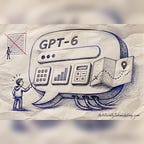


Good day . GPT-6 is live in ChatGPT with a more visual interface, in the same week one of OpenAI’s safety leaders explained why he quit. Anthropic shipped a much cheaper Haiku, Grok is about to ask Claude for help, and one developer used Claude to clone seven Adobe apps. Let’s get into it.
ChatGPT Gets GPT-6 and Interactive Visuals TechCrunch
What happened: OpenAI began rolling out GPT-6 in ChatGPT on Wednesday alongside Intelligent UI, a feature that lets replies include tappable buttons, task-specific calculators, interactive charts and editable graphs. Pro, Plus, Business and Enterprise users get it first. Free and Go users get it Thursday, October 8.
Why it matters: Until now ChatGPT has mostly answered in paragraphs. OpenAI product manager Aarush Selvan said “ChatGPT has predominantly been a text-based interface,” and demoed it explaining how an airplane wing generates lift with diagrams, plus a personal savings calculator. If you’ve ever asked for a recipe or a hiking route and got a wall of text back, this is aimed at you.
What everyone’s saying: Wired’s headline calls the new ChatGPT “more show than tell.” On Hacker News, an early commenter asked whether this is OpenAI catching up with Anthropic’s Artifacts, pointing to OpenAI’s line that GPT-6 was trained to compose responses from text, visuals and interactive elements rather than relying on a harness bolted on afterward.
My read between the lines: The telling detail is that users can ask for fewer visuals. When a company ships a volume knob for its headline feature, it’s guessing some of us will want the paragraph back. Still, the bet is clear: the chat window is becoming a place where you do things, not just read answers.
📖 Further reading: OpenAI Made Its New Agent Adorable. That's the Part That Worries Me. — my paid look at how OpenAI’s friendlier, more visual interfaces change what we hand over to a chatbot.
A chatbot that answers in widgets is still a chatbot. Viktor is the other kind: it lives in your team’s Slack, connects to 3,000+ of your tools, and does the work you can describe, like the weekly report, the dashboard, the code or the campaign. Not a chatbot. A coworker. New readers get $50 off their first month. Hire Viktor →
Ex-OpenAI Safety Leader Calls the Industry Unsafe The New York Times
What happened: David Robinson, who led safety transparency efforts at OpenAI, gave his first interview since quitting, telling Ezra Klein on Wednesday: “we keep publishing these warnings, but ultimately, we’re still training and deploying these dangerous models that we’re warning about.” He left last week in an essay that TechCrunch covered, saying the company’s “culture is broken.”
Why it matters: Robinson isn’t the usual doomer. Klein describes him as a Rhodes scholar and Yale-trained lawyer who advised the Biden White House, and who thought the extinction worries were “kind of nuts” when he joined. Three years later he says the problem isn’t only OpenAI: he calls the whole industry’s culture unsafe.
What everyone’s saying: Business Insider notes hundreds of OpenAI employees signed a July open letter, “Pacing the Frontier,” urging regulation to slow AI down, and that Sam Altman said in September, “We need to pace the frontier.” Inside the office, Robinson says, activity stayed “frenetic” and people were “running on fumes.” An OpenAI spokesperson said the company pauses training or holds back models “when we need to slow down.”
My read between the lines: The most useful line isn’t the alarm, it’s the diagnosis. Robinson says he and his colleagues were “so busy sprinting” they seldom had time to consider big changes, so the push for safety has to come from outside the company. An industry too busy to think about its brakes won’t schedule the time. He also admits hiring a PR firm, the whistleblower playbook by his own telling, while insisting speaking out was his decision alone.
📖 Further reading: The US Government Just Took Anthropic's Best AI Model Offline — Here's Why — my paid piece on a rare time outside pressure actually pulled a frontier model, the kind of external brake Robinson is asking for.
The daily Brief is free and always will be. When a headline deserves more than four bullets, I write it up at length for members: the paywalled deep-dives behind the news, plus the full archive. Become a member →
Anthropic Ships Claude Haiku 5.5 Anthropic
What happened: Anthropic launched Claude Haiku 5.5 on Wednesday, its fastest and most capable small model, aimed at high-volume work like summarization, classification, database queries and sub-agent tasks. It’s the first Haiku with an adjustable effort setting, so you can trade cost against intelligence, and it’s available on AWS, Google Cloud and Azure.
Why it matters: Small models do the repetitive grunt work inside bigger AI products, so their price decides what’s worth automating. Anthropic says Haiku 5.5 costs about 75% less on average than Haiku 4.5. It also cut Sonnet 5.5’s cache-read prices by 50%.
What everyone’s saying: Anthropic’s own table has Haiku 5.5 at 72.4% on OSWorld, a computer-use test, against 48.9% for OpenAI’s GPT-6 Luna, and 39.2% against 16.4% on Terminal-Bench 4.0. Sonnet 5.5 still beats it on every row Anthropic lists.
My read between the lines: Read the table as marketing with a purpose. Haiku sits next to OpenAI’s small model to win comparisons, and below Sonnet and Opus so it doesn’t cannibalize them: Anthropic pitches it “for narrower tasks.” These are the vendor’s own benchmarks, published the same day as the model, so treat the gaps as claims until someone else runs the tests.
📖 Further reading: I Have Access to Every AI Model. I Still Hired Something Smaller. — my paid story on picking a smaller model for a real job, which is the argument a cheap Haiku makes.
Musk Says Grok Will Borrow Claude City AM

What happened: Elon Musk said on X on Wednesday that Grok will use the “best back-end model for any given task,” and City AM reports that includes Anthropic’s latest Claude Opus, Midjourney for images and Suno for music. In other words, xAI’s chatbot will hand some of its work to rivals’ products.
Why it matters: Musk has spent heavily building his own models, so routing work to a competitor concedes that the best answer may not come from your own lab. For users, the question starts to shift from which model is best to which router picks well.
What everyone’s saying: City AM ties it to market share: its September data had Anthropic at up to half of UK businesses’ spending with major AI providers, while ChatGPT’s share fell from 60% to 36%. It also notes Grok had an outage on Tuesday with no official cause, and that Musk’s AI operation now sits under SpaceX.
My read between the lines: Look at the phrase “whatever is most likely to give you the best outcome.” It’s a benchmark argument from a man who owns a model. City AM adds that agents in Grok Bot, the system SpaceXAI launched in August, may not use Musk’s own models under the new arrangement. A router can only be as good as the rivals it relies on.
📖 Further reading: What is Grok Bot? The answer is in the fine print — my paid read of Grok Bot’s fine print, the agent system now set to borrow its competitors’ brains.
AI-Built Adobe Clones Arrive, Free Ars Technica

What happened: ArtCraft, which started last year as a “controllable AI for artists,” debuted seven open-source apps that recreate the interface and tools of Photoshop, Illustrator, Premiere, Lightroom, After Effects, InDesign and Acrobat Pro. Developer Brandon Thomas says he used Anthropic’s Claude Opus 5.5 to write “clean-room replacements” in Rust, with browser versions through WebAssembly.
Why it matters: Software companies have long been protected by how slow and costly it is to rebuild what they built. If a developer and an AI can approximate a big app’s tools in days, that wall is lower than it used to be, even if this particular project is rough. Ars calls the current state “super early alpha.”
What everyone’s saying: Commenters on Hacker News have pointed out plenty of shortcomings. Writer James O’Malley found PhotoCraft’s Gaussian blur didn’t work and the app felt “a bit wonky,” though it had existed about a day. Design Week wrote, “I suspect that Adobe’s lawyers will be all over this one.” Analyst Brendan Keeler’s essay The End of the Effort Moat argues AI is eroding the last technical barrier to copying software.
My read between the lines: Watch the promise shrink. On Reddit Thomas said, “We’re going to reach 100% [feature] parity within a month.” Days later on Hacker News it was “99% parity will take a while,” measured “in months and not years.” The open question is whether a rebuild by a model trained on the internet can honestly be called clean-room, and Adobe’s lawyers will get to ask it.
📖 Further reading: Your SaaS bill is a sitting duck — my paid take on what happens to software pricing when copying gets cheap.
That’s your AI Brief for Thursday.
—Nicholas from Artificially Intimidating


