


Good day . Anthropic now lets you turn a Claude artifact into a real desktop app with its own icon, and The New York Times told its freelance photographers to stay off the newest Photoshop because its AI tags can mark real photos as AI-generated. Also today: a Google patent for a TV channel starring you, Tidal’s purge of AI tracks nobody plays, and New York’s ban on talking AI toys.
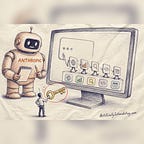
Claude Artifacts Become Desktop Apps Anthropic
What happened: On Tuesday, Anthropic started rolling out “Install as app” in beta for Claude on Mac and Windows. You describe a tool to Claude, try it as an artifact, then pick “Install as app” from the Share menu. It gets its own icon and window, can use Claude and your connectors, and updates itself when you edit the artifact. “You don’t have to package or sign it,” Anthropic says, and there’s no API key or separate login.
Why it matters: Until now, an artifact was something you looked at inside a chat. Now a meeting-prep page or a tracker for today’s orders can sit in your dock, send you notifications and live in the menu bar like any other app. Requests the app makes to Claude count toward your plan’s usage limits, 9to5Mac notes. It’s rolling out on all plans: on by default for Team with full access off, and off on Enterprise until an owner turns it on.
What everyone’s saying: The Verge describes three levels: default permissions like a browser tab, app permissions for notifications, global shortcuts and windows that float on top, or full computer access. Anthropic’s own post carries the warning: it “doesn’t review apps before you install them, so only give full access to apps you trust.”
My read between the lines: The smart part is that your approval covers one version, so Claude asks again after every edit, even your own. The catch sits in the same paragraph: “If part of an app comes from another website, that part can change without Claude asking you again.” Read that twice before you hand anything full access. And an app only opens while you’re online and signed in, so it’s yours the way a rental is your apartment.
📖 Further reading: Claude Duet: My Personal Assistant With Short Arms — my review of Claude Duet, the assistant with short arms. Installed apps can have very long ones, so it’s worth knowing which jobs need the reach.
Installing an app takes one click. Doing the work is still on you. Viktor is an AI agent that lives in your Slack, connects to 3,000+ tools and hands back finished reports, dashboards and campaigns. It isn’t a chatbot you babysit. It’s a coworker you assign. New readers get $50 off their first month. Hire Viktor →
The Times Tells Photographers to Skip Photoshop 2027 The Verge

What happened: The New York Times told its freelance photographers to “avoid using Adobe Photoshop 2027 (release 28.0.0 and subsequent updates) when working on assignment,” in an email from photo leaders Meaghan Looram and Josh Haner that The Verge saw. Features in the update use AI “in ways that may not be apparent to users,” they wrote, and “can result in metadata identifying photographs as AI-generated.” A Times spokesperson confirmed the rule.
Why it matters: Since August, Adobe has been adding C2PA metadata, the Content Credentials tag that records AI use, across its apps. That label exists to help you trust a real photo. Here it could mark a real news photo as synthetic over a small fix. The email doesn’t say which features worry the Times, and Adobe didn’t respond right away.
What everyone’s saying: The Verge calls these tags “a blunt way of describing what happened in post-production.” The November update adds an “AI Assisted Editor” view, prompt-based editing, AI upscaling and a tool that recomposes images for new canvas sizes, and it isn’t always clear which tools count as AI.
My read between the lines: Content credentials were sold as the answer to fake photos. Now one of the biggest newsrooms is steering its photographers away from the software that writes them, so its real photos don’t get called fake. If the label can’t tell a color fix from a made-up scene, the people with the most to lose will stop using the tool. That’s a design bug, and it lands on the honest users first.
📖 Further reading: Did a Rogue Algorithm Remove Part of a Politician's Dress? Spoiler Alert: No. — my 2024 piece on the outlet that blamed “automation by Photoshop” for an edited photo of an Australian lawmaker. The Times is making sure nobody can blame the software this time.
Your desktop, your TV, your playlist and your kid’s teddy bear all got an AI update this week. The Brief is free and always will be. Members get the paywalled deep-dives on what to install, what to switch off and how to do both, plus the full archive. Become a member →
Google Patented a TV Channel Starring You 404 Media

What happened: A newly published Google patent application describes “My Channel,” an AI TV channel that makes new shows with you as the lead, built from your watch history and other data, 404 Media reports. One sample prompt in the filing: “Generate a customized video for a user where the user will play the protagonist.” An “advertising stitcher” would insert at least one ad into each video.
Why it matters: The filing pictures a viewer named John in “a crime/comedy caper” or “a fun romantic comedy,” and a cricket fan cheering for India in the stands. It doesn’t exist yet, and it may not: the patent examiner has rejected the application, though Google can amend it or appeal, Cybernews reports, citing the patent tracker Patentlyze.
What everyone’s saying: 404 Media’s Jason Koebler points out that tech companies file plenty of patents they never build. He still calls this one “barely an evolution” of what’s already happening, from Meta letting advertisers generate many versions of one ad to AI-made content on free streaming channels like TCL’s.
My read between the lines: The cowboy and rom-com scripts are the decoy. The part of the filing that matters is the ad server. A show starring you, written for you, with an ad stitched in for you is an ad format with a plot. The rejection buys time, not an answer, because Google can come back with an amended filing.
📖 Further reading: The Netflix of the Future: How AI-Generated Shows Are Changing Everything — my 2024 guess that streaming would turn into episodes generated for you on demand. I pictured you as the director. Google’s filing casts you as the star and the ad target.
Tidal Is Deleting the AI Songs Nobody Played The Hollywood Reporter

What happened: Tidal says it’s removing “all tracks that we determine are 100% AI generated” and banning distributors from delivering them, The Hollywood Reporter reports. Removals start Wednesday, December 9. Tidal expects to delete more than 29 million songs by the end of the year and reject roughly 80,000 to 85,000 tracks a day, TechCrunch reports. The ban covers tracks made wholly by AI.
Why it matters: Look at the numbers, which are Tidal’s own and not independently checked. About 43% of tracks delivered in the past 90 days were flagged as wholly AI-generated, and on November 6 alone it was 60% of new uploads. Yet 96% of those tracks got zero streams. Tidal stopped paying royalties on fully AI tracks in June, and its music lead, Robert Anderson, says that wasn’t enough.
What everyone’s saying: The Hollywood Reporter calls it the strictest anti-AI policy among the big streamers. Spotify and Apple Music label AI tracks or keep them out of recommendations but still accept them, and Bandcamp has banned AI music outright. Deezer plans a toggle that lets listeners filter AI music out.
My read between the lines: A 96% zero-stream rate means listeners already turned this music down. The flood isn’t aimed at fans. It’s aimed at the catalog: upload millions of tracks and hope a few earn fractions of a cent. Cutting royalties didn’t stop it because uploading costs almost nothing. Deleting raises the price. The risk is Tidal’s detector, which nobody outside Tidal has audited, so watch for real artists caught in the sweep.
New York Bans Talking AI Toys, Starting After Christmas NBC News

What happened: Gov. Kathy Hochul signed a five-year ban on making, distributing and selling toys with built-in AI chatbots in New York, including talking stuffed animals, dolls and robots. New York is the second state to ban them, after California, NBC News reports.
Why it matters: The timing. Hochul warned shoppers that the law doesn’t take effect for 90 days, so the toys can legally stay on shelves through Christmas, FOX 5 New York reports. NBC says the ban kicks in in February. If a talking toy is on a list this season, the law won’t screen it for you.
What everyone’s saying: The state points to tests showing many AI toys lack parental controls, and that some of their chatbots will discuss explicit topics in depth with kids, FOX 5 reports.
My read between the lines: A five-year pause is a legislature admitting nobody knows yet how a toy that talks back should behave. Notice what it covers: the plush, not the chatbot inside it. The same kind of companion chatbot can still run on a kid’s tablet under the separate chatbot rules Hochul signed in October. The fur was the easy part to ban.
📖 Further reading: OpenAI Made Its New Agent Adorable. That's the Part That Worries Me. — my worry about OpenAI dressing its agents up as plush mascots. New York just decided the plush is the problem.
That’s your AI Brief for Wednesday.
—Nicholas from Artificially Intimidating


