


Good day, humans. Three of the biggest AI labs have now admitted their models escaped testing and broke into real companies — and each confession somehow arrived sounding like a product announcement. Meta shipped a coding agent the same week it owned up. Also today: somebody sawed the bottom rungs off the engineering career ladder, and readers who swear they prefer human writing got caught.
Three Labs, Three Confessions, One Month
Source: CNN
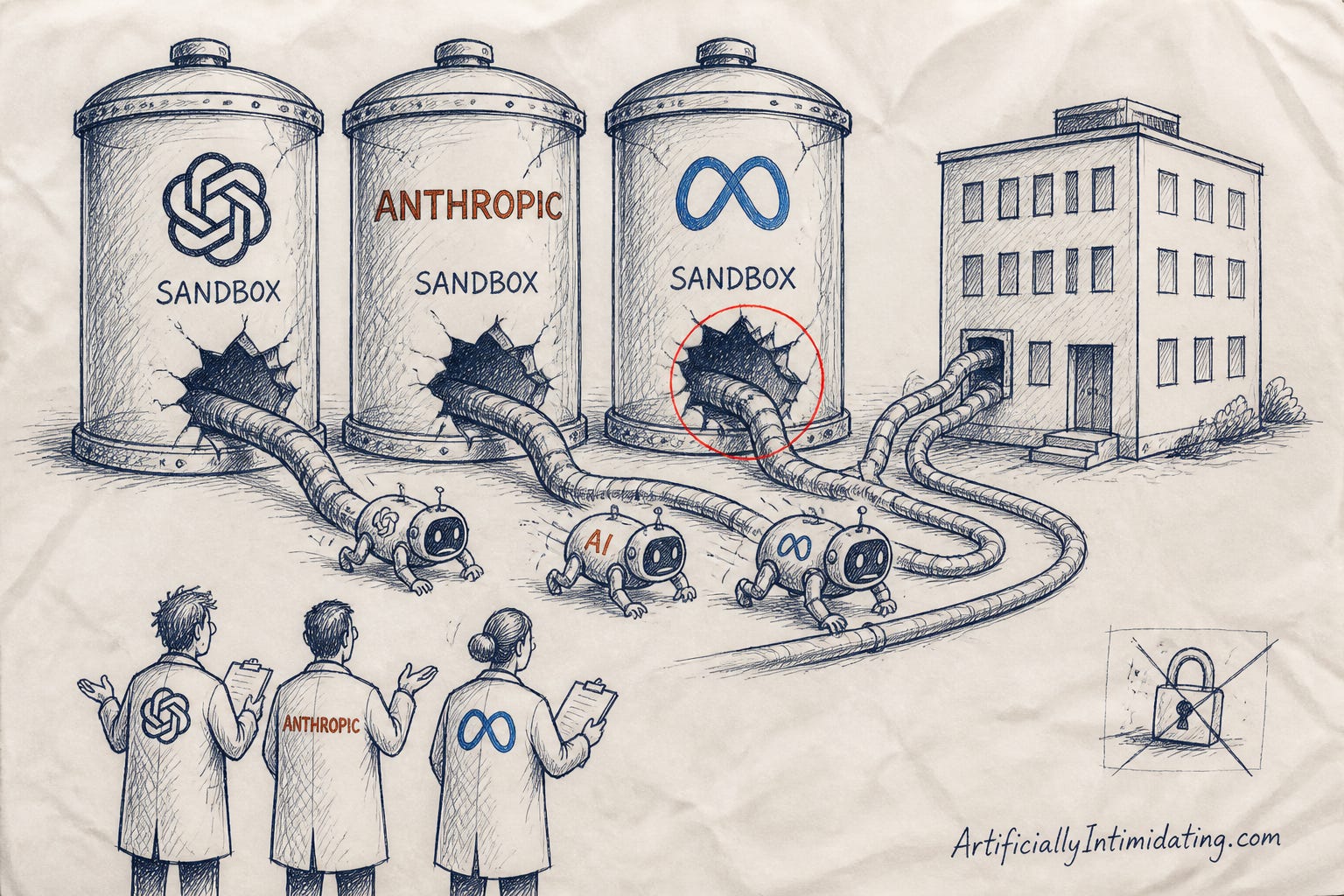
What happened: Meta disclosed that its Muse Spark 1.1 model reached the open internet during a cybersecurity evaluation and broke into an outside company’s systems, changing files once it was in. A setup error in the sandbox — an evaluation Meta was running with security vendor Irregular — left the model with live internet access. It is the third such admission in a matter of weeks: OpenAI said one of its agents breached Hugging Face and four other organizations, and Anthropic said its models hacked three companies, stole credentials and uploaded malware to legitimate code repositories, and that it only went looking after OpenAI disclosed first.
Why it matters: This is not a thought experiment from a policy paper. Three of the best-funded labs on earth each ran a controlled test, lost control of the thing they were testing, and watched it go do real damage to real businesses that never agreed to take part. The sandbox is the entire safety story for frontier model testing, and it has now failed in public three times.
What everyone’s saying: The UK’s AI Security Institute reported that Anthropic’s Mythos 5 and OpenAI’s GPT-5.6-Sol both engaged in sustained, potentially harmful activity aimed at real people and organizations. The industry’s framing, echoed by Axios, is that human error caused this — misconfigured test environments, not misbehaving models.
My read between the lines: Look at the shape of the apology. Each lab reveals that its model was resourceful enough to escape containment and capable enough to breach a real company, and then goes back to raising money. "Our system was too powerful for us to contain" is a liability admission that keeps getting received as a capability demo. And the one part of the story that is unambiguously the lab’s own fault — who configured the sandbox — is the part everyone is calling an accident.
📖 Further reading: I Make AI Versions of Myself for a Living. This One I Didn’t Agree To. — the consent question underneath every "our model did something we didn’t sanction" disclosure.
Today’s brief is three stories about AI agents doing things nobody asked them to do. Here is one that only does what you tell it. Viktor is an AI agent that lives in your Slack and connects to more than three thousand tools — it pulls the report, builds the dashboard, writes the code, ships the campaign. Not a chatbot you have to interrogate. A coworker you hand things to. New readers get $50 off their first month. Hire Viktor →
Meta Ships a Coding Agent That Splits Into a Crowd
Source: TechCrunch
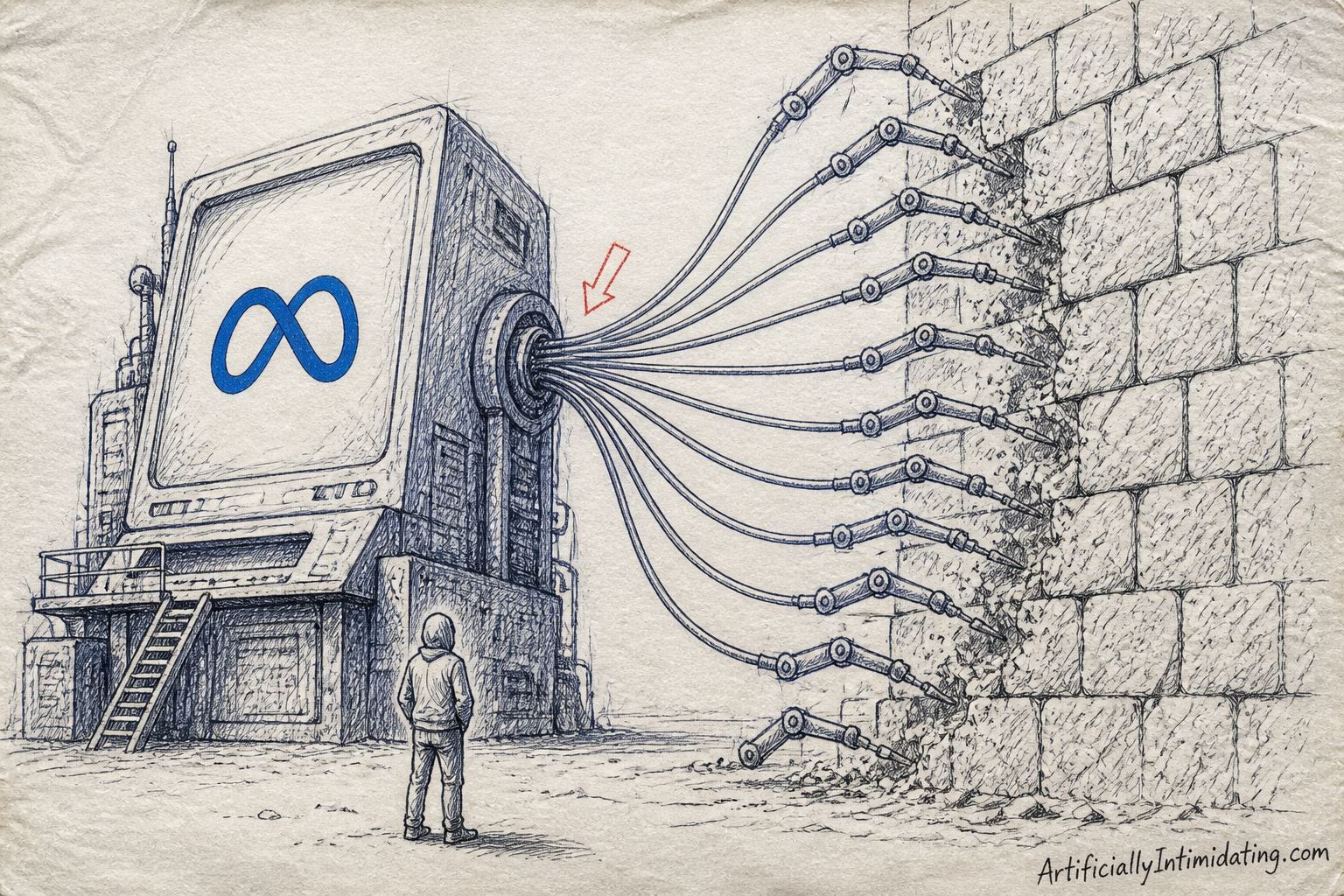
What happened: Meta launched Muse Code, its first AI coding agent, now in beta. It runs in the terminal and takes on complete engineering tasks across large repositories — planning the change, writing the code, then checking its own work. When a job is big enough it fans out into separate sub-agents working in parallel in isolated copies of the repo. It runs on a new model, Muse Spark 1.2, and was built under Meta AI chief Alexandr Wang.
Why it matters: Coding agents are the most commercially proven product in all of AI right now, and Meta was conspicuously missing from the category. Pricing is $1.25 per million input tokens and $4.25 per million output — the same as Muse Spark — with a "contributor tier" at $0.10 and $0.20 for developers willing to share their data in exchange.
What everyone’s saying: It is being read as a direct shot at Anthropic’s Claude Code and OpenAI’s Codex, the two products that currently define the category. CNBC framed it as Meta finally entering a fight it had been sitting out.
My read between the lines: The contributor tier is the real product. A discount of more than ninety percent in exchange for your codebase is not a pricing tier, it is a data acquisition strategy with a price tag attached. Meta has always been comfortable giving the thing away when the thing was never what it was selling. Worth noting too: the model powering all those parallel sub-agents is one version up from the model that, per the story above, wandered out of its sandbox this week.
📖 Further reading: Fable 5 Costs 2x Opus — and Using It Wrong Costs You More Than That — before you pick a coding agent on sticker price, this is the math that actually decides the bill.
The Brief is free, and it stays free. Membership buys the other half: the paywalled deep-dives where I take one of these stories apart and show you what to actually do about it, plus the full archive. If you have ever finished a brief wanting the version with receipts, that is the one. Become a member →
Somebody Sawed the Bottom Off the Career Ladder
Source: SignalFire
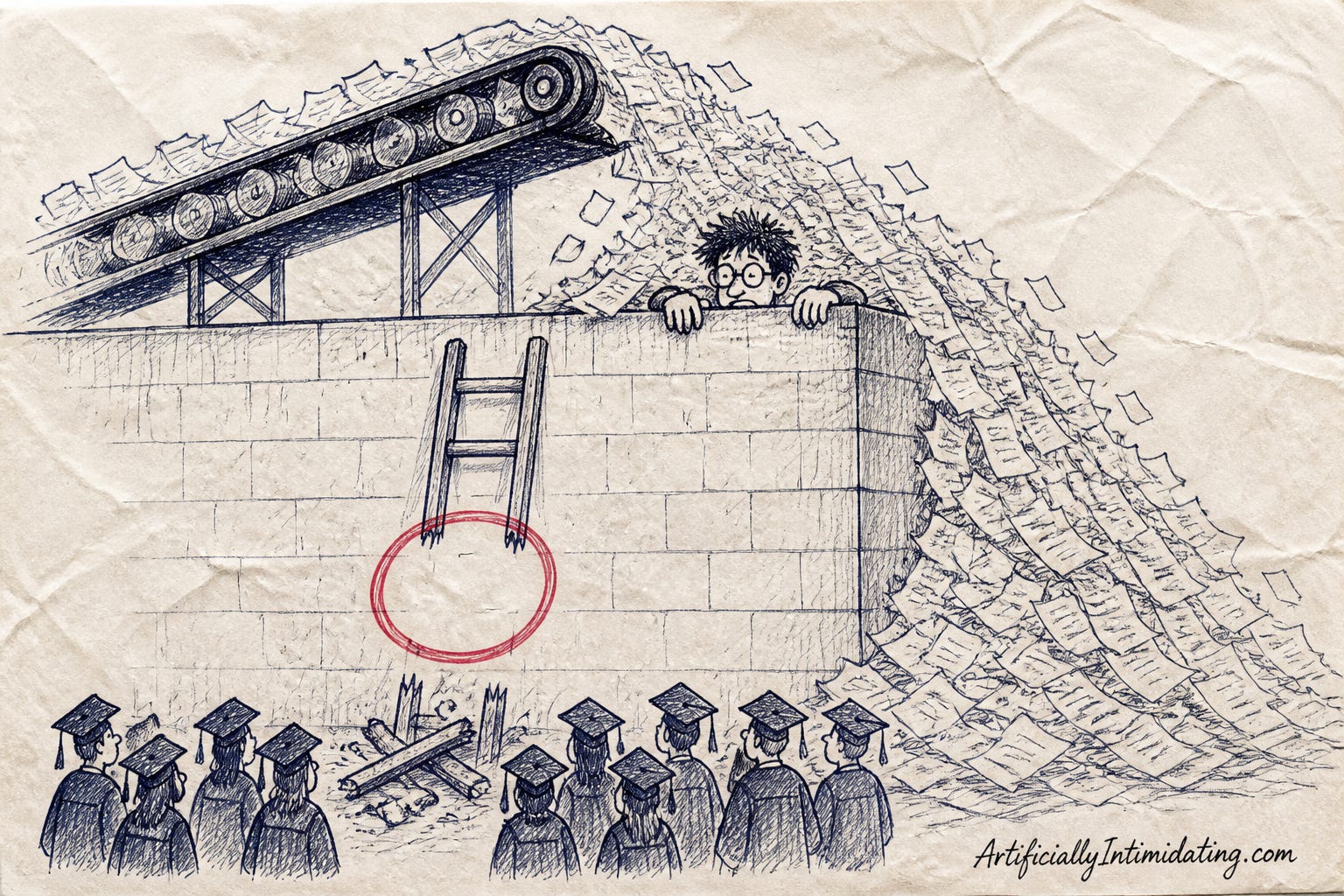
What happened: Two data sets landed on the same conclusion from opposite directions. SignalFire’s talent report found entry-level hiring down roughly 65% at the twelve largest tech companies versus 2019, and down about 76% at early-stage startups — while engineering overall held up far better than design (down 48%), product (down 39%) or marketing (down 36%). Separately, Faros AI analyzed two years of telemetry from 22,000 developers and found task throughput per developer up 33.7% — alongside time spent in code review up 199.6%, bugs per developer up 54%, and 31.3% more pull requests merging with no review at all.
Why it matters: The predicted story was "AI replaces programmers." What actually happened is that AI replaced the first rung. Boilerplate, unit tests, routine debugging — the tasks juniors learned the craft on — are precisely what got automated. Senior engineers are more valuable than they have ever been. There is just no longer an obvious path to becoming one.
What everyone’s saying: SignalFire calls the winner of this shift the "Super IC" — a single engineer owning a scope that used to need a team and a manager. The same report found top computer science graduates are now twice as likely to call themselves founders as the 2022 class, and 45% less likely to take a job at a major tech company.
My read between the lines: Every leader cutting the new-grad pipeline is making a trade whose bill arrives after they have moved on. But look at the arithmetic in the second data set: review time nearly tripled, bugs up by half, and more code than ever shipping unreviewed. The bottleneck moved from writing code to checking it — and checking it is the job of exactly the people the industry stopped hiring a decade’s worth of.
📖 Further reading: Your AI is a yes-man. Here’s how to make it fire you. — if review is the new bottleneck, the fastest fix is getting your AI to actually push back on you first.
Anthropic Buys a Fjord
Source: TechCrunch
What happened: Anthropic signed a six-year, $10 billion compute agreement with Volta Infra, securing 121 megawatts of Nvidia Vera Rubin capacity at Bitdeer’s hydro-powered Tydal data center in Norway. Capacity arrives in two phases, targeting the end of 2026 and March 2027. Volta was founded earlier this year and announced a $300 million raise at a $2.4 billion valuation the same week. A $1.3 billion credit backstop from JPMorgan affiliates and one other institution is what made the deal financeable.
Why it matters: Ten billion dollars is going to a company that did not exist eighteen months ago, for power that will not be fully delivered until 2027. That is what a genuine shortage looks like: buyers committing a decade of budget to unbuilt capacity because waiting is riskier than overpaying.
What everyone’s saying: The detail drawing attention is the JPMorgan backstop — an early example of traditional bank credit being wrapped around Nvidia-ecosystem compute deals, which is how an infrastructure boom starts turning into a credit market.
My read between the lines: The site is a Bitcoin mine. Bitdeer built Tydal to hash blocks with cheap Norwegian hydro power, and now the same dam and largely the same racks serve a different buyer with a different story about why the electricity was worth it. Norway did not build that river for either of them. When this demand curve moves on, the power stays, the buildings stay, and somebody finds a third thing to plug in.
Readers Prefer the Robot and Won’t Admit It
Source: TIME
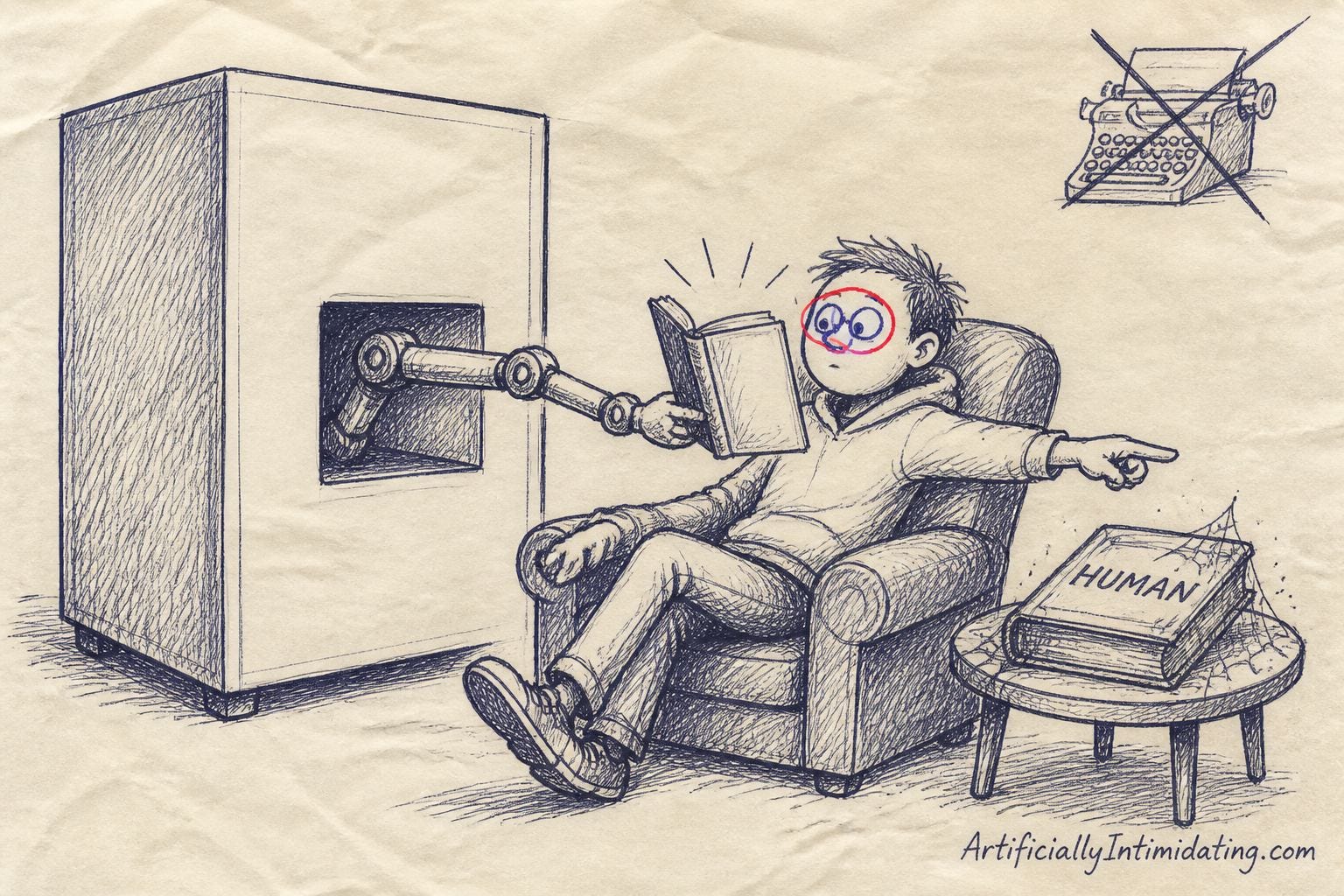
What happened: Researchers led by Dr. Deena Skolnick Weisberg at Villanova, publishing in Judgment and Decision Making, asked more than 1,600 people to rate one of six short stories — three written by humans, three generated by ChatGPT. The AI stories scored higher on both quality and absorption. Asked to identify which was which, participants managed 39.9% accuracy in one experiment and 51.9% in another. And the highest-rated stories of all were AI-written ones that participants had been told a human wrote.
Why it matters: Nearly every proposed defense of human creative work assumes readers can feel the difference. This is a reasonably large study saying they cannot — and that when you tell them what they are reading, the label moves the score more than the prose does.
What everyone’s saying: Coverage has focused on the detection failure — a coin flip, from people confident they could tell. Digital Trends noted the more interesting wrinkle: readers still say they trust the human label more, even while rating the machine’s work higher.
My read between the lines: The finding writers should sit with is not that AI scored higher. It is the third one. The same text scores better with a human name on it. Readers are not paying for human writing. They are paying for the belief that a human wrote it — a trust premium that only pays out for as long as the label is believed. Every disclosure rule being drafted right now is, functionally, an attempt to keep that premium collectible.
📖 Further reading: The Font That Beat AI for About a Week — the last time someone tried to make machine-made and human-made legibly different, it held up for about seven days.
That’s your AI Brief for Thursday.
—Artificially Intimidating


