


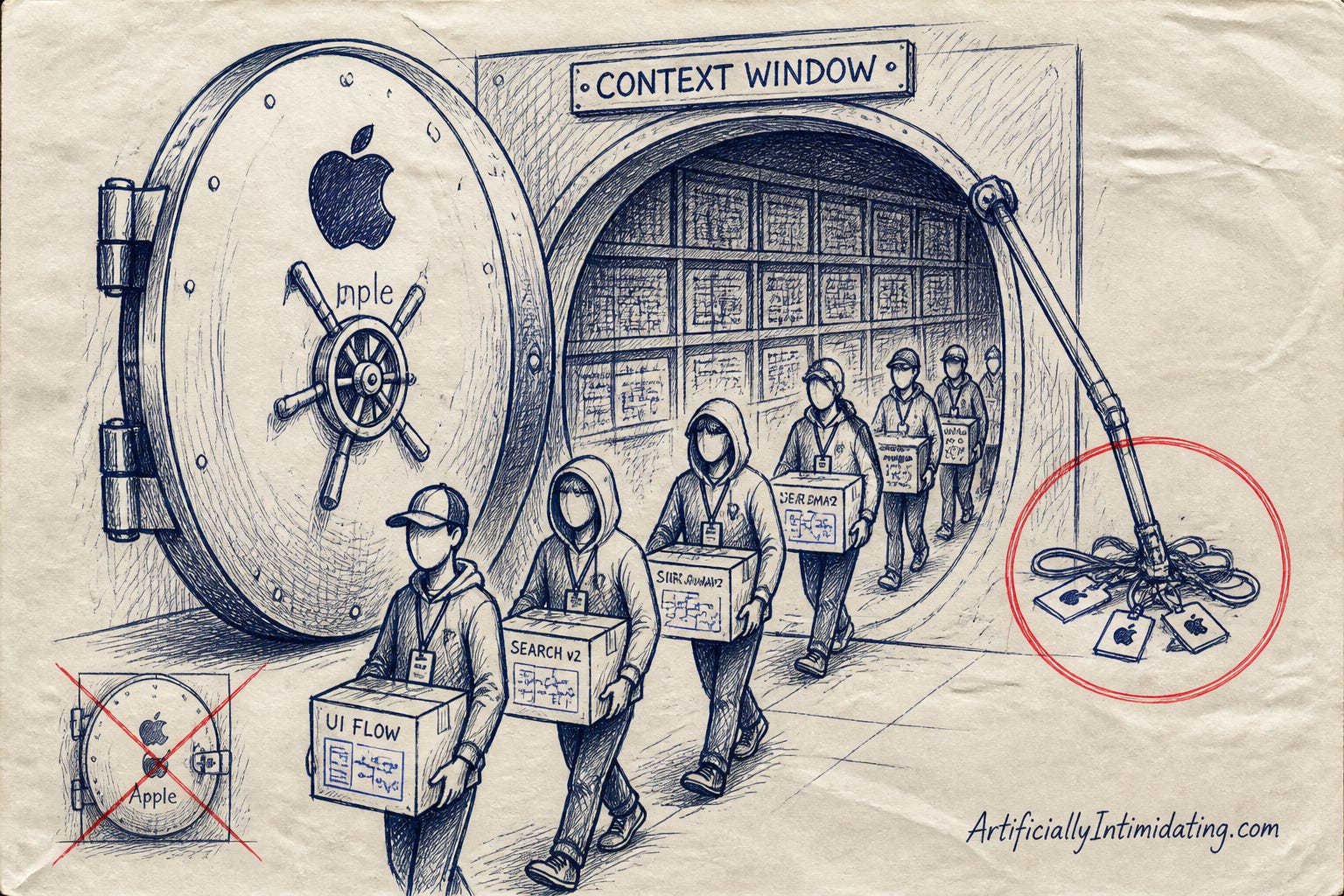
Good day, humans. Nobody in this industry agrees on what intelligence should cost. DeepSeek will run a job for three cents that Anthropic charges three dollars for, while Dwarkesh Patel makes the case that compute is about to get fifteen times more expensive. Meanwhile Apple is in court over what its ex-employees carried to OpenAI, and paying Google for the models that finally fixed Siri.
Apple Says Eleven More Ex-Employees May Be Involved
Source: TechCrunch
What happened: Apple asked a federal court for a preliminary injunction to stop OpenAI from building an AI device based on its technology, and said its investigation has now turned up eleven more former Apple employees who may have been involved beyond the two it originally named. One allegedly took screenshots of confidential documents about an unannounced product before interviewing at OpenAI.
Why it matters: This stopped being a dispute about two people. Apple is arguing a pattern exists, and asking a judge to freeze a rival’s hardware roadmap while it digs. An injunction is not a fine you pay and move on from. It is a stop sign on a product line.
What everyone’s saying: OpenAI answered in public rather than only in court, posting that Apple’s request is based on false information and that it does not have, nor want, Apple’s trade secrets. It also pointed at Apple’s own stumbles, including emailing the wrong person after confusing two similar surnames, as NBC News reported, and argued that the residual access those employees kept was an Apple security failure rather than theft.
My read between the lines: The detail Apple put in its own filing is that multiple former employees still had Apple work devices after they left, and only reached out about returning them once the lawsuit was filed. Apple is describing its offboarding process as a crime scene. The trade-secret argument may well be strong. The asset inventory is not helping it.
📖 Further reading: Block Can Read Your Team’s Buzz Messages. Unless You Host It Yourself. — the cheapest way to protect confidential information is deciding who holds it before anyone starts leaving.
Most of what companies spend on AI still goes to tools somebody has to sit down and operate. Viktor is the other kind. It is an AI agent that lives in your Slack, connects to more than 3,000 tools, and hands back finished work — reports, dashboards, campaigns, working code — instead of suggestions about work. Not a chatbot you prompt. A coworker you delegate to. New readers get $50 off their first month. Hire Viktor →
China Built a Death Zone Around Everyone Else
Source: Bloomberg, via Business Standard
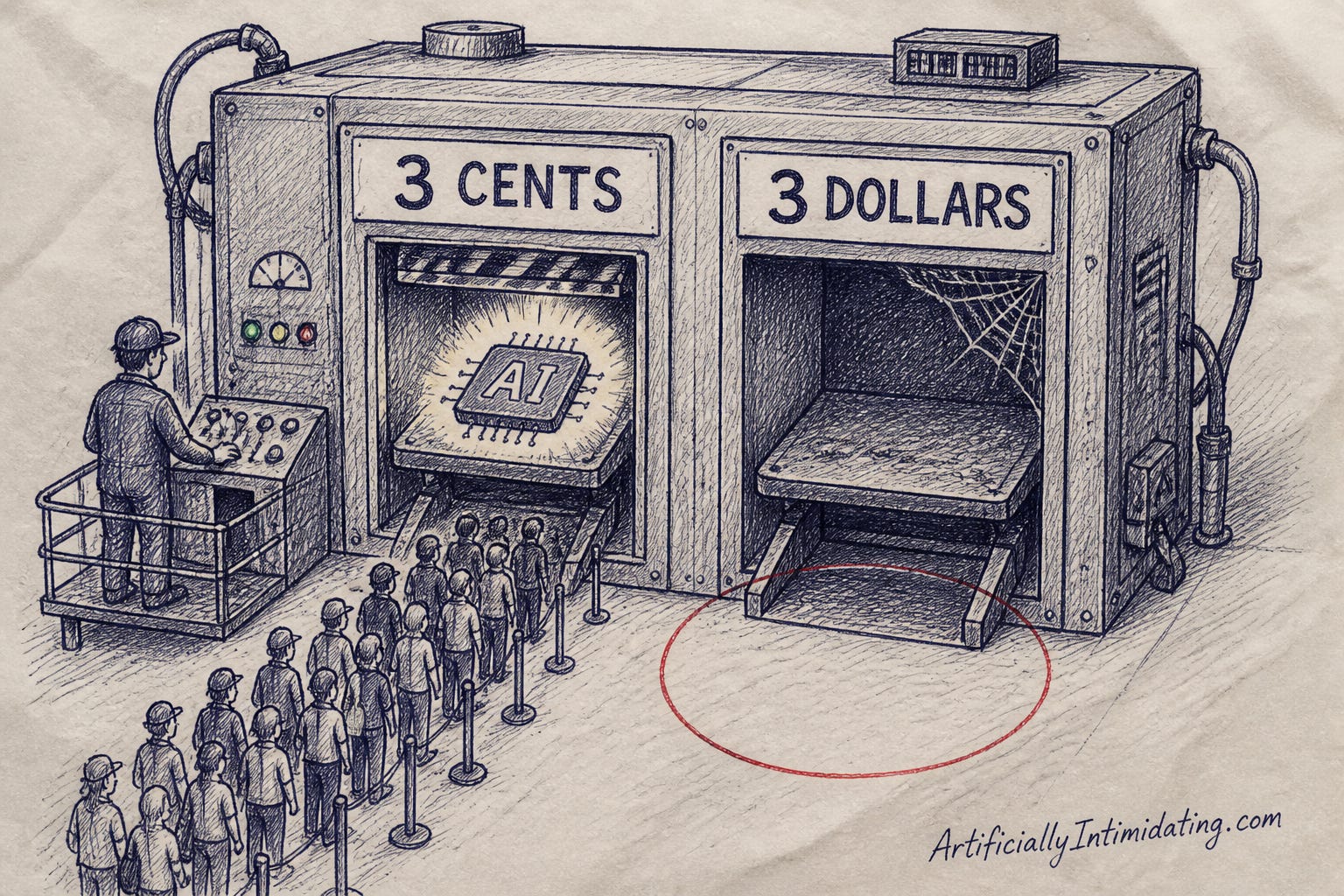
What happened: Five significant Chinese model releases landed in eight weeks: Alibaba’s Qwen3.8-Max, Moonshot’s Kimi K3, Z.ai’s GLM-5.2, ByteDance’s Seedance 2.5, and DeepSeek’s V4 Flash. In testing by independent evaluator Artificial Analysis, running one complex real-world workload costs $0.03 on DeepSeek V4 Flash against $3.15 on Claude Fable 5.
Why it matters: A hundredfold price gap changes what is worth automating at all. Work that made no sense at three dollars a run makes obvious sense at three cents, and a lot of the people running that calculation sit outside the US, in markets that have not picked a side yet.
What everyone’s saying: Analysts have started calling the shape of the benchmark chart a DeepSeek death zone: charge more for the same capability, or match the price with less of it, and a developer has no reason to pick you. Kai-Fu Lee said it flatly — without the Chinese open models, OpenAI and Anthropic would be laughing all the way to the bank.
My read between the lines: The part nobody says out loud is that none of this is profitable. Bloomberg Intelligence’s Rob Lea describes Chinese providers as trapped in a price war that puts market share ahead of margin, and pegs ByteDance’s video discounting at 99% off prevailing rates. Two American labs are walking toward trillion-dollar IPOs on the strength of margins their competitors are deliberately setting on fire. One of those two models of the future is wrong.
📖 Further reading: Fable 5 Costs 2x Opus — and Using It Wrong Costs You More Than That — if a hundredfold spread now exists, picking the wrong model for the job is the most expensive habit you have.
The Brief is free and it stays free. What sits behind the paywall is the part that takes longer than a bullet: the deep dives that work out what a story like today’s three-cents-against-three-dollars split actually means for what you run and what you pay, plus the full archive. If today earned it, become a member.
The Case That Compute Gets Fifteen Times Pricier
Source: Dwarkesh Patel
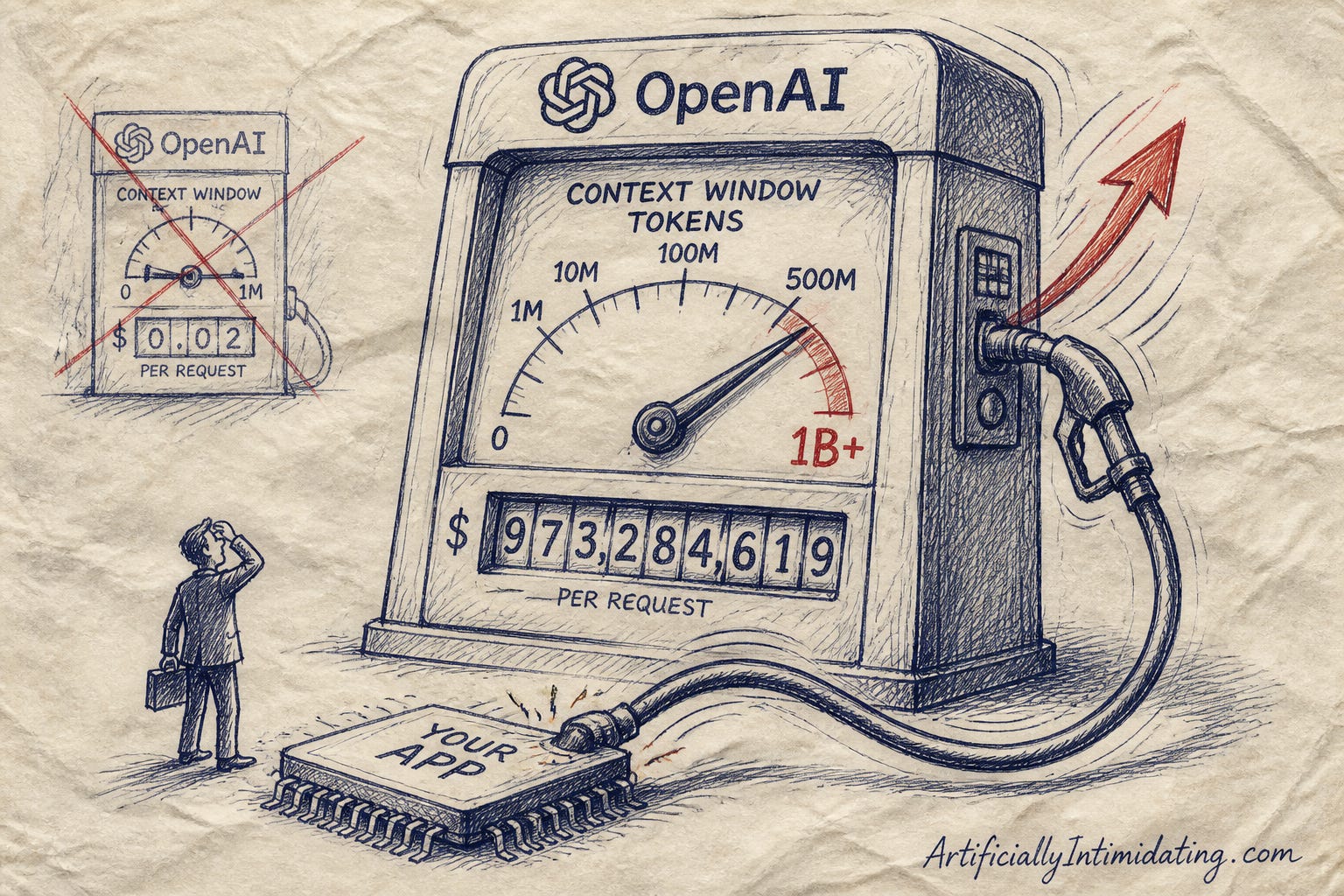
What happened: Dwarkesh Patel published a deliberately timeboxed argument that AI compute could get ten to fifteen times more expensive. His anchor: if a model equal to a human software engineer could run on one H100, that chip should rent for more than $250,000 a year at what companies already pay engineers. Today’s spot price is roughly a fifteenth of that.
Why it matters: Almost every plan being written right now assumes compute keeps getting cheaper. Patel’s math says demand is climbing faster than supply can grow — capacity roughly 3x a year against revenue growing 10x — and price is the only valve left. If he is right, your AI bill goes up, not down.
What everyone’s saying: The supply half of the argument is the part people accept: capacity growth breaks down as 1.4x from Moore’s Law, 1.2x from new fabs, and 1.8x from AI taking wafer allocation away from other devices, with that last one saturating by 2027. Google reportedly paying SpaceX $900 million a month for 110,000 GPUs, about double spot, is the number that makes it feel less like a thought experiment.
My read between the lines: Read this against today’s China story and one of them has to give. Patel argues scarcity drives prices up fifteenfold; DeepSeek is charging a hundredth of Anthropic and absorbing the difference on purpose. The sharpest objection is sitting in his own comment section, where a reader points out that Chinese open-weight models are precisely the thing that breaks the pricing power his model takes for granted.
📖 Further reading: Your SaaS bill is a sitting duck — if the input cost is about to move this much, the line items you never renegotiate are the ones to look at first.
Google’s Agent Wants Your Saved Passwords
Source: Google
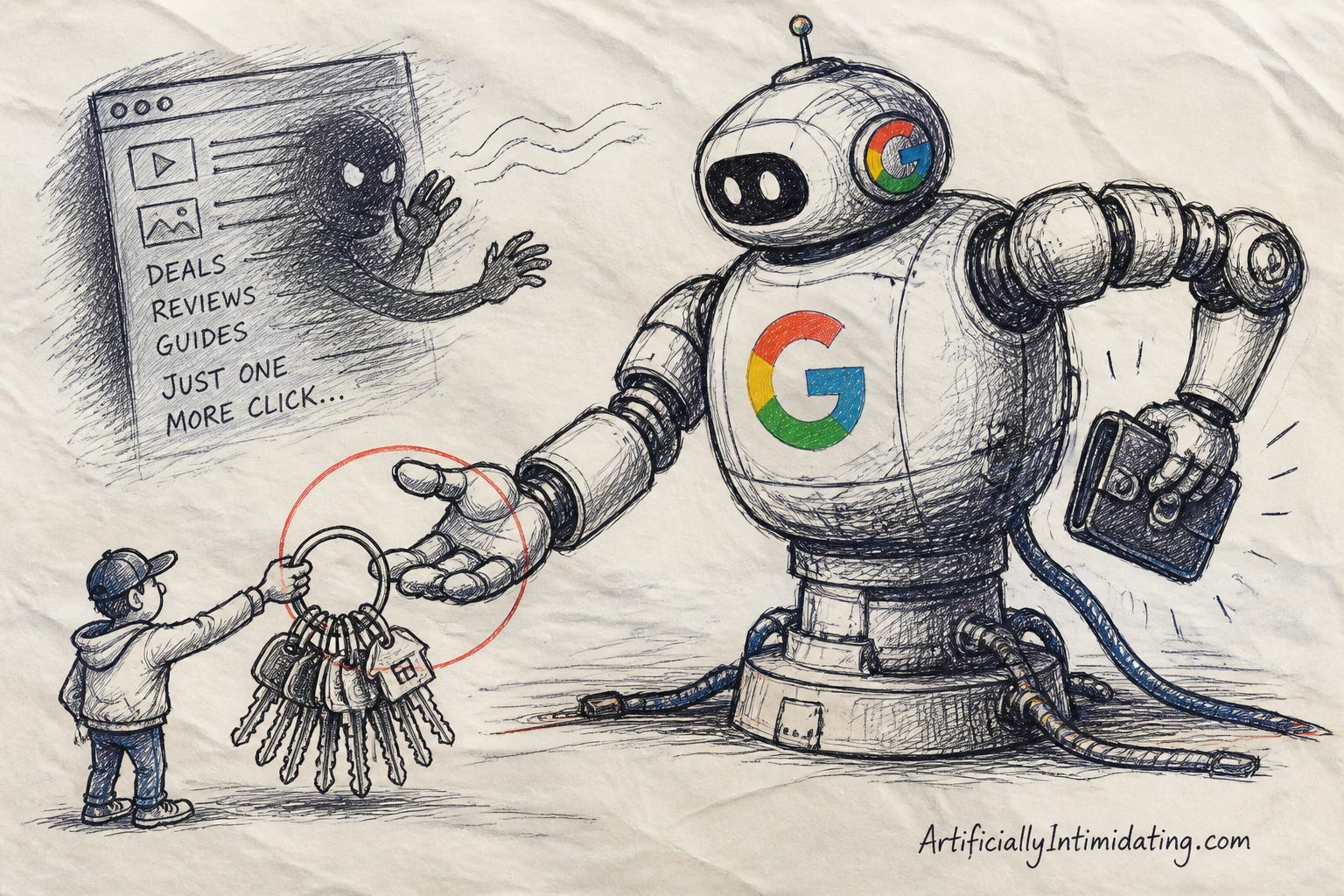
What happened: Google gave Gemini Spark direct Chrome integration. With your permission it can use your logged-in accounts and saved passwords to run errands — booking apartment viewings, researching flights and starting the booking — while stopping short of completing payments, which it hands back to you. It is rolling out in the US first, with Spark access opening to Google AI Pro subscribers in more than 160 additional countries.
Why it matters: This is the line between an assistant that tells you things and one that acts as you. Once it holds your credentials, its mistakes are yours, made from your account, attached to your history, and cleaned up on your time.
What everyone’s saying: Google says it built in protection against prompt injection, where hidden text on a page tries to hijack the agent mid-task. Naming that as the headline risk is the right call. It is also a problem the entire industry currently manages rather than solves.
My read between the lines: Yesterday we asked who the machine works for. Here is the practical version: an agent carrying your saved passwords is an agent a hostile web page can now try to recruit. And Google keeping payments manual is not restraint about your money. It is a tell about where they expect this to go wrong.
📖 Further reading: I Make AI Versions of Myself for a Living. This One I Didn’t Agree To. — consent granted once, to a system that keeps acting long afterward, is the recurring shape of this problem.
Siri Finally Works, Running on Google
Source: TechCrunch
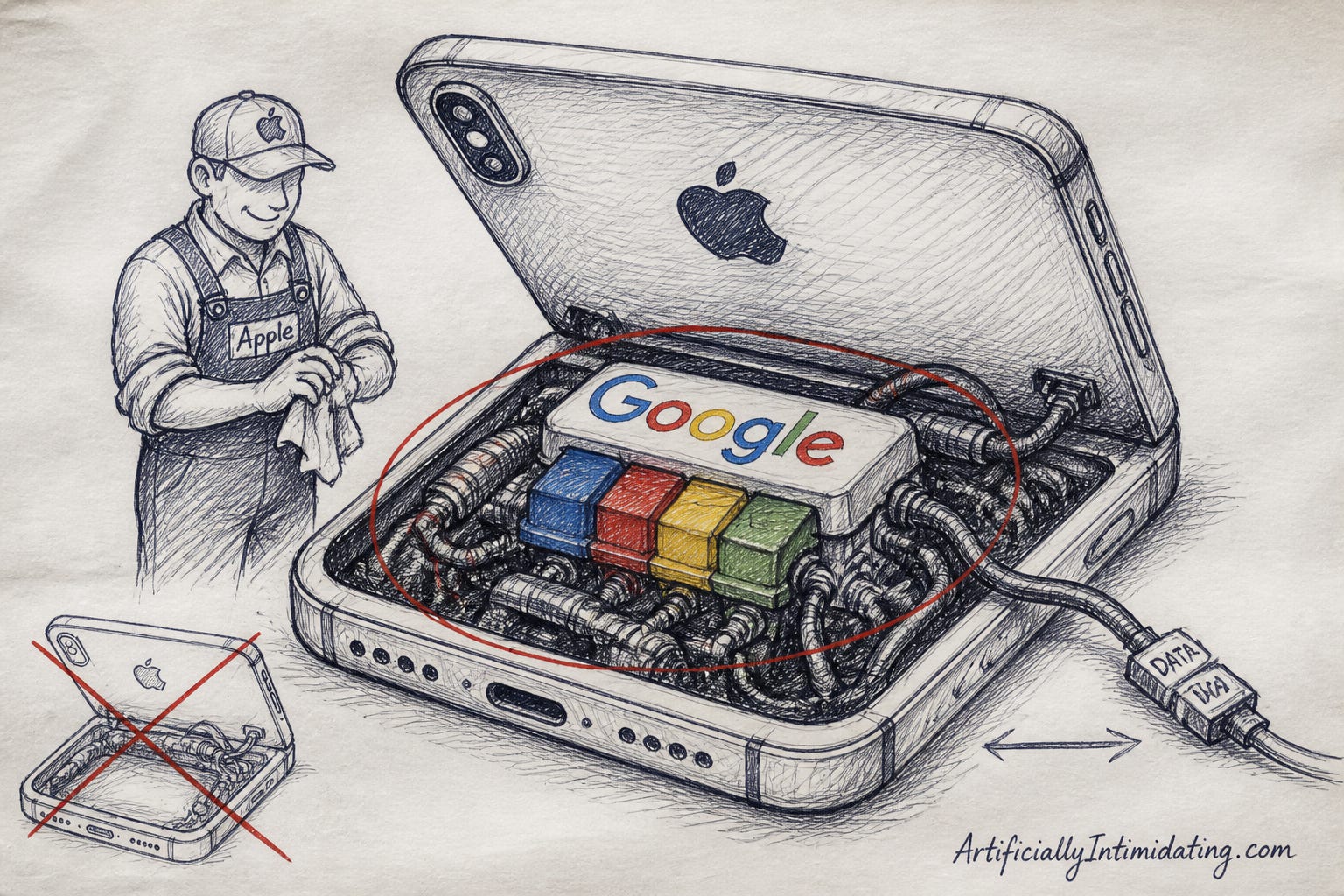
What happened: After years of delays and a $250 million settlement over features it had already advertised, Apple’s rebuilt Siri landed in the iOS 27 public beta. It holds a real conversation, understands personal context well enough to surface a receipt or read a licence number off a photo you saved, and drives apps by voice. General release is expected in September, and not at first in the EU or China.
Why it matters: This is the assistant that already sits in a billion pockets. Apple never needed to win the AI race outright. It needed Siri to stop being the punchline, and by every account that part is now done.
What everyone’s saying: The reaction is a shrug. The reading from TechCrunch is that Apple fixed a long-standing bug rather than shipping something new, and a merely competent assistant lands differently in a year when agents are writing software and finishing multi-step work on their own.
My read between the lines: The detail worth sitting with is how Apple got there. It licensed Google’s Gemini models and used them to train its own Apple Foundation Models, which then run on Apple silicon and Private Cloud Compute. The most privacy-branded company in tech solved its AI problem by renting a competitor’s brain. Hold that next to story one and the shape of Apple’s year is clear enough: litigate ferociously over what walks out the door, and pay whatever it takes to bring someone else’s in.
📖 Further reading: Your AI is a yes-man. Here’s how to make it fire you. — a competent assistant is the starting line, not the finish; the useful part is making it disagree with you.
That’s your AI Brief for Tuesday.
—Artificially Intimidating


