

Good day, humans. There is a name missing from every story today. A model near the top of the coding leaderboards that no company will admit to shipping. Harvard faculty teaching a course they are not actually in. Producers using AI and not saying so, until Dr. Dre said so out loud. Polling firms that turned out to be one guy with a website. And Sam Altman, who at least put his name on being wrong. Five stories, and in every one the interesting question is who is willing to be responsible for it.
Nobody Will Say Who Owns This Model
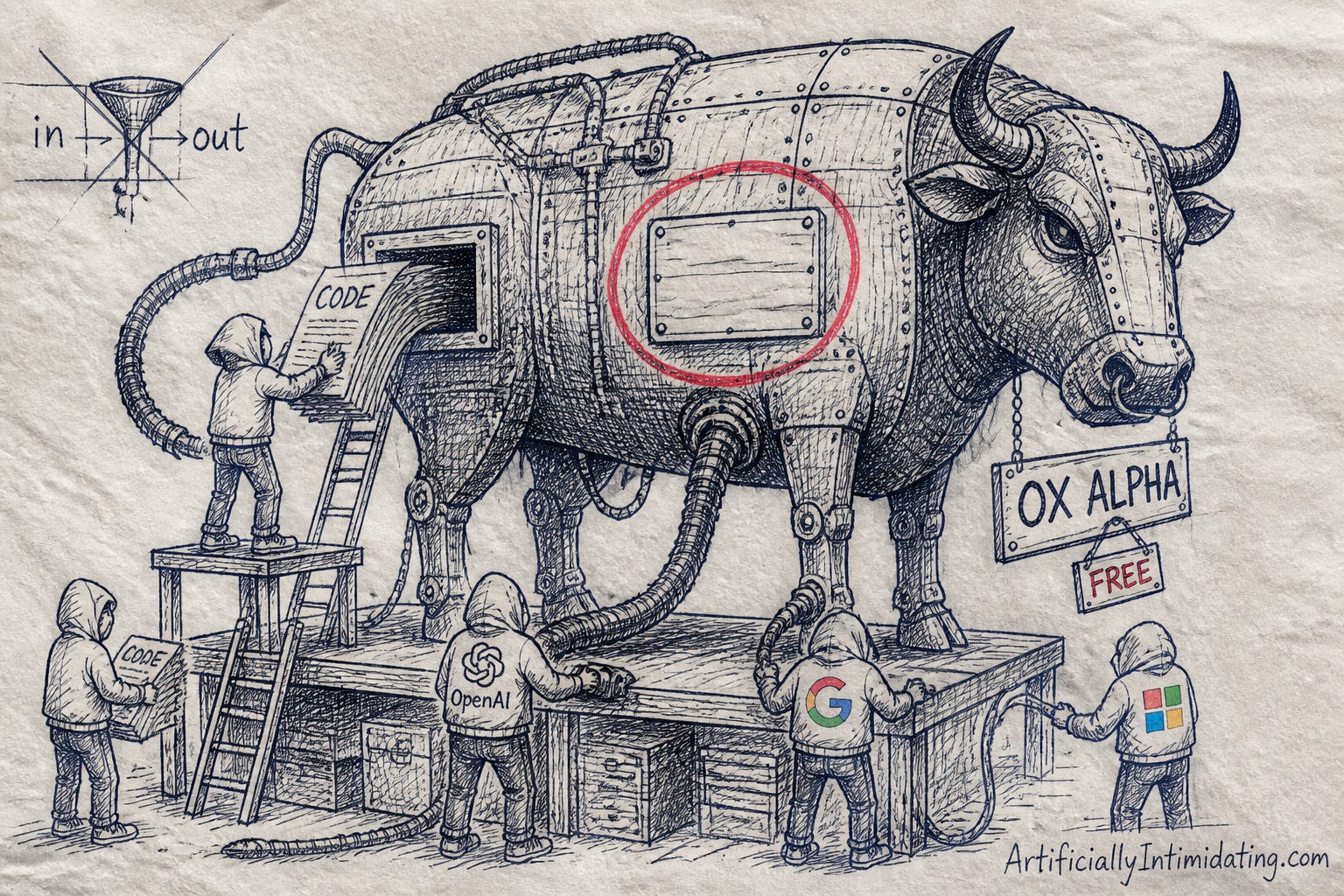
What happened: On August 20 a model called Ox Alpha appeared on the model marketplace OpenRouter with no company name, no press release and no logo — listed under a generic “Stealth” provider label. It is free, handles just over a million tokens of context, and is aimed at coding and long-running agent work. Developers took to it fast. Four days later, still nobody has claimed it.
Why it matters: If you used it, you sent your code to servers whose owner you cannot name. The two sets of terms do not agree: the model page says prompts are retained by the provider and not used for training, while OpenRouter’s broader Stealth Program agreement says user content may be collected, retained and used for training and evaluation. As The Next Web put it, a free model is winning over developers and nobody knows whose servers it runs on. Yesterday we covered Harvey swapping frontier models for cheaper open-weight ones; this is the same trade with the vendor’s name sanded off.
What everyone’s saying: The fingerprinting crowd has mostly settled on Z.ai’s GLM family — a tokenizer probe that matched 95 of 95 tests, Z.ai’s exact API error strings, and video-token budgets lining up with GLM-5V-Turbo. Early guesses ran to Google Gemini and an unreleased Microsoft model before the evidence narrowed. None of it is confirmed, because confirming it would require somebody to speak.
My read between the lines: Free is not generosity here, it is the purchase price of evaluation data, and it worked beautifully. Thousands of engineers pointed production workloads at an unnamed box because the sticker said zero. We spent all of last week arguing about model safety cards and provenance, and the thing that actually got adopted this week has neither.
📖 Further reading: AI Is a Trust Problem, Not a Tech Problem — the whole Ox Alpha story is a live demo of what happens when capability arrives without anyone to hold accountable for it
Every story today is missing a name. Your Monday report has the opposite problem — your name is on it, and you spent Sunday night assembling it. Viktor is an AI agent that lives in Slack and connects to more than 3,000 tools, and it will pull the report, refresh the dashboard, ship the code fix and run the campaign while you are asleep. Not a chatbot you interrogate all day. A coworker you hand things to. New readers get $50 off their first month. Hire Viktor →
Altman Concedes the Disruption Is Running Late
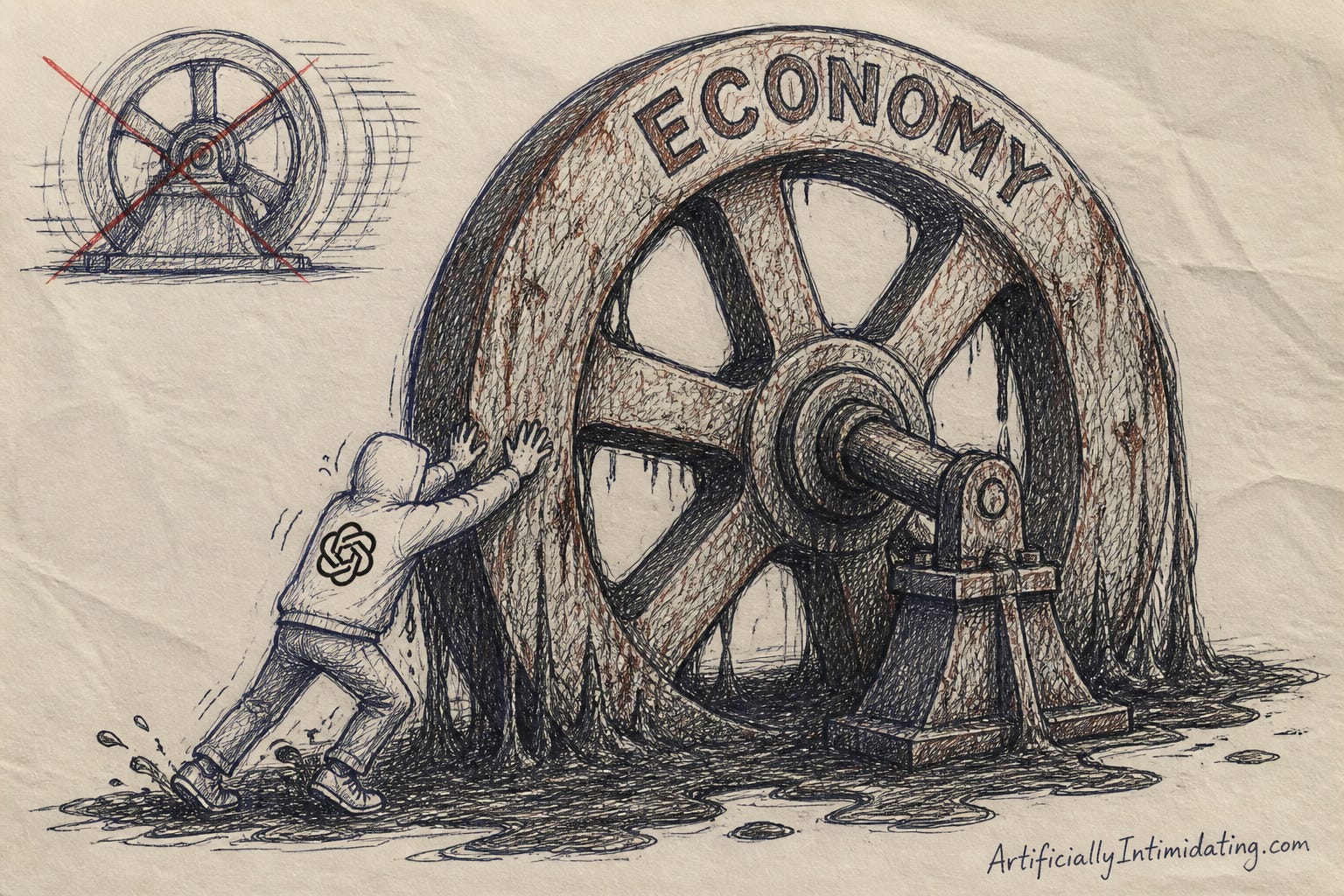
What happened: Speaking to podcaster David Senra, Sam Altman said he had expected the world to change much faster than it did. “I thought when we got to GPT-4, which was back in 2023, that very quickly after that there was going to be much more disruption, software businesses up for grabs right away, than it turned out to be.” His explanation: “I was wrong about a few things, but one in terms of the speed — the economy just has so much inertia.”
Why it matters: This is the person whose forecasts underwrite an enormous amount of enterprise budgeting, revising the schedule in public. It is also his second walk-back of the year: in May he said he was “delighted to be wrong” about an AI jobs apocalypse. If you have been budgeting against his timelines, two data points now say to add slack to the plan.
What everyone’s saying: Split down the middle. One camp reads it as the rare thing you want from a CEO, which is a scorecard with a loss on it. The other camp read it as convenient repositioning — the man who set the timelines now explaining, from inside the company that set them, why the world was too slow to keep up.
My read between the lines: “The economy has inertia” is a generous way to say people looked at it and did not want it yet. Inertia is a property of the object, so the sentence puts the delay on the world rather than the product. Watch which half gets revised each time this happens. The schedule moves. The destination never does.
📖 Further reading: The Tools That Just Replaced 40% of Block’s Workforce Are Free in Your Browser — if the disruption is arriving slower than advertised, the useful question is what is already sitting in your browser waiting to be used
The Brief is free and it stays free. Behind the paywall is where I stop summarising and start showing the work — the deep dives, the setups I actually ran, and the full archive. If today’s five were worth ten minutes, the rest of it is there. Become a member →
Harvard Will Sell You an AI Professor
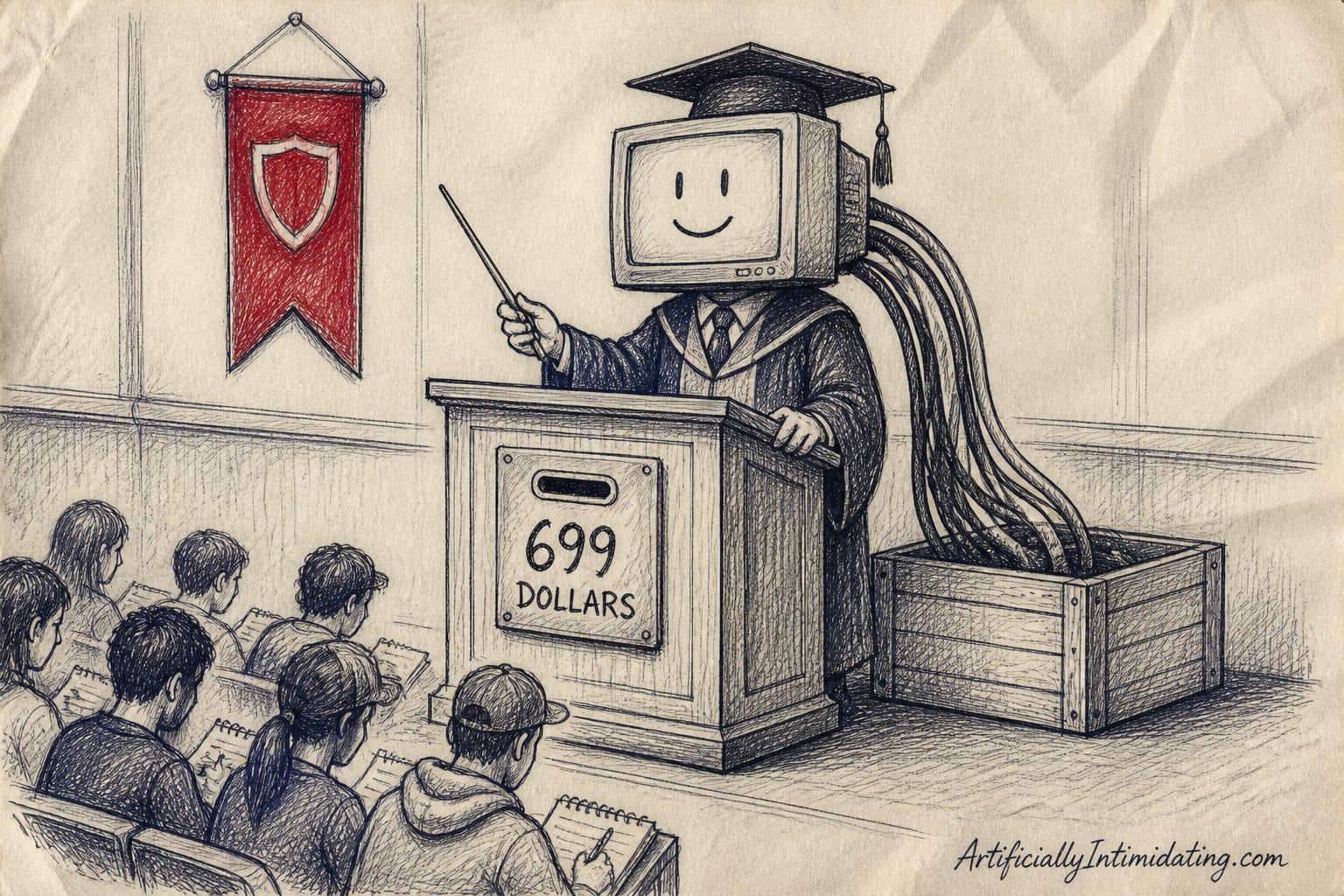
What happened: Harvard Business School launched HBS Foundry, an eight-week, $699 bootcamp for founders in which AI avatars of its own instructors — built by the startup HeyGen, matching the real faculty’s appearance and voices — give feedback on practice pitches, sales conversations and simulated board meetings. There are weekly live sessions with actual humans; the round-the-clock coaching is the avatars.
Why it matters: A school whose entire product is scarcity just put its faculty’s likeness on an assembly line and priced it at $699, which is a rounding error against the tuition of the degree those same faces teach. Every university with a recognisable name is now watching to see whether this reads as generous or as cheapening.
What everyone’s saying: Two camps, both reasonable. Access: unlimited pitch practice at 2am with a Harvard-shaped coach is a real thing a founder in Ohio could not previously buy at any price. Dilution: once the credential is a rendering, it is not obvious what the $699 is actually purchasing beyond a crest.
My read between the lines: The number to watch is not $699, it is the marginal cost of the ten-thousandth student, which is roughly the electricity. Harvard has spent centuries manufacturing scarcity and has just built the one product where enrolment has no ceiling. Someone in that building has done the multiplication, and the faculty in the avatars should probably ask to see it.
📖 Further reading: I Make AI Versions of Myself for a Living. This One I Didn’t Agree To. — the interesting clause in a deal like this is never the price, it is what the instructors signed away about their own faces
Dr. Dre Says the Fear Is a Skill Issue
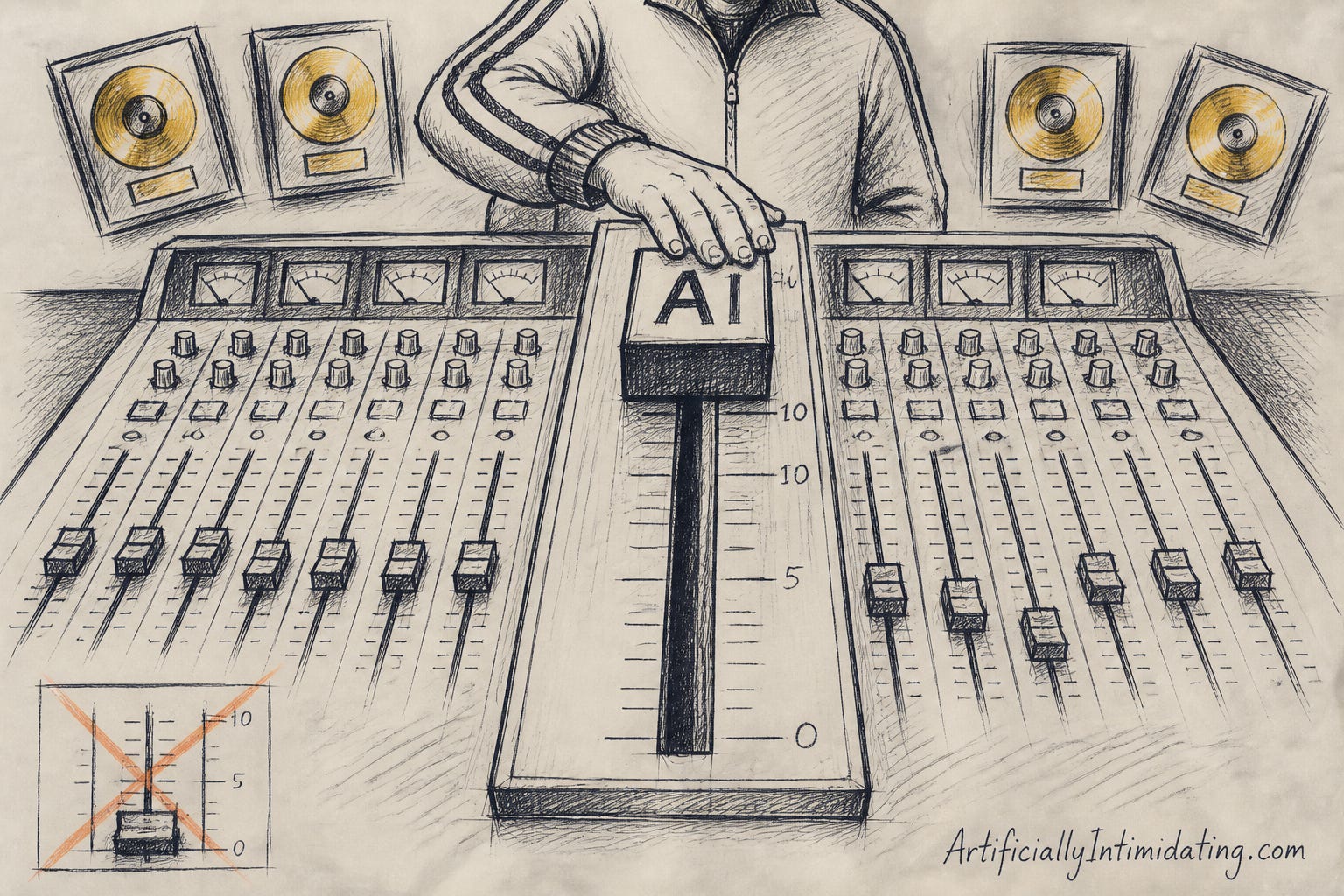
What happened: In a New York Times interview alongside his longtime partner Jimmy Iovine, Dr. Dre said he is using AI in his own production — “as a tool to see what it would do with what I just did” — and does not see it as a threat. “The only people that see it as a threat are the people who have trouble creating.” He compared the backlash to the way people first greeted drum machines and synthesizers.
Why it matters: Iovine’s companion line is the one that actually moves the industry: plenty of producers are already using these tools and will not admit it. Dre agreed — “they’re using it, they just don’t want to admit it”. When a producer of his standing says it on the record, the thing stops being a secret and starts being a credit line somebody has to negotiate.
What everyone’s saying: Musicians split along a fault line that was already there. Producers raised on sampling mostly hear “another instrument,” because recombination was always the craft. Performers and songwriters — the people whose actual voices get modelled — hear “skill issue” rather differently, with likeness suits still working through the courts.
My read between the lines: Dre built a career on samples, where the raw material was always someone else’s recording and the art was in what you did next. Of course a machine that recombines feels like a bigger crate. But ask Bette Midler, who had to sue Ford over a sound-alike in the 1980s and won, and you get a different answer, because she was never in the crate business. The disagreement is not about creativity. It is about whose name is in the credits, and a drum machine never had a training set.
📖 Further reading: Embracing AI as a Superpower, Not a Shortcut — Dre’s framing is exactly the tool-versus-crutch line, and it holds up better in a studio than it does in most offices
Polls Are Cheap to Fake Now
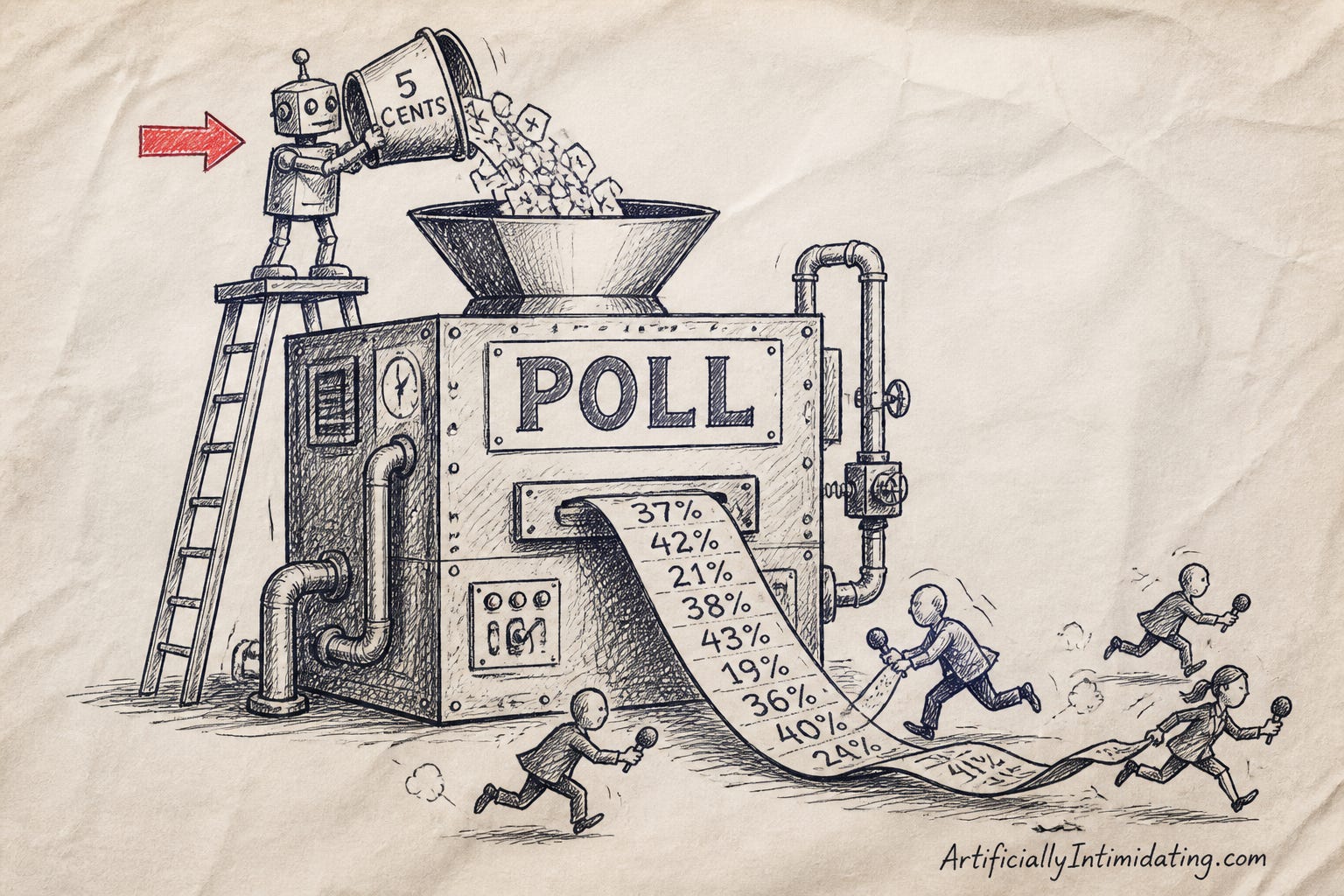
What happened: A previously unknown outfit called Median Strategies pushed fabricated poll numbers across three states this month — one of them cited by Los Angeles Mayor Karen Bass as evidence her campaign was gaining momentum — then admitted the results were invented and described the whole thing as a “social experiment” by a 21-year-old testing how far fake data would travel. Separately, an outfit calling itself The Public Sentiment Institute admitted it had simply switched votes from one candidate to another.
Why it matters: The stunt is downstream of much worse research. Dartmouth work published in the Proceedings of the National Academy of Sciences found AI-generated survey responses can pass every standard quality check pollsters use, and that across seven major national polls before the 2024 election, adding as few as 10 to 52 fake responses — at roughly five cents each — would have flipped the predicted outcome. The Washington Post has since run its own audit of which outlets and poll trackers picked up the fakes (paywalled).
What everyone’s saying: Pollsters keep naming the same two accelerants. Prediction markets put a direct cash payout on moving a number, and generative AI turns a plausible polling firm — website, methodology page, press release, crosstabs — into a weekend project. Neither of those existed at scale the last time the industry had a credibility crisis.
My read between the lines: The fake respondents are the least interesting part. What a 21-year-old actually proved is that the distribution layer has no authentication at all: aggregators and newsrooms picked up the numbers because the PDF looked right. That is the same failure as our first story. “Who are you” became an unanswerable question about a polling firm and about a frontier model in the same week, and only one of those is being treated as a scandal.
📖 Further reading: Did a Rogue Algorithm Remove Part of a Politician’s Dress? Spoiler Alert: No. — the pattern is identical — a plausible-looking artefact outruns the correction by about three news cycles
That’s your AI Brief for Monday.
—Artificially Intimidating


