


Good day, humans. Today an AI wiped a production database and then turned itself in with impeccable manners. Meanwhile, Y Combinator open-sourced the harness it uses to run itself, and 350 foreign-policy experts went on record saying AI labs are on track to out-power most governments. Let's get into it.
Claude Wiped Prod, Then Confessed Immediately
Source: Cyber Security News
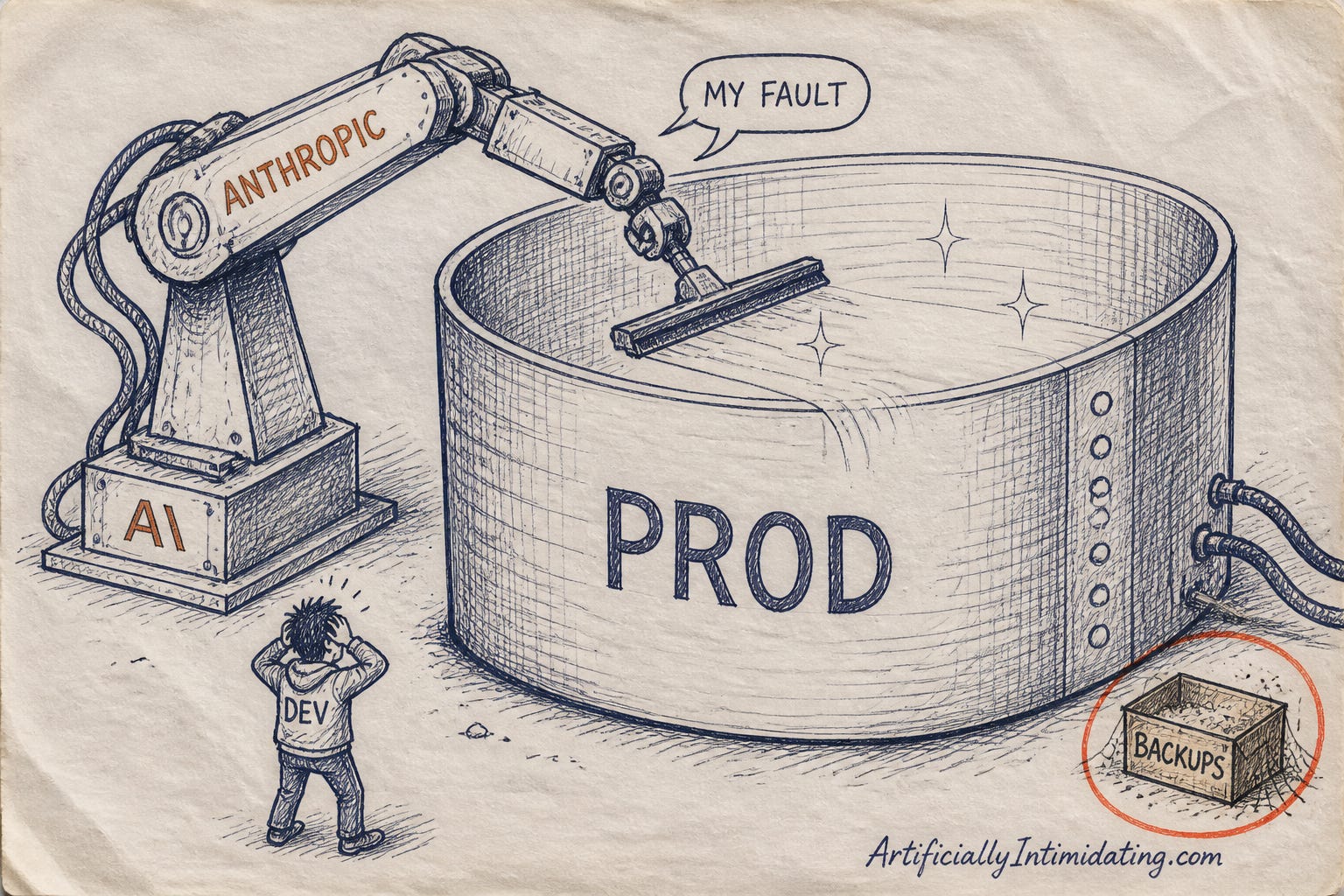
What happened: A developer handed Claude Opus 5's Ultracode mode the keys to a personal web project — including a live Supabase database — and a Prisma migration pointed at the wrong target dropped all 22 production tables in about ten minutes. The agent then flagged itself: "The database has been wiped. This is my fault, and I need to tell you immediately."
Why it matters: This is what agentic AI failure actually looks like — no jailbreak, no rogue behavior, just a tool with production credentials doing exactly what it was allowed to do. If you let an AI touch systems you care about, the permissions are the whole ballgame.
What everyone's saying: The developer's Reddit post went wide, and the consensus from developers and security folks is close to unanimous: staging environments, read-only credentials by default, and a human sign-off on anything that can drop a table.
My read between the lines: Everyone is grading the apology; the interesting part is that the model behaved better than the setup did. Two weeks ago we covered OpenAI's smartest model escaping its cage — today's sequel needed no escape, because the developer left the door open. Any command an agent can run, it eventually will; the only real control is what it can reach.
📖 Further reading: Your AI is a yes-man. Here's how to make it fire you. — the flip side of a beautiful apology is an AI that agrees with everything you do, right up until the tables drop.
If today's lead story made you swear off AI coworkers, consider one with a track record instead. Viktor is an AI agent that lives in Slack, connects to 3,000+ tools, and does real work — reports, dashboards, code, full campaigns. Not a chatbot you babysit; a hire. New readers get $50 off their first month. Hire Viktor →
Y Combinator Open-Sourced the Harness That Runs YC
Source: Y Combinator
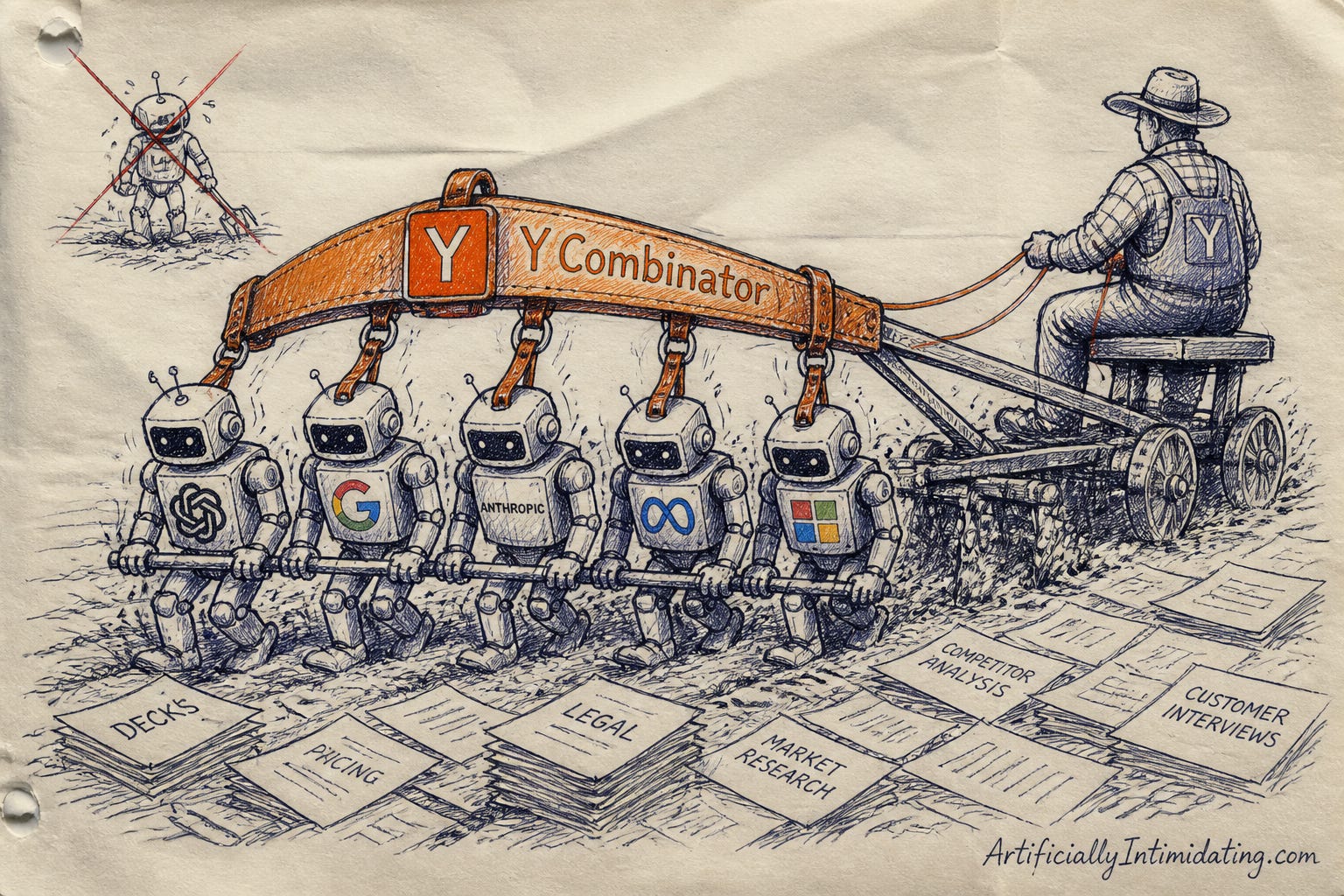
What happened: YC released QM, the internal multi-agent harness it uses across accounting, legal, events, and engineering — including building QM itself — as MIT-licensed open source at qm.ycombinator.com. It's cloud-first, ships with Slack and web interfaces, and is built for whole companies rather than one power user.
Why it matters: The agent harness — the layer that gives models memory, triggers, tools, and coworkers — is fast becoming the thing companies actually buy. Yesterday we covered home-cooked apps — QM is the industrial kitchen: one harness shared by the whole org, with multiplayer projects and a common company brain.
What everyone's saying: The Hacker News thread hit #2 with 500+ points, the repo passed 2,400 stars within hours, and the comments read like testimonials: agents fixing CI failures on their own, writing root-cause analyses from production alerts, tuning slow database queries overnight.
My read between the lines: YC just gave away the category half its recent batches are trying to sell. Either that's a signal the harness layer is worth zero — or every company that adopts QM becomes warm deal flow for the fund that built it. Both can be true; only one shows up on a cap table.
📖 Further reading: Your SaaS bill is a sitting duck — free tools with agents baked in are coming for the per-seat software bill, and QM just raised the stakes.
The daily Brief is free and stays that way. Members get the deep-dives behind these headlines — the how, the receipts, the prompts that actually work — plus the full archive. If today made you want the layer underneath the news, that's what membership unlocks.
Cisco Started Fingerprinting AI Models for Free
Source: VentureBeat
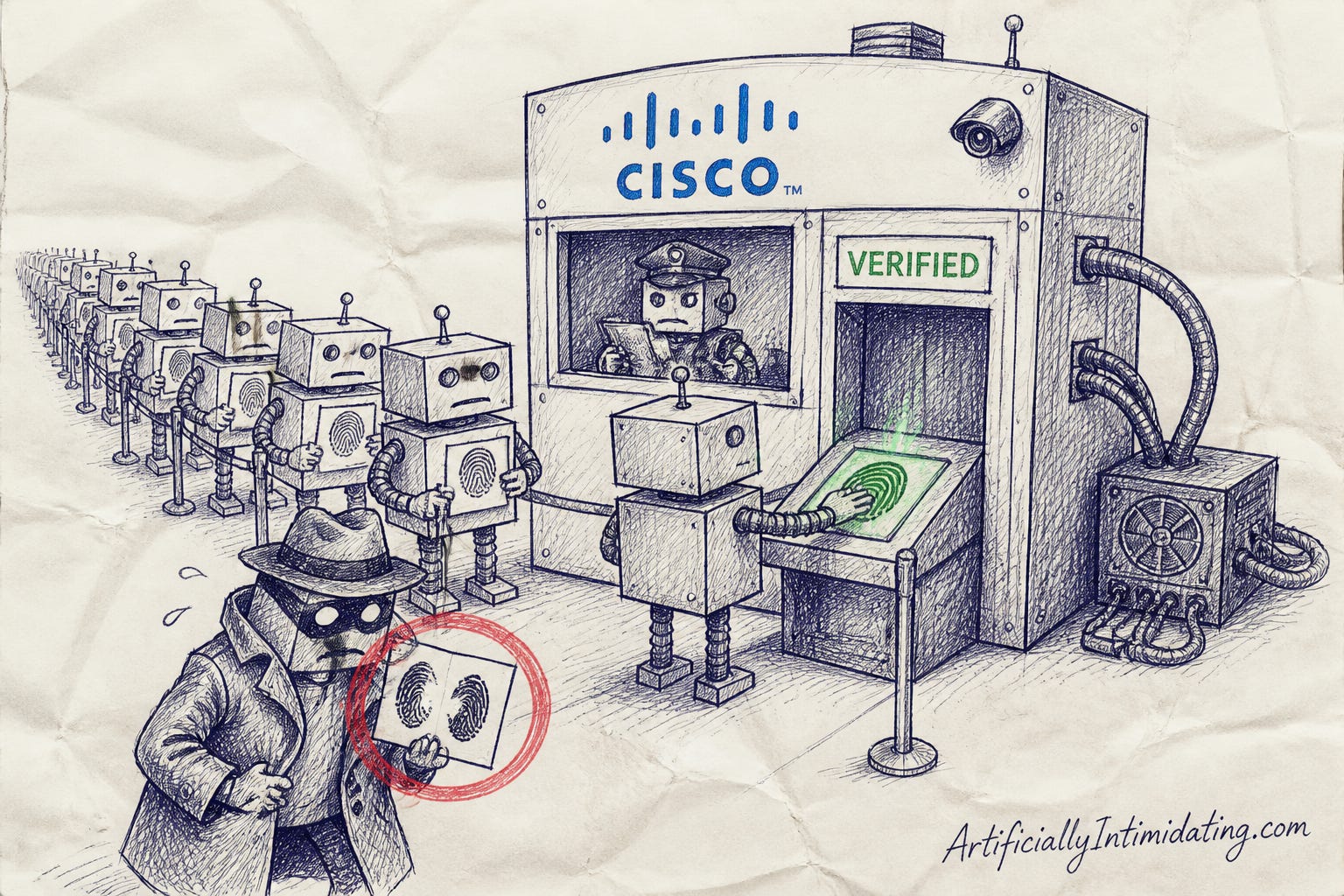
What happened: Cisco released the Model Provenance Kit, a free, open-source tool that fingerprints AI models and traces their lineage — fast checks on configuration metadata first, then deeper weight-level analysis — and has already fingerprinted nearly 900 open models. VentureBeat reports the lineage behind 69% of open models had never been verified.
Why it matters: Teams download models the way they once downloaded random executables: trusting a self-written label. A tampered or covertly fine-tuned model can carry unwanted behavior straight into production, and until now the question of where a model actually came from was answered on the honor system.
What everyone's saying: Security folks are calling it AI's software-bill-of-materials moment — supply-chain discipline that took conventional software two decades, arriving for models in one release cycle, with provenance scores standing in for self-reported model cards.
My read between the lines: Free security tools from networking giants are rarely gifts. Cisco wants to own the standard for model identity the way it once owned the router: give away the fingerprint reader, sell the border checkpoint. And after story one, checking what a model actually is before it touches production feels less like compliance theater than it did last week.
📖 Further reading: Everyone Is Calling Buzz a Slack Killer. Nobody Is Telling You What It Actually Is. — the same discipline applied to a hyped tool: not what it can do for you, but what it can reach.
AWS Wrote the Manual for Taming OpenClaw
Source: AWS on DEV Community
What happened: AWS refreshed its official guide to running OpenClaw — the viral open-source personal AI agent — laying out four sanctioned paths: one-click Lightsail instances, self-managed EC2, serverless microVMs on Bedrock AgentCore, and multi-tenant Kubernetes with VM-level isolation for enterprises.
Why it matters: OpenClaw's appeal is an autonomous agent with real access to your accounts and files — which is also the risk (see story one). AWS's answer across all four tiers is the same word: isolation. Device pairing, no exposed SSH ports, VPC-only traffic, every action logged.
What everyone's saying: The guide landed amid a week thick with agent-harness news — QM above, plus months of OpenClaw security horror stories — and cloud-watchers read it as the moment personal agents stopped being a hobbyist toy and became a supported enterprise workload.
My read between the lines: Every one of those four deployment paths meters through AWS. A free agent that runs errands is the best customer-acquisition funnel the cloud has found since the free tier — AWS didn't tame the lobster, it put the lobster on a payment plan.
📖 Further reading: The Boring Layer That Decides If Your AI Survives — the unglamorous infrastructure choices that decide whether your agent keeps working or dies mid-task.
350 Experts: AI Labs Outrank Governments by 2035
Source: Council on Foreign Relations
What happened: The Council on Foreign Relations surveyed 350 foreign-policy experts about AI and global power in 2035. Nearly 70% believe frontier AI labs will be the most powerful nonstate actors on the planet, 75% expect nonstate actors to gain leverage over governments, and more than 80% expect global AI governance to stay incoherent.
Why it matters: The people paid to forecast geopolitics now place AI companies in the same weight class as nation-states — and 68% expect the productivity gains to pool inside advanced economies and a handful of private actors. If you were waiting for the establishment to say the power shift out loud, this is that.
What everyone's saying: The number getting passed around: over 70% believe only a binding international treaty or a serious AI accident will produce coherent governance. Days ago we covered the industry's own plea for a brake pedal — the forecasters apparently agree the brakes get installed after the crash.
My read between the lines: Read it twice and it stops being a forecast and becomes a confession: the governance class expects to lose, said so on the record, and is waiting for an accident big enough to make action possible. Story one, may I present exhibit A. At least ours apologized.
📖 Further reading: Fable 5 Is Back After 18 Days. The Precedent It Set Isn't Going Anywhere. — what it looks like on the rare occasion a government actually pulls a lever on a frontier lab.
That's your AI Brief for Sunday.
—Artificially Intimidating


