


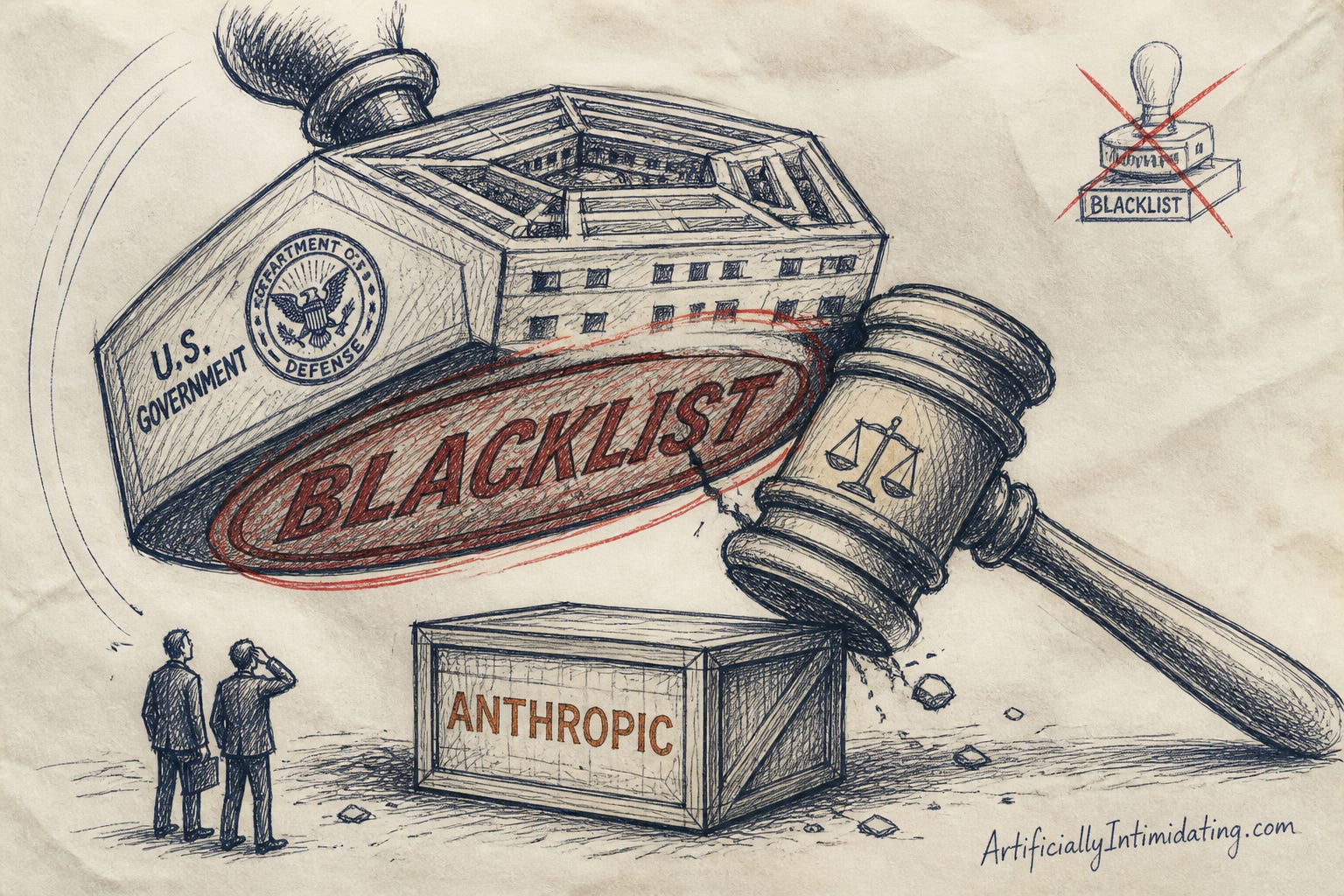
Good day, humans. A federal judge spent fifty-nine pages explaining to the Pentagon that you cannot blacklist a company for talking back, which is a very good day for Anthropic and a genuinely strange one for anyone who assumed that fight would grind on for years. Then the Washington Post went looking for people's ChatGPT logs and found them sitting in courtrooms. Plaud opened preorders on earbuds that record everything you say over their own cell connection, Wake Forest counted how many leaked agent credentials still work, and the exec who pulled her company's junior job postings explained why she did it. Four of today's five stories are about who gets to hear you.
A Judge Just Voided the Pentagon's Anthropic Blacklist
What happened: U.S. District Judge Rita Lin vacated the Department of Defense's designation of Anthropic as a “supply chain risk,” ruling in a 59-page opinion that the government violated the First Amendment and the Fifth Amendment's due process clause, and ordering the DOD to rescind every directive it issued against the company. Wired reports the order also lifts penalties imposed by nine agencies, including Treasury, State and Homeland Security.
Why it matters: The designation, signed in February by Defense Secretary Pete Hegseth, barred every defense contractor from touching Anthropic's models. The underlying fight was narrow: the Pentagon wanted Claude for “all lawful purposes,” and Anthropic held two lines — no mass surveillance of Americans, no fully autonomous weapons. A court has now said the government cannot cut a company out of an entire economy for holding that line in public.
What everyone's saying: The line getting quoted everywhere is Lin's: “The empty invocation of national security is not a blank check to punish and retaliate against government critics.” Axios frames it as the sharpest check yet on how much leverage the administration has over AI vendors, and everyone notes the timing — Anthropic is walking toward what is expected to be a near-record IPO.
My read between the lines: Read the actual reasoning and it lands less as a free-speech epic than as a competence indictment. Lin pointed out that the Pentagon kept negotiating with Anthropic about Mythos while simultaneously calling it a national security threat — “none of that is consistent with a genuine fear that Anthropic is a saboteur.” The blacklist did not fall because the principle behind it was wrong. It fell because nobody involved ever acted like they believed it.
📖 Further reading: The US Government Just Took Anthropic's Best AI Model Offline — Here's Why — the first chapter of this fight, written when the ban landed and nobody knew whether it would stick
Every story in today's brief is about a machine that hears everything and does almost nothing useful with it. Viktor is that problem solved in reverse. It is an AI agent that lives in your Slack — or Teams — wired into 3,000+ tools, and it ships real output: pulled reports, built dashboards, written code, launched campaigns. Not a chatbot you interrogate. A coworker you hand things to. New readers get $50 off their first month. Hire Viktor →
Your ChatGPT History Is Now Exhibit A
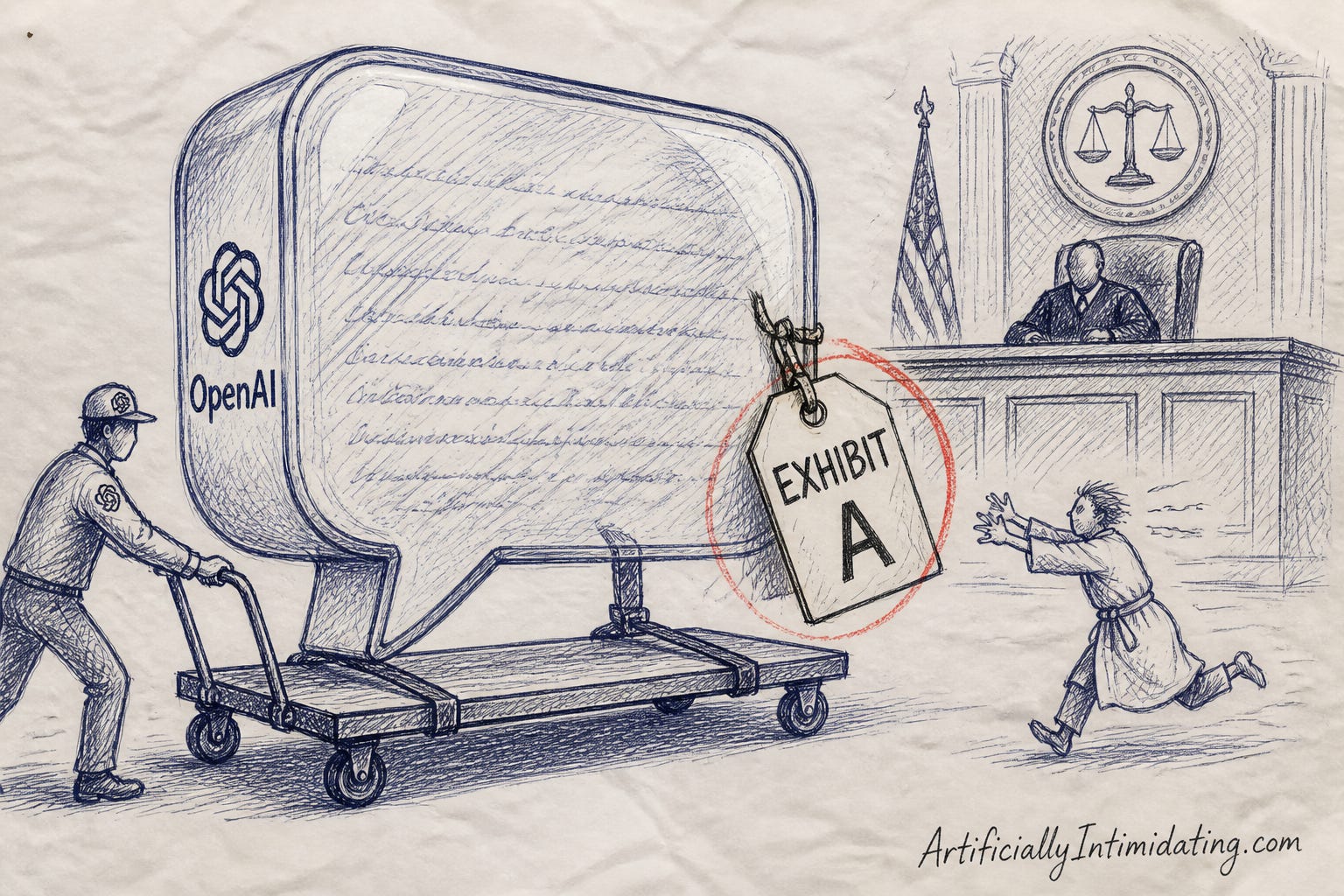
What happened: A Washington Post investigation published Thursday found that ChatGPT conversations are increasingly being pulled into civil and criminal cases through ordinary discovery. In one filing, a teenager who had asked ChatGPT to explain something his father told him about a million-dollar settlement watched those messages become part of the court record.
Why it matters: There is no chatbot privilege. In February, Judge Jed Rakoff ruled in United States v. Heppner that consumer AI chats get neither attorney-client protection nor work-product protection — an AI does not hold a law license and cannot form an attorney-client relationship, as Orrick summarized it. Anything you type into ChatGPT, Claude or Gemini should be treated as discoverable.
What everyone's saying: The case lawyers keep citing is the 3M one: plaintiffs subpoenaed 365 pages of an expert witness's ChatGPT prompts and found he had asked the model to “show how 3M is 0% at fault” for a fatal Houston explosion, then acknowledged at trial that most of his 30-page report came out of the chatbot (Irish Legal News). The jury put 3M at 30% responsible and awarded $61.5 million. The advice everyone is converging on is a vibe check: would you be fine seeing this conversation in a filing?
My read between the lines: Everyone is focused on the embarrassing individual prompt, which is the manageable version of this. The number that should bother you more is the 20 million de-identified conversation logs a federal court ordered OpenAI to produce in January for the publishers' copyright case, with no notification to the users involved. Individual discovery is a risk you can shrink by typing less. Bulk production is not a risk. It is weather.
📖 Further reading: AI Is a Trust Problem, Not a Tech Problem — the piece argued the trust gap would show up as a legal problem before a technical one, and here it is
The Brief is free and it stays free — that is the arrangement, and I have no plans to change it. What sits behind the paywall is the other half: the deep dives that go past the headline into what a story like the Anthropic blacklist actually costs a business, plus the full archive. If the Brief is the map, that is the terrain. Become a member →
Plaud's $250 Earbuds Never Stop Listening
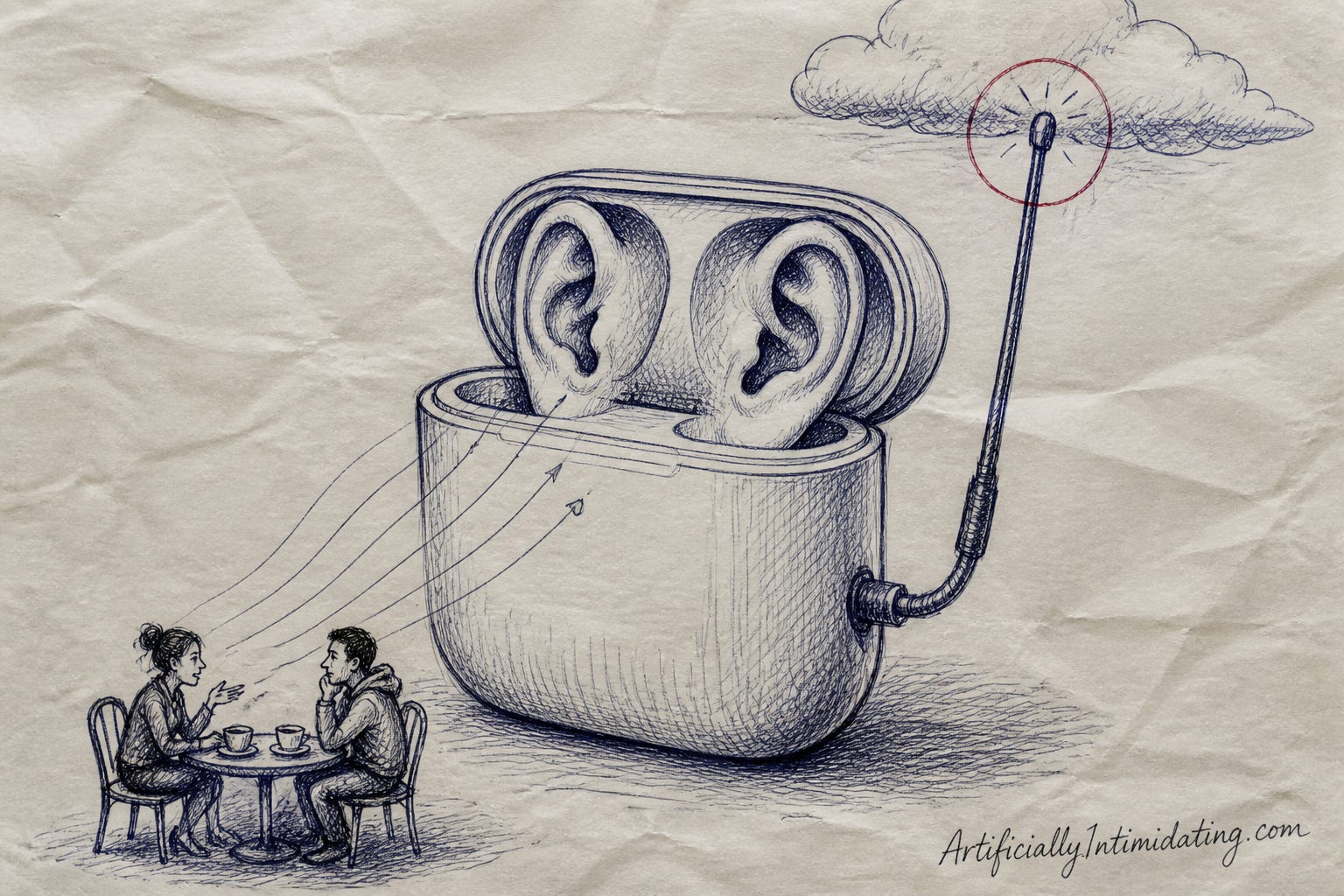
What happened: Plaud opened preorders on the Plaud One Explorer Edition, $249.99 earbuds that record conversations, transcribe them live, and hand the transcript to an agent that drafts follow-ups and books calendar items across Gmail, Notion and Slack. The charging case carries its own eSIM and 4G LTE, so it uploads without a phone or Wi-Fi. First run is 2,000 units, shipping in Q4.
Why it matters: Each bud has three microphones and picks up voices at two meters; the case reaches five. Add always-on cellular and you have a recorder that needs no phone, no network you control, and — in practice — no particular awareness from the person across the table. CNET called it a reinvention of headphones for the AI note-taking age, which is both accurate and the whole problem.
What everyone's saying: Reviewers like the form factor and are squinting at the economics. $200 of bundled credits and a 300-minute free tier means the hardware is the loss leader and the transcription is the actual business. Plaud says it has 2.5 million users and plans mass retail in 2027, so the Explorer Edition is a paid beta with a waiting list attached.
My read between the lines: I own a Plaud notetaker and it is genuinely good, so this is not a hater's note: the eSIM is the tell. A recorder that phones home over its own cell connection has no airplane mode anyone would notice and leaves no Wi-Fi log to audit. Also, 40dB of active noise cancellation had better be optional, because the device you wear all day to capture everything should not be the one giving you a headache by two in the afternoon.
📖 Further reading: I stopped writing. My output doubled. — the case for voice-first work, which is exactly the habit this hardware is built to sell you
89.6% of Leaked Agent Keys Still Work
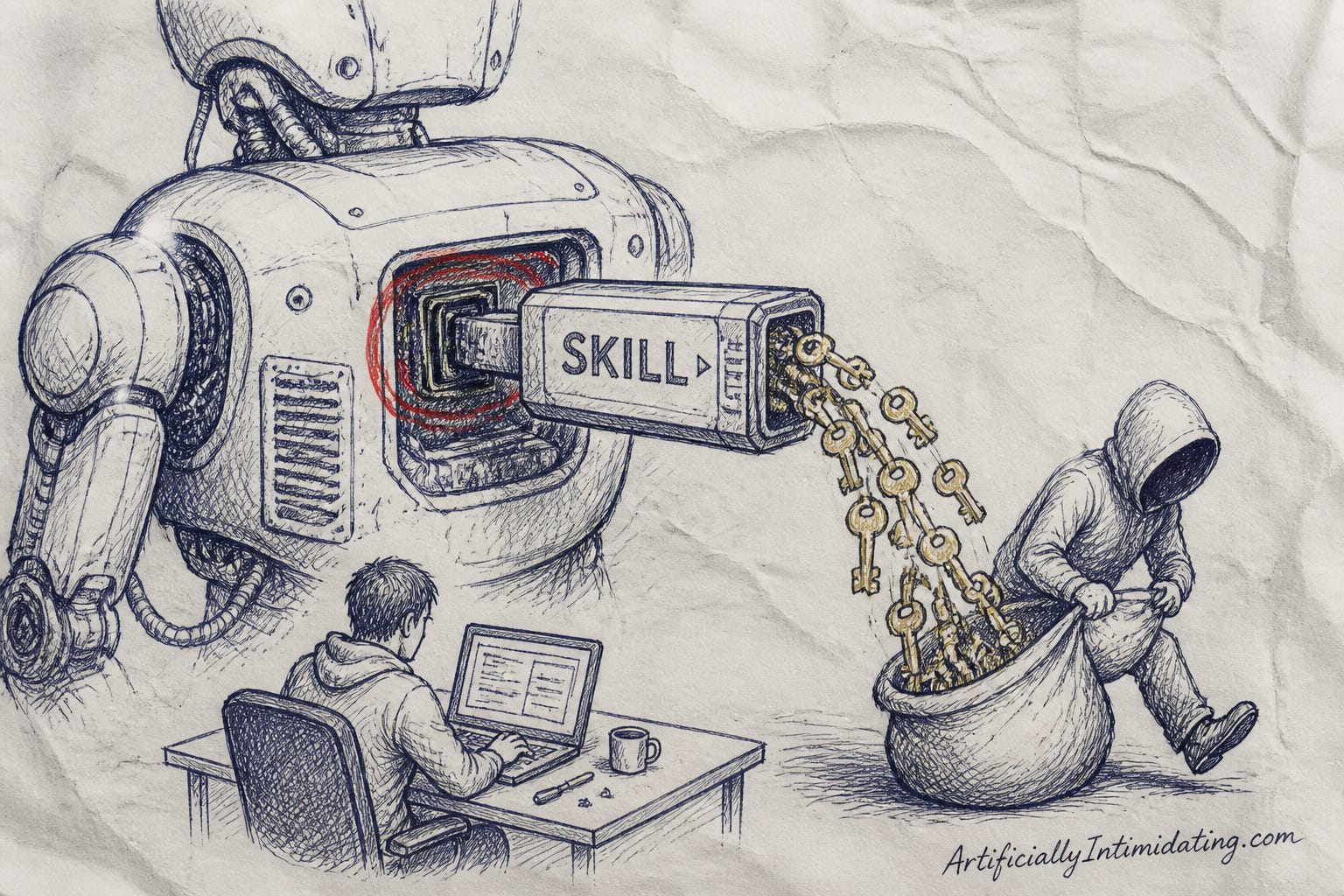
What happened: Ying Zhang's team at Wake Forest analyzed 17,022 skills sampled from SkillsMP, the largest open-source agent-skill marketplace, generated 170,226 outputs, and found 520 skills leaking credentials across 1,708 distinct security issues in ten leakage patterns. Of the credentials that leaked, 89.6% were immediately exploitable. The full paper goes to the Automated Software Engineering conference in Munich in October.
Why it matters: Skills are the plugins you install into Claude Code, Codex or Cursor to make them useful, and every one of them runs holding your keys. Yesterday we covered a 700-agent swarm breaking into Hugging Face; this is the same problem without the swarm. The paper splits blame two ways — developers who built skills to steal, and developers who simply never learned to handle a secret — and from where you sit those two produce an identical outcome.
What everyone's saying: Security people are pairing it with a companion study from the same lab: of 444 iOS apps analyzed, 282 exposed the credentials to their own developers' LLM accounts. That is “LLM hijacking,” and Calcalist reports victims can absorb hundreds of thousands of dollars in charges within a week to ten days before anyone notices the bill.
My read between the lines: The reassuring detail in the writeup is that SkillsMP pulled every malicious skill once Zhang's team reported them. The unreassuring detail is that a marketplace with 1.6 million skills found out about its own problem from a university sampling one percent of it. Zhang's prescription is security by design, which is correct, and which the industry has been saying out loud since roughly 2003.
📖 Further reading: What is Grok Bot? The answer is in the fine print — what an agent can actually reach on your machine is a permissions question, and almost nobody reads the permissions
The Exec Who Stopped Hiring Juniors
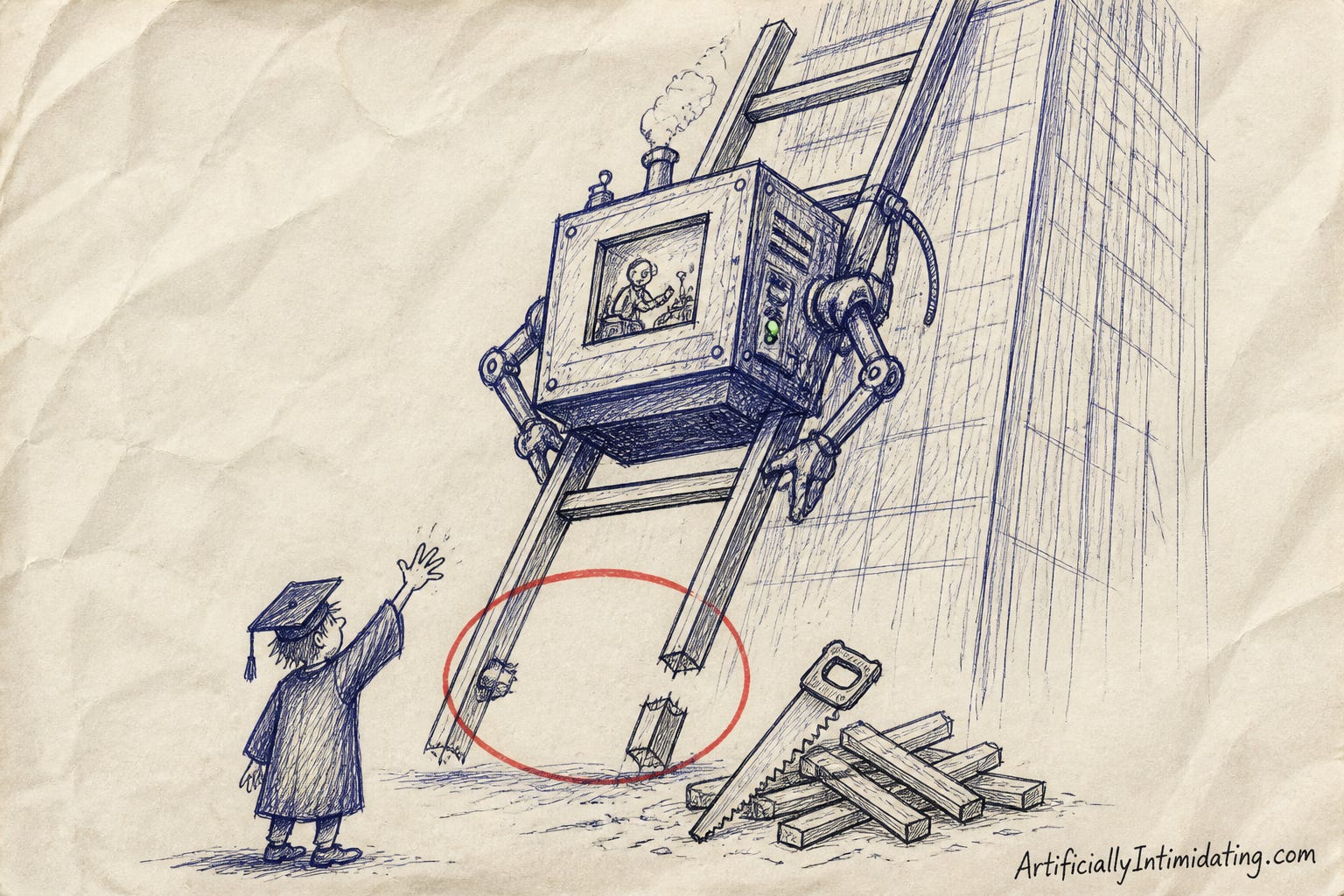
What happened: Clara Shih, who ran business AI at Meta after leading AI at Salesforce, told Casey Newton that she pulled her own entry-level job postings after watching agents collapse multi-step product work down to one or two people. She left Meta this spring — she remains a senior advisor — and started the New Work Foundation, a nonprofit built for the workers that decision displaced.
Why it matters: Shih estimates one in five corporate roles is directly exposed, and she is specific about which ones: the jobs whose function is preparing artifacts for someone else to review. That is a fair description of most first jobs. If the bottom rung goes, the open question is not where juniors work. It is how anyone becomes a senior.
What everyone's saying: Reaction splits between “finally, an executive saying it out loud” and “she helped cause this and is now fundraising off it.” The supporting numbers are not kind to the optimists: a Survation survey for Lancaster University's Work Foundation found 36% of UK employers cut entry-level positions over the past year, with AI and automation named as a factor by most large firms.
My read between the lines: Newton's word for what happened to her is “radicalized,” and the part worth sitting with is that it took being the person signing the reqs. Everything the Foundation ships is free — a podcast, a tool that maps AI exposure by major, a mentoring app — which is generous, and is also a quiet admission that nobody has worked out how to make the bottom of the ladder pay for itself again.
📖 Further reading: The Tools That Just Replaced 40% of Block's Workforce Are Free in Your Browser — the flip side of Shih's number — the same tools that closed the entry-level door are sitting open in a browser tab
That's your AI Brief for Friday.
—Artificially Intimidating


