

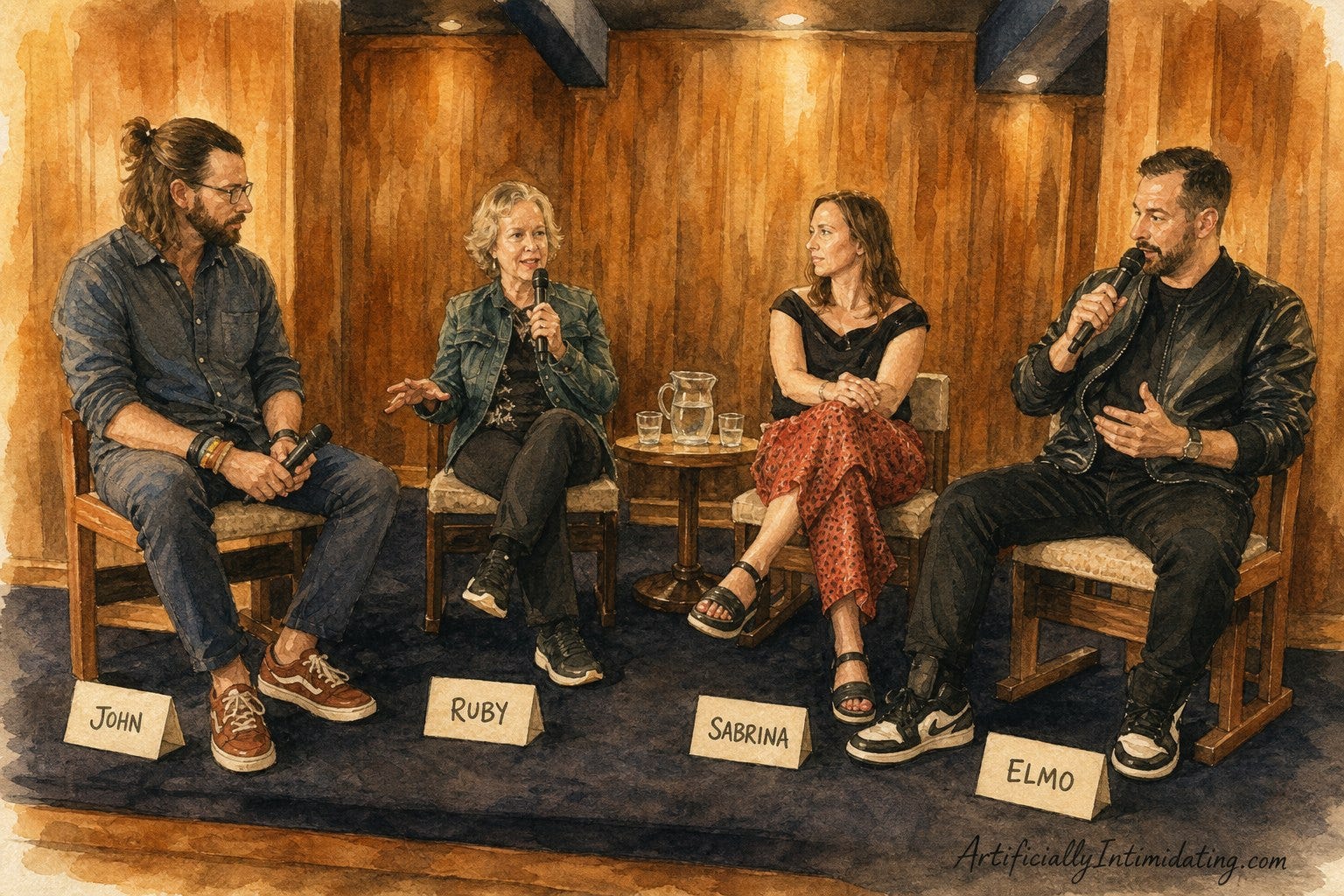
Earlier this week, I sat in a wood-paneled basement room in the Lower East Side for The Artist's Stake, a Creative Frontiers panel on AI and music. On stage: Ruby Marchand, who is the Chief Awards & Global Industry Officer (GRAMMYS!). Sabrina Kartzman, head of music partnerships at OpenAI. Elmo Lovano, founder of Jammcard. Moderating was John Hardin of the Abundance Institute
John is great at using historical examples to shine light on the present in a way that opens peoples minds to look at today differently than they did a few moments before they heard his historical anecdote. He opened with this:
Bing Crosby hated doing live broadcasts. When he heard Jack Mullin's tape recorders in June 1947, he hired Mullin as his chief engineer and put $50,000 into Ampex so he could stop performing his radio show twice a night. Tape bought Bing time. It got him onto the golf course.
Then in 1948, Crosby gave Les Paul one of the first Ampex machines. Within hours, Paul had the idea to add extra heads so he could record a new part while listening to the old ones. Same machine. Bing saw efficiency. Les Paul saw a new kind of music. (if you want more detail, tune into his podcast here where recounts this story.)
That frame is right for the moment we’re in now with AI. And then John said the panel would dig in "more on that Bing Crosby side."
That's where I got frustrated. The emotions aren’t running hot on the Bing side. Nobody's mad that AI can sort your inbox. The fight is on the Les Paul side: who made it, who trained it on what, and who gets paid. Would you agree ?
My first instinct was to blame the panel for staying safely abstract. But I’m not pointing fingers from a safe distance. I’m guilty too.
Because the more I listened, the more I realized I make the same distinction everyone else does: AI feels brilliant when it removes somebody else’s friction, and threatening when it comes for the part of the work we call craft.
What the Panel Said
Here's what I heard from the panel. Some of it was really good.
Ruby was more candid than I expected. The Grammy rule is simple: "End of story. Only humans." But she also admitted there's no tool that can find AI inside a recording. "Today, we rely on an honor system," she said. Entrants disclose. The standard is "meaningful human contribution," more than de minimis. That's an honest answer, and it's a big one.
Elmo said the stigma around AI in music has only gotten worse over the past year, not better. He uses it every day, and he's "not posting about my usage." That was the most telling thing anyone said all night.
Sabrina was upfront that she's eight months into the job and "still figuring it out myself." She works at a company in active IP fights. Of course she's careful.
Then the Audience Asked
One person asked: if anyone can make a song on Suno that sounds better than ten years of learning guitar, how does that compare to a guitar virtuoso using AI to code an app. Another asked about provenance. If AI hands you a lyric, isn't it a co-writer? And should the artists whose work trained these models see some kind of payment, like Jaron Lanier's micropayments idea? A third pitched a new file format that carries attribution with the work.
The answers mostly slid off. Sabrina's reply to the pay question: "We're also a language model, so we're using text to power our model." That's true as far as it goes. But lyrics are text. So is every review, every liner note and every forum fight about a song.
And the closing round? Use it for admin. Stay curious. We're in this together. All fine. None of it takes a position.
My knee jerk was to be mad at the panel for keeping the conversation in the same place it started … and not moving it forward … and … then I realized I do the exact same thing.
Everyone's job looks easy from the outside
Here's the hypocrisy nobody on stage named.
Musicians are upset that AI lets a beginner make a song. In the same breath, a lot of them brag that they don't need a bookkeeper, a lawyer or a developer anymore. Elmo said he spent three years building V1 of Jammcard and three days building V4. He said he doesn't want to pay his lawyer $700 for a contract answer. I'm not knocking him. That's smart.
Sabrina told a story about a chart topping musician who sheepishly opened up his laptop and showed her that he vibe-coded a tour-routing app? We all agreed it was brilliant. On the flip side, if Live Nation vibe-coded a chart-topping touring act there would be a music industry riot.
I realized that I'm not pointing fingers from a safe distance. I'm guilty.
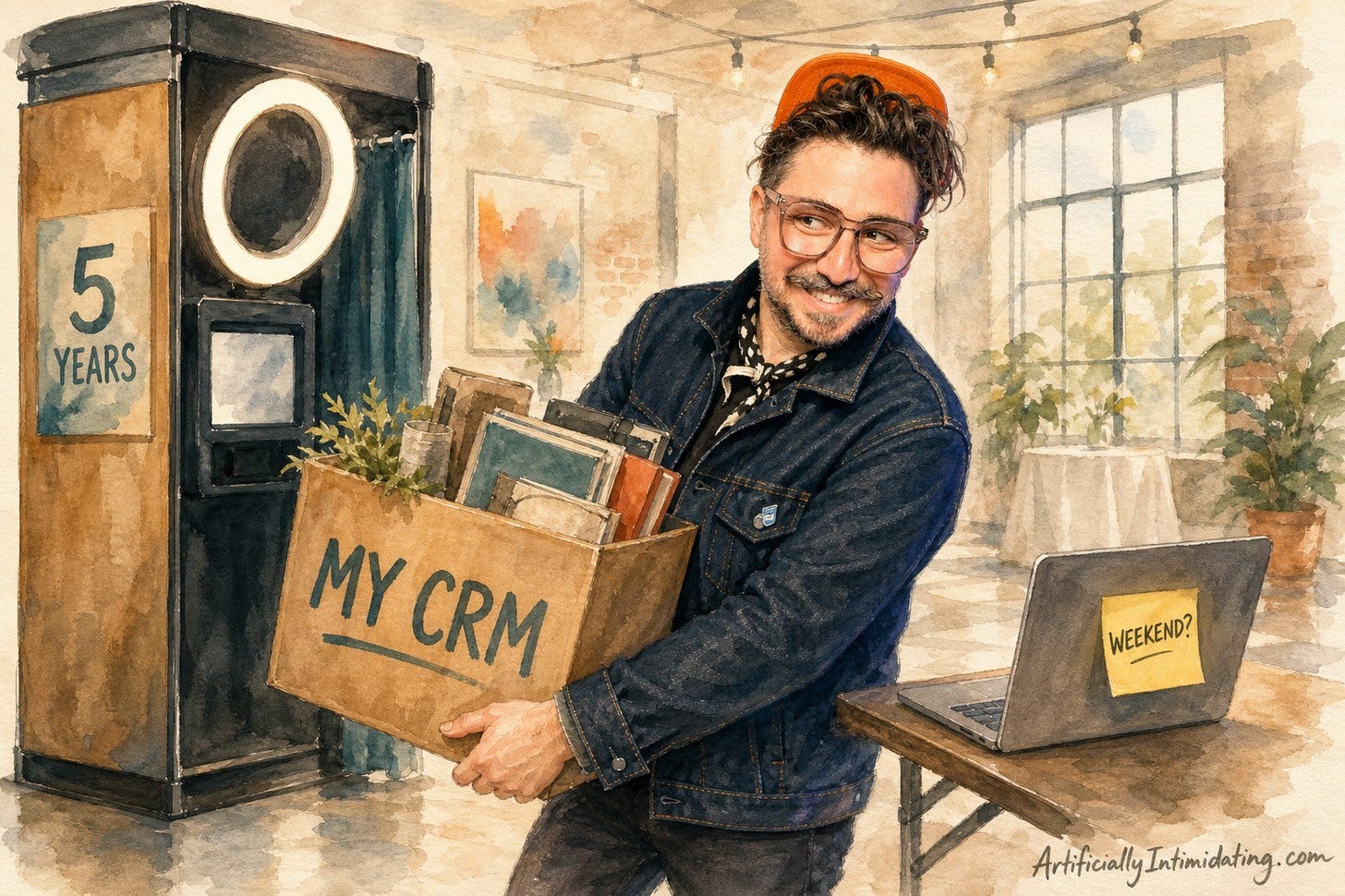
At OutSnapped, we've had a few client meetings lately where someone on the client team says point blank that don't need us anymore. They could just vibe-code a photo booth app. And I do the mental gymnastics every time. Sure you could. But we've got 20+ years of experience and have spent five-plus years and close to $2 million building our app at enterprise grade, so it handles edge cases you can't possibly dream up until it’s way too late. Not to mention, taking a quick glance at their floor plan and noticing how their line management is not going to work and will cut directly into their ROI — we sell way more than a photo booth app.
Then I go home and keep vibe-coding my own CRM to replace HubSpot. I have zero formal coding training.
Everyone sees the hard parts of their own craft. Everyone sees only the surface of everyone else's.
Photographers already lived through this
When I hear musicians describe AI like a brand-new wound, I recognize the feelings all too well.
I'm a photographer by trade with an expensive college degree from Emerson College to prove it. My work was/is endlessly used without permission or payment long before any model trained on it. Then the iPhone came around took the market value of a photo and drove it to about zero. Social Media not only encouraged this, but it made it the norm to devalue creation in exchange for likes and follows.
Then social media came for our audiences. My blog averaged more than 150,000 page views a day, but as Facebook and other platforms changed how people used the internet, we had to publish directly on their platforms just to reach the people who already wanted to see our work. And then instead of profit shares, Facebook actually charged us twice. It ran ads on our content, and then they stopped showing our content to people who wanted to see it unless we paid for advertising. That’s right, Facebook/Instagram charged us to run our own ads so our fans could see what we posted.
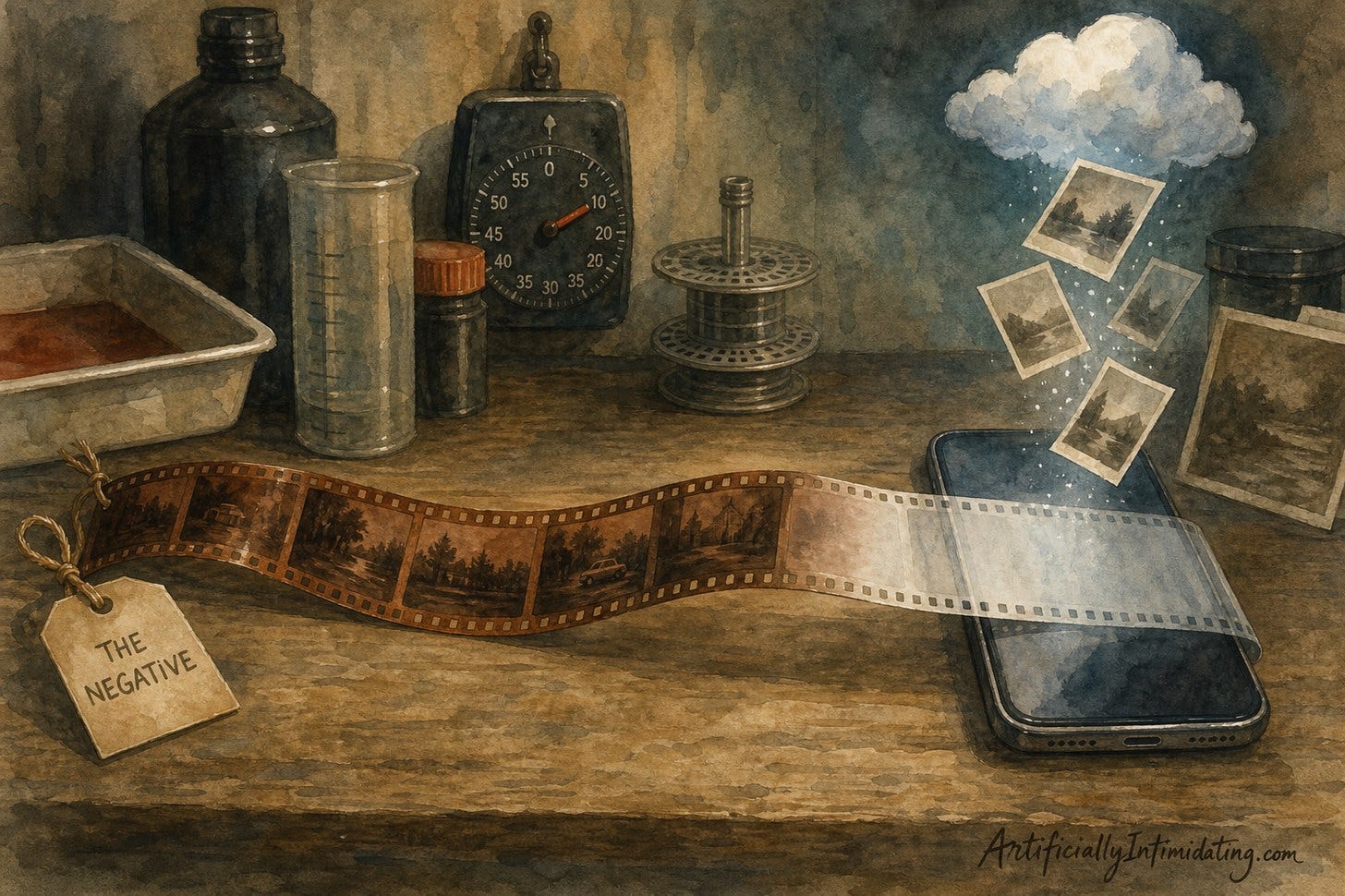
The law never caught up either. Photo ownership still leans on the idea of a literal physical negative. Today there's rarely a negative, or even an original. The file gets uploaded to the cloud and deleted from the phone or camera’s memory card. That's basically destroying the negative, every single time.
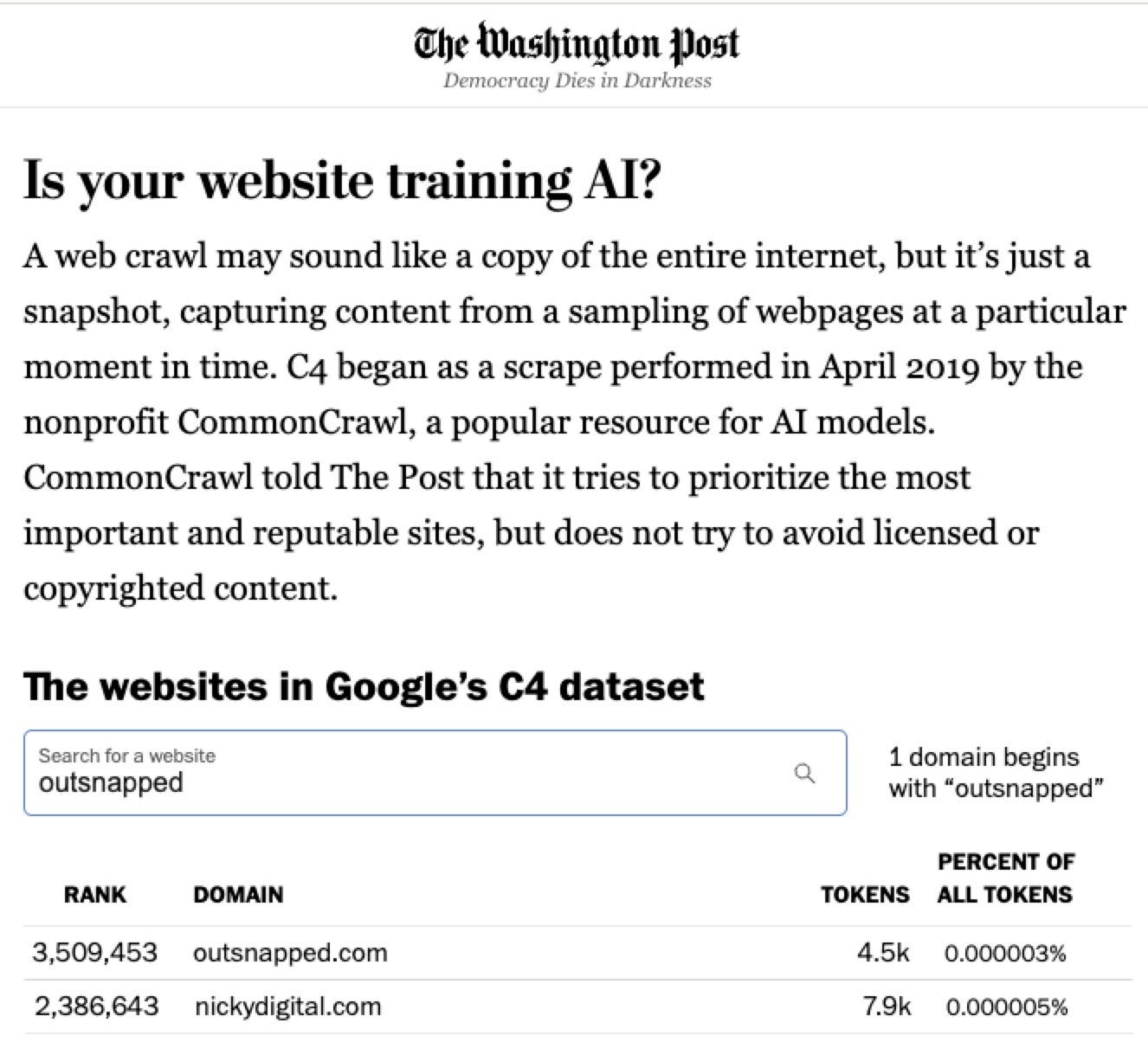
So when the Washington Post published a piece on the websites training AI like ChatGPT and outsnapped.com and nickydigital.com both showed up in the data? I shrugged. I’m sure that number's only grown exponentially since then. The tools I use every day, and services I sell through my own products, wouldn't exist without data like mine. You can't have your cake and eat it too.
Why music gets the licensing conversation
So why is music getting an amplified seat at the table when photos and blogs mostly got scraped?
Some of it is real. Music is emotional. It's been sacred to people as long as we've told stories.
But mostly? Music has the power to sue. Three major labels control a huge share of what's been recorded. Photographers never had anything like that.
Watch what the labels do with that power. When Spotify launched, the labels got equity through license negotiations. They paid nothing for the stock. When Spotify went public in 2018, Sony sold half its shares for $768 million and paid over $250 million of it to artists. That's about a third. Warner did worse. It made $504 million, set aside 25% for artists, and then counted that against their unrecouped advances, so much of it stayed at Warner.
The royalty pipe runs through the label too. Spotify pays the label, and the label pays the artist a slice. In UK Parliament testimony, one artist advocate said major-label deals usually split about 80/20 in the label's favor, while fully independent artists keep around 55%.
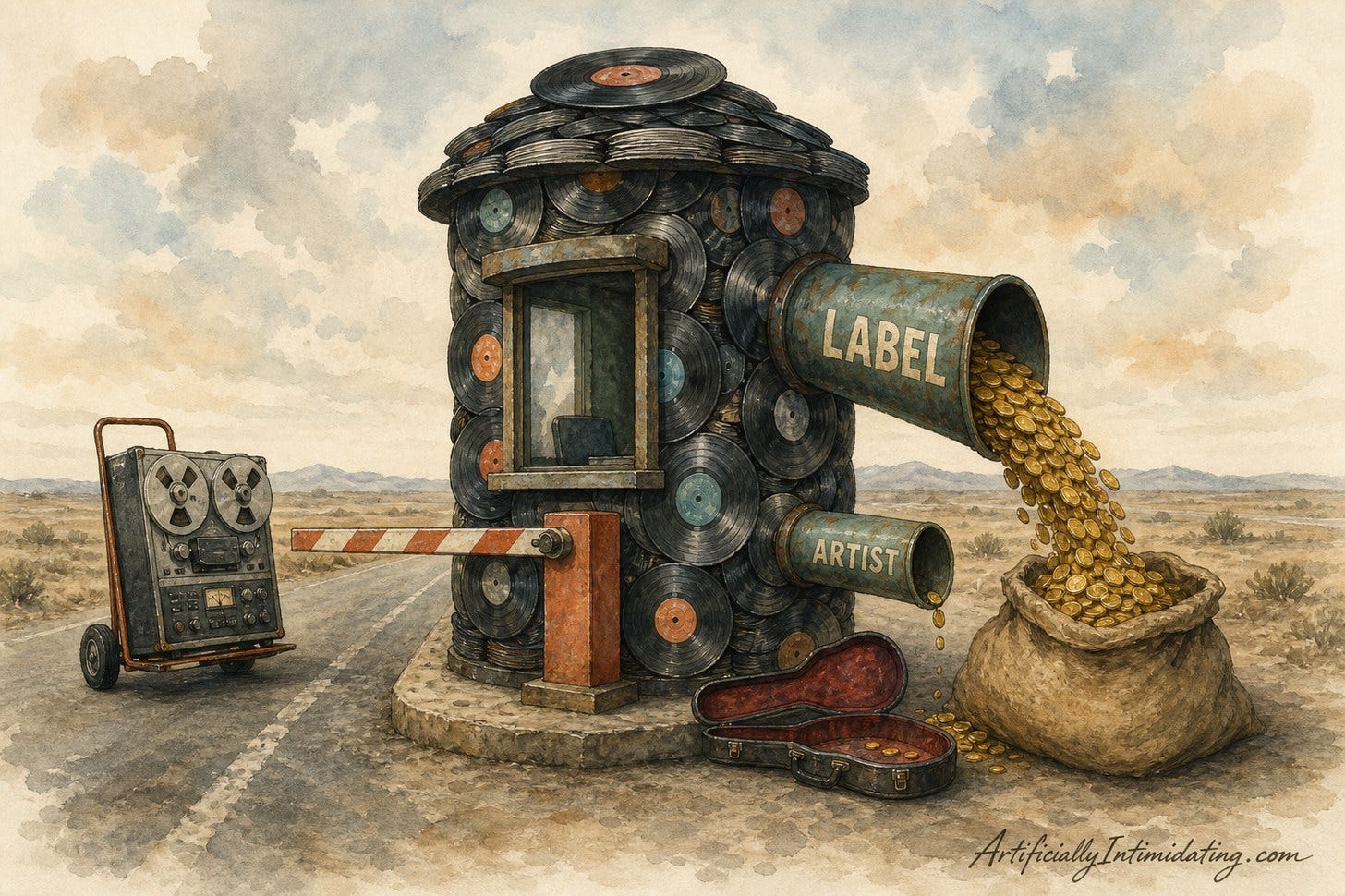
Now watch AI. In June 2024, all three majors sued Suno and Udio for training on their recordings without permission. By late 2025, Universal and Warner had settled with Udio and signed licensing deals, and Warner turned its Suno lawsuit into a partnership. Irving Azoff's Music Artists Coalition saw the pattern coming. His warning: artists end up on the sidelines with scraps.
Sue. Settle. Partner. Take a cut. That's not protecting artists. That's a business model.
To be fair, what the labels have is a conflict of interest, not a proven scheme. Money in royalties gets shared with artists by contract. Money in equity and partnerships often doesn't have to be.
So who really does owns the lyric?
The provenance question deserved a real answer. Here's the best one I've got.
If AI writes a line, it isn't technically your co-writer. But the line isn't technically yours either. In January 2025, the U.S. Copyright Office said purely AI-generated material made from prompts can't be copyrighted, because according (to them) prompts alone don't give a person enough control. You can still own your own writing inside the output, plus your creative choices in selecting, arranging or changing what the AI made. But the raw line? It technically belongs to no one. That's the gap under the Grammys' "de minimis" standard.
The attribution file format that audience member asked for? It kinda sorta exists. It's called Content Credentials. Initially, the idea was to mark content as created by AI. Fast foward to today, the amount of content made by AI, which as you read above is not owned by anyone (or maybe more arguably owned by everyone) has far outpaced the amount of human creation since the beginning of time. How cool/gross is that?
Anyhow, back in, 2024, OpenAI joined the C2PA steering committee, alongside Adobe, the BBC, Intel, Microsoft, Google, Sony and Truepic, to push a tamper-resistant tag that shows how and when content was created or changed. Yes, Sony is on that list.
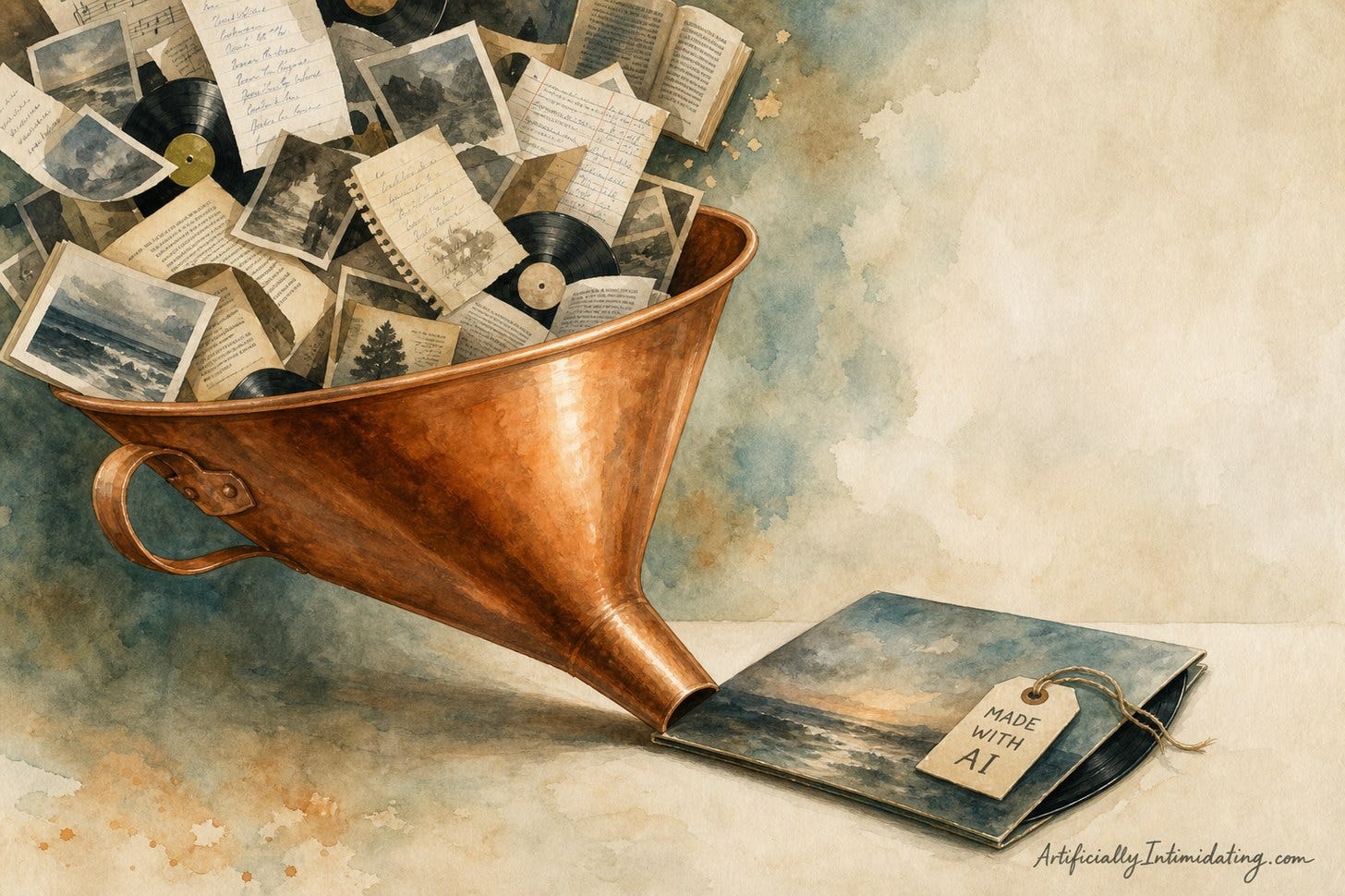
But here's the catch. That tag tracks the output. It tells you whether AI made something. Nobody has a working system for tracing the input, what a model was trained on. And the input is the half that would get anyone paid.
It's the physical negative problem all over again, at internet scale. The original gets absorbed, and the copy carries no trace of where it came from.
Should we get paid?
Sure. In a perfect world, we all should.
But look at the biggest check so far. A federal judge approved a $1.5 billion settlement where Anthropic pays authors about $3,000 per book, across more than 482,000 books. The lawyers called it the largest copyright recovery ever. And even that wasn't for training. The earlier ruling found training on books wasn't illegal. The money was for getting millions of them from pirate sites.
Three thousand dollars is real money, But ask any author if it's what their book is worth …
That's the part no panel can answer. I wonder if any dollar amount will ever come close to the emotional value we put on our ideas and our sense of self. We're arguing about money. What we're really defending is the feeling that part of each of us is in our work and our work is ours.
What my CRM project taught me
So where's the line? My CRM project is helping me find it … and it’s moving in both directions every day.
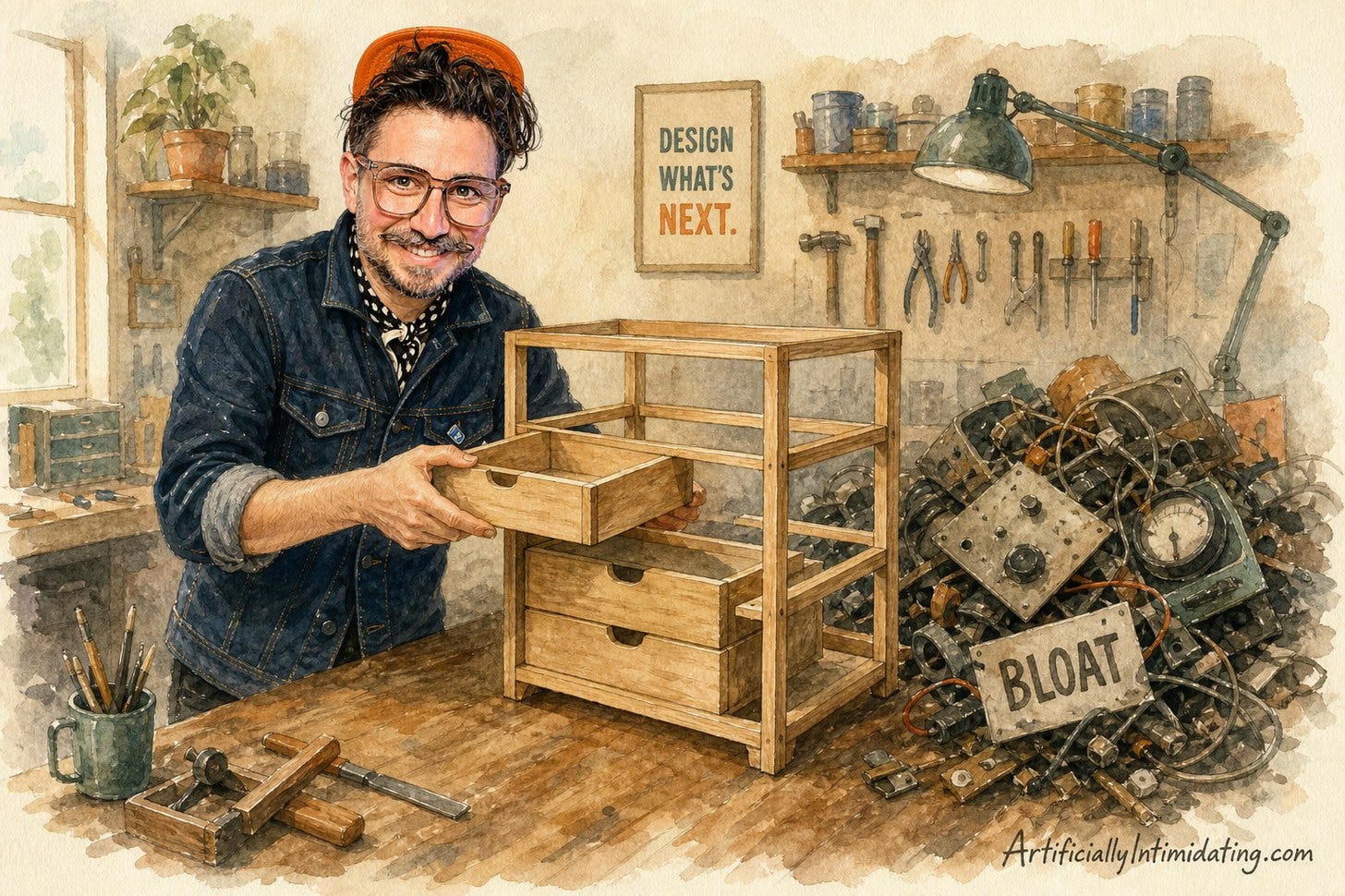
I didn't build it from scratch. I started with Twenty, a modern open-source CRM, as the skeleton, because data privacy and compliance are still out of my wheelhouse. Then I cut the bloat from Hubspot, the bad UX and the features that never worked for us. Now I'm building back only the pieces we actually miss.
We made concessions. But for our use case, it's infinitely better than HubSpot at less than 80% of the cost.
I didn't replace anyone's expertise. I borrowed it where it counted, and cut the padding I'd been paying for.
That’s the line. for me. Maybe Ruby’s version was simpler: “End of story. Only humans.” Mine is narrower. Not human versus AI. Not build versus buy. The craft you can’t fake, versus the padding you were paying for. A musician using AI for tour routing cuts someone else’s job — a booking agent’s, not their own. Someone generating a whole album with one prompt skips their own craft. Either way, the question isn’t whether AI touched it. It’s which part it replaced.
The questions I wish we'd asked
Creative Frontiers built a great room. The audience proved that. So here are the questions I'd love discuss with anyone who wants to talk:
Where's the line on "human-made" when influence can't be measured? If everything I've read, heard and tested for three years went through a machine first, where does my taste end and the model's begin? The Grammys never asked John Mayer to list every guitarist he learned from. Why would the line sit at a machine?
Which jobs is the music industry fine with AI replacing, and why does the line land exactly at our own?
When the labels settle with AI companies, how much of that money reaches the artists whose songs trained the model?
Bing and Les Paul looked at the same machine and saw two different futures. We're doing the same thing right now. The least we can do is admit that most people don’t truly have a choice … they have to straddle the line. Myself included.
Editor’s note: This version has been edited since the original email was sent to better express my appreciation for the opportunity to be in that room, to more deeply examine my own hypocrisy, and to correct typos and other rough edges.