

Good day, humans. Anthropic just crossed $45B in annualized revenue and is now chasing a $900B valuation — which would make it the most valuable AI startup on earth. Meanwhile, Google quietly dismantled one of Silicon Valley's oldest hiring traditions, and a journalist bought real-time deepfake software for less than a Netflix subscription. Big week. Let's get into it.
📬 Before we dive in: The sharpest AI Brief tips come from readers who are actually in the weeds. If you spot a story worth covering, share it in the community chat. The best tips make tomorrow's edition.
Anthropic Eyes $900B in a $50B Mega-Round · The Decoder
What happened: Anthropic is reviewing investor offers for a new funding round of up to $50 billion at a pre-money valuation of roughly $900 billion — which would make it the world's most valuable AI startup, surpassing OpenAI's March valuation of $852 billion. The FT reports Anthropic's annualized revenue is now approaching $45 billion, a fivefold increase from $9 billion at the end of 2024.
Why it matters: This is the fastest revenue ramp in software history: from $87M ARR in January 2024 to $45B today — in 28 months. Earlier this week we noted Anthropic hit $30B; that number has already been revised upward again. An IPO as early as late 2026 is now on the table.
What everyone's saying: Investors are racing to get in before the IPO. Dragoneer, General Catalyst, and Lightspeed are among the interested parties. CEO Dario Amodei held off on the round until compute deals with SpaceX, Google, Broadcom, and AWS were locked in — which tells you something about what infrastructure confidence does to your valuation.
My read between the lines: Anthropic's revenue story is largely the Claude Code story — a product that didn't exist 18 months ago and now generates over $1B ARR on its own. When a coding assistant is the backbone of a potential trillion-dollar IPO, someone needs to write the post-mortem on "AI won't take software jobs." The irony writes itself.
📖 Further reading: Anthropic Hit $30B and Immediately Started Acting Like It — the trajectory we called remarkable last week has already accelerated again.
You spend all week reading about AI. WisprFlow is the one I actually use. It's voice dictation that works across every app on your Mac — speak, and it writes. No switching, no copying, no friction. If you're still typing everything, this is the upgrade. Try WisprFlow free →
Google Just Rewired the Tech Job Interview · Tekedia
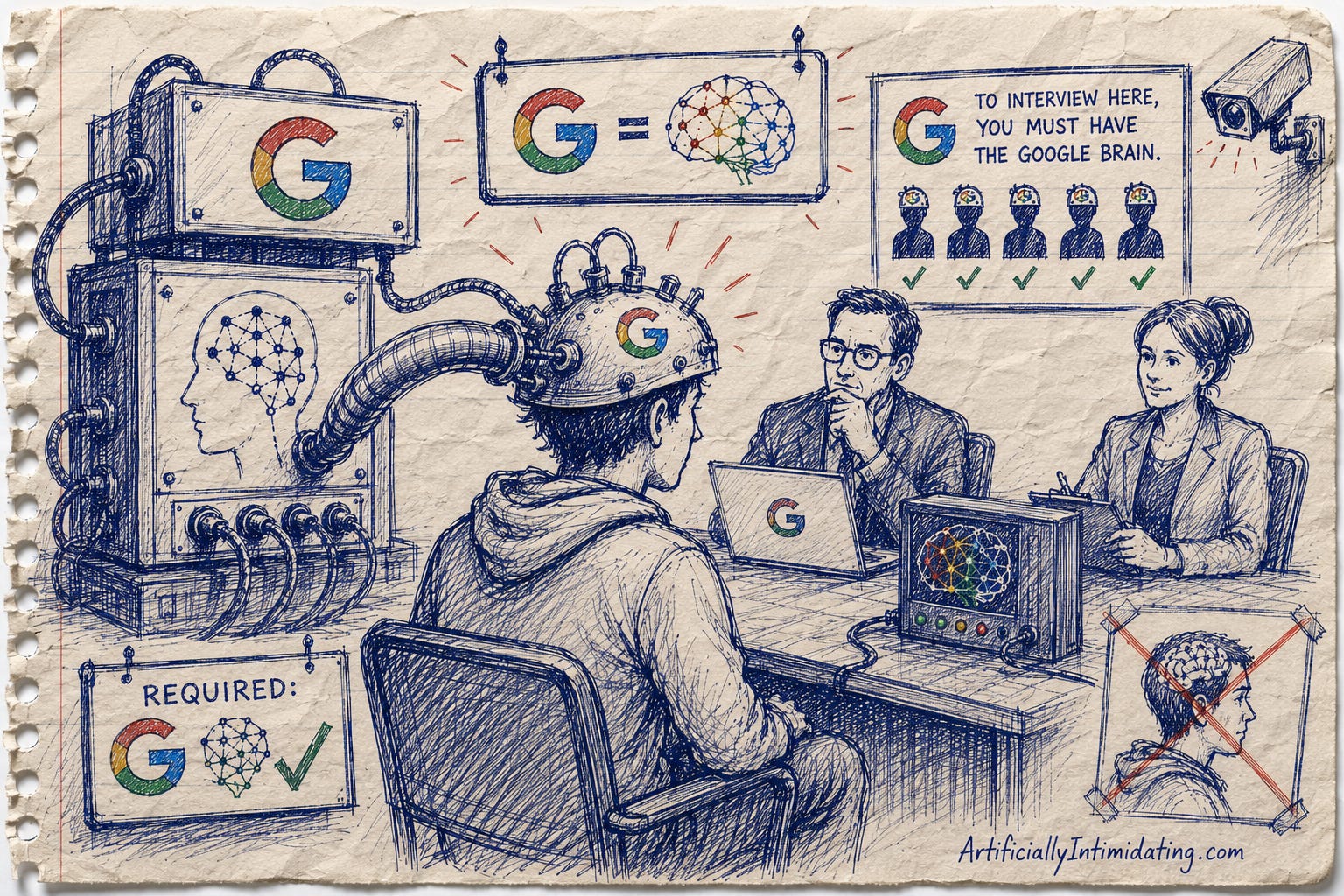
What happened: Google is piloting a new interview format that allows software engineering candidates to use AI assistants during a "code comprehension" round — initially for junior to mid-level US roles, with potential global expansion. The company calls it reflective of "how our teams are operating in the AI era."
Why it matters: This ends a foundational assumption of elite tech hiring — that unassisted, whiteboard-style coding ability is the right signal for engineering talent. If Google says AI fluency is what you're actually testing for, every other company's HR team just got a new memo to write.
What everyone's saying: Two camps have formed: those who see this as intellectually honest (you use AI on the job, why test without it?) and those worried it collapses the ability to distinguish strong engineers from strong prompt writers. Both camps have a point.
My read between the lines: The fact that Google is announcing this publicly is the tell. They're not just changing their process — they're giving the rest of the industry permission to follow. Expect AI-assisted interview rounds to be standard at every major tech company within 18 months. The whiteboard interview as we knew it is done.
OpenAI Puts Codex Inside Your Browser · The New Stack
What happened: OpenAI launched a Chrome extension for Codex that can perform tasks directly on popular websites — including LinkedIn and Salesforce — as part of OpenAI's "super app" push to combine ChatGPT, Codex, browsing, and agentic capabilities into a single cross-platform system.
Why it matters: This is the inflection from "AI that helps you code" to "AI that does things on the web for you." The browser is where most of your work actually happens — and OpenAI just moved in. For practitioners, this is the closest consumer-facing equivalent to the agentic workflow tools enterprise teams have been paying to build.
What everyone's saying: Developers are excited; enterprise IT and security teams are composing acceptable-use memos. Browser extensions are already one of the largest attack surfaces in enterprise environments, and an AI extension that can take actions on authenticated websites is a new category of risk that nobody's fully modeled yet.
My read between the lines: OpenAI earmarked part of its $122B raise for the super app. A Chrome extension is not a super app — it's a beachhead. Get Codex into the browser workflow now, make it indispensable, then expand scope. The AI wars are increasingly being fought in your address bar, and this is just the opening move.
📖 Further reading: Carry Claude Code in Your Pocket. No Install. No GPU. No Trace. — if Codex is coming for your browser, this is what sovereign AI tooling looks like instead.
A $15/Month Deepfake Tool Is Crashing KYC Everywhere · ID Tech Wire
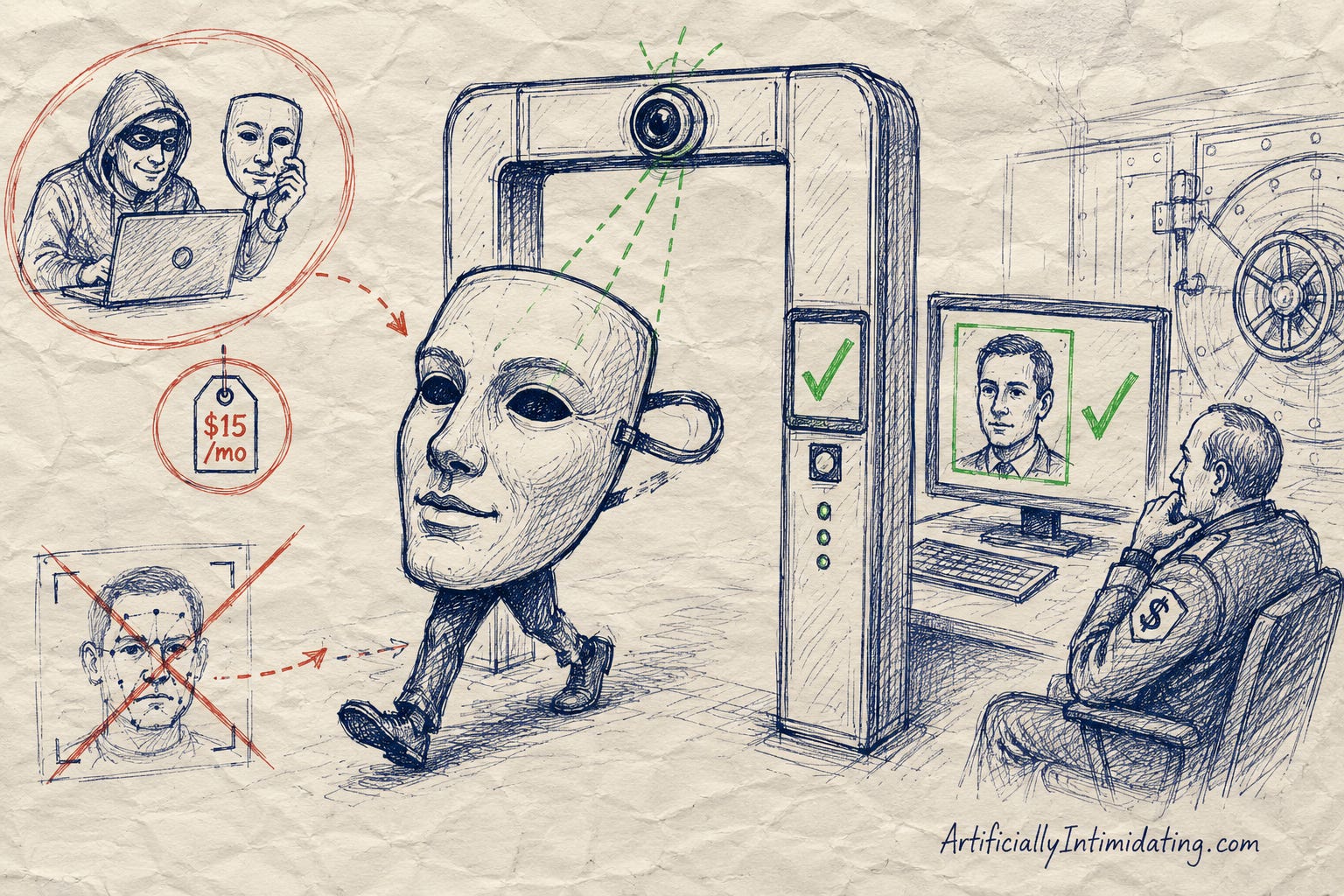
What happened: 404 Media journalist Joseph Cox obtained and tested "Haotian AI," a real-time deepfake software package marketed to operators inside Southeast Asian scam compounds. The tool replaces your face live in video calls on Zoom, Teams, WhatsApp, TikTok, and YouTube. In April 2026, the vendor added a KYC bypass module that can apparently defeat the selfie liveness checks used by banks and crypto exchanges.
Why it matters: The "liveness check" — where you're asked to blink or match your face to your ID — was the last line of defense against synthetic identity fraud. That defense is now commercially available for a few dollars a month. The implications for online banking, crypto onboarding, and remote hiring are significant.
What everyone's saying: Biometric security researchers aren't surprised — they've tracked this vector since early 2025. But the public availability, subscription pricing, and breadth of supported platforms represents a step change in accessibility that the security industry wasn't keeping pace with.
My read between the lines: The tool is built on openly licensed AI models released as a public good. The uncomfortable truth: the gap between "frontier AI for researchers" and "real-time face swap for scam compounds" was always going to be measured in months, not years. Every KYC provider betting on biometrics alone needs to rethink their stack — and they needed to do it yesterday.
China Writes a $2B Check to Its Open-Weight Challenger · Asanify
What happened: Moonshot AI — the Chinese lab behind the Kimi open-weight model — closed a $2 billion funding round at a $20 billion valuation, backed by Meituan, Alibaba, and Tencent. The lab already has $200 million in annual recurring revenue.
Why it matters: This is China's big tech consumer internet complex putting serious institutional capital behind an open-weight challenger to US frontier labs. For any developer or enterprise not wanting to pay OpenAI or Anthropic prices, a well-funded, open-weight alternative with $200M in commercial traction is a credible option — and one that gets cheaper as it scales.
What everyone's saying: The "frontier means closed" thesis from US labs is under pressure. Moonshot's commercial traction suggests viability doesn't require the closed-model playbook, and the open-weight approach is increasingly seen as a credible commercial strategy, not just a research posture.
My read between the lines: $200M ARR at a $20B valuation is a 100x revenue multiple. In any other era that's a red flag; in China's AI sector right now, it's just a Saturday. Compare it to Anthropic's $45B ARR at $900B — a 20x multiple — and China's numbers suddenly look almost conservative. The AI financial race is accelerating as fast as the technical one, and neither side has any interest in slowing down.
That's your AI Brief for Saturday, May 9. Join the conversation in the Artificially Intimidating community chat.
—Artificially Intimidating