

Good day, humans. Trust is having a rough week. Anthropic is being sued by its own power users, the world’s top deepfake detective just admitted he can’t tell real from fake anymore, and ChatGPT quietly wrapped every third-party app in two iframes because it doesn’t fully trust them either. Five stories, one theme. Let’s get into it.
🎟️ Before we dive in — we’re taking this offline.
“Not Your Average AI Meetup: Creativity, Culture & Curiosity” is TONIGHT, Tuesday, June 16 · 8 PM · Lower East Side, NYC.
Drinks, real conversation, no slides — plus a lightning round: “What’s the most interesting thing AI did this week?” You’re holding this week’s answers.
It’s a $3 ticket on purpose, to keep the room full of people who actually show up.
Anthropic Gets Sued Over Claude’s Fine Print
Source: Engadget
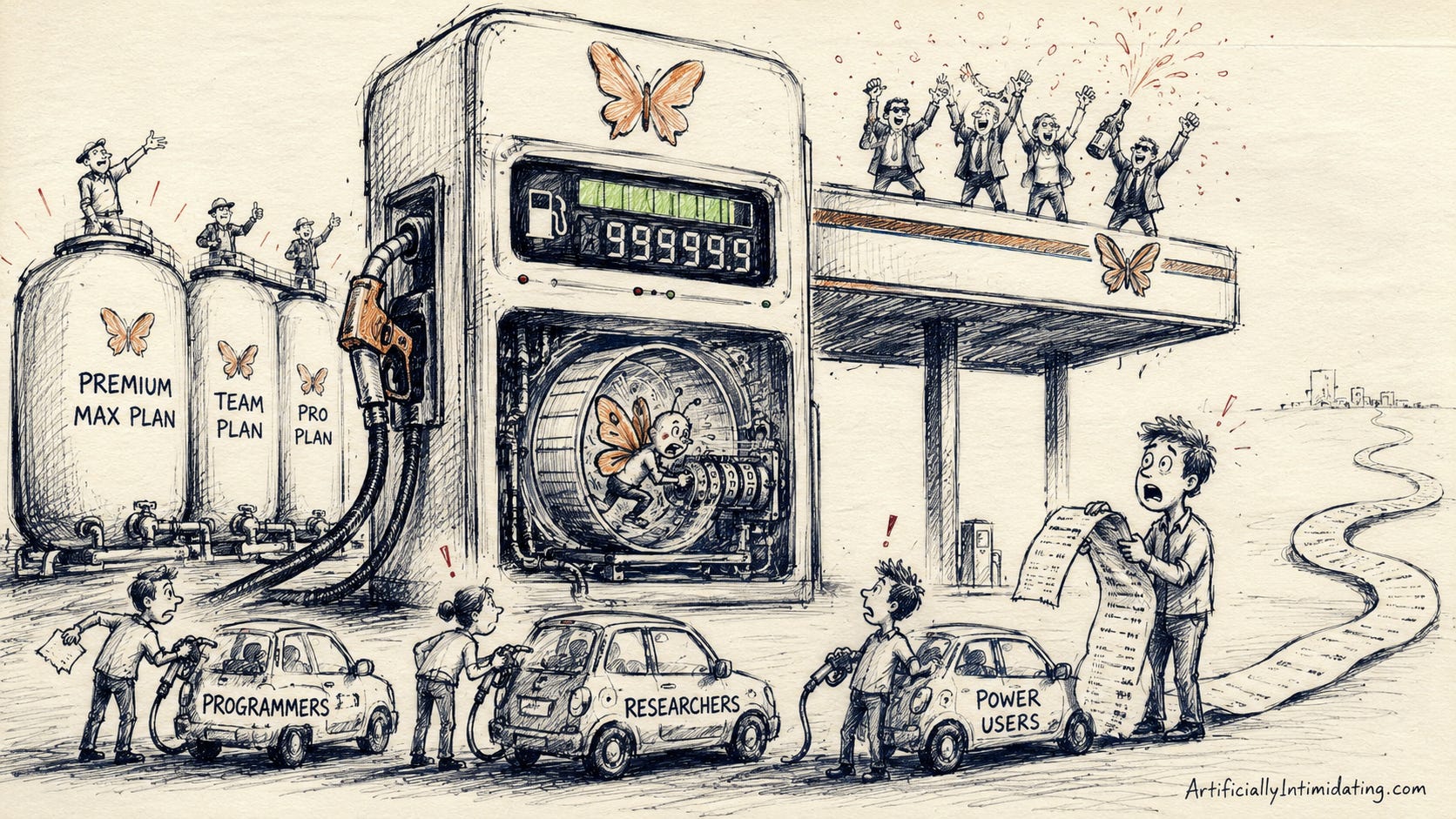
What happened: Yesterday we called it “Anthropic charges by the token” — today’s the full story. Karl Khan, a Washington, DC Claude user, filed a proposed class action in California federal court alleging Anthropic misled buyers of its $100 Max 5x and $200 Max 20x plans, whose real usage caps land far below the advertised amount. He says a single five-hour coding sprint could burn through nearly 20% of his weekly allowance.
Why it matters: If you’ve ever paid for an AI subscription and slammed into a wall you didn’t see coming, this suit is about you. It’s one of the first real legal tests of how clearly AI companies must disclose what “unlimited-ish” actually means before charging you $200 a month.
What everyone’s saying: Anthropic declined to comment, and the complaint pegs damages above $5 million. As CNET notes, Claude’s rate limits have been a running sore on Reddit for months — the lawsuit just turns the griping into a filing.
My read between the lines: The timing is brutal. Anthropic spent this week explaining that it meters Claude “by the token” — and now a customer is arguing the meter was rigged from the start. When your pricing is so opaque that even your biggest fans can’t predict their own bill, “trust us” stops being a business model.
📖 Further reading: The US Government Just Took Anthropic’s Best AI Model Offline — Here’s Why — Washington already had Anthropic under the microscope this month; now its own power users are too.
Today’s brief is brought to you by Viktor.
You just read that OpenAI is hiring 300,000 humans to deploy AI — Viktor skips the middleman.
It’s an AI agent that lives in your Slack, plugs into 3,000+ tools, and ships the actual work: reports, dashboards, code, campaigns. Not a chatbot you babysit — a coworker that delivers.
New users get $50 off their first month. Hire Viktor →
iOS 27’s Beta Spills Siri’s Real Secrets
Source: MacRumors
What happened: Developers digging through the new iOS 27 beta found a far more capable Siri than Apple showed off on stage. The revamped “Siri AI” can pull answers from your emails, texts and photos, see what’s on your screen, change a compromised password on its own, and build Shortcuts from a plain-English sentence.
Why it matters: This is Apple’s long-delayed attempt to make Siri actually useful — an assistant that knows your life well enough to find “that photo from the barbecue” or reschedule a meeting without you spelling everything out. For most people, it’s the first time AI shows up natively on the phone already in their pocket.
What everyone’s saying: Outlets like MacRumors and 9to5Mac are cataloguing dozens of buried features, and the consensus is that iOS 27 is Apple’s biggest software update in years — even if the headline Siri brain rolls out in stages this fall.
My read between the lines: Apple’s pattern is to under-promise on stage and let the beta diggers do the marketing. A Siri that reads your screen and silently rotates your passwords is exactly the kind of deep access that sounds magical right up until you remember every other company that asked for it. The privacy pitch is doing a lot of heavy lifting here.
📖 Further reading: Thanks to Apple, Your Favorite AI Tool Is a Dead Tool Walking — when Apple turns Siri into the default front door, the standalone AI apps you pay for start looking awfully optional.
Why ChatGPT Hides Apps Inside Two Iframes
Source: StartupHub.ai
What happened: Developers noticed ChatGPT’s new in-chat “apps” render inside two nested iframes on a locked-down subdomain, not one. OpenAI’s Alexandre Barthelet explained it’s deliberate: the double wrapper plus a strict content-security policy isolates third-party app code so it can’t reach your ChatGPT session — or the other apps loaded next to it.
Why it matters: ChatGPT is quietly turning into an operating system, with apps running inside your conversation the way programs run on your laptop. And like any OS, it now has to sandbox untrusted software so a sketchy travel widget can’t read the medical chatbot sitting one message above it.
What everyone’s saying: Developers are calling it “CSP as the new CORS” and “the conversation is the new desktop.” A new arXiv paper, Confused ChatGPT, argues the sandbox still leaks: co-resident apps share one context window with no provenance, opening the door to “confused deputy” context-poisoning attacks.
My read between the lines: Two iframes is a remarkable amount of plumbing to admit a simple truth — nobody should trust the apps they’re letting into the chat, including the platform hosting them. We spent a decade learning to be suspicious of browser tabs. The chatbot just reinvented the tab, and inherited the security headache that came with it.
📖 Further reading: Your Laptop Has Been in the Way This Whole Time — if the conversation is becoming the computer, this is the playbook for the agents that will live inside it.
Disney, the NYT and Adobe Form an AI Pact
Source: Deadline
What happened: A new coalition, the Alliance for Responsible Innovation in the Arts & Media (ARIAM), launched with a heavyweight roster — Disney, The New York Times, Adobe, the BBC, the Financial Times, Condé Nast and Wiley among them — led by Netflix alum Victoria Furniss. Its stated mission: make sure AI in media is “developed and deployed responsibly.”
Why it matters: These are the companies whose articles, films and photos trained today’s AI — and several are suing over exactly that. Banding together signals they’d rather shape the rules of AI-and-content from the inside than keep fighting it one lawsuit at a time.
What everyone’s saying: Per Deadline, the group frames itself around protecting creative work and human authorship. Skeptics note that “responsible innovation” coalitions tend to be long on principles and short on enforcement — and that several members are hedging, licensing to AI firms with one hand while signing manifestos with the other.
My read between the lines: When Disney and The New York Times — who agree on almost nothing — show up to the same press release, it isn’t idealism, it’s leverage. This is rights-holders building a standards body so they own the definition of “responsible” before regulators or OpenAI write it for them. Provenance is about to become a business.
The Deepfake Hunter Who Can’t Trust His Eyes
Source: The New York Times (paywalled)
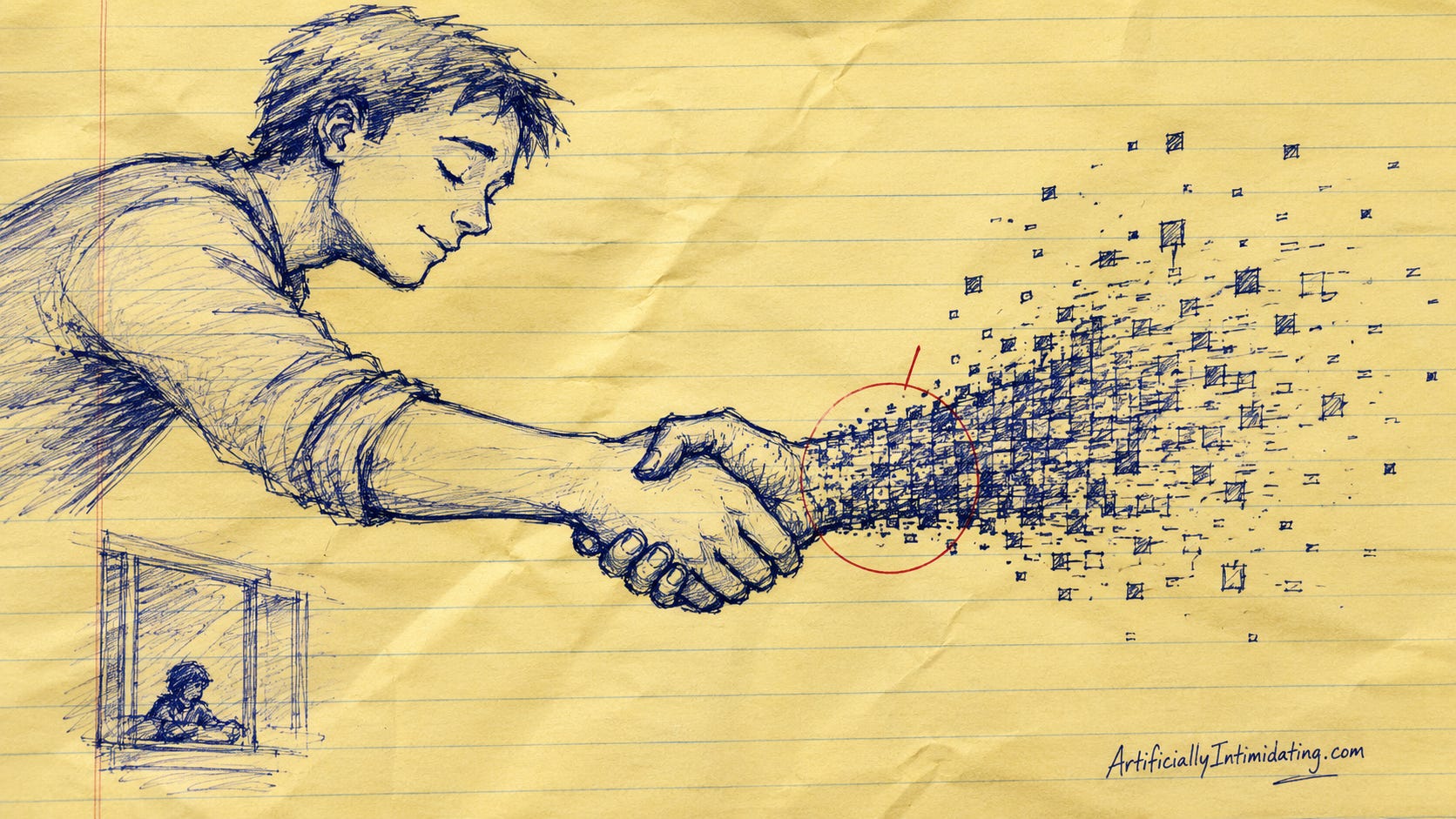
What happened: In a New York Times profile, UC Berkeley digital-forensics pioneer Hany Farid — for two decades the person governments and newsrooms called to verify a video — admitted AI-generated media has gotten so good he’s begun failing his own authenticity tests. “I feel like I’m going blind,” he said.
Why it matters: Farid is the closest thing the world has to a human lie-detector for images, and he’s effectively raising a white flag. If the expert can’t tell a real bombing from a generated one, the rest of us scrolling past at 2x speed have no chance — and that’s a problem for courts, elections and your group chat alike.
What everyone’s saying: Coverage from PYMNTS to the San Francisco Chronicle ties the moment to hard numbers — one firm, DeepStrike, clocked a roughly 900% jump in deepfake content over the past year. Farid is leaving Silicon Valley for a Vermont farm, which reads as its own kind of verdict.
My read between the lines: The scariest part isn’t the fakes — it’s the “liar’s dividend” Farid himself coined: once everyone knows video can be faked, the guilty get to wave off real footage as AI. Detection was always going to lose this arms race. The quiet endgame is a world where “prove it’s real” replaces “prove it’s fake,” and nobody’s selling that tool yet.
📖 Further reading: AI Is a Trust Problem, Not a Tech Problem — Farid’s white flag is the human face of the argument we made: the tech raced ahead of our ability to believe it.
That’s your AI Brief for Tuesday. Join the conversation in the Artificially Intimidating community Discord.
—Artificially Intimidating