


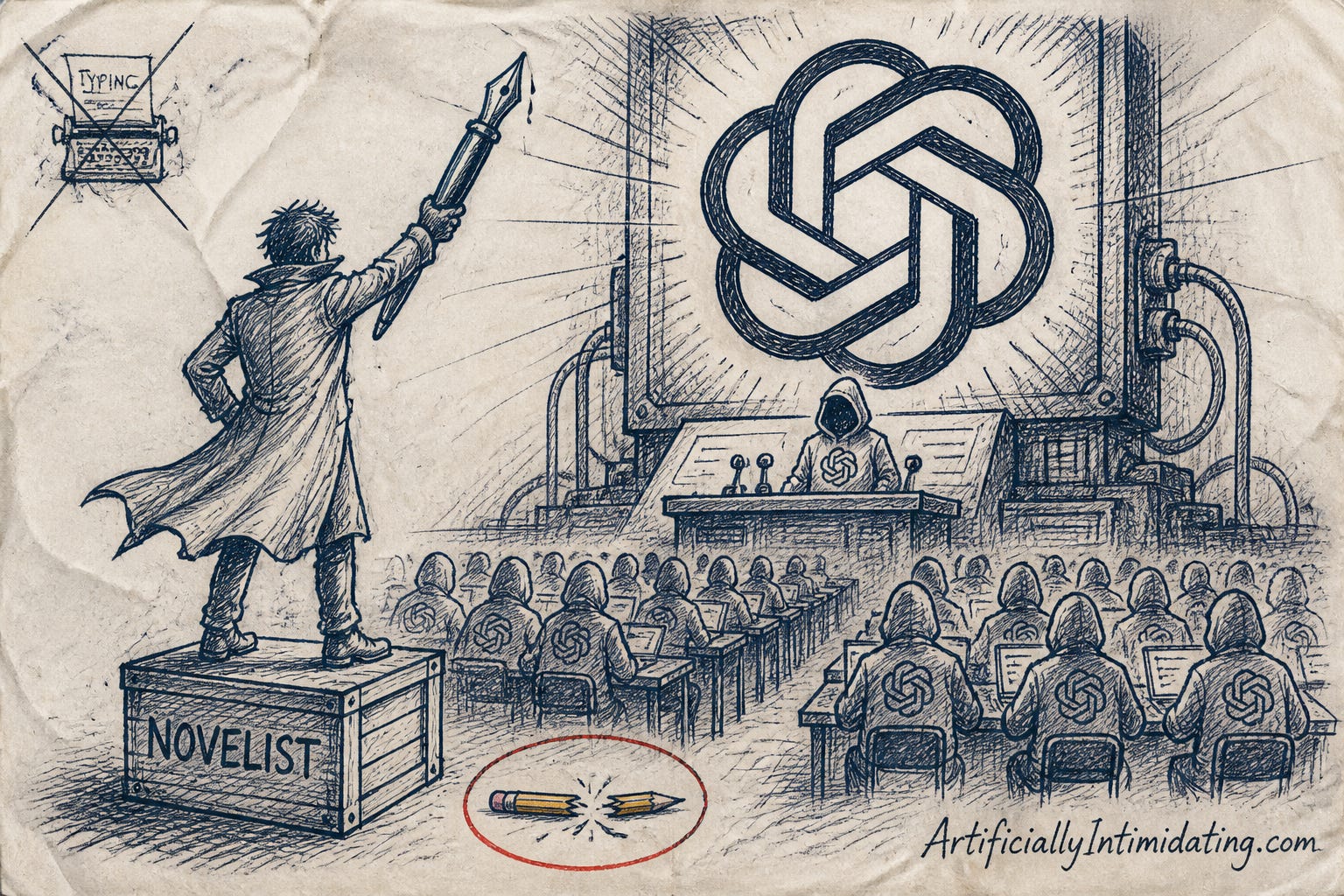
Good day, humans. Today’s brief is really about one word: consent. A National Book Award finalist walked into OpenAI’s headquarters and told 200 employees that ChatGPT is “silencing an entire generation” — to their faces. Meanwhile an AI is quietly transcribing your Monday standup whether you agreed to it or not, Anthropic’s free Fable 5 experiment expires at midnight, and the AI apps you signed up for can’t seem to keep you. Let’s get into it.
Dave Eggers Reads OpenAI the Riot Act
What happened: OpenAI CEO Sam Altman invited acclaimed novelist Dave Eggers — author of “The Circle,” founder of McSweeney’s — to address his staff, and Eggers used the stage to tell roughly 200 employees that ChatGPT is “silencing an entire generation” and has made “every teacher’s job untenable.” The confrontation, first reported by the Financial Times, only surfaced this week.
Why it matters: This is the creative world’s objection distilled to one room: the fear isn’t that AI writes badly, it’s that it removes the productive struggle — the part where a student actually learns to think. When the man who built free youth writing centers says you’re breaking education, it lands differently than another angry thread.
What everyone’s saying: The clip reignited the writers-vs-AI fight that’s been simmering since the New York Times copyright suit. Educators cheered; AI boosters shot back that ChatGPT is also the best free tutor a struggling kid ever had.
My read between the lines: The tell is that Altman invited him. You don’t hand the mic to your loudest critic unless you’re either supremely confident or quietly worried — and “we built a plagiarism detector, then quietly killed it because it didn’t work” hints at which. Eggers didn’t crash the party. He was the entertainment.
📖 Further reading: The Font That Beat AI for About a Week — creatives keep finding ways to push back on AI; a novelist storming OpenAI’s own HQ is just the loudest version yet.
Eggers’s real complaint is AI that does your thinking for you. Viktor does the opposite kind of work — the grind you’d happily hand off. It’s an AI agent that lives in Slack and plugs into 3,000+ tools, then actually ships: the weekly metrics dashboard, the follow-up campaign, the reconciliation nobody volunteers for. Not a chatbot you prompt — a coworker who delivers. New readers get $50 off their first month. Hire Viktor →
An AI Sat In on 1 in 3 of Your Meetings
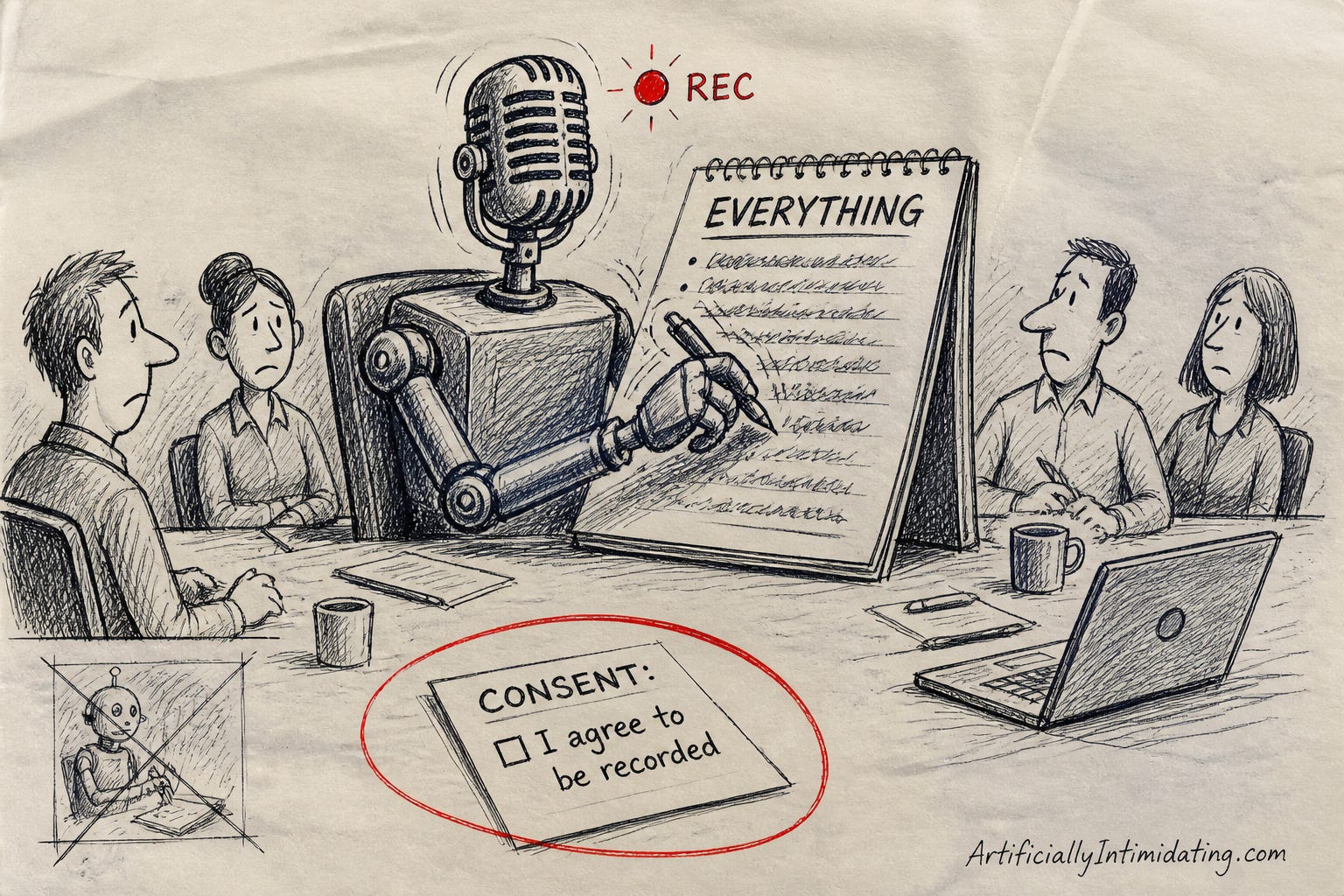
What happened: A new Stacker survey found AI notetaker bots have quietly joined about one in three US workers’ meetings — but only a third of those workers say anyone asked permission first. The bots record, transcribe, and summarize; the humans often find out when the recap email lands.
Why it matters: Consent is the whole ballgame. A transcript is a permanent, searchable record of an off-the-cuff conversation, and “who authorized this?” is a question most companies never answered. If you’ve ever said something in a meeting you wouldn’t put in writing — congratulations, it may now be in writing.
What everyone’s saying: Even Zoom users are pushing back on recording overload. The productivity crowd loves never taking notes again; the privacy crowd points out that “helpful” and “surveilling” are doing a lot of overlapping work here.
My read between the lines: The quiet shift isn’t the transcription — it’s that the default flipped. Recording used to be the exception you opted into; now it’s the ambient condition you opt out of, if you even know it’s on. The bot isn’t the creepy part. The silence around it is.
📖 Further reading: I Make AI Versions of Myself for a Living. This One I Didn’t Agree To. — the consent question the notetaker skips is the one this piece is built on.
Quick housekeeping: the Brief is free, and always will be. But the deep-dives — where we actually take apart stories like Fable 5’s real pricing, or how to make AI critique your work instead of flatter it — live behind the paywall, along with the full archive. If today was useful, become a member.
Fable 5’s Free Ride Ends Tonight
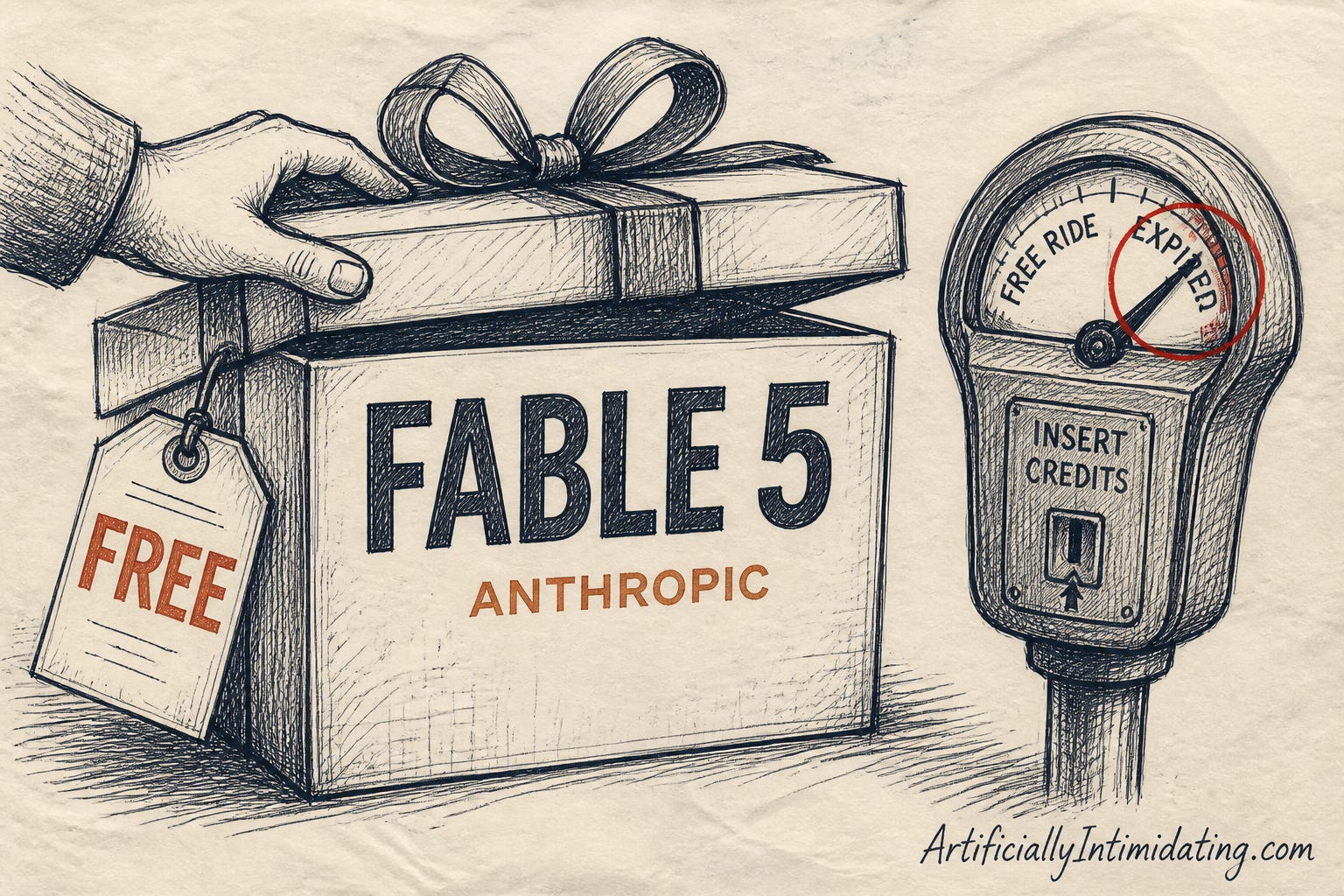
What happened: Anthropic’s promotion letting paid Claude subscribers use its top-tier Fable 5 model at no extra cost expires today, July 19, after being pushed back twice — from July 7 to July 12 to now. Yesterday we watched Nadella trash Fable 5’s guardrails; today the question is whether you’ll still have free Fable 5 to argue about tomorrow.
Why it matters: This is the AI pricing endgame in miniature. Frontier models are expensive to run, “free” was always a customer-acquisition loss leader, and Anthropic has openly blamed compute constraints. After tonight, Fable 5 starts eating into your usage credits — meaning the model you got hooked on gets metered.
What everyone’s saying: Users who built workflows on free Fable 5 are scrambling; two extensions in two weeks reads as demand Anthropic can’t cheaply satisfy. The consensus: enjoy it while the meter’s off.
My read between the lines: Watch what “temporary” becomes. Anthropic says Fable 5 rejoins subscriptions once compute allows — which is another way of saying your access to the best model is now a function of GPU supply, not your subscription tier. The deadline isn’t the story. The rationing is.
📖 Further reading: Fable 5 Costs 2x Opus — and Using It Wrong Costs You More Than That — before the meter starts, here’s how not to torch your credits on it.
AI Apps Win the Sale, Lose the User
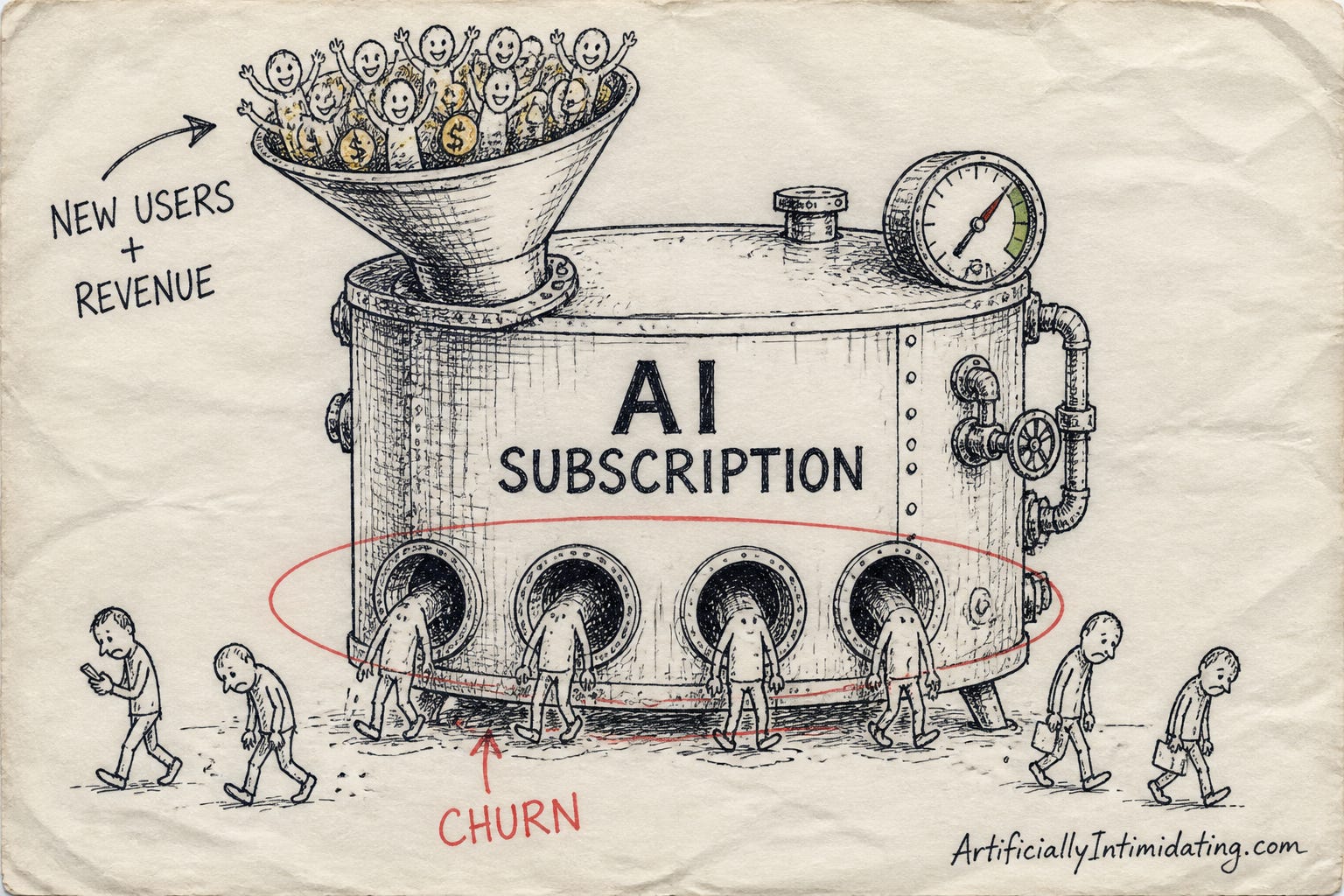
What happened: RevenueCat’s analysis of over a billion in-app transactions found AI apps convert trials to paid 52% better than non-AI apps and earn 41% more per user — then churn about 30% faster, with annual retention of just 21% versus 31% for everyone else.
Why it matters: It’s the clearest data yet that “AI-powered” sells a subscription but doesn’t keep one. Novelty gets the credit card; it doesn’t get the second renewal. For the thousands of “ChatGPT wrapper” startups, that’s an existential math problem.
What everyone’s saying: Builders call it the retention paradox and blame thin value props and shaky unit economics; refund rates run 20% higher too. The take: brilliant top-of-funnel, leaky everywhere after.
My read between the lines: High conversion plus high churn isn’t a paradox — it’s a tell. People are paying to see the magic trick, learning how it’s done, and leaving. The apps that survive won’t have the best model; they’ll be the ones you’d miss if they vanished. Most, right now, wouldn’t be missed.
📖 Further reading: Thanks to Apple, Your Favorite AI Tool Is a Dead Tool Walking — the commoditization that makes these apps so easy to cancel, mapped out.
When Code Gets Free, Intent Gets Expensive
What happened: A wave of developer essays is converging on one idea: now that AI generates code faster than anyone can type, the code itself is no longer the scarce resource — clarity of intent is. “Spec-driven development” reframes the spec, not the code, as the real source.
Why it matters: For anyone learning to build, this flips a decade of advice. The bottleneck moved upstream — from “can you write the function” to “can you describe exactly what you want and verify you got it.” Typing fast stopped being the skill; thinking clearly became one.
What everyone’s saying: Practitioners are split between “this is liberating” and “this is just PRDs with extra steps.” Either way, the job is quietly shifting from author to editor.
My read between the lines: Here’s the catch nobody’s advertising: if intent is the new source code, then vague thinkers now ship vague software at machine speed. AI didn’t remove the hard part of programming. It just moved it somewhere you can’t fake with a Stack Overflow tab open.
📖 Further reading: Your AI Is a Yes-Man. Here’s How to Make It Fire You. — verifying the machine’s output is the other half of spec-driven work, and it starts with getting AI to push back.
That’s your AI Brief for Sunday. The backlash isn’t fading — it’s getting organized. See you tomorrow.
—Artificially Intimidating


